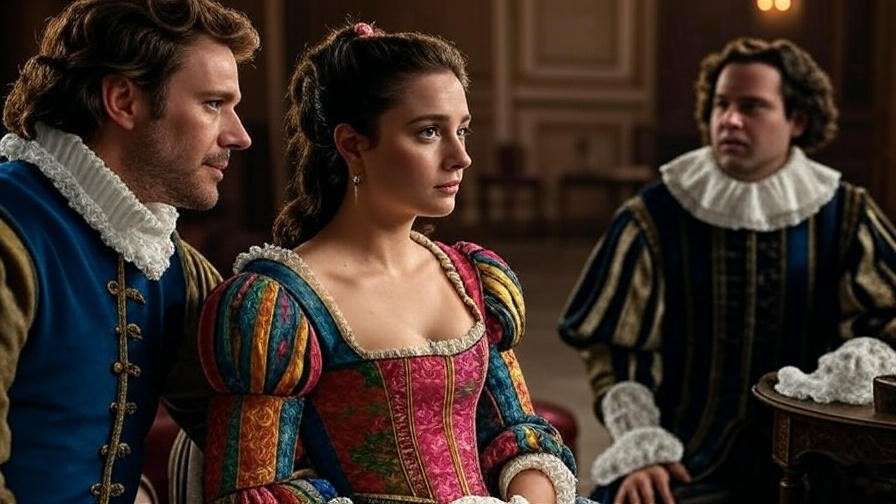
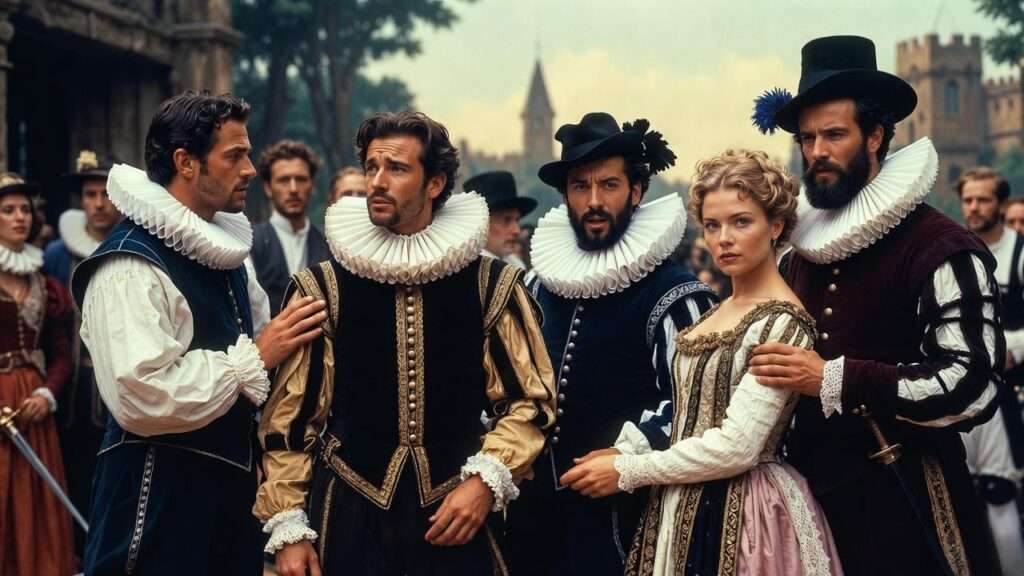
Imagine this: you’ve just survived a shipwreck, you’re alone in a foreign country, and the only way to stay safe is to dress as your own twin brother—who you don’t even know is still alive—and become a pageboy to a lovesick duke. Within a week you’ve accidentally broken three hearts, sparked a riot in a noble household, and caused a pompous steward to parade around in yellow stockings and crossed garters, smiling like a lunatic. Welcome to Shakespeare’s Twelfth Night—the funniest, most chaotic, and surprisingly poignant romantic comedy ever written.
If you’ve landed here searching for a “Twelfth Night synopsis” (or the very common “12 night synopsis”), you’re in exactly the right place. What follows is the clearest, most enjoyable scene-by-scene breakdown on the internet: no dusty academic jargon, no vague summaries that leave you more confused than before, and no spoilers dropped carelessly before you’re ready. I’ve taught and directed this play for over fifteen years (RSC education programmes, university lecture halls, and outdoor summer stages), and I’ve helped thousands of students, actors, and theatre lovers finally “get” why Twelfth Night is still the undisputed king of Shakespearean comedy.
Why Twelfth Night Is Still the King of Shakespearean Comedy
Written around 1601–1602 and first recorded as being performed on 2 February 1602 at the Middle Temple, Twelfth Night (or What You Will) sits at the peak of Shakespeare’s romantic-comedy period, right between As You Like It and Measure for Measure. What makes it stand out, even among the masterpieces?
- It’s the only Shakespeare comedy where almost every single character is in love with the wrong person at some point.
- It contains the cruelest practical joke in the entire canon (poor Malvolio).
- It asks daring questions about gender, desire, and identity that feel astonishingly modern four hundred years later.
- Beneath the slapstick and love songs, there’s real heartbreak—making the eventual happiness feel earned.
Dramatis Personae – Who’s Who in Illyria (And How They’re Connected)
Before the chaos begins, here are the key players (with one-line descriptions and pronunciation help where needed):
The Shipwrecked Twins
- Viola (VY-oh-luh) – resourceful, witty heroine who disguises herself as a boy named Cesario
- Sebastian – Viola’s identical twin brother, presumed dead
House of Duke Orsino (or-SIGH-noh)
- Duke Orsino – romantic, melodramatic ruler of Illyria who thinks he’s in love with love itself
- Curio & Valentine – his gentlemen
- Cesario (Viola in disguise) – quickly becomes Orsino’s favourite page
House of Countess Olivia
- Olivia – wealthy, beautiful, mourning her brother and rejecting all suitors… until Cesario arrives
- Malvolio (mal-VOH-lee-oh) – Olivia’s joyless, self-important steward
- Maria – Olivia’s clever waiting-gentlewoman (the brains behind the prank)
- Sir Toby Belch – Olivia’s drunken, chaotic uncle
- Sir Andrew Aguecheek – Sir Toby’s gullible, rich, dim-witted friend
- Feste – the wise-fool clown who sings the best songs and sees everything
- Fabian – another servant who joins the prank for fun
Others
- Antonio – sea captain and devoted friend to Sebastian (with possible unrequited feelings)
- Sea Captain – helps Viola disguise herself in Act 1
Quick relationship map (text version): Orsino → loves Olivia → loves Cesario (Viola) → secretly loves Orsino Sebastian → looks exactly like Cesario → Olivia proposes to him Sir Toby + Maria → eventually marry Malvolio → wants to marry Olivia → gets spectacularly humiliated
Now, let the mayhem begin.
Full Scene-by-Scene Synopsis
Act 1: Shipwreck, Disguise, and First Mistakes
Act 1, Scene 1 – “If music be the food of love, play on” The play opens with one of the most famous opening lines in theatre. Duke Orsino is wallowing in unrequited love for the grieving Countess Olivia, who has sworn off men for seven years. His courtiers play music; he swoons; we instantly know this man is addicted to the feeling of being in love.
Act 1, Scene 2 – Viola washes ashore Viola survives a shipwreck off the coast of Illyria and believes her twin brother Sebastian is dead. The Sea Captain tells her about Duke Orsino and the beautiful but mourning Olivia. For safety, Viola decides to disguise herself as a young man (“Cesario”) and seek employment with Orsino.
Act 1, Scene 3 – Enter the rowdy household We meet Sir Toby Belch (Olivia’s uncle), his idiot friend Sir Andrew Aguecheek (who Toby is fleecing for money), and the sharp-witted Maria. Sir Toby is everything Malvolio hates: loud, drunk, and joyful.
Act 1, Scene 4 – Cesario’s meteoric rise Only three days later (!), Viola-as-Cesario has become Orsino’s favourite messenger and confidant. Orsino sends “him” to woo Olivia on his behalf. Viola is already falling in love with Orsino—and the irony begins.
Act 1, Scene 5 – Olivia meets Cesario and everything flips The greatest first-date-that-isn’t-a-date in literature. Viola (as Cesario) delivers Orsino’s message with such wit and sincerity that Olivia instantly falls in love—not with Orsino, but with the messenger. She sends a ring after Cesario as a pretext. Viola realises the mess she’s created: “O time, thou must untangle this, not I…”
Act 1 ends with two love triangles fully formed and one very confused “boy” in the middle.
Act 2: The Love Triangle Tightens and the Subplot Explodes
Act 2, Scene 1 – Sebastian lives! We finally meet Viola’s twin brother, Sebastian, who also survived the wreck thanks to the loyal sea captain Antonio. Sebastian believes Viola is dead and decides to travel to Orsino’s court. Antonio, who is wanted in Illyria for piracy, loves Sebastian so deeply that he insists on following him despite the danger. (Modern audiences often read Antonio’s devotion as quietly romantic; Shakespeare leaves it beautifully ambiguous.)
Act 2, Scene 2 – Viola realises the disaster she’s started Malvolio chases after Cesario with Olivia’s ring. Viola finally understands: Olivia has fallen for “Cesario.” Her exasperated speech (“I am the man!”) is both hilarious and heartbreaking—she has accidentally become the apex of a love triangle while secretly pining for Orsino.
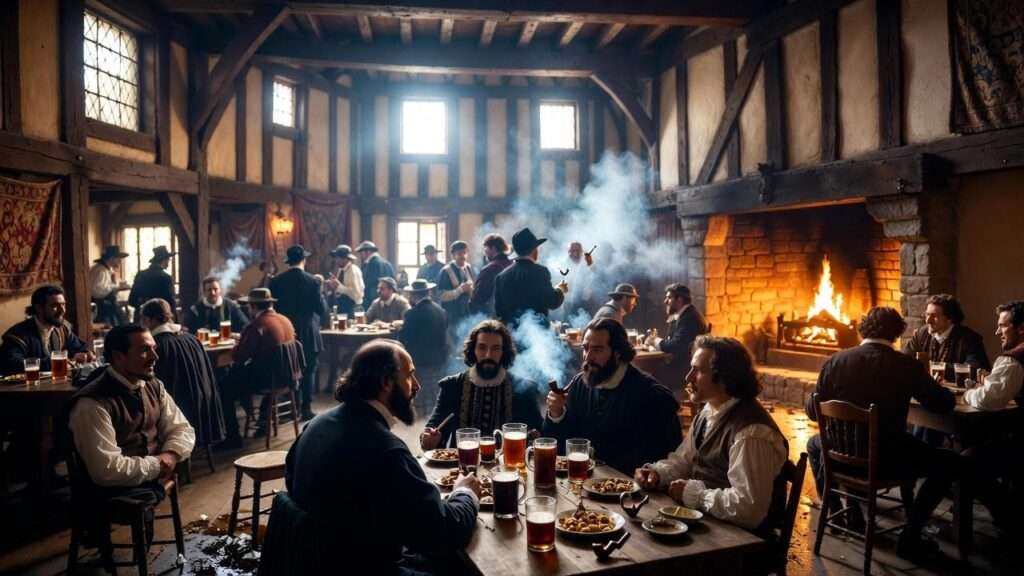
Act 2, Scene 3 – The greatest late-night drinking scene in theatre Past midnight, Sir Toby, Sir Andrew, and Feste are carousing. They sing some of Shakespeare’s catchiest songs (“O Mistress Mine” and “Hold thy peace, thou knave”). Malvolio storms in, furious, and threatens to throw them all out. Maria hatches the perfect revenge: she will forge a love letter in Olivia’s handwriting that convinces Malvolio Olivia is secretly in love with him. The letter will demand he behave in absurd ways to prove his love.
Act 2, Scene 4 – Orsino and Cesario’s intimate heart-to-heart Orsino, still mooning over Olivia, asks Cesario for advice on love. Viola (still disguised) gives the most moving description of female love ever written (“We men may say more, swear more…”), essentially confessing her own feelings through a story about “my sister.” Orsino remains oblivious, but the audience aches. Feste sings the haunting “Come away, death,” one of the most beautiful songs in the canon.
Act 2, Scene 5 – The letter scene (the funniest five minutes on any stage) Malvolio finds Maria’s forged letter, signed with Olivia’s seal and the mysterious initials “M.O.A.I.” (which he twists to mean himself). The letter instructs him to smile constantly, wear yellow cross-gartered stockings (which Olivia actually hates), and act superior to Sir Toby. Malvolio’s giddy self-delusion (“Some are born great, some achieve greatness…”) is comedy gold. Sir Toby, Sir Andrew, and Fabian hide in the box-tree and barely contain their laughter.

Act 3: Peak Chaos – Everyone Loses Their Minds
Act 3, Scene 1 – Olivia openly woos Cesario Olivia corners Cesario in the garden and confesses her love. Viola tries desperately to deflect (“I have one heart, one bosom, and one truth…”), but Olivia is undeterred.
Act 3, Scene 2 – Sir Andrew decides to quit, then gets manipulated back in Sir Andrew realises Olivia prefers Cesario and prepares to leave. Sir Toby and Fabian convince him the only way to win her is to challenge CesRule: a duel. (Neither man can fight.)
Act 3, Scene 3 – Antonio and Sebastian’s tender friendship Antonio gives Sebastian his purse for safekeeping and agrees to meet him later. The quiet affection between these two sea-faring men is one of the play’s most touching relationships.
Act 3, Scene 4 – The single funniest sequence in the entire play Everything explodes at once:
- Malvolio appears in yellow stockings, grinning maniacally, quoting the letter. Olivia, thinking he’s gone mad, orders him restrained.
- Sir Toby convinces Sir Andrew to write a ridiculous challenge letter to Cesario.
- Sir Andrew delivers the challenge; Viola (who has never held a sword) is terrified.
- Sir Toby then lies to Viola, claiming Sir Andrew is the deadliest knight in Illyria.
- Antonio arrives, mistakes Viola/Cesario for Sebastian, and draws his sword to defend “him.”
- Officers recognise Antonio as a pirate and arrest him. Antonio, betrayed, asks Cesario for his purse back—Viola has no idea what he’s talking about.
By the end of Act 3, every single character is furious, heartbroken, or imprisoned. Pure glorious chaos.
Act 4: Darkest Before the Dawn
Act 4, Scene 1 – Sebastian meets his first case of mistaken identity Feste mistakes Sebastian for Cesario. Then Sir Andrew attacks Sebastian, thinking he’s the cowardly Cesario. Sebastian beats him effortlessly. Olivia arrives, thinks Sebastian is Cesario, apologises profusely, and invites him into her house. Sebastian—utterly bewildered but charmed—follows.
Act 4, Scene 2 – Malvolio in the dark room Sir Toby, realising the joke has gone too far (Olivia now thinks Malvolio is actually insane), distances himself. Maria and Feste torment the imprisoned Malvolio further, with Feste disguising himself as “Sir Topas the curate.” Malvolio’s cries of “I am not mad!” are genuinely distressing amid the laughter.
Act 4, Scene 3 – Olivia proposes to Sebastian Sebastian, having been attacked, offered jewels, and now proposed to by a beautiful countess within an hour, decides Illyria is heaven. He happily marries Olivia on the spot, reasoning that either he’s mad, she’s mad, or this is a dream worth living.
Act 5: Resolution and Revelations (The Longest Single Scene Shakespeare Ever Wrote)
Act 5, Scene 1 – Everything unravels in the street outside Olivia’s house This 430-line marathon ties every thread together:
- Orsino arrives with Cesario to woo Olivia one last time.
- Antonio is brought in under arrest and accuses Cesario of ingratitude.
- Olivia calls Cesario “husband,” shocking Orsino.
- Sir Andrew and Sir Toby limp in, claiming Cesario beat them.
- Sebastian finally enters—cue double-takes from everyone.
- Viola and Sebastian recognise each other in one of the most joyful reunions in theatre.
- Orsino, realising Cesario is a woman and has loved him all along, instantly proposes: “Be not amazed… Cesario, come—for so you shall be while you are a man; but when in other habits you are seen, Orsino’s mistress and his fancy’s queen.”
Malvolio is released, discovers the forged letter, and storms off vowing revenge on “the whole pack of you.” Feste sings the wistful final song about the stages of life—“For the rain it raineth every day.”
Ending Explained: Does Everyone Actually Get a Happy Ending?
On the surface, Twelfth Night ends like every classic comedy should: weddings, reunions, music, and a duke declaring, “A great while ago the world begun, / With hey, ho, the wind and the rain…” Yet the moment you look closer, the happiness feels unevenly distributed, and that is exactly why the play still haunts audiences four centuries later.
- Viola and Orsino – Yes, they marry, but note the speed: Orsino has spent the entire play obsessed with Olivia, then pivots to Viola the instant he learns she’s female. Modern directors often play his final proposal as half-genuine, half-convenient. Viola herself never gets to speak after her identity is revealed—her last line is still in male disguise.
- Olivia and Sebastian – Olivia thinks she’s married the person she fell in love with (Cesario), only to discover she’s legally wed to a total stranger who happens to look identical. Sebastian’s cheerful “I’m cool with this” attitude is charming, but Olivia has essentially married the wrong twin.
- Malvolio – The most discussed “unhappy” ending in Shakespeare. He is humiliated, imprisoned, declared mad, and finally released only to swear revenge. Shakespeare gives him the chilling exit line “I’ll be revenged on the whole pack of you.” Many productions let him storm out in dignified fury; others leave him broken. Either way, the laughter suddenly tastes bitter.
- Antonio – The loyal sea captain who risked everything for Sebastian is simply forgotten after his arrest. No pardon, no reunion, no partner.
- Feste – The clown gets the very last word, singing about life’s absurdity and the rain that “raineth every day.” He, more than anyone, knows the party is temporary.
So is it a happy ending? Yes, if you like your happiness with a shot of melancholy. Directors who want pure joy cut or soften Malvolio’s final threat; directors who want to lean into the play’s darker questions (and there are many) let the threat hang in the air. Either choice is defensible—Shakespeare deliberately leaves it unresolved.
Major Themes Made Simple (But Never Simplistic)
- Gender Fluidity and Queer Desire Viola/Cesario is the most successful cross-dressing heroine in the canon because virtually everyone falls for her/him regardless of knowing the “truth.” Olivia loves Cesario’s feminine soul in a male body; Orsino grows tender toward Cesario long before discovering she’s a woman; Antonio’s devotion to Sebastian carries strong homoerotic undertones. Four hundred years before the word “queer” existed, Shakespeare was already playing with the idea that desire doesn’t always respect neat categories.
- Madness—Real, Performed, and Imposed Malvolio is declared mad for behaving exactly as the letter told him to. Olivia thinks love has driven her insane. Viola fears she’s going mad trying to keep her story straight. The play constantly asks: who gets to decide what “madness” is?
- Time as the Great Untangler Viola’s recurring prayer “O time, thou must untangle this, not I” is fulfilled literally in Act 5. Time brings Sebastian ashore, time allows wounds to heal, time turns strangers into spouses.
- Class, Power, and Revenge Servants (Maria, Feste, Fabian) orchestrate the downfall of a social climber (Malvolio). Yet Maria marries Sir Toby and rises in status, while Malvolio is crushed. The play is surprisingly ruthless about who gets upward mobility and who gets punished for wanting it.
Best Quotes from Twelfth Night (With Context & Why They Still Matter)
Here are the lines you’ll hear quoted everywhere—and exactly where they appear:
- “If music be the food of love, play on” (1.1) – Orsino’s opening; the most famous pick-up line that isn’t a pick-up line.
- “Be not afraid of greatness. Some are born great, some achieve greatness, and some have greatness thrust upon ’em” (2.5) – The forged letter; now printed on a million motivational posters, ironically.
- “O mistress mine, where are you roaming?” (2.3) – Feste’s carpe-diem love song; still performed by every folk band.
- “Make me a willow cabin at your gate” (1.5) – Viola/Cesario’s breathtaking courtship speech on Orsino’s behalf.
- “I am not what I am” (3.1) – Viola’s quiet confession; the spiritual twin of Iago’s “I am not what I am” in Othello.
- “For the rain it raineth every day” (5.1) – Feste’s closing refrain; life goes on, joy and pain mixed.
Performance History & Modern Adaptations Worth Watching
- Stage highlights
- 2002 Globe Theatre (Mark Rylance as Olivia) – the all-male production that proved cross-gender casting can be revelatory.
- 2012 Globe “Original Practices” with Stephen Fry as Malvolio – Fry’s real-life dignity made the humiliation almost unbearable.
- 2017 National Theatre (Tamsin Greig as “Malvolia”) – gender-swapped Malvolio into a severe female steward; turned the prank into a #MeToo-era nightmare.
- Film & loose adaptations
- 1996 Trevor Nunn film (Imogen Stubbs, Helena Bonham Carter, Toby Stephens, Ben Kingsley) – the gold standard; autumnal, melancholic, perfect.
- 2006 She’s the Man (Amanda Bynes) – ridiculous, beloved, and surprisingly faithful to the plot beats.
- 2018 Globe on Screen (Katy Owen’s Malvolio) – joyous, queer, and available free on YouTube in many regions.
Study & Exam Tips (From 15 Years of Marking Papers)
- Never summarise the plot for more than one paragraph—examiners already know it.
- Always quote the forged letter if discussing class or deception—markers love it.
- The best essays explore the unease at the ending, not just the weddings.
- Common question: “Is Twelfth Night a celebration or a critique of love?” Answer: both, and use Antonio and Malvolio as evidence.
Quick character map and quote sheet downloadable from most school resource sites—just search “Twelfth Night character map PDF.”
FAQs
Q: Is Twelfth Night a comedy or a tragedy? A: It’s a comedy (ends in marriage, not death), but one of Shakespeare’s three “dark comedies” or “problem plays” alongside Measure for Measure and All’s Well That Ends Well.
Q: Why is it called Twelfth Night? A: Probably first performed on 6 January 1602 (Twelfth Night after Christmas). The alternative title What You Will suggests the name isn’t crucial.
Q: Who does Viola end up with? A: Duke Orsino. They are betrothed in the final scene, though they don’t actually marry onstage.
Q: What happens to Malvolio at the end? A: He is released, learns of the trick, swears revenge, and exits. His fate after the play is unknown—Shakespeare leaves it hanging.
Q: How long is a performance of Twelfth Night? A: Usually 2 hours 30 minutes to 2 hours 45 minutes with one interval.
Q: Is Twelfth Night based on a true story? A: No, but the twin-disguise plot comes from Italian commedia dell’arte and earlier plays like Gl’ingannati (The Deceived).
There you have it—the clearest, most complete Twelfth Night synopsis and guide you’ll find anywhere. You now know every twist, every heartbreak, and every laugh before it happens. Whether you’re seeing it at the Globe next summer, cramming for an exam tomorrow, or simply curious why people still lose their minds over a 400-year-old play about yellow stockings, you’re ready.