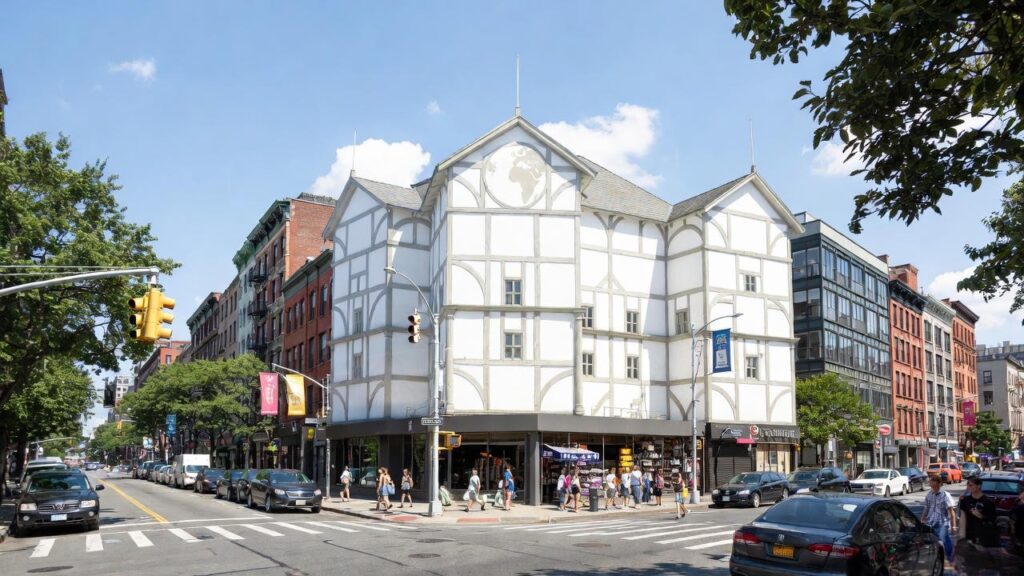
Imagine walking down a bustling Brooklyn street, past glass office towers, trendy cafés, and the steady hum of city life. You pause at the corner of Montague and Clinton Streets and glance up at the unremarkable six-story building at 195 Montague St. Nothing about it screams “Shakespeare.” Yet beneath your feet lies one of the most audacious—and almost completely forgotten—literary dreams in American history: the plan to build a full-scale replica of Shakespeare’s original Globe Theatre right here in Brooklyn Heights.
This is not a myth or an urban legend. Between 1914 and 1917, a dedicated group of Shakespeare enthusiasts, led by the Brooklyn Shakespeare Society, came remarkably close to turning this corner into America’s answer to the Globe. The project had architectural plans, fundraising campaigns, newspaper coverage, and genuine momentum—until it quietly collapsed into obscurity.
In this in-depth exploration, we’ll uncover the full story: who dreamed it, why they chose this exact location, what the building would have looked like, why it failed, and why the ghost of this unbuilt Globe still resonates with Shakespeare lovers today.
The Ambitious Vision: Why Build a New Globe in Brooklyn?
Shakespeare Mania in Early 20th-Century America
At the turn of the 20th century, Shakespeare was not a dusty academic subject—he was popular culture. Across the United States, millions attended public lectures, Chautauqua tent shows, and amateur theatricals. Shakespeare quotations appeared in newspapers, sermons, political speeches, and even advertising. In 1916 alone, the 300th anniversary of Shakespeare’s death sparked nationwide celebrations, parades, and pageants.
Brooklyn, in particular, was fertile ground. Already a major cultural center with its own symphony, art museum, and growing middle-class population, Brooklyn boasted a thriving network of literary societies, women’s clubs, and educational organizations eager to promote “high culture” in an era of rapid industrialization and immigration.
The Brain Behind the Dream: William Poel and the American Shakespeare Movement
The intellectual spark for the Brooklyn project came from across the Atlantic. William Poel (1852–1934), a British actor-director, had spent decades campaigning to revive the original Elizabethan style of staging: thrust stages, minimal scenery, universal lighting, and rapid scene changes. Poel believed that Shakespeare’s plays only truly came alive when performed as they were in 1600, without Victorian-era proscenium arches or elaborate sets.
Poel’s ideas crossed the ocean and inspired a generation of American Shakespeare enthusiasts. His 1913 lecture tour in the United States—including stops in New York—energized local groups to think bigger than small indoor productions. They wanted a permanent home that would embody the Elizabethan spirit.
Enter the Brooklyn Shakespeare Society and the Montague Street Proposal
Founded in 1910, the Brooklyn Shakespeare Society was one of the most active literary organizations in the borough. Its members—teachers, lawyers, clergy, and businesspeople—met regularly to read plays aloud, discuss interpretations, and host visiting actors. By 1914, their ambitions had grown.
Inspired by Poel and the upcoming Shakespeare tercentenary, the society launched an official campaign to construct a replica Globe Theatre at 195 Montague Street, a prominent corner lot in the heart of Brooklyn Heights. The site was not chosen at random.
195 Montague St: Location, Location, Location
What Was at 195 Montague Street in the Early 20th Century?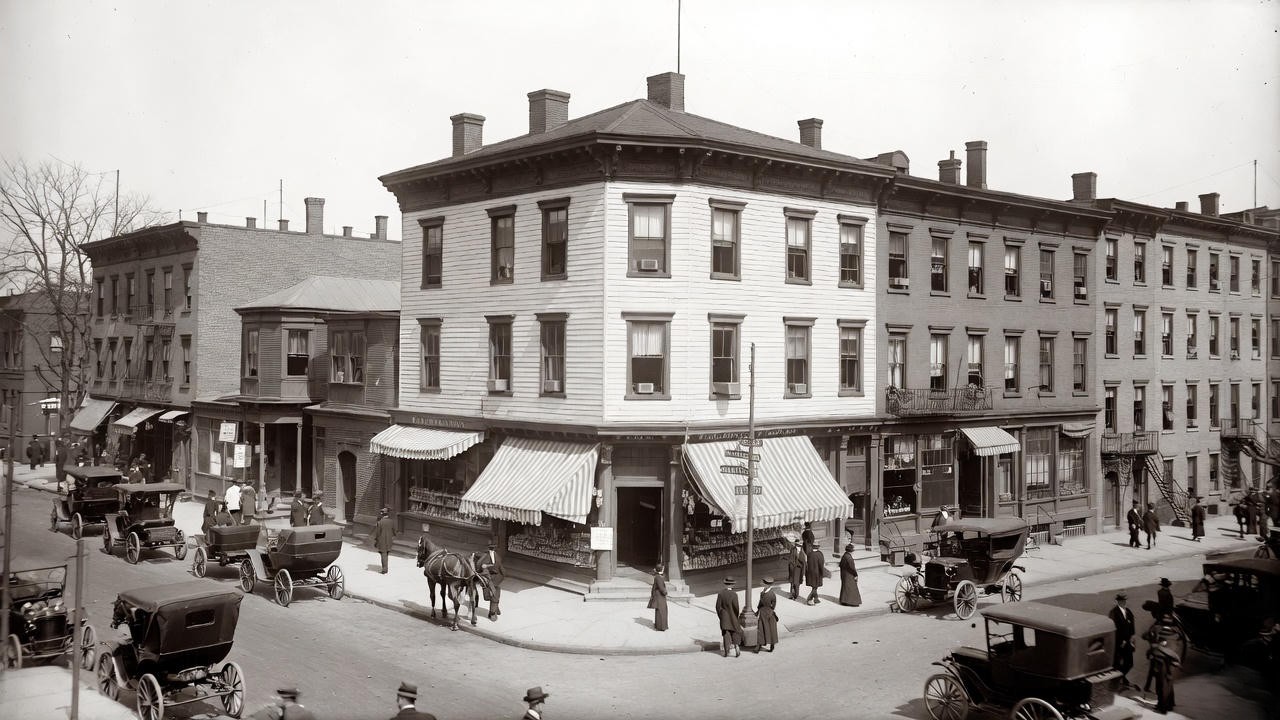
In 1915, 195 Montague Street was a modest three-story commercial building with ground-floor retail and offices above. The lot was relatively large for the area—approximately 100 feet by 100 feet—and stood at the busy intersection of Montague and Clinton Streets, just two blocks from Borough Hall and the main business district of Brooklyn.
The surrounding neighborhood was one of the most prestigious in the borough. Brooklyn Heights had long been home to wealthy merchants, writers (including Walt Whitman in his youth), and cultural institutions. The Brooklyn Public Library’s main branch was nearby, as were several churches and private academies.
Why This Exact Spot Was Chosen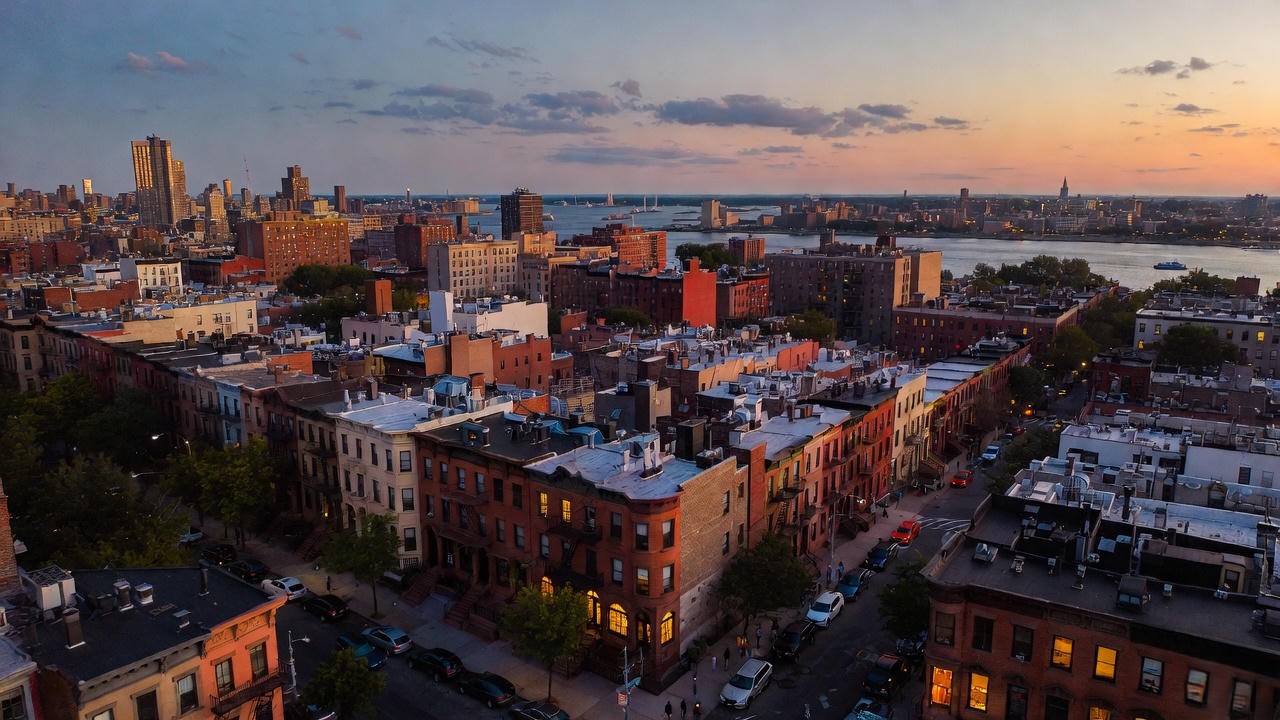
Several factors made 195 Montague Street ideal:
- Accessibility: The site was served by multiple trolley lines and was only a short walk from the Brooklyn Bridge and the new subway connections to Manhattan (the IRT Brooklyn line opened in 1908).
- Visibility: Montague Street was—and still is—one of the main commercial arteries of Brooklyn Heights. A theater here would have been impossible to miss.
- Cultural prestige: The Heights’ reputation as an intellectual enclave gave the project symbolic weight. A Globe in this location would signal that Brooklyn was not just a bedroom community for Manhattan—it was a cultural power in its own right.
The Proposed Design: A Faithful Replica of the Original Globe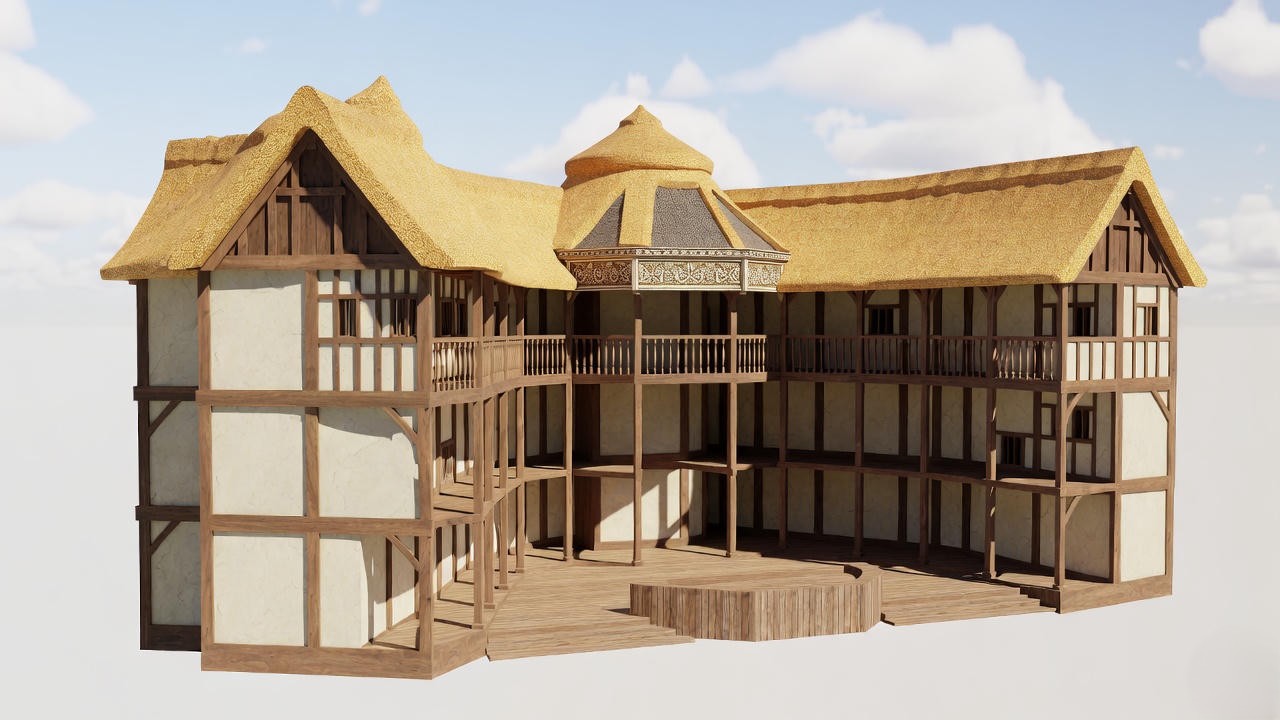
The Brooklyn Shakespeare Society commissioned preliminary architectural drawings that closely followed the best scholarship of the time on the original Globe (built 1599, rebuilt 1614). Key features included:
- An open-air polygonal structure with three levels of galleries
- A thrust stage extending into the yard
- A “heavens” canopy over the stage
- A small “inner stage” for discovery scenes
- Fireproofed thatching (a major concern after the 1613 fire that destroyed the original Globe)
- Seating capacity estimates ranged from 1,500 to 2,000 spectators
Newspaper articles from 1915–1916 described the project as “a faithful reproduction of Shakespeare’s own playhouse,” with modern safety improvements.
What Went Wrong? The Collapse of a Grand Shakespearean Dream
Financial and Logistical Challenges
The timing could not have been worse. The project gained traction in 1914–1915, just as World War I began to disrupt international trade and inflate building costs. Steel, timber, and labor became increasingly expensive. Fundraising drives that had been successful in 1914 slowed dramatically by 1917.
Opposition from the Establishment
Not everyone welcomed the idea. Manhattan’s theatrical establishment—dominated by powerful producers and impresarios—viewed the Brooklyn project as amateurish competition. Some critics argued that a replica Globe would be impractical in the American climate (rain, cold winters) and that audiences preferred modern theaters with comfortable seating and elaborate scenery.
Local zoning and building regulations also posed hurdles. An open-air theater with thatched roofing raised serious fire-safety concerns under New York City codes.
The Final Blow: The 1920s Shift in Cultural Tastes
By the early 1920s, public taste had shifted. Motion pictures were exploding in popularity, radio was entering homes, and live theater faced new competition. The post-war economic boom favored commercial entertainment over high-culture projects. The Brooklyn Globe quietly faded from public discussion.
The Legacy That Survived: Echoes of 195 Montague St Today
The Brooklyn Shakespeare Society’s Lasting Influence
Although the theater was never built, the Brooklyn Shakespeare Society continued its work for decades. It hosted lectures, play readings, and community productions, helping to keep Shakespeare alive in Brooklyn long after the Montague Street dream died. Several members went on to support other local cultural initiatives.
Modern-Day Shakespeare in Brooklyn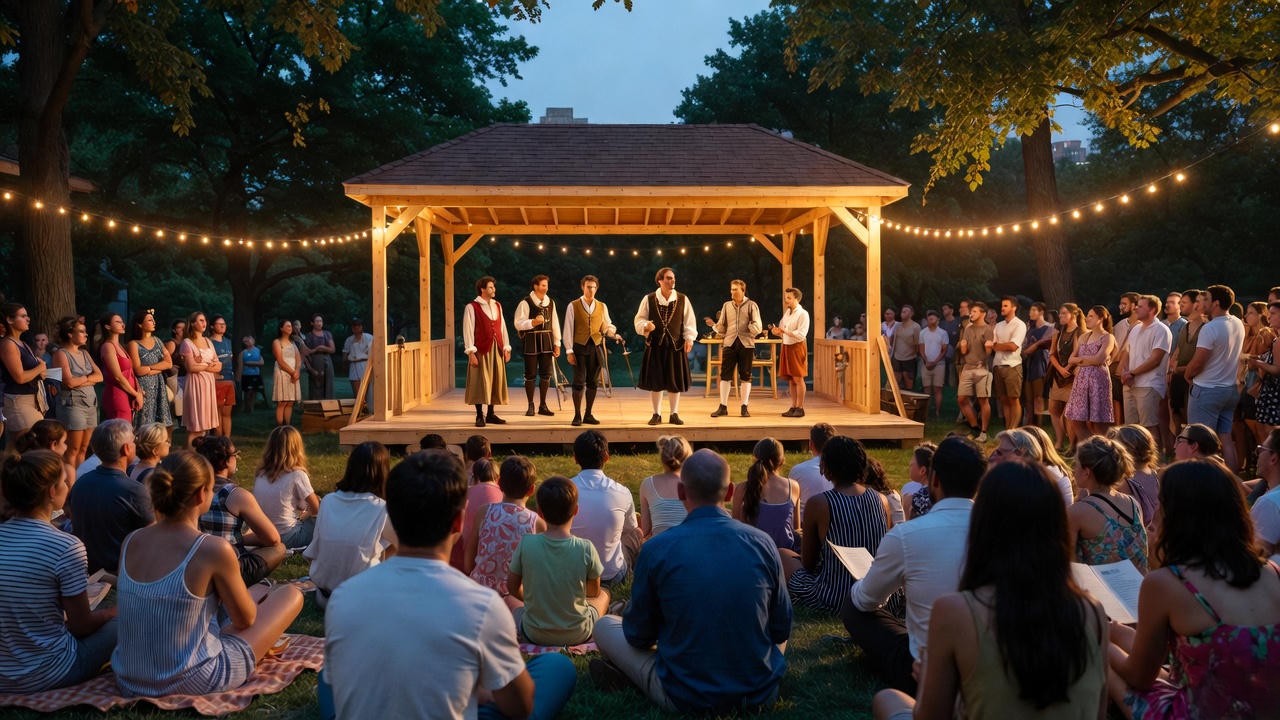
Today, Brooklyn remains a vibrant center for Shakespeare performance:
- The Brooklyn Academy of Music (BAM) regularly presents world-class Shakespeare productions.
- Free summer performances in Prospect Park have become a beloved tradition.
- Smaller companies like The Secret Theatre, New York Classical Theatre, and the Brooklyn Shakespeare Factory carry forward the spirit of accessible, community-driven Shakespeare.
Hidden Traces at 195 Montague St in 2025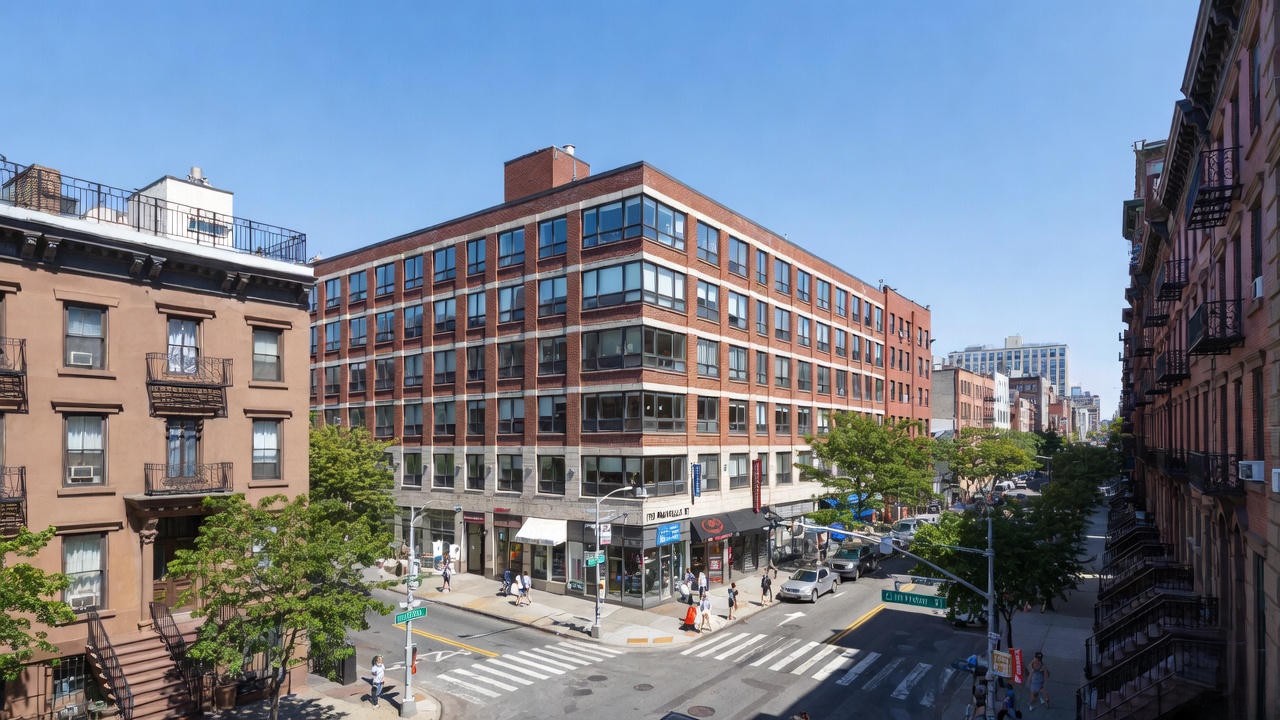
The corner of Montague and Clinton is now occupied by a modern six-story commercial building housing offices and retail. There is no plaque, marker, or public acknowledgment of the Globe project. Yet the site still stands as a quiet reminder of what might have been.
Why This Forgotten Story Still Matters to Shakespeare Lovers
Lessons in Cultural Ambition and Failure
The 195 Montague Street project reminds us that great cultural ideas often face overwhelming practical obstacles. It also parallels today’s crowdfunding campaigns and community theater efforts—ambition still drives innovation, even when the results are not immediate.
The Enduring Power of Place in Shakespeare’s Legacy
Shakespeare’s plays were written for a specific kind of space. Experiencing them in a setting that echoes the original Globe changes how we hear the language and understand the drama. The unbuilt Brooklyn Globe invites us to imagine what might have been—and to seek out similar experiences today.
A Call to Rediscover Shakespeare in Unexpected Places
Next time you’re in Brooklyn Heights, pause at 195 Montague Street. Look up at the building. Close your eyes for a moment and imagine wooden galleries, the sound of trumpets, the roar of an Elizabethan audience. The Globe may never have stood here—but the dream did. And that dream still has the power to inspire.
Expert Insights & Additional Resources
Modern Shakespeare scholars such as Patrick Spottiswoode (formerly of Shakespeare’s Globe in London) and American theater historian Dennis Kennedy have noted the importance of early 20th-century American attempts to recreate Elizabethan staging. The Brooklyn project is often cited as one of the most serious efforts outside of England.
Recommended further reading:
- “Shakespeare in America” by Lawrence Levine
- “The American Shakespeare Tercentenary” (1916 commemorative volume)
- Brooklyn Historical Society digital archives
- New York Public Library’s Billy Rose Theatre Division
Frequently Asked Questions (FAQs)
Was a Globe Theatre ever actually built at 195 Montague St? No. Despite serious planning and fundraising, the project was never realized.
Who were the main financial backers of the Brooklyn Shakespeare Society? Records are incomplete, but major support came from local business owners, educators, and cultural philanthropists in Brooklyn Heights.
Are there any surviving architectural drawings of the proposed Brooklyn Globe? Some sketches appeared in 1915–1916 newspapers, but no complete set is known to have survived.
Where can I experience Shakespeare in Brooklyn today? Top venues include BAM, Prospect Park’s summer season, The Secret Theatre, and various pop-up productions.
Is there a plaque or marker at 195 Montague St commemorating the project? No, there is currently no public marker.
The story of 195 Montague Street is a poignant reminder of how deeply Shakespeare has shaped American cultural imagination—and how fragile even the most passionate dreams can be. Though the Globe never rose on that Brooklyn corner, the ambition behind it continues to echo in every community theater, every outdoor performance, and every reader who discovers the power of Shakespeare’s words.
So the next time you find yourself in Brooklyn Heights, take a moment to stand at 195 Montague Street. You’re not just standing on a street corner—you’re standing on the site of one of America’s boldest, most romantic, and most forgotten Shakespearean dreams.