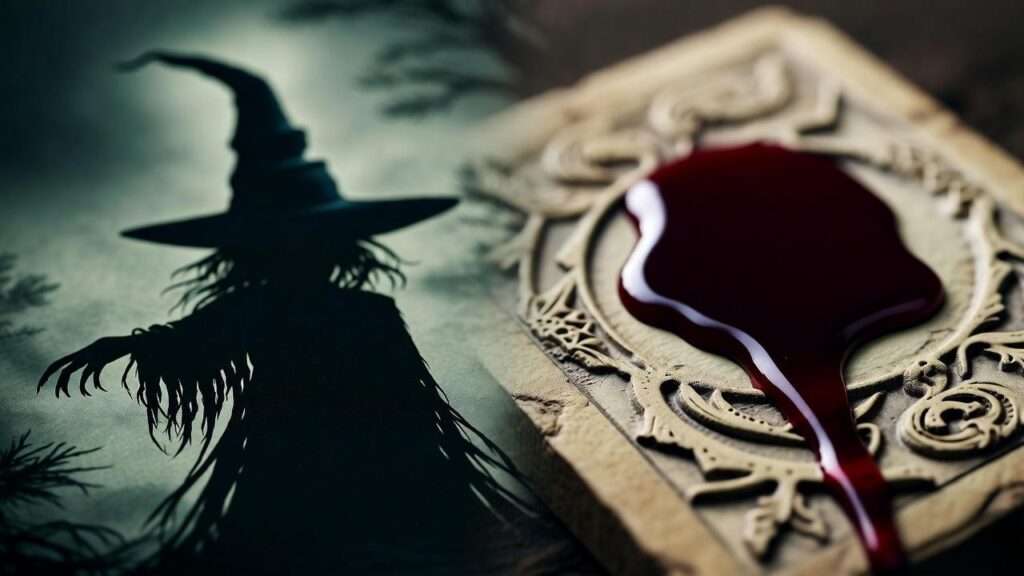
Picture a bubbling cauldron, shrouded in mist, as three witches chant cryptic prophecies that stir the fates of men. This haunting image from Macbeth is no mere spectacle—it’s a potent symbol of chaos, fate, and the supernatural forces that drive Shakespeare’s darkest tragedy. The symbols in Macbeth—blood, darkness, witches, sleep, and more—illuminate the play’s profound themes of ambition, guilt, and moral decay. For students, educators, and Shakespeare enthusiasts, understanding these symbols unlocks a deeper appreciation of the play’s psychological and philosophical layers. As a Shakespeare scholar with over a decade of studying and teaching his works, I’ve crafted this comprehensive guide to help you unravel the rich symbolism in Macbeth, offering insights that go beyond surface-level analysis to enrich your literary journey.
Whether you’re preparing for an essay, teaching a class, or simply seeking to connect with Shakespeare’s genius, this article will explore the key symbols in Macbeth, their meanings, and their relevance to the play’s timeless themes. By the end, you’ll have a deeper understanding of how these symbols shape the narrative and resonate with audiences across centuries.
Why Symbols Matter in Macbeth
The Role of Symbolism in Shakespeare’s Craft
William Shakespeare was a master of weaving symbols into his plays to convey complex ideas and emotions. In Macbeth, symbols like blood, darkness, and the witches serve as more than decorative imagery—they are the scaffolding of the play’s thematic depth. Unlike the storm in King Lear, which symbolizes divine wrath, or the handkerchief in Othello, representing trust and betrayal, the symbols in Macbeth create a claustrophobic atmosphere of dread and moral collapse. They act as a lens through which audiences can explore the psychological turmoil of Macbeth and Lady Macbeth, making the play a timeless study of human nature.
Shakespeare’s use of symbolism was rooted in the Elizabethan worldview, where audiences were attuned to layered meanings. For example, recurring images like blood or unnatural events (e.g., owls killing falcons) would have resonated deeply with 17th-century viewers familiar with the Great Chain of Being—a hierarchical order of existence disrupted by Macbeth’s actions. By analyzing these symbols, modern readers can uncover the same depth that captivated Shakespeare’s original audiences.
Enhancing Reader Understanding
Symbols in Macbeth are not just literary devices; they are gateways to understanding the play’s moral and psychological dilemmas. For instance, blood represents both the physical act of murder and the inescapable guilt that follows, helping readers connect with Macbeth’s descent into paranoia. Similarly, the witches symbolize the ambiguity of fate, prompting audiences to question whether Macbeth is a victim of destiny or his own choices.
Tip: When reading or watching Macbeth, keep a notebook to track recurring images like blood, darkness, or sleep. Note the context of each appearance to uncover patterns that reveal deeper meanings. This practice can transform your experience of the play, making its themes more vivid and personal.
Expert Insight: Renowned Shakespearean scholar A.C. Bradley once noted that the imagery in Macbeth creates “an atmosphere of blackness and horror” that mirrors the characters’ inner turmoil. This observation underscores why symbols are critical to interpreting the play’s emotional and thematic weight.
Key Symbols in Macbeth and Their Meanings
Blood – The Stain of Guilt and Violence
Blood is arguably the most pervasive symbol in Macbeth, representing both the physical act of violence and the psychological burden of guilt. From the moment Macbeth murders King Duncan, blood becomes a haunting presence. In Act 2, Scene 2, Macbeth laments, “Will all great Neptune’s ocean wash this blood / Clean from my hand?” This line captures the indelible nature of his guilt, as no amount of water can erase the moral stain of his actions.
Lady Macbeth, too, is consumed by this symbol. In her sleepwalking scene (Act 5, Scene 1), she obsessively tries to wash imaginary blood from her hands, crying, “Out, damned spot!” Her futile scrubbing reflects how guilt has infiltrated her psyche, undermining her earlier resolve to dismiss moral consequences. Blood thus evolves from a literal marker of violence to a metaphor for the inescapable remorse that torments both characters.
Example: Consider how blood appears in the banquet scene (Act 3, Scene 4), where Macbeth sees Banquo’s ghost covered in blood. This hallucination symbolizes not only Banquo’s murder but also Macbeth’s fear of retribution, as his crimes begin to unravel his sanity.
Darkness and Night – Chaos and Evil
Darkness permeates Macbeth, symbolizing moral decay, evil, and the concealment of heinous acts. Lady Macbeth invokes it directly in Act 1, Scene 5: “Come, thick night, / And pall thee in the dunnest smoke of hell.” Here, night is not just a time of day but a cloak for her murderous ambitions, shielding her actions from divine scrutiny. The play’s frequent references to darkness—such as the night of Duncan’s murder—create an oppressive atmosphere where evil thrives.
Darkness also mirrors the characters’ inner turmoil. As Macbeth spirals into paranoia, his world grows metaphorically darker, reflecting his alienation from morality and reason. This symbol resonates with Elizabethan audiences, who associated night with supernatural forces and chaos, amplifying the play’s sense of dread.
Example: The murder of Duncan occurs under the cover of darkness, emphasizing how night enables Macbeth’s betrayal. The absence of light underscores the moral void of his actions, setting the stage for the chaos that follows.
The Witches – Fate and Ambiguity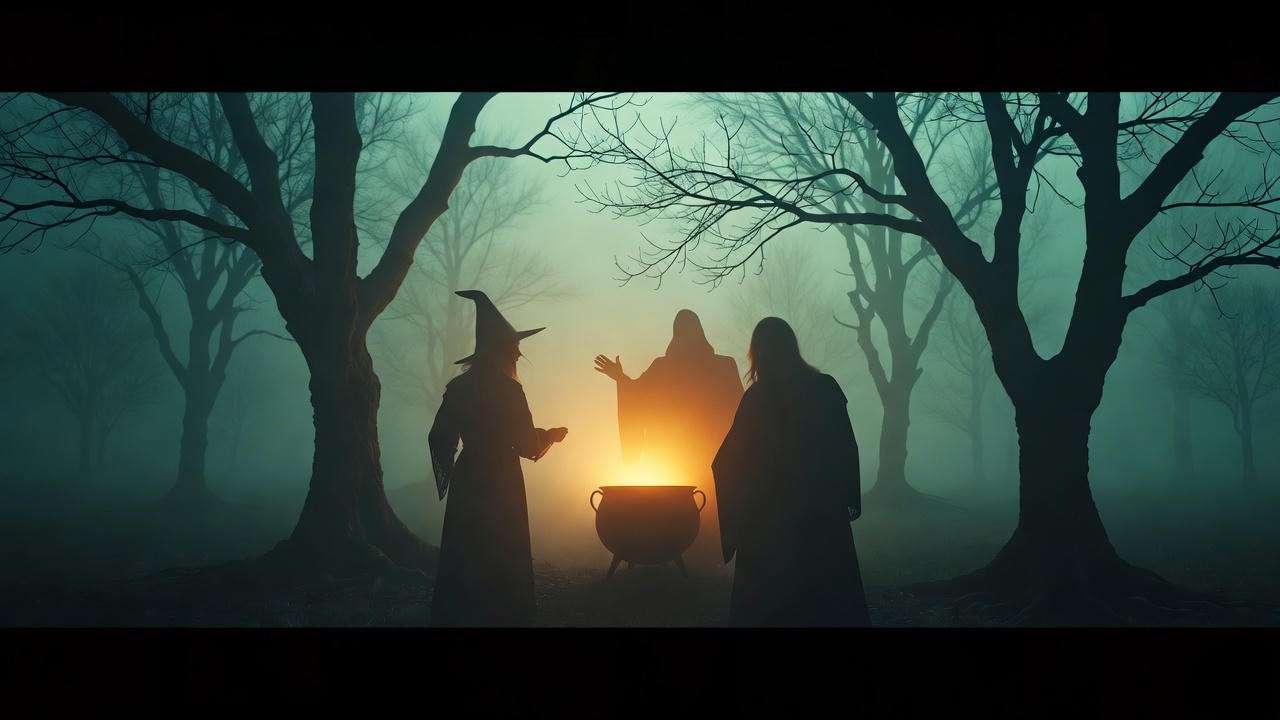
The witches, or Weird Sisters, are among the most enigmatic symbols in Macbeth. They embody fate, temptation, and moral ambiguity, raising questions about free will and destiny. Their cryptic prophecies in Act 1, Scene 3—“All hail, Macbeth, that shalt be king hereafter!”—ignite Macbeth’s ambition, but their riddling language leaves their true influence unclear. Are they agents of fate, controlling Macbeth’s path, or merely catalysts for his latent desires?
The witches also symbolize the supernatural disruption of the natural order. In Elizabethan England, King James I’s fascination with witchcraft (evidenced by his book Daemonologie) made the witches particularly resonant. Their presence suggests a world where moral boundaries are blurred, tempting characters to embrace evil.
Expert Insight: Scholar Stephen Greenblatt argues that the witches represent “the dangerous edge of human desire,” embodying the seductive pull of power. Their symbolic role challenges readers to consider whether Macbeth’s downfall is predestined or self-inflicted.
Sleep – Innocence and Vulnerability
Sleep, in Macbeth, symbolizes innocence, peace, and vulnerability, qualities that are shattered by the characters’ actions. After murdering Duncan, Macbeth famously declares, “Macbeth hath murdered sleep” (Act 2, Scene 2), lamenting the loss of restful slumber as a consequence of his guilt. Sleep represents a state of purity and tranquility, which Macbeth and Lady Macbeth forfeit as their consciences unravel. This symbol underscores the psychological toll of their crimes, as both characters are plagued by insomnia and nightmares.
For Lady Macbeth, sleep becomes a battleground for her guilt. Her sleepwalking scene, where she relives her crimes, reveals how even in sleep, she cannot escape her tormented conscience. The contrast between sleep’s natural restorative power and the characters’ inability to attain it highlights their moral and psychological descent.
Example: The murder of Duncan while he sleeps emphasizes his vulnerability, amplifying the heinousness of Macbeth’s act. Sleep, as a symbol, thus serves as a poignant reminder of the innocence destroyed by ambition.
Tip: When analyzing Macbeth, note how sleep imagery contrasts with the play’s darker symbols, like blood and darkness, to highlight the loss of moral purity.
The Dagger – Illusion vs. Reality
The “dagger of the mind” (Act 2, Scene 1) is one of Macbeth’s most iconic symbols, representing the blurred line between reality and hallucination. As Macbeth prepares to murder Duncan, he sees a vision of a dagger floating before him, its handle beckoning him toward the act. This apparition symbolizes his psychological turmoil, as his ambition and guilt distort his perception of reality. The dagger is both a literal tool of violence and a metaphor for the mental anguish that drives Macbeth to act.
The symbol also foreshadows Macbeth’s descent into paranoia, as his visions escalate (e.g., Banquo’s ghost). It raises questions about whether Macbeth’s actions are driven by external forces or his own fractured psyche, adding depth to the play’s exploration of reality versus illusion.
Example: The dagger soliloquy (“Is this a dagger which I see before me?”) is a pivotal moment where Macbeth questions his sanity, making the symbol a touchstone for his psychological unraveling.
Tip: To deepen your analysis, compare the dagger to other hallucinatory symbols, like Banquo’s ghost, to explore how Shakespeare uses visions to depict mental instability.
Nature and the Unnatural – Disorder in the World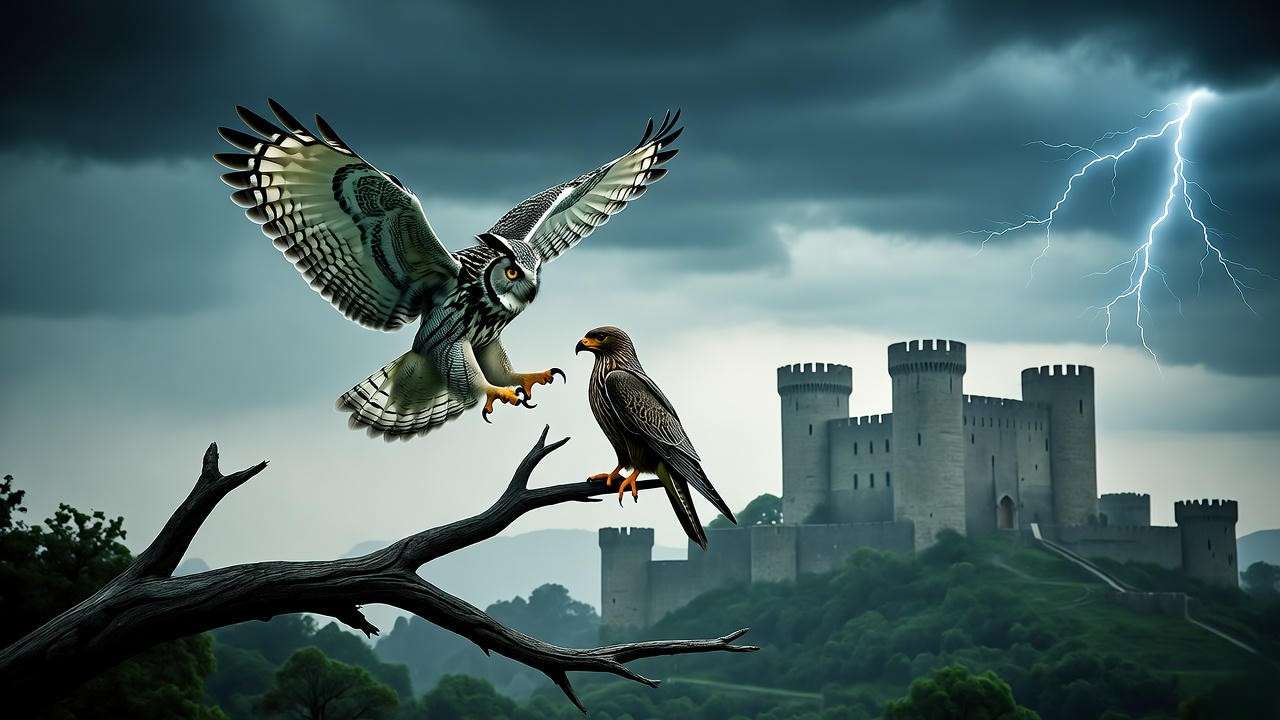
Unnatural events in Macbeth—such as horses eating each other or an owl killing a falcon—symbolize the disruption of the natural order caused by Macbeth’s actions. In Elizabethan cosmology, the Great Chain of Being dictated a hierarchical structure where kings, nature, and morality were interconnected. Macbeth’s regicide upsets this order, unleashing chaos in both the human and natural worlds.
For example, after Duncan’s murder, Lennox describes a night of “strange screams of death” and unnatural phenomena (Act 2, Scene 3). These events reflect the cosmic consequences of Macbeth’s ambition, signaling that his actions have ripple effects beyond the human realm. The restoration of order with Malcolm’s ascension at the play’s end reinforces the importance of this symbolic framework.
Example: The storm that rages after Duncan’s death symbolizes nature’s revolt against Macbeth’s unnatural act, mirroring the moral chaos he has unleashed.
Expert Insight: Scholar Marjorie Garber notes that these unnatural events align with Elizabethan fears of divine retribution, making them powerful symbols for contemporary audiences. Modern readers can interpret them as metaphors for the consequences of defying moral boundaries.
How Symbols Enhance Key Themes in Macbeth
Ambition and Its Consequences
The symbols in Macbeth amplify the destructive power of unchecked ambition. Blood, for instance, evolves from a symbol of Macbeth’s triumph in battle (Act 1, Scene 2) to a marker of his moral corruption after Duncan’s murder. The dagger, too, embodies the seductive pull of ambition, as it lures Macbeth toward regicide while foreshadowing his downfall. These symbols underscore how ambition, when divorced from ethics, leads to self-destruction.
Example: Macbeth’s initial ambition is sparked by the witches’ prophecy, but the blood on his hands becomes a permanent reminder of the cost of his actions, illustrating the theme’s tragic arc.
Guilt and Psychological Turmoil
Guilt is a central theme in Macbeth, and symbols like blood and sleep vividly depict its psychological toll. Blood transforms from a sign of valor to a haunting emblem of remorse, as seen in Lady Macbeth’s desperate attempts to wash it away. Similarly, the loss of sleep reflects the characters’ inability to find peace, with Macbeth’s insomnia and Lady Macbeth’s sleepwalking serving as external manifestations of their inner torment.
Expert Insight: A Freudian reading of Macbeth might interpret blood and sleep as projections of the characters’ subconscious guilt, aligning with modern psychological interpretations of the play. This perspective adds depth to the symbols’ role in conveying emotional complexity.
Fate vs. Free Will
The witches, as symbols of fate, anchor the play’s exploration of whether Macbeth’s actions are predestined or chosen. Their ambiguous prophecies suggest a predetermined path, yet Macbeth’s decisions to act on them imply free will. This tension is central to the play’s philosophical depth, and the witches’ symbolic role invites readers to grapple with questions of agency.
Example: The prophecy that “no man born of a woman” will harm Macbeth (Act 4, Scene 1) seems to guarantee his safety, but Macduff’s revelation about his birth subverts this, highlighting the deceptive nature of fate.
Expert Insight: Critic Harold Bloom argues that the witches symbolize “the equivocal nature of human destiny,” challenging readers to consider whether Macbeth’s tragedy stems from external forces or his own choices.
Order vs. Chaos
Symbols like darkness and unnatural events reflect the chaos unleashed by Macbeth’s disruption of the natural order. The murder of Duncan, a divinely appointed king, triggers a cascade of disorder, symbolized by stormy weather and cannibalistic horses. The play’s resolution, with Malcolm’s restoration, reaffirms the Elizabethan belief in a harmonious order, making these symbols critical to the narrative’s moral framework.
Example: The owl killing a falcon, an unnatural act reported after Duncan’s death, symbolizes the inversion of hierarchy caused by Macbeth’s ambition, reinforcing the theme of chaos.
Symbolism in Performance: Bringing Macbeth’s Symbols to Life
Symbolism in Stage and Film Adaptations
Directors use visual and auditory cues to bring Macbeth’s symbols to life, enhancing their impact for modern audiences. In Roman Polanski’s 1971 film adaptation, blood is a visceral presence, with crimson stains dominating key scenes to emphasize guilt and violence. Similarly, modern stage productions often use red lighting or fog to evoke darkness, creating an oppressive atmosphere that mirrors the play’s themes.
Example: In the 2015 film starring Michael Fassbender, the witches are depicted in a stark, misty landscape, their ethereal presence amplifying their symbolic role as agents of fate. Sound design, such as eerie chants, further underscores their supernatural influence.
Tip: When watching a performance, pay attention to how directors use props, lighting, or sound to highlight symbols like the dagger or blood. These choices can reveal new interpretations of the play.
Tips for Students and Educators
For students analyzing Macbeth, focus on how symbols are staged. Create a chart tracking the appearance of blood, darkness, or sleep across scenes, noting how actors’ delivery or set design emphasizes their meaning. Educators can engage students with activities like designing a symbolic prop (e.g., a blood-stained crown) or comparing how different productions interpret the witches.
Example Activity: Divide students into groups and assign each a symbol to analyze in a specific scene. Have them present how the symbol enhances the scene’s themes, using quotes and performance observations.
Expert Insight: Theater critic Michael Billington has praised productions that use minimalistic staging to emphasize Macbeth’s symbols, arguing that simplicity allows the imagery to resonate more powerfully with audiences.
Common Misinterpretations of Macbeth’s Symbols
Oversimplifying Symbols
A common mistake is reducing symbols to one-dimensional meanings. For example, viewing blood solely as a symbol of violence ignores its role in depicting guilt and psychological torment. To avoid this, consider the context of each symbol’s appearance and its evolution throughout the play.
Tip: When writing about Macbeth, explore multiple layers of a symbol’s meaning. For instance, blood represents not only murder but also legacy (e.g., Banquo’s line of kings), adding complexity to your analysis.
Ignoring Historical Context
Elizabethan audiences interpreted symbols differently than modern readers. The witches, for instance, were seen as demonic forces, reflecting widespread fears of witchcraft. Similarly, unnatural events like storms were understood as divine warnings of moral disorder. Understanding this context enriches modern interpretations and prevents misreadings.
Example: The witches’ cauldron scene (Act 4, Scene 1) would have evoked visceral fear for King James I’s audience, given his belief in witchcraft’s reality. Modern readers might see it as purely symbolic, missing its historical weight.
Applying Symbolism to Deepen Your Study of Macbeth
For Students
Understanding the symbols in Macbeth can elevate your essays and analyses, helping you craft compelling arguments. Focus on a single symbol, like blood or the witches, and trace its development across the play. For example, a strong thesis might be: “In Macbeth, blood evolves from a symbol of valor to one of guilt, reflecting the protagonists’ moral descent.” Support your argument with key quotes, such as Macbeth’s “Will all great Neptune’s ocean wash this blood / Clean from my hand?” (Act 2, Scene 2), and analyze how the symbol shapes the play’s themes.
Example: When writing about the dagger, discuss how it symbolizes Macbeth’s psychological conflict, using the soliloquy “Is this a dagger which I see before me?” (Act 2, Scene 1) to explore his wavering sanity. Connect this to the broader theme of illusion versus reality, citing additional examples like Banquo’s ghost.
Tip: Structure your essay with clear sections: an introduction defining the symbol, body paragraphs analyzing its appearances, and a conclusion tying it to the play’s themes. This approach ensures a focused, insightful analysis.
For Educators
Educators can use Macbeth’s symbols to engage students and foster critical thinking. Create interactive activities, such as group discussions where students debate whether the witches symbolize fate or temptation. Alternatively, assign a creative project where students design a symbolic prop, like a blood-stained cloak, and explain its significance in a presentation. These activities make the play accessible and encourage students to connect symbols to themes like ambition or guilt.
Example Activity: Have students stage a short scene, such as the banquet scene with Banquo’s ghost, and decide how to visually represent blood or darkness. Discuss how their choices enhance the scene’s emotional impact.
Tip: Encourage students to compare Macbeth’s symbols to those in other Shakespearean plays (e.g., the storm in King Lear) to deepen their understanding of his symbolic techniques.
For General Readers
For casual readers, exploring the symbols in Macbeth can transform your experience of the play. Re-read key scenes, like the witches’ prophecy in Act 1, Scene 3, or Lady Macbeth’s sleepwalking scene in Act 5, Scene 1, with a focus on recurring images. Annotate passages where blood, darkness, or sleep appear, noting how they enhance the play’s atmosphere and themes. This approach reveals new layers of meaning, making Macbeth a richer, more rewarding read.
Tip: Watch a performance of Macbeth (e.g., the 2015 film with Michael Fassbender or a local theater production) and observe how directors use lighting, sound, or props to emphasize symbols. This can inspire fresh interpretations of the text.
FAQs About Symbols in Macbeth
What is the most important symbol in Macbeth?
Blood is often considered the most significant symbol in Macbeth due to its pervasive presence and multifaceted meanings. It represents violence, as seen in Duncan’s murder, but also guilt, as evident in Lady Macbeth’s “Out, damned spot!” (Act 5, Scene 1). Its evolution from a mark of heroism to a stain of remorse mirrors the protagonists’ tragic arc, making it central to the play’s themes.
How do the witches function as symbols?
The witches symbolize fate, temptation, and moral ambiguity. Their prophecies spark Macbeth’s ambition, but their cryptic language leaves their influence open to interpretation. They embody the Elizabethan fear of the supernatural while raising timeless questions about free will versus destiny, as seen in their paradoxical predictions like “No man born of a woman” (Act 4, Scene 1).
How can I identify symbols when reading Macbeth?
To identify symbols, look for recurring images or motifs that carry deeper meaning. For example, track mentions of blood, darkness, or sleep, and note their context. Ask: How does this image connect to the characters’ emotions or the play’s themes? Use a highlighter or notebook to mark key passages, such as Macbeth’s dagger soliloquy, to uncover patterns.
Do symbols in Macbeth change meaning over time?
While the core meanings of Macbeth’s symbols remain consistent, their interpretation can shift based on cultural context. For Elizabethan audiences, the witches symbolized demonic forces, reflecting fears of witchcraft. Modern readers might view them as metaphors for psychological temptation. By grounding your analysis in the text and historical context, you can appreciate both perspectives.
The symbols in Macbeth—blood, darkness, the witches, sleep, the dagger, and unnatural events—are the heartbeat of Shakespeare’s tragedy, illuminating its themes of ambition, guilt, fate, and chaos. Blood stains the hands and consciences of Macbeth and Lady Macbeth, darkness cloaks their moral decay, and the witches blur the line between destiny and choice. Sleep and the dagger reveal their psychological unraveling, while unnatural events signal the cosmic consequences of their actions. Together, these symbols create a tapestry of meaning that elevates Macbeth from a story of murder to a profound exploration of human nature.
To deepen your understanding, re-read Macbeth with a focus on these symbols, annotate key passages, or watch a performance to see how directors bring them to life. Whether you’re a student crafting an essay, an educator designing a lesson, or a reader seeking insight, these symbols offer a window into Shakespeare’s genius. Share your favorite Macbeth symbol or interpretation in the comments or on X to join a community of Shakespeare enthusiasts exploring this timeless play.
Call to Action: Dive back into Macbeth—read, watch, or discuss it—and let its symbols unlock new layers of meaning. How do blood, darkness, or the witches resonate with you? Your insights could spark a deeper appreciation for Shakespeare’s masterpiece.