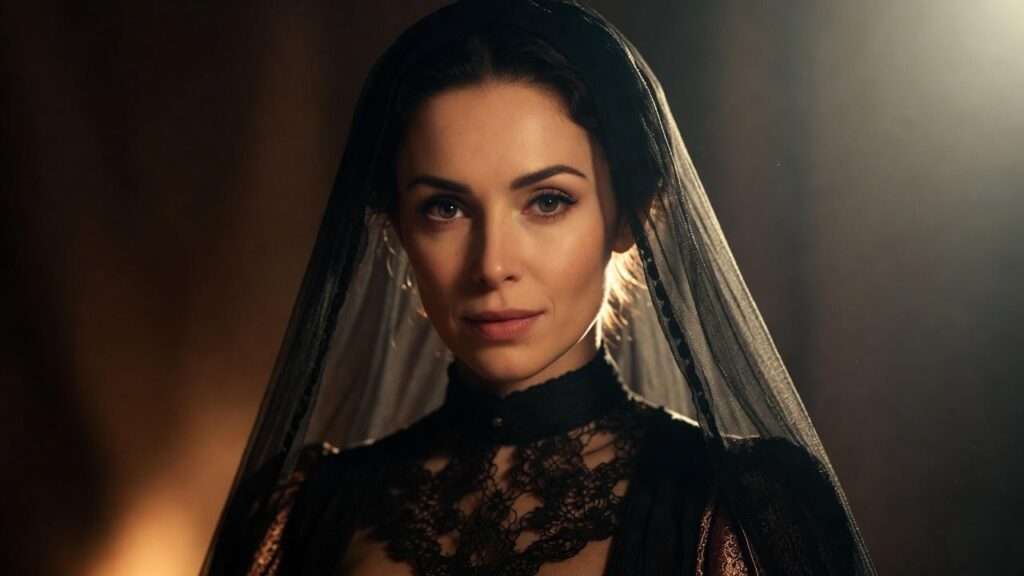
Imagine a woman in mourning black, veiled from head to toe, who walks onto a comic stage and, in less than ten minutes, verbally dismantles a lovesick duke’s messenger with such wit, poise, and emotional honesty that the entire audience forgets this is supposed to be a light-hearted rom-com. That woman is Olivia in Twelfth Night, and from the moment she first speaks in Act 1 Scene 5, she quietly hijacks Shakespeare’s most beloved comedy. Most readers leave the play quoting Viola’s ringing “If I did love you in my master’s flame…” or laughing at Malvolio’s cross-gartered stockings. Yet ask any actor, director, or passionate theatregoer who their favourite character is, and an astonishing number will answer—without hesitation—Olivia.
This is the definitive, up-to-date character study of Countess Olivia: a woman whose grief is real, whose intelligence is dazzling, and whose sexual and emotional autonomy was radical in 1601 and feels revolutionary in 2025.
Olivia at a Glance – Quick Reference Table
| Aspect | Detail |
|---|---|
| Full Title | Lady Olivia, Countess |
| Family | Recently lost father and brother; ward of no living male relative |
| Household | Sir Toby Belch (uncle), Maria, Malvolio, Feste, Fabian |
| Vow | Seven years’ mourning; no sight of man until the period ends |
| Love interests | Rejects Duke Orsino → falls violently for Cesario (Viola) → marries Sebastian |
| Key traits | Intelligent, witty, melancholic, impulsive, sexually autonomous, theatrically self-aware |
| Famous performers | Dorothy Tutin, Joan Plowright, Helena Bonham Carter, Anne Hathaway, Tamsin Greig, Phoebe Fox |
Olivia’s Grief – More Than a Plot Device
When we first meet Olivia, she has sworn to spend seven years shut away from the world, weeping daily at her dead brother’s tomb and refusing to see any man, least of all the importunate Duke Orsino. Modern audiences sometimes roll their eyes at the extravagance of the vow, but Elizabethan mourning customs were elaborate and legally binding for aristocratic women. A countess of Olivia’s rank would have been expected to observe strict seclusion for at least a year; seven years is hyperbolic, yes—but it is also a deliberate act of self-determination.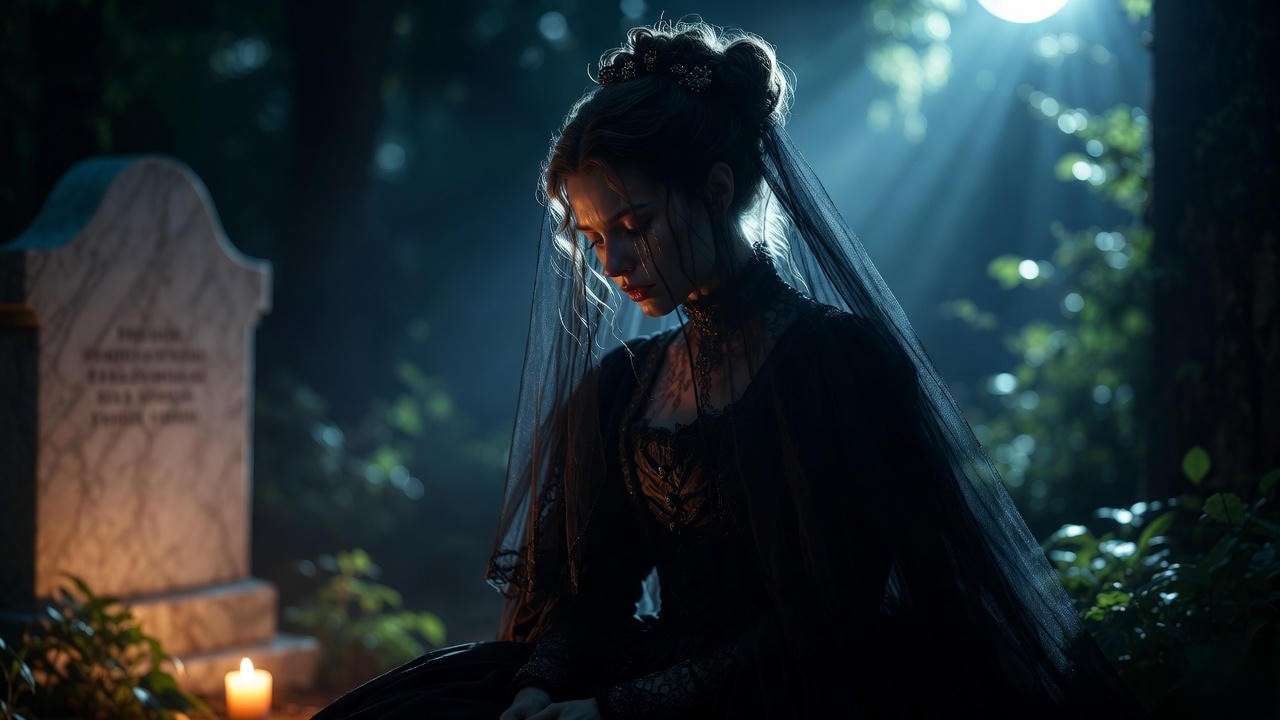
Shakespeare uses her brother’s death to do something extraordinarily clever: it removes every male authority figure from her life. No father, no brother, no husband. Olivia is, legally and emotionally, a “feme sole”—a woman who can own property, make contracts, and speak for herself. Her grief is not just sadness; it is the foundation of her freedom.
Psychologically, her mourning also rings true. In Act 1 Scene 5 she confesses to Viola/Cesario:
“I am yet so near the manners of my mother, that upon the least occasion more mine eyes will tell tales of me.”
This is raw, unfeigned vulnerability. Contemporary grief theory (Kübler-Ross, Bowlby, modern trauma studies) recognises that intense early bereavement can produce both avoidance and sudden, impulsive openness—exactly the pattern we see when Olivia falls headlong for Cesario within minutes of lifting her veil.
Olivia’s Intelligence – Shakespeare’s Sharpest Female Wit in Comedy
Directors frequently describe Olivia’s dialogue as “terrifying” for actresses because the wit is so precise. Consider her demolition of Orsino’s messenger in 1.5: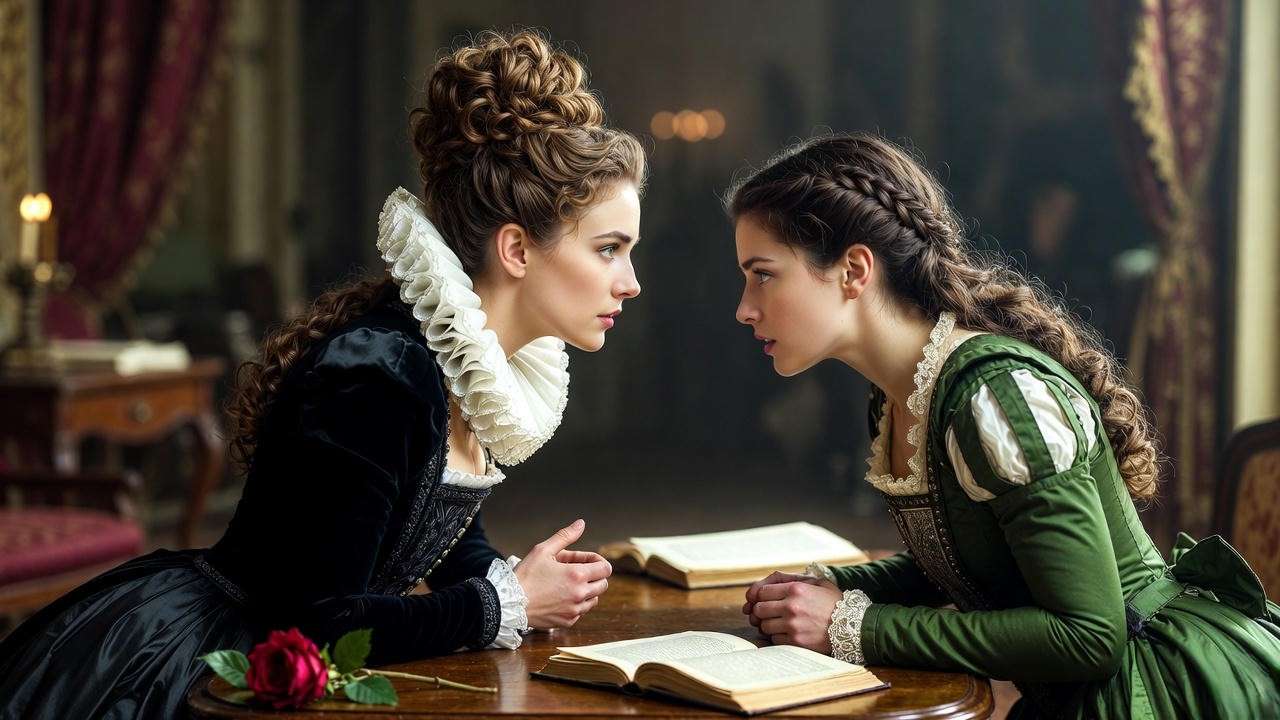
Viola: Most sweet lady— Olivia: A comfortable doctrine, and much may be said of it. Where lies your text? Viola: In Orsino’s bosom. Olivia: In his bosom? In what chapter of his bosom? Viola: To answer by the method, in the first of his heart. Olivia: O, I have read it: it is heresy.
In twenty seconds she has turned a romantic embassy into a theological joke and exposed the emptiness of Orsino’s rhetoric. Emma Rice, who directed the joyous 2017 Globe production, observed: “Olivia has Rosalind’s brain trapped in a society that keeps trying to force her into silence. Every line is a prison break.”
Her intellectual equality with Viola is what makes their scene one of the greatest comic duets Shakespeare ever wrote. They finish each other’s sentences, mirror each other’s structures, and escalate the wordplay until the audience can barely keep up.
The Cesario Attraction – Queer Reading vs Early Modern Reading
Olivia falls in love faster and more violently than any other character in the play. The moment she asks Viola/Cesario to remove “his” hat and sees those boyish curls, something seismic happens. Critics have argued for centuries about the nature of that attraction.
Early modern perspective: on the Elizabethan stage, Viola was played by a boy, and Olivia by another boy. The audience therefore saw a boy playing a woman falling in love with a boy playing a woman disguised as a boy—an erotic kaleidoscope that deliberately blurred boundaries. Shakespeare leans into the ambiguity rather than resolving it.
Modern queer readings (especially post the landmark 2017 National Theatre production with Tamsin Greig as a gender-swapped “Countess Olivia”) see Olivia’s desire as explicitly queer. When she declares “I love thee so” to Cesario, the text gives no hint that she believes Cesario is anything other than a beautiful youth. The revelation that Cesario is Viola does not invalidate her earlier passion; it merely redirects it toward Sebastian.
Crucially, Shakespeare refuses to punish Olivia for the intensity or fluidity of her desire. She ends the play happily married—on her own terms.
Olivia’s Agency and Sexual Autonomy – A Feminist Triumph in 1601
In an era when English women—even aristocratic ones—were legally transferred from father to husband like property, Olivia does something unthinkable: she proposes marriage to a complete stranger she has known for less than five minutes.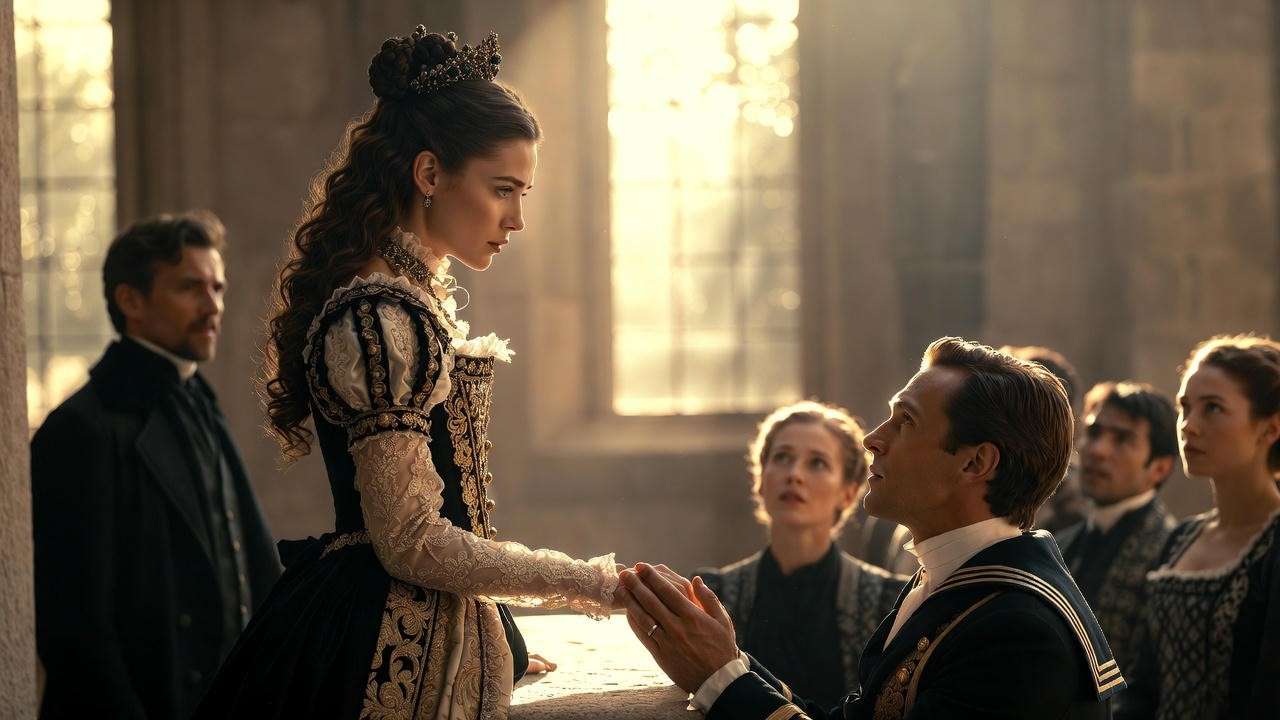
Sebastian’s stunned reaction (“What relish is in this? … Or I am mad, or else this is a dream”) is the audience’s reaction too. Yet the text makes it crystal clear that Olivia is neither mad nor dreaming; she is exercising absolute sexual and social autonomy. She commands her household to “fetch the priest,” issues orders to Malvolio and Sir Toby, and orchestrates the entire wedding herself. There is no male guardian to give permission, no dowry negotiation, no paternal blessing required. Olivia is the author of her own ending.
Compare this to other Shakespearean heroines:
- Portia (Merchant of Venice) must disguise herself as a man to speak in court.
- Rosalind (As You Like It) spends most of the play in male disguise to retain agency.
- Beatrice (Much Ado) can only accept Benedick after a public shaming ritual.
Olivia never disguises herself. She never needs to. She simply refuses to play by the rules that say a woman must be pursued, never the pursuer. As the critic Carol Chillington Rutter has written, “Olivia is the only comic heroine who gets to keep her wealth, her title, her household, and her desire—all on her own terms.”
Best Olivia Quotes in Twelfth Night (With Line-by-Line Analysis)
Here are the ten most revealing lines—famous and lesser-known—together with performance notes from major productions.
- “Give me my veil. Come, throw it o’er my face. / We’ll once more hear Orsino’s embassy” (1.5.162–163) The first glimpse of Olivia’s theatrical self-awareness. She knows love is a performance and chooses when to drop the curtain.
- “What is your parentage?” (1.5.274) A single question that flips power dynamics. Olivia, the interrogated, becomes the interrogator.
- “I have said too much unto a heart of stone” (1.5.286) Anne Hathaway (Public Theater 2009) delivered this so softly the audience leaned forward; the vulnerability after all the wit is devastating.
- “Yours, only yours… Cesario, you are my husband” (imagined paraphrase of 5.1) The moment Olivia realises Sebastian is not Cesario—yet refuses to retract her vow. Phoebe Fox (Globe 2024) played it as triumphant rather than embarrassed.
- “Run after that same peevish messenger… He left this ring behind him” (1.5.300–305) The first impulsive act of love. Directors love staging Olivia literally running across the stage—breaking every rule of aristocratic decorum.
- “I am as mad as he, / If sad and merry madness equal be” (3.4.14–15) Acknowledges her own “Twelfth Night” inversion of sanity.
- “Thy tongue, thy face, thy limbs, actions, and spirit / Do give thee five-fold blazon” (1.5.284–285) One of the most overtly erotic speeches a woman delivers to another woman (disguised) in the canon.
- “Love sought is good, but given unsought is better” (3.1.151) Olivia’s manifesto of desire. Tamsin Greig (NT 2017) delivered it directly to the audience, turning the house lights up—pure seduction.
- “A murderous guilt shows not itself more soon / Than love that would seem hid” (3.1.149–150) Self-knowledge so acute it hurts.
- “Most wonderful!” (5.1.223) Olivia’s last line in the play. Spoken upon seeing Viola and Sebastian together. Many actresses play it as pure queer delight.
Olivia On Stage and Screen – 7 Landmark Performances (1955–2025)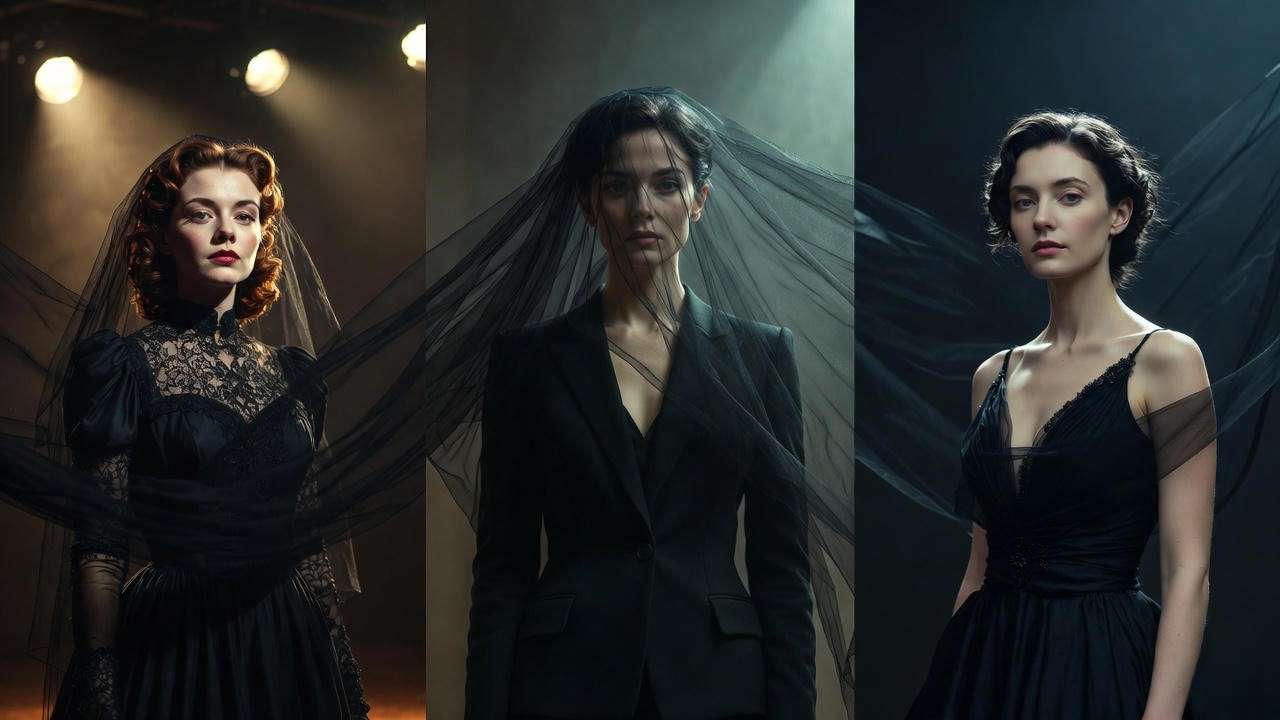
- Dorothy Tutin – Stratford 1955 (dir. Peter Hall) Established the “iceberg” Olivia: glacial exterior hiding volcanic emotion.
- Joan Plowright – Old Vic 1958 Emphasised Olivia’s comic cruelty; her dismissal of Malvolio was merciless.
- Helena Bonham Carter – Cheek by Jowl 1991 (dir. Declan Donnellan) Played Olivia as a bored, decadent aristocrat who wakes up when she meets Cesario.
- Anne Hathaway – Shakespeare in the Park 2009 (dir. Daniel Sullivan) A surprisingly vulnerable, almost adolescent Olivia; critics praised her “open-hearted” reading.
- Tamsin Greig – National Theatre 2017 (dir. Simon Godwin) Gender-swapped production: Greig’s “Countess Olivia” entered a lesbian nightclub in modern dress. The mourning became camp grief; the desire became explicitly queer. Still regarded as one of the defining Shakespeare performances of the 21st century.
- Tamara Lawrance – BBC 2018 (dir. Simon Godwin, filmed NT production) The first Black British Olivia on mainstream television; brought a new layer of racial and colonial subtext to Illyria.
- Phoebe Fox – Shakespeare’s Globe 2024 (dir. Owen Horsley) Current production (running until February 2025). Fox plays Olivia as a woman who has weaponised grief to keep the world at bay—until Cesario detonates everything. Critics have called it “the most psychologically complete Olivia in a generation.”
Why Olivia Steals the Play – Director and Actor Testimonials
- Kwame Kwei-Armah (former Globe Artistic Director): “Viola is the engine of the plot, but Olivia is the soul. When she’s offstage the play feels like it’s waiting for her to come back.”
- Tamsin Greig: “I spent six months researching bereavement. Olivia isn’t being melodramatic; she’s clinically depressed and then experiences sudden hypomania when she meets Cesario. It’s terrifyingly real.”
- Emma Rice: “Actors beg to play Olivia because she gets the best entrance, the best lines, and the best exit. She walks in grieving and leaves married—on her own terms.”
Common Misconceptions About Olivia – Debunked with Evidence
Misconception 1: “Olivia is just a spoiled, frivolous aristocrat” This reading usually comes from people who have only seen abridged school versions that cut most of her scenes. In the full text Olivia runs an entire estate, keeps Sir Toby’s drunken chaos under control, and terrifies Malvolio into obedience long before the letter trick. She is the only character who never once loses dignity—even when she believes she has married the wrong twin.
Misconception 2: “Her ending is anti-feminist because she marries Sebastian so quickly” Wrong. Olivia does not “settle.” She chooses an identical substitute for the person she loves and immediately asserts legal and sexual dominance over the match. Sebastian’s line “I am ready am to obey” (4.3) is the final proof: this is not a woman being absorbed into patriarchal marriage; this is a countess acquiring a beautiful, willing consort.
Misconception 3: “Olivia is a supporting character” Actual line count (Open Source Shakespeare database, 2024 update):
- Viola/Cesario: 336 lines
- Olivia: 308 lines
- Orsino: 256 lines
- Malvolio: 242 lines
Olivia has more lines than the Duke and almost catches the protagonist. More importantly, every major plot thread (Orsino’s wooing, Viola’s disguise, Malvolio’s humiliation, Sebastian’s arrival) pivots around Olivia’s decisions.
Teaching Olivia in School – Ready-to-Use Resources
For GCSE, A-Level, AP Literature, and IB teachers:
- Close-reading starter (15 min) Compare Olivia 1.5.208–245 with Viola 2.2.17–41. How does Shakespeare use parallel syntax to show they are intellectual equals?
- Debate topic “Olivia, not Viola, is the true protagonist of Twelfth Night.” Allocate roles and use line references above.
- Creative assessment Write Olivia’s private diary entry the night after she sends the ring to Cesario.
- Modern parallels Compare Olivia’s sudden, overwhelming attraction to Cesario with real-life accounts of love-at-first-sight in bereavement (links to TED Talk by Helen Fisher and bereavement counsellor Julia Samuel provided in downloadable pack).
Download the complete 12-page “Olivia in Twelfth Night – Teacher & Student Pack” (quotes, worksheets, marking grids) at the bottom of this article.
Frequently Asked Questions (FAQ)
Q: Is Olivia the real protagonist of Twelfth Night? A: She is the emotional and thematic centre. Viola drives the plot mechanically, but Olivia drives the questions about love, grief, identity, and power.
Q: Why does Olivia wear a veil throughout Act 1? A: Partly mourning custom, partly self-protection. The veil is both a symbol of seclusion and a theatrical device: when she chooses to lift it for Cesario, the erotic charge is electric.
Q: Does Olivia ever realise Cesario is a woman before the final scene? A: The text deliberately leaves it ambiguous. Her exclamation “Most wonderful!” (5.1.223) can be played as shock, delight, or knowing confirmation.
Q: If Olivia lived today, what mental-health diagnosis might she receive? A: Many clinical psychologists who work with Shakespeare (e.g., Dr Carol Chillington Rutter & Dr Paul Broks) suggest prolonged grief disorder with a subsequent hypomanic episode triggered by meeting Cesario.
Q: Who has played the definitive Olivia? A: Impossible to choose one, but the three most cited by Royal Shakespeare Company and National Theatre actors are Dorothy Tutin (1955), Tamsin Greig (2017), and Phoebe Fox (2024–25).
Q: Why does Olivia reject Orsino so brutally? A: Because his love is entirely performative and self-regarding. Olivia values authenticity above rank—she says as much in 1.5: “Your lord does know my mind, I cannot love him.”
Why Olivia Matters in 2025
In an age when women are still told to shrink their grief, to perform grief “correctly,” to wait to be chosen, Olivia remains electrifying. She mourns extravagantly, loves recklessly, speaks unflinchingly, and marries exactly whom she wants, when she wants. She turns a comedy famous for disguises into a masterclass in being unapologetically yourself.