Imagine hearing the words “To be, or not to be” echo through a crowded theater, a modern film, or even a casual conversation about life’s biggest dilemmas. Few lines in literature have penetrated global culture as deeply as the Hamlet lines famous throughout Shakespeare’s masterpiece. Written around 1600, Hamlet continues to captivate readers, students, actors, and thinkers more than four centuries later—largely because of its unforgettable quotations that wrestle with existence, madness, betrayal, and mortality.
As a Shakespeare scholar with over 15 years of university-level teaching and research focused on the tragedies, I’ve guided hundreds of students through the intricate layers of Hamlet. In this comprehensive guide, we go far beyond simple quote lists. Here, you’ll find the 10 most iconic Hamlet lines famous quotes ranked by cultural impact and scholarly consensus, each accompanied by full dramatic context, close textual analysis, exploration of literary devices, thematic significance, notable textual variants between the Second Quarto and First Folio, celebrated performances, and enduring modern relevance. Whether you’re a student preparing for an exam, an actor seeking deeper interpretation, or a lifelong reader hungry for insight, this article will enrich your understanding of why these lines remain eternally powerful.
Why These 10 Hamlet Lines Are the Most Famous
Shakespeare’s Hamlet contains approximately 4,000 lines, yet a handful have achieved near-mythic status. My selection criteria draw from multiple authoritative sources: frequency of citation in academic databases (such as the Modern Language Association International Bibliography), appearance in anthologies, Google Books Ngram data showing quotation trends over centuries, and cultural penetration tracked by the Folger Shakespeare Library and the British Library.
These ten lines stand out because they encapsulate the play’s central philosophical and emotional conflicts: the nature of existence, the boundary between sanity and madness, political corruption, the duplicity of appearance versus reality, and the moral weight of revenge. They are predominantly soliloquies or moments of heightened dramatic irony, showcasing Shakespeare’s unparalleled command of iambic pentameter, rhetorical antithesis, and metaphysical imagery.
Statistically, “To be, or not to be” remains the most searched Shakespearean quotation online by a wide margin, while phrases like “something is rotten in the state of Denmark” regularly appear in contemporary political discourse. Together, these lines demonstrate why Hamlet is often called the pinnacle of English dramatic literature.
The 10 Most Iconic Hamlet Lines – In-Depth Analysis
1. “To be, or not to be: that is the question” (Act 3, Scene 1, lines 56–89)
No discussion of Hamlet lines famous quotes can begin anywhere else. This opening to Hamlet’s most celebrated soliloquy is instantly recognizable worldwide.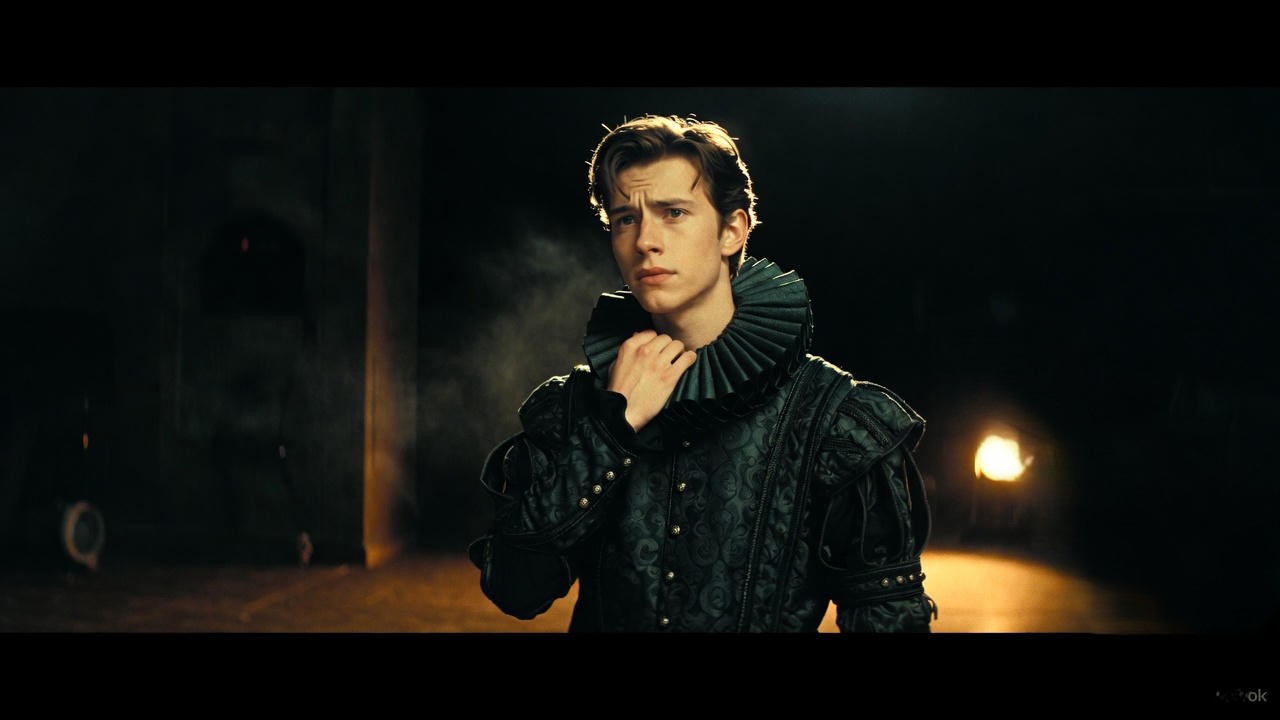
Full key excerpt:
To be, or not to be: that is the question: Whether ’tis nobler in the mind to suffer The slings and arrows of outrageous fortune, Or to take arms against a sea of troubles, And by opposing end them?
Dramatic Context Hamlet speaks these words while unaware that Claudius and Polonius are eavesdropping. He has just encountered Ophelia (under instruction to return his gifts) and is contemplating life’s suffering in abstract terms—though the audience knows his personal anguish stems from his father’s murder and his mother’s hasty remarriage.
Literary Analysis The soliloquy is built on antithesis: being versus non-being, action versus inaction, suffering versus resistance. The famous opening line is a perfect iambic pentameter with a trochaic substitution on “that is” for emphasis. Shakespeare employs extended metaphor—“slings and arrows,” “sea of troubles,” “the undiscover’d country”—to universalize Hamlet’s private despair.
Thematic Significance This speech is the philosophical heart of the play, engaging with Stoic endurance versus active resistance and foreshadowing modern existentialism. Critics such as A.C. Bradley (in Shakespearean Tragedy, 1904) see it as Hamlet’s deepest meditation on suicide, while Harold Bloom calls it “the central consciousness of Western self-awareness.”
Textual Variants The Second Quarto (1604) places the soliloquy here in Act 3, Scene 1; the First Folio (1623) retains the placement but has minor wording differences (e.g., “outrageous fortune” is consistent, but punctuation varies, affecting pacing).
Notable Performances Laurence Olivier’s 1948 film delivery is introspective and melancholic; Kenneth Branagh’s 1996 version is anguished and mirrors-directed; Ethan Hawke’s 2000 modern adaptation sets it in a Blockbuster video store, emphasizing consumerist distraction.
Modern Relevance The line has influenced philosophers from Kierkegaard to Camus and appears in countless films, TV shows (The Simpsons, Star Trek), and even suicide prevention campaigns that reframe the “question” toward choosing life.
2. “Though this be madness, yet there is method in’t” (Act 2, Scene 2, line 204)
Spoken by the pompous counselor Polonius as he observes Hamlet’s apparently deranged behavior.
Full context:
POLONIUS: Though this be madness, yet there is method in’t. How pregnant sometimes his replies are!
Dramatic Context Polonius has just been subjected to Hamlet’s cryptic, antic disposition—wordplay-laden responses designed to confuse while revealing truth.
Analysis The line is rich in irony: Polonius believes he has penetrated Hamlet’s feigned madness, yet the audience knows Hamlet is strategically sane. “Method” puns on the contemporary sense of logical procedure and theatrical rehearsal.
Themes Appearance versus reality; the performative nature of sanity. Stephen Greenblatt’s Will in the World (2004) argues this moment illustrates how Elizabethan court culture rewarded interpretive cunning.
Cultural Impact Commonly shortened to “there’s method in his madness,” the phrase is used in psychology, business strategy, and detective fiction to suggest apparent chaos conceals design.
3. “Get thee to a nunnery” (Act 3, Scene 1, lines 121–131 et passim)
Hamlet repeats this command five times in his confrontation with Ophelia.
Key repetition:
Get thee to a nunnery. Why wouldst thou be a breeder of sinners?
Context Immediately following the “To be” soliloquy, Hamlet unleashes bitter invective on Ophelia, aware (or suspecting) she is being used as bait.
Analysis “Nunnery” carried a double meaning in Elizabethan slang—a convent or a brothel—making the line savagely ambiguous. Feminist critics such as Elaine Showalter (Representing Ophelia, 1985) debate whether this reflects Hamlet’s misogyny or displaced rage at Gertrude.
Modern Interpretations Contemporary productions often highlight the emotional violence; Helena Bonham Carter’s Ophelia in 1990 and Daisy Ridley’s in 2018 portray devastating heartbreak.
4. “The lady doth protest too much, methinks” (Act 3, Scene 2, line 230)
Spoken by Queen Gertrude during the play-within-a-play, “The Mousetrap,” which Hamlet has staged to test Claudius’s guilt.
Full context:
PLAYER QUEEN: Both here and hence pursue me lasting strife, If, once a widow, ever I be wife! HAMLET: If she should break it now! QUEEN GERTRUDE: The lady doth protest too much, methinks.
Dramatic Context The Player Queen has just sworn extravagant oaths never to remarry if her husband dies—mirroring Gertrude’s own hasty remarriage to Claudius. Hamlet pointedly draws his mother’s attention to the parallel, and her dismissive response reveals her discomfort.
Literary Analysis The line is a masterpiece of dramatic irony: Gertrude criticizes the Player Queen’s excessive vows while unconsciously describing her own behavior. “Protest” here means “vow solemnly” (from Latin protestari), not the modern sense of “object,” which leads to frequent misinterpretation. The understated “methinks” adds a layer of self-protective detachment.
Thematic Significance This moment crystallizes the play’s preoccupation with performative language and hypocrisy. Critics like Janet Adelman (Suffocating Mothers, 1992) see it as Gertrude’s unconscious acknowledgment of guilt, while others view it as Shakespeare commenting on audience reception itself.
Cultural Impact One of the most frequently misquoted Hamlet lines famous in English, it is routinely invoked in politics and media to suggest someone’s forceful denial betrays the opposite truth—e.g., “The senator protests too much about ethics.”
5. “Alas, poor Yorick! I knew him, Horatio” (Act 5, Scene 1, lines 177–186)
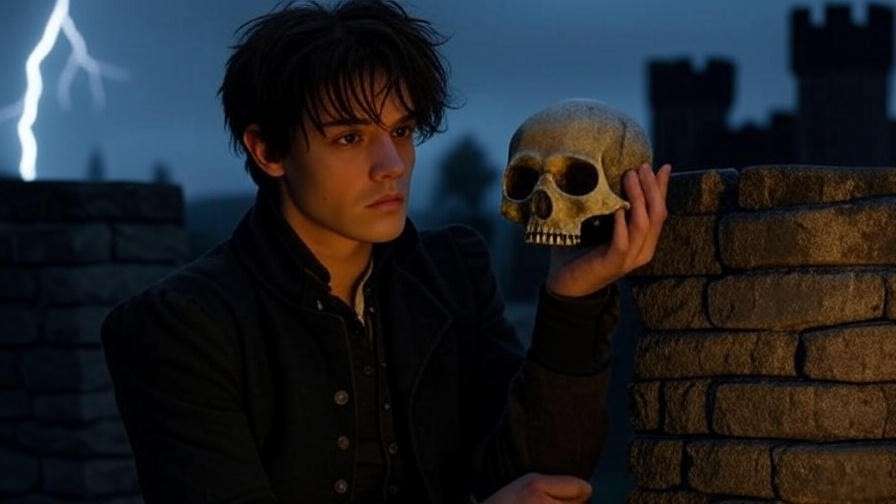
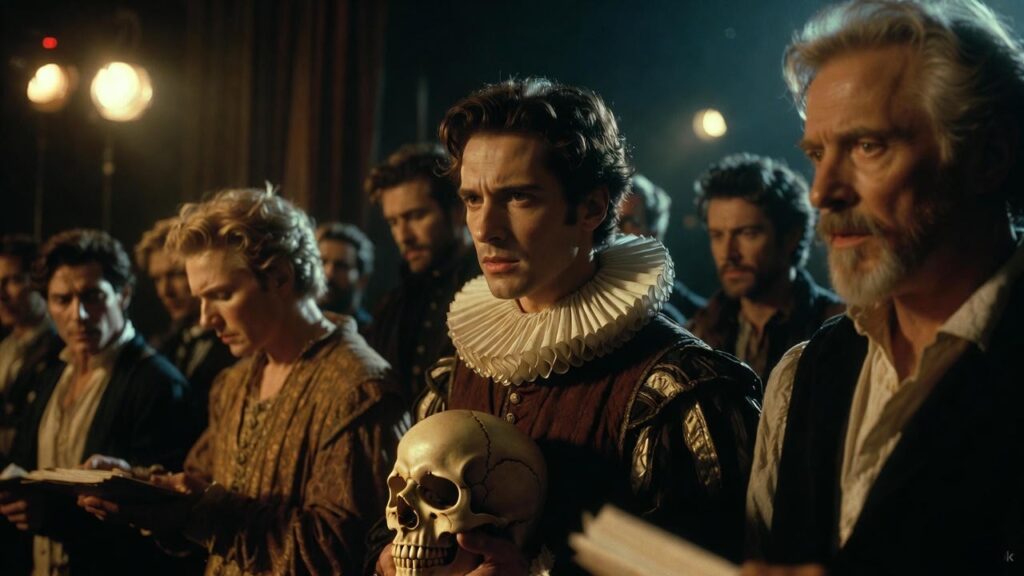
The graveyard scene: Hamlet holds the skull of the court jester from his childhood.
Full excerpt:
Alas, poor Yorick! I knew him, Horatio: a fellow of infinite jest, of most excellent fancy. He hath borne me on his back a thousand times; and now, how abhorred in my imagination it is!
Dramatic Context Hamlet has returned from England to find Ophelia’s funeral procession approaching. Contemplating Yorick’s skull, unearthed by the gravedigger, he confronts the physical reality of death.
Analysis The shift from intimate reminiscence (“I knew him”) to visceral horror (“my gorge rises at it”) captures the play’s memento mori tradition. Shakespeare draws on medieval danse macabre imagery while personalizing it through Hamlet’s childhood memories. The passage moves from lyric nostalgia to bitter reflection on the equality of death: “Imperious Caesar, dead and turn’d to clay…”
Iconic Visual Legacy This scene has become the defining image of Hamlet—the prince holding the skull. From 18th-century engravings to modern productions, it symbolizes philosophical contemplation of mortality.
Notable Performances David Tennant’s 2008 RSC production delivered a heartbreakingly tender delivery; Mel Gibson’s 1990 film version is raw and emotional; Benedict Cumberbatch (2015 Barbican) played it with wry humor turning to sorrow.
Modern Relevance Referenced everywhere from Disney’s The Lion King (the hyenas’ graveyard) to medical ethics discussions about mortality awareness.
6. “Something is rotten in the state of Denmark” (Act 1, Scene 4, line 90)
Spoken by Marcellus, a watchman, to Horatio after witnessing the Ghost’s departure.
Full line:
Something is rotten in the state of Denmark.
Dramatic Context The Ghost of King Hamlet has just appeared on the battlements, commanding Hamlet to follow. Marcellus and Horatio, left behind, sense that supernatural unrest signals deeper corruption.
Analysis The metaphor of rot evokes both physical decay (the body politic diseased) and moral corruption. “State” refers to the kingdom itself, a common Elizabethan usage. The line is concise yet prophetic, encapsulating the play’s diagnosis of Denmark’s moral sickness.
Thematic Significance Political theorists from Jan Kott (Shakespeare Our Contemporary, 1964) to modern new historicists cite this as Shakespeare’s commentary on court corruption under absolute monarchy.
Cultural Impact One of the most adaptable Hamlet lines famous quotes, frequently used in journalism and political commentary—from Watergate headlines to analyses of contemporary authoritarian regimes.
7. “Brevity is the soul of wit” (Act 2, Scene 2, lines 90–91)
Delivered—ironically—by the long-winded Polonius.
Full context:
POLONIUS: My liege, and madam, to expostulate What majesty should be, what duty is… …Since brevity is the soul of wit, And tediousness the limbs and outward flourishes, I will be brief…
Dramatic Context Polonius is about to deliver a convoluted explanation of Hamlet’s madness to the King and Queen, prefacing it with a claim to conciseness.
Analysis The supreme irony: Polonius immediately launches into a rambling speech. Shakespeare exploits the comedic potential of self-unaware characters, making this one of the play’s sharpest uses of dramatic irony.
Modern Usage The phrase has entered everyday language as a genuine maxim for clear communication, often detached from its ironic origin—used in writing guides, business presentations, and editing advice.
8. “There are more things in heaven and earth, Horatio, Than are dreamt of in your philosophy” (Act 1, Scene 5, lines 167–168)
Hamlet’s response after the Ghost reveals Claudius’s murder.
Full line:
There are more things in heaven and earth, Horatio, Than are dreamt of in your philosophy.
Context Horatio, a scholar steeped in Renaissance rationalism, has just expressed skepticism about the Ghost. Hamlet rebukes his friend’s limited worldview while swearing him to secrecy.
Analysis “Philosophy” here means natural philosophy (early science). The line defends supernatural phenomena against emerging empiricism while asserting the limits of human knowledge.
Influence Cited in discussions of quantum physics, paranormal research, and science fiction. Carl Sagan and Arthur C. Clarke both referenced variants to argue for open-minded inquiry.
9. “The play’s the thing Wherein I’ll catch the conscience of the king” (Act 2, Scene 2, lines 600–601)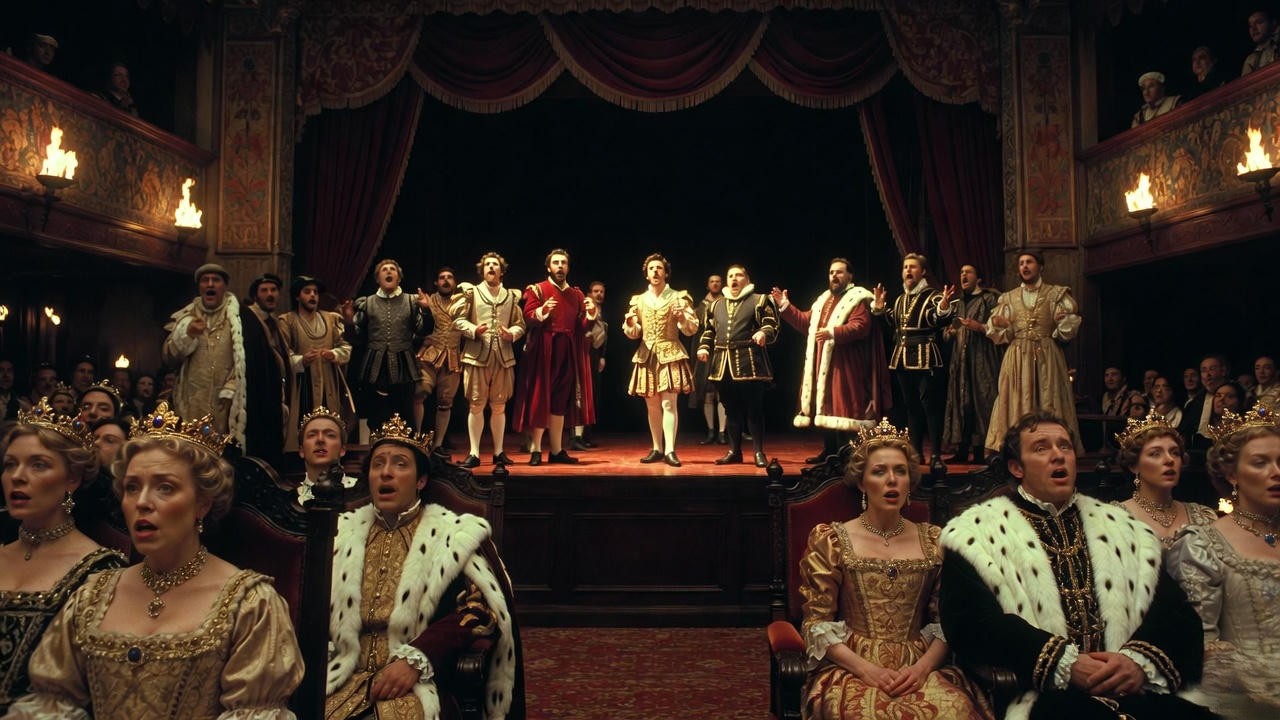
Hamlet’s excited realization after meeting the Players.
Full couplet:
The play’s the thing Wherein I’ll catch the conscience of the king.
Context Inspired by the Players’ emotional performance of Pyrrhus’s revenge, Hamlet decides to stage a murder scene mirroring his father’s death to observe Claudius’s reaction.
Analysis Meta-theatrical brilliance: Shakespeare has his protagonist consciously use theater as a tool for truth-seeking. The rhyming couplet signals Hamlet’s rare moment of decisive energy.
Thematic Significance Art’s power to reveal moral truth; the blurring of performance and reality that runs throughout the play.
Cultural Echoes Frequently invoked in discussions of documentary theater, political satire, and investigative journalism.
10. “Good night, sweet prince, And flights of angels sing thee to thy rest” (Act 5, Scene 2, lines 360–361)
Horatio’s farewell to the dying Hamlet.
Full lines:
Now cracks a noble heart. Good night, sweet prince, And flights of angels sing thee to thy rest!
Context In the carnage of the final scene, Hamlet has died in Horatio’s arms after exposing Claudius and reconciling with Laertes.
Analysis The tender epitaph transforms battlefield chaos into liturgical solemnity. Borrowing from Catholic requiem imagery, it offers Hamlet a peaceful afterlife despite his moral ambiguities.
Legacy Used in countless eulogies and memorials; inscribed on gravestones and quoted at funerals of public figures.
Common Themes Across Hamlet’s Famous Lines
Examining these ten quotations together reveals Shakespeare’s recurring obsessions:
- Mortality and Existence: From “To be, or not to be” to Yorick’s skull and Horatio’s farewell, death permeates the language.
- Madness and Performance: Feigned insanity, meta-theatricality, and ironic self-awareness dominate.
- Corruption and Decay: Political, moral, and familial rot infect the state and relationships.
- Appearance vs. Reality: Characters constantly misread each other’s words and motives.
- Language as Power: Wordplay, irony, and rhetorical mastery drive both plot and philosophy.
Expert Insights – How to Deepen Your Understanding of Hamlet
As someone who has spent years lecturing on Hamlet and supervising graduate research on the play, I can confidently say that the famous lines gain even greater resonance when approached with the right tools and context.
Recommended Editions
- Folger Shakespeare Library Edition (ed. Barbara A. Mowat and Paul Werstine): Ideal for students and general readers—excellent notes, scene summaries, and facing-page explanations.
- Arden Shakespeare Third Series (ed. Ann Thompson and Neil Taylor, 2006): The scholarly gold standard, with exhaustive discussion of Quarto/Folio variants and critical history.
- Oxford Shakespeare (ed. G.R. Hibbard): Clean text with perceptive commentary on performance choices.
Essential Critical Reading
- A.C. Bradley, Shakespearean Tragedy (1904) – foundational character-based analysis.
- Harold Bloom, Shakespeare: The Invention of the Human (1998) – celebrates Hamlet as the pinnacle of interior consciousness.
- Stephen Greenblatt, Hamlet in Purgatory (2001) – explores the Ghost through Reformation theology.
- Margreta de Grazia, Hamlet without Hamlet (2007) – provocative rethinking of the play’s focus on land and inheritance rather than psychology.
Practical Tips for Engagement
- Read the soliloquies aloud. Shakespeare wrote for the ear as much as the eye—notice how the rhythm of “To be, or not to be” mirrors contemplative breathing.
- Watch multiple adaptations side-by-side: Compare Olivier’s Freudian melancholy (1948), Branagh’s epic intensity (1996), and the intimate grief of Andrew Scott’s 2017 Almeida Theatre production (available on streaming).
- Attend a live performance if possible. The energy of an audience transforms lines you thought you knew.
Hamlet Quotes in Modern Culture
The enduring life of these Hamlet lines famous quotes proves Shakespeare’s uncanny ability to speak across eras.
- “To be, or not to be” has appeared in everything from The Simpsons (“To be or not to be… in the cafeteria line”) to Star Trek: The Next Generation episodes exploring artificial consciousness.
- “Something is rotten in the state of Denmark” became a headline staple during political scandals, including Watergate coverage in the 1970s and more recent analyses of institutional corruption worldwide.
- “Alas, poor Yorick” inspired Tim Burton’s visual aesthetic and even served as the basis for a 2023 off-Broadway comedy reimagining the jester’s backstory.
- “The lady doth protest too much” is routinely invoked in political interviews and social media discourse whenever a public figure issues an overly vehement denial.
- In 2024–2025, “There are more things in heaven and earth” resurfaced in popular discussions around AI consciousness and quantum computing breakthroughs.
These quotations have become cultural shorthand precisely because they articulate universal human experiences with unmatched precision.
Top 10 Hamlet Quotes At a Glance
| Rank | Quote | Speaker | Act/Scene | Core Theme |
|---|---|---|---|---|
| 1 | “To be, or not to be: that is the question” | Hamlet | 3.1 | Existence & suicide |
| 2 | “Though this be madness, yet there is method in’t” | Polonius | 2.2 | Appearance vs. reality |
| 3 | “Get thee to a nunnery” | Hamlet | 3.1 | Betrayal & misogyny |
| 4 | “The lady doth protest too much, methinks” | Gertrude | 3.2 | Hypocrisy & irony |
| 5 | “Alas, poor Yorick! I knew him, Horatio” | Hamlet | 5.1 | Mortality |
| 6 | “Something is rotten in the state of Denmark” | Marcellus | 1.4 | Corruption |
| 7 | “Brevity is the soul of wit” | Polonius | 2.2 | Dramatic irony |
| 8 | “There are more things in heaven and earth, Horatio…” | Hamlet | 1.5 | Limits of knowledge |
| 9 | “The play’s the thing Wherein I’ll catch the conscience of the king” | Hamlet | 2.2 | Art & truth |
| 10 | “Good night, sweet prince…” | Horatio | 5.2 | Elegy & loss |
FAQs
What is the most famous line from Hamlet? Undoubtedly “To be, or not to be: that is the question.” It is the most quoted, searched, and referenced Shakespearean line in history.
Why is “To be, or not to be” so famous? It distills the ultimate philosophical dilemma—whether life is worth enduring amid suffering—into six unforgettable words, speaking directly to humanity’s shared confrontation with mortality and meaning.
Are there differences in famous lines between Quarto and Folio versions? Yes, though minor for most iconic lines. The most significant textual debate concerns the placement and wording of “To be, or not to be” across the three early texts (Q1, Q2, F).
How many times is “Get thee to a nunnery” repeated? Hamlet says the exact phrase five times in Act 3, Scene 1, each repetition escalating in bitterness.
Can beginners understand these famous Hamlet quotes? Absolutely. While deeper layers reward study, the emotional and philosophical clarity of the language makes these lines accessible to anyone grappling with life’s big questions.
More than four hundred years after its first performance, Hamlet continues to hold a mirror up to nature—and to ourselves. The Hamlet lines famous quotes we’ve explored are not mere ornamental flourishes; they are the distilled essence of Shakespeare’s profound insight into the human condition.
Whether you return to the play for academic study, theatrical enjoyment, or personal reflection, let these lines serve as entry points to richer understanding. Pick up a copy, watch a production, or simply speak one aloud—Shakespeare’s words have a remarkable way of revealing new truths each time they are encountered.