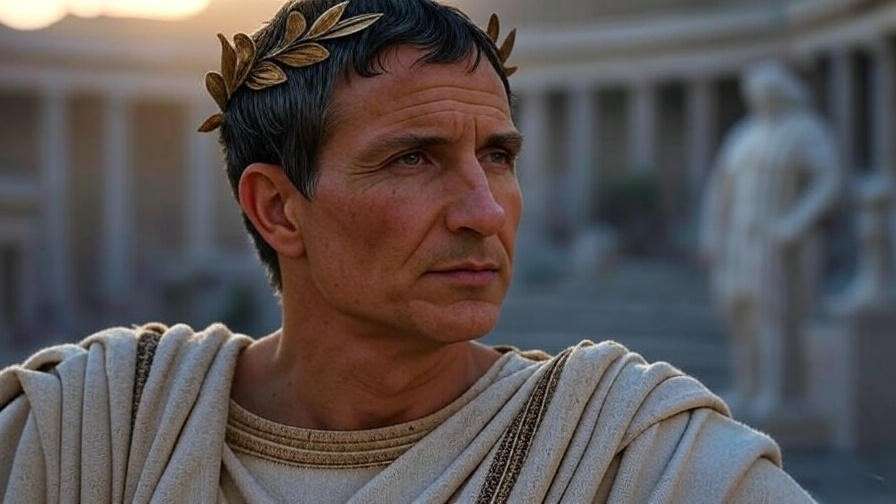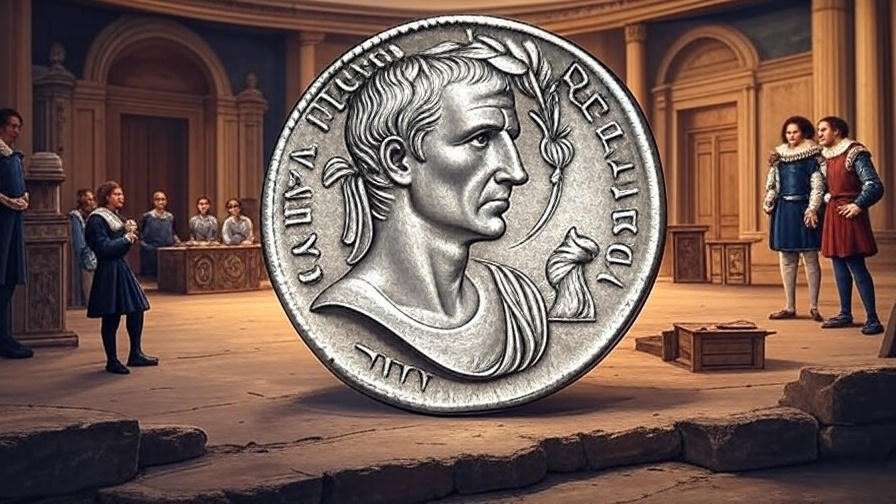
Imagine holding a small silver coin in your palm, worn smooth by centuries of hands, yet still bearing the unmistakable profile of a man whose ambition reshaped the world. This is no ordinary artifact—it’s one of the legendary Julius Caesar coins, the first Roman issues to feature the portrait of a living leader. Minted in the turbulent final years of the Roman Republic, these denarii were not just currency but bold statements of power, divine favor, and impending monarchy. For enthusiasts of ancient history and literature alike, Julius Caesar coins offer a tangible link to the real events that inspired William Shakespeare’s gripping tragedy Julius Caesar, where themes of ambition, betrayal, and republican ideals clash with devastating consequences.
In this comprehensive exploration, we’ll delve into the historical significance of these ancient Roman coins, their iconic designs and symbolism, and their profound echoes in Shakespeare’s masterpiece. Whether you’re a numismatist seeking to understand their rarity and value, a Shakespeare scholar tracing the Bard’s historical inspirations, or simply fascinated by the fall of the Republic, these coins bridge the gap between propaganda on silver and drama on the stage. Drawing from authoritative sources like Michael Crawford’s Roman Republican Coinage and collections at the British Museum and American Numismatic Society, we’ll uncover why Julius Caesar coins remain among the most coveted and insightful artifacts from antiquity.
The Historical Context of Julius Caesar’s Coinage
To appreciate Julius Caesar coins fully, we must first understand the revolutionary context in which they were minted. Roman Republican coinage traditionally avoided personal glorification. Obverses typically featured gods, goddesses, or idealized ancestors, while reverses commemorated familial achievements or state victories. Living Romans were strictly prohibited from appearing on coins—a taboo rooted in fears of monarchy, evoking the hated kings expelled in 509 BC.
Julius Caesar shattered this convention. As general, consul, and eventually dictator, Caesar used coinage as a masterful tool of political propaganda during the Civil War (49–45 BC) and his dictatorship. His issues, primarily silver denarii (the standard Roman silver coin worth about a day’s wages for a laborer), were struck in massive quantities—estimates suggest over 22 million from military mints alone—to pay loyal legions and broadcast his message across the empire.
From Republic to Dictatorship: The Rise of Personal Coinage
Caesar’s earliest coins, minted around 49–48 BC from a traveling military mint, marked his break from tradition. These lacked his portrait but boldly inscribed his name (“CAESAR”) and symbols of authority, such as pontifical implements signifying his role as Pontifex Maximus (high priest). By 44 BC, in the months before his assassination, Caesar authorized lifetime portrait denarii—the first for a living Roman at the Rome mint. Inscriptions like “CAESAR DICT PERPETVO” (Caesar, Dictator for Life) proclaimed his perpetual power, granted by a compliant Senate.
This innovation signaled Caesar’s monarchical aspirations, alarming republicans like Brutus and Cassius. As numismatic scholar Michael Crawford notes in Roman Republican Coinage (1974), these coins transitioned Rome from collective republican imagery to personal imperial propaganda, paving the way for Augustus and future emperors.
Coins as Political Propaganda
Caesar’s denarii funded armies while spreading ideology. Claims of descent from Venus (via Trojan hero Aeneas) legitimized his rule as divinely ordained. Symbols of victory celebrated conquests in Gaul, reinforcing his image as Rome’s savior. In an era without mass media, coins circulated widely, reaching soldiers, citizens, and provinces—making them the ancient equivalent of political billboards.
Expert sources, including the British Museum and American Numismatic Society, emphasize how Caesar’s coinage reflected the era’s turmoil: civil war, proscriptions, and the Republic’s collapse. These artifacts provide direct evidence of how one man reshaped Roman identity.
Iconic Julius Caesar Coins and Their Symbolism
Julius Caesar coins are renowned for their bold, innovative designs. While thousands survive, certain types stand out for rarity, symbolism, and historical impact. Below, we examine the most significant issues, drawing from Crawford’s catalog (RRC) and recent auction data as of 2026.
The Famous Elephant Denarius (49–48 BC)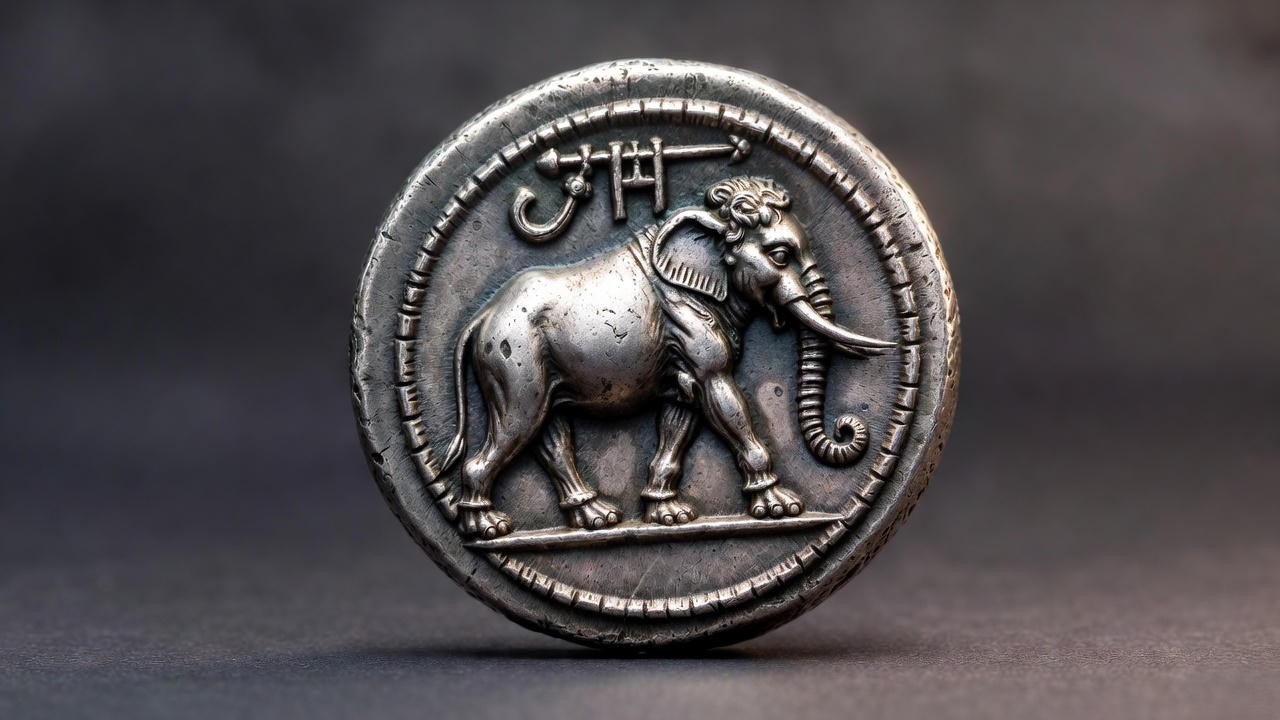
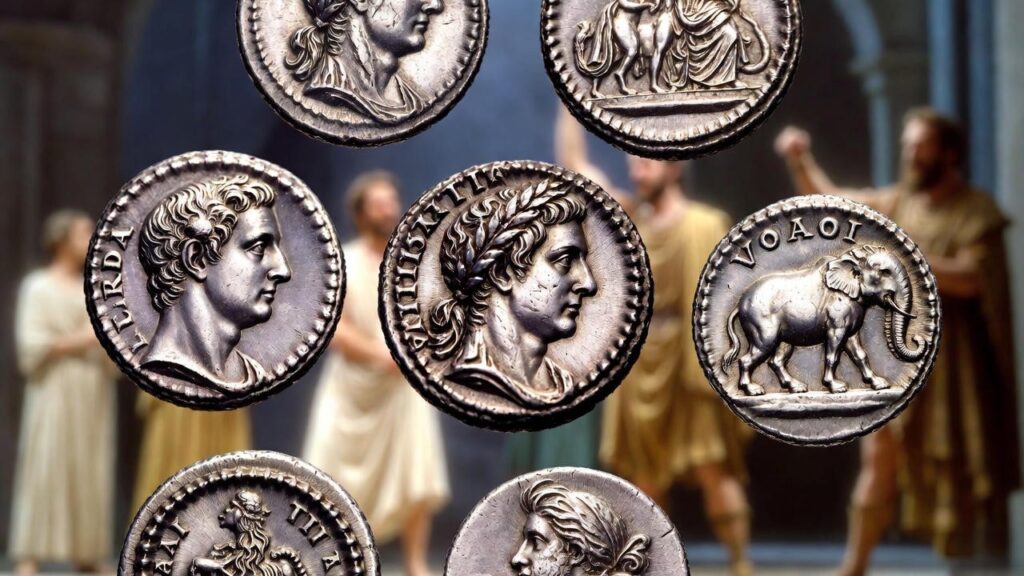
One of the most recognizable ancient coins, this denarius (Crawford 443/1) features an elephant trampling a serpent (or dragon) on the obverse, with “CAESAR” in the exergue. The reverse shows pontifical implements: simpulum (ladle), aspergillum (sprinkler), securis (axe), and apex (priest’s cap).
Symbolism abounds:
- The elephant represents strength and victory, possibly alluding to Caesar’s conquests or a family legend.
- Trampling the serpent symbolizes good triumphing over evil—Caesar over his enemies (perhaps Pompey or Gauls).
- Some interpretations suggest a pun: “Caesar” resembling a Punic word for elephant.
- Pontifical symbols highlight Caesar’s religious authority.
Minted to pay troops during the Civil War, millions were produced, making decent examples accessible today (prices $500–$5,000 in fine condition).
Venus and Aeneas Issues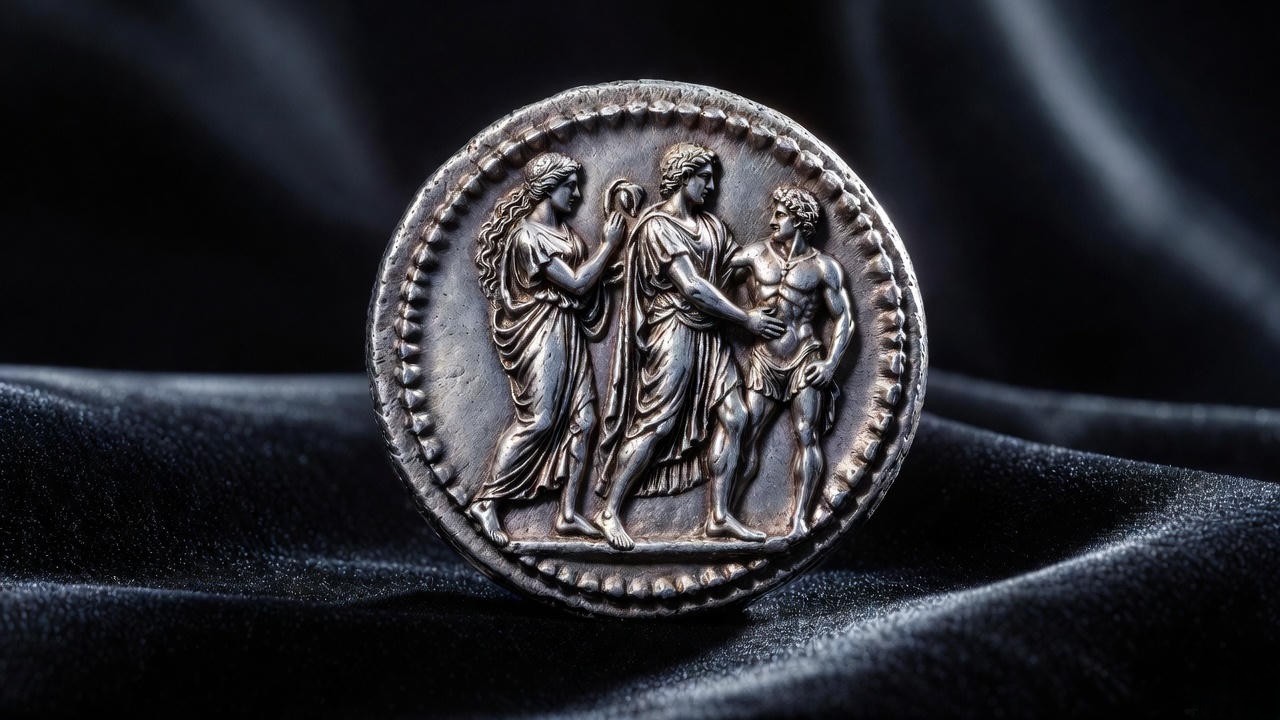
Many denarii depict Venus (obverse) with Aeneas fleeing Troy, carrying his father Anchises and the Palladium (reverse). These assert Caesar’s divine ancestry: the Julian gens traced lineage to Venus via Aeneas and his son Iulus.
This propaganda countered accusations of tyranny by framing Caesar as Rome’s fated leader. Variations include Venus with Cupid on her shoulder, emphasizing fertility and divine favor.
The Lifetime Portrait Denarius (44 BC)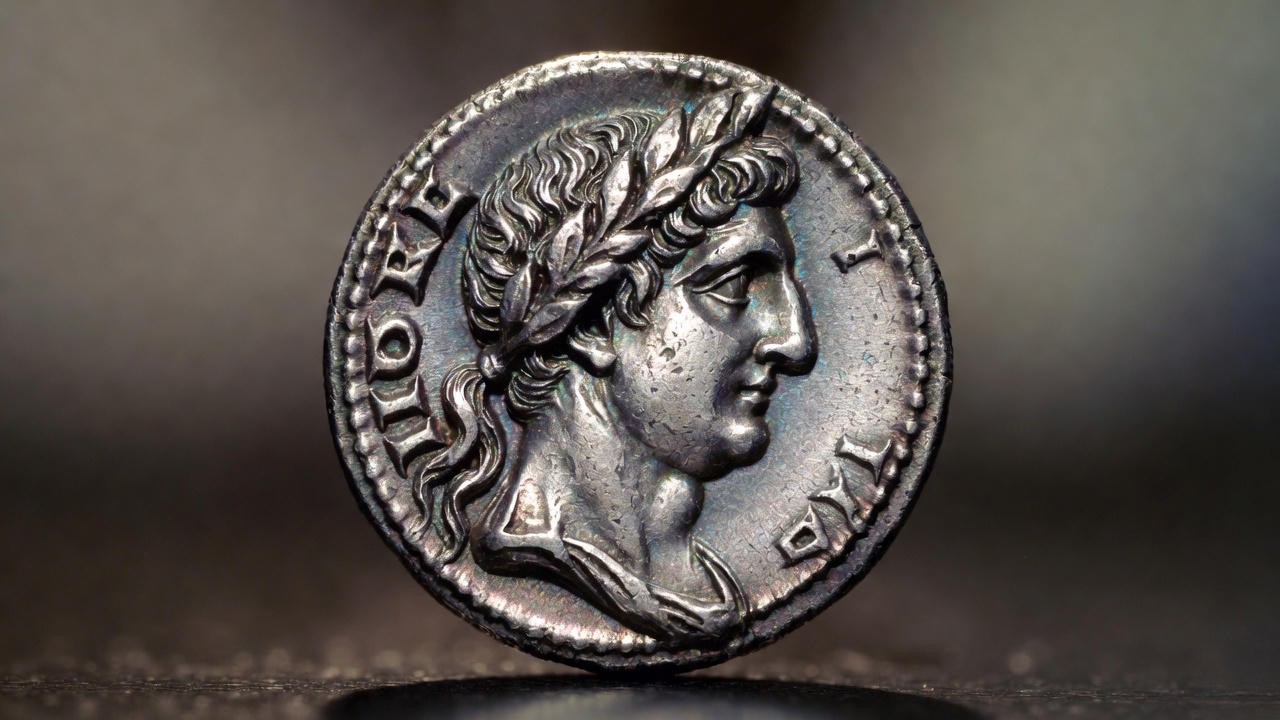
The pinnacle of audacity: Caesar’s wreathed or veiled head on the obverse, often with “CAESAR DICT PERPETVO.” Reverses frequently show Venus Victrix holding Victory or other symbols of triumph.
Known colloquially as “the coin that killed Caesar,” its kingly imagery—complete with laurel wreath or veil (evoking divinity)—fueled assassination fears. Struck only from January to mid-March 44 BC, these portrait coins are significantly rarer than earlier types. Fine examples typically fetch $10,000–$100,000 or more at auction, with exceptional pieces exceeding half a million dollars.
Post-Assassination Coins: The Ides of March Denarius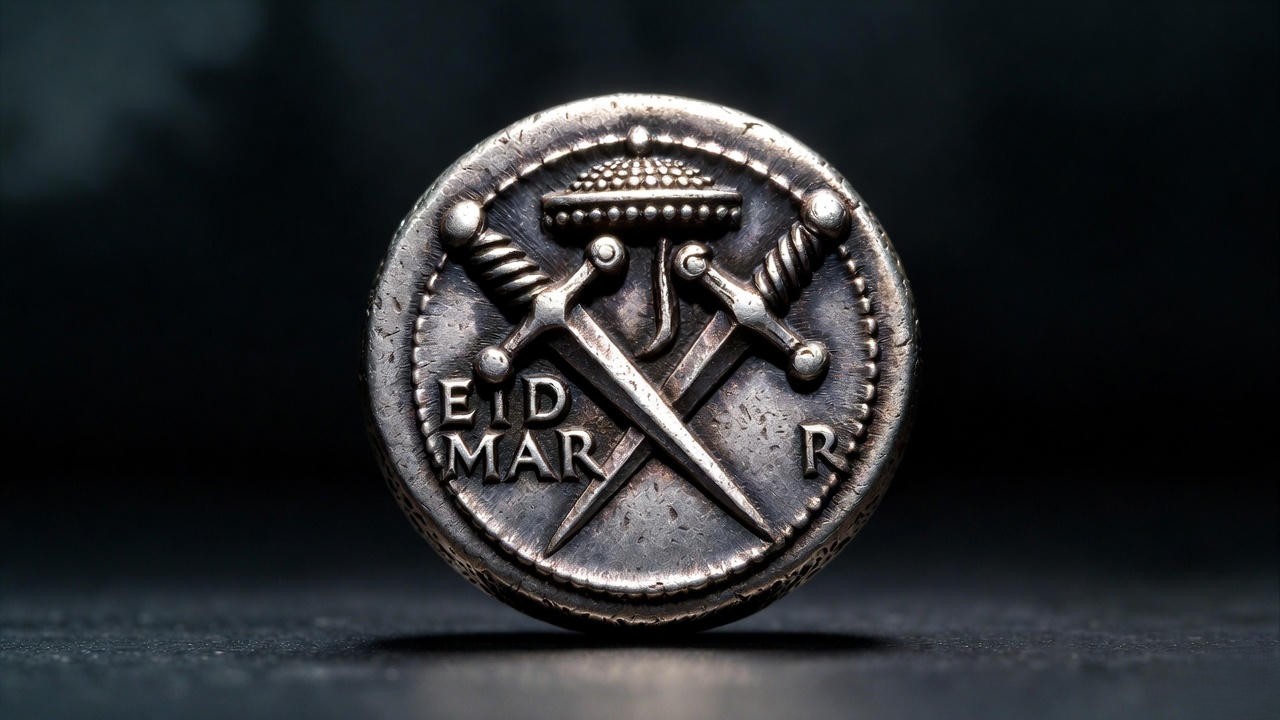
Though not issued by Caesar himself, no discussion of Julius Caesar coins is complete without Brutus’s infamous “EID MAR” denarius (Crawford 508/3, minted 43–42 BC). The obverse bears Brutus’s portrait; the reverse depicts two daggers flanking a pileus (cap of liberty) with the inscription “EID·MAR” (Ides of March).
This coin was pure counter-propaganda: celebrating the assassination as tyrannicide and liberation of the Republic. Fewer than 100 silver examples are known today, making it one of the rarest and most valuable ancient coins. Auction records show prices ranging from $500,000 to over $3 million for top-grade specimens.
How Julius Caesar’s Coins Echo in Shakespeare’s Masterpiece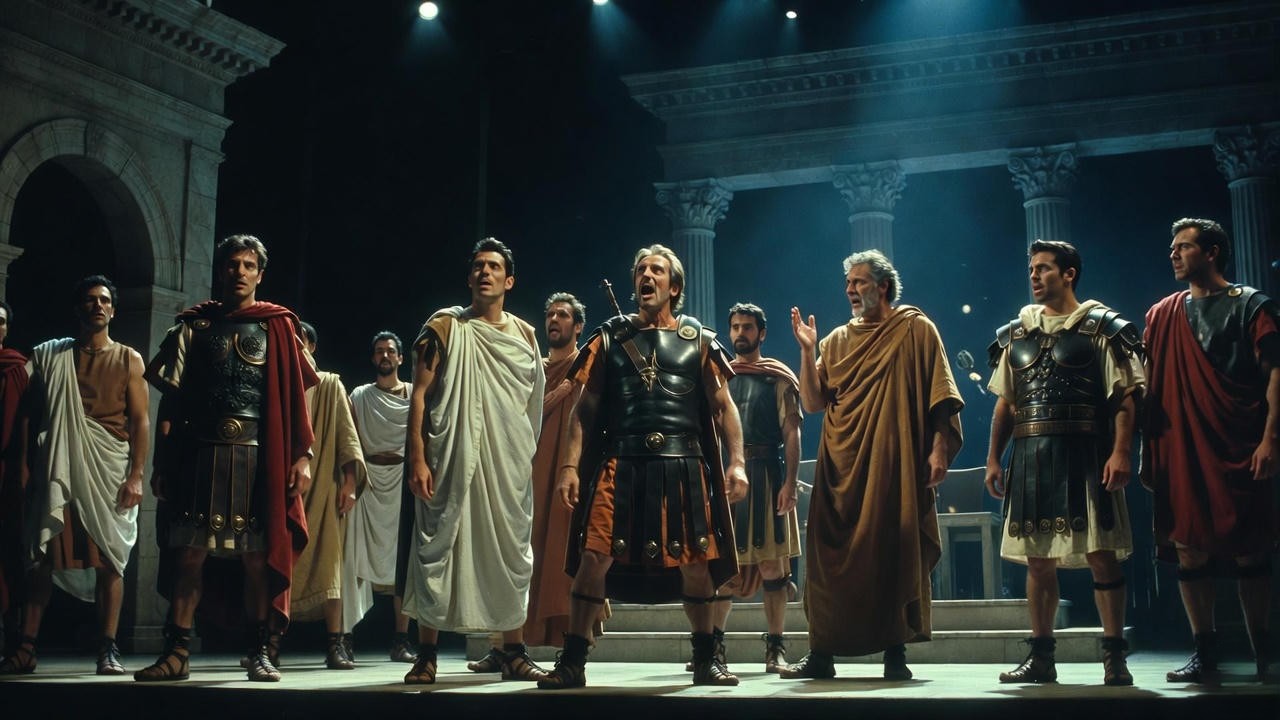
Shakespeare’s Julius Caesar (written circa 1599) draws heavily from Plutarch’s Lives, but the Bard’s audience—living in an age fascinated by classical antiquities—would have recognized the cultural weight of Roman coinage. While the play contains no direct references to specific coins, the themes of divine ambition, political propaganda, and betrayal mirror Caesar’s numismatic legacy perfectly.
Propaganda and the Illusion of Power
Caesar’s coins broadcast god-like status and perpetual rule, much like the play’s portrayal of a leader whose growing power alarms the Senate. Mark Antony’s funeral oration masterfully manipulates public perception—echoing how Caesar used coinage to shape his image among the masses.
The famous crown scene (Act 1, Scene 2), where Caesar thrice refuses the diadem offered by Antony, contrasts sharply with the lifetime portrait denarii’s blatant monarchical symbolism. Shakespeare highlights the tension between public humility and private ambition.
Divine Right and Ambition
Venus imagery on Caesar’s coins directly ties to claims of divine favor. In the play, characters debate Caesar’s superhuman status: Cassius envies his “colossus” stature, while Caesar himself compares his constancy to the northern star. These echoes reflect how real Roman propaganda elevated Caesar above mortal peers.
Renaissance Fascination with Roman Antiquities
Elizabethan England was steeped in classical revival. Collectors prized Roman coins; cabinets of curiosities often featured denarii. Shakespeare, educated in Latin classics, would have been aware of such artifacts through translations of Plutarch and Suetonius, who describe Caesar’s honors and the outrage they provoked.
Modern productions often incorporate coin imagery subtly—projecting enlarged denarii during scenes of political maneuvering—to underscore themes of propaganda and legacy.
Modern Interpretations in Theater and Film
Directors like Orson Welles (1937 fascist-themed production) and the Royal Shakespeare Company have used visual motifs inspired by Roman coinage to emphasize authoritarianism. In film adaptations (e.g., 1953 with Marlon Brando), close-ups of statues and medallions evoke the same self-deification seen on Caesar’s portrait issues.
Collecting Julius Caesar Coins Today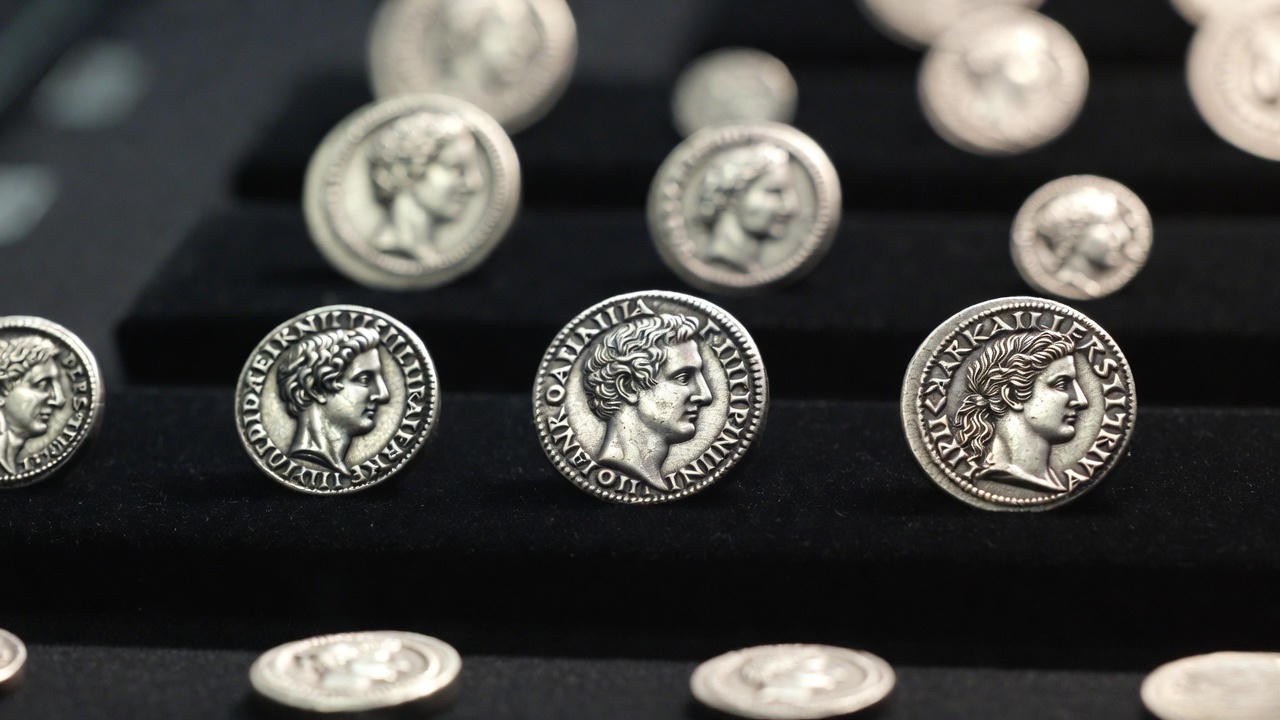
For modern collectors, Julius Caesar coins represent both historical significance and investment potential. Prices have risen steadily, driven by demand from history enthusiasts, Shakespeare scholars, and investors.
Rarity, Value, and Authentication
- Elephant denarii: Most accessible, $500–$5,000 (VF–EF grade).
- Venus/Aeneas types: $1,000–$10,000.
- Lifetime portraits: $10,000–$100,000+.
- EID MAR: Multimillion-dollar territory.
Authentication is critical. Reputable grading services (NGC Ancients, PCGS) encapsulate coins with provenance details. Look for characteristic wear patterns, correct weight (around 3.9g), and die matches from Crawford’s catalog.
Common fakes include modern strikes or altered Republican denarii. Always buy from established dealers (e.g., members of the International Association of Professional Numismatists).
Ethical Considerations and Legal Ownership
Many coins originate from old European collections with documented provenance predating modern export laws. New finds from metal detecting (especially in Britain) require reporting under the Treasure Act. Avoid pieces without clear ownership history to prevent supporting illicit trade.
Why They Appeal to Shakespeare Enthusiasts
Owning a Julius Caesar denarius provides a direct connection to the world Shakespeare dramatized. Holding the same type of coin that circulated during the Ides of March brings the play’s themes palpably to life—perfect for educators, theater groups, or personal study.
Expert Insights and Tips
Dr. Kris Lockyear, archaeologist and numismatist, notes: “Caesar’s coins are unique primary sources—propaganda frozen in silver that lets us hear his political voice directly.”
Recommended reading:
- Michael H. Crawford, Roman Republican Coinage (2 vols., 1974)—the definitive catalog.
- Plutarch’s Life of Caesar (North’s translation influenced Shakespeare).
- Wayne Sayles, Ancient Coin Collecting series.
Visit major collections:
- British Museum (free admission, excellent Roman galleries).
- American Numismatic Society (New York).
- Cabinet des Médailles (Paris).
Frequently Asked Questions (FAQs)
What makes Julius Caesar coins so historically significant? They mark the transition from republican to imperial coinage and represent the first lifetime portrait of a living Roman leader.
Are there direct references to coins in Shakespeare’s Julius Caesar? No explicit mentions, but money and tribute play symbolic roles (e.g., “the ransom of a world”), and the play’s themes mirror real coin propaganda.
How can I tell if a Julius Caesar coin is authentic? Check weight, style, die links (using Crawford), and third-party grading. Avoid suspiciously perfect specimens.
Why is the elephant denarius so famous? Its striking design, massive production, and early propaganda value make it instantly recognizable.
What is the most valuable Julius Caesar-related coin? The EID MAR denarius by Brutus—celebrating Caesar’s assassination.
How do these coins enhance understanding of Shakespeare’s play? They provide concrete evidence of Caesar’s self-promotion and the political tensions dramatized in the tragedy.
Where can I see real Julius Caesar coins? Major museums worldwide; online databases like the British Museum Collection Online or ACSearch.info offer high-resolution images.
Julius Caesar coins are far more than collectible artifacts—they are windows into one of history’s pivotal moments. These small silver pieces carried messages of divine right, victory, and absolute power that ultimately contributed to Caesar’s downfall, just as Shakespeare so masterfully portrayed.
By studying these ancient Roman coins, we gain deeper insight into the real ambition and propaganda that fueled the Republic’s collapse—and into the timeless themes Shakespeare explored: the fragility of power, the danger of unchecked ambition, and the eternal conflict between liberty and tyranny.
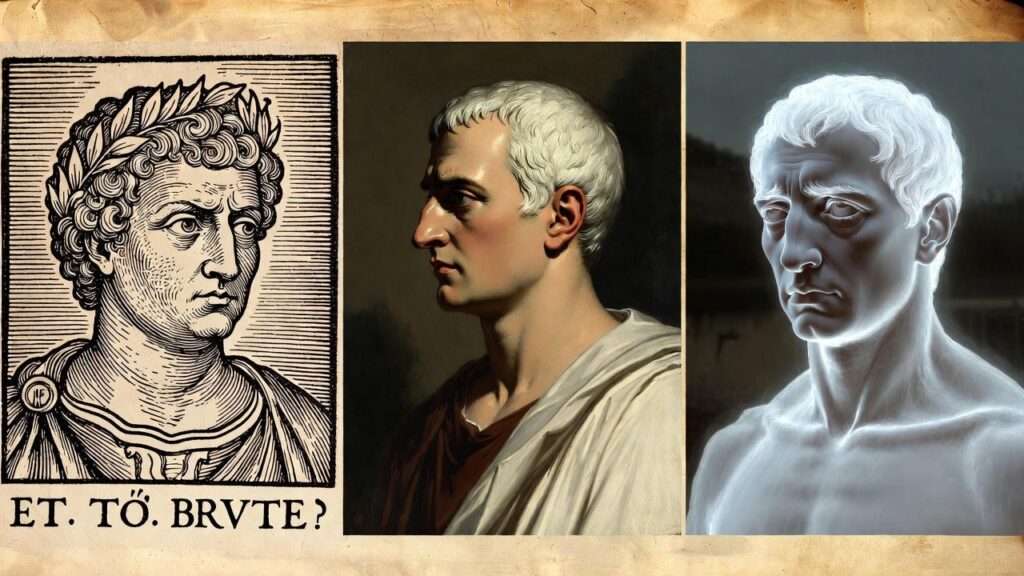
Whether you encounter them in a museum case, an auction catalog, or (if fortunate) in your own collection, Julius Caesar coins continue to speak across two millennia. They remind us that the words “Et tu, Brute?” echo not just in literature, but in the very currency that once circulated through Rome’s streets on the fateful Ides of March.