
Imagine two young lovers, caught in the whirlwind of first love, only to face separation—not by family feuds, but by the harsh hand of the law. This is the timeless tragedy of William Shakespeare’s Romeo and Juliet, where youthful passion collides with rigid societal rules. Centuries later, the story inspires “Romeo and Juliet laws” across the United States, including Colorado’s close-in-age exemptions. These provisions aim to prevent real-life heartbreak by protecting consensual relationships between teens and young adults from being criminalized as statutory rape or sexual assault.
In Colorado, the Romeo and Juliet law (more formally known as the close-in-age exemption under Colorado Revised Statutes § 18-3-402) creates critical exceptions to the state’s age of consent rules. Many people—parents worried about their teenagers, young adults navigating relationships, educators guiding students, or even individuals facing potential legal questions—search for clarity on this topic. Confusion abounds: Is a high school senior dating a sophomore legal? Can a 16-year-old be with someone significantly older without consequences? The stakes are high—misunderstandings can lead to felony charges, sex offender registration, ruined futures, and lifelong stigma.
This in-depth guide explains Colorado’s Romeo and Juliet law in clear, accurate detail. We’ll cover the current age of consent, how the close-in-age exceptions work, when they don’t apply, potential penalties, real-world scenarios, and practical advice for staying safe and informed. All information draws from primary sources like the Colorado Revised Statutes (CRS § 18-3-402 and related sections), official legislative summaries, and established legal interpretations as of 2026—no major statutory changes have occurred since the well-documented framework was established.
Important disclaimer: This article is for educational purposes only and is not legal advice. Laws can be complex and fact-specific. For personal situations, always consult a licensed Colorado attorney or qualified legal professional. If you or someone you know is facing charges or concerns related to these laws, seek immediate professional help.
What Is the Age of Consent in Colorado?
The foundation of understanding Colorado’s Romeo and Juliet law starts with the baseline: the state’s age of consent.
In Colorado, the general age of consent is 17 years old. This means that individuals who are 17 or older can legally consent to sexual activity with other adults (17+), provided the encounter is truly consensual and free from coercion, force, impairment, or any position of authority.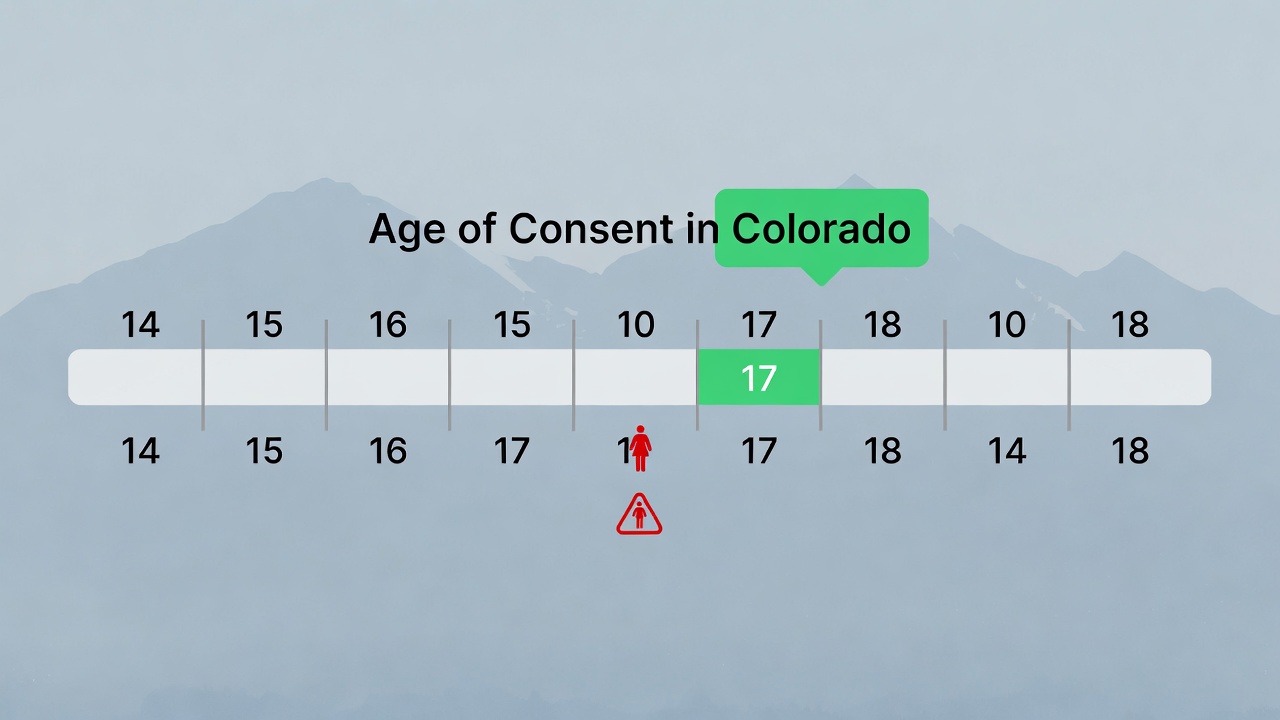
- Consensual sexual activity between two people both 17 or older is fully legal.
- Engaging in sexual penetration or intrusion (as defined in CRS § 18-3-401) with someone under 17 can constitute sexual assault under CRS § 18-3-402, even if the younger person “agrees” or initiates—because the law deems minors under 17 incapable of giving legal consent in most cases.
This strict rule exists to protect younger individuals from exploitation, grooming, or unequal power dynamics. However, Colorado lawmakers recognize that not all underage relationships involve predation. That’s where the close-in-age exemptions—commonly called Romeo and Juliet laws—come in.
A related but stricter rule applies in cases involving a position of trust. Under CRS § 18-3-405.3 (sexual assault on a child by one in a position of trust), the effective age of consent rises to 18 for relationships involving authority figures such as teachers, coaches, therapists, clergy, babysitters, or others in supervisory roles. In these situations, close-in-age exemptions do not apply, and violations carry severe penalties regardless of age difference or consent.
Understanding Colorado’s Romeo and Juliet Law (Close-in-Age Exemption)
Colorado’s Romeo and Juliet law is not a standalone statute but a set of affirmative defenses and exclusions built into the sexual assault law (CRS § 18-3-402). The goal is straightforward: to avoid turning typical teenage or young-adult consensual relationships into felonies while still protecting against genuine exploitation.
For Minors Under 15 Years Old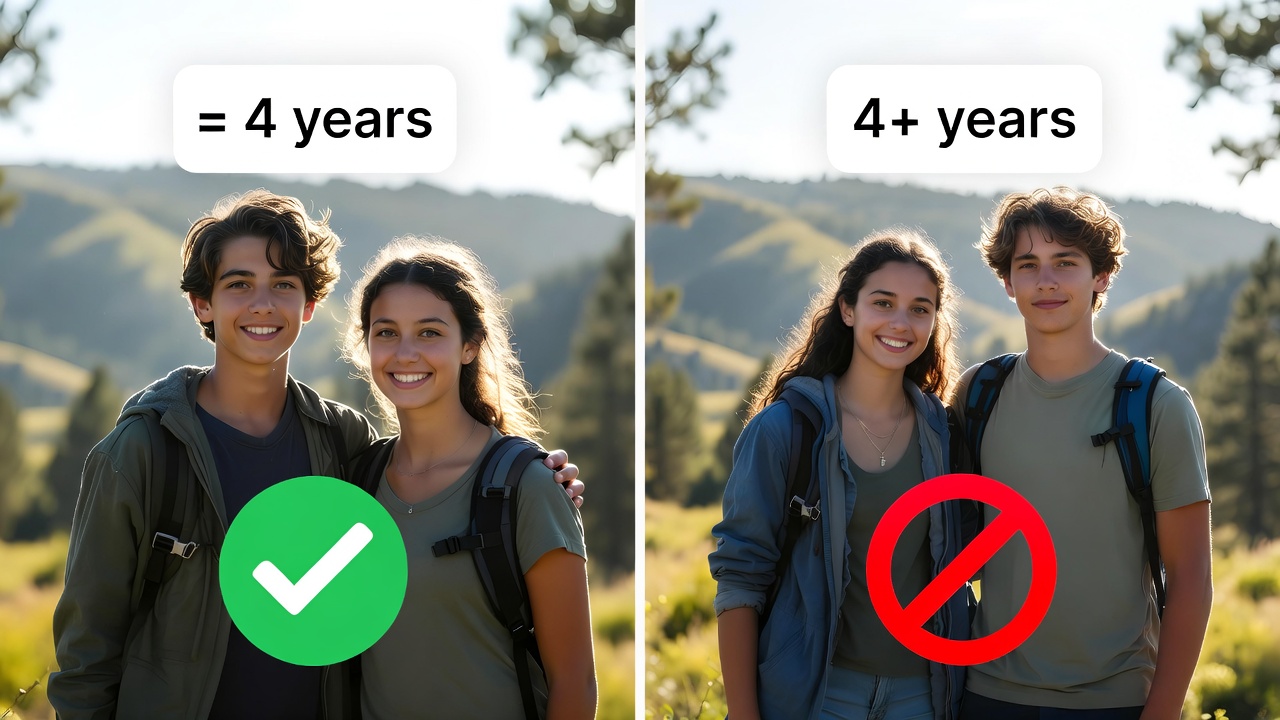
The law provides a narrow window: A person under 15 can legally engage in consensual sexual activity with a partner who is less than 4 years older.
- This means the age gap must be under 4 full years (calculated precisely to the day of birth).
- Example: A 14-year-old (born January 1) and a 17-year-old (born December 31 of the relevant year) — gap of just under 4 years — would generally qualify for the exemption.
- Example: A 14-year-old and an 18-year-old — gap of 4+ years — does not qualify, potentially triggering a Class 4 felony charge under CRS § 18-3-402(1)(d).
Important note: There is no close-in-age exemption for children under 15 if the gap is 4 years or more, or in any position-of-trust scenario.
For Minors Aged 15 to 16 Years Old
The exemption is more permissive here: A 15- or 16-year-old can legally consent to sexual activity with a partner who is less than 10 years older.
- Again, the difference is measured precisely.
- Example: A 16-year-old and a 25-year-old (9-year gap) — protected under the exemption.
- Example: A 16-year-old and a 26-year-old (10-year gap) — no exemption, potentially a Class 1 misdemeanor under CRS § 18-3-402(1)(e).
Key requirements that apply to both tiers:
- The activity must be fully consensual — no force, threats, impairment by drugs/alcohol, or deception.
- No position of trust or authority can exist.
- The partners cannot be spouses (though a spousal exemption exists separately if legally married).
- The law focuses on sexual intrusion or penetration (intercourse, oral sex, etc.); lesser contact may fall under other statutes like unlawful sexual contact (CRS § 18-3-404).
These exceptions reflect a balanced approach: protecting vulnerable youth while acknowledging that teen relationships often span small age gaps, especially in high school or early college settings.
When the Romeo and Juliet Exemption Does NOT Apply
Even within the age windows, several scenarios void the protection and can lead to serious criminal charges.
Common situations where the exemption fails:
- Exceeding the age gap: Any gap of 4+ years for under-15s or 10+ years for 15-16-year-olds removes the defense.
- Non-consensual acts: Consent must be affirmative and ongoing. Coercion, intoxication, or incapacity invalidates any claimed exemption.
- Position of trust: Teachers, coaches, employers, family members in authority roles, etc., face charges under CRS § 18-3-405.3—no close-in-age protection applies, and the age of consent effectively becomes 18.
- Aggravating factors: Incest (CRS § 18-6-301), use of force, weapons, drugs to facilitate, or pattern-of-abuse charges elevate severity.
- Under 15 with no exemption: For children 13 or younger, even small gaps may trigger charges if other factors exist, though the 4-year rule is the primary filter.
Common myths debunked:
- Myth: “If both are teens, it’s always okay.” Reality: Only if within the exact gaps and no other disqualifiers.
- Myth: “Love or emotional maturity overrides the law.” Reality: The statute is age-based; feelings do not create legal consent.
- Myth: “It started when both were underage, so it’s fine now.” Reality: The law evaluates ages at the time of the act.
These limitations underscore the law’s focus on preventing exploitation rather than policing all young romance.
Potential Penalties for Violations in Colorado
Violating Colorado’s age-of-consent rules outside exemptions carries severe, life-altering consequences.
- Class 4 felony (under-15 with 4+ year gap, CRS § 18-3-402(1)(d)): 2–6 years in prison, fines up to $500,000, mandatory sex offender registration (potentially lifetime), parole, and collateral consequences like employment barriers, housing restrictions, and professional license loss.
- Class 1 misdemeanor (15–16 with 10+ year gap, CRS § 18-3-402(1)(e)): Up to 364 days in jail, fines up to $1,000, possible probation, and potential sex offender registration in some cases.
- Position-of-trust violations (CRS § 18-3-405.3): Class 3 or 4 felony (depending on victim’s age), with 4–12+ years prison possible, plus registration.
Additional impacts include:
- Sex offender registry listing (publicly accessible in many cases).
- Immigration consequences for non-citizens.
- Civil lawsuits or family court issues.
Quick comparison table (for illustrative purposes):
| Younger Person’s Age | Older Partner’s Age Gap | Legal Outcome (Consensual Case) |
|---|---|---|
| Under 15 | Less than 4 years | Protected (exemption applies) |
| Under 15 | 4+ years | Class 4 felony |
| 15–16 | Less than 10 years | Protected (exemption applies) |
| 15–16 | 10+ years | Class 1 misdemeanor |
| Any (position of trust) | Any | Felony (Class 3/4) |
Real-World Examples and Scenarios
To make Colorado’s Romeo and Juliet law feel less abstract, let’s examine realistic scenarios that reflect the kinds of relationships many teens and young adults experience. These examples are hypothetical but grounded in how the statutes (CRS § 18-3-402) are typically interpreted and applied by Colorado courts, prosecutors, and defense attorneys.
Protected Relationships (Exemption Applies)
- High school classmates: A 14-year-old freshman begins dating a 17-year-old junior. Their age difference is just under 3 years. They become sexually active during the school year. → This falls squarely within the under-15 / less-than-4-years exemption. No crime has occurred, assuming full consent and no other disqualifying factors.
- Senior and sophomore: A 16-year-old sophomore is in a consensual relationship with an 18-year-old senior (2-year gap). They turn 17 and 19 respectively during the relationship. → Protected under both tiers at different points. Even after the older partner turns 19, the 10-year window for 15–16-year-olds keeps it legal.
- Recent high school graduate and current senior: A 17-year-old senior dates a 26-year-old who graduated a few years earlier (9-year gap). The younger partner is still 16 when the relationship becomes sexual. → Protected under the 15–16 / less-than-10-years rule. Once the younger turns 17, the general age of consent covers it anyway.
Risky or Illegal Scenarios (Exemption Does NOT Apply)
- Large age gap with younger teen: A 14-year-old begins a sexual relationship with a 19-year-old (5-year gap). Even if both insist it is consensual and loving, the gap exceeds the 4-year limit. → This constitutes sexual assault of a child (Class 4 felony). Prosecutors rarely overlook gaps this wide.
- 16-year-old and 27-year-old: A 16-year-old meets a 27-year-old online or at a community event. They engage in sexual activity (11-year gap). → No exemption—the 10-year window is exceeded. This becomes a Class 1 misdemeanor sexual assault charge.
- Position-of-trust violation: A 17-year-old student has a consensual sexual relationship with their 24-year-old coach. → The position-of-trust statute (CRS § 18-3-405.3) overrides any close-in-age consideration. This is a felony, often charged as a Class 3 or 4 depending on specifics.
- Pre-existing relationship that ages out: A couple begins dating at ages 14 and 17 (3-year gap—protected). Two years later, the younger is 16 and the older is 19. Still protected. But if the relationship continues until the younger is 16 and the older is 20 (now 4-year gap), it remains protected under the 15–16 tier. However, if the gap had started larger, the protection could vanish mid-relationship
Special Considerations for Parents, Teens, and Educators
Different audiences face unique concerns when it comes to Colorado’s age-of-consent and close-in-age rules.
For Parents and Guardians
- Foster open, non-judgmental conversations about relationships, consent, and legal boundaries early—ideally before high school.
- Be aware of online interactions: Apps, gaming platforms, and social media often connect teens with much older individuals.
- Watch for red flags: Significant age differences, secrecy, gifts/money from an older partner, or sudden behavioral changes.
- If you discover a concerning relationship, document dates/ages calmly and consult a family law attorney or child protective services before confronting anyone.
For Teens and Young Adults
- Know your exact ages and calculate gaps honestly—use birth dates, not just years.
- Understand that “consent” in the emotional sense does not equal legal consent if ages fall outside exemptions.
- Be cautious with explicit images or videos (sexting): Even self-produced images shared with a partner can trigger child pornography laws (CRS § 18-6-403) if one person is under 18, though Colorado offers limited defenses for close-in-age consensual exchanges between minors.
- If pressured or unsure, talk to a trusted adult or use anonymous resources (see below).
For Educators, Coaches, and Youth Workers
- Mandatory reporting laws apply if you suspect sexual abuse or exploitation.
- Maintain strict professional boundaries—Colorado courts rarely show leniency in position-of-trust cases.
- Schools often provide age-of-consent education as part of health or sex-education curricula; reinforce accurate information.
Tying back to Shakespeare: Romeo and Juliet’s impulsive passion led to tragedy partly because adults refused to understand youthful love. Modern laws attempt a middle path—protecting without over-punishing—yet they still require awareness and responsibility from everyone involved.
Related Laws and Broader Context
Colorado’s framework doesn’t exist in isolation. Several related statutes intersect with the Romeo and Juliet exemptions:
- Sexting and juvenile pornography: CRS § 18-6-403 criminalizes possession/distribution of images depicting minors in sexually explicit conduct. However, § 18-6-403(6) provides an affirmative defense if the image depicts the defendant or was created/possessed with consent of someone within 4 years of age (for under-18 depictions). This offers limited protection for consensual teen-to-teen exchanges but is narrower than the sexual assault exemptions.
- Minimum marriage age: With parental/judicial consent, Colorado allows marriage at 16 (CRS § 14-2-106, as amended). A valid marriage creates a spousal exemption under § 18-3-402(2), though underage marriage remains rare and heavily scrutinized.
- Comparison to neighboring states:
- Utah: Stricter—3-year gap for 16–17, no broad exemption for 14–15.
- New Mexico: 4-year gap for 13–16.
- Kansas: 4-year gap for 14–16. Colorado’s 10-year window for 15–16-year-olds is relatively permissive, reflecting a legislative choice to accommodate relationships common in rural or college-transition settings.
What Should You Do If Facing Questions or Charges?
If you are uncertain about a situation or already involved in a legal matter:
- Immediately stop any sexual contact if there is any doubt about legality.
- Do not discuss details with law enforcement without an attorney present—anything said can be used against you.
- Contact a Colorado criminal defense attorney who specializes in sex-crime or juvenile cases. Many offer free initial consultations.
- For minors or families: Consider Colorado Legal Services (legalaidcolorado.org) or local bar association referrals.
- Crisis support: Colorado Crisis Services (1-844-493-8255) or the National Sexual Assault Hotline (1-800-656-4673).
Prevention remains the best approach: Education, honest age checks, and healthy relationship boundaries.
Frequently Asked Questions (FAQs)
Is the Romeo and Juliet law the same thing as the age of consent? No. The age of consent is 17 in Colorado. The Romeo and Juliet provisions are exceptions that allow consensual activity below that age under specific close-in-age conditions.
Can a 16-year-old legally date and be sexually active with a 25-year-old in Colorado? Yes, if the gap is less than 10 years (here, 9 years). It falls within the exemption for 15–16-year-olds.
What if the relationship started legally but one partner ages past the exemption? The law looks at ages on the date of each act. If a later act falls outside the window, that specific act can be criminal.
Does sexting fall under these same rules? Not exactly. While close-in-age defenses exist for certain consensual image exchanges, federal and state child pornography laws can still apply if anyone is under 18. Proceed with extreme caution.
How precise do age calculations need to be? Very precise—down to the day. Courts use exact birth dates.
Can someone be charged even if the younger person initiated everything? Yes. The younger person’s willingness or initiation does not create legal consent if they are below the age threshold without an exemption.
Is there protection for same-sex relationships? Yes—the statutes are gender-neutral and apply equally.
What happens if both partners are under 18 and outside the exemption? The older minor can still be charged (often as a juvenile), though prosecution is less common in small-gap cases.
Colorado’s Romeo and Juliet law—its close-in-age exemptions under CRS § 18-3-402—strikes a careful balance. It protects younger teens from exploitation while recognizing that not every consensual relationship between adolescents or young adults deserves criminal punishment. By setting clear 4-year and 10-year windows, the state attempts to shield genuine youthful love from the kind of tragedy Shakespeare dramatized, while still imposing firm boundaries against predatory behavior.
The key takeaway is simple but powerful: knowledge prevents unintended harm. Whether you’re a parent seeking to guide your teen, a young person exploring relationships, an educator creating safe environments, or someone researching for personal reasons, understanding these rules empowers better decisions.
Laws exist to protect, not to punish indiscriminately. Use this information responsibly, prioritize open communication and consent education, and never hesitate to seek qualified legal guidance when stakes are high.