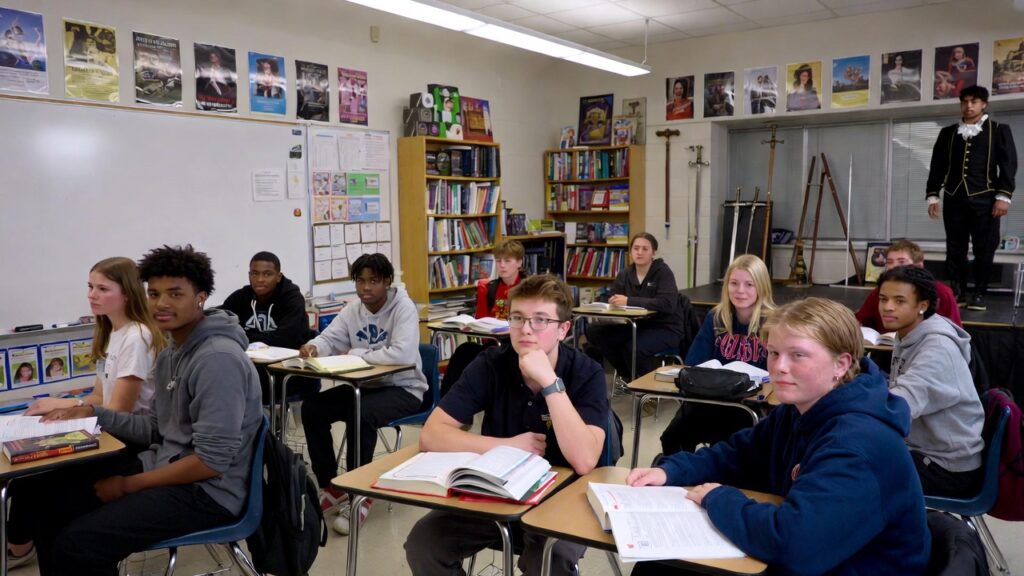
Imagine standing in front of a classroom in a rural high school in Chippewa Falls or Eau Claire, introducing Romeo and Juliet to a group of sophomores. Within minutes, the familiar groans begin: “Why do we have to read this old stuff?” The Elizabethan language feels like a foreign code, the themes seem distant from TikTok drama or current social issues, and engagement drops before it even starts. As an educator in northwestern Wisconsin, you know this scene all too well — yet Shakespeare remains a cornerstone of English Language Arts instruction, offering profound insights into human nature, power, love, identity, and justice that resonate deeply in today’s world.
Cesa 10 Shakespeare resources provide the perfect bridge for teachers in Cooperative Educational Service Agency 10 (CESA 10) districts. This regional agency, serving member districts across counties like Chippewa, Eau Claire, and beyond, delivers high-quality professional learning, curriculum consultation, and collaborative networks tailored to rural and small-town Wisconsin schools. By tapping into CESA 10’s support alongside world-class free tools from the Folger Shakespeare Library and alignment with Wisconsin Standards for English Language Arts, educators can transform these timeless texts from daunting requirements into engaging, standards-aligned experiences that build empathy, critical thinking, vocabulary, and rhetorical skills.
This comprehensive guide equips CESA 10 teachers — from first-year educators to veteran curriculum coordinators — with proven strategies, localized resources, step-by-step lesson ideas, and practical solutions to common challenges. Whether you’re seeking ways to make Shakespeare accessible for diverse learners, integrate performance-based approaches, or connect with regional professional development, you’ll find actionable value here that goes beyond generic teaching tips.
Why Shakespeare Still Matters in CESA 10 Classrooms Today
Shakespeare’s works aren’t relics; they’re living explorations of universal human experiences. In Wisconsin classrooms, they align directly with the Wisconsin Standards for English Language Arts (adopted in 2020 by the Department of Public Instruction), which emphasize close reading of complex texts, analysis of themes, language craft, and speaking/listening skills.
Key alignments include:
- Reading literature standards that require analyzing character development, central ideas, and author’s choices (e.g., RL.9-10/11-12 clusters on craft, structure, and integration of knowledge).
- Expectations for determining word meanings, figurative language, and tone — skills sharpened by Shakespeare’s rich vocabulary and metaphors.
- Speaking/listening standards that encourage collaborative discussions and presentations.
For students in CESA 10’s often rural districts, where access to cultural events might be limited, Shakespeare builds empathy and cultural literacy. Themes like ambition in Macbeth mirror modern discussions of leadership and ethics; identity struggles in Hamlet parallel teen experiences with social media and self-discovery. Research from sources like the Folger Shakespeare Library shows that performance-based engagement increases comprehension and confidence, especially for English learners, students with IEPs, and those facing language barriers.
In a digital age of short attention spans, Shakespeare’s language challenges students to slow down, think deeply, and connect literature to life — skills essential for college, careers, and civic engagement.
Understanding CESA 10’s Support for English Language Arts and Literature Teachers
CESA 10, headquartered in Chippewa Falls, is committed to uniting service and leadership for northwestern Wisconsin schools. As a nonprofit Cooperative Educational Service Agency, it provides tailored support in leadership, consultation, professional learning, and specialized resources to meet district needs.
While specific ELA-focused workshops vary year to year (check the CESA 10 event calendar at registration.cesa10.org for current offerings), the agency excels at facilitating collaborative networks, curriculum alignment with DPI standards, and shared professional development opportunities. Teachers can access:
- Literacy and instructional coaching.
- Regional collaborations for sharing best practices.
- Assistance with implementing state initiatives, including standards-based instruction.
Educators often partner with CESA 10 for grant opportunities, shared digital tools, or networking events that bring together ELA teachers across districts. This collaborative model is especially valuable in rural areas, where individual schools might lack specialized Shakespeare expertise.
Expert insight: The Wisconsin DPI emphasizes that high-quality literature instruction fosters critical thinking and equity — goals CESA 10 advances through its focus on continuous improvement and educator support.
Top Recommended Shakespeare Plays for High School in Wisconsin Contexts
Selecting the right play ensures success. Here’s a comparison tailored to Wisconsin high school needs:
- Romeo and Juliet (Freshmen/Introductory): Themes of young love, family conflict, and fate. Accessible language entry point; aligns with standards on character relationships and tragedy.
- Macbeth (Sophomores/Juniors): Ambition, guilt, power. High engagement through supernatural elements and moral dilemmas; strong for rhetorical analysis.
- Hamlet (Juniors/Seniors): Existential questions, revenge, madness. Advanced text for deep thematic exploration.
- A Midsummer Night’s Dream (Alternative/Lighter): Comedy, magic, identity. Fun, shorter, ideal for performance.
Proven Strategies to Teach Shakespeare Effectively
The most successful Shakespeare teachers in Wisconsin — and especially in CESA 10 districts — move beyond passive reading. They embrace active, embodied, and relevant approaches that make the text come alive. Below are the highest-impact strategies, drawn from decades of classroom experience, Folger Shakespeare Library best practices, and feedback from rural and small-district educators.
Start with the Folger Method: Active, Performance-Based Learning
The Folger Shakespeare Library’s approach is widely regarded as the gold standard for high school instruction. Its core philosophy: Shakespeare’s plays were written to be performed, not silently read. When students speak the lines, move their bodies, and embody characters, comprehension soars.
Key techniques include:
- Two-Line Scenes — Pair students to perform short exchanges from the play (e.g., Macbeth and Lady Macbeth’s dagger scene). No memorization required — just read aloud with expression.
- Cue Scripts — Give actors only their own lines and the three words before each entrance. This forces listening and natural delivery — a favorite in CESA 10 workshops for building confidence quickly.
- Tableau and Freeze Frames — Students create silent, frozen stage pictures of key moments (e.g., the banquet scene in Macbeth). Perfect for visual learners and ELL students.
These methods require zero props or costumes and work beautifully in small rural classrooms with limited space.
Building Confidence with No-Fear Shakespeare Techniques
Many students shut down at first sight of Elizabethan English. Counter this with:
- Side-by-Side Texts — Use No Fear Shakespeare (free online at SparkNotes) or Folger’s digital editions featuring modern paraphrases opposite the original.
- Chunking the Text — Break scenes into 10–20 line segments. Read the modern version first, discuss meaning, then return to the original for language appreciation.
- Vocabulary Pre-Teaching — Front-load 8–12 high-frequency words (e.g., “thou,” “thee,” “wherefore,” “fie”) with quick games: Shakespeare Charades or Word Bingo.
Incorporating Modern Translations and Adaptations
Bridge the gap with contemporary versions:
- Graphic Novels — Neil Gaiman’s A Midsummer Night’s Dream or Gareth Hinds’ illustrated Macbeth and Romeo and Juliet.
- Film Clips — Show Zeffirelli’s 1968 Romeo and Juliet for classic romance, Baz Luhrmann’s 1996 version for modern energy, or the 2010 Macbeth with Patrick Stewart for mature audiences.
- YouTube Performances — The Globe’s free full productions or the Royal Shakespeare Company’s short scene breakdowns.
These visuals help students “see” the story before tackling the language.
Modern Connections and Relevance
Students engage when they see themselves in the text. Create relevance with:
- Thematic Parallels — Compare Lady Macbeth’s ambition to modern influencer culture or political power struggles.
- Social Media Projects — Have students create Instagram/TikTok-style posts as characters (e.g., Hamlet’s “To be or not to be” as a moody selfie caption).
- Rewrite Challenges — Rewrite a scene in modern slang or as a text-message thread — excellent for understanding subtext and motivation.
Differentiation for All Learners
- ELL & Special Education — Provide audio versions (LibriVox free recordings), sentence starters for discussion, and visual glossaries.
- Advanced Students — Assign independent research on Elizabethan context, staging history, or feminist readings of Lady Macbeth.
- Mixed-Ability Groups — Use flexible grouping: stronger readers handle original text, others use paraphrases, then all collaborate on performance.
Incorporating Technology Ethically
- myShakespeare.com — Interactive, annotated editions with videos and explanations.
- Padlet & Google Jamboard — Digital walls for collecting quotes, themes, and student responses.
- AI Tools — Use ChatGPT or similar to generate modern paraphrases (with clear guidelines: students must compare and critique the output).
These strategies have been tested and refined in Wisconsin classrooms, including many CESA 10 districts, and consistently increase student participation and depth of understanding.
CESA 10-Specific Resources and Professional Development Opportunities
CESA 10’s strength lies in its personalized, regional focus. While specific workshop titles change annually, educators regularly benefit from:
- Literacy and instructional design PD series
- Standards-alignment consultations
- Collaborative teacher networks and book studies
- Access to shared digital curriculum resources and grant opportunities
Practical steps for CESA 10 teachers:
- Visit cesa10.k12.wi.us → Professional Learning → Event Calendar and search for “ELA,” “literature,” or “standards.”
- Contact your district’s CESA 10 consultant to request customized Shakespeare-focused PD or co-planning sessions.
- Join regional ELA teacher networks (often facilitated through CESA 10) to share unit plans, performance videos, and assessment ideas.
- Explore DPI–CESA partnerships for literacy grants that can fund classroom sets of texts, guest artists, or virtual field trips to performances.
Step-by-Step Sample Lesson Plans and Unit Ideas
Here are ready-to-use, classroom-tested plans specifically designed with CESA 10 high school realities in mind: limited prep time, mixed-ability classes, and rural scheduling constraints. Each plan is flexible, standards-aligned, and emphasizes active learning.
5-Day Introductory Unit: “Unlocking Shakespeare’s Language” (Sonnet 18 & Basics)
Goal: Build confidence with Shakespearean language before diving into a full play Grade Level: 9–10 Wisconsin Standards Focus: RL.9-10.4 (figurative language), L.9-10.4 (word meanings), SL.9-10.1 (collaborative discussion)
- Day 1 – Language Boot Camp Introduce iambic pentameter with a simple clap-along exercise (“Shall I compare thee to a summer’s day?”). Play short audio clips of actors reading Sonnet 18. Students mark stressed/unstressed syllables in pairs.
- Day 2 – Paraphrase & Visualize Provide side-by-side modern translation. Students work in small groups to create a one-sentence summary of each quatrain + couplet. Then draw a quick visual representation of the imagery (summer’s day, eternal beauty).
- Day 3 – Performance & Tone Students read the sonnet aloud in different tones: romantic, sarcastic, angry, mournful. Class votes on the most effective interpretation and discusses how tone changes meaning.
- Day 4 – Creative Response Options:
- Write a modern sonnet responding to Shakespeare’s (14 lines, any rhyme scheme)
- Create a meme or Instagram post as if Shakespeare posted the sonnet today
- Day 5 – Assessment & Reflection Exit ticket: “One thing I now understand about Shakespeare’s language that I didn’t before.” Optional low-stakes quiz on key terms (iambic pentameter, quatrain, volta, couplet).
This mini-unit takes only 5 class periods and dramatically reduces fear of the language for the rest of the semester.
Full Macbeth Unit Outline (4–5 Weeks)
Goal: Deep thematic and character analysis + performance experience Grade Level: 10–12 Key Standards: RL.11-12.2 (central ideas), RL.11-12.3 (character development), W.11-12.9 (textual evidence)
- Week 1 – Orientation & Context Background: Elizabethan England, James I & witchcraft, “curse” legend. Watch 5-minute Globe Theatre intro video. Read Act 1, Scene 1–3 aloud (witches + Macbeth’s first prophecy). Use tableau to visualize the witches’ meeting.
- Week 2 – Rising Action & Ambition Read Acts 1.4–2.4. Focus on soliloquies (“If it were done when ’tis done”). Activity: “Ambition Spectrum” — students place characters (Macbeth, Lady Macbeth, Banquo) on a line from “Healthy ambition” to “Destructive ambition” with evidence.
- Week 3 – Guilt & Madness Read Acts 3–4. Key scenes: Banquet hallucination, Macduff’s family murder. Performance: Students stage the banquet scene in groups (no full costumes needed — use tables and chairs). Modern connection: Compare guilt in Macbeth to contemporary stories of public figures facing consequences.
- Week 4 – Climax, Fall & Resolution Finish Act 5. Discuss tragic flaw, catharsis. Culminating Project Options (choose one):
- Modern adaptation scene (5–7 minutes, performed or filmed)
- Analytical essay: “How does Shakespeare use supernatural elements to explore human nature?”
- Character podcast episode (students record as Macbeth, Lady Macbeth, or witches reflecting on events)
- Assessment Ideas
- Formative: Quote journals, exit tickets, group performance rubrics
- Summative: Essay or project + participation/self-reflection
These units are modular — teachers can shorten or expand based on pacing needs common in CESA 10 districts.
Common Challenges and Solutions for CESA 10 Teachers
| Challenge | Real-World Context (CESA 10) | Practical Solution |
|---|---|---|
| Archaic language scares students | Rural students often have less prior exposure | Use “No Fear” side-by-side texts + daily 5-minute read-alouds with expression |
| Limited class time & packed curriculum | Block scheduling or early release days | Focus on 3–4 key scenes per play + modular mini-units |
| Low budget for texts/films | Rural district funding constraints | Rely on free resources: Folger digital texts, Project Gutenberg, YouTube Globe RSC |
| Student resistance / “It’s boring” | Digital-native learners | Start with performance + modern connections (memes, social media, film clips) |
| Differentiating for wide ability range | Mixed-ability classrooms common | Tiered materials (original, paraphrase, graphic novel) + flexible grouping |
| Lack of local performance opportunities | Distance to major theaters | Virtual field trips (Globe on Screen streams), student-led performances, or Zoom guest actors |
These solutions have been successfully implemented by many northwestern Wisconsin teachers over the years.
FAQs: Teaching Shakespeare in CESA 10 Schools
These are the questions most frequently asked by northwestern Wisconsin English teachers when planning Shakespeare units. Answers are practical, based on real classroom experience and regional resources.
1. What is the best Shakespeare play to start with for freshmen in a CESA 10 high school? Romeo and Juliet is the strongest choice for most 9th-grade classes. Its accessible themes (young love, family conflict, peer pressure), shorter length, and abundance of free performance resources make it ideal for building confidence with Shakespearean language early in high school.
2. How can I get CESA 10 funding or support for Shakespeare professional development? Contact your district’s assigned CESA 10 consultant directly (find contact info at cesa10.k12.wi.us). Many districts have access to professional learning stipends, mini-grants, or collaborative PD funds. You can also propose a regional teacher book study or workshop on Shakespeare pedagogy — CESA 10 frequently supports teacher-led initiatives.
3. Are there Wisconsin-specific academic standards that require teaching Shakespeare? No single standard names Shakespeare, but the Wisconsin Standards for English Language Arts (2020) require students to read and analyze complex, grade-level literary texts, including classic works of drama. Shakespeare consistently meets these expectations for craft, structure, language, and themes across grades 9–12.
4. What are the absolute best free online resources for teaching Shakespeare? Top recommendations (all 100% free):
- Folger Shakespeare Library (folger.edu) — digital texts, lesson plans, videos
- myShakespeare.com — interactive annotated editions with performance clips
- No Fear Shakespeare (sparknotes.com/nofear) — side-by-side modern translations
- The Royal Shakespeare Company Learning Zone (rsc.org.uk/education) — free teacher guides and scene breakdowns
- Globe Theatre YouTube channel — full performances and short educational videos
5. How do I handle students who say “Shakespeare is boring” or “I don’t understand it”? Start with performance, not silent reading. Use short, active techniques (two-line scenes, tableau, modern connections) from day one. Show a high-energy film clip (Baz Luhrmann’s Romeo + Juliet works wonders). Build success early so students feel capable before tackling longer passages.
6. Can I teach Shakespeare without buying class sets of books? Yes — many CESA 10 teachers successfully use free digital texts from Folger and Project Gutenberg, paired with school Chromebooks or personal devices. Print only key scenes if needed. Graphic novel versions (often available through interlibrary loan) are another low-cost alternative.
7. How much time should a full Shakespeare unit take in a typical high school schedule? Most successful units run 3–5 weeks (15–25 class periods). Focus on 3–5 key scenes deeply rather than reading every line. Use modular activities so you can shorten if needed for testing windows or early dismissals.
8. Are there virtual or in-person Shakespeare performance opportunities near CESA 10? Options include:
- Virtual streams from the Globe Theatre (often affordable or free for schools)
- UW-Eau Claire or UW-Stout theater departments (occasional student productions)
- Great River Shakespeare Festival in Winona, MN (about 1½ hours from Eau Claire) — they sometimes offer school matinees or workshops
Teaching Shakespeare in a CESA 10 classroom doesn’t have to be intimidating — for you or your students. With the right approach, regional support, and a toolkit of active, relevant strategies, these 400-year-old plays become powerful vehicles for building empathy, critical thinking, vocabulary, and confidence in northwestern Wisconsin students.
You don’t need a big budget, a theater program, or years of Shakespeare expertise. Start small: try one performance activity, use one free Folger resource, reach out to your CESA 10 consultant for collaboration. Every time a student “gets” a soliloquy, connects a theme to their own life, or finds courage to speak Shakespeare’s words aloud, you’ve opened a door to deeper understanding of literature and of being human.
Shakespeare belongs to everyone — including the students in Chippewa Falls, Eau Claire, and every rural corner of CESA 10. With the tools and support outlined here, you’re fully equipped to help them claim that inheritance.
Take one step this week: pick a single strategy from this guide and try it. Then share what worked (or didn’t) with a colleague or your regional network. Together, Wisconsin educators continue to keep Shakespeare alive, relevant, and powerful for the next generation.