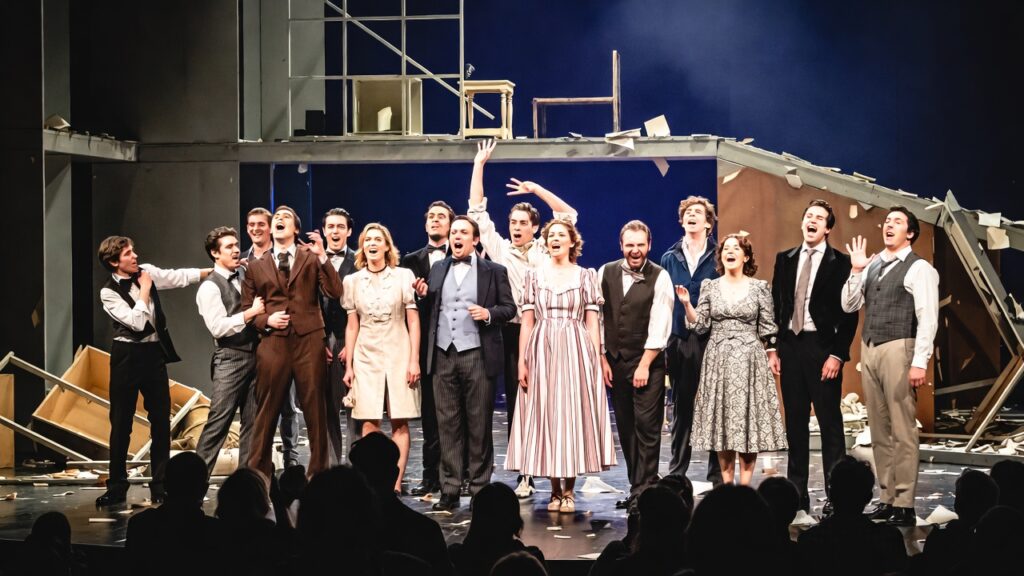
Imagine this: It’s opening night. The lights rise on a grand 1920s manor set. A young groom lies dead on a chaise longue. The inspector strides in to solve the mystery. But within seconds, the corpse twitches, the mantelpiece collapses, a door refuses to open, and the butler mangles every word he attempts. What begins as a sincere attempt at a classic whodunit spirals into glorious, relentless chaos. Welcome to The Play That Goes Wrong, the Olivier and Tony Award-winning masterpiece of metatheatrical farce from Mischief Theatre.
In The Play That Goes Wrong, the characters of the Cornley Polytechnic Drama Society (often simply called the Cornley Drama Society) turn a simple 1920s murder mystery into an unforgettable comedy of errors. These hapless amateur actors, desperately trying to deliver a polished production of The Murder at Haversham Manor, become the true stars as everything—from props to pronunciation—goes disastrously awry.
Whether you’re a longtime fan planning to see the show again, a theatre student studying physical comedy, or someone curious about why this production has become a global phenomenon (with long runs in London’s West End, on Broadway, and worldwide tours), this ultimate guide delivers the depth you’re seeking. We’ll break down every major character in the Cornley troupe, explore their personalities, dual roles in the inner play, iconic comedic moments, and why they resonate so powerfully. Drawing from the original Mischief creations, production history, and insights into farce traditions (including echoes of Shakespearean comedy and classics like Noises Off), this comprehensive resource goes beyond basic summaries to offer real value: deeper understanding, performance tips, and context that enhances enjoyment and appreciation.
Understanding the Structure: Actors vs. Characters in The Play That Goes Wrong
At its core, The Play That Goes Wrong is a play-within-a-play—or more precisely, a disastrous production framed by the incompetent but earnest efforts of the Cornley Polytechnic Drama Society. The “outer” layer features the society’s members as flawed, endearing people with big dreams and minimal talent. The “inner” layer is their ambitious staging of The Murder at Haversham Manor, a Christie-esque mystery where a groom is murdered on his wedding day, and suspects include family, friends, and staff.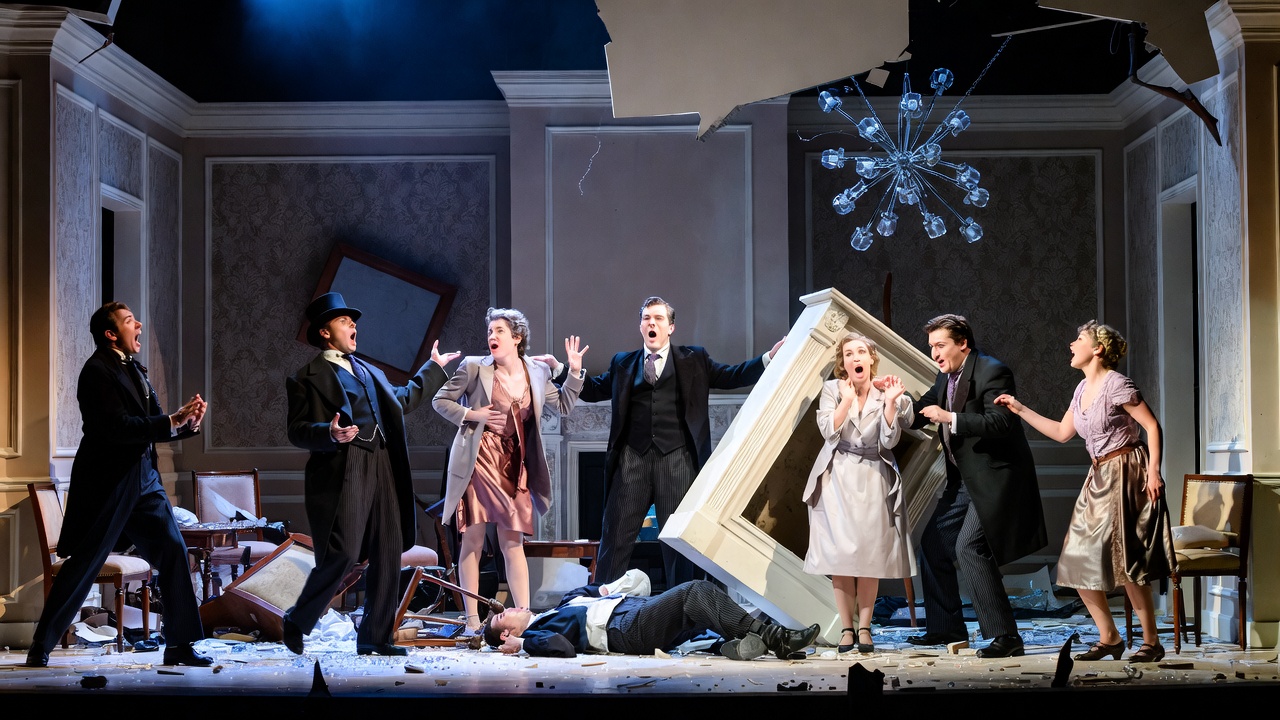
The humor arises from the constant collision between these layers: actors breaking character to fix mishaps, forgetting lines, suffering injuries, and desperately improvising while pretending nothing is wrong. This metatheatrical structure, masterfully executed by creators Henry Lewis, Jonathan Sayer, and Henry Shields, pays homage to farce traditions while adding modern physical comedy and fourth-wall breaks.
Here’s a clear breakdown of the main Cornley members and their roles in the murder mystery:
| Cornley Actor | Role in The Murder at Haversham Manor | Key Personality Traits of the Cornley Actor | Primary Comedic Contribution |
|---|---|---|---|
| Chris Bean | Inspector Carter | Overzealous perfectionist, multi-tasker (director, designer, etc.) | Desperate attempts to salvage the show amid total collapse |
| Jonathan Harris | Charles Haversham (the corpse) | Earnest, self-imagined action hero (James Bond vibes) | Endless physical comedy as the “dead” body refuses to stay still |
| Robert Grove | Thomas Colleymoore | Bombastic “theatre lovey,” Richard Burton-style declaimer | Over-the-top speeches ignoring surrounding disasters |
| Dennis Tyde | Perkins the Butler | Shy, socially awkward, joins for friendship | Hilarious mispronunciations and line-forgetting |
| Sandra Wilkinson | Florence Colleymoore | Conceited diva, spotlight hog | Rivalry-fueled antics, concussion subplot |
| Max Bennett | Cecil Haversham / Arthur the Gardener | Inexperienced newbie, eager but naive | Double-role confusion, scenery-chewing, audience breaks |
| Annie Twilloil | (Stage manager; steps in as Florence) | Dedicated, frazzled problem-solver | Heroic but chaotic backstage interventions |
| Trevor Watson | (Lighting & sound operator; no role) | Grumpy techie who despises actors | Wrong cues, accidental onstage appearances |
This table captures the essence: every Cornley member contributes uniquely to the escalating mayhem.
Meet the Cornley Drama Society – The Real Characters Behind the Chaos
The brilliance of The Play That Goes Wrong lies in its perfectly crafted characters: each one is a fully realized, flawed individual whose personality fuels the escalating disaster. These are not just archetypes; they are believable amateur thespians whose ambitions and insecurities clash spectacularly on stage. Below, we explore each major member of the Cornley Polytechnic Drama Society in depth, drawing from the original Mischief Theatre scripts, interviews with creators Henry Lewis, Jonathan Sayer, and Henry Shields, and observations from multiple productions.
Chris Bean (Plays Inspector Carter)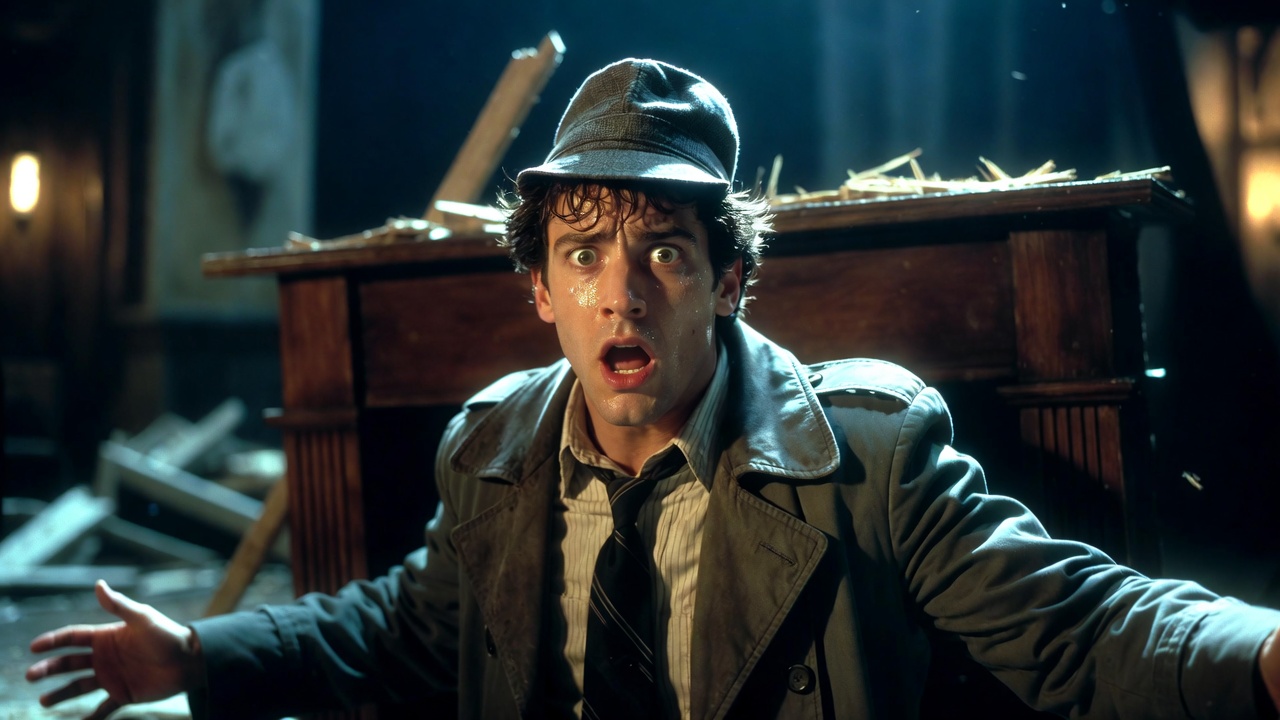
Chris Bean is the heart and soul of the Cornley Drama Society—its ambitious director, designer, costume supervisor, and lead actor all rolled into one. As the self-appointed leader, he embodies the classic high-status clown: he believes he is the only thing standing between the production and total failure. His Inspector Carter role requires him to exude authority, but the reality is far different.
Personality & Traits
- Perfectionist to a fault
- Desperately tries to maintain control
- Quick to blame others while refusing to admit his own mistakes
Comedic Highlights
- Repeated attempts to fix collapsing scenery while delivering lines
- Iconic moments like shouting “We’re fine!” as the set disintegrates
- The final act’s desperate, sweat-drenched improvisation
Expert Insight Chris’s character echoes the overconfident authority figures in Shakespearean comedy—think Malvolio in Twelfth Night or the pompous Armado in Love’s Labour’s Lost. The humor comes from the gap between his self-image and reality, a timeless farce device.
Jonathan Harris (Plays Charles Haversham)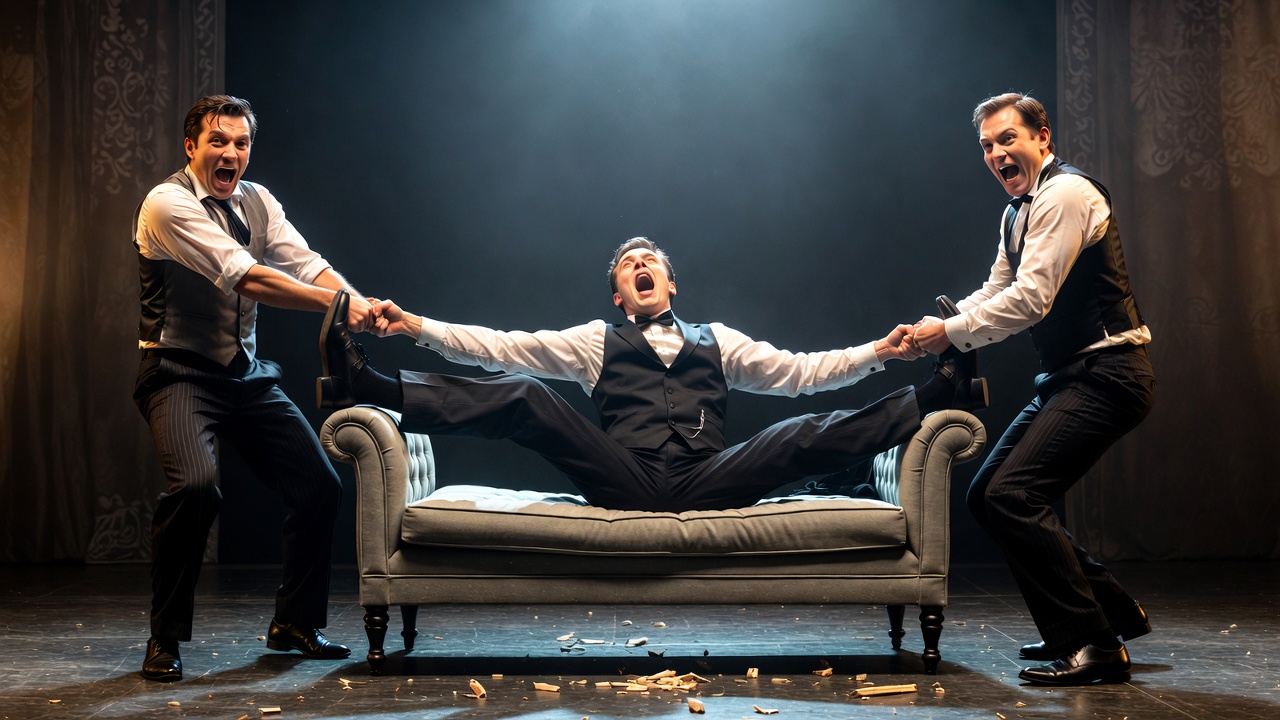
Jonathan is the earnest, well-meaning actor who has cast himself as the groom, Charles Haversham—the “corpse” at the center of the murder mystery. He dreams of being a Hollywood action hero, but his physical comedy is pure slapstick.
Personality & Traits
- Clumsy and accident-prone
- Genuinely believes he’s delivering a nuanced performance
- Suffers the most physically demanding mishaps
Comedic Highlights
- The body that refuses to stay dead (rolling off the chaise, being dragged across the stage)
- The “durmatory” scene where he’s repeatedly dropped or propped up incorrectly
- Audience interaction when he’s “accidentally” left onstage too long
Performance Tip Corpse comedy requires total physical commitment and trust in fellow actors. Jonathan’s role is a masterclass in how stillness can be hilarious when everything else is chaos.
Robert Grove (Plays Thomas Colleymoore)
Robert is the bombastic “theatre lovey,” channeling a Richard Burton-style delivery with every line. He loves the sound of his own voice and remains oblivious to the disasters around him.
Personality & Traits
- Grandiose and declamatory
- Insists on “proper” theatre technique
- Never breaks character, no matter what
Comedic Highlights
- Delivering passionate monologues while the set falls apart
- Ignoring obvious mistakes to continue his over-the-top performance
- The moment he’s left holding a broken door handle
Expert Insight Robert’s character pays tribute to the old-school Shakespearean actors who could recite entire soliloquies regardless of circumstance—a nod to the enduring tradition of “the show must go on.”
Dennis Tyde (Plays Perkins the Butler)
Dennis is the shy, socially awkward member who joined the society to make friends. He struggles with lines and pronunciation, turning every dialogue into a linguistic minefield.
Personality & Traits
- Eager to please but chronically nervous
- Constantly apologizes (both in and out of character)
- Joins theatre to overcome shyness
Comedic Highlights
- Mispronunciations like “durmatory” for “dormitory” and “h’arm” for “arm”
- Line-forgetting leading to frantic ad-libs
- The moment he’s forced to read stage directions aloud
Unique Angle Dennis is the most relatable character for amateur actors everywhere. His struggles highlight the universal fear of forgetting lines on stage.
Sandra Wilkinson (Plays Florence Colleymoore)
Sandra is the diva of the group—conceited, competitive, and always fighting for the spotlight. Her rivalry with Annie (the stage manager) adds extra tension.
Personality & Traits
- Self-centered and dramatic
- Quick to take offense
- Insists on her “star” status
Comedic Highlights
- The concussion subplot where she gets increasingly loopy
- Physical altercations with other characters
- The moment she’s replaced by Annie and refuses to leave the stage
Expert Insight Sandra’s character explores the ego-driven side of amateur theatre, a theme that resonates with anyone who’s ever been in a community production.
Max Bennett (Plays Cecil Haversham / Arthur the Gardener)
Max is the inexperienced newcomer, wide-eyed and eager but completely out of his depth. He’s assigned two roles, leading to hilarious confusion.
Personality & Traits
- Naive and enthusiastic
- Desperate to impress Chris
- Tends to overact and break the fourth wall
Comedic Highlights
- Switching between characters with minimal costume changes
- Accidental audience interaction
- The “wrong twin” mix-up
Performance Tip Max’s double-role requires precise timing and costume quick-changes—skills that test even professional actors.
Annie Twilloil (Stage Manager / Plays Florence later)
Annie is the unsung hero: the dedicated stage manager who keeps the show running despite constant disasters. She steps in as Florence when Sandra is incapacitated.
Personality & Traits
- Practical, problem-solving
- Increasingly frazzled as the night progresses
- Deeply committed to the production
Comedic Highlights
- Backstage interventions that go horribly wrong
- The moment she has to perform while wearing a headset
- The final act’s heroic save
Trevor Watson (Lighting & Sound Operator)
Trevor is the grumpy techie who despises actors and would rather be anywhere else. He’s responsible for some of the show’s most catastrophic mistakes.
Personality & Traits
- Sarcastic and antisocial
- Constantly annoyed by actors’ demands
- Takes petty revenge through bad cues
Comedic Highlights
- Playing the wrong sound effects at the worst moments
- Accidental onstage appearances
- The “blackout” that lasts too long
Expert Insight Trevor represents the eternal tension between actors and technicians—a dynamic that every theatre practitioner recognizes.
Iconic Moments and Comedic Breakdowns by Character
The true genius of The Play That Goes Wrong lies in how individual character quirks combine to create unforgettable set-piece disasters. Below are some of the production’s most celebrated moments, organized by the Cornley member most responsible for (or victimized by) the chaos.
Physical Comedy Highlights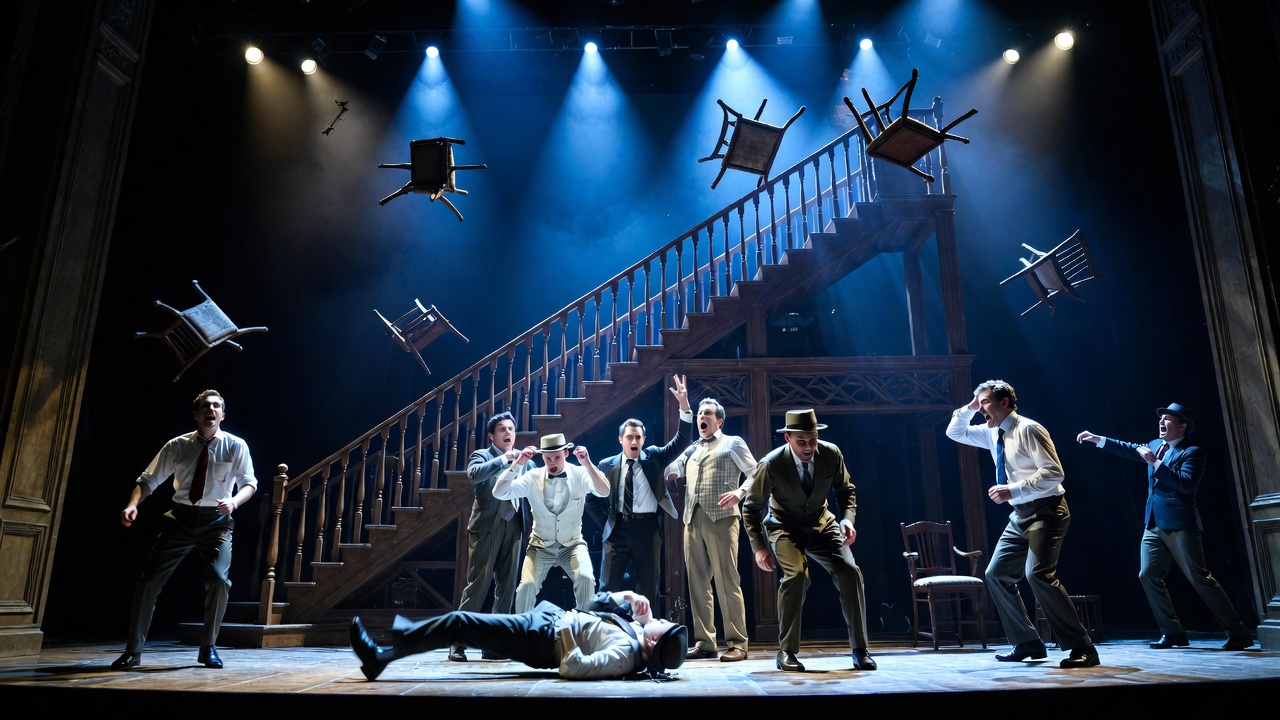
- The Durmatory Debacle Jonathan Harris (as the corpse Charles Haversham) is supposed to be carried offstage by Thomas Colleymoore (Robert Grove) and Cecil Haversham (Max Bennett). Instead, the body becomes impossibly heavy, gets stuck in doorways, slides off shoulders, and ends up being dragged across the floor by the ankles. This extended sequence is pure physical farce, requiring precise timing and trust among the cast.
- The Collapsing Mantelpiece Chris Bean’s Inspector Carter repeatedly tries to lean casually against the fireplace mantel—only for it to break, fall, and nearly crush him. Each time he resets the piece, it collapses again in a slightly different (and more catastrophic) way. The repetition builds escalating hilarity.
- The Flying Door When a door is supposed to open normally, it instead detaches entirely and flies across the stage. Robert Grove’s Thomas Colleymoore continues his monologue while holding the detached doorknob, pretending nothing has happened.
Line Mishaps and Improvisation
- Dennis’s Pronunciation Nightmares Dennis Tyde’s Perkins the Butler delivers one of the most quoted lines in modern theatre: “I put him in the durmatory… I mean, the dormitory… I mean, the study.” Every mispronunciation is delivered with increasing panic and sincerity, turning a simple line into a comedic tour de force.
- Chris’s Desperate Cover-Ups When lines are forgotten or props fail, Chris Bean (as both director and Inspector) launches into increasingly convoluted explanations: “The Inspector… has just remembered… that he left his… magnifying glass… in the… other room!” These ad-libs grow more absurd as the night progresses.
- Sandra’s Concussion Sequence After being hit on the head (accidentally, of course), Sandra Wilkinson’s Florence begins slurring lines, forgetting who she is, and eventually delivering someone else’s dialogue. The gradual descent into incoherence is both hilarious and strangely touching.
Ensemble Chaos
The moments when multiple disasters collide are the show’s peaks:
- The blackout where Trevor plays funeral music instead of dramatic underscoring
- Annie rushing onstage in her headset to fix a light, only to become part of the action
- Max accidentally addressing the audience directly when he forgets which character he’s playing
- The final attempt to get the curtain call right—only for the set to completely collapse around the bowing cast
These sequences showcase Mischief Theatre’s signature style: layered, escalating mayhem in which every character’s flaw feeds the next disaster.
Production History and Casting Insights
The Play That Goes Wrong premiered at the Old Red Lion Theatre in London in 2012 as a 70-minute fringe production created by three Cambridge University graduates: Henry Lewis, Jonathan Sayer, and Henry Shields. What began as a late-night comedy quickly gained cult status and transferred to the West End’s Apollo Theatre in 2014, where it ran for nearly nine years.
Key Milestones
- 2015: Olivier Award for Best New Comedy
- 2017: Tony Award for Best Scenic Design (the collapsing set is itself an award-winning character)
- International tours in over 30 countries
- Spin-offs: Peter Pan Goes Wrong (2013), The Nativity Goes Wrong (2014), and the BBC television series The Goes Wrong Show (2019–2021)
Casting Philosophy Mischief Theatre prioritizes physical comedy ability and ensemble chemistry over traditional “star” casting. Many original cast members (including Henry Lewis as Chris Bean, Dave Hearn as Max Bennett, and Charlie Russell as Sandra Wilkinson in early runs) remained with the show for years. Touring companies now often feature new actors trained in the precise timing and trust exercises developed by the original team.
Expert Insight The longevity of the production is partly due to its modular structure: the set, props, and gags are meticulously rehearsed, allowing new casts to learn the show in weeks rather than months. This scalability is rare in physical comedy.
Why These Characters Make The Play That Goes Wrong Timeless
Farce has always thrived on exaggerated human flaws exposed under pressure. The Play That Goes Wrong takes this tradition and modernizes it through characters who feel instantly recognizable to anyone who has ever participated in, watched, or even just heard horror stories about community theatre.
Echoes of Classic Comedy
The Cornley Drama Society members draw from a long lineage of comedic archetypes:
- Chris Bean → the overreaching authority figure (Malvolio in Twelfth Night, Dogberry in Much Ado About Nothing, or the pompous manager in Noises Off)
- Sandra Wilkinson → the vain leading lady (think Beatrice in Restoration comedy or diva characters in 20th-century farce)
- Dennis Tyde → the bumbling servant / everyman (a direct descendant of commedia dell’arte’s Arlecchino or Shakespeare’s clowns)
- Robert Grove → the grandiloquent ham actor (a loving tribute to every over-the-top Shakespearean performer who ever forgot the set was falling apart)
Yet these characters never feel like mere copies. Mischief Theatre gives each one a contemporary, relatable inner life: the perfectionist who can’t let go, the shy newcomer desperate to belong, the techie who quietly resents the spotlight. That emotional truth beneath the slapstick is what elevates the show from mere gag-fest to something audiences return to again and again.
Universal Themes Wrapped in Chaos
At its heart, The Play That Goes Wrong celebrates:
- Perseverance — the refusal to cancel the show no matter how disastrous things become
- Teamwork under duress — even when characters hate each other, they ultimately pull together
- The joy of failure — the production is terrible, yet the cast’s dedication makes it strangely triumphant
These themes resonate far beyond theatre fans. In an age of curated social-media perfection, watching gloriously incompetent people refuse to give up feels cathartic and oddly inspiring.
Appeal to Different Audiences
- Theatre students study the precision timing and trust exercises required for physical comedy
- Casual theatregoers love the sheer hilarity and accessibility (no prior knowledge of murder mysteries needed)
- Shakespeare enthusiasts recognize structural and character parallels to the comedies
- Families enjoy the slapstick that works on both child and adult levels
The result is a production that has maintained near-capacity houses for over a decade across multiple continents—a rare feat for any play, let alone a modern farce.
Tips for Aspiring Actors: How to Play These Roles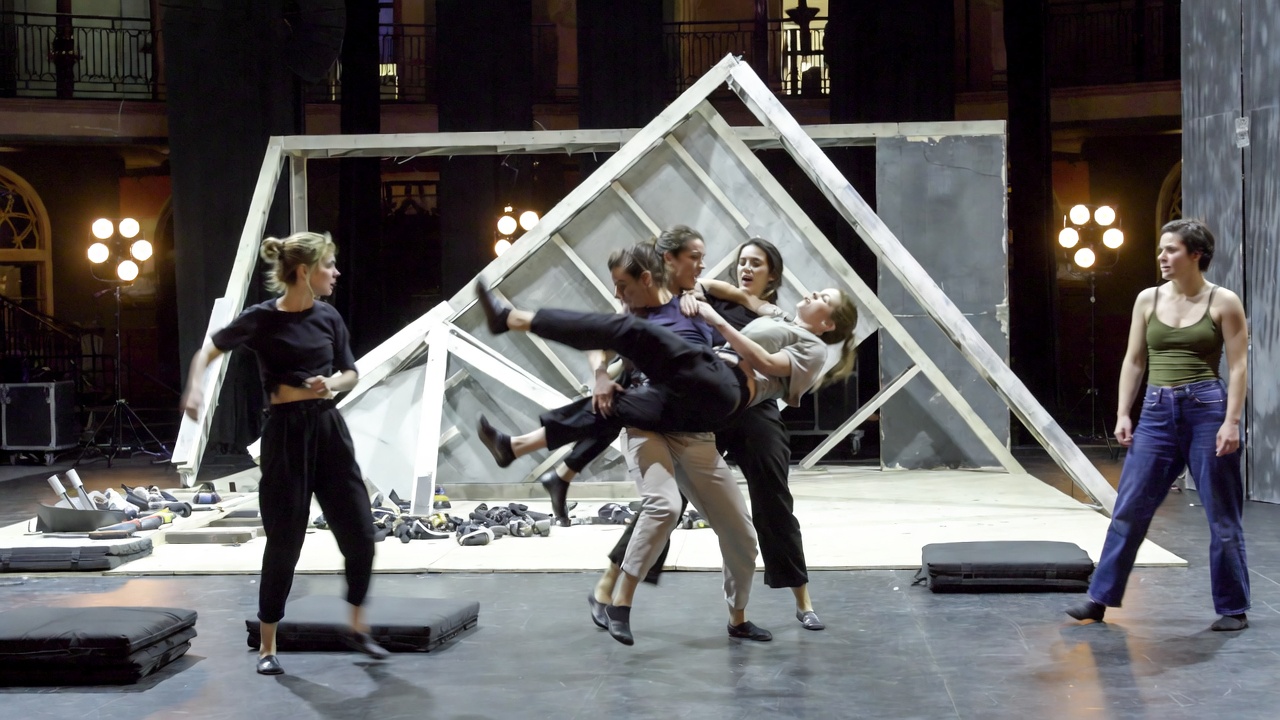
Many drama schools, community groups, and amateur societies now stage licensed productions of The Play That Goes Wrong. If you’re preparing to audition or perform, here are practical insights drawn from the show’s demands.
Physical Preparation
- Core strength & flexibility — you’ll be lifting, dragging, falling, and recovering repeatedly
- Falling safely — learn stage falls; most injuries in amateur productions come from poorly executed tumbles
- Endurance — the show runs ~2 hours with almost no breaks for the on-stage cast
Voice & Accent
- Received Pronunciation (RP) — the murder mystery is set in a 1920s English manor, so crisp British accents are essential
- Projection under chaos — practice delivering lines clearly even when running, falling, or being hit by props
Building Ensemble Chemistry
- Trust exercises are non-negotiable — the corpse-dragging sequence requires complete faith in your scene partners
- Rehearse “failure states” — practice what happens when props break or cues are missed
- Develop personal “fix-it” habits for your character — Chris always tries to reset scenery, Dennis panics and apologizes, etc.
Safety & Staging Notes
- Work closely with a fight director or physical comedy coach
- Use crash mats for repeated falls (especially the mantelpiece and chaise longue sequences)
- Mark “danger zones” on the set where collapsing elements could cause real harm
Mastering these roles teaches skills that transfer to almost any physical comedy or farce—including Shakespeare’s own comedies.
Frequently Asked Questions (FAQs)
Who are the main characters in The Play That Goes Wrong? The eight core members of the Cornley Polytechnic Drama Society: Chris Bean, Jonathan Harris, Robert Grove, Dennis Tyde, Sandra Wilkinson, Max Bennett, Annie Twilloil, and Trevor Watson.
What is the play-within-a-play called? The Murder at Haversham Manor — a classic 1920s whodunit about the murder of groom Charles Haversham on his wedding night.
How many actors are in the cast? Eight on-stage performers. The original production uses exactly eight actors, with no understudies appearing in the main action.
Is there a female character who plays multiple roles? Annie Twilloil (stage manager) steps in to play Florence Colleymoore when Sandra is knocked unconscious, creating one of the show’s funniest role switches.
What makes the characters so funny? Each character’s specific personality flaw collides with the others’ flaws at the worst possible moment. The humor is character-driven rather than purely situational.
Has the show changed much since its premiere? The core structure and most iconic gags remain the same, but touring companies occasionally tweak lines or business to suit local audiences or new cast strengths.
Is it appropriate for children? Generally yes—there is no strong language, sexuality, or graphic violence. The slapstick appeals to all ages, though very young children may find the prolonged chaos overwhelming.
Are there other “Goes Wrong” shows? Yes—Mischief Theatre has created Peter Pan Goes Wrong, The Nativity Goes Wrong, Magic Goes Wrong, and the television series The Goes Wrong Show.
Can amateur groups perform it? Yes—licensing is available through Samuel French / Concord Theatricals. However, it requires strong physical comedy skills, a reliable set crew, and careful safety planning.
Final Thoughts: Celebrating the Hilarious Heart of Cornley
The Play That Goes Wrong succeeds because its characters are not laughing at amateur theatre—they are laughing with it. Every missed cue, every collapsing flat, every mangled line reflects something deeply human: the stubborn, beautiful determination to create art even (especially) when everything goes wrong.
Whether you’re seeing the show for the first time, returning for the fifth, or preparing to step onto a stage yourself, understanding the Cornley Drama Society members deepens the joy. They remind us that perfection is overrated—sometimes the greatest performances emerge from glorious, unrestrained imperfection.
So the next time you hear someone mispronounce “dormitory” as “durmatory,” or watch a corpse stubbornly refuse to stay dead, smile. You’re in excellent company.