Imagine standing at a graveside on a quiet afternoon, the wind gently stirring the leaves, as a loved one’s life is remembered not with tears alone, but with words that rise above sorrow. A voice reads slowly: “I have fought the good fight, I have finished the race, I have kept the faith.” From 2 Timothy 4:7, these words cut through grief like sunlight, affirming that the departed lived with purpose, courage, and unwavering conviction. For countless families, this biblical passage stands as one of the most cherished funeral readings—powerful, concise, and deeply comforting. It transforms a final farewell into a celebration of endurance and triumph.
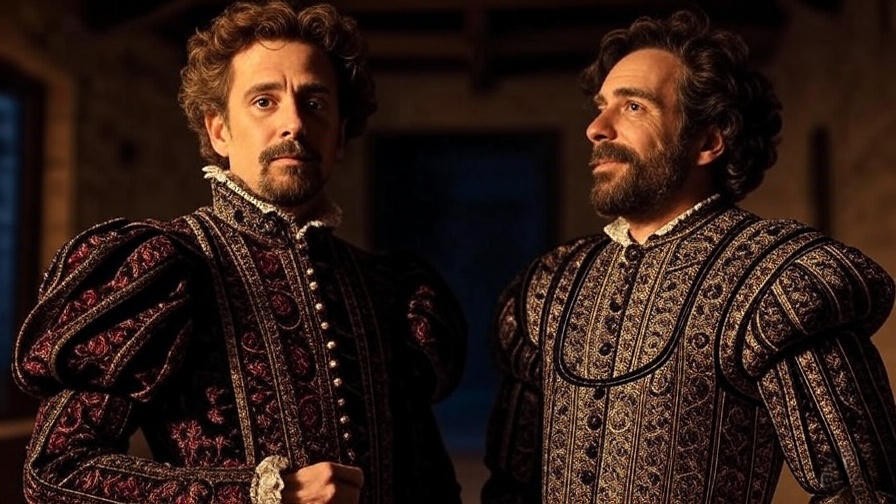
Yet what if those ancient words could gain even greater resonance through the lens of William Shakespeare, the greatest poet of the English language? Shakespeare’s plays and sonnets are filled with meditations on life’s battles, the race against time, honorable deaths, and legacies that outlive the body. While the exact phrase belongs to the Apostle Paul, Shakespeare’s explorations of similar themes—struggle, valor, mortality, and eternal remembrance—offer profound parallels that enrich the scripture’s message. This article draws on literary scholarship to bridge these timeless sources, providing deeper insight for anyone seeking a meaningful funeral tribute, eulogy, or personal reflection.
Whether you’re planning a service, writing a eulogy, or simply grappling with loss, here you’ll find not just quotes, but thoughtful connections that honor both faith and human artistry. By blending Paul’s triumphant declaration with Shakespeare’s poetic wisdom, we can create memorials that feel uniquely personal and profoundly uplifting.
The Biblical Foundation: Understanding “I Have Fought the Good Fight”
The words “I have fought the good fight” come from the Apostle Paul’s second letter to Timothy, written near the end of his life. Imprisoned in Rome and facing imminent execution under Nero, Paul pens what many scholars consider his spiritual last will and testament.
The Context in 2 Timothy 4:6–8
In the King James Version, the passage reads: “For I am now ready to be offered, and the time of my departure is at hand. I have fought a good fight, I have finished my course, I have kept the faith: Henceforth there is laid up for me a crown of righteousness, which the Lord, the righteous judge, shall give me at that day: and not to me only, but unto all them also that love his appearing.”
Paul employs vivid athletic metaphors drawn from the Greco-Roman world: the “fight” (agōn, an intense contest or struggle), the “course” or race (dromos), and the prize of a “crown.” These images were familiar to his audience—think of Olympic games or gladiatorial arenas—yet Paul reorients them toward spiritual perseverance. He isn’t boasting of personal achievement but testifying to God’s faithfulness through a life of ministry, hardship, and fidelity.
Modern translations like the NIV render it smoothly: “I have fought the good fight, I have finished the race, I have kept the faith.” The slight variations preserve the core: a life completed with integrity, looking forward to divine reward.
Why This Passage Resonates at Funerals
Funeral professionals and clergy often note that 2 Timothy 4:7 ranks among the most requested scripture readings for Christian services, especially for those who lived long, faithful lives or faced prolonged trials. It shifts focus from loss to victory, from earthly struggle to heavenly rest. The passage comforts mourners by:
- Affirming the deceased’s character and contributions.
- Offering hope of eternal reward.
- Providing a framework for understanding suffering as part of a purposeful “race.”
In secular or mixed-faith settings, the language of perseverance and legacy still resonates universally, making it adaptable beyond strict religious contexts.
Why Pair Scripture with Shakespeare? Literary and Thematic Synergies
William Shakespeare lived in an era steeped in biblical language. The Geneva Bible and later the King James Version (published in 1611, just five years before Shakespeare’s death) influenced Elizabethan culture profoundly. Scholars estimate Shakespeare incorporated over 1,300 biblical allusions across his works, reflecting deep familiarity with Scripture even as he explored humanistic themes.
Shared Human Concerns: Life as Battle, Race, and Journey
Paul’s metaphors of fight and race find echoes in Shakespeare’s recurring depictions of existence as conflict and pilgrimage. Life, for Shakespeare, is rarely passive—characters wrestle with ambition, honor, fate, and morality. The “good fight” implies not just survival, but noble striving; similarly, Shakespeare’s heroes often define themselves through how they face adversity.
Shakespeare’s Exploration of Mortality and Triumphant Legacy
Unlike Paul’s assured hope, Shakespeare frequently confronts the fragility of life (“Tomorrow, and tomorrow, and tomorrow…” from Macbeth). Yet he also celebrates those who meet death with dignity, leaving behind reputations that endure. This tension—between transience and immortality—makes his insights complementary to Paul’s: the Bible promises divine crown, Shakespeare explores human legacy through memory, art, and virtue.
Key Shakespearean Parallels to “I Have Fought the Good Fight”
Shakespeare never directly quotes 2 Timothy 4:7, but thematic resonances abound. Below are the strongest connections, drawn from close textual reading.
Henry V: The Heroic Fight and Victorious Legacy
In Henry V, the young king rallies his outnumbered troops before Agincourt with the famous St. Crispin’s Day speech: “We few, we happy few, we band of brothers… This day shall gentle his condition… And gentlemen in England now abed / Shall think themselves accursed they were not here…”
Here, battle becomes a “good fight”—not for conquest alone, but for honor and shared glory. Like Paul, Henry frames struggle as ennobling, with victory measured in legacy: those who fight well are remembered forever. For a funeral, pairing this with 2 Timothy 4:7 suits veterans, leaders, or anyone who inspired others through courage.
Julius Caesar: Valor in the Face of Death
Brutus declares, “Cowards die many times before their deaths; / The valiant never taste of death but once.” This stoic acceptance mirrors Paul’s readiness for martyrdom. Cassius and Brutus die honorably, choosing noble ends over compromise—echoing “kept the faith.” The play explores how a well-fought life (or cause) outlives physical defeat.
As You Like It and The Seven Ages of Man: Life’s Race Completed
Jaques’ monologue describes the “seven ages” of man, from infancy to “second childishness and mere oblivion.” Life is a staged journey, a race with inevitable conclusion. Yet unlike Jaques’ melancholy, Paul ends in triumph. Shakespeare’s portrait invites reflection: how did the deceased navigate their “ages”? Did they “finish the race” with grace?
The Tempest: Farewell to Struggles and Peaceful Resolution
Prospero’s renunciation speech—”I’ll drown my book”—marks laying down power and conflict: “Now my charms are all o’erthrown, / And what strength I have’s mine own, / Which is most faint.” It parallels Paul’s “time of my departure,” finding peace after trials. Forgiveness and reconciliation themes add emotional depth for services emphasizing healing.
Other Echoes: Hamlet, Macbeth, and Sonnets
Hamlet’s existential struggle (“To be, or not to be”) contrasts with Paul’s certainty, highlighting doubt versus faith. Macbeth’s nihilism (“Life’s but a walking shadow”) serves as foil to Paul’s hope. Sonnets like 18 (“Shall I compare thee to a summer’s day?”) and 116 affirm love and virtue enduring beyond death, reinforcing legacy.
Practical Ways to Incorporate These Insights into a Funeral Service
The true value of literary and scriptural insights lies in their application. When families choose “I have fought the good fight” as a funeral reading, they often seek ways to make the service feel deeply personal rather than formulaic. Shakespeare’s language—rich, rhythmic, and emotionally resonant—offers powerful tools for personalization without overshadowing the sacred tone of the biblical text.
Selecting and Combining Readings
A well-structured funeral service typically includes one or two scripture readings, a secular or literary reading, and perhaps a poem or eulogy excerpt. Here are proven combinations that pair 2 Timothy 4:7 effectively with Shakespeare:
- For a life marked by leadership, courage, or service
- Primary reading: 2 Timothy 4:7–8
- Shakespearean companion: Excerpt from Henry V’s St. Crispin’s Day speech (Act 4, Scene 3), particularly lines 58–67: “This day is called the feast of Crispian: He that outlives this day, and comes safe home, Will stand a tip-toe when this day is named…”
- Why it works: Both texts celebrate shared struggle and lasting remembrance. The martial imagery honors veterans, first responders, or anyone who “fought” for others.
- For someone who faced long illness or adversity with dignity
- Primary reading: 2 Timothy 4:6–8
- Shakespearean companion: Prospero’s farewell from The Tempest (Act 5, Scene 1): “Now my charms are all o’erthrown, And what strength I have’s mine own, Which is most faint…”
- Why it works: The relinquishing of power and acceptance of rest mirrors Paul’s readiness for departure, offering comfort in the idea of peaceful release.
- For a reflective or philosophical tribute
- Primary reading: 2 Timothy 4:7
- Shakespearean companion: Jaques’ “Seven Ages of Man” speech (As You Like It, Act 2, Scene 7, lines 139–166), ending with: “…Last scene of all, That ends this strange eventful history, Is second childishness and mere oblivion, Sans teeth, sans eyes, sans taste, sans everything.”
- Why it works: Juxtaposing Shakespeare’s poignant realism with Paul’s triumphant hope creates a balanced reflection—acknowledging life’s fragility while affirming its ultimate meaning.
Delivery tip: When combining texts, have the scripture read first (establishing spiritual foundation), followed by the Shakespeare excerpt (adding poetic depth). Keep the Shakespeare portion brief—10–20 lines maximum—to maintain emotional momentum.
Personalizing Eulogies or Tributes
Many eulogists feel pressure to find original words. Shakespeare provides ready-made phrases that can be adapted respectfully:
- Instead of saying “He never gave up,” try: “Like the valiant in Julius Caesar, he never tasted of death but once—facing every trial with steady courage.”
- For a devoted family member: “She kept the faith through every season of life, and now, in the words of Paul and the spirit of Shakespeare’s sonnets, her love endures beyond the summer’s lease.”
- For a quiet but steadfast life: “Though the world may call it a small stage, he played his part with honor, finishing his course as nobly as any king in Shakespeare’s histories.”
These adaptations show respect for both sources while making the tribute feel uniquely tailored.
Modern Applications: Celebrations of Life
Even in non-religious or humanist services, the core sentiment—“a life well fought and well finished”—remains powerful. Replace explicit references to the “crown of righteousness” with secular equivalents: legacy, memory, influence on others. Shakespeare’s humanism makes him an ideal bridge:
- Use Sonnet 18 (“Shall I compare thee to a summer’s day?”) to affirm that “so long as men can breathe or eyes can see, / So long lives this, and this gives life to thee.”
- Or Sonnet 116: “Love alters not with his brief hours and weeks, / But bears it out even to the edge of doom.”
Such choices maintain emotional weight while aligning with diverse beliefs.
Expert Insights: What Shakespeare Teaches Us About Legacy and Grief
As someone who has spent years studying and teaching Shakespeare’s complete works, I am continually struck by how his characters confront mortality without despair. Where modern culture often avoids death, Shakespeare stares directly at it—and finds nobility in the confrontation.
Paul’s “I have fought the good fight” is declarative and assured; Shakespeare’s characters reach similar conclusions through struggle, doubt, and hard-won clarity. Henry V earns his victory through shared sacrifice; Prospero lays down his magic staff only after choosing forgiveness over revenge; even Macbeth, in his nihilism, underscores by contrast the value of a life lived with purpose.
This interplay offers genuine comfort to the bereaved. Grief often brings the fear that a loved one’s life was “for nothing.” Both Paul and Shakespeare answer: No. A life fought well—whether on a battlefield, in a sickroom, or in quiet daily faithfulness—leaves an imprint that time cannot erase. The scriptures promise divine remembrance; Shakespeare promises human remembrance through story, love, and art.
In an age of fleeting digital memorials, returning to these ancient and early-modern voices reminds us that some words are worth speaking aloud, worth carving into stone, worth passing down to grandchildren.
Honoring a Life with Timeless Words
When we gather to say goodbye, the right words can transform raw grief into something closer to gratitude. “I have fought the good fight, I have finished the race, I have kept the faith” already carries that power. When enriched by Shakespeare’s unmatched insight into the human condition, it becomes not just a reading, but a testament—a declaration that the life being honored mattered, that it was fought with courage, finished with dignity, and will be remembered with love.
If you are planning a service, writing a eulogy, or simply seeking solace, consider letting these two great voices speak together. In doing so, you pay tribute not only to the one who has gone before, but to the enduring human capacity for meaning, endurance, and hope.
May the words of Paul and the poetry of Shakespeare bring light to your own journey through grief—and may they remind you that every good fight, well fought, leaves behind a legacy brighter than the grave.
FAQs
What is the full Bible verse for “I have fought the good fight”? The complete passage most often used is 2 Timothy 4:7–8 (KJV): “I have fought a good fight, I have finished my course, I have kept the faith: Henceforth there is laid up for me a crown of righteousness…”
Is this passage appropriate for non-religious funerals? Yes—especially when framed around universal themes of perseverance, integrity, and legacy. The athletic metaphors of “fight” and “race” resonate regardless of belief, and Shakespearean excerpts can replace or complement religious elements.
What are the most popular Shakespeare funeral readings? Beyond those discussed here, common choices include:
- Sonnet 18 (“Shall I compare thee to a summer’s day?”)
- Sonnet 116 (“Let me not to the marriage of true minds…”)
- “Fear no more the heat o’ the sun” from Cymbeline
- Prospero’s “Our revels now are ended” from The Tempest
How can I find more Shakespeare quotes on legacy and death? Search the Folger Shakespeare Library’s digital texts (folger.edu), Open Source Shakespeare (opensourceshakespeare.org), or MIT’s Shakespeare site. Focus on the histories (Henry IV, V, VI), tragedies (Hamlet, Julius Caesar, Macbeth), and late romances (The Tempest, Cymbeline).
Why do people choose literary readings at funerals? Literature offers language that everyday speech often cannot match—beauty, rhythm, universality, and emotional precision. When paired with scripture, it creates a richer, more layered tribute that honors both the spiritual and the human dimensions of a life.