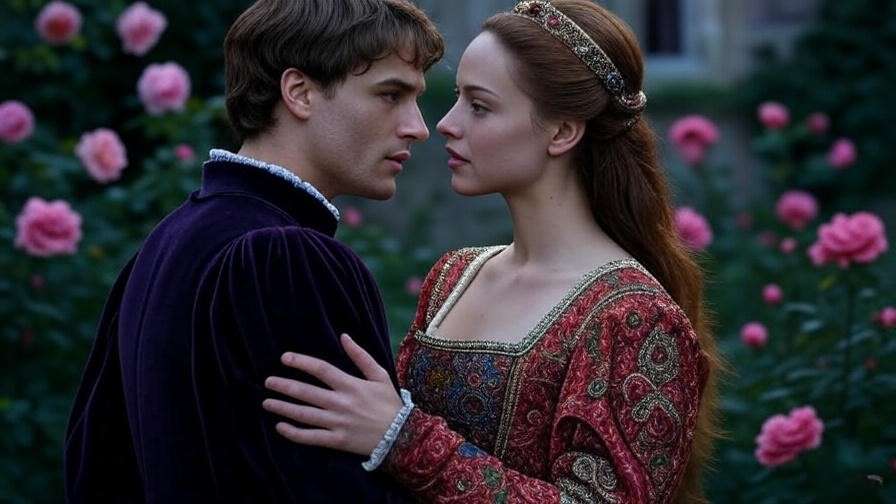
Imagine opening Romeo and Juliet and reading:
“O Romeo, Romeo! wherefore art thou Romeo? Deny thy father and refuse thy name; Or, if thou wilt not, be but sworn my love, And I’ll no longer be a Capulet.”
Now imagine immediately seeing beside it:
“Romeo, Romeo, why are you Romeo? Deny your father and refuse your name. Or if you won’t, just swear your love to me, and I’ll stop being a Capulet.”
That single side-by-side comparison is the magic of Romeo and Juliet No Fear Shakespeare — the most widely used modern-English translation tool for one of literature’s greatest love stories.
For generations, readers have felt the same frustration: Shakespeare’s language is beautiful, poetic, and powerful… and frequently bewildering. Archaic words, inverted sentence structures, Elizabethan puns, and rapid shifts between prose and verse can make even the most passionate scenes feel distant or confusing.
That’s exactly why the No Fear Shakespeare edition of Romeo and Juliet has become the go-to resource for high school students, college literature classes, ESL learners, theater enthusiasts, and anyone who wants to experience the full emotional force of the play without spending half their time reaching for a dictionary.
In this comprehensive guide you’ll find:
- How to use the No Fear Shakespeare format most effectively
- Scene-by-scene breakdowns with the most important passages decoded
- Literary insights and character analysis that go far beyond basic plot summaries
- Explanation of major themes, symbols, and Shakespeare’s language techniques
- Answers to the questions students ask most often
- Practical strategies for exams, essays, class discussions, and personal enjoyment
Whether you’re preparing for a test, directing a school production, teaching the play, or simply want to finally feel why millions of people still cry over two teenagers in Verona — this article is designed to help you move from confusion to genuine understanding and appreciation.
What Is “Romeo and Juliet No Fear Shakespeare” and Why It Works So Well
The No Fear Shakespeare series, published by SparkNotes, presents the complete original text of each play on the left-hand page and a modern, conversational English translation on the right-hand page.
Unlike many simplified versions that paraphrase loosely or omit difficult passages, the No Fear translation aims for near-literal accuracy while using clear, contemporary language. It keeps the emotional tone, rhythm, and intent of Shakespeare’s lines intact — just without the vocabulary and syntax barriers of 1590s English.
Key strengths of the format:
- Side-by-side layout allows you to compare original and modern lines instantly
- No summarization — every line is translated
- Preserves puns, wordplay, and emotional nuance when possible
- Available in print, online (sparknotes.com), and audio formats
- Free online version includes searchable text and annotations
Who benefits most from Romeo and Juliet No Fear Shakespeare?
- High school students facing required reading and exams
- College students encountering Shakespeare for the first time in literature courses
- ESL / ELL learners who understand modern English but struggle with Early Modern English
- Teachers looking for a classroom tool that lets students access meaning quickly
- Actors and directors who want to understand every nuance before memorizing lines
- General readers who love the story but have been intimidated by the language
Compared to alternatives:
- Plain summaries → lose Shakespeare’s actual words and poetic beauty
- Heavily annotated academic editions → can overwhelm beginners
- Film adaptations → change dialogue, cut scenes, and interpret rather than explain
The No Fear edition bridges the gap: it lets you hear Shakespeare’s voice while understanding exactly what he’s saying.
Quick usage tip Most effective reading method (recommended by many experienced teachers):
- Read the original line(s) first
- Glance at the modern translation to confirm meaning
- Re-read the original line(s) with new understanding This simple three-step cycle dramatically improves comprehension and helps train your ear for Shakespeare’s language over time.
Quick Overview – The Story in Plain English
Romeo and Juliet tells the story of two teenagers from feuding families who fall instantly and passionately in love — only to be destroyed by the hatred between their parents, impulsive decisions, bad timing, and cruel accidents.
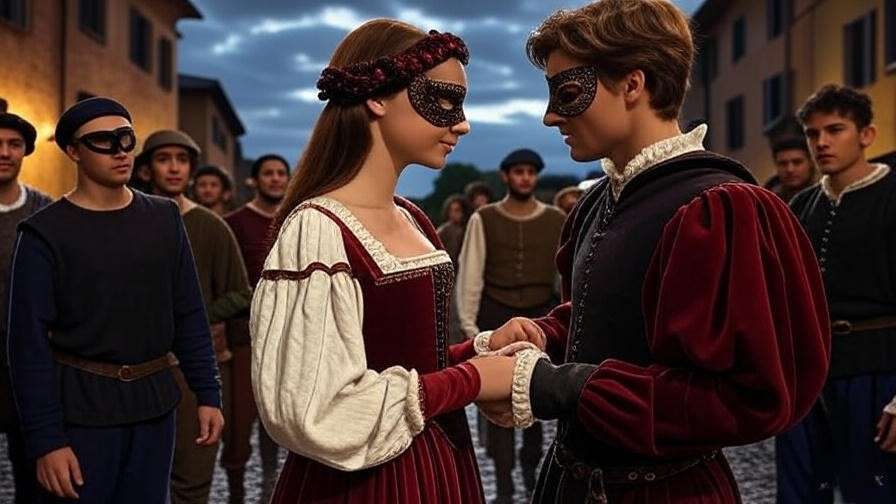
The play opens with a street fight between servants of the Capulets and Montagues. Romeo Montague, depressed over a recent unrequited love, sneaks into a Capulet party and meets Juliet Capulet. They fall in love at first sight, speak in a shared sonnet, and kiss — before discovering they belong to enemy families.
With the help of Juliet’s Nurse and Friar Laurence, they secretly marry the next day.
Tragedy strikes almost immediately. In a street fight, Romeo’s friend Mercutio is killed by Juliet’s cousin Tybalt. Romeo, enraged, kills Tybalt in revenge and is banished from Verona by the Prince.
Juliet’s parents, unaware of the secret marriage, insist she marry Paris. Desperate, Juliet agrees to Friar Laurence’s dangerous plan: she will take a potion that makes her appear dead for 42 hours. The Friar will send a letter to Romeo explaining the plan so he can rescue her from the family tomb when she awakens.
But the letter never reaches Romeo. Believing Juliet is truly dead, he buys poison, returns to Verona, kills Paris at the tomb, and takes his own life beside Juliet’s body. Moments later, Juliet awakens, sees Romeo dead, and stabs herself.
The deaths of the two young lovers finally force the Capulets and Montagues to end their ancient feud — but only after the ultimate price has been paid.
Act-by-Act Breakdown with Key Insights & Standout Passages
This is the heart of the guide. Below, we walk through each act with the most important moments, famous lines shown in both original and No Fear modern translation, and deeper literary and emotional insights that help you truly grasp why the play feels so powerful — even 400+ years later.
Act 1 – Where Ancient Hate Meets Young Desire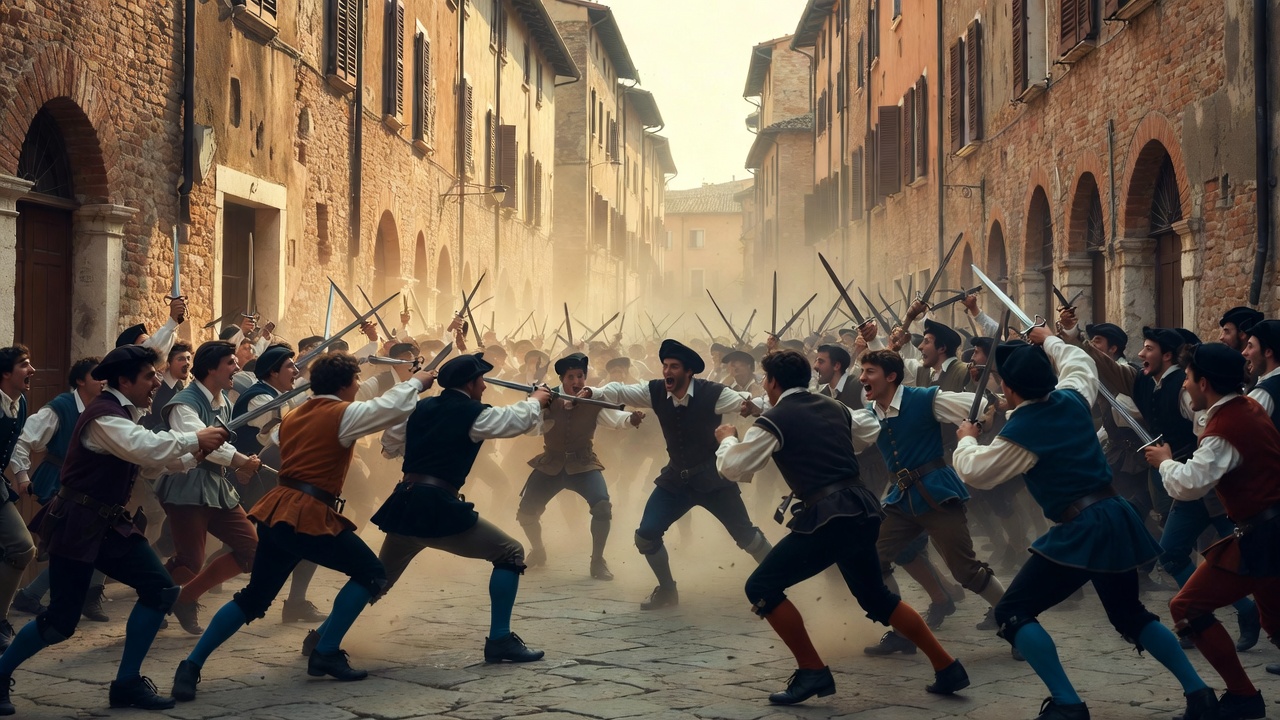
Act 1 sets up the explosive contrast at the center of the play: a society poisoned by mindless hatred versus two teenagers who instantly see beyond it.
Key moments:
- The opening street brawl (servants of both houses fighting for no real reason)
- Romeo’s lovesick melancholy over Rosaline
- Capulet’s party invitation
- Romeo and his friends crash the party
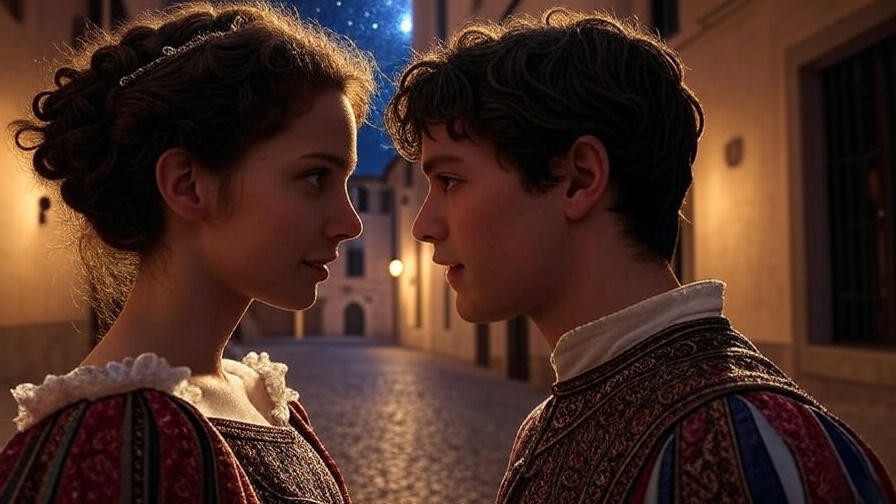
- The first meeting of Romeo and Juliet — they speak a shared sonnet and kiss before learning each other’s names
Standout passage: The Prologue (original vs. modern)
Original:
Two households, both alike in dignity, In fair Verona, where we lay our scene, From ancient grudge break to new mutiny, Where civil blood makes civil hands unclean.
No Fear modern:
Two wealthy families in Verona, Italy, have an ancient grudge that has recently broken out into new violence. The citizens have blood on their hands from fighting each other.
Why it matters: The Prologue is a 14-line sonnet that tells the entire story before it begins — including the fact that the lovers are “star-crossed” and will die. Shakespeare is deliberately removing suspense about the outcome so we focus instead on how and why the tragedy happens.
Most important moment: The first conversation (Act 1, Scene 5)
Original (shared sonnet):
ROMEO: If I profane with my unworthiest hand This holy shrine, the gentle sin is this: My lips, two blushing pilgrims, ready stand To smooth that rough touch with a tender kiss.
JULIET: Good pilgrim, you do wrong your hand too much… (They kiss)
No Fear modern:
ROMEO: If my rough and unworthy hand has offended this holy shrine (your hand), I’ll make up for it with a kiss from my lips — two blushing pilgrims. JULIET: Good pilgrim, you’re being too hard on yourself… (They kiss)
Deeper insight: Their first words form a perfect Shakespearean sonnet — a highly structured love poem. This is not accidental. Shakespeare is signaling that these two are perfectly matched on a poetic and spiritual level. The religious imagery (shrine, pilgrims, holy, sin) turns their physical attraction into something almost sacred — yet it happens in the middle of a party in a house divided by hate.
Theme introduced: Love as a form of religion — a private, pure world that exists in defiance of the public feud.
Act 2 – The Balcony Scene and Secret Marriage
Act 2 contains the most famous scene in all of Shakespeare — and for good reason.
Key moments:
- Romeo sneaks into the Capulet orchard
- The balcony scene (Act 2, Scene 2)
- Romeo and Juliet declare their love and plan to marry
- Friar Laurence agrees to perform the secret wedding
- The Nurse acts as go-between
The balcony scene — key lines decoded
Original (Juliet’s most famous lines):
O Romeo, Romeo! wherefore art thou Romeo? Deny thy father and refuse thy name; Or, if thou wilt not, be but sworn my love, And I’ll no longer be a Capulet.
No Fear modern:
Romeo, Romeo, why are you Romeo? Deny your father and refuse your name. Or if you won’t, just swear your love to me, and I’ll stop being a Capulet.
Crucial clarification: “Wherefore” does not mean “where.” It means “why.” Juliet is asking why he has to be Romeo Montague — why he has to belong to the enemy family. She’s not wondering about his physical location.
Another key exchange:
Original:
JULIET: My bounty is as boundless as the sea, My love as deep; the more I give to thee, The more I have, for both are infinite.
No Fear:
JULIET: My love for you is as huge as the sea, and as deep. The more love I give you, the more I have left — both are infinite.
Expert insight: Juliet is often the more mature and decisive speaker. She proposes marriage. She uses bolder, more confident imagery. Romeo is romantic but more hesitant and flowery. This reversal of traditional gender roles is one reason modern readers find Juliet especially compelling.
Symbolism spotlight:
- Light and dark (Romeo calls Juliet the sun; she worries he’ll be killed if seen)
- Birds and falconry (Juliet imagines training Romeo like a falcon)
- The orchard wall as the literal and symbolic barrier between their worlds
Act 3 – The Turning Point: Violence Explodes
Act 3 is where the play irreversibly shifts from romance to tragedy. The speed is brutal: what begins as a hot summer afternoon ends with two deaths, a banishment, and the complete destruction of any realistic hope for a happy ending.
Key moments:
- Mercutio taunts Tybalt in the street
- Romeo tries to prevent a fight (because he has just secretly married Juliet, Tybalt’s cousin)
- Tybalt kills Mercutio under Romeo’s arm
- Romeo, overcome with guilt and rage, kills Tybalt
- The Prince banishes Romeo from Verona on pain of death
Most devastating line – Mercutio’s death speech
Original:
No, ’tis not so deep as a well nor so wide as a church-door; but ’tis enough, ’twill serve. Ask for me tomorrow, and you shall find me a grave man.
No Fear modern:
No, it’s not as deep as a well or as wide as a church door, but it’s enough. It’ll do the job. Ask for me tomorrow and you’ll find me a grave man.
Why this moment changes everything: Mercutio is the play’s great comic cynic — witty, irreverent, and skeptical of romantic love. His death is shocking not only because he dies, but because his death kills the play’s humor and lightness. From this point forward, the tone is relentlessly tragic. Shakespeare uses Mercutio’s punning even in death (“grave man”) to show how quickly joy can turn to horror.
Romeo’s reaction – the emotional pivot
Original:
This gentleman, the Prince’s near ally, My very friend, hath got his mortal hurt In my behalf—my reputation stained With Tybalt’s slander—Tybalt, that an hour Hath been my kinsman!
No Fear modern:
This man, who is close to the Prince and my close friend, has been fatally wounded defending me—while my reputation was being trashed by Tybalt, who an hour ago became my relative!
Deeper insight: Romeo’s killing of Tybalt is not cold-blooded murder. It is an impulsive act born of grief, guilt, and loyalty to Mercutio. Yet it is also the single choice that dooms everyone. Shakespeare shows how one moment of passion can destroy multiple futures.
Juliet’s great soliloquy – Act 3, Scene 2
Original (opening lines):
Gallop apace, you fiery-footed steeds, Towards Phoebus’ lodging; such a wagoner As Phaeton would whip you to the west…
No Fear modern:
Gallop fast, you fiery-footed horses, toward the home of the sun god. A driver like Phaeton would whip you to the west…
What it reveals: This speech is Juliet’s most openly sexual and passionate moment. She longs for night so she can consummate her marriage. Yet the same speech contains dramatic irony: she is calling for darkness, unaware that darkness (in the form of death) is already closing in. The contrast between her youthful desire and the gathering tragedy is heartbreaking.
Act 3 takeaway: The adult world’s violence and the younger generation’s impulsiveness collide — and the young pay the price. Romeo’s banishment separates the lovers physically and symbolically severs their chance at happiness.
Act 4 – Desperate Plans and Faking Death
Act 4 is the shortest act, but it is packed with tension and moral ambiguity.
Key moments:
- Paris pressures Juliet to marry him
- Juliet defies her parents openly for the first time
- The Nurse, previously an ally, advises Juliet to marry Paris
- Juliet goes to Friar Laurence for help
- The Friar devises the dangerous sleeping-potion plan
- Juliet takes the potion and is discovered “dead”
Juliet’s courage – Act 4, Scene 3 (potion speech)
Original:
What if it be a poison, which the friar Subtly hath ministered to have me dead… …How if, when I am laid into the tomb, I wake before the time that Romeo Come to redeem me?
No Fear modern:
What if the Friar gave me poison to kill me… …What if I wake up in the tomb before Romeo comes to get me?
Literary insight: This soliloquy shows Juliet’s extraordinary bravery. She is thirteen or fourteen years old, yet she is willing to risk death, madness, and being buried alive for love. At this moment, she is more decisive and courageous than any adult in the play.
Moral complexity of Friar Laurence The Friar’s plan is well-intentioned but reckless. He gambles with Juliet’s life and Romeo’s sanity on the hope that everything will work out. Shakespeare subtly questions whether good intentions excuse dangerous meddling.
Act 5 – Catastrophe and Reconciliation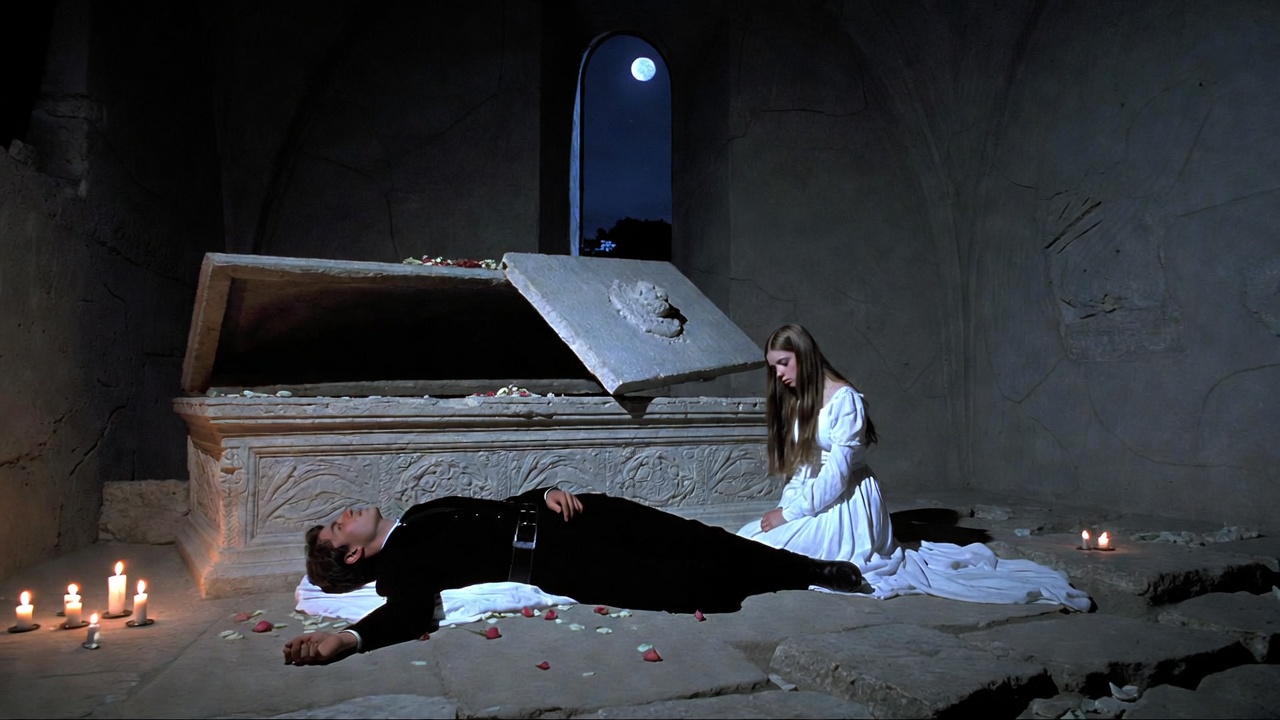
Act 5 delivers the devastating final sequence. Shakespeare compresses time brutally: Romeo hears of Juliet’s “death,” buys poison, rides back to Verona, kills Paris at the tomb, poisons himself, and Juliet awakens only to find him dead and then takes her own life—all within a few hours.
Key moments:
- Romeo learns (falsely) that Juliet is dead
- He purchases poison from an apothecary
- Paris confronts Romeo at the Capulet tomb and is killed
- Romeo opens the tomb, sees Juliet “dead,” drinks poison, and dies
- Juliet awakens, finds Romeo dead, kisses him, and stabs herself with his dagger
- The Prince, Capulets, and Montagues arrive; the feud ends in mutual grief
Standout passage: Romeo’s final speech before taking poison
Original:
Eyes, look your last! Arms, take your last embrace! and, lips, O you The doors of breath, seal with a righteous kiss A dateless bargain to engrossing death!
No Fear modern:
Eyes, look your last! Arms, take your last embrace! And lips—O you, the doors of breath—seal with a holy kiss an endless contract with devouring death!
Deeper insight: Romeo’s language here is ritualistic and almost ceremonial. He treats his suicide as a formal marriage to death itself — echoing the sacred imagery he and Juliet used when they first met. Shakespeare creates a tragic symmetry: their love began with a shared sonnet and ends with Romeo speaking to his own body parts as if they are separate witnesses to his final act.
Juliet’s awakening and death
Original:
What’s here? a cup, closed in my true love’s hand? Poison, I see, hath been his timeless end. …O happy dagger! This is thy sheath; there rust, and let me die.
No Fear modern:
What’s this? A cup in my true love’s hand? Poison—I see—has been his end too soon. …O happy dagger! This is your sheath. There rust, and let me die.
Powerful contrast: Juliet is practical even in death. She quickly assesses the situation, rejects the idea of living without Romeo, and chooses the dagger over slow suffocation or starvation in the tomb. Her line “O happy dagger!” is bitterly ironic — the weapon that brings her death is “happy” only because it reunites her with Romeo.
Closing lines – Prince Escalus
Original:
A glooming peace this morning with it brings; The sun, for sorrow, will not show his head.
No Fear modern:
This morning brings a gloomy peace. The sun itself is too sad to show its face.
Final insight: The only reconciliation the play offers is one born of grief. The parents embrace over the bodies of their children, but it comes far too late. Shakespeare refuses to give the audience an easy moral. The feud ends not because anyone learned wisdom, but because the next generation has been annihilated.
Major Themes in Romeo and Juliet — What No Fear Translation Helps You See Clearly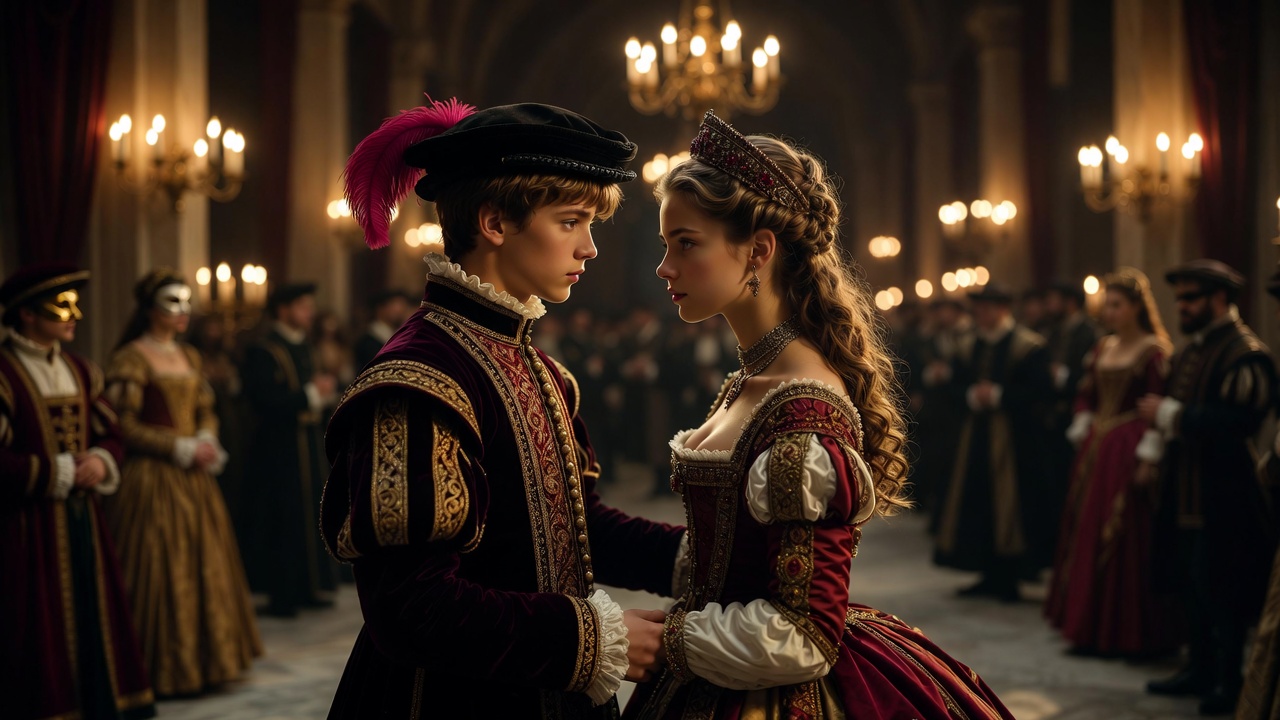
The No Fear Shakespeare side-by-side format is especially valuable for themes because it lets you focus on meaning instead of decoding vocabulary. Here are the play’s central ideas, made more accessible by the modern translation:
- Love vs. Hate The two emotions are portrayed as mirror images — both irrational, both all-consuming, both capable of sudden violence. The feud breeds hate; the love between Romeo and Juliet is just as extreme and uncontrollable.
- Fate vs. Free Will The Prologue calls the lovers “star-cross’d,” suggesting cosmic inevitability. Yet the tragedy is also driven by human choices: Romeo’s revenge killing, the Friar’s risky plan, the Nurse’s betrayal of trust, the missed letter. Shakespeare leaves the question deliberately open.
- Youth vs. Age The younger characters act on passion and emotion; the adults act out of fear, pride, or habit. The tragedy occurs because the adults refuse to listen, guide, or protect the young — leaving teenagers to make life-and-death decisions alone.
- Language as Power Who controls language controls perception. Mercutio’s wit, Juliet’s decisive speeches, the Prince’s final judgment — all show how words shape reality. The feud itself is sustained by words of insult and honor.
- Time Pressure The entire play takes place in four or five days. Events cascade with terrifying speed. Shakespeare uses constant references to time (“Gallop apace,” “Come, night,” “It is too rash, too unadvised, too sudden”) to create a sense of unstoppable momentum toward disaster.
Key Characters – Motivations, Growth, and Modern Parallels
Understanding the characters deeply is one of the biggest benefits of using the No Fear Shakespeare edition. The modern translation removes the language barrier so you can focus on what drives each person and how they change (or fail to change) over the course of the play.
Romeo Montague
- Motivation: Passionate, idealistic, ruled by his emotions.
- Character arc: Starts lovesick over Rosaline, instantly “falls” for Juliet, becomes violent after Mercutio’s death, and chooses suicide when he believes Juliet is dead.
- Key trait: Impulsiveness. His decisions are quick, emotional, and often irreversible.
- Modern parallel: The teenager who feels emotions very intensely, makes big declarations after knowing someone for only hours, and struggles with emotional regulation.
- No Fear advantage: You can clearly see how Romeo’s language becomes darker and more fatalistic after Act 3.
Juliet Capulet
- Motivation: Love, autonomy, and escape from parental control.
- Character arc: Begins obedient but quickly grows defiant. She proposes marriage, stands up to her parents, and chooses death on her own terms.
- Key trait: Courage combined with sharp intelligence. She often speaks more maturely and decisively than Romeo.
- Modern parallel: A young person facing intense family pressure, forced marriage, or rigid expectations who asserts their right to choose their own path.
- No Fear advantage: Juliet’s long soliloquies (especially “Gallop apace” and the potion speech) become much clearer, revealing her inner strength and vulnerability.
Mercutio
- Motivation: Wit, friendship, and mocking romantic excess.
- Role: Provides comic relief and acts as Romeo’s foil. His death marks the tonal shift from comedy to tragedy.
- Key trait: Brilliant wordplay and cynicism about love.
- Modern parallel: The quick-witted friend who uses humor to cope with pain and deflect serious emotions.
- No Fear advantage: Mercutio’s puns and Queen Mab speech are notoriously difficult in the original; the modern version helps readers appreciate his brilliance.
Friar Laurence
- Motivation: Desire to end the feud and help young love.
- Character arc: From optimistic helper to increasingly desperate schemer.
- Key flaw: Overconfidence in his clever plans; he gambles with lives.
- Modern parallel: Well-meaning adults (counselors, teachers, parents) who try to “fix” teenage problems with risky shortcuts instead of addressing root causes.
- No Fear advantage: You can easily follow the Friar’s moral reasoning and see how it becomes more questionable as the play progresses.
The Nurse
- Motivation: Loyalty to Juliet and a desire for her happiness.
- Character arc: Starts as Juliet’s confidante and ally, then advises her to marry Paris after Romeo’s banishment.
- Key trait: Earthy, humorous, pragmatic, but ultimately self-preserving.
- Modern parallel: The adult who says “just do what’s practical” when a young person is facing a moral crisis.
- No Fear advantage: The Nurse’s bawdy humor and long speeches become much funnier and more relatable in modern English.
Lord Capulet, Lady Capulet, Lord Montague, Prince Escalus
- Role: Represent the older generation and the rigid social order.
- Key trait: Pride, anger, and inability to break the cycle of hate until forced by tragedy.
- Modern parallel: Parents and authority figures who prioritize family reputation, tradition, or control over their children’s well-being.
Literary Techniques & Shakespeare’s Craftsmanship You’ll Notice More Clearly with No Fear
The modern translation makes Shakespeare’s craft accessible without destroying it. Here are key techniques you’ll spot more easily:
- Embedded sonnets → Romeo and Juliet’s first conversation is a shared sonnet; the Prologue is another. This signals their perfect poetic match.
- Oxymorons & paradoxes → “brawling love,” “loving hate,” “sweet sorrow,” “still-waking sleep.” These show love and hate as intertwined.
- Foreshadowing & dramatic irony → The Prologue tells the ending; characters constantly talk about death while planning their future.
- Light/dark imagery → Romeo sees Juliet as the sun; they meet at night; darkness hides their love but also brings death.
- Contrast → Youth vs. age, private passion vs. public feud, hope vs. despair.
- Wordplay & puns → Especially in Mercutio and the Nurse. The No Fear version often explains the pun in the modern line.
Common Student Questions & Pitfalls When Reading Romeo and Juliet
Q: Why do they fall in love so fast? A: Shakespeare isn’t writing realism. The speed shows the overwhelming power of first love and teenage passion. It’s also tied to fate language in the play.
Q: Is Friar Laurence to blame? A: He bears some responsibility for the dangerous plan, but so do many others. The tragedy results from collective failures, not one villain.
Q: Why didn’t they just run away? A: Elizabethan audiences understood the social and economic barriers. Teens had no money, no independence, and no safe place to go. Running away would have meant poverty and disgrace.
Q: Is this really a love story or a tragedy of hate? A: Both. The love is genuine and beautiful, but the hate of the older generation creates the conditions for its destruction.
Q: How much is fate vs. bad decisions? A: Shakespeare leaves it ambiguous. The Prologue says “star-cross’d,” but human choices (revenge, risky plans, missed letters) drive the plot.
Best Ways to Use Romeo and Juliet No Fear Shakespeare for School, Exams, or Personal Enjoyment
The No Fear Shakespeare edition is a powerful tool — but how you use it makes all the difference between surface-level understanding and genuine appreciation. Here are practical, field-tested strategies that students, teachers, and general readers have found most effective.
For school reading and essay writing
- First pass: Read the modern translation column straight through for each scene to grasp the plot, emotions, and character motivations quickly.
- Second pass: Go back and read the original Shakespeare text with the modern version beside it. Focus especially on famous speeches, soliloquies, and the lovers’ dialogue.
- Third pass (for essays): Read only the original text of the passages you plan to quote. By this point, you’ll understand them deeply and can analyze Shakespeare’s word choice, imagery, and rhythm with confidence.
- Quoting tip: Most teachers accept a combination — quote the original for literary analysis, and use the modern version in your explanation if needed to clarify meaning.
For exam preparation
- Memorize 4–6 key passages in the original (balcony scene exchanges, “Gallop apace,” potion speech, Romeo’s death speech, Juliet’s dagger lines). Knowing them verbatim impresses examiners.
- Use the modern translation to make sure you can explain every line accurately under time pressure.
- Create a quick “theme + quote” cheat sheet: pair each major theme with one original quotation and its modern explanation.
For teachers assigning the play
- Assign alternating reading: one night read only the modern translation, the next night read the original with the translation as support.
- Use the side-by-side format for in-class close reading — project a page and have students compare how Shakespeare’s language choices create tone or emotion.
- Have students “translate” one short passage into their own modern words after reading the No Fear version — this builds confidence and deepens understanding.
For personal enjoyment or theater lovers
- Read the No Fear version first to fall in love with the story.
- Then re-read favorite scenes in the original only — you’ll be surprised how much more poetic and emotional the language feels once you already understand it.
- Listen to professional audio versions (many include the No Fear text as a companion) while following along in the book.
- Pair the reading with one of the major film adaptations:
- Baz Luhrmann’s 1996 version (modern setting, fast-paced, very teen-oriented)
- Franco Zeffirelli’s 1968 version (classic, beautiful, closer to Elizabethan staging)
- The 1990 Kenneth Branagh-style approach doesn’t exist for this play, but the 2013 adaptation with Douglas Booth and Hailee Steinfeld is worth watching for a more faithful tone.
Quick habit that pays off: Every time you finish a scene, pause and ask yourself: “What did I just feel?” The No Fear translation helps you name the emotion — love, rage, despair, hope — so you can experience the play the way Shakespeare intended: as an emotional rollercoaster, not a vocabulary exercise.
Romeo and Juliet No Fear Shakespeare does something remarkable: it removes the single biggest obstacle — the language barrier — so you can finally experience the play’s raw power, beauty, and heartbreak the way audiences did in 1595.
Shakespeare didn’t write for scholars or literature professors. He wrote for ordinary people — apprentices, merchants, housewives, teenagers — who wanted to laugh, cry, and feel something intense for two hours. The No Fear translation brings that original intention back within reach.
This is not just a story about two teenagers who fall in love too quickly. It is a mirror held up to how fast passion can ignite, how hate can blind entire communities, how adults can fail children, and how one impulsive choice can cascade into irreversible tragedy.
The next time you open the book, try this: read your favorite scene in the original, glance at the modern translation for clarity, then read the original again. You’ll almost certainly feel the words hit harder, deeper, and more personally than before.
That moment — when the language stops being an obstacle and starts being a direct channel to emotion — is the real gift of the No Fear Shakespeare edition.
Now go back to Verona. The sun is setting, the feud is still burning, and two young hearts are about to meet for the first time. This time, you’ll understand every word they say… and every feeling behind them.
FAQs
What is Romeo and Juliet No Fear Shakespeare? It is the SparkNotes edition that presents the full original Shakespeare text on the left page and a clear, modern-English translation on the right page — line by line.
Is the No Fear translation accurate? Yes — it is very faithful to the original meaning, tone, and emotional weight. It prioritizes clarity over poetic elegance, but it rarely distorts Shakespeare’s intent.
Should I read the original or the modern translation first? Most effective method: read the original line first, check the modern translation to confirm understanding, then re-read the original. This trains your ear while ensuring you don’t miss meaning.
Why is Romeo and Juliet still relevant today? It captures universal experiences: intense first love, family conflict, teenage rebellion, impulsive decisions, grief, and the consequences of hate. Modern parallels include arranged marriages in some cultures, toxic family feuds, teen mental health struggles, and the speed of modern relationships.
Where can I find Romeo and Juliet No Fear Shakespeare online? The full text is freely available at sparknotes.com (search “No Fear Romeo and Juliet”). Printed copies are widely sold in bookstores and online.