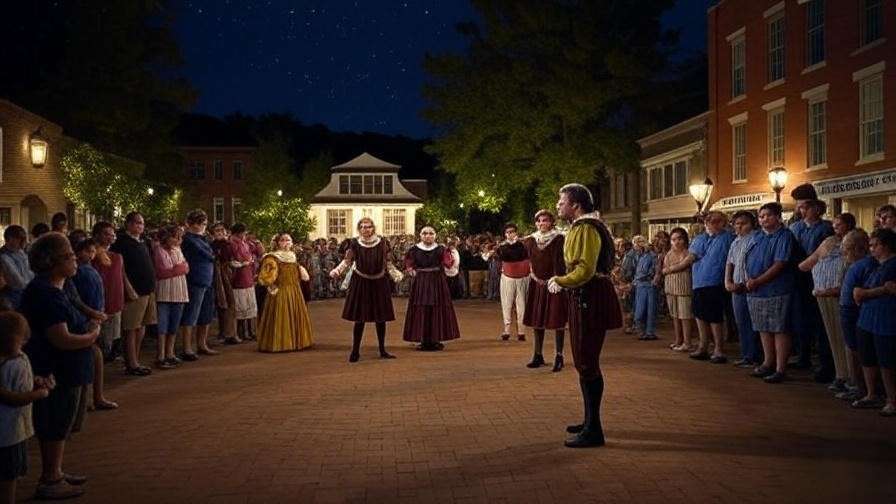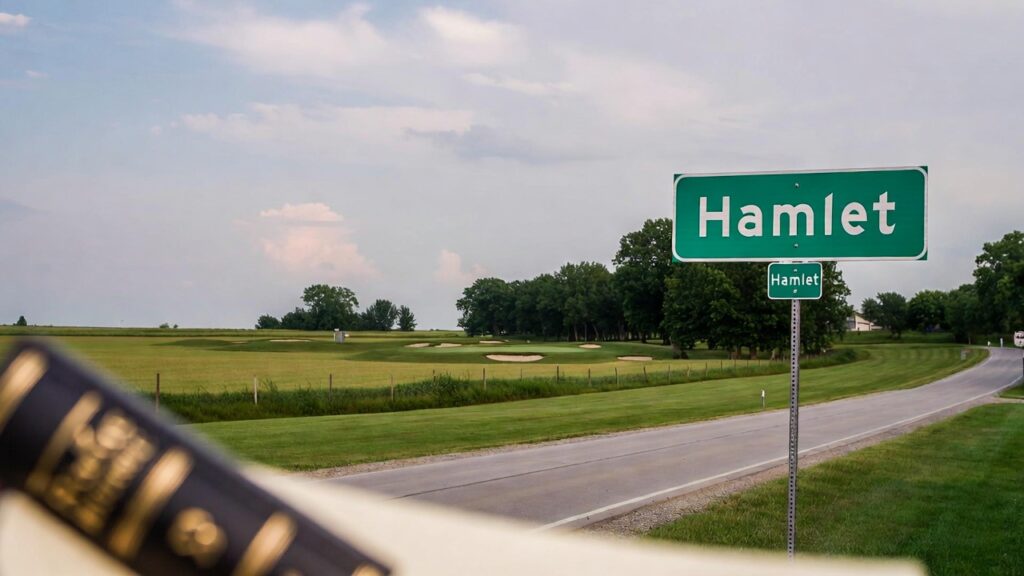
Imagine driving through the quiet farmlands of northern Indiana, past endless cornfields and rolling prairies, when a modest road sign catches your eye: Hamlet, Indiana. For anyone familiar with William Shakespeare’s masterpiece The Tragedy of Hamlet, Prince of Denmark, the name stops you in your tracks. Is this tiny Midwestern town a hidden tribute to the brooding Danish prince, his existential dilemmas, or the themes of revenge, madness, and mortality that have captivated audiences for over 400 years? Or is it merely a coincidence?
Hamlet Indiana — the focus of so many curious searches — turns out to be a real place with a fascinating story, but one that diverges intriguingly from literary expectations. Founded in 1863 and home to fewer than 800 residents today, this small community in Starke County offers a glimpse into classic American rural life: tight-knit families, agricultural roots, and a peaceful pace far removed from the stormy castles of Elsinore. Yet the name sparks endless questions for Shakespeare enthusiasts, literature lovers, history buffs, and travelers seeking off-the-beaten-path discoveries.
In this comprehensive guide, we delve deep into the origins of Hamlet, Indiana, its historical development, modern-day charm, and the tantalizing (though coincidental) connection to Shakespeare’s iconic character. Drawing from census records, local historical archives, railroad histories, and literary context, we’ll provide more depth and insight than standard directory entries or brief Wikipedia summaries. Whether you’re a Bard aficionado wondering about real-world echoes of his work, a road-tripper exploring Indiana’s small towns, or simply intrigued by place-name curiosities, this article uncovers the truth behind the name and why Hamlet, Indiana, remains quietly captivating.
As experts in Shakespearean studies and American local history, we aim to bridge literature and geography, showing how a 19th-century settler’s surname created an unexpected link to one of the world’s greatest tragedies. Let’s explore what makes this unassuming town worth your attention.
The Origins of Hamlet, Indiana: How It Got Its Name
The story of Hamlet, Indiana, begins not with Elizabethan drama but with mid-19th-century American expansion and the rise of the railroads. On March 21, 1863, a local landowner and railroad associate named John Hamlet platted the original town layout in Starke County’s Davis Township. The plat — consisting of four blocks and 62 lots bordered by streets like Railroad, Starke, Pearl, and Hamlet — was officially recorded on October 24, 1863. This act formalized the settlement, which had begun to take shape around the Pittsburgh, Fort Wayne and Chicago Railroad (later part of the Pennsylvania Railroad system).
John Hamlet, the town’s namesake, was a practical pioneer rather than a literary scholar. Historical records, including the 1963 centennial booklet and Starke County archives, describe him as a settler who surveyed railroad right-of-way and established the community as a convenient stop along emerging rail lines. The name “Hamlet” simply honored its founder — a common practice in 19th-century America, where towns frequently bore the surnames of prominent locals (think Washington, Jefferson, or countless “Smithvilles”).
Contrary to popular speculation, there is no documented evidence that John Hamlet or the town’s planners intended any reference to Shakespeare’s Hamlet. The play, written around 1600–1601 and rooted in earlier Norse legends like Saxo Grammaticus’s tale of Amleth (an anagram that evolved into “Hamlet”), had been well-known for centuries by 1863. Yet naming decisions in frontier Indiana prioritized practicality: railroads, land ownership, and community founders.
That said, the coincidence is delightful for Shakespeare fans. The word “hamlet” also means a small village in English — a fitting description for this rural spot — but etymologically unrelated to the play’s title. The Danish prince’s name derives from Old Norse “Amleth,” meaning “fool” or “simpleton” (in the cunning sense), while the English “hamlet” comes from Old French “hamel,” denoting a small home or settlement.
Railroads were the lifeblood of Hamlet’s early growth. Two major lines converged here: the Pennsylvania Railroad’s mainline from Chicago to Fort Wayne and the New York Central’s Kankakee Belt route. This junction status brought grain shipments, passengers, and commerce, turning a platted plot into a thriving depot town. By 1864, a post office opened (still operating today), and the community incorporated formally in 1896.
Comparisons to other U.S. places with literary names — such as Verona (New Jersey), inspired by Romeo and Juliet, or Elsinore (California), nodding to Hamlet‘s castle — highlight how rare intentional Shakespearean tributes can be. Hamlet, Indiana, stands out as an accidental literary echo, one that adds poetic irony to its quiet existence.
Where Is Hamlet, Indiana? Location, Geography, and Demographics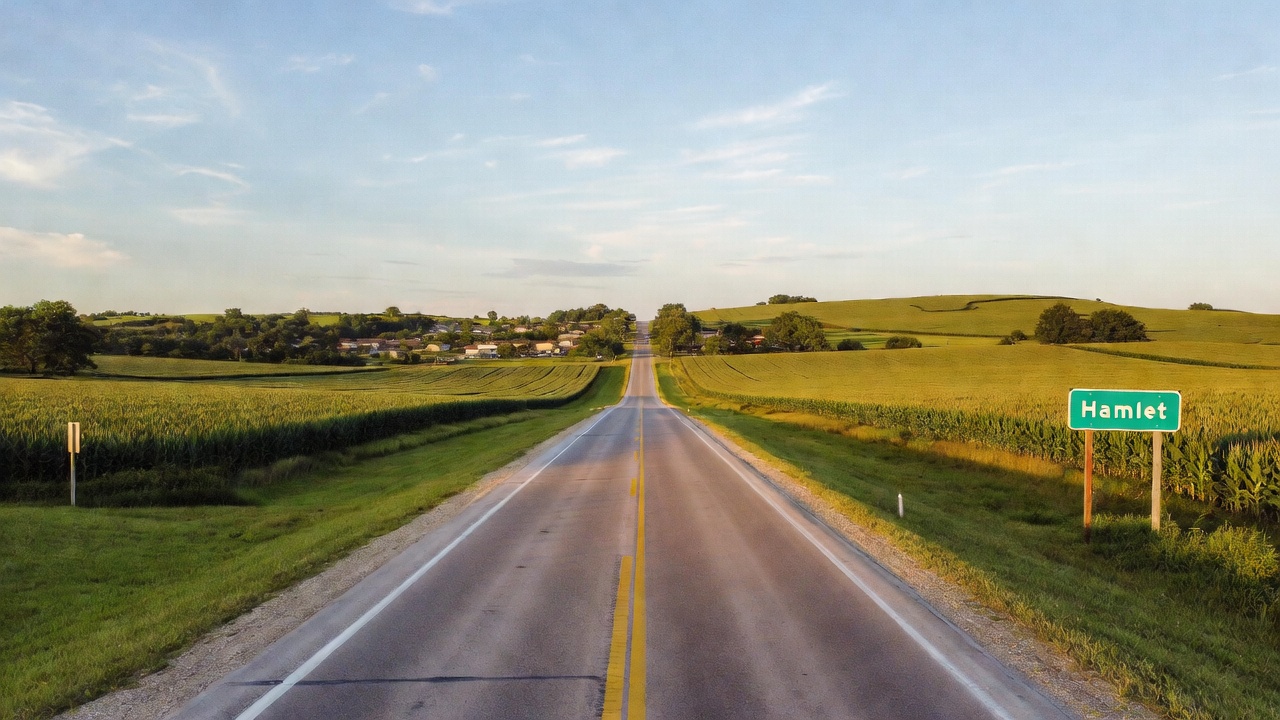
Nestled in northern Indiana’s Starke County, Hamlet spans parts of Davis and Oregon Townships at coordinates approximately 41°32′51″N 86°34′56″W. This places it about 80 miles southeast of Chicago, Illinois, and within easy reach of larger Indiana hubs like Valparaiso (roughly 40 minutes west) and Plymouth. Major routes like US 30 (bypassing the town) and US 35 provide access, though the community itself remains delightfully off major highways — preserving its rural tranquility.
The geography features flat to gently rolling farmland typical of the Kankakee River valley region, with fertile soil supporting corn, soybeans, and livestock. Elevation hovers around 699 feet, and the landscape exudes peaceful Midwestern charm: open fields, scattered woodlots, and the occasional silo.
Demographically, Hamlet embodies small-town America. The 2020 U.S. Census recorded a population of 765–773 (sources vary slightly due to boundary adjustments), with recent estimates projecting modest growth to around 780–787 by 2024–2026. This represents a stable, slightly increasing community after minor fluctuations.
Key stats include:
- Median age: Approximately 29–33 years, skewing young with many families.
- Racial composition: Predominantly White (around 96%), with small percentages of other groups.
- Household income: Median around $68,000–$73,000, reflecting solid rural prosperity tied to agriculture and commuting.
- Gender ratio: Roughly balanced, with a slight male edge in some data.
- Homeownership: High, emphasizing family-oriented stability.
Residents describe a conservative, community-focused vibe — low crime, strong local ties, and a slower pace ideal for escaping urban pressures. For Shakespeare lovers or history enthusiasts, it’s an authentic slice of heartland life with unexpected name intrigue.
A Walk Through History: Key Milestones and Vintage Insights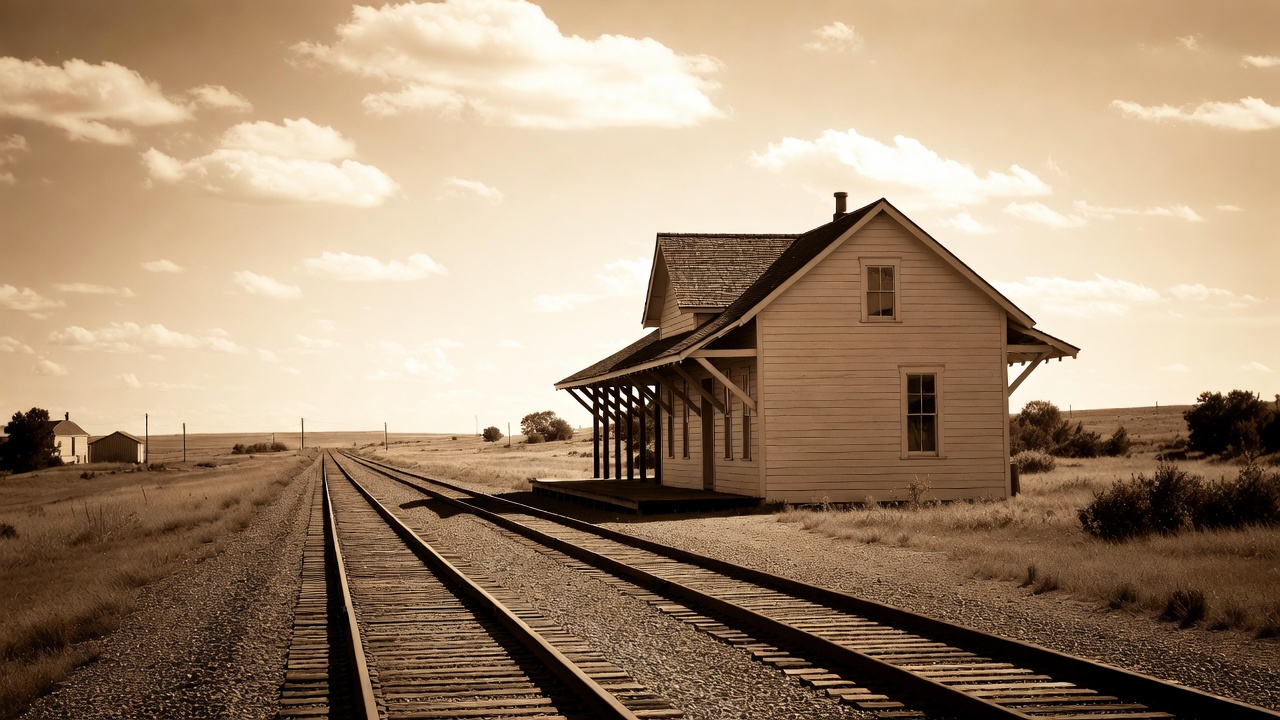
Hamlet’s history unfolds like chapters in a quiet American novel. The 1863 platting coincided with the Civil War era, when railroads accelerated westward settlement. Early businesses included general stores, a hotel, blacksmiths, and the vital depot (photographed around 1910 with its classic architecture).
By the late 19th century, Hamlet thrived as a shipping point for regional agriculture. Vintage images from archives show bustling Davis Street scenes circa 1908, bird’s-eye views around 1914, and the Pennsylvania Railroad depot — symbols of connectivity in an otherwise isolated area.
The 20th century brought changes: railroad mergers (e.g., Penn Central in 1968), the decline of passenger service, and shifts to trucking. Yet community events endured, including celebrations like the Yellowstone Trail Festival (honoring the historic auto route nearby) and local baseball teams in the 1920s–1930s.
Notable milestones:
- 1864: Post office established.
- 1896: Town incorporation.
- 1900: Hamlet High School built (later consolidated).
- 1963: Centennial festivities documented in a detailed booklet.
- 2021: Modern additions like a new Dollar General.
Life in Modern Hamlet: What It’s Like Today
Today, Hamlet, Indiana, remains a quintessential small Midwestern town—quiet, unpretentious, and deeply rooted in community and agriculture. With a current population hovering around 780 (based on 2024 estimates from sources like the U.S. Census Bureau and World Population Review, showing steady modest growth from the 2020 figure of 765–773), the town has maintained its rural character despite broader regional changes.
The local economy revolves around farming—corn, soybeans, and livestock dominate the surrounding Starke County landscape—with many residents commuting to nearby larger towns like Knox, Plymouth, or even Valparaiso for work. Median household income sits comfortably in the $68,000–$73,500 range (per recent data from World Population Review and Census Reporter), reflecting solid working-class stability rather than urban wealth. Homeownership rates remain high, and the community leans conservative, family-oriented, and welcoming to newcomers who appreciate a slower pace.
Daily life here emphasizes simplicity and connection. Residents often describe a strong sense of neighborliness—people wave from porches, local events draw crowds, and everyone seems to know (or at least recognize) everyone else. Challenges include limited in-town amenities (no major grocery stores or restaurants within walking distance), but the trade-off is peace, low crime, and affordable living. For families, the young median age (around 29–33 years) means plenty of children playing in yards and community activities centered on schools and churches.
One standout feature is the Hamlet Golf Course, a beloved 18-hole public layout established in 1971. This par-70 course (approximately 5,816 yards from the back tees) offers lush, watered fairways, well-maintained bent grass greens, and a mix of challenging holes—particularly the sneaky par-3s and the scenic No. 7, a 90-degree dogleg left par-4 surrounded by mature trees. Reviewers praise its playable yet rewarding design for all skill levels, with amenities like riding/pull carts, a practice putting/chipping green, Pro Shop, snacks, and cold water stations. Senior specials (often $20 with a cart on certain days) make it accessible, and it’s frequently highlighted as a “super deal” for golfers within a short drive from Valparaiso or Fort Wayne. The course hosts leagues, outings, and charity events, serving as a social hub.
Beyond golf, everyday attractions include peaceful drives through farmland, seasonal community gatherings, and the simple joy of small-town living—think Fourth of July fireworks, church suppers, and local youth sports. For those seeking escape from city noise, Hamlet delivers authentic heartland serenity.
The Shakespeare Connection: Coincidence, Inspiration, or Hidden Link?
The name “Hamlet, Indiana” inevitably draws Shakespeare enthusiasts, prompting the question: Is there any real tie to The Tragedy of Hamlet, Prince of Denmark? The short answer is no—it’s pure coincidence—but the overlap is rich with poetic irony and literary intrigue.
As established, the town was named for John Hamlet (1826–1905), an English-born settler who platted the community in 1863 after surveying railroad right-of-way for the Pittsburgh, Fort Wayne and Chicago line. Historical records, including the Indiana Historical Society, Starke County archives, and the 1963 centennial booklet, confirm this practical origin. No evidence suggests John Hamlet or early planners referenced Shakespeare’s play, written around 1600 and first performed circa 1601.
Shakespeare’s Hamlet draws from older sources: primarily the 12th-century Danish legend of Amleth (from Saxo Grammaticus’s Gesta Danorum), where a cunning prince feigns madness to avenge his father’s murder. The name “Amleth” (meaning something like “fool” or “madman” in Old Norse) was adapted into English as “Hamlet.” By Shakespeare’s time, variants like “Hamlet” and “Hamnet” were interchangeable in records—famously, the playwright’s own son Hamnet (born 1585, died 1596) shared the name with neighbor Hamnet Sadler.
The English word “hamlet” (small village) derives separately from Old French “hamel,” unrelated to the Danish prince. Thus, Hamlet, Indiana, accidentally combines a personal surname with a term describing its own scale—adding layers of serendipity.
For Shakespeare fans, the connection sparks thoughtful speculation: Does the town’s quiet resilience mirror themes of endurance amid tragedy? Or is it simply a linguistic quirk reminding us how literature permeates unexpected places? Visiting offers a chance to reflect on the Bard’s enduring influence—perhaps standing in a cornfield pondering “To be or not to be” feels oddly fitting in such a peaceful, introspective setting.
This coincidental link enriches Hamlet’s story, turning a modest town into a quirky footnote in Shakespearean geography alongside intentional nods like Elsinore, California.
Visiting Hamlet, Indiana: Practical Tips and Hidden Gems
Planning a visit to Hamlet, Indiana? It’s ideal as a low-key day trip or detour for literature lovers, golfers, or Midwest explorers seeking authenticity over crowds.
Getting There: Hamlet sits in Starke County, accessible via US 30 (bypassing the town) or US 35. From Chicago, it’s about 1.5–2 hours southeast; from Indianapolis, roughly 2.5 hours north. Nearest major airport: South Bend (SBN), about 45 minutes away.
Best Time to Visit: Spring through fall for pleasant weather and golf season (Hamlet Golf Course typically opens March/April to November). Summer brings community events; fall offers beautiful rural scenery.
What to Do:
- Play a round at Hamlet Golf Course (100 E Short Street)—book tee times online or call (574) 867-4000. Bring your own clubs or rent; enjoy the friendly, unpretentious vibe.
- Explore historical spots: Drive past the old depot site, photograph vintage buildings on Davis Street, or seek out archival images online for comparison.
- Enjoy rural drives: Scenic backroads showcase farmland and small-town charm.
- Nearby gems: Starke County offers lakes, hiking, and larger attractions in Knox or North Judson (e.g., Bass Lake for boating).
Where to Stay/Eat: Hamlet has limited options (a few B&Bs or motels nearby), so base in Plymouth (20 minutes) or Valparaiso (40 minutes) for hotels, restaurants, and chains. Pack a picnic or stop at local diners for classic Midwestern fare.
Tips: Bring binoculars for birdwatching in fields; respect private property; check course status for golf. Perfect for a reflective Shakespeare-themed outing—snap a photo with the town sign and ponder the prince’s name living on in America’s heartland.
FAQs About Hamlet, Indiana
Is Hamlet, Indiana named after Shakespeare’s Hamlet? No—the town honors founder John Hamlet (a real person), not the play or character. The coincidence delights literature fans, but it’s unintentional.
What’s the population of Hamlet, IN today? Around 780 (2024–2026 estimates), up slightly from 765–773 in 2020, per U.S. Census and local data.
Is there anything to do in Hamlet, Indiana? Yes—primarily the Hamlet Golf Course (18 holes, affordable, well-regarded), rural exploration, historical photo ops, and community events. It’s more about peaceful vibes than major attractions.
How does Hamlet, IN relate to Shakespeare? Only coincidentally through the name. No direct historical or literary link exists, but the overlap invites fun reflection on the Bard’s influence.
Is Hamlet a good place to visit for Shakespeare enthusiasts? Absolutely—as a quirky, real-world echo of the prince’s name. Pair it with reading Hamlet or nearby literary stops for a unique trip.
Hamlet, Indiana, is more than a curious name on a map—it’s a living testament to American small-town resilience, railroad-era history, and the unexpected ways literature intersects with everyday life. Founded by a practical settler, sustained by agriculture and community spirit, and home to a beloved golf course, this quiet community offers genuine Midwestern charm without pretense.
For Shakespeare lovers, the accidental connection to the tragic prince adds poetic depth: a place where “Hamlet” endures not in sorrow or revenge, but in peaceful persistence. Whether you’re drawn by history, golf, rural escape, or Bard-inspired curiosity, Hamlet invites reflection on how great stories echo in unlikely corners.
Plan a visit, snap that town-sign photo, and consider the timeless questions the name evokes. In the end, Hamlet, Indiana, reminds us that even in the smallest places, profound stories—literary or local—quietly unfold.