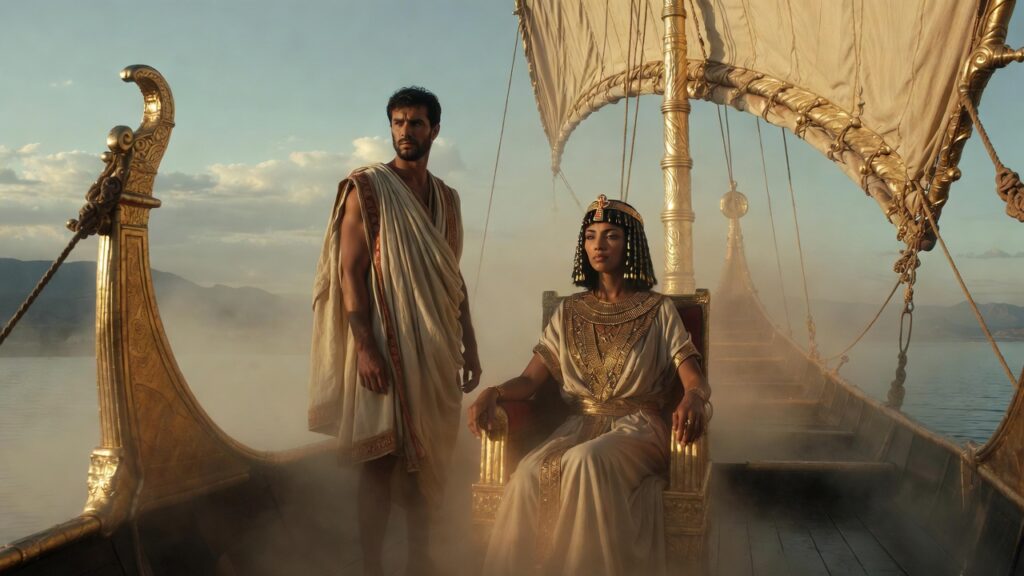
Imagine a queen on a golden barge so magnificent that the very winds fall in love with her sails. The air is thick with perfume, the oars beat like a lover’s pulse, and an entire empire holds its breath. This is not a fairy tale — it is the opening image that has captivated audiences for over four centuries. Yet behind the romance lies a brutal collision of passion, politics, and power that still feels dangerously relevant in 2026.
In this 15 of 108 deep dive on williamshakespeareinsights, we cut through the Elizabethan language, the centuries of myth, and the modern misconceptions to give you a clear, comprehensive, and genuinely useful guide to Shakespeare’s Antony and Cleopatra. Whether you’re a student facing an exam, a teacher preparing a lesson, a theater lover choosing your next production, or simply someone who wants to understand why this play refuses to fade, you’ll finish this article with the confidence to read, discuss, teach, or perform it — and with seven practical life lessons you can actually use.
No jargon without translation. No spoilers beyond structure. Just expert insight drawn from the First Folio, Plutarch’s Lives, and four centuries of performance and scholarship. Let’s begin.
Historical & Biographical Context: The Real Story Shakespeare Used
Shakespeare did not invent Antony and Cleopatra. He reached back more than 1,600 years to the Roman historian Plutarch’s Parallel Lives (translated into English by Sir Thomas North in 1579) and transformed raw history into blazing drama.
The real Mark Antony was one of Julius Caesar’s most trusted generals. After Caesar’s assassination in 44 BC, Antony shared power with Octavius (later Augustus) and Lepidus in the Second Triumvirate. In 41 BC he met Cleopatra VII, the last Ptolemaic ruler of Egypt — a brilliant, multilingual queen who spoke nine languages and knew how to wield both charm and statecraft. Their alliance was as much political as personal: Antony needed Egypt’s wealth and grain; Cleopatra needed Roman protection against rivals.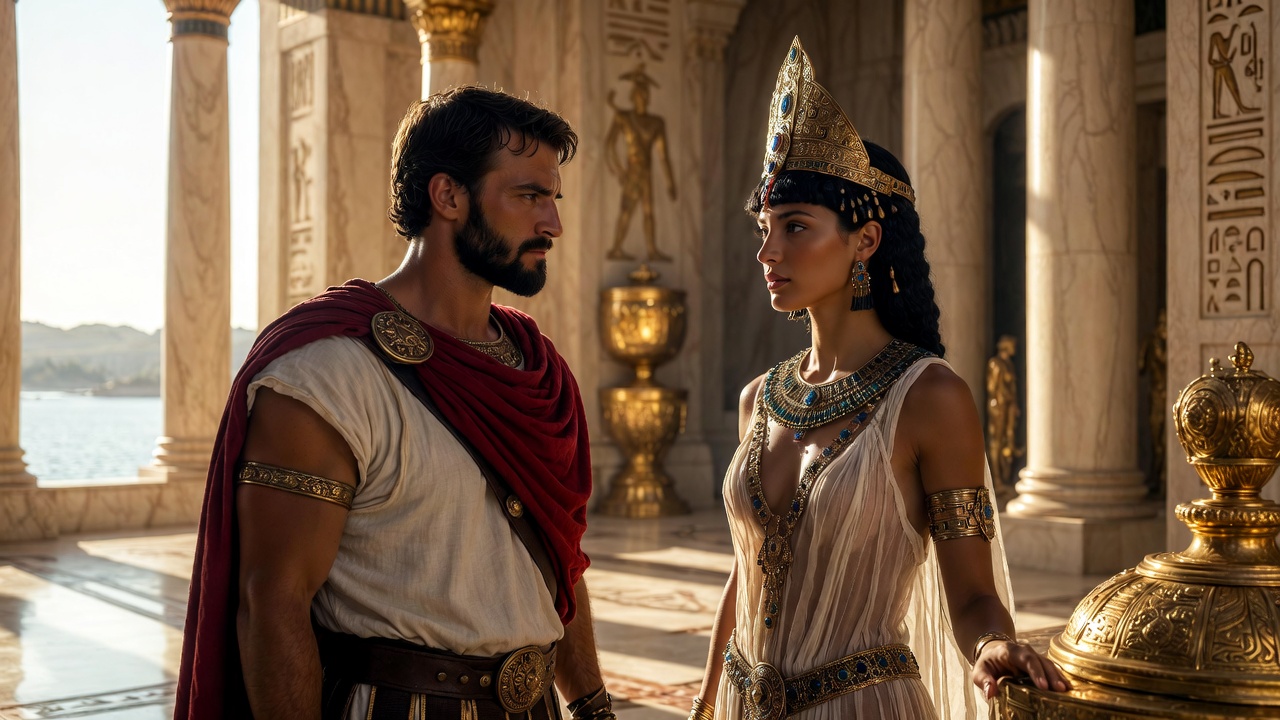
By 31 BC the alliance had become a threat to Rome. Octavius framed the conflict as East versus West, luxury versus discipline, foreign queen versus Roman virtue. The decisive Battle of Actium ended in Antony and Cleopatra’s defeat. Both chose death rather than parade in Octavius’s triumph — Antony by botched suicide, Cleopatra by the legendary asp.
Shakespeare wrote the play around 1606–1607, during the early years of King James I’s reign. Jacobean England was obsessed with questions of absolute power, female rule (remember Elizabeth I had died only four years earlier), and the dangers of unchecked passion. The playwright compresses ten years of history into five acts, heightening the emotional stakes and giving Cleopatra far more agency and complexity than Plutarch ever did.
As literary scholar Janet Adelman noted in her groundbreaking 1973 study The Common Liar, the play constantly forces us to question “right judgment” — nothing is quite what it seems, and truth itself becomes slippery.
Complete Plot Summary – Act by Act (Made Simple)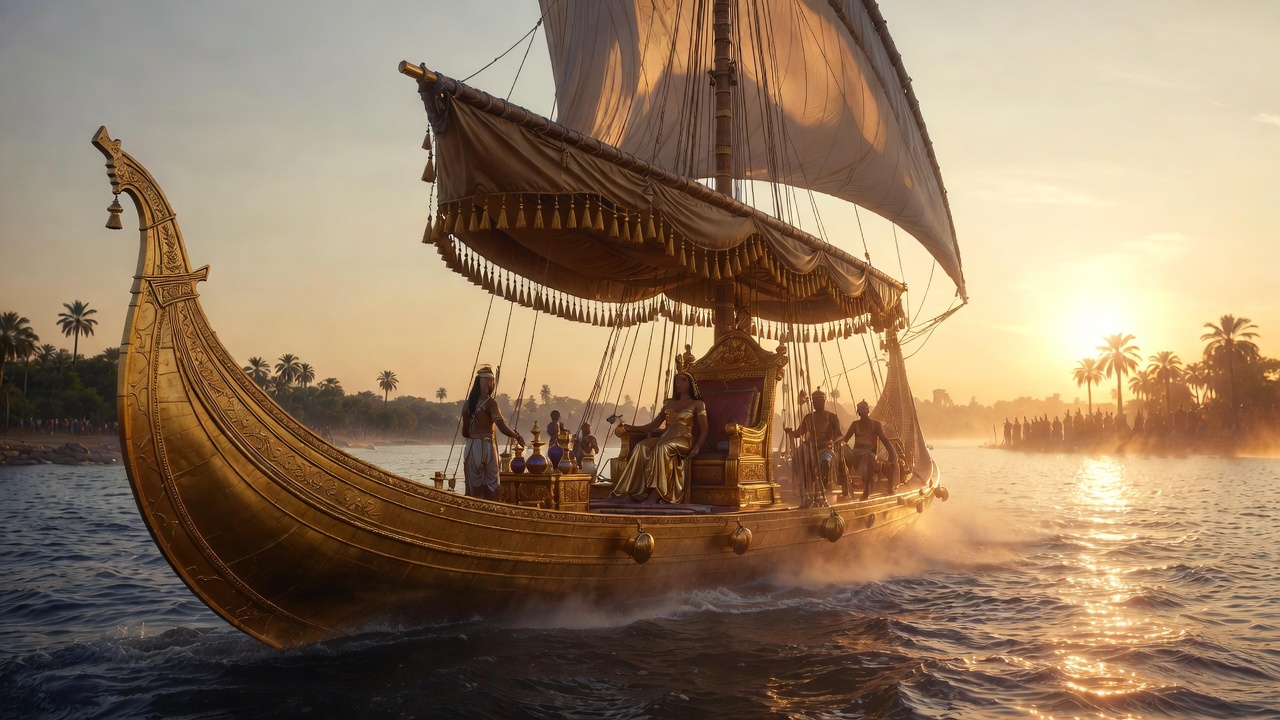
Acts 1–2: The Spark We open in Alexandria. Roman soldiers complain that their general, Mark Antony, has “become the bellows and the fan / To cool a gipsy’s lust.” Antony is torn between duty to Rome and his intoxicating life with Cleopatra. When news arrives that his wife Fulvia has died and Pompey is rebelling, Antony reluctantly returns to Rome. There he marries Octavius’s sister Octavia to seal a political alliance — but the marriage is doomed from the start. Enobarbus’s famous description of Cleopatra on her barge (the lines that inspired the hook above) convinces us that no Roman wife can compete.
Acts 3–4: War and Betrayal Back in Egypt, Antony’s military decisions grow erratic. The decisive naval Battle of Actium is a disaster — Cleopatra’s ships flee, Antony follows, and his reputation collapses. Octavius closes in. Antony’s loyal friend Enobarbus deserts him, only to die of a broken heart. Antony attempts suicide, believing Cleopatra has betrayed him. She, fearing capture, hides in her monument and sends word that she is dead. Antony falls on his sword and is carried to her — still alive — for one final, heartbreaking reunion.
Act 5: The Tragic End Cleopatra stages her own magnificent death. Dressed in her royal robes, she applies the asp to her breast and dies with the immortal line: “I am fire and air; my other elements / I give to baser life.” Octavius arrives to find her serene and victorious even in defeat. He orders a noble burial and claims the world — but the audience knows the lovers have already won the only victory that matters: immortality through legend.
In-Depth Character Analysis – The People Who Drive History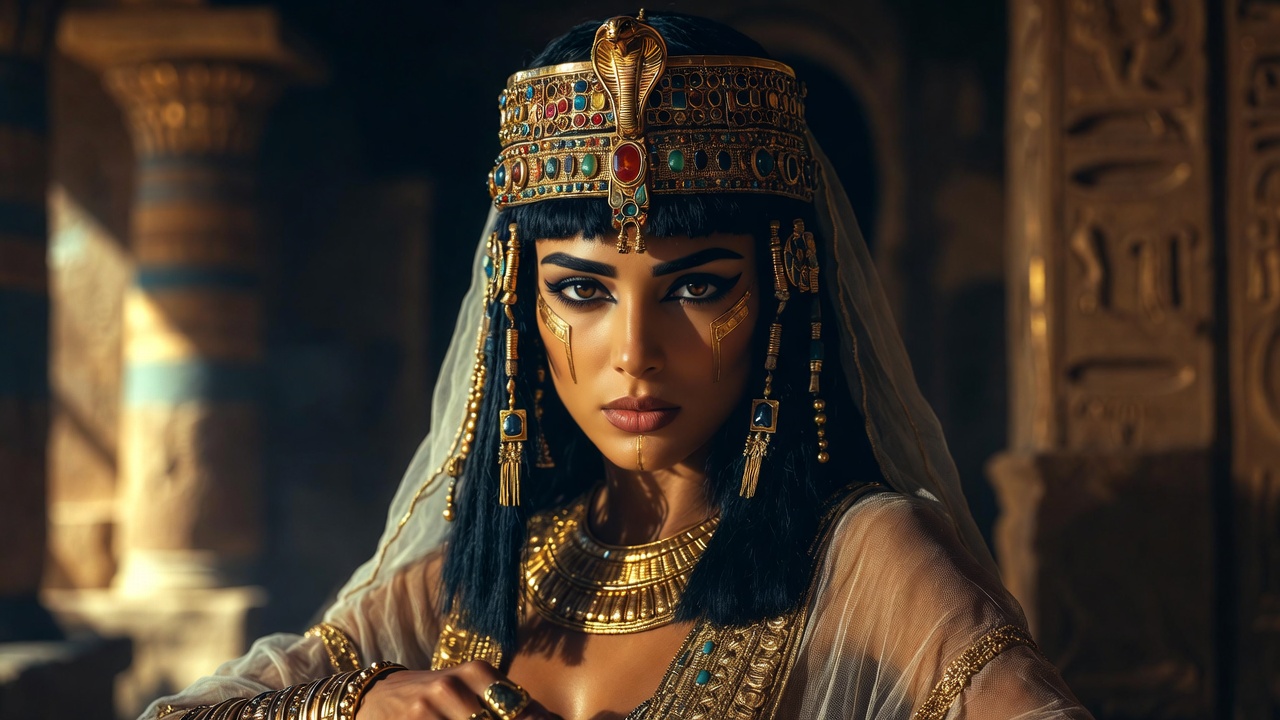
Mark Antony – Soldier, Lover, Tragic Hero Antony is Shakespeare’s most human tragic protagonist. He is simultaneously the greatest soldier of his age and a man who knows he is throwing everything away. His famous cry — “Let Rome in Tiber melt, and the wide arch / Of the ranged empire fall!” — reveals a soul that chooses love over empire. Yet his flaws are glaring: impulsive, generous to a fault, and prone to self-dramatization. As Jonathan Dollimore observes in Radical Tragedy, Shakespeare shows “virtus under erasure” — traditional Roman manly virtue is dismantled before our eyes.
Cleopatra – Politician, Seductress, Ultimate Performer Cleopatra is Shakespeare’s most complex female creation. She has more lines than any other woman in the canon and shifts between roles — passionate lover, cunning politician, grieving widow, playful girl — with dizzying speed. Critics once called her a “whore” or “gypsy”; modern readings recognize her as a master of image and survival. Janet Adelman points out that her performance of femininity is so powerful it exposes the artificiality of Roman masculinity itself.
Octavius Caesar – Cold Ambition Personified Octavius is the play’s “winner” yet the least sympathetic character. Emotionally controlled where Antony is volcanic, he understands power as calculation. His final speech is respectful but also deeply self-serving — he will turn the lovers’ story into propaganda that strengthens his own rule.
Supporting Players Enobarbus provides the plain-speaking Roman perspective and delivers some of the play’s most poetic lines before his heartbreaking desertion. Charmian and Iras, Cleopatra’s attendants, offer loyalty and humor that humanize the queen. Messengers and soldiers constantly shuttle between worlds, reminding us how fragile communication was in the ancient Mediterranean.
Core Themes Explored – What Shakespeare Really Wants Us to See
Love vs. Duty The central tension. Antony repeatedly tries and fails to reconcile the two. The play refuses to let us choose neatly — love is both transcendent and destructive.
Power and Empire East (Egypt: fluid, sensual, feminine) versus West (Rome: rigid, disciplined, masculine). Shakespeare shows that neither is wholly admirable nor wholly false; the clash itself creates tragedy.
Betrayal and Loyalty Everyone betrays someone. Antony betrays Rome and Octavia; Cleopatra appears to betray Antony at Actium; Enobarbus betrays Antony yet cannot live with it. The play asks: in a world of shifting alliances, what does loyalty even mean?
Gender and Performance Cleopatra’s greatest weapon is theater. She stages her own life and death so convincingly that she defeats Octavius’s political triumph. Shakespeare — writing for an all-male stage — uses a boy actor to play the most powerful woman in history, layering irony upon irony.
Mortality and Legacy Both lovers obsess over how they will be remembered. Cleopatra’s final speech rejects a Roman triumph: “Shall they hoist me up / And show me to the shouting varletry / Of censuring Rome?” She chooses mythic death instead — and wins.
Comparison Table (quick reference for students and teachers)
- Romeo and Juliet: teenage passion, private tragedy
- Macbeth: ambition destroys a kingdom
- Antony and Cleopatra: mature passion destroys (and creates) empires — the only tragedy that feels like a love story and a political thriller at once.
6. Shakespeare’s Language & Dramatic Techniques – Demystified
Shakespeare’s language in Antony and Cleopatra is famously rich, varied, and sometimes deliberately overwhelming — mirroring the chaotic, overflowing world of the lovers. Here we break it down so you can read the play with confidence rather than confusion.
Blank Verse vs. Prose – When and Why Shakespeare Switches Most of the play is written in blank verse (unrhymed iambic pentameter), the natural rhythm of elevated Roman and Egyptian speech. Yet Shakespeare frequently drops into prose for lower-status characters (soldiers, messengers, the clown who brings the asp) and for moments of emotional disintegration. When Antony rages after Actium, his lines fracture into shorter bursts and prose-like fragments — a theatrical signal that his world is collapsing. Cleopatra, by contrast, retains poetic control even in her final scene, showing her mastery over language itself.
Imagery of the East: Perfume, Gold, the Nile The play is saturated with sensory language that evokes Egypt’s luxury and fluidity: “The beds i’ th’ East are soft,” “infinite variety,” “my salad days.” Cleopatra is repeatedly compared to natural forces — the moon, the Nile, fire, air — while Rome is associated with stone, marble, and cold measurement. This contrast is not mere decoration; it structures the entire tragedy.
Famous Soliloquies and Set Pieces Explained Line-by-Line (with Modern Translations)
- Enobarbus’s barge speech (Act 2, Scene 2): Original: “The barge she sat in, like a burnish’d throne, / Burn’d on the water…” Modern sense: Cleopatra’s arrival was so dazzling that the boat itself seemed to glow; the winds loved her sails; even the water was enchanted. Why it matters: This 60-line description is one of the most famous passages in Shakespeare — and it’s delivered by a cynical Roman soldier. It proves Cleopatra’s power is real, not just rumor.
- Cleopatra’s death speech (Act 5, Scene 2): Original: “Give me my robe, put on my crown; I have / Immortal longings in me…” Modern sense: She dresses for her final performance, kisses her maids goodbye, and welcomes the asp as a “baby” at her breast. Her last words — “O Antony!” — are simple, human, devastating. The language shifts from grand poetry to intimate monosyllables, showing she has transcended performance into genuine feeling.
Dramatic Irony and the “Messenger” Device Messengers rush in and out constantly, often delivering bad news with comic or tragic awkwardness. Shakespeare uses them to create dramatic irony: the audience usually knows more than the characters. When Cleopatra asks a messenger to describe Octavia (“tall?” “round-faced?”), her insecurity is painfully clear — and we already know Octavia cannot compete.
7. Symbolism & Visual Motifs That Still Fascinate Directors
Shakespeare gives directors unforgettable stage images:
- The Barge — Rarely shown literally on stage (too expensive), but evoked through lighting, music, and description. Modern productions often project golden light or use silk to suggest water and opulence.
- The Asp — The snake is both erotic and deadly, a phallic symbol and a mother’s “baby.” Directors debate whether it’s real or imagined; some productions use a live snake for shock value.
- The Monument — Cleopatra’s tower-like tomb becomes her stage for death. In performance, it is frequently a raised platform or scaffolding, emphasizing her theatrical control even in defeat.
- Sword vs. Crown — Antony’s Roman sword repeatedly fails him (he botches his suicide); Cleopatra’s crown becomes her final prop. The visual contrast underscores the play’s central question: which wins — martial force or performative power?
(Suggested visuals for readers: search for RSC 2017 production photos of Sophie Okonedo’s Cleopatra on her “barge” platform or Ralph Fiennes’s wounded Antony carried to the monument. These images show how modern directors translate Shakespeare’s verbal spectacle into theatrical reality.)
8. 7 Timeless Lessons for Modern Readers & Leaders
Antony and Cleopatra is not just a history play — it is a mirror for anyone navigating love, ambition, and public life in 2026. Here are seven lessons distilled from the text, each with a contemporary parallel.
- Passion without discipline destroys empires (and careers) Antony’s inability to balance desire and duty costs him everything. Modern parallel: High-profile executives or politicians whose private scandals derail public success.
- True power includes emotional intelligence Cleopatra reads people brilliantly and adapts her performance accordingly. Leaders who ignore emotional undercurrents lose allies — just as Antony loses Enobarbus.
- Public image is everything – Cleopatra’s masterclass She understands branding better than most modern PR teams. Her staged death turns political defeat into mythic victory. Lesson: How you are remembered often matters more than what actually happened.
- Never underestimate a woman in politics Octavius continually misjudges Cleopatra’s cunning because he sees only “a woman.” In 2026, this remains a costly mistake in boardrooms and parliaments worldwide.
- Loyalty is tested in crisis, not in comfort Enobarbus deserts when Antony seems finished — then dies of shame. True loyalty reveals itself when the cause looks lost.
- How we die defines how we are remembered Both lovers choose their exits carefully. Cleopatra’s serene, royal death outshines Octavius’s military triumph in historical memory. Modern parallel: public figures whose final statements or actions shape their legacy long after they’re gone.
- Love and ambition can coexist – but rarely for long The play shows that the two forces are not incompatible in theory, yet they pull in opposite directions. Couples and partners in high-stakes careers still wrestle with this tension daily.
Each of these lessons is grounded in specific moments in the text and has been borne out in four centuries of real-world history.
9. Modern Adaptations & Why the Play Still Thrives on Stage & Screen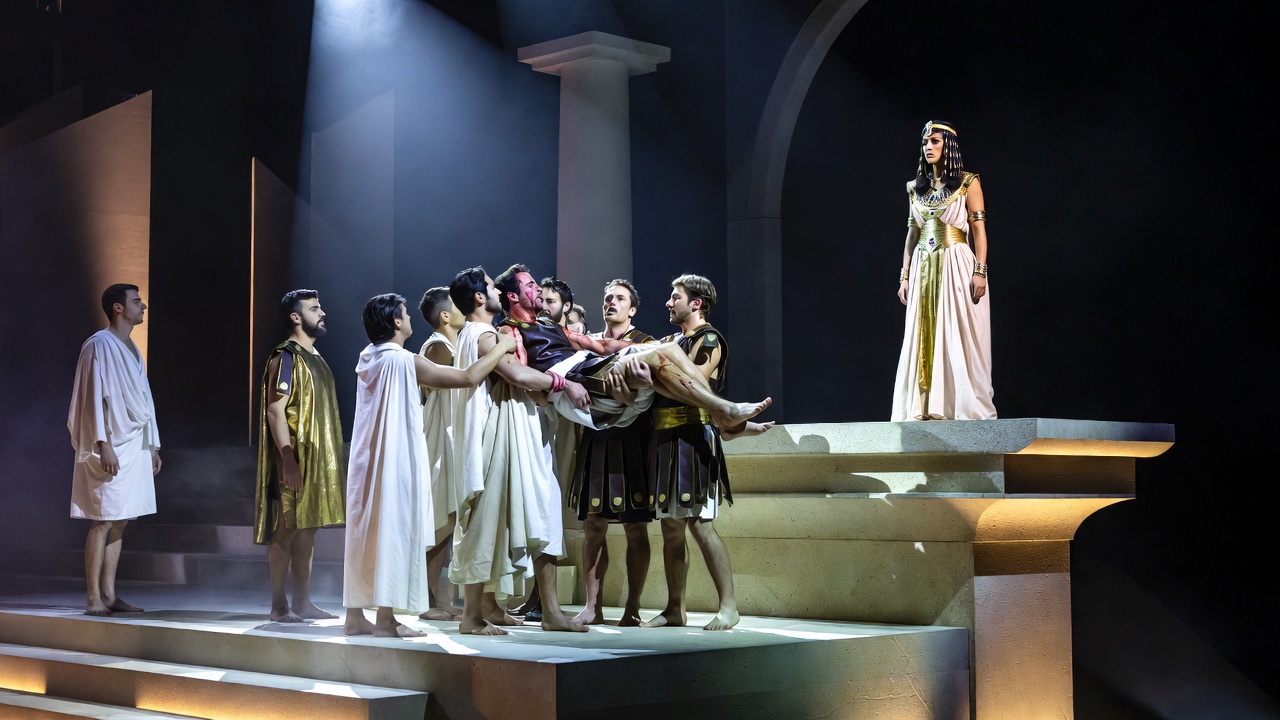
Antony and Cleopatra remains one of the most frequently staged of Shakespeare’s tragedies because it speaks directly to contemporary anxieties: globalization, gender power dynamics, media spectacle, and the clash between private desire and public duty.
Notable recent productions include:
- RSC 2017 (directed by Iqbal Khan) with Ralph Fiennes and Sophie Okonedo — emphasized Cleopatra’s political acumen and made the East-West divide feel urgently modern.
- National Theatre 1998 (with Alan Howard and Helen Mirren) — highlighted sensuality and aging.
- The 2023 Stratford Festival (Canada) production used diverse casting to explore empire and colonialism.
On screen, the 1972 film starring Elizabeth Taylor and Richard Burton remains iconic (if flawed), while the 1981 BBC version with Jane Lapotaire offers a more textually faithful reading. The play’s influence can be seen in HBO’s Rome series, which borrowed heavily from Shakespeare’s portrayal of the lovers.
Directors continue to be drawn to the text because Cleopatra remains one of the few roles that gives an actress both commanding stage time and emotional depth — a rarity even today.
10. Practical Tips: How to Read, Teach, or Perform Antony and Cleopatra Today
This play can feel sprawling and intimidating at first glance. Here are battle-tested, reader- and teacher-friendly strategies that actually work in 2026.
For First-Time Readers & Students
- Read Act 1 and Act 5 first. They contain the emotional heart of the play (the lovers’ first meeting energy and Cleopatra’s final triumph). Once you feel the passion and the payoff, the middle acts’ political maneuvering make more sense.
- Keep two bookmarks: one in the text, one in a simple map of the ancient Mediterranean (Alexandria ↔ Rome ↔ Athens ↔ Actium). Geography drives the plot.
- Use a modern-spelling edition with excellent notes: the Arden Third Series (ed. John Wilders or the updated R.A. Foakes version) or the Folger Shakespeare Library edition. Both provide facing-page glosses without overwhelming you.
- Listen to an audiobook while following the text — the Arkangel Shakespeare recording (with Samantha Bond as Cleopatra) is particularly strong for catching rhythm and tone.
For Teachers & Book Clubs
- Start discussion with one question: “Who ‘wins’ at the end — Octavius or the lovers?” Let students debate for 10 minutes before any plot summary. The disagreement reveals how differently people read power and legacy.
- Assign short performance excerpts: Enobarbus’s barge speech (one student reads, others close their eyes and visualize), Cleopatra’s “Give me my robe” scene, or Antony’s “I am dying, Egypt, dying.” Even awkward teenage readings bring the language to life.
- Use the “compare-contrast” method: show a 2-minute clip from the 1972 Taylor/Burton film (the monument scene), then read the same passage aloud. Ask: “What did the film add or lose?”
For Actors & Directors
- Cleopatra is not “sexy” by default — she performs sexiness when it serves her. Directors should let the actress decide when the seduction is genuine and when it is strategy.
- Antony’s physical decline must be visible: from confident general in Act 1 to a man who can no longer lift his own sword by Act 4.
- Embrace the play’s messiness. Shakespeare gives you rapid scene changes and contradictory reports — lean into that chaos rather than trying to tidy it up.
Free High-Quality Resources (2026)
- MIT’s full text + searchable concordance: shakespeare.mit.edu
- Folger Digital Texts (free PDFs with line numbers)
- Luminos Open Access books — search for “Antony and Cleopatra” for recent scholarly essays
- YouTube: RSC’s “Playing Shakespeare” series has excellent clips on the lovers’ language
11. Frequently Asked Questions (FAQ)
Is Antony and Cleopatra a love story or a tragedy? Both — and that’s the point. It is Shakespeare’s only mature tragedy that feels like a grand romance. The love is real and transcendent, yet it directly causes political and personal catastrophe.
Why did Shakespeare make Cleopatra so powerful and complex? He was writing shortly after Elizabeth I’s death. A brilliant, seductive, politically astute queen was still fresh in cultural memory. Shakespeare amplifies Plutarch’s Cleopatra into a figure who outsmarts and out-performs every Roman man around her.
What really happened at the Battle of Actium? Historically, Cleopatra’s squadron fled the naval battle (possibly a pre-arranged tactical retreat), Antony followed, and their combined forces were routed. Shakespeare condenses and dramatizes it into a single, humiliating moment of desertion.
How historically accurate is the play? About 60–70%. Shakespeare compresses a decade into weeks, invents dialogue, and gives Cleopatra far more agency than Plutarch. The emotional and thematic truth, however, feels piercingly accurate.
What is the best modern translation or simplified version? No “translation” is needed — the language is late Shakespeare and mostly clear. For heavy support, try the No Fear Shakespeare edition (parallel modern prose) or the Shakespeare Made Easy series. Avoid heavily abridged versions; they strip the poetry.
Where does this fit in the “15 of 108” series? This is entry #15 in a planned 108-part journey through Shakespeare’s complete works, major characters, themes, and life lessons. Previous entries covered everything from sonnet 18 to Hamlet’s soliloquies; next up will explore another towering tragedy or comedy. Subscribe to williamshakespeareinsights for the full sequence.
12. Why Antony and Cleopatra Still Matters in 2026
We began with a queen on a golden barge — a spectacle so dazzling it made an empire pause. We end with the same queen, now robed and crowned, choosing death on her own terms while the new master of the world watches. Octavius gains Rome; Cleopatra gains eternity.
In an age of viral personal branding, geopolitical power struggles, high-profile relationships under constant scrutiny, and leaders who must balance passion with pragmatism, Antony and Cleopatra feels less like a 400-year-old artifact and more like today’s headlines. It reminds us that love can be heroic, that performance can be power, and that the stories we tell about ourselves often outlive the empires we build or destroy.