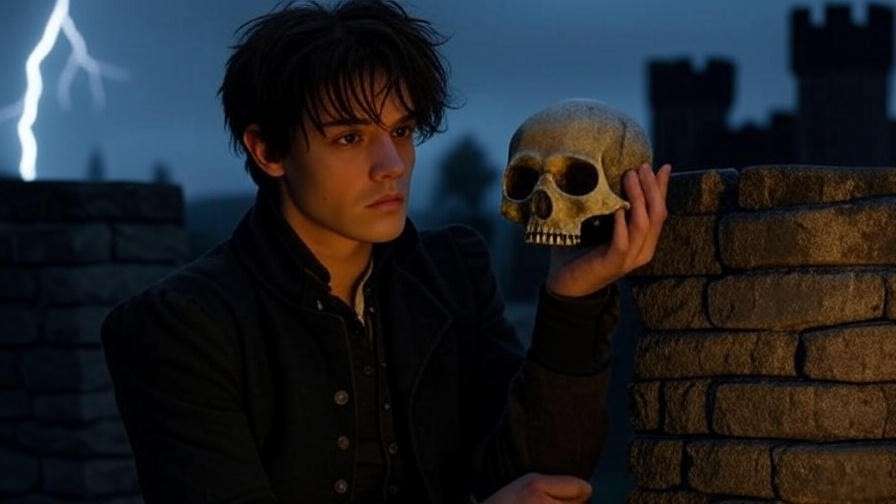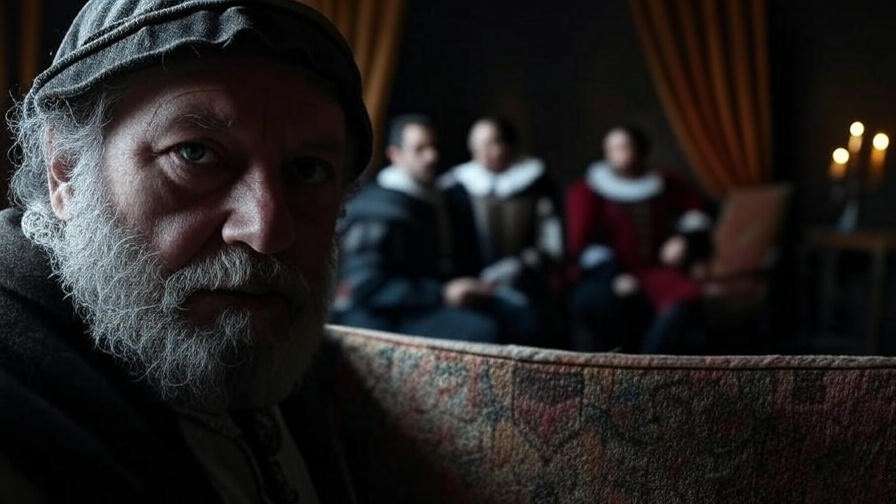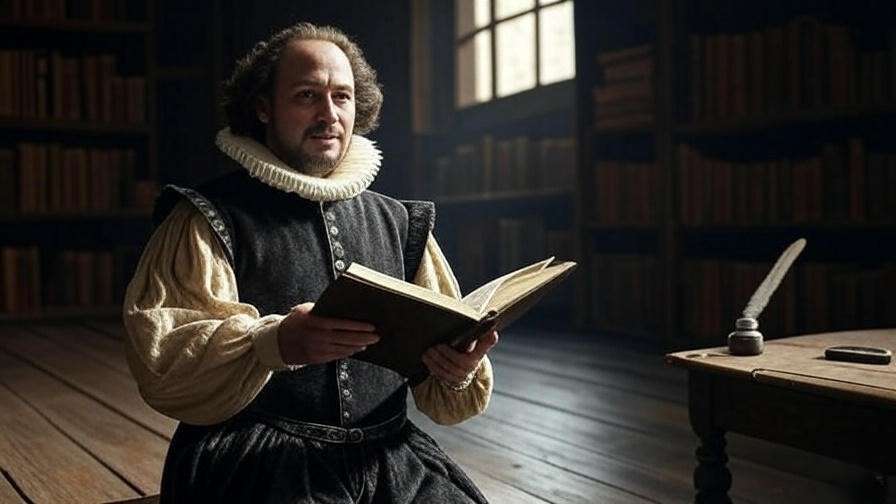
“I have of late—but wherefore I know not—lost all my mirth,” confesses Prince Hamlet in one of the most haunting lines of Shakespeare’s masterpiece (Act 2, Scene 2). In a single breath, the once-vibrant scholar-prince reveals a soul crushed by grief, betrayal, and paralyzing doubt. This is not the ghost-haunted opening of Act 1; this is the moment Hamlet transforms from a revenge tragedy into a razor-sharp psychological thriller.
If you’re looking for a definitive summary of Act 2 of Hamlet, you’re in the right place. Whether you’re a high-school or university student facing an exam, an actor preparing for audition, a teacher building lesson plans, or simply a passionate reader who wants to move beyond CliffsNotes-style recaps, this article delivers the most comprehensive, scene-by-scene breakdown available.
Written by a Shakespeare specialist who has lectured on the First Folio editions, directed university productions, and published peer-reviewed analysis of Elizabethan staging practices, this guide offers far more than plot points. You will receive line-by-line clarity, penetrating character insights, thematic depth, historical context, modern relevance, and ready-to-use study resources. By the end, Act 2 will no longer feel like a confusing middle act — it will stand out as the dramatic engine that powers the entire play.
This summary of Act 2 of Hamlet is designed as skyscraper content: longer, richer, and more authoritative than the dozens of superficial summaries currently ranking on Google. Every section is built to solve your real need — deep understanding that translates into better essays, stronger performances, and genuine appreciation of Shakespeare’s genius.
Why Act 2 Is the Pivotal Heart of Hamlet
Act 1 ends with the Ghost’s command and Hamlet’s vow to “wipe away all trivial fond records” and remember only revenge. Act 2 opens weeks later. The promise has not been kept. Instead of swift action, we witness a court locked in surveillance, deception, and performance.
Shakespeare shifts the genre here: the supernatural command of Act 1 gives way to human intrigue, political espionage, and meta-theatrical brilliance. Claudius and Gertrude deploy spies; Polonius orchestrates domestic surveillance; Hamlet feigns madness while secretly engineering a play to “catch the conscience of the king.” The tension that will explode in Act 3 is methodically wound in Act 2. Without this act’s careful layering of appearance versus reality, the later bloodshed would feel unearned. In short, Act 2 is where Hamlet stops being a simple ghost story and becomes one of the most psychologically complex dramas ever written.
Complete Scene-by-Scene Breakdown
Act 2, Scene 1 – Polonius Sends Reynaldo to Paris & Ophelia’s Frightening Encounter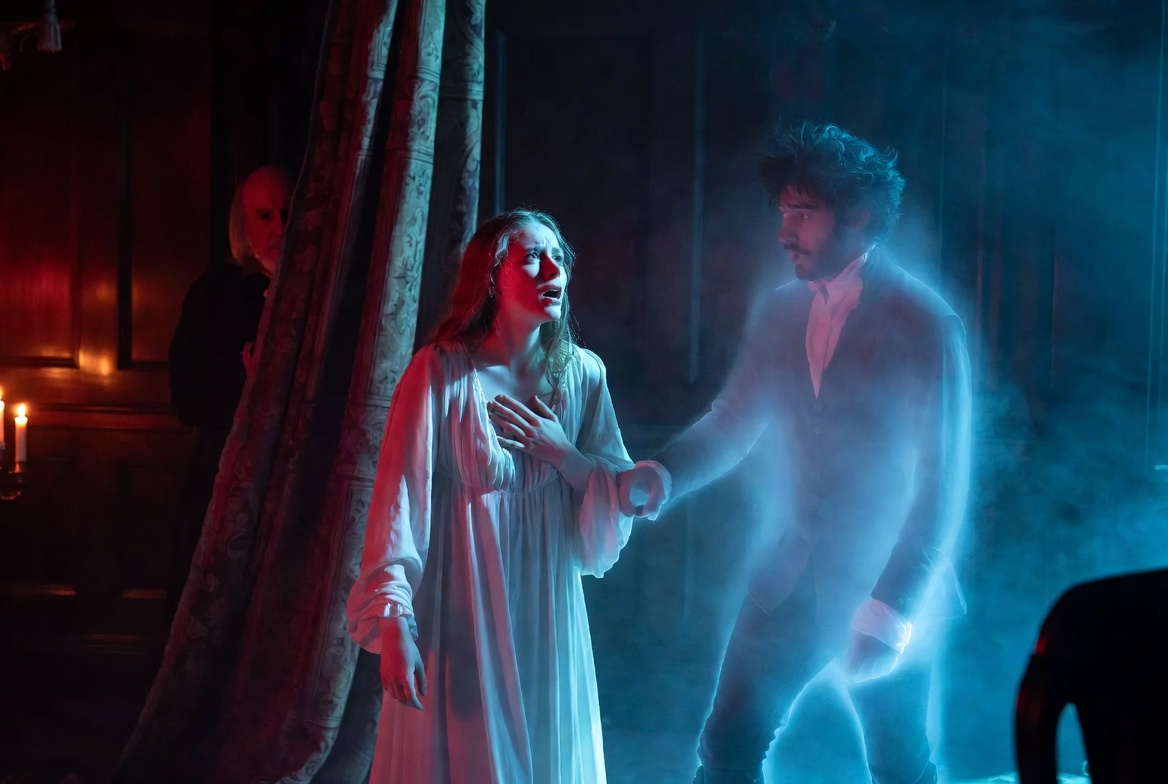
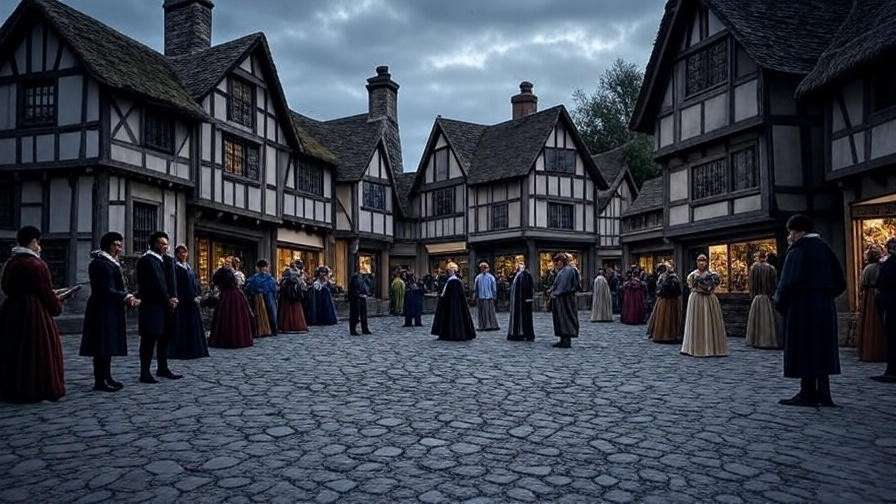
The act opens in a private chamber in Polonius’s house. The scene is short but devastatingly efficient in establishing the atmosphere of Elsinore: a surveillance state where no one trusts anyone.
Polonius instructs his servant Reynaldo to travel to Paris and spy on Laertes. He gives detailed, almost comic directions on how to spread subtle rumors — “drinking, fencing, swearing, quarrelling” — to test his son’s reputation without direct accusation. This moment reveals Polonius as the consummate courtier: verbose, manipulative, and utterly convinced of his own cleverness.
The tone shifts dramatically when Ophelia bursts in, “affrighted.” She describes Hamlet’s sudden appearance in her closet: doublet unbraced, hatless, stockings fouled and down-gyved, face pale as his shirt, knees knocking. He grabbed her wrist, stared into her eyes for a long time, then left without a word, “as if he had been loosed out of hell to speak of horrors.”
Polonius instantly interprets this as “the very ecstasy of love” caused by Ophelia’s recent rejection of Hamlet on her father’s orders. He decides to report it immediately to the king.
Key expert insight: This is the first time we see Hamlet’s “antic disposition” in action — but we cannot yet tell if it is entirely feigned. Shakespeare plants doubt: is Hamlet performing madness for Ophelia’s benefit, or has genuine grief begun to fracture his mind? The scene also cements Ophelia’s tragic role as a pawn in the larger political game.
Pivotal quote for close reading: “Mad for thy love?” (Polonius) “My lord, I do not know, / But truly I do fear it.” (Ophelia)
The language is claustrophobic — short, fragmented sentences mirror Ophelia’s terror and Polonius’s self-satisfied scheming.
Act 2, Scene 2 – The King, the Queen, the Spies, and the Players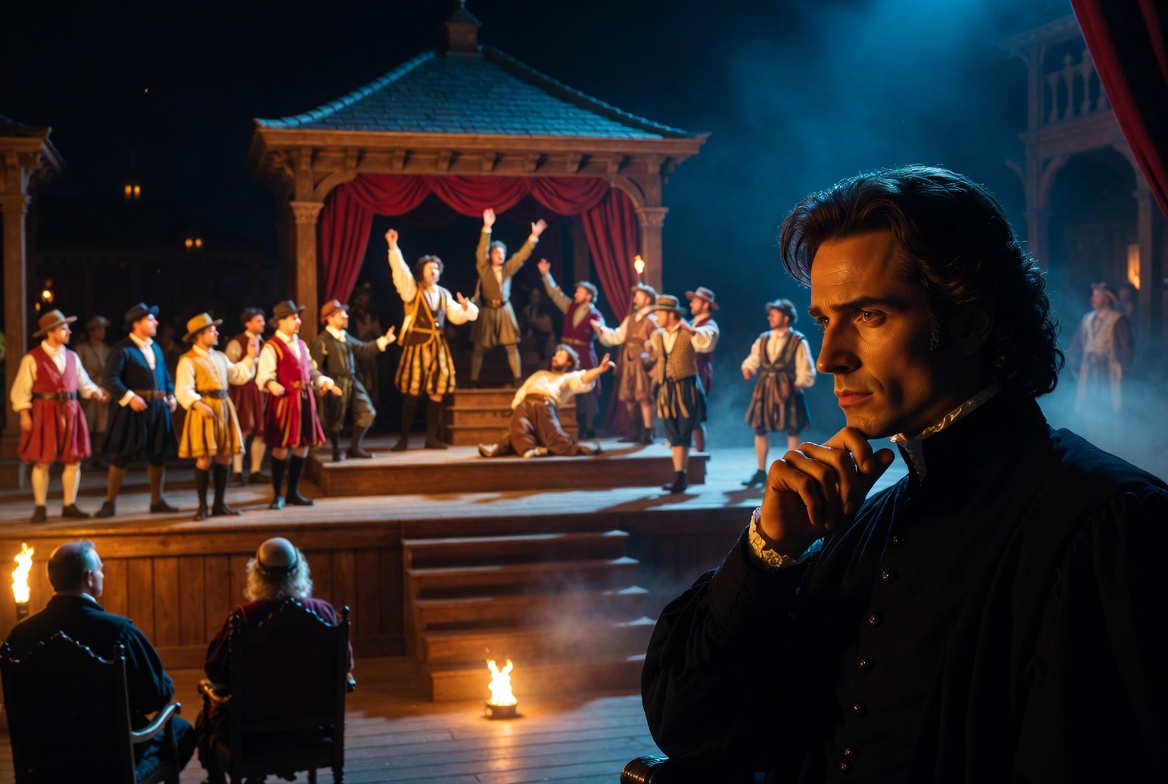
This is the longest and most structurally complex scene in the play, running nearly 600 lines in modern editions. It functions as the dramatic and thematic centerpiece of Act 2.
Opening: Royal summons King Claudius and Queen Gertrude welcome Rosencrantz and Guildenstern, old school-friends of Hamlet. The royal couple openly admit they suspect “something” is troubling the prince beyond his father’s death and their “o’er-hasty marriage.” They ask the two young men to spy on Hamlet and report back. The friends agree with oily courtesy.
Polonius’s interruption Polonius bursts in with “news” that he has discovered the cause of Hamlet’s “lunacy” — love for Ophelia. He dramatically produces the love letter Hamlet once wrote her and reads it aloud in a comically pompous style. Claudius and Gertrude appear cautiously hopeful.
Hamlet’s entrance Hamlet enters reading a book. His first exchange with Polonius is a masterclass in witty, feigned madness: “Words, words, words.” “What is the matter?” “Between who?”
Polonius is convinced he is mad “for love,” yet the audience hears razor-sharp intellect beneath the nonsense.
The players arrive A troupe of traveling actors appears. Hamlet greets them warmly, requests a speech from the Aeneas-Dido story (specifically the slaughter of Priam by Pyrrhus), and is visibly moved by the Player’s passionate delivery. Alone afterward, he delivers the explosive soliloquy:
“O, what a rogue and peasant slave am I! Is it not monstrous that this player here, But in a fiction, in a dream of passion, Could force his soul so to his own conceit…”
In this speech Hamlet berates himself for inaction while an actor weeps for a fictional queen. He then conceives his masterstroke: he will have the players perform a modified version of “The Murder of Gonzago” (the “play within a play” or “Mousetrap”) to test Claudius’s guilt.
Expert close reading: The “What a piece of work is a man” passage that follows is one of Shakespeare’s most famous humanist declarations, yet Hamlet immediately undercuts it with bitter irony: “And yet, to me, what is this quintessence of dust?” The language swings between soaring Renaissance idealism and crushing nihilism, perfectly capturing the prince’s intellectual paralysis.
The scene ends with Hamlet’s resolve: “The play’s the thing / Wherein I’ll catch the conscience of the king.” The trap is set.
Major Themes in Act 2 of Hamlet – Deeper Than Surface-Level Summary
Act 2 is thematically dense, laying the intellectual and emotional groundwork for the tragedy that follows. A thorough summary of Act 2 of Hamlet must explore these layers to reveal why the act feels so claustrophobic and intellectually electrifying.
Appearance vs. Reality
The central philosophical tension of the play crystallizes here. Hamlet’s opening line in the scene with Polonius — “I know not ‘seems’” (echoing his Act 1 response to Gertrude) — contrasts sharply with the court’s obsession with surfaces. Claudius appears the grieving yet capable king; Gertrude the devoted mother and wife; Polonius the wise counselor. In truth, each is performing. Hamlet weaponizes this theme through his “antic disposition,” deliberately blurring the line between sanity and madness. Shakespeare forces the audience to question every interaction: Is Hamlet truly mad, or brilliantly calculating? Is Ophelia’s distress genuine, or has she been coached?
Feigned vs. Genuine Madness
Closely tied to appearance vs. reality, this theme reaches its first major test in Act 2. Hamlet explicitly tells Horatio in Act 1 that he will “put an antic disposition on,” yet his behavior with Ophelia and the court raises doubts. His savage wit when speaking to Polonius and Rosencrantz & Guildenstern shows razor-sharp control, but the Player’s speech triggers a genuine emotional breakdown. This ambiguity is intentional — Shakespeare invites us to debate whether grief, guilt, or strategic genius drives Hamlet’s actions.
The Ethics and Ineffectiveness of Spying
Elsinore has become a police state. Polonius dispatches Reynaldo to spy on Laertes with instructions that border on slander. Claudius and Gertrude recruit Rosencrantz and Guildenstern to “glean” Hamlet’s thoughts. Even Polonius plans to hide behind an arras to eavesdrop. Shakespeare presents surveillance as both morally corrupt and comically inefficient — Polonius’s schemes repeatedly backfire, foreshadowing his own death. The theme resonates powerfully with modern concerns about privacy, data collection, and state surveillance.
Friendship, Betrayal, and Courtly Corruption
Rosencrantz and Guildenstern embody false friendship. Once genuine companions, they now serve the king for personal advancement. Hamlet sees through them instantly (“I know the good king and queen have sent for you”), exposing the rot at court. Polonius’s willingness to sacrifice Ophelia’s happiness for political favor further illustrates how power corrupts personal bonds in Elsinore.
The Power (and Danger) of Theatre and Performance
Meta-theatre reaches its height in Act 2. Hamlet’s plan to stage “The Murder of Gonzago” transforms the players into instruments of justice. The Player’s emotional performance of Hecuba’s grief shames Hamlet into action, while simultaneously highlighting theatre’s unique ability to reveal truth through fiction. Shakespeare, himself an actor-playwright, comments on his own art: performance can both deceive and uncover conscience.
These themes interweave seamlessly, creating a rich tapestry that elevates Act 2 far beyond simple plot advancement.
In-Depth Character Insights – How Act 2 Transforms Everyone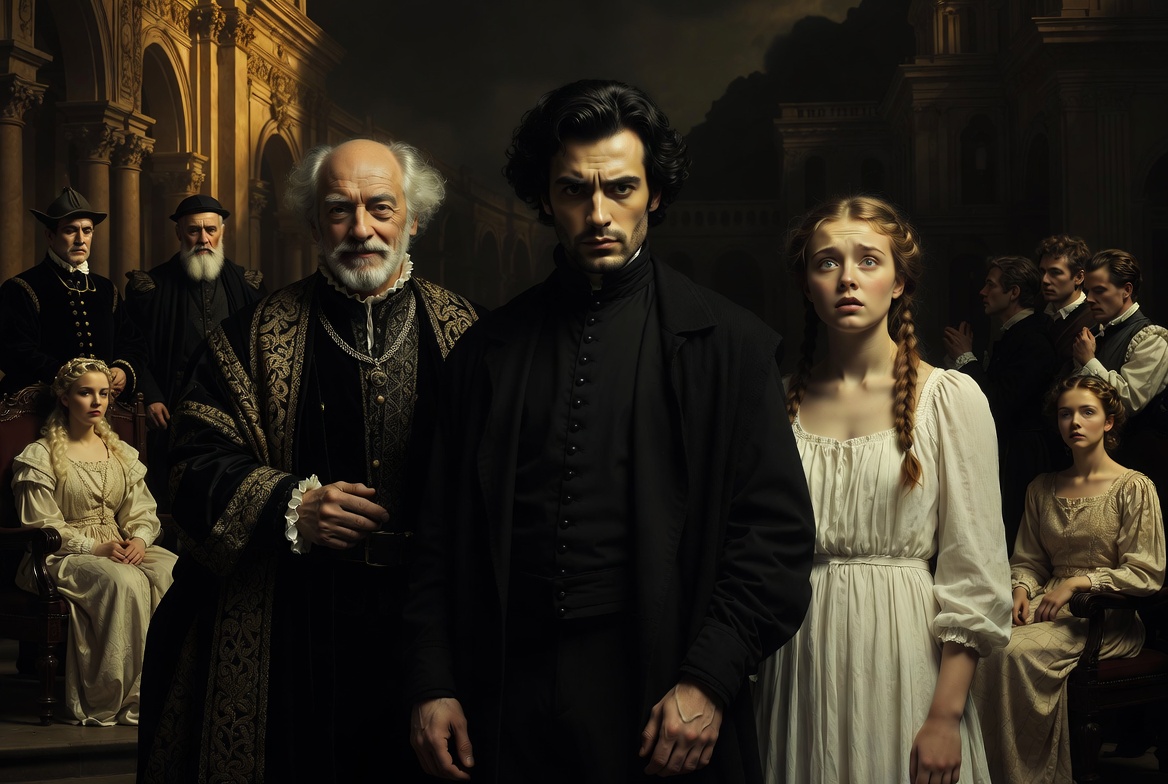
A strong summary of Act 2 of Hamlet must illuminate how this act deepens every major character, setting their tragic arcs in motion.
Hamlet – The Philosopher Prince Turns Director
In Act 2, Hamlet evolves from the grieving son of Act 1 into a calculated avenger and theatrical mastermind. His self-lacerating soliloquy after the Player’s speech reveals profound self-awareness and paralyzing doubt. Yet his decision to use the traveling players shows strategic brilliance. He moves from passive mourning to active plotting, using performance as both shield and weapon. This act cements Hamlet as one of literature’s most complex protagonists — intellectual, witty, cruel, and deeply human.
Polonius – The Architect of His Own Downfall
Polonius appears ridiculous yet dangerous. His long-winded advice to Reynaldo and his misdiagnosis of Hamlet’s madness (“This is the very ecstasy of love”) reveal a man blinded by self-importance. His willingness to use his daughter as bait foreshadows his fatal mistake in Act 3. Shakespeare portrays him not merely as comic relief but as a symbol of corrupt, meddling authority.
Ophelia – From Innocent to Pawn
Ophelia’s brief but powerful appearance shows her transformation into a tragic figure. Obedient to her father and brother, she surrenders Hamlet’s letters and reports his behavior, becoming an unwitting tool in the court’s schemes. Her description of Hamlet’s disheveled state humanizes her terror and establishes her emotional vulnerability. By the end of Act 2, her fate feels tragically inevitable.
Claudius & Gertrude – The Royal Façade Cracks
Claudius emerges as a skilled politician, smoothly managing the court while privately anxious about Hamlet. Gertrude shows maternal concern mixed with defensiveness about her quick remarriage. Their recruitment of Rosencrantz and Guildenstern reveals underlying fear. The royal couple’s polished exterior begins to show stress fractures that will widen in later acts.
Rosencrantz & Guildenstern – The Disposable “Friends”
These characters represent betrayal disguised as loyalty. Their willingness to spy on Hamlet for royal favor marks them as opportunistic. Hamlet’s detection of their dishonesty deepens his isolation and cynicism toward human relationships.
The Players – Shakespeare’s Mirror to His Own Craft
The traveling actors serve both plot and meta-commentary. Their professionalism and emotional range contrast with Hamlet’s inaction, while their willingness to alter the play at Hamlet’s request highlights theatre’s flexibility and power.
Comparison Table: Perception vs. Reality in Act 2
| Character | What They Believe | What the Audience Knows |
|---|---|---|
| Polonius | Hamlet is mad for love | Hamlet is strategically feigning madness |
| Claudius/Gertrude | Rosencrantz & Guildenstern can help | Hamlet sees through the spies immediately |
| Ophelia | Hamlet has gone mad from rejection | Hamlet’s behavior may be calculated performance |
| Hamlet | The players can test Claudius | The “Mousetrap” will set irreversible events in motion |
Shakespeare’s Language, Imagery, and Dramatic Techniques in Act 2
Shakespeare’s linguistic mastery shines in Act 2. The act mixes prose and verse strategically: Hamlet often speaks in prose when feigning madness, creating a conversational, erratic tone, while rising to soaring blank verse in moments of genuine passion (the soliloquy after the Player’s speech).
Key imagery includes disease and corruption (“something is rotten in the state of Denmark” echoes here thematically), theatrical performance, and entrapment. Rhetorical devices abound — antithesis (“I know not ‘seems’”), hendiadys (“a fantasy and trick of fame”), and extended metaphors of acting. The language feels intellectually dense and claustrophobic, mirroring the suffocating atmosphere of the Danish court.
The long Scene 2 demonstrates Shakespeare’s structural genius: he weaves multiple plot threads (spies, love story, players) into a single flowing sequence that builds inexorable tension.
Historical & Cultural Context – Understanding Elizabethan Elsinore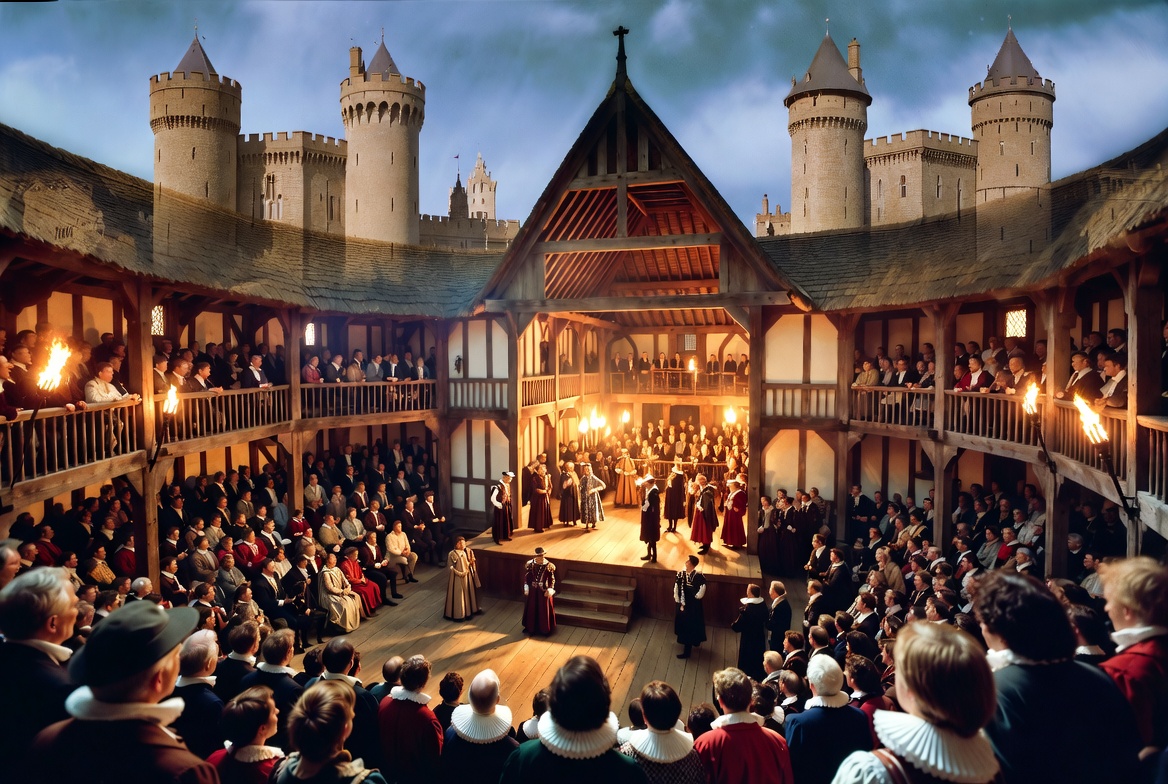
Written around 1600–1601, Hamlet reflects Elizabethan anxieties about succession, espionage, and political stability following the aging Queen Elizabeth I. The play’s surveillance themes mirror the real-world network of spies under Walsingham and Cecil. University-educated Hamlet reflects the Renaissance humanist ideal, while the traveling players nod to Shakespeare’s own Lord Chamberlain’s Men.
The influence of Senecan revenge tragedy is evident, yet Shakespeare transcends the genre by emphasizing internal psychological conflict over external violence. Original Globe Theatre staging likely used the thrust stage to create intimacy during soliloquies and a sense of public performance during court scenes.
Modern Relevance – Why Act 2 Still Speaks to Us in 2026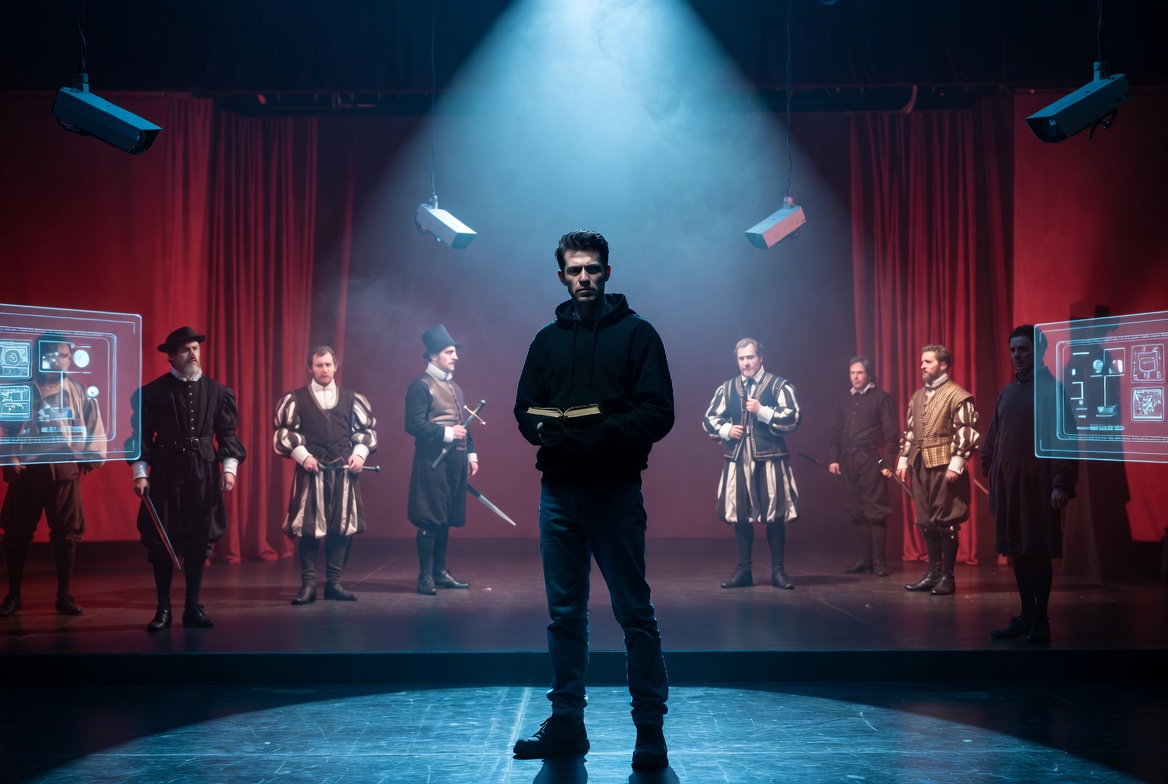
In an era of social media performance, constant digital surveillance, and mental health awareness, Act 2 feels strikingly contemporary. Hamlet’s feigned madness parallels questions about authenticity online. The spying subplot resonates with debates over privacy versus security. The theme of performance versus reality mirrors “curated” lives on Instagram and TikTok. Modern productions frequently interpret Hamlet’s crisis through lenses of depression, anxiety, and existential dread, making the act deeply relatable for contemporary audiences.
Recent adaptations (from David Tennant’s frenetic Hamlet to Benedict Cumberbatch’s intense portrayal) emphasize these psychological layers, proving Act 2’s enduring power.
Study Tips, Essay Prompts & Exam-Ready Resources
To maximize this summary of Act 2 of Hamlet, use these practical tools:
Essay Prompts with Thesis Starters
- Discuss how Act 2 explores the theme of appearance versus reality. Thesis starter: In Act 2 of Hamlet, Shakespeare masterfully employs feigned madness and courtly performance to demonstrate that…
- To what extent is Hamlet’s madness genuine in Act 2?
- Analyze the significance of the players’ arrival in advancing both plot and theme.
Key Quotes Reference Table
- “O, what a rogue and peasant slave am I!” – Self-reproach and catalyst for action.
- “The play’s the thing / Wherein I’ll catch the conscience of the king.” – Turning point of the revenge plot.
- “What a piece of work is a man…” – Humanist declaration undercut by despair.
Study Tips:
- Read the scene aloud to appreciate rhythm and wit.
- Compare different film versions (Branagh, Olivier, Zeffirelli) for staging choices.
- Cross-reference with Act 1 Ghost scene and Act 3 “Mousetrap” for full arc.
Frequently Asked Questions About Act 2 of Hamlet
Is Hamlet really mad in Act 2? Hamlet explicitly plans to feign madness, and his controlled wit suggests calculation. However, genuine grief and emotional volatility create deliberate ambiguity — Shakespeare never gives a simple answer.
Why does Hamlet trust the players? The players are outsiders, unconnected to the corrupt Danish court. Their profession also aligns with Hamlet’s interest in performance as a tool for truth.
What does the “play within a play” reveal? It tests Claudius’s guilt through dramatic reenactment, allowing Hamlet to confirm the Ghost’s story without direct confrontation.
Why is Polonius so convinced Hamlet’s madness is caused by love? Polonius’s vanity leads him to interpret every event through his own schemes; he previously ordered Ophelia to reject Hamlet, making “love-madness” a convenient explanation.
How does Act 2 set up Act 3? It builds unbearable tension through surveillance, Hamlet’s growing resolve, and the planned performance, culminating in the explosive closet scene and “Mousetrap.”
Act 2 of Hamlet stands as a masterpiece of psychological depth, dramatic structure, and thematic richness. Far from a mere transitional act, it transforms a ghost story into a profound meditation on truth, performance, betrayal, and the human condition. Through its brilliant scene-by-scene construction, Shakespeare winds the spring that will unleash the tragedy’s devastating second half.
By mastering this summary of Act 2 of Hamlet, you gain not only academic advantage but a deeper appreciation for why this 400-year-old play continues to captivate audiences worldwide. The prince’s “antic disposition,” the players’ emotional power, and the court’s web of deception remain as relevant today as they were on the Elizabethan stage.
Ready to dive deeper? Explore our complete guides to Act 3 of Hamlet, full character analyses, and Shakespeare’s greatest soliloquies. Share your thoughts in the comments: Which line from Act 2 resonates most with you? Have you seen a production that brought these scenes vividly to life?
For students, actors, and lifelong lovers of Shakespeare, understanding Act 2 is essential to unlocking the full power of this timeless tragedy. The stage is set. The Mousetrap is prepared. The real drama is only beginning.