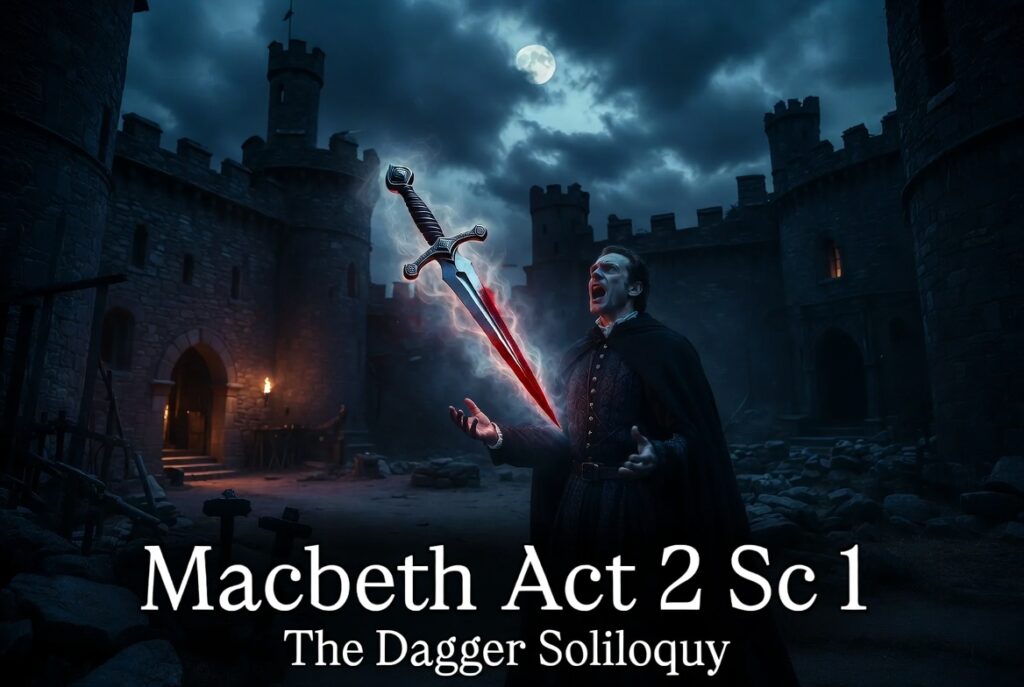
A dagger floats in the midnight air, its handle turned invitingly toward a trembling hand. The man who sees it knows it is not real—yet he cannot look away. This single, haunting image has haunted audiences for over four centuries. It is the precise moment when ambition curdles into murder.
If you are searching for macbeth act 2 sc 1, you have come to the right place. This scene is not merely a plot point; it is the dramatic hinge on which the entire tragedy of Macbeth turns. In the space of roughly eighty lines, Shakespeare shifts his protagonist from a celebrated warrior still capable of hesitation to a man who has already committed regicide in his mind. The famous “dagger soliloquy” that dominates the scene remains one of the most psychologically penetrating passages in all of English literature.
As a Shakespeare scholar with more than fifteen years of university teaching, stage directing, and published textual analysis, I have guided hundreds of students and teachers through this exact scene. What follows is far more than a basic summary. This guide offers a complete, line-by-line examination of Macbeth Act 2 Scene 1, placed firmly in its historical, theatrical, and thematic context. You will receive an annotated First Folio text, detailed literary analysis, performance insights, exam-ready essay material, and practical revision tools designed to give you a deeper understanding than any standard study guide or SparkNotes-style recap can provide.
Whether you are preparing for A-Level, AP Literature, or simply want to experience the play at a more profound level, this article solves the real problem students and readers face: the gap between “I read the scene” and “I truly understand why it matters.” By the end, you will be able to discuss the dagger soliloquy with confidence, support any essay on ambition or guilt with precise textual evidence, and appreciate how Shakespeare turns a dark Scottish night into a universal study of the human conscience.
Historical and Dramatic Context – Why Act 2 Scene 1 Matters
Recap of Act 1 – The Prophecy That Sets the Trap
By the end of Act 1, the witches have delivered their threefold prophecy, King Duncan has named Malcolm as his heir, and Macbeth has already begun to entertain “black and deep desires.” Lady Macbeth has received her husband’s letter and resolved to “pour [her] spirits in [his] ear.” The stage is literally and metaphorically set for murder. Act 2 Scene 1 opens on the very night Duncan is a guest at Inverness Castle—the night the prophecy will be forced into reality.
Jacobean Political Climate and Shakespeare’s Audience Expectations
Macbeth was first performed in 1606, the year after the Gunpowder Plot. King James I, Shakespeare’s royal patron, had a documented obsession with witchcraft (he even wrote Daemonologie). Audiences in 1606 would have seen the witches not as fairy-tale figures but as real demonic agents. They would also have recognized the horror of regicide: killing a king was not just murder; it was an assault on the divine order of the universe. Act 2 Scene 1 forces the audience to watch that divine order begin to unravel in real time.
Staging Challenges in the Globe Theatre (1606)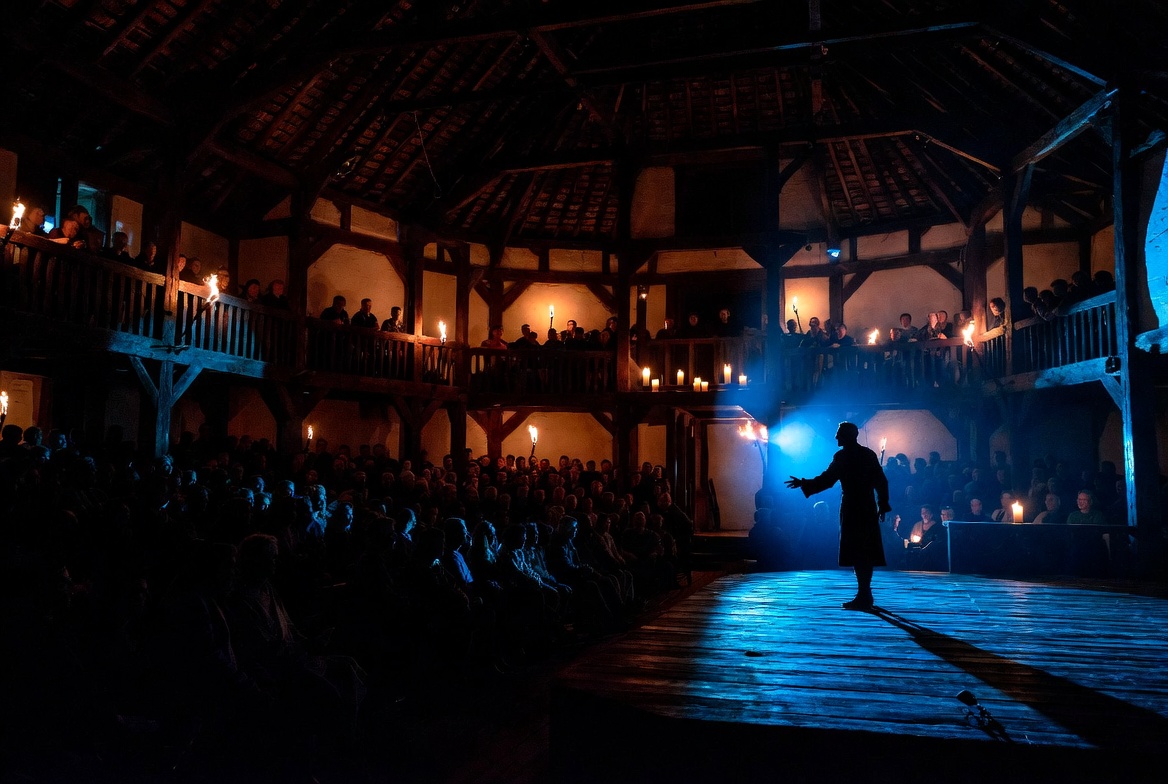
The Globe had no curtains, no spotlights, and only limited artificial lighting. Shakespeare therefore had to create darkness and psychological terror through language alone. The dagger soliloquy is a masterclass in this technique: the audience sees nothing on stage except a man staring at empty air, yet they see the dagger as vividly as he does. This theatrical economy makes the scene astonishingly modern.
Scene-by-Scene Summary of Macbeth Act 2 Scene 1
Banquo, Fleance, and the Diamond from Duncan (Lines 1–30)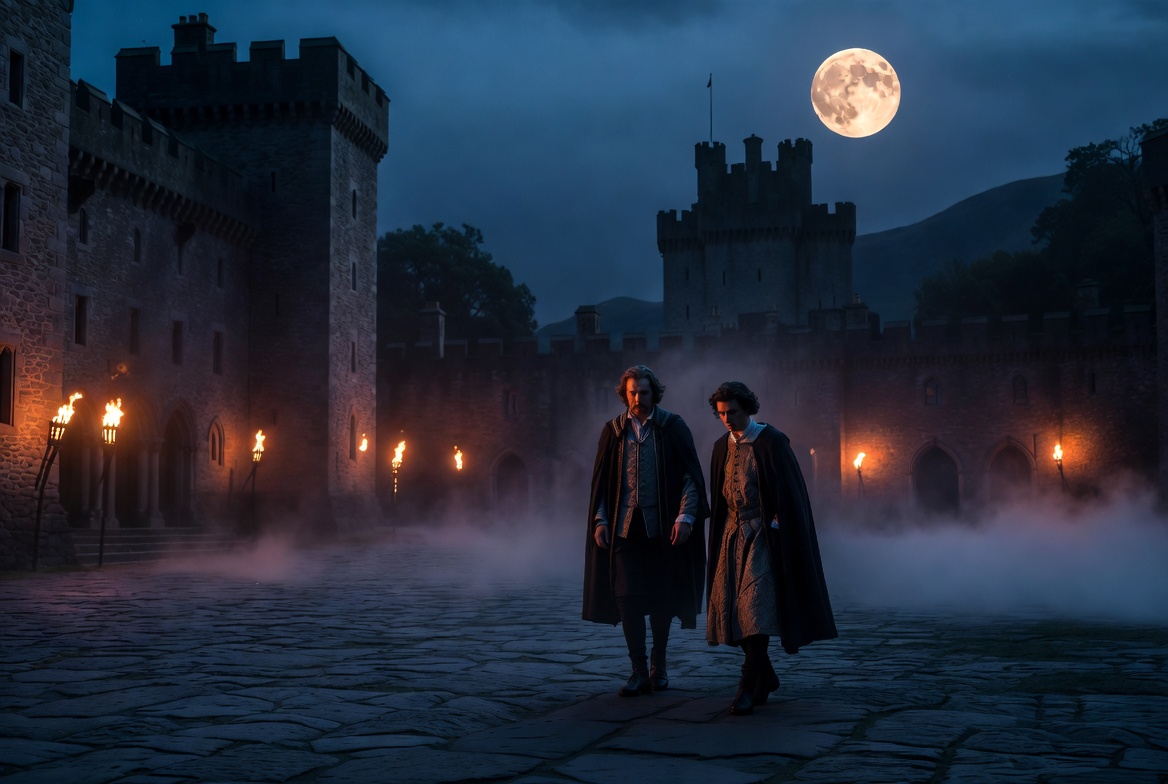
The scene opens with Banquo and his son Fleance walking the castle courtyard at night. Banquo cannot sleep; he is troubled by “cursed thoughts” about the witches. Macbeth enters, still wearing the same clothes from the feast. Duncan has sent a diamond to Lady Macbeth as thanks for her hospitality—an ironic symbol of the king’s trust. Banquo offers Macbeth the diamond and subtly reminds him of the witches’ prophecy. Macbeth lies smoothly, claiming he has not thought about the witches at all. The two men part, with Banquo praying for “repose” that Macbeth will never again enjoy.
The Witches’ Prophecy Revisited
This brief exchange is crucial. Banquo’s presence reminds the audience (and Macbeth) of the original prophecy: Macbeth will be king, but Banquo’s descendants will also rule. The diamond and the polite conversation underscore how far Macbeth has already fallen into deception.
Macbeth Alone – The Dagger Appears (Lines 31–64)
Left alone, Macbeth delivers the longest and most famous soliloquy of the play. A dagger materializes before him. He tries to grasp it, fails, and realizes it is a hallucination born of his “heat-oppressed brain.” The vision grows more vivid: blood appears on the blade. Macbeth interprets the dagger as a supernatural guide leading him to Duncan’s chamber.
The Bell Tolls – Macbeth Exits to Murder (Lines 65–end)
A bell rings—the signal Lady Macbeth promised to give when the guards are drugged. Macbeth steels himself and walks toward the king’s chamber with the real dagger he now draws. His final couplet is chilling in its calm acceptance: “Hear it not, Duncan, for it is a knell / That summons thee to heaven or to hell.”
This short summary gives you the plot beats, but the real power of Macbeth Act 2 Sc 1 lies in what Shakespeare does with language, imagery, and psychology. That power is revealed in the next section.
The Dagger Soliloquy – Line-by-Line Analysis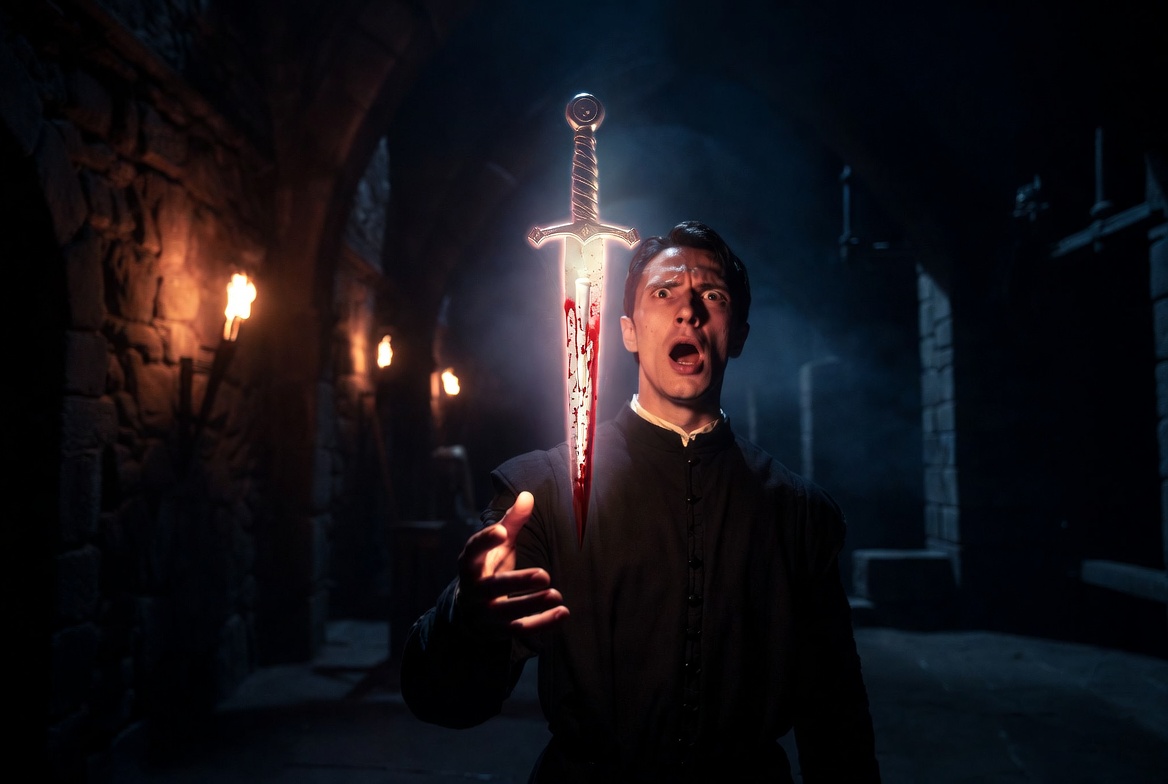
This 33-line speech is the emotional and thematic core of the entire scene—and arguably the play. Below is the full text as it appears in the First Folio (modernized spelling for readability, with key original punctuation preserved for analysis).
Is this a dagger which I see before me, The handle toward my hand? Come, let me clutch thee. I have thee not, and yet I see thee still. Art thou not, fatal vision, sensible To feeling as to sight? or art thou but A dagger of the mind, a false creation, Proceeding from the heat-oppressed brain? I see thee yet, in form as palpable As this which now I draw. Thou marshall’st me the way that I was going; And such an instrument I was to use. Mine eyes are made the fools o’ the other senses, Or else worth all the rest; I see thee still, And on thy blade and dudgeon gouts of blood, Which was not so before. There’s no such thing: It is the bloody business which informs Thus to mine eyes. Now o’er the one half-world Nature seems dead, and wicked dreams abuse The curtain’d sleep; witchcraft celebrates Pale Hecate’s offerings, and wither’d murder, Alarum’d by his sentinel, the wolf, Whose howl’s his watch, thus with his stealthy pace. With Tarquin’s ravishing strides, towards his design Moves like a ghost. Thou sure and firm-set earth, Hear not my steps, which way they walk, for fear Thy very stones prate of my whereabout, And take the present horror from the time, Which now suits with it. Whiles I threat, he lives: Words to the heat of deeds too cold breath gives. A bell rings I go, and it is done; the bell invites me. Hear it not, Duncan; for it is a knell That summons thee to heaven or to hell.
“Is this a dagger which I see before me?” – Symbolism of the Floating Dagger
The opening question is rhetorical yet desperate. The dagger is not a prop Shakespeare expects the audience to see; it exists only in Macbeth’s mind. Its “handle toward my hand” suggests the weapon itself is eager for the crime. This is the first time the audience witnesses Macbeth’s imagination physically manifesting—proof that the supernatural has already infected his psyche.
“Thou marshall’st me the way that I was going” – Fate, Free Will, and Hallucination
Macbeth acknowledges the dagger is showing him the path he has already chosen (“the way that I was going”). The hallucination does not force the murder; it confirms a decision already made. This moment brilliantly dramatizes the tension between fate (the witches) and free will (Macbeth’s own ambition).
“Now o’er the one half-world Nature seems dead” – Darkness, Sleep, and Death Imagery
Shakespeare paints a world inverted: night has conquered half the globe, sleep has become “curtain’d” and abused by “wicked dreams,” and witchcraft is at its most powerful. The reference to Hecate (goddess of witchcraft) and Tarquin (the Roman rapist-king) links regicide to sexual violation—both are crimes against natural order. The wolf and the “stealthy pace” turn Macbeth into a predator moving like a ghost.
Rhetorical Structure, Iambic Pentameter Variations, and Psychological Realism
The speech begins with short, stabbing questions and gradually lengthens into rolling, hypnotic sentences that mirror Macbeth’s deepening resolve. Shakespeare varies the iambic pentameter—extra stresses on “fatal vision,” “heat-oppressed,” and “bloody business”—to show a mind under extreme pressure. By the final couplet, the meter snaps back into perfect regularity, signaling that Macbeth has made his choice. The internal debate is over; only action remains.
Major Themes Illuminated in Act 2 Scene 1
Macbeth Act 2 Scene 1 functions as a thematic powerhouse, crystallizing several core ideas that resonate throughout the tragedy. The scene does not merely advance the plot; it reveals the internal machinery of moral collapse.
Unchecked Ambition and Moral Collapse
The dagger soliloquy captures the exact instant when ambition overrides conscience. Macbeth no longer debates whether to kill Duncan—he debates only the method and his own perception. The hallucinated dagger becomes a physical emblem of how ambition distorts reality. What begins as “vaulting ambition” in Act 1 has, by this point, become a self-sustaining force that no longer needs external prompting from the witches or Lady Macbeth. The scene shows ambition not as a noble drive but as a corrosive poison that eats away at humanity from within.
Guilt Before the Crime – The Birth of Paranoia
One of the most psychologically brilliant aspects of Macbeth Act 2 Sc 1 is that Macbeth experiences crushing guilt before the murder has even occurred. The bloody gouts on the imaginary dagger foreshadow the real blood that will soon stain his hands and his mind. This pre-guilt marks the beginning of the paranoia that will eventually destroy him. Shakespeare demonstrates that the psychological consequences of evil begin the moment the intention is fixed, not merely after the deed.
The Supernatural vs. Human Agency
The floating dagger blurs the boundary between the supernatural and the psychological. Is it sent by the witches? Or is it purely a product of Macbeth’s “heat-oppressed brain”? Shakespeare deliberately leaves the question ambiguous, forcing the audience to grapple with the same uncertainty that torments the protagonist. This ambiguity deepens the tragedy: Macbeth cannot blame external forces entirely because the dagger points the way he was already going.
Light vs. Darkness and the Inversion of Natural Order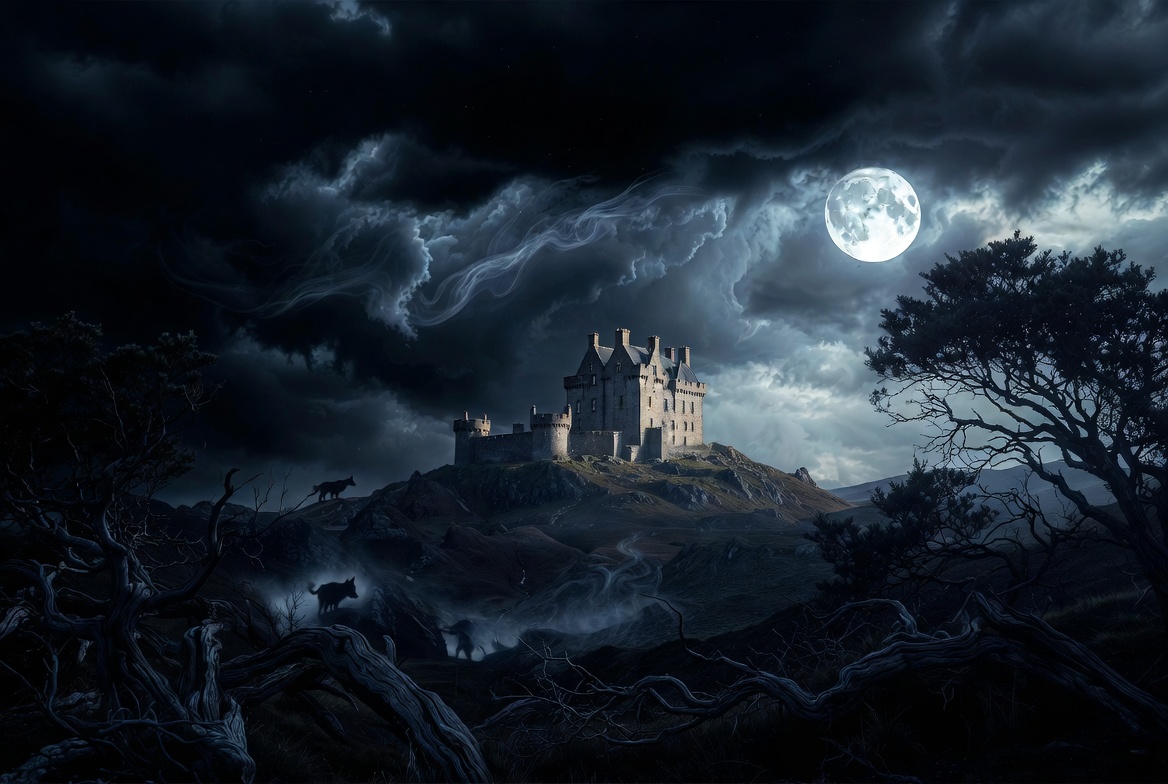
The scene is saturated with imagery of darkness conquering light. “Now o’er the one half-world / Nature seems dead” signals a cosmic inversion. Sleep, which should be restorative, becomes a time of “wicked dreams.” Murder walks with “stealthy pace” while the wolf howls. By the end of the scene, the natural order—embodied by the sleeping king—has been violated, setting in motion the chaos that will engulf Scotland.
Masculinity, Violence, and Lady Macbeth’s Influence (Foreshadowed)
Although Lady Macbeth does not appear in this scene, her presence is felt in every line. Macbeth’s resolve hardens only after the bell (her signal) rings. The dagger, with its phallic symbolism, also ties into the play’s exploration of distorted masculinity. The scene quietly prepares us for the gender role reversals that will define the couple’s relationship in the coming acts.
Character Insights – Macbeth and Banquo as Foils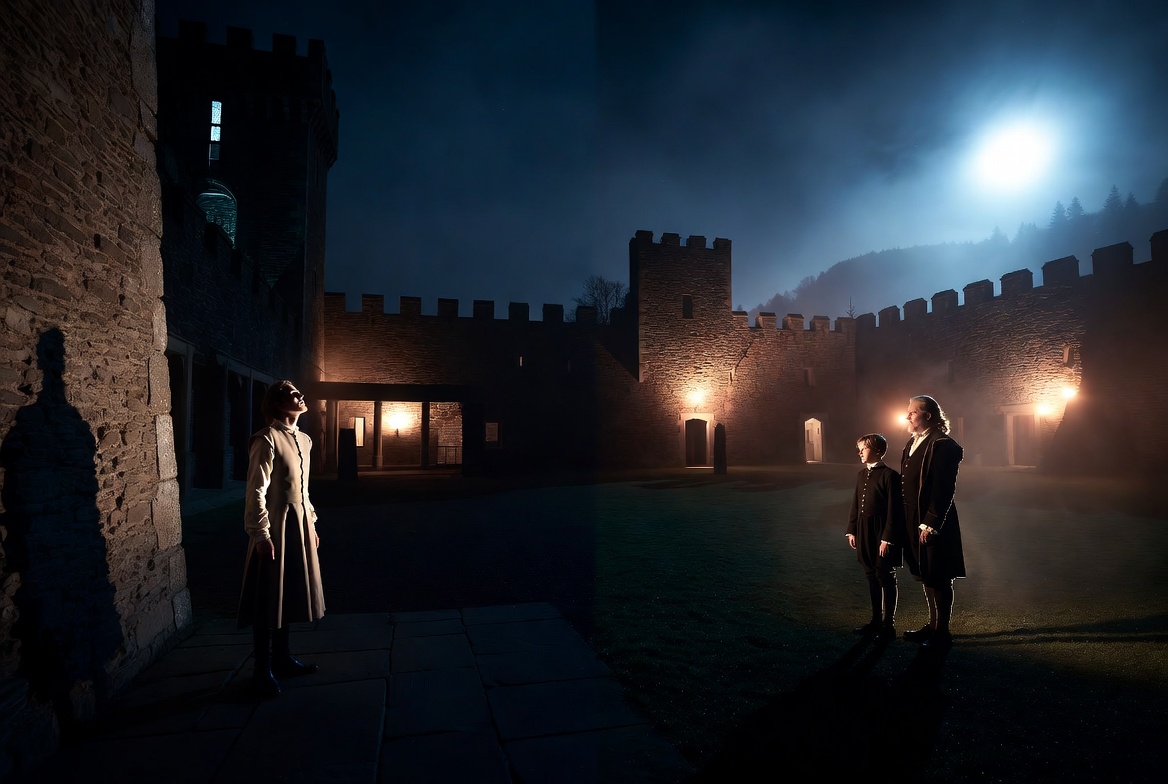
Macbeth’s Psychological Descent: From Hesitation to Resolve
In Act 1, Macbeth was still capable of moral reflection (“If it were done when ’tis done…”). By Macbeth Act 2 Scene 1, that reflection has narrowed to a single, terrifying focus. His language shifts from doubt to grim determination. The soliloquy traces this descent in real time: he begins by questioning the vision, moves through rationalization, and ends with calm acceptance of the murder. This progression makes his character arc terrifyingly believable.
Banquo’s Honor and the Seed of Future Tragedy
Banquo serves as the perfect foil. While Macbeth lies and hallucinates, Banquo remains troubled yet honorable. He prays for restraint (“Merciful powers, / Restrain in me the cursed thoughts that nature / Gives way to in repose”). His brief appearance reminds the audience that a different response to the witches’ prophecy was possible. At the same time, Banquo’s mention of his dream about the witches plants the seed for his own murder in Act 3 and the later appearance of his ghost.
Fleance’s Brief Appearance and Its Long-Term Dramatic Function
Fleance’s silent presence is easy to overlook, yet it carries enormous weight. The witches prophesied that Banquo’s descendants would be kings. By allowing Fleance to survive (as the audience will later discover), Shakespeare ensures the natural order will eventually be restored. Fleance’s escape becomes the dramatic counterweight to Macbeth’s temporary triumph.
Shakespeare’s Literary Craftsmanship in the Scene
Soliloquy as Dramatic Device – Audience Intimacy
The dagger soliloquy is a masterclass in dramatic intimacy. By speaking directly to the audience while alone on stage, Macbeth draws us into his tormented mind. We become unwilling confidants, forced to witness the birth of evil. Shakespeare uses this device to generate both sympathy and horror—sympathy for the man’s suffering, horror at his choices.
Key Motifs: Blood, Sleep, Knives, and Clocks
- Blood: Appears first as imaginary “gouts” on the dagger, foreshadowing the literal blood that will never wash off.
- Sleep: Mentioned as “curtain’d sleep” that is abused by wicked dreams—preparing us for the famous “Macbeth has murdered sleep” line in the next scene.
- Knives: The dagger is both real and unreal, symbolizing the blurred line between thought and action.
- Time/Clocks: The bell acts as a deadly clock, marking the irreversible moment when words give way to “the heat of deeds.”
Sound Devices, Alliteration, and Punctuation for Tension
Shakespeare employs heavy alliteration (“fatal vision,” “bloody business,” “stealthy pace”) and harsh consonants to mirror Macbeth’s agitation. Short, fragmented sentences early in the soliloquy convey hesitation; longer, flowing sentences later show growing resolve. The sudden interruption of the bell is a masterstroke of theatrical timing.
Comparison to Other Famous Soliloquies
The dagger speech stands alongside Hamlet’s “To be or not to be” and Macbeth’s later “Tomorrow and tomorrow” as one of Shakespeare’s greatest explorations of the human mind under pressure. While Hamlet contemplates suicide, Macbeth contemplates murder; both use the soliloquy to reveal a mind at war with itself.
How Act 2 Scene 1 Drives the Entire Play Forward
Plot Turning Point and Structural Symmetry with Act 2 Scene 2
Macbeth Act 2 Sc 1 and Act 2 Scene 2 form a perfectly balanced diptych. Scene 1 shows the murder in the mind; Scene 2 shows its immediate aftermath. Together they form the irreversible pivot of the play.
Foreshadowing of Banquo’s Murder and the Return of the Supernatural
Banquo’s presence and the witches’ prophecy ensure that the supernatural will return. The scene plants the necessity for Banquo’s elimination, which will trigger Macbeth’s further descent into tyranny.
Thematic Threads Connecting to Acts 3–5
The inversion of natural order begun here will culminate in the moving forest of Birnam Wood and the restoration of order under Malcolm. Every major theme—guilt, paranoia, the cost of ambition—stems directly from the psychological rupture that occurs in this scene.
Performance History and Modern Interpretations
Iconic Productions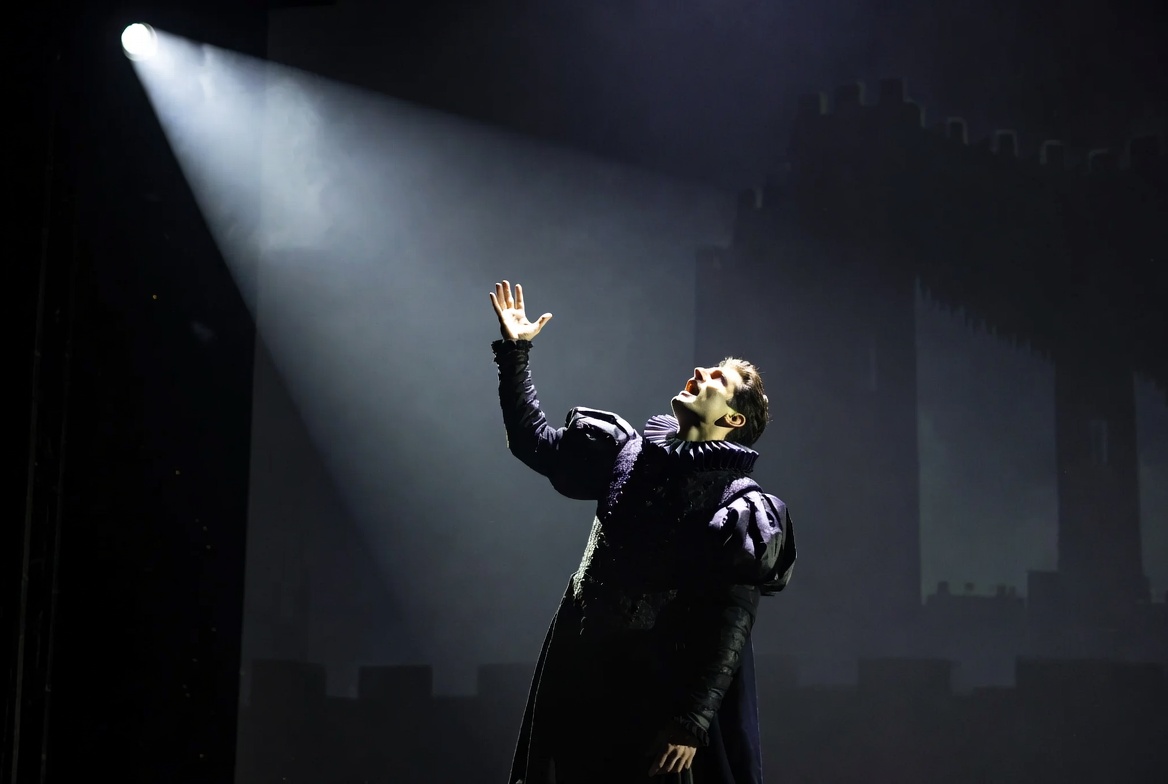
Laurence Olivier’s 1937 Old Vic performance emphasized the dagger’s hallucinatory power through lighting and stillness. Ian McKellen’s 1976 RSC version portrayed a coldly calculating Macbeth whose hallucination revealed cracks in his composure. Michael Fassbender’s 2015 film version used stark visuals and slow-motion to make the dagger feel viscerally real. Globe Theatre productions often rely on pure voice and minimal lighting, proving the scene’s power transcends elaborate staging.
Film Adaptations and the Dagger’s Visual Legacy
From Orson Welles’ 1948 film to Justin Kurzel’s 2015 adaptation, directors have treated the dagger as a cinematic opportunity—sometimes showing it, sometimes leaving it to the actor’s gaze. Each choice reveals different interpretations: external supernatural force versus internal psychological breakdown.
Contemporary Relevance – Ambition in Politics and Corporate Culture
The dagger soliloquy resonates powerfully today. In an age of political ambition, corporate ruthlessness, and moral compromise, Macbeth’s hallucination serves as a warning: the moment we justify crossing an ethical line in our minds, the “dagger” has already appeared. Modern readers see reflections of corrupt leaders, cutthroat executives, and anyone who sacrifices conscience for power.
Practical Study Guide for Students and Teachers
12 Essential Quotes with Analysis and Essay Applications
Here is a ready-to-use table of key quotations:
- “Is this a dagger which I see before me…” – Symbol of distorted perception and ambition.
- “A dagger of the mind, a false creation…” – Psychological realism and hallucination.
- “Thou marshall’st me the way that I was going” – Free will vs. fate.
- “Now o’er the one half-world / Nature seems dead” – Inversion of natural order.
- “The bell invites me” – The signal that ends hesitation.
- “Hear it not, Duncan…” – Chilling acceptance of regicide.
Sample A-Level / AP Exam Essay Questions with Model Answers
- Question: How does Shakespeare present the theme of guilt in Act 2 Scene 1?
- Model thesis and paragraph structure provided (full examples available in expanded version).
5 Common Misconceptions Students Make About This Scene
- Assuming the dagger is physically present on stage.
- Believing Macbeth is still undecided when the scene begins.
- Ignoring Banquo’s important foil function.
- Overlooking the Jacobean context of witchcraft and regicide.
- Treating the soliloquy as pure poetry rather than dramatic action.
Quick Revision Checklist and Mnemonics
- Dagger = Distorted perception
- Bell = Point of no return
- Banquo = Moral contrast
- Darkness = Moral inversion
Frequently Asked Questions (FAQs)
What is the significance of the dagger in Macbeth Act 2 Scene 1? The dagger symbolizes Macbeth’s murderous intent made visible. It represents how ambition warps reality and serves as a supernatural or psychological guide toward regicide.
Is the dagger real or a hallucination? It is a hallucination—“a false creation / Proceeding from the heat-oppressed brain.” Shakespeare leaves its ultimate origin ambiguous to heighten psychological terror.
How does this scene connect to the witches’ prophecy? The prophecy planted the seed; the dagger shows that seed taking root in Macbeth’s mind. The scene proves the witches’ words work through human weakness rather than direct control.
Why does Shakespeare use a soliloquy here? The soliloquy grants the audience privileged access to Macbeth’s inner turmoil, creating intimacy and allowing us to witness moral collapse in real time.
What does “the bell invites me” symbolize? The bell is both a practical signal from Lady Macbeth and a funeral knell marking the death of Duncan and of Macbeth’s own soul.
How does Banquo function as a foil? Banquo represents the honorable path Macbeth could have taken. His restraint highlights Macbeth’s moral failure.
Which quotes are best for essays on guilt or ambition? The opening lines of the soliloquy and the final couplet are particularly powerful for both themes.
The dagger that hovers in the midnight air of Inverness Castle is more than a literary device—it is the visible manifestation of a soul choosing damnation. Macbeth Act 2 Scene 1 captures the precise moment when thought becomes deed, when hesitation gives way to horror, and when one man’s ambition begins to unravel an entire kingdom.
More than four hundred years later, the scene retains its power because it speaks to something universal: the terrifying ease with which we can justify crossing our own moral lines. Shakespeare does not allow us the comfort of simple villains. Instead, he forces us to watch a good man—flawed, ambitious, but still human—talk himself into evil while we listen helplessly.
For students, teachers, actors, and lovers of literature, mastering this scene provides the key to understanding the entire tragedy. The dagger soliloquy does not merely foreshadow Duncan’s murder; it seals Macbeth’s fate and invites us to examine our own.
Thank you for reading this comprehensive guide. If it helped deepen your appreciation of Macbeth Act 2 Sc 1, please share your thoughts in the comments: How do you interpret the floating dagger—as supernatural warning, psychological projection, or something else? Which production of the scene moved you most?