In the treacherous world of 17th-century Venice and Cyprus, a single whispered lie can topple a hero, shatter a marriage, and expose the darkest corners of the human soul. William Shakespeare’s Othello remains one of the most gripping tragedies ever written, exploring how jealousy, deception, and racial prejudice destroy lives with surgical precision. If you’re searching for a clear othello outline to unlock this masterpiece—whether for exam preparation, classroom teaching, theatrical performance, or personal appreciation—you’ve come to the right place.
This comprehensive guide delivers exactly what readers need: a full plot summary, a detailed scene-by-scene breakdown, in-depth analysis of key themes, character studies, literary techniques, historical context, and practical study resources. Far more than a simple recap, this othello outline equips you with the insights, quotes, and connections that turn passive reading into active understanding. By the end, you’ll not only know what happens in Othello but why it continues to resonate powerfully in our world today.
Understanding Othello: A Brief Overview
Written around 1603–1604 during Shakespeare’s mature tragic period, Othello, the Moor of Venice is a five-act play first performed at the Globe Theatre. It draws from Giraldi Cinthio’s 1565 Italian tale Un Capitano Moro but transforms the source material into a tightly wound psychological drama. The protagonist, Othello, is a Black general in the Venetian army—Shakespeare’s only major Black tragic hero—whose military brilliance earns him respect yet leaves him vulnerable to the envy and racism simmering beneath Venice’s polished surface.
At its core, the play is a domestic tragedy fueled by manipulation. Iago, Othello’s ensign, orchestrates the downfall of his general through calculated lies about Desdemona’s fidelity. The action moves swiftly from the sophisticated canals of Venice to the isolated military outpost of Cyprus, where isolation amplifies every emotion. Shakespeare masterfully blends public duty with private passion, making Othello both a study of Renaissance power politics and an intimate portrait of marital trust destroyed.
This othello outline will help you navigate the play’s rapid pacing, its rich blank verse, and its timeless relevance. Students preparing for GCSE, A-Level, or college literature courses will find structured analysis here; actors will discover scene-specific motivations; and general readers will gain fresh appreciation for Shakespeare’s genius.
Complete Plot Summary of Othello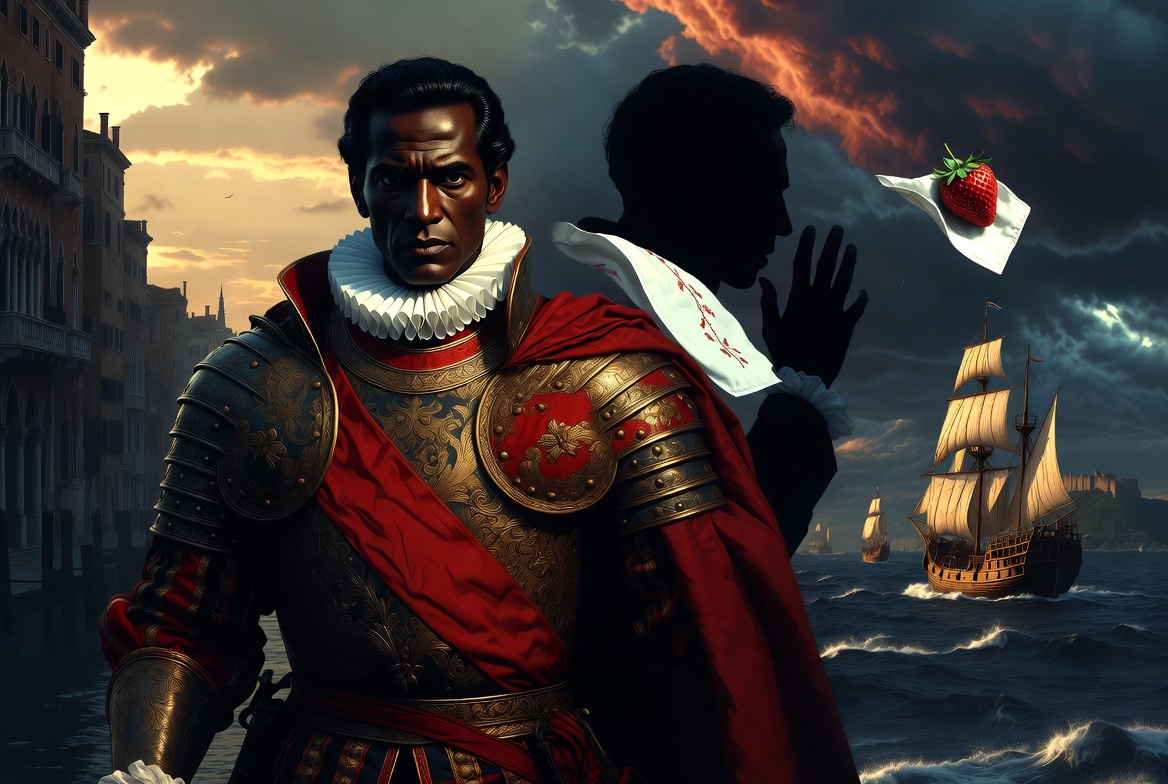
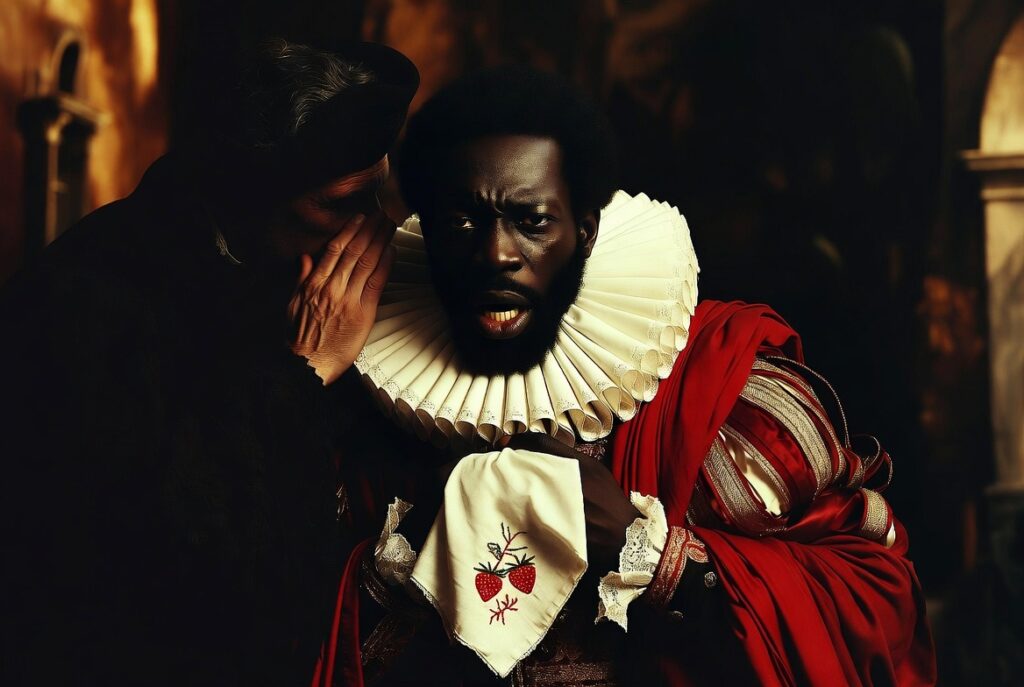
The plot of Othello unfolds with relentless momentum, driven by Iago’s scheme of revenge. Othello, a respected Moorish general serving Venice, secretly marries Desdemona, the daughter of the senator Brabantio. Their union angers Brabantio, who believes Othello used witchcraft to seduce his daughter. Meanwhile, Iago—passed over for promotion in favor of the inexperienced Cassio—plots Othello’s ruin. He convinces Othello that Desdemona is having an affair with Cassio, planting a handkerchief as false evidence.
Othello’s growing jealousy spirals into obsession. He demands proof, then orders Desdemona’s death. In a climactic bedroom scene, Othello smothers his innocent wife. Moments later, Emilia (Iago’s wife and Desdemona’s attendant) exposes the truth. Othello, realizing his fatal error, kills himself. Iago is arrested but remains defiantly silent. The play ends with the restoration of order under Venetian authority, yet the human cost lingers.
This concise summary captures the skeleton, but the true power lies in the details—the subtle asides, the racial slurs, the handkerchief’s symbolic journey. Our scene-by-scene breakdown below reveals how Shakespeare builds tension act by act, turning suspicion into catastrophe.
Detailed Scene-by-Scene Breakdown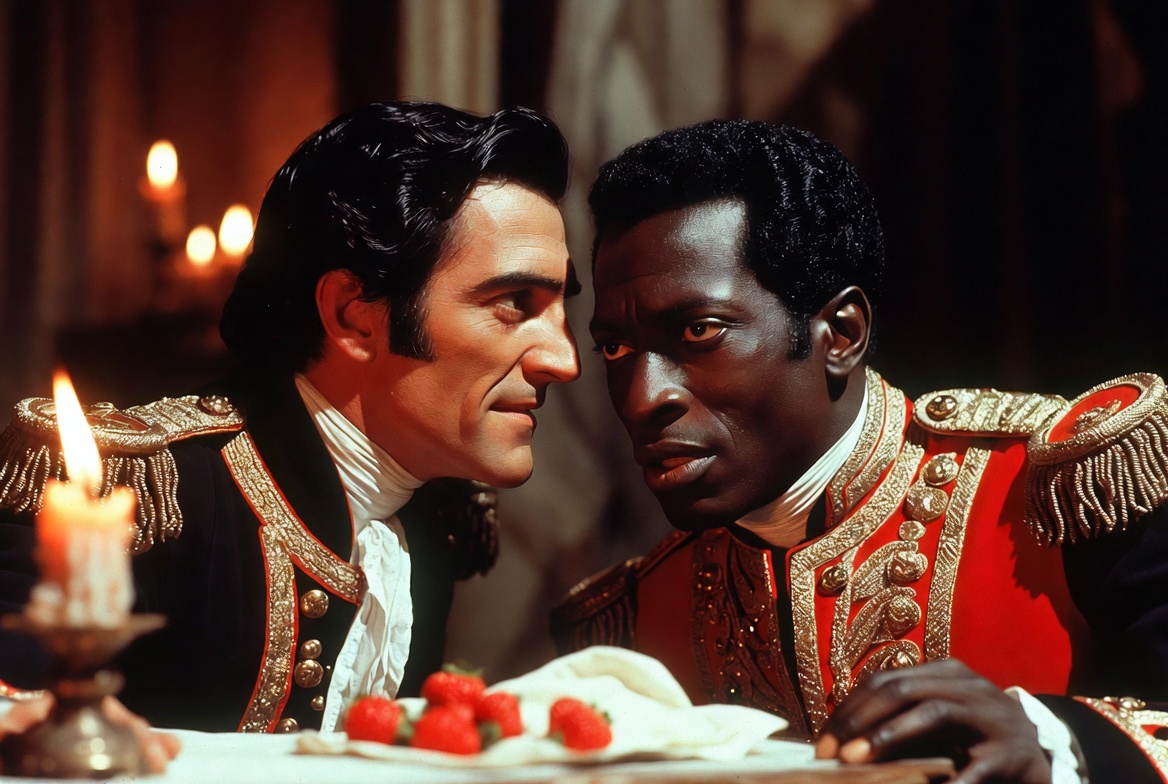
Act 1: The Seeds of Conflict (Venice)
Scene 1 The play opens at night in a Venetian street. Iago and Roderigo (a foolish suitor of Desdemona) wake Brabantio with crude accusations: “Your daughter and the Moor are now making the beast with two backs.” Iago reveals his grudge—Othello promoted Cassio over him—and establishes his manipulative nature through the famous line: “I am not what I am.” Roderigo’s jealousy and Iago’s resentment set the revenge plot in motion. This scene introduces the theme of appearance versus reality and the racial tension (“thick-lips,” “old black ram”).
Scene 2 Othello appears for the first time, calm and noble, refusing to hide from Brabantio’s men. He speaks poetically of his love for Desdemona. When confronted, Othello defends his marriage with dignity. The Duke’s messenger interrupts, calling Othello to defend Cyprus against the Turks. Shakespeare contrasts Othello’s composure with the chaos around him, establishing him as a tragic hero of high status.
Scene 3 In the Duke’s council chamber, Brabantio accuses Othello of sorcery. Othello’s eloquent defense—“She loved me for the dangers I had passed, / And I loved her that she did pity them”—wins the senators. Desdemona confirms her love. The Duke sends Othello to Cyprus, allowing Desdemona to accompany him. Iago and Roderigo remain in Venice; Iago begins planting doubts in Roderigo’s mind and reveals his plan in a chilling soliloquy: “I hate the Moor… He hath a free and open nature / That thinks men honest that but seem to be so.” The act ends with Iago’s famous couplet: “Hell and night / Must bring this monstrous birth to the world’s light.”
Act 2: Arrival in Cyprus and the First Manipulation
Scene 1 A storm destroys the Turkish fleet, allowing the Venetians safe arrival. Cassio greets Desdemona warmly. Othello arrives to joyful reunion. Iago observes and immediately begins undermining Cassio’s reputation, noting his “daily beauty” and courtesy toward Desdemona. Roderigo arrives, and Iago manipulates him into starting a fight with Cassio later.
Scene 2 A herald announces celebrations for Othello’s victory and marriage.
Scene 3 The drunken brawl orchestrated by Iago leads to Cassio’s demotion. Cassio, ashamed, seeks Desdemona’s help to regain his position. Iago soliloquizes again, outlining his full plan: he will convince Othello that Cassio and Desdemona are lovers. The handkerchief motif is introduced when Desdemona drops it and Emilia picks it up for Iago.
Act 3: The Poison Takes Hold (The “Temptation Scene”)
This central act is the longest and most psychologically intense.
Scene 1 Cassio asks Emilia to arrange a meeting with Desdemona.
Scene 2 Othello sends letters to Venice.
Scene 3 The pivotal temptation scene—nearly 400 lines of pure dramatic brilliance. Desdemona pleads for Cassio. Iago begins dropping subtle hints: “Ha! I like not that.” He questions Cassio’s honesty and plants the idea of an affair. Othello demands proof. Iago describes seeing Cassio wipe his beard with Desdemona’s handkerchief. When Othello later demands the handkerchief from Desdemona and she cannot produce it, his suspicion hardens into conviction. By the scene’s end, Othello vows revenge: “Arise, black vengeance, from thy hollow cell!” Iago promises to kill Cassio; Othello promotes him to lieutenant.
Scene 4 Desdemona searches for the handkerchief. Othello’s behavior turns erratic; he calls her a whore and demands it. Emilia begins to suspect foul play but remains silent.
Act 4: Descent into Madness
Scene 1 Iago further torments Othello with fabricated details of Cassio’s dream and the handkerchief’s whereabouts. Othello falls into a trance. When Cassio appears laughing (about Bianca, not Desdemona), Othello interprets it as mockery. Lodovico arrives from Venice with orders recalling Othello and appointing Cassio governor.
Scene 2 Othello confronts Desdemona harshly, accusing her of infidelity. She protests her innocence. Emilia defends her. Othello’s language becomes crude and animalistic, showing his complete psychological collapse.
Scene 3 The “Willow Song” scene. Desdemona, sensing doom, sings a mournful song of forsaken love while preparing for bed. She and Emilia discuss marital fidelity; Emilia’s pragmatic views contrast Desdemona’s idealism. This quiet, intimate scene heightens the tragedy before the final violence.
Act 5: Catastrophe and Revelation (Cyprus)
Scene 1 Iago arranges Roderigo’s attack on Cassio, but both are wounded. Iago kills Roderigo to silence him.
Scene 2 The tragic climax in Desdemona’s bedchamber. Othello delivers a poetic soliloquy (“It is the cause, it is the cause, my soul”) before smothering Desdemona. Emilia enters, discovers the murder, and calls for help. When she reveals Iago’s plot, Othello stabs Iago (non-fatally). Othello’s final speech—“I have done the state some service”—is one of Shakespeare’s most moving farewells. He kills himself beside Desdemona. Lodovico restores order, demotes Iago, and leaves Cassio in charge. The play closes on a note of grim justice.
This scene-by-scene othello outline reveals Shakespeare’s structural genius: each act tightens the noose of deception while advancing character development and thematic depth.
Key Themes in Othello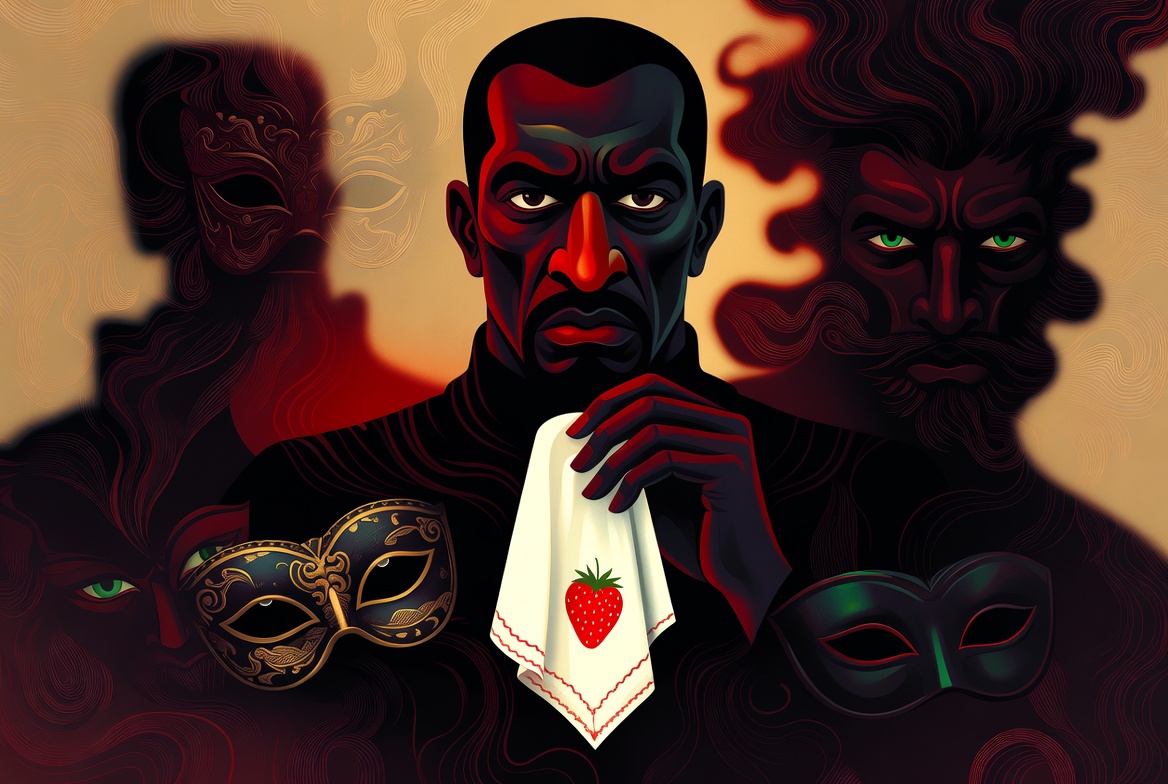
Shakespeare weaves several interlocking themes throughout Othello, transforming a simple tale of jealousy into a profound exploration of human nature. These themes emerge organically from the action and dialogue, making the play richly layered for analysis. Understanding them deepens any othello outline and reveals why the tragedy feels so immediate and relevant.
Jealousy as a Destructive Force Jealousy drives the central conflicts, consuming both Iago and Othello. Iago resents Cassio’s promotion and suspects (without proof) that Othello has slept with his wife Emilia. This professional and sexual envy fuels his “motiveless malignity”—a phrase coined by Samuel Taylor Coleridge to describe Iago’s seemingly pure delight in evil. Othello’s jealousy, by contrast, is manufactured but no less devastating. Once planted, it grows rapidly, turning love into obsession. Shakespeare shows jealousy not as mere emotion but as a poison that distorts perception: Othello demands “ocular proof” yet accepts flimsy circumstantial evidence. The theme warns that unchecked jealousy erodes reason, trust, and humanity. As Othello declares in Act 3, Scene 3: “O, beware, my lord, of jealousy; / It is the green-eyed monster which doth mock / The meat it feeds on.” This famous warning, delivered by the very manipulator causing the pain, underscores the play’s irony.
Appearance Versus Reality (Deception and Treachery) “Nothing is but what is not” could serve as an alternate motto for the play. Iago masterfully exploits the gap between seeming and being, repeatedly insisting he is “honest Iago” while orchestrating lies. Characters repeatedly misjudge others: Brabantio believes Othello used witchcraft; Othello believes Desdemona is unfaithful; even Emilia fails initially to connect her husband to the unfolding horror. Shakespeare uses dramatic irony— the audience knows Iago’s true nature from his soliloquies— to heighten tension. The theme critiques how easily social facades and eloquent speech conceal malice, a lesson that resonates in an era of misinformation and performative virtue.
Prejudice and Racism As a Black Moor commanding Venetian forces, Othello embodies the outsider who achieves status yet remains vulnerable to racial stereotyping. Iago, Roderigo, and Brabantio pepper the opening scenes with animalistic insults: “old black ram,” “Barbary horse,” “thick-lips,” and references to “the devil.” These slurs reveal the casual racism of Venetian society, where Othello is valued for military utility but distrusted in private life. His marriage to the white Desdemona intensifies anxieties about miscegenation and social order. Shakespeare does not endorse these prejudices; instead, he associates racist language most strongly with the villain Iago, subtly critiquing the ideology. Othello’s own internalization of these stereotypes contributes to his insecurity—he fears Desdemona may prefer Cassio because “Haply, for I am black / And have not those soft parts of conversation / That chamberers have.” The theme exposes how racial othering undermines even the most accomplished individuals, making Othello a powerful text for discussing identity, belonging, and systemic bias.
Gender, Womanhood, and Sexuality The play examines patriarchal control and the limited agency of women in Renaissance society. Desdemona is idealized as pure and obedient yet shows remarkable boldness in defying her father and defending her husband. Her loyalty persists even as Othello abuses her verbally and physically. Emilia offers a more pragmatic, earthy perspective on marriage, famously arguing in Act 4, Scene 3 that wives have the same desires and faults as husbands: “Let husbands know / Their wives have sense like them.” Bianca, the courtesan, highlights the sexual double standard—Cassio enjoys her company without commitment. The handkerchief, passed from man to woman and back, symbolizes contested female fidelity and male possession. Shakespeare portrays women as both victims of male jealousy and potential agents of truth (Emilia’s final revelation). The theme invites reflection on honor, chastity, and the silencing of women’s voices.
Manhood, Honor, and Reputation Military and social reputation dominate male interactions. Othello’s identity is tied to his service to the state (“I have done the state some service”). Cassio’s demotion devastates him because it damages his professional honor. Iago manipulates these codes, knowing that perceived cuckoldry equates to lost manhood in Venetian eyes. The play contrasts genuine honor (Othello’s early nobility) with performative machismo, showing how fragile male reputation becomes when rooted in external validation rather than inner virtue.
Justice and Revenge Characters frequently invoke justice to justify cruelty. Brabantio seeks legal redress against Othello; Iago frames his scheme as rightful payback; Othello believes he is executing divine justice by killing an allegedly adulterous wife. Shakespeare reveals the danger of subjective justice untethered from truth, culminating in a courtroom-like final scene where Lodovico attempts to restore order amid the bodies.
These themes interlock seamlessly. Jealousy exploits racial prejudice and gender norms, while deception thrives in a society obsessed with reputation. A thorough othello outline must trace how Shakespeare layers these ideas across acts, using soliloquies, imagery, and irony to invite audiences to question surface appearances.
Major Characters Analysis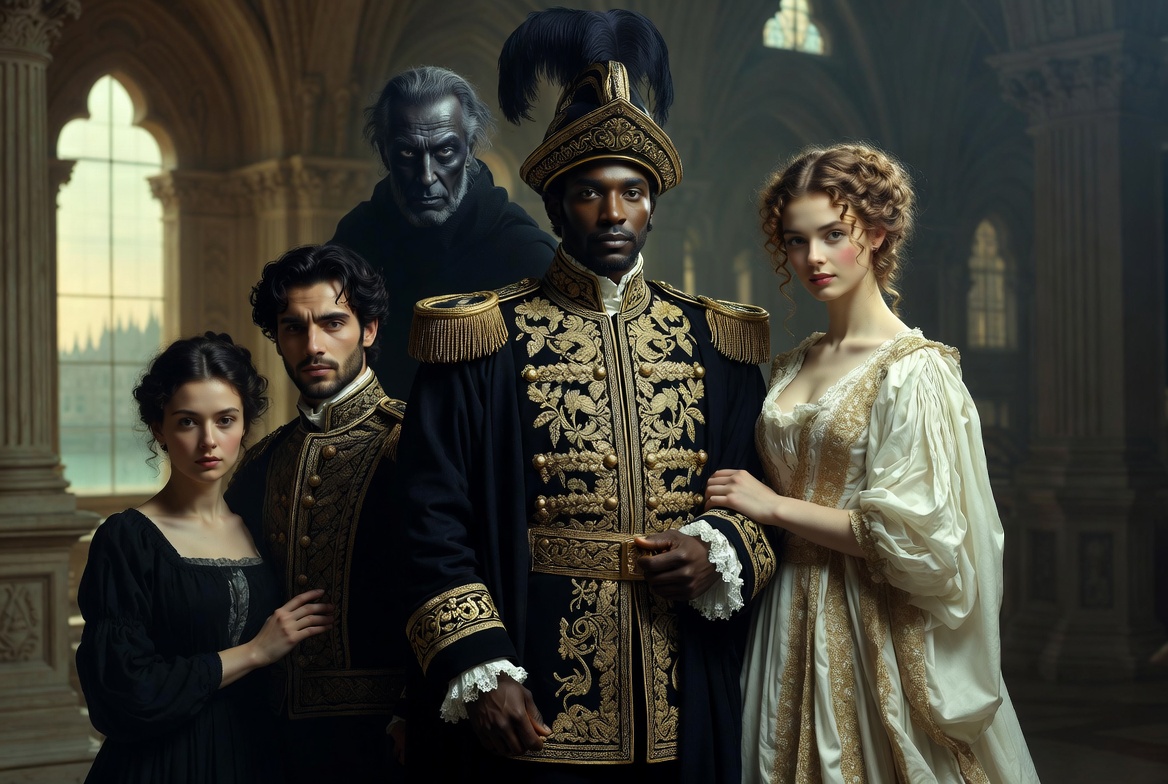
A deep othello outline requires nuanced character study. Shakespeare crafts psychologically complex figures whose flaws and virtues propel the tragedy.
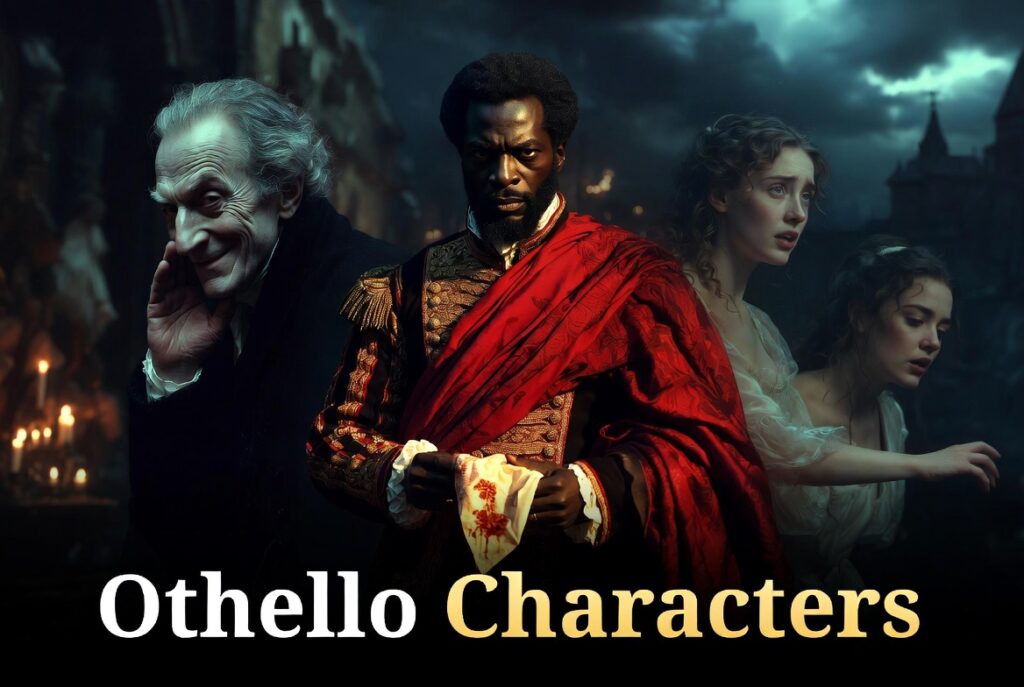
Othello: The Noble Moor Othello begins as a confident, eloquent leader whose “free and open nature” makes him susceptible to manipulation. His military prowess earns respect, yet his status as an outsider breeds underlying insecurity. Shakespeare portrays him as a man of action rather than introspection—until Iago’s poison forces painful self-examination. Othello’s tragic flaw is not inherent jealousy but his trusting disposition combined with internalized racial doubt. His language shifts dramatically: early poetic grandeur (“Keep up your bright swords, for the dew will rust them”) gives way to fragmented, bestial outbursts (“Goats and monkeys!”). In his final speech, Othello attempts to reclaim dignity, framing his suicide as honorable service. He represents the destructive potential of manipulated love and the cost of otherness in a prejudiced society.
Iago: The Architect of Evil Iago is Shakespeare’s most chilling villain—intelligent, charismatic, and seemingly motiveless. His stated reasons (passed-over promotion, suspected cuckoldry) feel insufficient; critics like Coleridge note his “motiveless malignity.” Iago delights in destruction for its own sake, treating people as pawns in a grand game. His soliloquies reveal a nihilistic worldview where honesty is weakness and manipulation is art. Iago’s ordinary appearance (no physical deformity) makes his evil more terrifying—he could be anyone. By the end, even when exposed, he refuses explanation: “Demand me nothing. What you know, you know.” Iago embodies pure treachery and the banality of calculated malice.
Desdemona: The Faithful Wife Often idealized as the innocent victim, Desdemona is more complex. She is courageous—eloping with Othello and speaking boldly before the Duke—and compassionate, pleading for Cassio. Her purity is genuine, yet she shows naivety in underestimating jealousy’s power. The Willow Song scene reveals her growing awareness of danger and quiet resignation. Desdemona symbolizes idealized love and the vulnerability of women in patriarchal structures. Her death is not passive; it underscores the tragedy of misplaced trust.
Cassio: The Flawed Lieutenant Cassio is courteous, handsome, and professionally capable yet impulsive and socially polished in ways Othello is not. His drunken brawl, orchestrated by Iago, costs him his position and fuels the central misunderstanding. Cassio’s genuine admiration for Desdemona provides Iago with “evidence.” He represents the dangers of reputation and the redemptive power of loyalty—Othello forgives him in the end.
Emilia: The Truth-Teller Emilia evolves from seemingly complicit wife to moral heroine. Initially loyal to Iago (stealing the handkerchief), she grows suspicious and ultimately defies him at great cost. Her speech on gender equality in Act 4, Scene 3, and her courageous revelation in Act 5 make her a voice of reason and justice. Emilia highlights the play’s exploration of marital dynamics and female solidarity.
Supporting Figures Brabantio embodies paternal authority and racial anxiety. Roderigo is the gullible tool of Iago’s schemes, representing foolish infatuation. Bianca adds texture to the sexual politics of Cyprus. Lodovico and the Venetian authorities restore political order, emphasizing the gap between public stability and private catastrophe.
Symbolism and Literary Devices
Shakespeare’s language and imagery elevate Othello beyond plot. Key devices include:
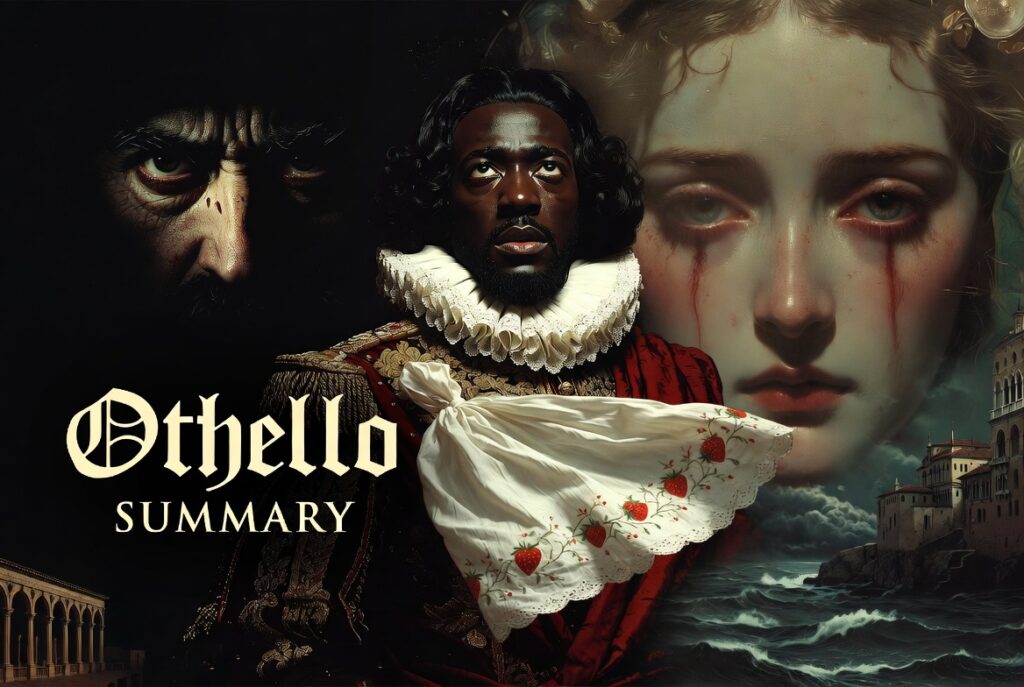
The Handkerchief The most potent symbol, the handkerchief represents love, fidelity, and Othello’s exotic heritage. Given as a first gift, it carries magical associations (woven by a sibyl, dyed with mummy from virgins’ hearts). To Othello, its loss signifies Desdemona’s betrayal; to Iago, it becomes fabricated proof. Some critics interpret its white fabric with strawberry embroidery as evoking wedding sheets and virginity, while others see it as a portable stand-in for Othello himself—black with red accents symbolizing interracial union. Its circulation drives the plot and illustrates how trivial objects gain lethal meaning through interpretation.
Animal and Hellish Imagery Iago repeatedly dehumanizes others with beast metaphors (“beast with two backs,” “Barbary horse”). Othello’s language descends into the same register as jealousy overtakes him, reflecting his loss of humanity. References to devils, hell, and monsters reinforce the moral descent.
Dramatic Irony and Soliloquy Iago’s frequent asides and soliloquies create dramatic irony, aligning the audience uncomfortably with the villain. Othello’s speeches shift from controlled blank verse to prose-like fragmentation, mirroring psychological collapse.
Foreshadowing and Pacing The storm in Act 2 foreshadows emotional turmoil. Shakespeare compresses time in Cyprus, intensifying claustrophobia and momentum.
These devices create a tightly woven tapestry, making every line thematically rich.
Historical and Literary Context
Othello was written around 1603–1604, shortly after James I ascended the English throne. England maintained trade and diplomatic ties with North African Moors, and Black individuals (including ambassadors and servants) were present in London, though often viewed through exotic or prejudiced lenses. The play draws from Cinthio’s Un Capitano Moro but elevates it into psychological depth. Venice, a cosmopolitan republic threatened by Ottoman Turks, mirrors England’s own anxieties about empire, otherness, and invasion. The Renaissance emphasis on honor, reputation, and classical tragedy influences the structure, while Shakespeare subverts Aristotelian norms by making the hero’s flaw partly societal rather than purely personal. The play also engages contemporary debates on marriage, race, and gender in a changing Europe.
Why Othello Endures: Modern Relevance
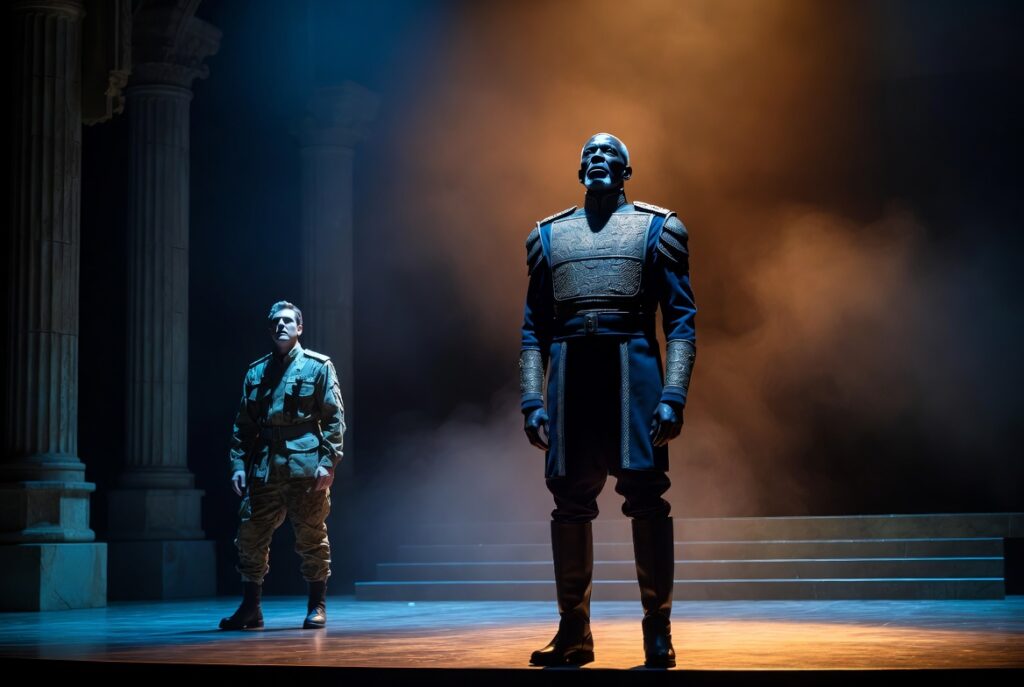
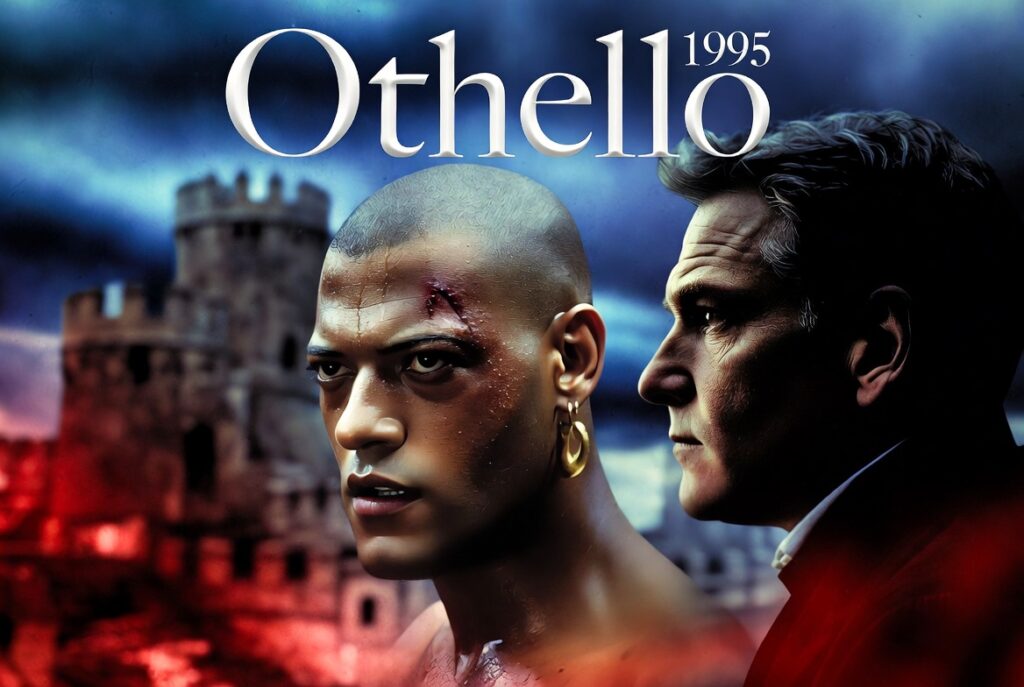
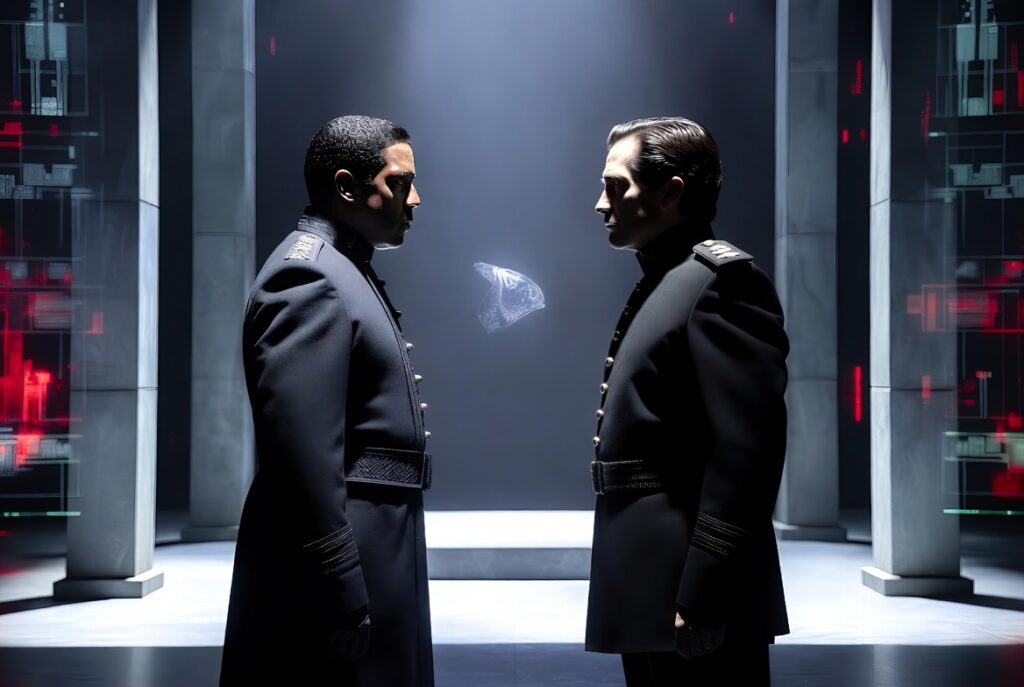
Centuries later, Othello speaks urgently to issues of systemic racism, toxic masculinity, gaslighting, and “fake news.” Productions frequently update settings—to military bases, police departments, or corporate environments—to highlight persistent power imbalances. The play warns against confirmation bias and the speed with which lies spread in isolated or high-stakes communities. Its exploration of interracial love, jealousy in relationships, and the silencing of women remains painfully timely. Modern adaptations, from Orson Welles’ 1952 film to Oliver Parker’s 1995 version with Laurence Fishburne as the first Black screen Othello, and contemporary stage productions, continue to reinterpret the tragedy for new audiences.
For students, the play offers rich material for essays on identity, manipulation, and tragedy. Teachers appreciate its tight structure and discussable themes. Actors value the emotional range and poetic challenges.
Practical Study Resources and Tips
- Key Quotes to Memorize: Collect lines on jealousy (Iago’s “green-eyed monster”), Othello’s defense of his marriage, the handkerchief scene, and final speeches.
- Essay Prompts: “To what extent is Othello a victim of his own insecurities rather than Iago’s manipulation?” or “Discuss the role of race in the play’s tragic outcome.”
- Comparative Reading: Pair with The Merchant of Venice for outsider themes or modern texts exploring jealousy and deception.
- Performance Viewing: Watch film versions or RSC productions to see how staging affects interpretation.
- Active Reading Strategy: Note shifts in Othello’s language and track the handkerchief’s journey.
This othello outline provides a foundation—build upon it with your own annotations and discussions for deeper insight.
William Shakespeare’s Othello stands as a masterpiece of psychological tragedy, where love, trust, and nobility crumble under the weight of deception and prejudice. Through its complete plot, meticulous scene-by-scene progression, profound themes, complex characters, and masterful symbolism, the play offers timeless lessons about human vulnerability. Whether you seek this othello outline for academic success, theatrical preparation, or personal enrichment, the play rewards careful study with fresh revelations each time.
By understanding how a single handkerchief and whispered doubts can unravel lives, readers gain tools to recognize manipulation in their own world. Othello does not merely entertain—it challenges us to examine our biases, guard our trust, and value truth above appearances. In an age still grappling with race, gender, and misinformation, Shakespeare’s tragedy remains essential reading.
Shakespeare’s genius lies in showing that the greatest monsters are not exotic outsiders but the ordinary vices—envy, insecurity, and deceit—that dwell within. Approach Othello with an open mind, and it will repay you with profound insight into the human heart.