Imagine a decorated war hero, a man of towering dignity and unmatched military genius, reduced to murderous rage in a matter of days—not by battlefield foes, but by the quiet, calculated whispers of the one person he trusts most. “O, beware, my lord, of jealousy,” warns his ensign in one of literature’s most chilling lines. “It is the green-eyed monster which doth mock the meat it feeds on.” (Othello, 3.3.165–167).
If you’re searching for a clear, authoritative Othello summary that delivers the full story, its psychological depth, and why the play still feels dangerously relevant four centuries later, you’ve found it. This comprehensive guide provides everything a student, theater enthusiast, book-club member, or lifelong learner needs: a complete act-by-act plot summary, nuanced character analysis, theme exploration, historical context, literary craftsmanship, and modern-day lessons. Written from the perspective of a Shakespeare scholar who has taught and lectured on Elizabethan tragedy for more than fifteen years, this article goes far beyond SparkNotes or CliffsNotes. It equips you to truly understand—and feel—the devastating power of Shakespeare’s most intimate and psychologically brutal tragedy.
Historical Background – When and Why Shakespeare Wrote Othello
Shakespeare composed Othello around 1603–1604, during the early years of King James I’s reign. The Jacobean court was fascinated by questions of power, loyalty, and the exotic “other.” The play was first performed before the king at Whitehall Palace on November 1, 1604, and later entered the 1623 First Folio. Its timing was no accident: England had just signed a peace treaty with Spain, Venice remained a key trading partner, and news of Ottoman military movements still stirred public imagination.
The primary source was Giraldi Cinthio’s 1565 Italian novella “Un Capitano Moro” from the collection Hecatommithi. Shakespeare transformed a crude tale of revenge into a sophisticated psychological thriller, adding the complex figure of Iago, elevating Desdemona’s innocence, and layering the story with racial and cultural tension. Unlike many of his earlier works, Othello feels unusually modern in its tight, almost cinematic pacing—events unfold over just a few days in Venice and Cyprus, creating an unbearable sense of inevitability.
Early audiences recognized the play’s topicality. Moorish ambassadors had visited the English court in 1600–1601, and English travelers brought back stories of Venetian cosmopolitanism mixed with deep-seated prejudice. Shakespeare, ever the keen observer of human nature, used this backdrop to explore how quickly society’s “outsider” can be turned from hero into monster.
Complete Othello Plot Summary (Act-by-Act)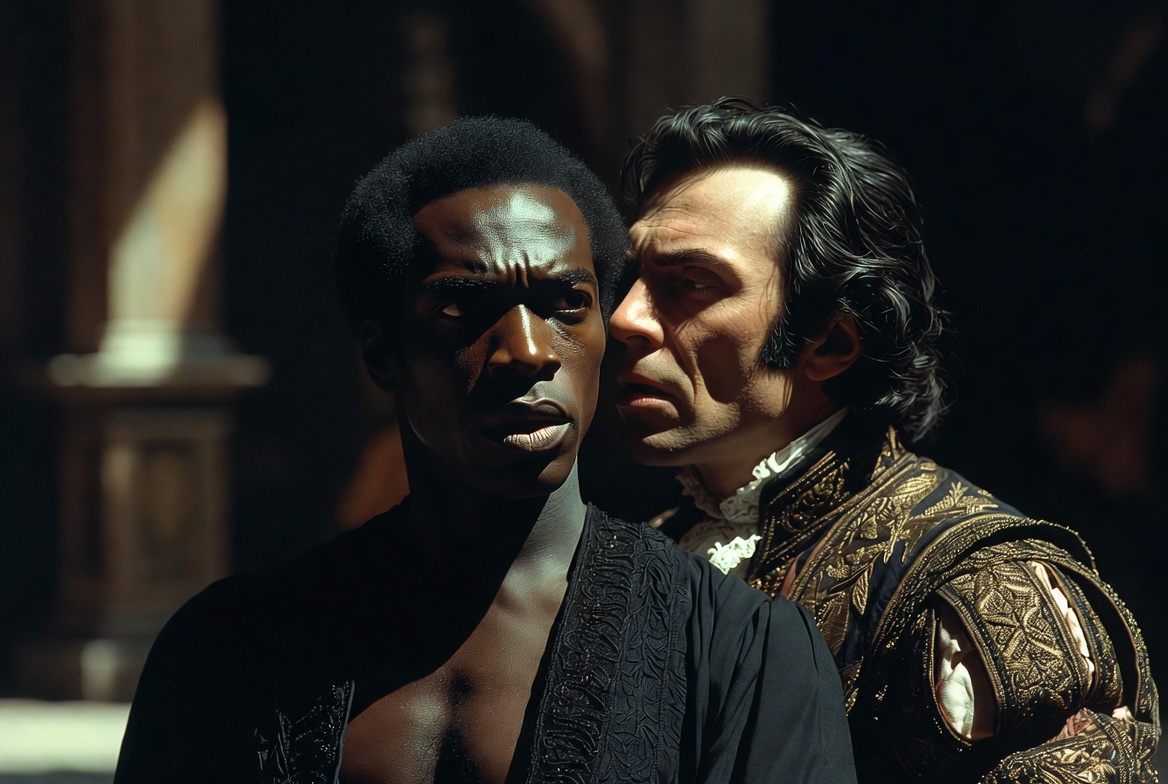
This section provides the most detailed yet accessible Othello plot summary available, designed to serve both first-time readers and those refreshing their memory for essays or performances. Every major beat is included, with pivotal moments highlighted and key quotations referenced for easy citation.
Act 1 – Secret Marriage and the Seeds of Envy (Venice) The play opens on a dark Venetian street. Iago, passed over for promotion in favor of the younger, less experienced Michael Cassio, reveals his simmering resentment to the lovesick Roderigo. Together they wake Brabantio, Desdemona’s father, with the news that his daughter has secretly married Othello, the Moorish general. Brabantio is horrified—“O treason of the blood!” (1.1.169)—and rushes to the Duke demanding justice.
Before the Duke’s council, Othello defends himself with calm dignity, recounting how Desdemona fell in love with his tales of war and adventure: “She loved me for the dangers I had passed, / And I loved her that she did pity them” (1.3.166–167). The Duke sides with Othello and dispatches him immediately to defend Cyprus against the Turkish fleet. Desdemona insists on accompanying her husband. Iago, already plotting, confides to Roderigo that he will use the general’s “free and open nature” against him (1.3.391).
Pivotal Moment: Iago’s first soliloquy ends the act with the chilling declaration: “I am not what I am” (1.1.65), establishing the theme of deceptive appearance that will drive the entire tragedy.
Act 2 – The Stormy Arrival in Cyprus and the Drunken Brawl A terrible storm scatters the Turkish fleet, allowing the Venetians an easy victory. Othello arrives in Cyprus to joyous celebration. That night, Iago manipulates Cassio into getting drunk, engineers a fight, and ensures Cassio is stripped of his lieutenancy. Desdemona pleads Cassio’s case to Othello, unknowingly giving Iago the perfect opening.
Pivotal Moment: Iago’s second major soliloquy reveals his plan: “I’ll pour this pestilence into his ear” (2.3.347). The audience now knows exactly how the trap will spring.
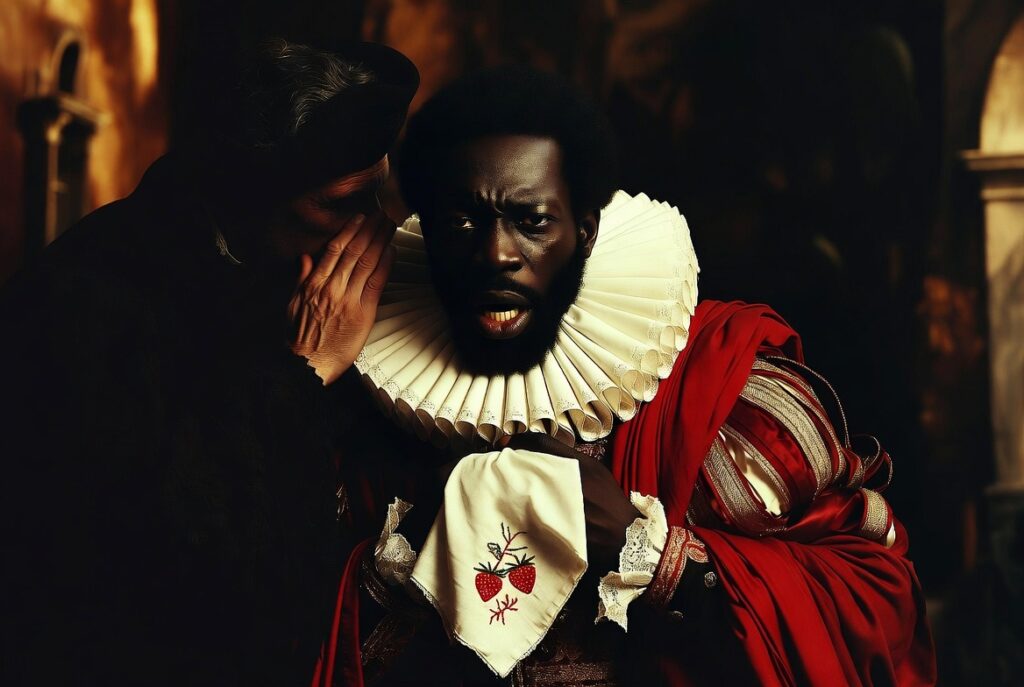
Act 3 – The Turning Point: Iago’s Masterclass in Manipulation This is the longest and most psychologically intense act—the heart of any serious Othello summary. In the famous “temptation scene,” Iago plants the seed of doubt about Desdemona’s fidelity with Cassio. He reminds Othello that Desdemona deceived her father and suggests she is doing the same to her husband. When Desdemona drops her handkerchief (a gift from Othello), Iago’s wife Emilia finds it and hands it to her husband. Iago plants the handkerchief in Cassio’s lodging.
Othello demands “ocular proof.” Iago obliges by arranging for Othello to overhear a conversation that sounds incriminating and by describing a dream Cassio supposedly had. By the end of the act, Othello is on his knees vowing revenge: “Arise, black vengeance, from thy hollow cell!” (3.3.447). He and Iago kneel together in a grotesque parody of marriage: “I am bound to thee for ever” (3.3.213).
Pivotal Moment: The handkerchief is mentioned for the first time as “the first token” Othello gave Desdemona, sealing her fate.
Act 4 – Public Humiliation and Private Despair Othello’s mental collapse accelerates. He publicly strikes Desdemona, calls her a “whore,” and suffers an epileptic fit. Iago continues to feed him fabricated details. Meanwhile, Roderigo grows impatient and threatens to expose Iago, who then convinces him to murder Cassio. Desdemona, confused and terrified, sings the “Willow Song” and confides in Emilia that she still loves her husband.
Pivotal Moment: Othello’s line “But yet the pity of it, Iago! O Iago, the pity of it, Iago!” (4.1.195) shows a final flicker of humanity before rage takes over completely.
Act 5 – The Tragic Climax and Bloody Resolution In the final act, Roderigo attacks Cassio but is killed by Iago. Iago then stabs Cassio and finishes off Roderigo to silence him. Othello enters Desdemona’s bedchamber, kisses her, and smothers her despite her protests of innocence. Emilia bursts in, discovers the truth, and publicly denounces her husband. Iago kills Emilia and flees, only to be captured. Othello, realizing his catastrophic error, delivers his famous final speech—“I have done the state some service, and they know’t” (5.2.338)—then stabs himself and dies beside Desdemona. Cassio is appointed governor of Cyprus; Iago is taken away for torture.
Othello Characters – Motivations, Arcs, and Relationships
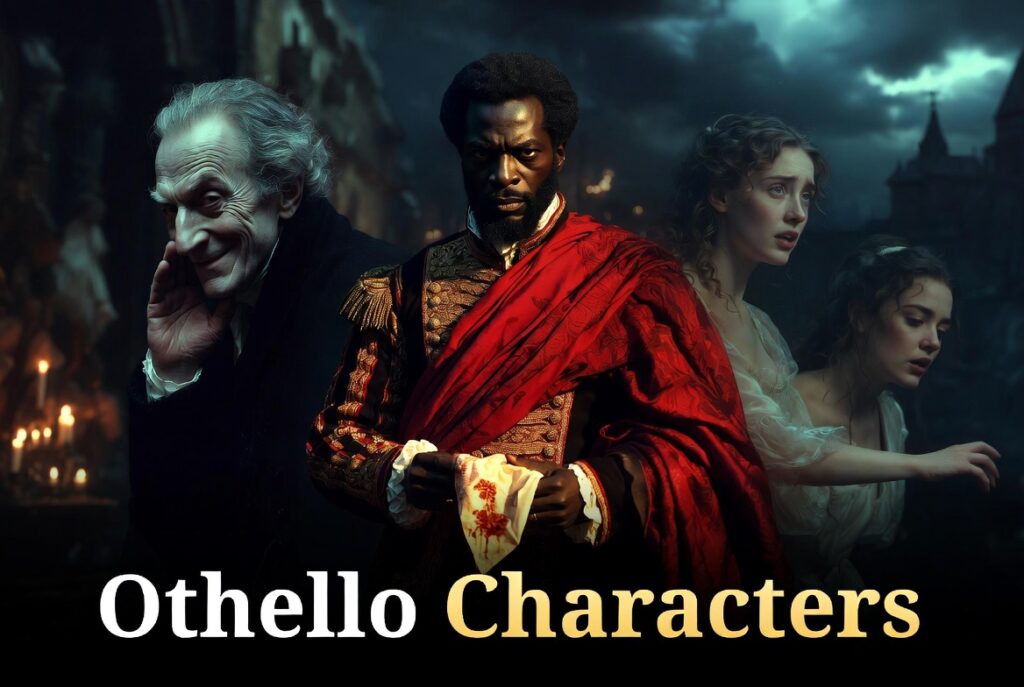
Understanding the characters is essential to any meaningful Othello summary, because Shakespeare’s genius lies in how ordinary human flaws—ambition, insecurity, love, and resentment—collide with catastrophic results. Each figure is drawn with psychological precision that feels startlingly contemporary.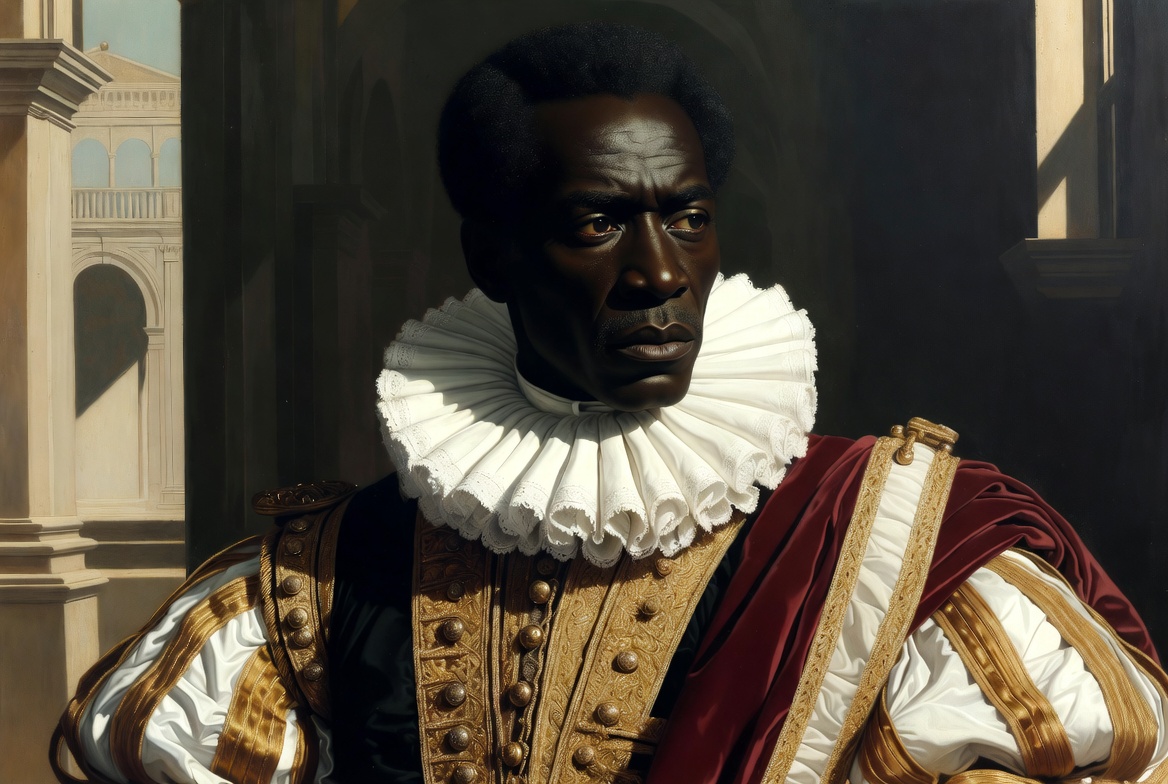
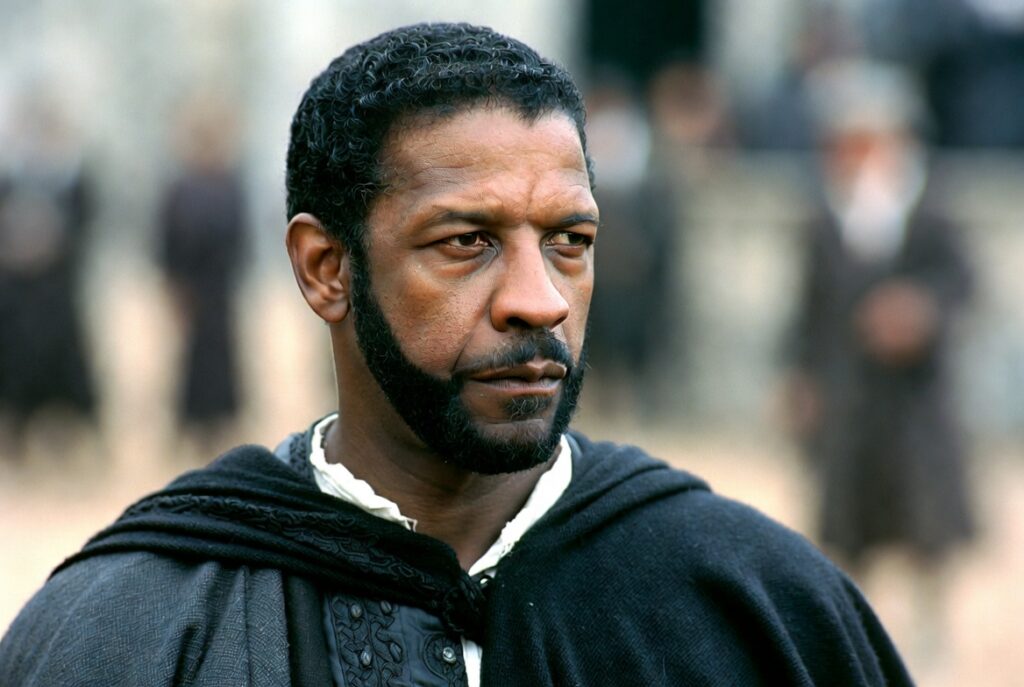
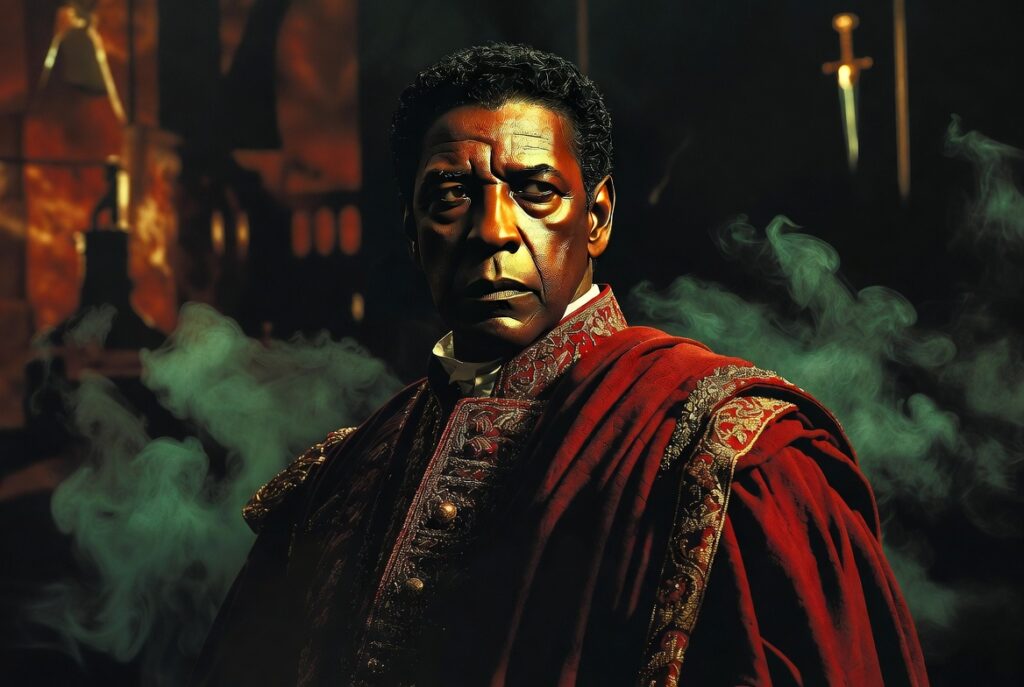
Othello – Noble General or “Barbarian” Outsider? Othello begins as the epitome of Renaissance heroism: a battle-hardened Moor who has risen through merit to command Venice’s armies. He is eloquent, composed, and deeply in love with Desdemona. Yet his tragic flaw is not simple jealousy; it is his profound insecurity about his place in Venetian society. As a Black man in a white Christian world, he is constantly aware that others view him as an exotic outsider. Iago exploits this vulnerability masterfully, turning Othello’s greatest strength—his trusting nature—into his downfall.
By Act 4, the noble general has transformed into a man who calls his wife a “subtle whore” and strikes her publicly. His final speech reveals the depth of his self-awareness: he asks to be remembered as “one that loved not wisely but too well” (5.2.344). Othello is neither purely heroic nor purely villainous; he is a good man destroyed by his inability to trust his own worth in a society that subtly (and sometimes overtly) rejects him.
Desdemona – The Strength Behind the Innocence Many readers initially see Desdemona as passive or naive, but a careful reading reveals remarkable courage. She defies her father and Venetian custom to marry Othello, then insists on joining him in a war zone. Her loyalty never wavers, even as Othello accuses and abuses her. In her final moments, she tries to protect her husband by claiming she killed herself.
Desdemona represents pure, unconditional love, yet Shakespeare shows how even the purest love cannot survive when poisoned by suspicion. Her famous line “I am not merry, but I do beguile / The thing I am by seeming otherwise” (2.1.122–123) hints at her quiet resilience and emotional intelligence.
Iago – Shakespeare’s Most Diabolical Villain Iago is widely regarded as one of the most terrifying antagonists in all of literature precisely because he lacks a single, clear motive. He offers multiple explanations—being passed over for promotion, suspicion that Othello slept with his wife Emilia, resentment of Cassio’s refinement—yet none fully satisfy. This ambiguity makes him more frightening: pure evil that needs no justification.
Iago is a master manipulator who understands human psychology better than anyone else on stage. He weaponizes truth (the handkerchief is real), half-truths, and outright lies with equal skill. His soliloquies reveal a chilling delight in destruction: “And what’s he then that says I play the villain?” (2.3.330). Modern readers often recognize Iago’s tactics as textbook gaslighting, narcissistic control, and sociopathic behavior.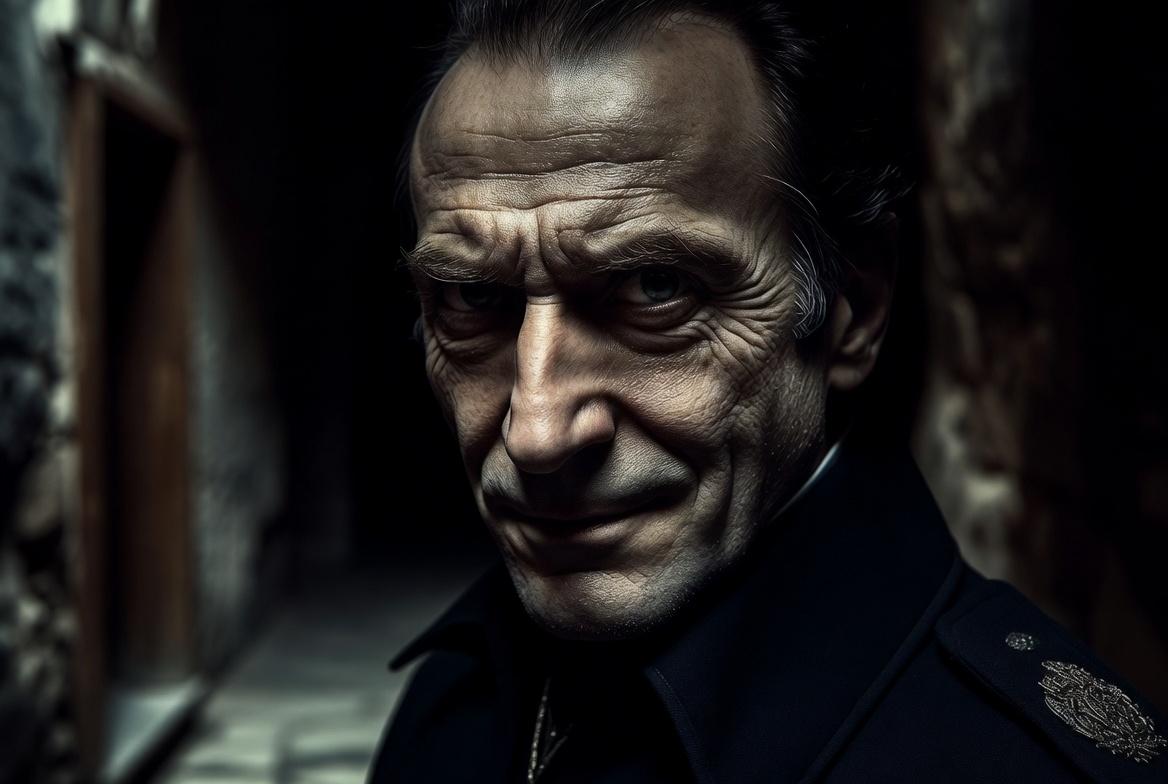
Supporting Characters
- Michael Cassio: The handsome, cultured Florentine lieutenant whose promotion triggers Iago’s scheme. Cassio represents the courtly ideal that Othello fears he can never fully embody.
- Emilia: Iago’s wife and Desdemona’s attendant. Initially complicit (she gives Iago the handkerchief), she becomes the moral voice of the play in Act 5, bravely exposing her husband’s crimes at the cost of her life. Her speech on gender double standards is one of Shakespeare’s most powerful proto-feminist moments.
- Roderigo: The gullible Venetian gentleman bankrolled and manipulated by Iago. He serves as comic relief early on, then as a disposable tool.
- Brabantio: Desdemona’s father, whose racist outrage foreshadows the prejudice Othello will face.
- Bianca: Cassio’s mistress, whose genuine affection contrasts sharply with the deception surrounding the main characters.
Comparison Table: Perception vs. Reality
| Character | What They Believe | Harsh Reality |
|---|---|---|
| Othello | Desdemona is unfaithful | She is completely loyal |
| Desdemona | Othello still loves and trusts her | He plans to murder her |
| Iago | He can destroy others and escape | He is exposed and sentenced to torture |
| Cassio | His career is ruined | He is promoted to governor |
| Emilia | Her husband is honest | He is the architect of the entire tragedy |
This table highlights Shakespeare’s central concern with appearance versus reality—one of the play’s most enduring themes.
Core Themes in Othello – Timeless Lessons on Human Nature
No Othello summary is complete without exploring the profound themes that make the play resonate across centuries.
The Poison of Jealousy Jealousy is not merely an emotion in Othello; it is a destructive force that consumes reason. Shakespeare shows how quickly it spreads from Iago to Othello and even infects secondary characters. The famous “green-eyed monster” metaphor remains one of the most quoted descriptions of jealousy in English literature.
Betrayal and the Fragility of Trust The tragedy hinges on broken trust. Othello’s willingness to believe Iago over Desdemona reveals how easily even the strongest bonds can shatter when doubt is skillfully sown.
Race and Otherness Othello is repeatedly called “the Moor,” “thick-lips,” and “Barbary horse.” While Shakespeare gives Othello dignity and nobility, the play unflinchingly depicts the racist attitudes of Venetian society. Modern scholars debate whether the play is progressive or simply reflects its time; what remains undeniable is its exploration of how racial prejudice can be weaponized to destroy a man’s sense of self.
Gender, Patriarchy, and Female Silence The women in Othello—Desdemona, Emilia, and Bianca—exist in a world controlled by men. Desdemona’s silence in the face of false accusation and Emilia’s explosive final speech (“Let husbands know / Their wives have sense like them”) expose the double standards imposed on women. The play remains painfully relevant to discussions of misogyny and female agency.
Appearance vs. Reality and the Power of Reputation Almost every major character is deceived by surfaces. Iago’s honest facade, Cassio’s drunken mistake, and the misinterpreted handkerchief all demonstrate how fragile reputation is—and how deadly its loss can be.
Literary Devices, Symbolism, and Shakespeare’s Craft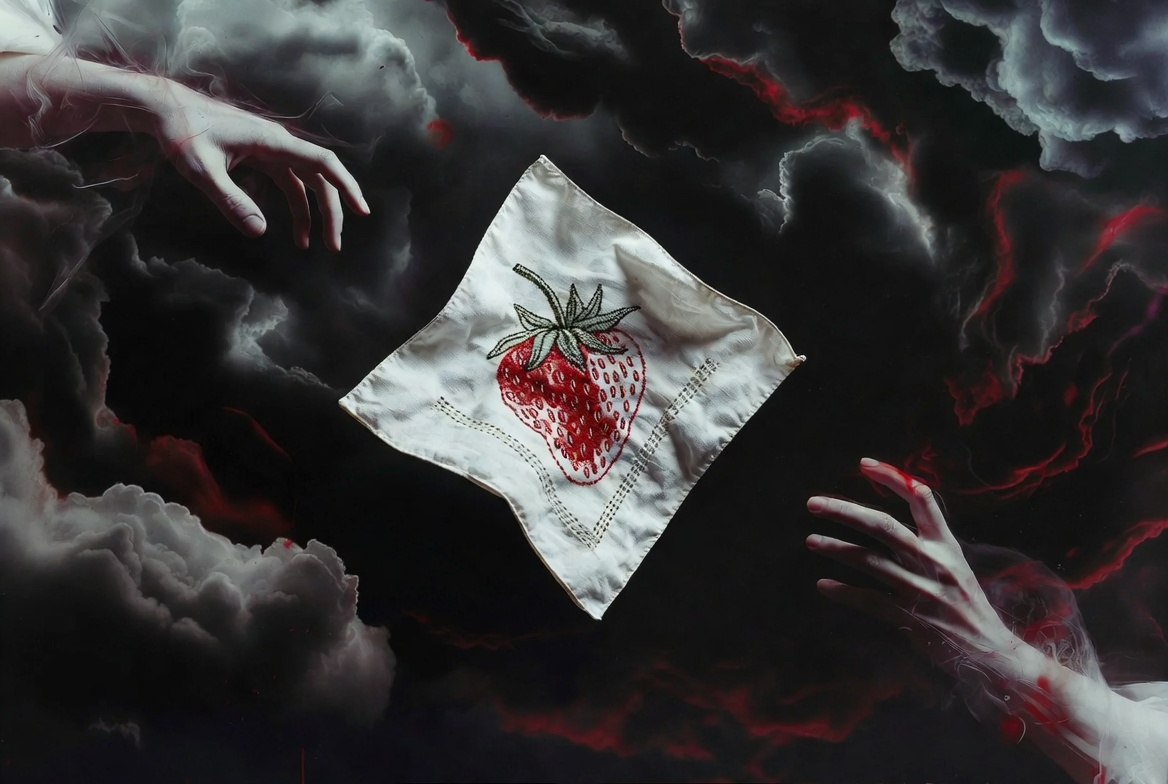
Shakespeare’s technical mastery elevates Othello from melodrama to masterpiece.
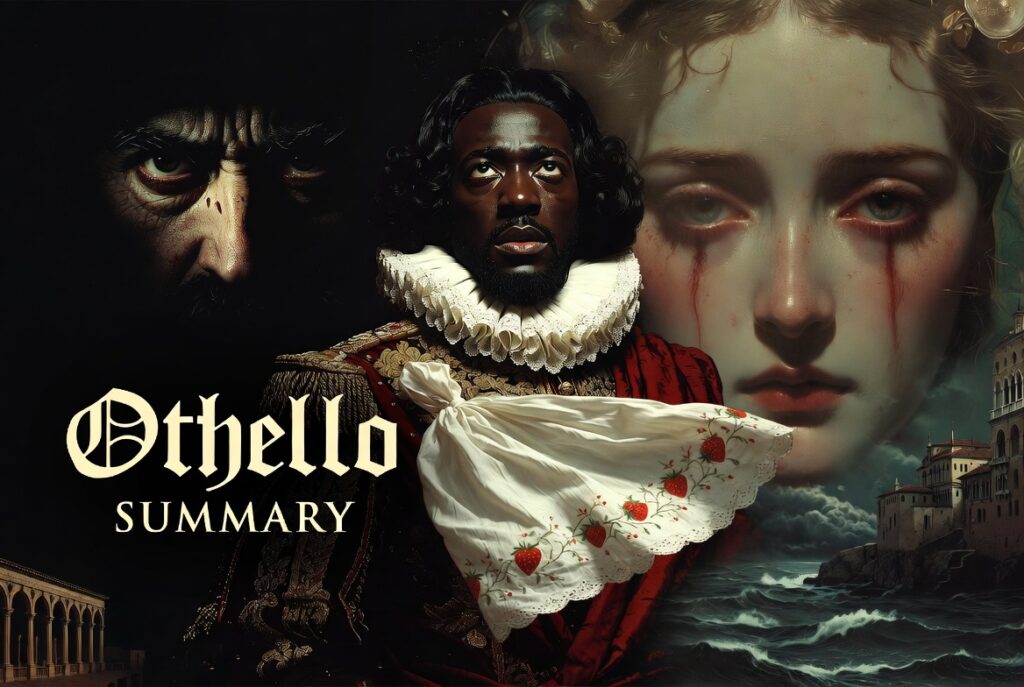
The Handkerchief – One Object That Dooms Everyone This small strawberry-spotted cloth carries enormous symbolic weight. It represents Othello and Desdemona’s love, Desdemona’s chastity, and later becomes “proof” of infidelity. Its journey from Desdemona to Emilia to Iago to Cassio to Bianca creates a chain of misunderstandings that drives the plot.
Dramatic Irony The audience knows the truth long before Othello does. This creates unbearable tension, especially in Act 3 and 4, as we watch an innocent woman condemned by lies we cannot stop.
Animal Imagery, Color Motifs, and Poison Language Iago repeatedly describes people as animals (goats, monkeys, wolves). Othello moves from noble “lion” imagery to savage beast comparisons. Black-and-white contrasts (Othello’s skin, the handkerchief’s embroidery) and poison metaphors reinforce the play’s moral and racial themes.
Soliloquies and Structure Iago’s nine soliloquies give him direct access to the audience, making us unwilling accomplices. The play’s compressed timeline—events spanning only days—creates thriller-like momentum rarely seen in Shakespeare’s other tragedies.
Historical and Cultural Context That Deepens Your Understanding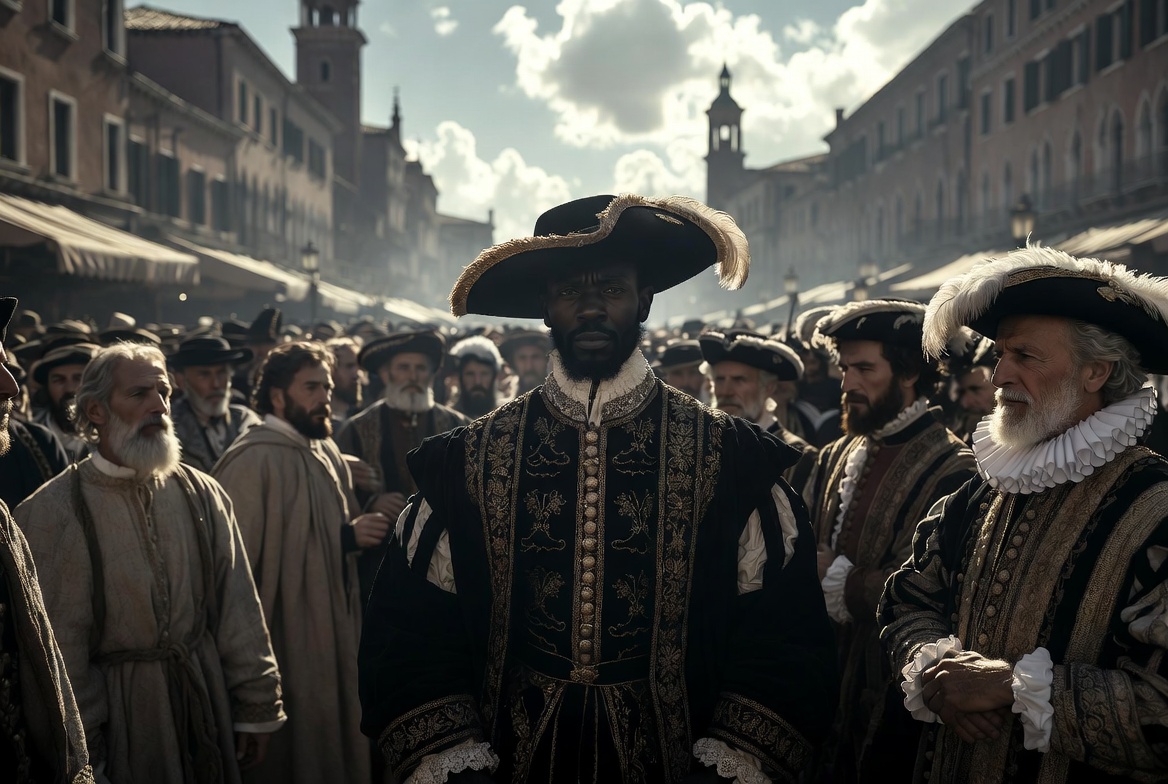
Othello is deeply rooted in its time. Venice in the early 17th century was a wealthy, cosmopolitan republic constantly threatened by the Ottoman Empire. Moors—Muslim North Africans—were both feared and romanticized in European imagination. While some Moors served as merchants or mercenaries, racial prejudice was widespread. Shakespeare’s decision to make his tragic hero a Black Moor was bold and layered with contemporary resonance.
The play also reflects Jacobean anxieties about marriage across class and cultural lines. Brabantio’s horror at his daughter’s union mirrors real societal fears. Military life, honor culture, and the importance of reputation in a hierarchical society further inform every character’s motivation.
Why Othello Still Matters in 2026 – Modern Relevance and Lessons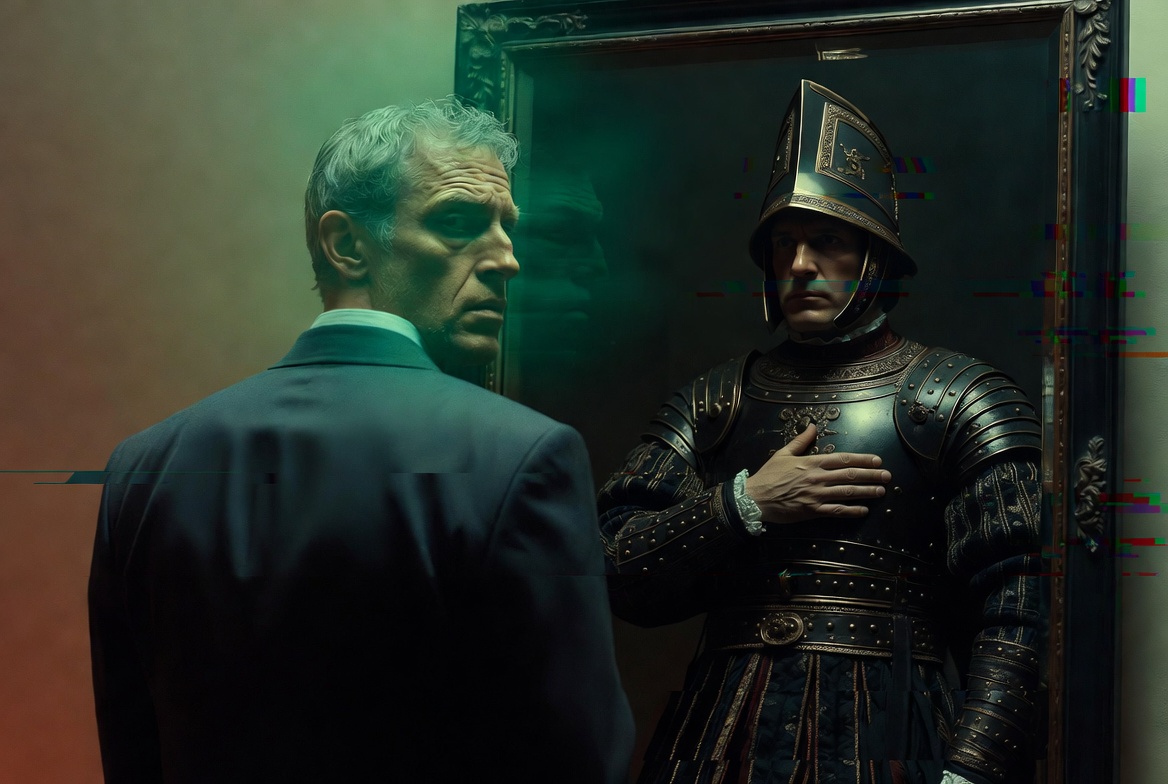
Four hundred years later, Othello feels eerily prescient. In an age of social media, deepfakes, and cancel culture, the speed with which reputation can be destroyed by whispered (or posted) lies is terrifyingly familiar. Iago’s manipulation tactics mirror modern gaslighting, online trolling, and coordinated smear campaigns.
The play’s treatment of race and “othering” speaks directly to ongoing conversations about identity, immigration, and systemic prejudice. Othello’s internalised doubt about his own worth echoes the experiences of many marginalized individuals in predominantly white or majority cultures.
Gender dynamics remain equally relevant. Desdemona’s inability to defend herself effectively against male authority, and Emilia’s late rebellion, highlight persistent issues of patriarchal control and female silencing.
Practical Takeaways – 5 Red Flags of Manipulation
- Someone who constantly questions your loyalty while offering no proof.
- “Honest” friends who only share damaging information about others.
- Pressure to distrust your own perceptions (“You’re overreacting”).
- Using your insecurities against you.
- Creating artificial urgency or secrecy.
Reading Othello can genuinely help readers recognize toxic relationships in their own lives.
Notable Adaptations and Interpretations Through the Centuries
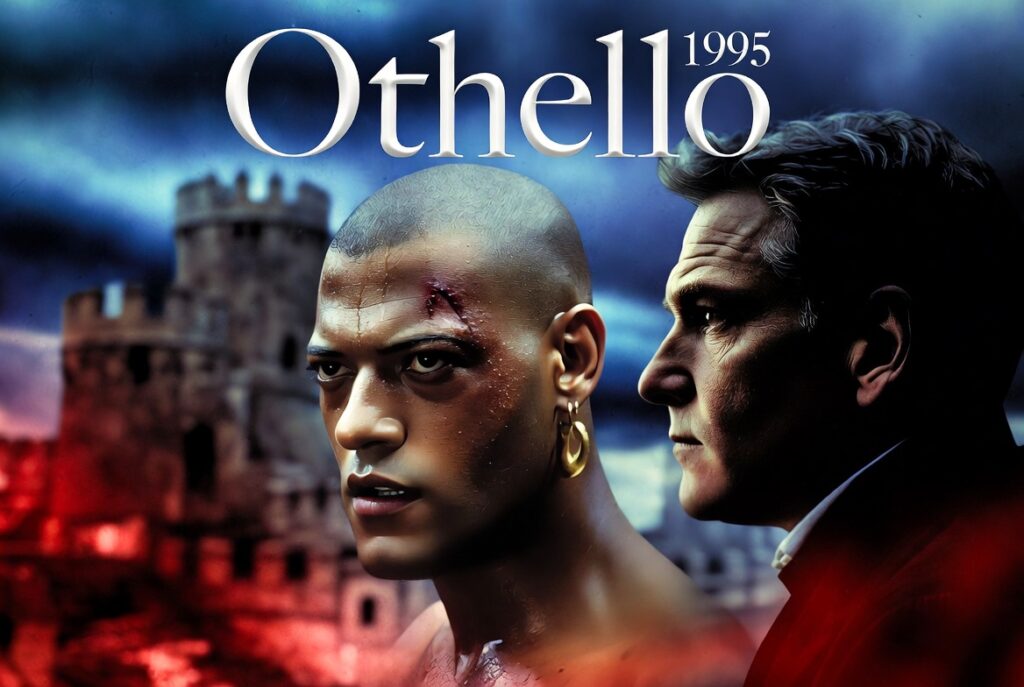
Othello has inspired countless reinterpretations. Orson Welles’ 1952 film remains a cinematic landmark for its expressionistic visuals. Oliver Parker’s 1995 version with Laurence Fishburne and Kenneth Branagh is accessible for students. Vishal Bhardwaj’s 2006 Indian film Omkara brilliantly transplants the story to contemporary Uttar Pradesh, proving the play’s universal appeal.
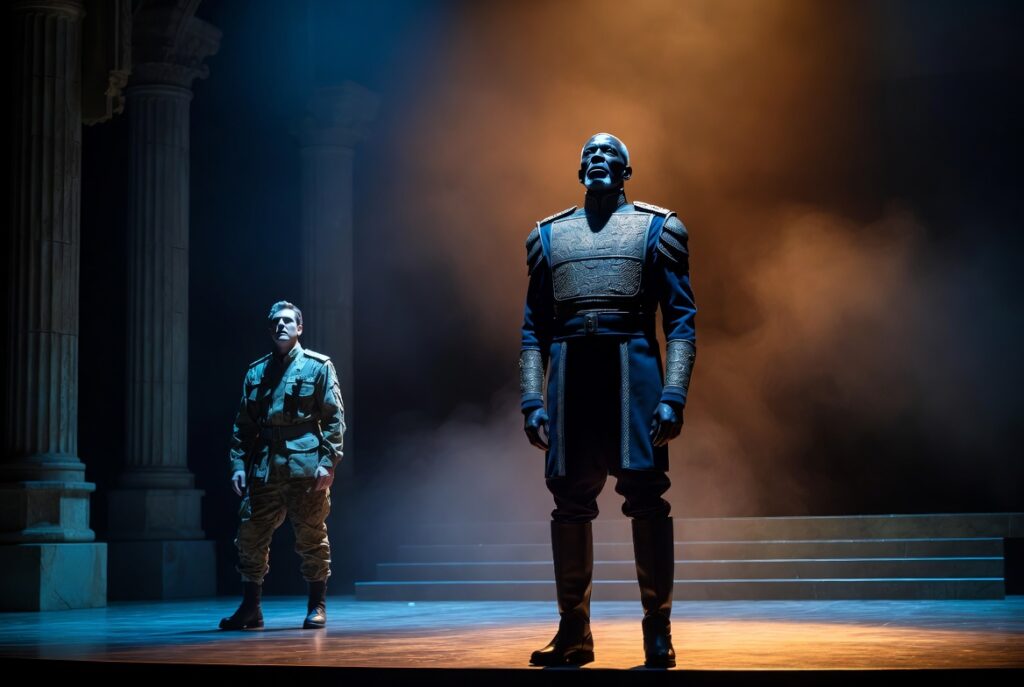
On stage, groundbreaking productions include Patrick Stewart’s 2010 photo-negative casting (white Othello, Black Iago) and countless productions that center race, gender, or military trauma. Operatic versions by Verdi and ballet adaptations further demonstrate the story’s emotional power across art forms.
Frequently Asked Questions About Othello
Is Othello based on a true story? No. It draws from Cinthio’s fictional novella, though Shakespeare may have been inspired by real Moorish visitors to London and Venetian-Ottoman conflicts.
Why does Iago hate Othello so much? Shakespeare deliberately leaves this ambiguous. The uncertainty makes Iago more terrifying—he embodies motiveless malice.
What does the handkerchief really symbolize? It symbolizes love, fidelity, magic, and ultimately the fragility of evidence and trust.
Is Desdemona too passive? Many modern readers find her frustratingly submissive, yet her unwavering love and final attempt to protect Othello reveal inner strength.
How long does the play take to read or perform? A full reading takes 3–4 hours; stage performances usually run 2.5–3 hours.
What is the best modern translation or edition? The Arden, Folger, or Oxford editions are excellent for students. For casual readers, No Fear Shakespeare offers helpful parallel text.
How does Othello compare to other Shakespeare tragedies? Unlike Hamlet (philosophical delay) or King Lear (cosmic scope), Othello is intensely personal and domestic. Its speed and psychological realism make it feel like a modern thriller.
Othello remains Shakespeare’s most devastating exploration of how easily goodness can be corrupted by envy, insecurity, and lies. In just a few short days on a Mediterranean island, a noble general is transformed into a murderer, an innocent wife is silenced forever, and a villain’s web of deception claims multiple lives.
The tragedy does not simply show evil; it demonstrates how ordinary human weaknesses—when skillfully exploited—can lead to unimaginable destruction. Othello’s final words capture the heartbreaking irony: a man who “loved not wisely but too well” pays the ultimate price for trusting the wrong person.
Whether you are studying for an exam, preparing for a performance, or simply seeking to understand one of literature’s greatest masterpieces, this Othello summary aims to give you both the complete story and the deeper insight needed to appreciate its enduring power.
I encourage you to read or watch the full play. Then return here and share in the comments: Which line from Othello hits you hardest, and why?
Shakespeare’s tragedies continue to illuminate the darkest corners of the human heart—and Othello, with its intimate focus on jealousy, betrayal, and fragile trust, may be the most painfully relevant of them all.