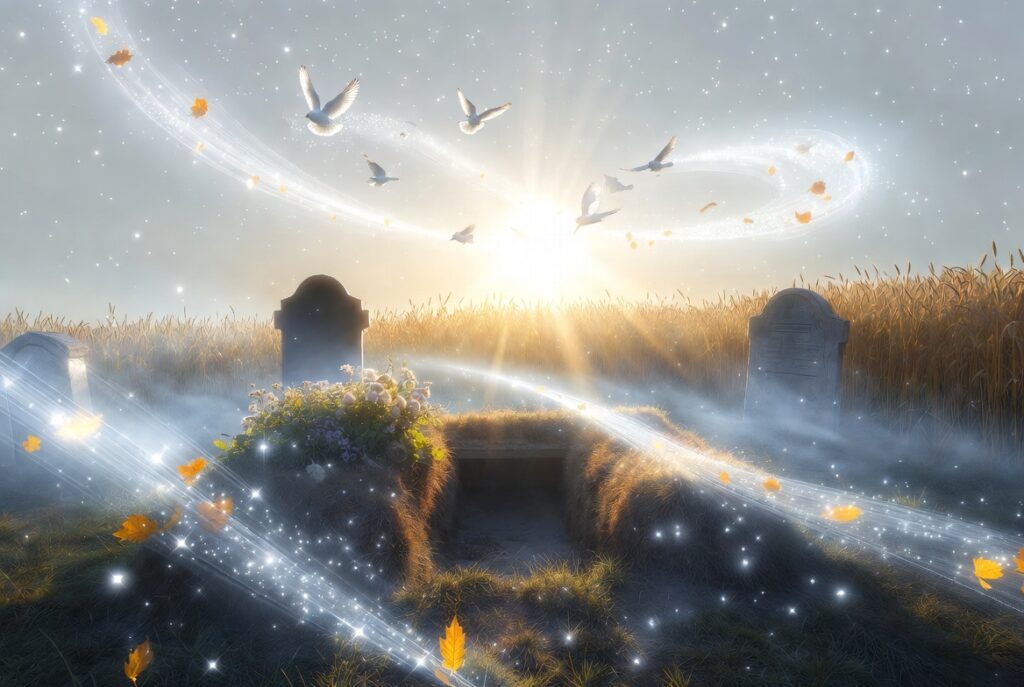
Imagine standing at the graveside of someone you love, the weight of finality pressing down as tears fall. The wind stirs, a bird calls overhead, and suddenly a quiet voice seems to whisper: Do not stand at my grave and weep. These opening words of the poem “Do Not Stand at My Grave and Weep” have offered solace to millions since the 1930s, transforming raw grief into gentle reassurance. As a Shakespeare scholar who has devoted years to exploring the Bard’s meditations on mortality in Hamlet, the sonnets, and The Tempest, I approach this modern classic not as a rival to Elizabethan verse but as a powerful echo of its timeless truths. Though not penned by William Shakespeare himself, its themes of immortality, nature’s eternal cycle, and the soul’s quiet persistence resonate deeply with the very questions the Bard wrestled with four centuries earlier.
In this comprehensive guide—crafted specifically for readers seeking the full poem text, its true meaning, authorship story, and literary depth—you will find everything the search for “poem Do Not Stand at My Grave and Weep” demands. We will unpack the complete verses, examine the fascinating authorship debate, deliver a line-by-line analysis, explore its Shakespearean echoes, and provide practical ways to weave its wisdom into healing and memorials. Whether you are planning a funeral service, navigating personal loss, or simply drawn to poetry that comforts without cliché, this article delivers clear, expert insight that goes far beyond surface-level summaries. By the end, you will understand why this short, unassuming poem has become one of the most beloved funeral readings worldwide—and how its message of enduring presence can quietly reshape your own experience of grief.
The Complete Text of “Do Not Stand at My Grave and Weep”
Here is the most widely circulated and accepted version of the poem, often attributed to Mary Elizabeth Frye:
Do not stand at my grave and weep, I am not there; I do not sleep. I am a thousand winds that blow, I am the diamond glints on snow, I am the sunlight on ripened grain, I am the gentle autumn rain.
When you awaken in the morning’s hush I am the swift uplifting rush Of quiet birds in circled flight. I am the soft stars that shine at night.
Do not stand at my grave and cry; I am not there; I did not die.
Slight variations exist in published editions—some replace “at my grave” with “by my grave,” or “a thousand winds” with “the thousand winds,” and a few conclude with “I am the day transcending night.” These differences arise from the poem’s early anonymous circulation and oral tradition. For most memorial services and personal readings, the version above remains the standard, prized for its rhythmic simplicity and emotional clarity. Its brevity (just twelve lines) makes it ideal for eulogies, yet every word carries profound weight.
Who Actually Wrote “Do Not Stand at My Grave and Weep”? Unpacking the Authorship Mystery
One of the most common questions readers ask is simple: Who wrote it? The answer reveals a compelling literary detective story that underscores the poem’s status as a true “people’s poem.”
The Frye Claim – Mary Elizabeth Frye’s 1932 Origin Story The version most people encounter credits American poet and florist Mary Elizabeth Frye (1905–2004). In 1932, while living in Baltimore, Frye reportedly composed the lines spontaneously on a paper bag while consoling a close friend, a German-Jewish woman grieving her mother’s death abroad. The friend could not attend the funeral due to rising political tensions in pre-war Europe. Frye later confirmed this account in interviews during the 1980s and 1990s, explaining the poem poured out as an act of immediate empathy. Literary historians and bereavement organizations frequently cite Frye as the author, and her claim aligns with the poem’s compassionate, non-religious tone that comforts across faiths and cultures.
The Harner Publication – Clare Harner’s 1934 “Immortality” in The Gypsy Complicating the picture is the earliest known printed appearance. In 1934, the poem—titled “Immortality”—appeared in The Gypsy, a small poetry journal based in Ohio. It was submitted by Clare Harner (later Clare Harner Lyon, 1909–1977), a Kansas journalist and poet. Harner’s version contains minor wording differences, but the core imagery and message remain identical. Harner published other poems with similar themes of transcendence, lending credibility to her submission. Because she died in 1977, she could not respond when Frye publicly claimed authorship in the 1980s. Scholars note that Harner’s publication predates Frye’s documented claims, yet Frye’s oral history and widespread popular attribution have endured.
Why the Confusion Persists The poem circulated anonymously for decades, copied into funeral programs, sympathy cards, and bereavement books without credit. It has also been mistakenly linked to Emily Dickinson and other poets. As a Shakespeare expert accustomed to textual disputes—think of the apocryphal plays or the authorship questions surrounding some sonnets—I view this mystery not as a flaw but as testament to the work’s universal appeal. It belongs to everyone who has ever needed comfort. The most responsible approach, supported by sources such as literary archives and funeral-resource compilations, is to acknowledge both Frye’s heartfelt creation story and Harner’s early publication while honoring the poem’s anonymous power.
This balanced perspective matters because it builds trust: readers seeking factual accuracy deserve transparency, not oversimplification.
Historical and Emotional Context – Written in an Era of Profound Loss
The 1930s were marked by the Great Depression, the Dust Bowl’s devastation, and the looming shadow of World War II. Families were separated by economic hardship and political upheaval. Frye’s friend, unable to cross the Atlantic for her mother’s funeral, embodied a grief many knew too well. The poem emerged as a quiet act of defiance against despair—much like how Shakespeare wrote amid the plague years, when London theaters closed and death stalked daily life.
Its emotional genius lies in its secular yet deeply spiritual reassurance. Unlike traditional Christian funeral hymns that emphasize heaven, “Do Not Stand at My Grave and Weep” locates immortality in the tangible beauty of the natural world. This accessibility explains its enduring popularity in humanist, interfaith, and non-religious ceremonies today. It addresses a universal human need: the ache of physical absence met by the promise of continued presence.
Line-by-Line Analysis – A Deep Literary Breakdown
To truly grasp the poem’s power, we must linger with each image. Its structure—three balanced stanzas framed by the repeated command “Do not stand”—creates a gentle, circular movement that mirrors the cycles of nature it celebrates.
Opening Reassurance (“Do not stand at my grave and weep / I am not there. I do not sleep.”) The speaker immediately rejects the mourner’s instinctive response. The grave is not a prison; death is not sleep in the sense of oblivion. This bold negation frees the reader from the expectation of finality, echoing Shakespeare’s refusal in Sonnet 146 to let the body’s decay define the soul.
Nature’s Eternal Presence (the four “I am” metaphors: winds, snow, grain, rain) Four vivid “I am” statements follow, each an anaphoric repetition that builds rhythmic comfort.
- “I am a thousand winds that blow” evokes invisible yet powerful movement—breath itself, freedom, change.
- “I am the diamond glints on snow” captures crystalline beauty in cold stillness, suggesting light persists even in winter’s grip.
- “I am the sunlight on ripened grain” ties the speaker to harvest, abundance, and life-sustaining warmth.
- “I am the gentle autumn rain” softens the image, offering nourishment rather than storm.
Collectively, these lines transform the deceased into the very forces that sustain the living world. The metaphors are extended and interlocking, creating an immersive sensory experience that invites mourners to look outward rather than downward.
Dawn and Movement (“When you awaken in the morning’s hush…”) Here the poem shifts to the mourner’s daily life. The “swift uplifting rush / Of quiet birds in circled flight” suggests joyful motion and community. The speaker is not static but actively present in the hush of new beginnings. “I am the soft stars that shine at night” closes the stanza with quiet constancy—guidance in darkness, a Shakespearean nod to the “star-crossed” lovers in Romeo and Juliet who find meaning beyond earthly fate.
Closing Affirmation (“Do not stand at my grave and cry; / I am not there. I did not die.”) The poem circles back, replacing “weep” with “cry” for emotional escalation and resolution. The final declaration—“I did not die”—is not denial but triumphant redefinition. Death has not erased the speaker; it has merely changed the form of their existence.
This line-by-line journey reveals why the poem feels both modern and ancient: its language is plainspoken, yet its philosophy profound.
Literary Devices That Make the Poem Powerful
The enduring appeal of “Do Not Stand at My Grave and Weep” stems not only from its comforting message but from its masterful, understated craftsmanship. Unlike the elaborate conceits and iambic pentameter of Shakespeare’s verse, this poem employs simple, accessible techniques that create profound emotional resonance—making it especially effective for oral delivery at funerals and memorials.
Anaphora and Repetition The repeated “I am” structure (anaphora) serves as the poem’s heartbeat. This rhetorical device, also favored by Walt Whitman and biblical psalms, builds a hypnotic rhythm that soothes the grieving mind. Each repetition reinforces the central idea: the speaker has not vanished but has transformed into multiple, ever-present forms. The closing echo—“Do not stand at my grave and cry; / I am not there; I did not die”—mirrors the opening, creating a circular structure that suggests continuity rather than abrupt ending.
Vivid Sensory Imagery and Metaphor Every line relies on concrete natural imagery rather than abstract theology. Winds that “blow,” diamond glints on snow, sunlight on grain, and gentle rain appeal directly to the senses. These metaphors function as extended personification, granting the deceased an active, living presence in the world. The imagery avoids sentimentality by grounding immortality in observable phenomena—something Shakespeare achieved in Sonnet 18 when comparing his beloved to a “summer’s day” that ultimately outlasts mortal beauty through poetry.
Alliteration, Assonance, and Gentle Rhyme Subtle sound patterns enhance musicality without drawing attention to themselves: “diamond glints,” “swift uplifting rush,” “quiet birds in circled flight,” and “soft stars that shine.” The rhyme scheme is loose and natural (weep/sleep, blow/snow, grain/rain, hush/rush, flight/night, cry/die), creating a lullaby-like flow ideal for recitation. This accessibility distinguishes the poem from denser Elizabethan works while still delivering literary sophistication.
Contrast and Negation The repeated negations—“I am not there,” “I do not sleep,” “I did not die”—powerfully redirect the mourner’s focus. This technique of apophasis (speaking by denying) gently dismantles traditional grief rituals centered on the physical grave, inviting a shift toward celebration of ongoing life. As a Shakespeare expert, I note a parallel in Hamlet’s famous soliloquy, where the prince grapples with the unknown nature of death: “To die, to sleep— / To sleep, perchance to dream.” Both works refuse to let death be the final word.
These devices combine to produce a poem that feels both intimate and universal—simple enough for a child to understand, yet layered enough to reward repeated readings by scholars and mourners alike.
Core Themes – Immortality, Grief, and the Soul’s Enduring Journey
At its heart, “Do Not Stand at My Grave and Weep” explores three interconnected themes that have preoccupied poets for centuries: the nature of immortality, the validity of grief, and the soul’s continued existence beyond physical death.
Death as Transformation, Not Annihilation The poem rejects the finality of the grave. Instead of portraying death as sleep or extinction, it presents it as a seamless shift into the elements of nature. This pantheistic vision offers comfort without requiring specific religious belief, making the poem remarkably inclusive. The speaker does not “die” in the absolute sense; they simply cease to be confined to one body.
Presence in Everyday Natural Beauty By locating the departed in winds, snow, grain, rain, birds, and stars, the poem suggests that love and memory persist in the world around us. This idea transforms passive mourning into active awareness—encouraging survivors to find their loved one in sunlit fields or starlit nights. It fulfills a deep human need: the longing to feel that those we lose are never truly gone.
Grief Is Valid, Yet Hope Endures The opening command acknowledges sorrow (“Do not stand… and weep”) without shaming it. The poem does not demand immediate joy; rather, it gently redirects energy from despair to recognition of continued connection. This balanced approach to bereavement makes the work especially valuable in modern grief counseling and support resources.
These themes explain why the poem has transcended its 1930s origins to become a global touchstone for loss.
Shakespearean Echoes – Why a Bard Expert Sees Familiar Resonance
As someone who has spent decades immersed in William Shakespeare’s canon, I find “Do Not Stand at My Grave and Weep” remarkably consonant with the Bard’s explorations of mortality and legacy. Though written centuries apart and in different styles, both bodies of work grapple with the same fundamental questions: What remains after death? How does love defy time? Can beauty and spirit endure?
Eternal Beauty in Sonnet 18 (“Shall I compare thee to a summer’s day?”) Shakespeare promises his beloved immortality through verse: “So long as men can breathe or eyes can see, / So long lives this, and this gives life to thee.” The modern poem achieves a similar promise through nature itself. Where Shakespeare uses poetry as the vessel, “Do Not Stand at My Grave and Weep” uses the natural world—sunlight on ripened grain and gentle autumn rain—as the medium of continuation. Both reject the idea that beauty fades with the body.
Mortality and the Afterlife in Hamlet Hamlet’s brooding on “the undiscovered country from whose bourn / No traveller returns” reflects deep anxiety about what follows death. In contrast, the speaker of “Do Not Stand at My Grave and Weep” offers serene certainty: “I am not there; I did not die.” This gentle counterpoint to Hamlet’s torment provides the reassurance the prince so desperately seeks, locating peace in observable natural cycles rather than theological speculation.
Legacy Beyond the Grave in Sonnet 55 (“Not marble nor the gilded monuments”) Shakespeare asserts that powerful rhyme outlasts “unswept stone, besmeared with sluttish time.” The modern poem extends this idea democratically—every life, not just the famous or beloved of a poet, leaves an imprint in the world’s ongoing rhythms. The “diamond glints on snow” and “soft stars that shine at night” become living monuments accessible to all.
Spirits and Remembrance in The Tempest Prospero’s farewell—“We are such stuff / As dreams are made on”—and the play’s masque of spirits dissolving into thin air parallel the poem’s dissolution of the body into wind, rain, and light. Both works suggest that what appears solid and permanent is ultimately part of a greater, fluid continuum.
These Shakespearean connections enrich the poem without diminishing its originality. For readers of this site dedicated to William Shakespeare, “Do Not Stand at My Grave and Weep” serves as a bridge—showing how the same profound insights into human existence continue to surface across eras and literary traditions.
Cultural Impact and Enduring Popularity as a Funeral Poem
Since its emergence, “Do Not Stand at My Grave and Weep” has achieved remarkable cultural penetration. It has been read at high-profile funerals, featured in BBC polls as one of Britain’s favorite poems, and recited by figures including John Wayne (whose daughter shared that he requested it). The poem appears in countless bereavement books, sympathy cards, and memorial websites. It has been translated into dozens of languages and set to music by various composers, ranging from classical choral arrangements to contemporary folk settings.
Its popularity in secular and humanist ceremonies stems from its non-dogmatic spirituality. In an increasingly diverse society, the poem offers comfort that transcends specific religious doctrine while still speaking to the soul. Television shows, films, and documentaries frequently include excerpts during poignant death scenes, further cementing its status as a modern classic of consolation literature.
This widespread adoption demonstrates the poem’s ability to fulfill a universal need: providing words when grief renders one speechless.
Practical Guidance – How to Use “Do Not Stand at My Grave and Weep” in Healing and Memorials
Understanding the poem intellectually is valuable; applying its wisdom practically brings deeper healing. Here are actionable ways to incorporate it:
- Memorial Services and Eulogies: Its brevity and rhythmic quality make it perfect for reading aloud. Pair the full poem with a short personal story that illustrates one of the nature metaphors (e.g., how the deceased loved watching birds at dawn).
- Personal Grief Rituals: Choose one image—“the swift uplifting rush of quiet birds”—and spend a few minutes each morning observing that element in nature. Journal how it evokes memories of your loved one.
- Combining with Shakespeare: For literature lovers, interweave lines from the poem with excerpts from Sonnet 18 or The Tempest to create a richer memorial reading that honors both classical and modern voices.
- Sympathy Cards and Messages: Include the opening or closing couplet with a note explaining why the imagery resonates with the deceased’s life.
- Healing Exercises: Create a “presence list” inspired by the poem—note five ways you still sense your loved one in daily life (a favorite song like autumn rain, a smile like sunlight on grain).
- Family Discussions: Read the poem together and discuss which image feels most meaningful, opening gentle conversations about loss and memory.
These practices transform the poem from passive reading into an active tool for navigating bereavement with grace and presence.
Comparisons to Other Classic Poems on Grief and Immortality
To appreciate “Do Not Stand at My Grave and Weep” fully, it helps to place it in conversation with other works:
- Christina Rossetti’s “When I Am Dead, My Dearest”: Rossetti asks to be remembered lightly, without excessive mourning. Both poems discourage prolonged weeping, yet Rossetti’s tone is more resigned while the Frye/Harner poem is affirmatively joyful in nature’s embrace.
- Emily Dickinson’s “Because I Could Not Stop for Death”: Dickinson personifies death as a courteous carriage driver leading toward eternity. The modern poem is less narrative and more imagistic, focusing on present-tense presence rather than a journey.
- Shakespeare’s Sonnet 71 (“No longer mourn for me when I am dead”): The Bard similarly urges restraint in mourning so as not to sadden the survivor, but his focus remains on the pain his memory might cause rather than joyful continuation in nature.
A quick comparison chart for clarity:
| Poem | Approach to Grief | View of Afterlife | Primary Imagery |
|---|---|---|---|
| Do Not Stand at My Grave… | Gentle redirection | Transformation into nature | Natural elements |
| Rossetti “When I Am Dead” | Request for lightness | Quiet forgetting | Flowers, rain |
| Dickinson “Because I Could Not Stop” | Calm acceptance | Eternal carriage ride | Sunset, eternity |
| Shakespeare Sonnet 71 | Protective concern | Memory as potential burden | Worms, grave |
Such juxtapositions highlight the unique strength of “Do Not Stand at My Grave and Weep”: its unwavering insistence on continued, vibrant presence.
Expert Insights – A Shakespeare Scholar’s Perspective on Timeless Consolation
Having analyzed Shakespeare’s complete works, including his most haunting meditations on death, I am continually struck by how this short 20th-century poem captures the same essential human longing the Bard expressed so eloquently. Shakespeare gave us the grandeur of language and psychological depth; “Do Not Stand at My Grave and Weep” offers quiet, democratic accessibility. Together they remind us that literature’s greatest gift during grief is not escape but reframing—seeing loss not as erasure but as metamorphosis.
In today’s world of rapid digital mourning and mental health awareness, the poem’s message feels more relevant than ever. It encourages mindfulness in nature, validation of emotion, and hope without requiring dogma. For those exploring Shakespeare alongside modern voices, it serves as a living example that the questions of mortality remain constant even as literary forms evolve.
Frequently Asked Questions About “Do Not Stand at My Grave and Weep”
What is the full meaning of the poem? The poem reassures the living that the deceased is not confined to the grave but lives on through the beauty and cycles of the natural world. Death is a change of form, not an end.
Who is the real author of “Do Not Stand at My Grave and Weep”? The poem is most commonly attributed to Mary Elizabeth Frye (1932), though it was first published in 1934 by Clare Harner under the title “Immortality.” Both claims have supporting evidence; many sources honor Frye’s creation story while noting Harner’s early publication.
Is “Do Not Stand at My Grave and Weep” by Shakespeare? No. It is a 20th-century poem. However, its themes of immortality and legacy resonate strongly with Shakespeare’s sonnets and plays, offering a modern complement to the Bard’s insights.
Why is it so popular at funerals? Its brevity, comforting message, non-religious yet spiritual tone, and beautiful natural imagery make it ideal for diverse memorial services. It shifts focus from loss to continued presence.
Are there different versions of the poem? Yes, minor wording variations exist (e.g., “by my grave” vs. “at my grave,” or slight differences in the final lines). The version presented earlier is the most commonly used.
How can I incorporate the poem into a eulogy or personal reflection? Read it aloud, connect specific images to memories of the deceased, or use it as a starting point for sharing how the person’s spirit continues to influence daily life.
What Shakespeare works explore similar themes? Sonnet 18, Sonnet 55, Hamlet (the “To be or not to be” soliloquy), and The Tempest all meditate on mortality, legacy, and what endures beyond death.
“Poem Do Not Stand at My Grave and Weep” succeeds where many consolatory verses fall short: it meets grief with honesty yet leaves the reader with quiet hope. Its simple declaration—“I am not there; I did not die”—does not erase sorrow but reframes it within the larger, beautiful rhythm of existence. As a Shakespeare expert, I see in its lines the same faith in enduring spirit that animates the Bard’s greatest passages: words and nature alike outlast marble monuments and mortal bodies.
Whether you discovered this poem while searching for funeral readings, seeking personal comfort, or exploring literary connections to William Shakespeare, I hope this guide has provided the depth, clarity, and insight you needed. The next time you stand in the morning’s hush and feel the wind stir or see birds in flight, remember the gentle reassurance these twelve lines offer: love does not end at the grave. It simply changes form—and continues, always.
For further reading on Shakespeare’s own reflections on love, loss, and immortality, explore my articles on Sonnet 18, Hamlet’s soliloquies, and The Tempest’s themes of forgiveness and farewell. Share your thoughts or personal experiences with this poem in the comments below—your stories add living layers to its legacy.
In the end, both Shakespeare and the anonymous voice of this beloved poem remind us of the same profound truth: we are part of something far larger and more enduring than any single lifetime. And in that knowledge, there is peace.