In the aftermath of Polonius’s shocking death, Hamlet descends into a storm of political scheming, genuine madness, and moral reckoning. Act 4 of Shakespeare’s masterpiece transforms the play from introspective tragedy into a high-stakes revenge drama that hurtles toward its bloody conclusion. If you’re searching for a clear, detailed Act 4 Hamlet summary that goes beyond basic plot points, you’re in the right place. This comprehensive guide delivers a scene-by-scene breakdown, rich character analysis, key themes, memorable quotes, and practical study insights to help students, literature enthusiasts, and Shakespeare lovers fully understand this pivotal act.
Act 4 serves as the bridge between Hamlet’s famous soliloquies of doubt and the explosive final duel in Act 5. Here, Shakespeare accelerates the pace, deepens the tragedy, and reveals the devastating human cost of revenge. Whether you’re preparing for an exam, writing an essay, or simply seeking to appreciate the play’s genius, this analysis provides the depth and clarity you need.
Context Leading into Act 4
To fully appreciate Act 4, it is essential to recall the powder keg created in the preceding acts. The Ghost of King Hamlet has revealed Claudius’s murder, charging Prince Hamlet with revenge. Hamlet responds with his “antic disposition”—a calculated feigned madness—while wrestling with philosophical and moral dilemmas. The pivotal “Mousetrap” play in Act 3 confirms Claudius’s guilt, leading to the closet scene where Hamlet confronts Gertrude. In a moment of rash action, Hamlet kills Polonius, mistaking him for the King.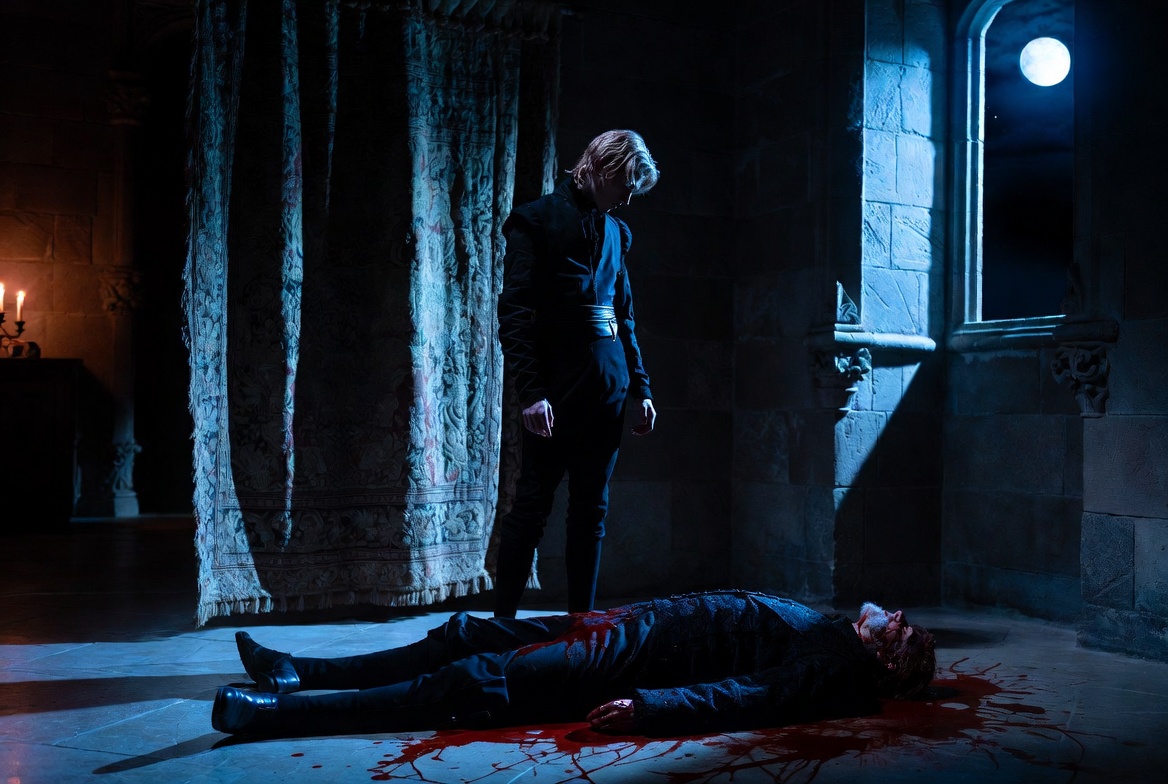
This single act—Polonius’s death—becomes the catalyst for everything that follows. It removes any remaining restraint in the Danish court, forces Hamlet’s exile, drives Ophelia to genuine madness, and arms Laertes with vengeful fury. Shakespeare masterfully shows how one impulsive killing poisons the entire kingdom, echoing the original regicide.
Scene-by-Scene Summary and Analysis
Act 4, Scene 1 – Gertrude’s Report and Claudius’s Reaction
The act opens in the immediate aftermath of Polonius’s murder. A terrified Gertrude tells Claudius what happened. She describes Hamlet as “Mad as the sea and wind when both contend / Which is the mightier” and recounts how he dragged Polonius’s body away.
Claudius’s response reveals his calculating nature. Rather than pure grief, he focuses on political damage control: “It had been so with us, had we been there.” He quickly frames the incident as a threat to his own safety and decides Hamlet must be sent to England. This scene establishes Claudius as a skilled manipulator who weaponizes crisis for self-preservation while Gertrude walks a tightrope between protecting her son and her husband.
Key Quote: “Mad as the sea and wind when both contend / Which is the mightier.” (4.1)
This imagery of uncontrollable natural forces underscores the chaos Hamlet has unleashed.
Act 4, Scene 2 – Hamlet and the Sponges (Rosencrantz and Guildenstern)
Hamlet, hiding Polonius’s body, encounters Rosencrantz and Guildenstern. He delivers sharp, witty barbs, calling them “sponges” that “soak up the king’s countenance, his rewards, his authorities.” When asked where Polonius is, Hamlet replies with dark humor: “At supper… Not where he eats, but where he is eaten.”
This scene highlights Hamlet’s continued intellectual superiority and his disdain for the corrupt court. His sponge metaphor brilliantly critiques sycophancy and disposable courtiers. Even in danger, Hamlet maintains control through language, turning interrogation into philosophical commentary on mortality and power.
Act 4, Scene 3 – Hamlet Before Claudius: Exile to England
Claudius confronts Hamlet directly. The Prince continues his wordplay, describing Polonius’s location in grotesque, punning terms: “A certain convocation of politic worms are e’en at him.” Claudius announces Hamlet’s immediate departure to England for “safety,” while secretly planning his murder.
Hamlet’s exit line—“England, if my love for thee holds true…”—carries ironic foreshadowing. This scene deepens the theme of appearance versus reality: Claudius plays the concerned ruler while plotting assassination, and Hamlet knows far more than he reveals.
Act 4, Scene 4 – Hamlet and Fortinbras: The Turning Point Soliloquy
This scene marks a crucial turning point. Hamlet encounters Fortinbras’s Norwegian army marching across Denmark to fight for a worthless patch of land in Poland. Witnessing such purposeful action prompts one of the play’s most important soliloquies:
“How all occasions do inform against me, And spur my dull revenge!”
Hamlet berates himself for inaction while a prince risks thousands of lives “even for an eggshell.” He resolves: “O, from this time forth, / My thoughts be bloody, or be nothing worth!”
Analysis: This soliloquy contrasts Hamlet’s reflective nature with Fortinbras’s decisive militarism. It shows Hamlet’s evolving character—he moves from paralysis to a firmer commitment to revenge, even if still expressed in thought rather than immediate deed. The scene also broadens the play’s scope from personal vendetta to questions of honor, national ambition, and the absurdity of human conflict.
Act 4, Scene 5 – Ophelia’s Madness and Laertes’s Return
One of the most heartbreaking sequences in the play begins here. Ophelia enters in a state of true madness, singing fragmented songs about death, betrayal, and lost love. Her distribution of flowers (rosemary for remembrance, pansies for thoughts, rue for regret) carries rich symbolic weight.
Laertes bursts in, leading a mob demanding justice for his father’s death. Claudius deftly manipulates the situation, directing Laertes’s rage toward Hamlet while positioning himself as a reasonable king.
Analysis: Ophelia’s madness stands in stark contrast to Hamlet’s feigned version. It represents the collateral damage of the revenge plot, highlighting the destructive impact on women in a patriarchal society. Her songs and symbolic flowers externalize overwhelming grief, loss of agency, and fractured sanity. Laertes emerges as Hamlet’s passionate foil—ready to act immediately where Hamlet deliberates.
Act 4, Scene 6 – Horatio Receives Hamlet’s Letter
This short transitional scene brings relief and new information. Sailors deliver a letter from Hamlet to Horatio, revealing that pirates attacked the ship to England. Hamlet was captured but treated well and has returned to Denmark. He urges Horatio to join him.
The pirate encounter adds an element of adventure and divine providence, suggesting Hamlet’s fate may have other plans beyond Claudius’s schemes. It also reaffirms Horatio’s role as the trusted, rational friend.
Act 4, Scene 7 – The Poisoned Plot: Claudius and Laertes Conspire
In the act’s climactic scene, Claudius informs Laertes that Hamlet killed Polonius and explains why he couldn’t punish him publicly (Gertrude’s love and public opinion). A letter arrives announcing Hamlet’s return.
Claudius and Laertes then devise a double murder plot: a fencing match where Laertes will use a poisoned, unbated rapier, supplemented by a poisoned cup of wine intended for Hamlet. The scene ends with the devastating news of Ophelia’s drowning.
Claudius’s line, “Revenge should have no bounds,” encapsulates the corrupt moral world of Elsinore. Laertes’s willingness to “cut [Hamlet’s] throat i’ th’ church” shows his impulsive rage, further contrasting with Hamlet’s conscience.
Key Symbolism: Poison returns as a central motif—echoing the original murder—representing the spreading corruption in Denmark.
Major Character Developments in Act 4
Hamlet: Act 4 shows significant growth. From witty evasion and self-reproach, he moves toward acceptance of action. His encounter with Fortinbras crystallizes his resolve, yet he remains characteristically thoughtful. His “madness” continues to serve both as protection and authentic emotional outlet.
Claudius: Revealed as a master politician. His guilt exists but never overrides self-preservation. He expertly turns threats into opportunities, manipulating Laertes while maintaining a facade of kingship.
Ophelia: Perhaps the most tragic figure in this act. Stripped of her father, brother, and lover’s sanity, she breaks under societal and personal pressure. Her madness humanizes the revenge tragedy, showing its innocent victims.
Laertes: Introduced as the anti-Hamlet—decisive, emotional, and less burdened by moral philosophy. He serves as an effective foil that highlights Hamlet’s complexity.
Gertrude: Her loyalty remains divided. She protects Hamlet while remaining married to the man who murdered his father, creating ongoing tension.
Fortinbras: Though largely offstage, his presence looms as a model of purposeful leadership, foreshadowing the play’s resolution.
Key Themes Explored in Act 4
Act 4 of Hamlet intensifies the play’s central philosophical and moral concerns while introducing new layers of political and personal tragedy. Several dominant themes emerge powerfully in this section.
Action vs. Inaction Hamlet’s encounter with Fortinbras’s army in Scene 4 becomes the emotional and thematic heart of the act. While Hamlet has spent much of the play paralyzed by overthinking, Fortinbras risks lives for “a fantasy and trick of fame.” This contrast forces Hamlet to confront his own delay, resulting in his vow that his “thoughts be bloody.” Laertes further embodies decisive action, willing to rebel against the king and commit sacrilege for revenge. Shakespeare uses these foils to question what true honor and courage demand.
Madness: Real vs. Feigned A core exploration in any Act 4 Hamlet summary is the juxtaposition of Hamlet’s calculated “antic disposition” with Ophelia’s authentic mental collapse. Hamlet’s madness is performative and strategic; Ophelia’s is devastatingly real, triggered by trauma, grief, and societal constraints. Her fragmented songs and behavior illustrate how overwhelming loss can fracture the human mind, offering a poignant commentary on psychological fragility in Elizabethan drama.
Revenge and Its Moral Costs Revenge drives the plot, yet Shakespeare reveals its corrosive nature. Claudius’s original murder has poisoned the court, and new revenge plots multiply. Laertes’s declaration that “Revenge should have no bounds” exposes the dangerous absence of moral limits. By the end of Act 4, multiple characters are ensnared in cycles of vengeance that will claim nearly everyone by the play’s close.
Appearance vs. Reality Deception permeates every scene. Claudius maintains the image of a legitimate, grieving king while plotting murder. Hamlet hides his sanity and knowledge behind madness. Even Gertrude conceals the full truth. This theme underscores the treacherous environment of Elsinore, where truth is dangerous and performance is survival.
Corruption, Poison, and Decay The motif of poison—first introduced with King Hamlet’s murder—spreads metaphorically. Claudius’s schemes infect the court, while images of rotting bodies (Polonius being eaten by worms) and disease reinforce the idea that “something is rotten in the state of Denmark.” Ophelia’s flowers and drowning further symbolize corrupted innocence and inevitable death.
Gender and Power Ophelia and Gertrude highlight the limited agency of women in a male-dominated revenge tragedy. Ophelia is used as a pawn by her father and the king, then abandoned by Hamlet. Her madness and death poignantly illustrate the collateral damage inflicted on women caught in patriarchal power struggles.
Literary Devices and Shakespeare’s Craft in Act 4
Shakespeare’s technical brilliance shines in Act 4 through masterful pacing and rich literary techniques:
- Soliloquies: The Scene 4 soliloquy ranks among Hamlet’s most revealing, showcasing internal conflict and character growth.
- Imagery and Symbolism: Flower symbolism in Ophelia’s mad scene (rosemary, fennel, rue, daisies) carries traditional meanings that deepen her tragedy. Sea and water imagery foreshadow her drowning and Hamlet’s pirate escape.
- Foil Characters: Fortinbras and Laertes brilliantly illuminate Hamlet’s traits through contrast.
- Irony: Dramatic irony abounds as Claudius plots against a Hamlet who has already escaped, and as Laertes unknowingly joins a scheme that will destroy him.
- Dramatic Pacing: Short, dynamic scenes create urgency and momentum, contrasting with the longer, more philosophical earlier acts.
- Wordplay and Metaphor: Hamlet’s sponge metaphor and worm imagery demonstrate his linguistic mastery even under pressure.
These devices elevate Act 4 from mere plot progression to profound artistic achievement.
Historical and Modern Relevance
In Elizabethan England, Hamlet engaged with revenge tragedy conventions popularized by Thomas Kyd’s The Spanish Tragedy. Audiences understood the moral and religious conflicts surrounding private revenge in a Christian society that condemned vigilantism. Political anxieties about succession and court corruption also mirrored real concerns during Queen Elizabeth I’s final years.
Today, Act 4 remains strikingly relevant. Ophelia’s descent resonates in conversations about mental health, grief, and the pressures faced by young women. Her story is frequently analyzed through feminist and psychological lenses, with modern adaptations exploring trauma, patriarchy, and emotional suppression.
Claudius’s political manipulation offers insights into contemporary power dynamics, fake news, and authoritarian facades. The themes of action versus overthinking speak to anyone facing difficult decisions or moral dilemmas. Hamlet’s self-reproach in the Fortinbras soliloquy often connects with students and professionals struggling with procrastination or analysis paralysis.
Study Tips and Exam Preparation
For students writing essays or preparing for exams, focus on these high-value elements:
Essential Quotes to Memorize:
- “How all occasions do inform against me…” (4.4) – Action and honor
- “Mad as the sea and wind…” (4.1) – Chaos imagery
- “Revenge should have no bounds.” (4.7) – Moral collapse
- Sponge metaphor (4.2) – Court corruption
Common Essay Questions:
- How does Laertes serve as a foil to Hamlet in Act 4?
- Discuss the significance of Ophelia’s madness.
- To what extent does Hamlet resolve to take action in Act 4?
Tips for Success:
- Always link plot events to character development and broader themes.
- Compare Act 4 with Act 3 (shift from thought to momentum) and Act 5 (fulfillment of revenge).
- Use specific textual evidence rather than general statements.
- Consider multiple interpretations: psychological, political, feminist, and philosophical.
Join literature discussion groups or watch acclaimed performances (Kenneth Branagh, Laurence Olivier, or modern adaptations) to see how actors interpret these scenes.
Frequently Asked Questions (FAQs)
What is the significance of Hamlet’s soliloquy in Scene 4? It represents a turning point where Hamlet criticizes his own inaction and commits to more decisive revenge, using Fortinbras as a catalyst for change.
Why does Ophelia go mad? The combined trauma of her father’s death at Hamlet’s hands, Hamlet’s rejection, and her constrained position in court overwhelms her fragile emotional state.
How does Laertes serve as a foil to Hamlet? Laertes acts swiftly and emotionally on his grief, while Hamlet deliberates philosophically—highlighting different approaches to revenge and honor.
What happens to Hamlet after he is sent to England? Pirates attack the ship; Hamlet is captured but returns to Denmark, foiling Claudius’s assassination plot.
Is Claudius’s grief over Polonius genuine? It appears secondary to political self-preservation. His primary concern is managing the threat Hamlet poses to his throne.
How does Act 4 set up the finale in Act 5? It establishes the poisoned fencing match, confirms Hamlet’s return, deepens Laertes’s rage, and reports Ophelia’s death—all elements that converge in the tragic climax.
Act 4 of Hamlet stands as a masterful escalation that transforms personal conflict into inevitable catastrophe. Through rapid scene changes, profound character development, and rich thematic exploration, Shakespeare shows how revenge corrupts not only the avenger but everyone in their orbit. From Ophelia’s tragic flowers to Hamlet’s renewed resolution beside Fortinbras’s army, this act delivers some of the play’s most emotionally charged and intellectually stimulating moments.
Understanding Act 4 deeply enriches any reading or performance of the full play. It reminds us that actions—even justified ones—carry devastating consequences, and that the line between sanity and madness, thought and deed, can be heartbreakingly thin.
For continued exploration of Shakespeare’s genius, explore our other guides on Hamlet’s major characters, key soliloquies, or complete play themes. Reread Act 4 with fresh eyes, watch a stage or film version, and reflect on how its lessons about revenge, grief, and action still speak powerfully to us today.
The tragedy of Elsinore continues to captivate because it holds a mirror to our own complex humanity—a testament to Shakespeare’s unmatched insight into the human condition.