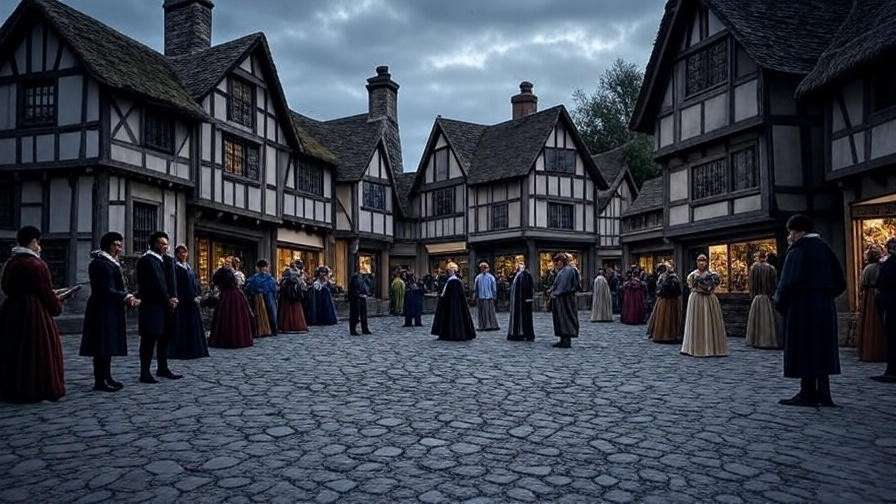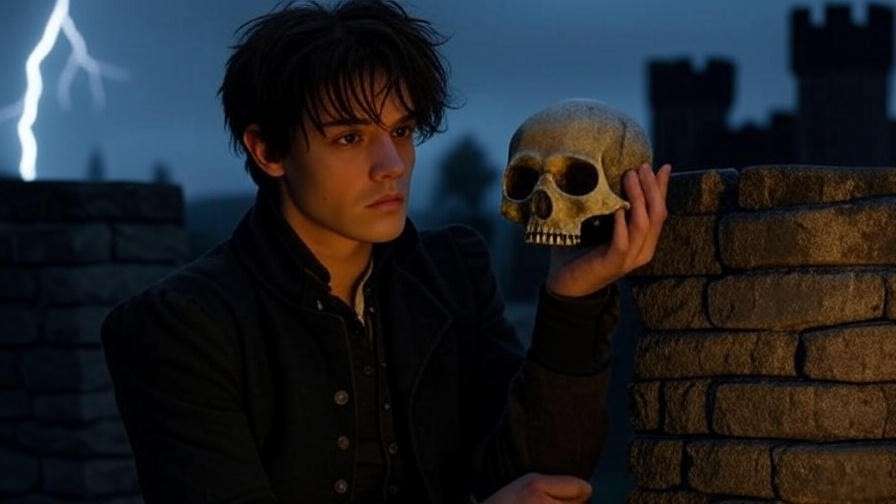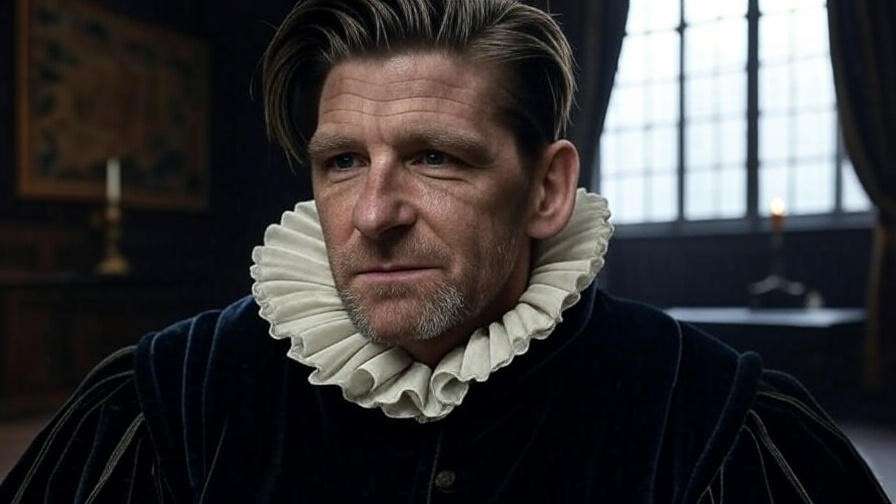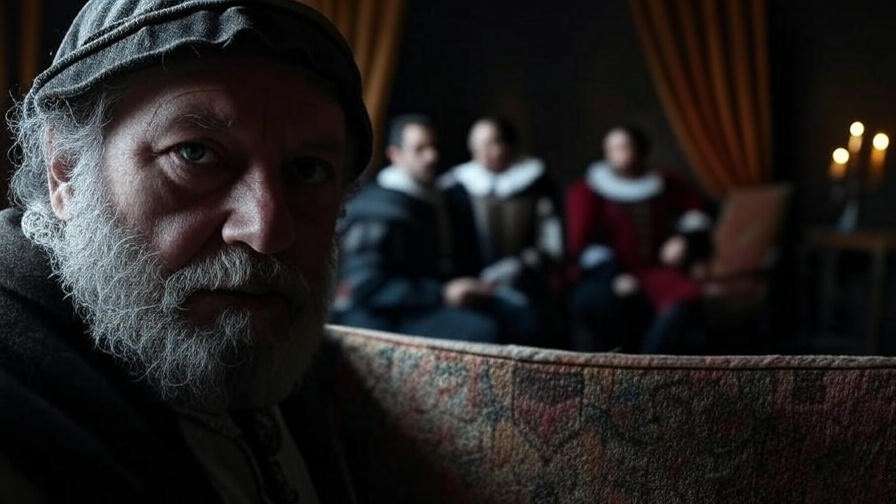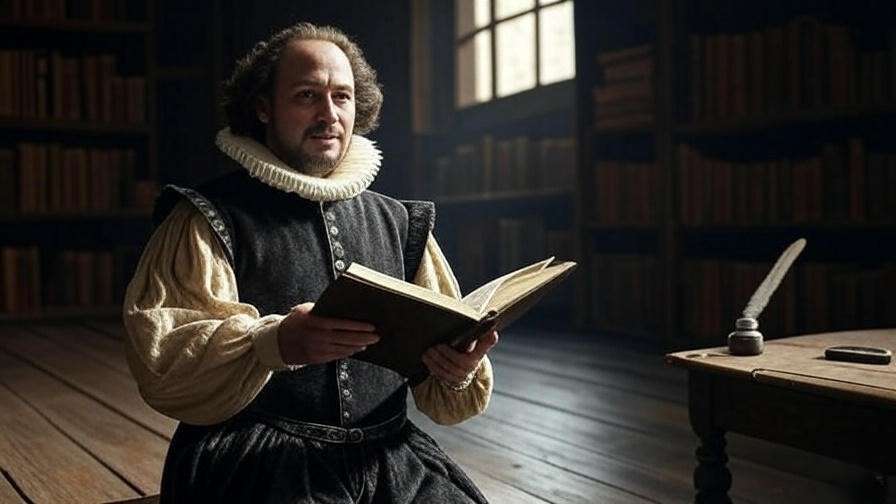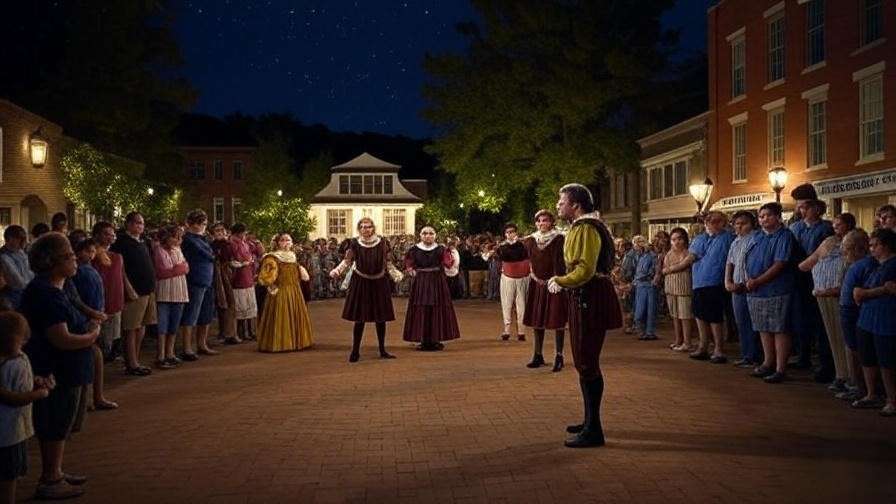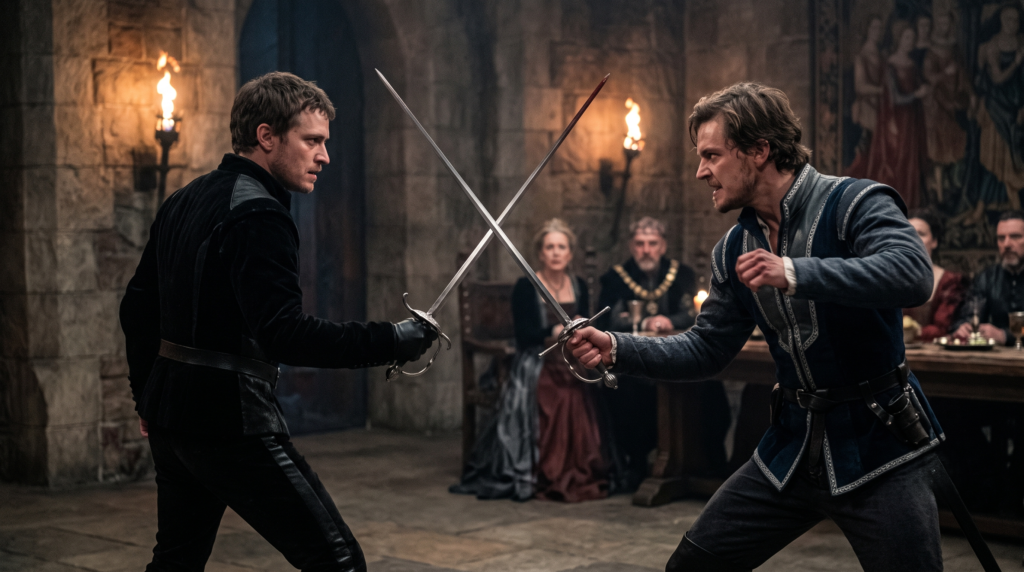
A single devastating event—the sudden, violent murder of a father—sparks two entirely different paths in the dark, paranoid halls of Elsinore. One path is paved with paralyzing overthought, feigned madness, and profound existential dread; the other is forged in reckless fury, political rebellion, and unhesitating bloodshed. When dissecting William Shakespeare’s most celebrated revenge tragedy, understanding the dynamic between Hamlet and Laertes is the ultimate key to unlocking the play’s deepest thematic concerns. Why did Shakespeare construct two young men with identical grievances, yet engineer them to have polar opposite reactions?
Hamlet and Laertes are not merely political rivals or competitors for Ophelia’s affection; they are perfect structural and psychological mirrors. By examining their contrasting approaches to grief, honor, and vengeance, Shakespeare exposes the tragic flaws inherent in both radical inaction and blind impulse. This comprehensive analysis breaks down their character parallels, explores a scene-by-scene comparison of their crucial interactions, and reveals exactly what their intertwined tragic ends teach us about the human condition.
Defining the “Foil” in Shakespearean Drama
What is a Literary Foil?
In literature, a foil is a secondary character whose primary purpose is to contrast with the protagonist. By highlighting the differences in personality, methodology, or morality, the foil illuminates the distinct, often flawed, traits of the main character.
Shakespeare was a master of this technique. In Romeo and Juliet, Mercutio’s cynical, bawdy realism serves as a foil to Romeo’s lofty, poetic romanticism. In Henry IV, the fiercely ambitious, honor-obsessed Hotspur is juxtaposed against the initially wayward and calculating Prince Hal. However, nowhere is the use of the foil more intricately woven into the very fabric of the plot than in Hamlet. The play is a study in contrasts, demanding that the audience evaluate the Prince of Denmark not in isolation, but in relation to those placed strategically around him.
The Mirror Matrix of Hamlet
Hamlet presents a unique dramatic structure by featuring not one, but three grieving sons tasked with avenging a father: Prince Hamlet, Laertes, and the Norwegian Prince Fortinbras. While Fortinbras operates on the geopolitical periphery—a traditional, military leader reclaiming lost lands—Laertes serves as the closest, most intimate psychological counterweight to Hamlet. They occupy the same physical space in the Danish court, share a deep connection through Ophelia, and ultimately cross swords in the play’s devastating climax. Laertes is the immediate, visceral answer to the question the play constantly asks: What if Hamlet just acted?
Parallel Lives, Divergent Paths: The Background Setup
Sons of Elsinore’s Elite
To fully appreciate the foil dynamic, we must first look at the startling similarities in their backgrounds. Hamlet is the Crown Prince of Denmark, the son of the recently deceased King Hamlet. Laertes is the son of Polonius, the Lord Chamberlain and chief counselor to the current King, Claudius. Both young men represent the future of Elsinore’s elite. They are bound by the suffocating expectations of filial piety, aristocratic honor, and public duty.
Both are also deeply constrained by the older generation. Hamlet is trapped by the mandate of a supernatural Ghost, while Laertes is initially smothered by the long-winded, overbearing advice of Polonius (most notably in the famous “To thine own self be true” speech, which rings deeply ironic given Polonius’s deceptive nature).
Wittenberg vs. Paris: The Intellectual vs. The Courtier
Their divergence begins with their chosen environments away from the Danish court, setting the stage for their contrasting worldviews.
-
Hamlet’s World (Wittenberg): Hamlet is a student at the University of Wittenberg, famously associated with Martin Luther and the Protestant Reformation. It is a center of rationalism, philosophy, theology, and deep existential contemplation. Hamlet’s education conditions him to demand empirical proof and moral absolute certainty. He cannot simply act; he must understand the metaphysical consequences of his actions.
-
Laertes’ World (Paris): Laertes begs leave to return to Paris, a city representing traditional courtly life, chivalry, fencing, music, and the adherence to societal codes of honor. It is an active, sensory, and highly social environment. Laertes is conditioned to defend his reputation with his blade rather than his intellect.
Takeaway: Their geographic preferences perfectly foreshadow their reactions to trauma. When disaster strikes, the Wittenberg scholar retreats into his own mind to analyze the cosmic injustice of it all, while the Parisian courtier reaches immediately for his sword.
The Catalyst of Chaos: Two Fathers, Two Murders
King Hamlet and Polonius: Parallel Traumas
The inciting incident for both characters is an unnatural death. Hamlet learns from a terrifying apparition that his father was poisoned by Claudius. Laertes receives murky, delayed news that his father, Polonius, was slain—ironically, by Hamlet himself—and hastily buried in secret, “hugger-mugger,” without the state honors a Lord Chamberlain deserves.
Both sons are instantly thrust into the archetypal role of the revenge-seeking son. The audience is thus invited to watch a controlled experiment: drop two different temperaments into the exact same crucible of grief, and observe the explosion.
Action vs. Contemplation (The Core Antithesis)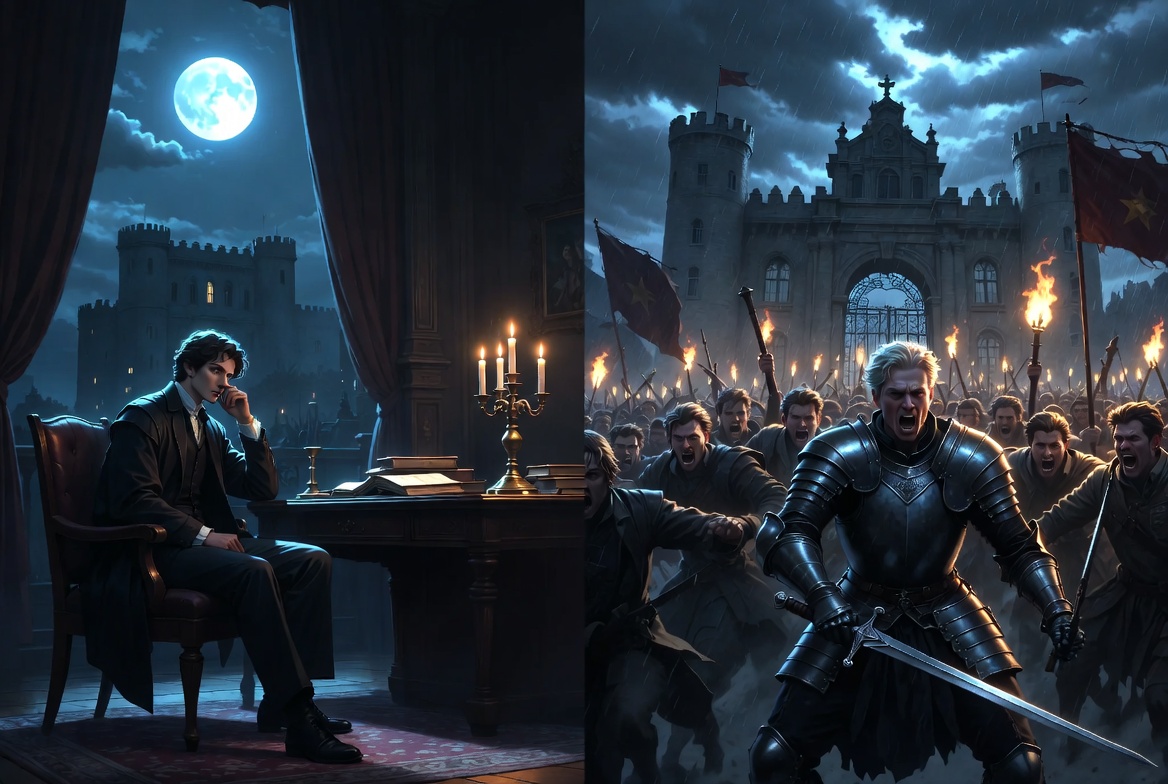
The pacing of their respective reactions forms the central conflict of the play.
Hamlet’s Reaction:
Hamlet’s response to the Ghost’s command is characterized by agonizing delay. He adopts an “antic disposition” (feigning madness), subjects himself to brutal self-interrogation in soliloquies like the “To be or not to be” debate, and orchestrates a complex theatrical trap (The Mousetrap play) just to verify the Ghost’s claims. Hamlet demands perfect moral certainty before he will strike.
Laertes’ Reaction:
Laertes responds with terrifying speed and sheer, unadulterated political force. Upon hearing of his father’s death, he secretly sails back from France, raises a localized rebellion, breaches the castle gates, and corners King Claudius. He does not stop to investigate; he assumes guilt and demands immediate retribution.
Expert Insight: The absolute peak of their contrasting philosophies occurs when examining their dialogue. Compare Hamlet’s agonizing over his own inaction (“O, what a rogue and peasant slave am I!”) alongside Laertes’ fierce, unhesitating declaration to Claudius:
“To hell, allegiance! Vows, to the blackest devil! / Conscience and grace, to the profoundest pit! / I dare damnation.”
Laertes explicitly rejects everything that paralyzes Hamlet—conscience, grace, and the fear of damnation.
Moral Integrity vs. Reckless Vengeance
Hamlet’s Search for Moral Justification
One of the most defining moments of Hamlet’s delay occurs in Act 3, Scene 3, when he finds Claudius alone, seemingly in prayer. Hamlet draws his sword but stops. His reasoning is purely theological: if he kills Claudius while the King is confessing his sins, Claudius will go to heaven. King Hamlet was murdered before he could repent, trapping his soul in purgatory. Therefore, killing Claudius at prayer is not true revenge; it is a favor.
Hamlet is burdened by his conscience. He is not just looking for physical revenge; he is seeking spiritual justice. This relentless search for moral perfection in an imperfect, corrupt world is his tragic flaw (hamartia).
Laertes’ Vulnerability to Manipulation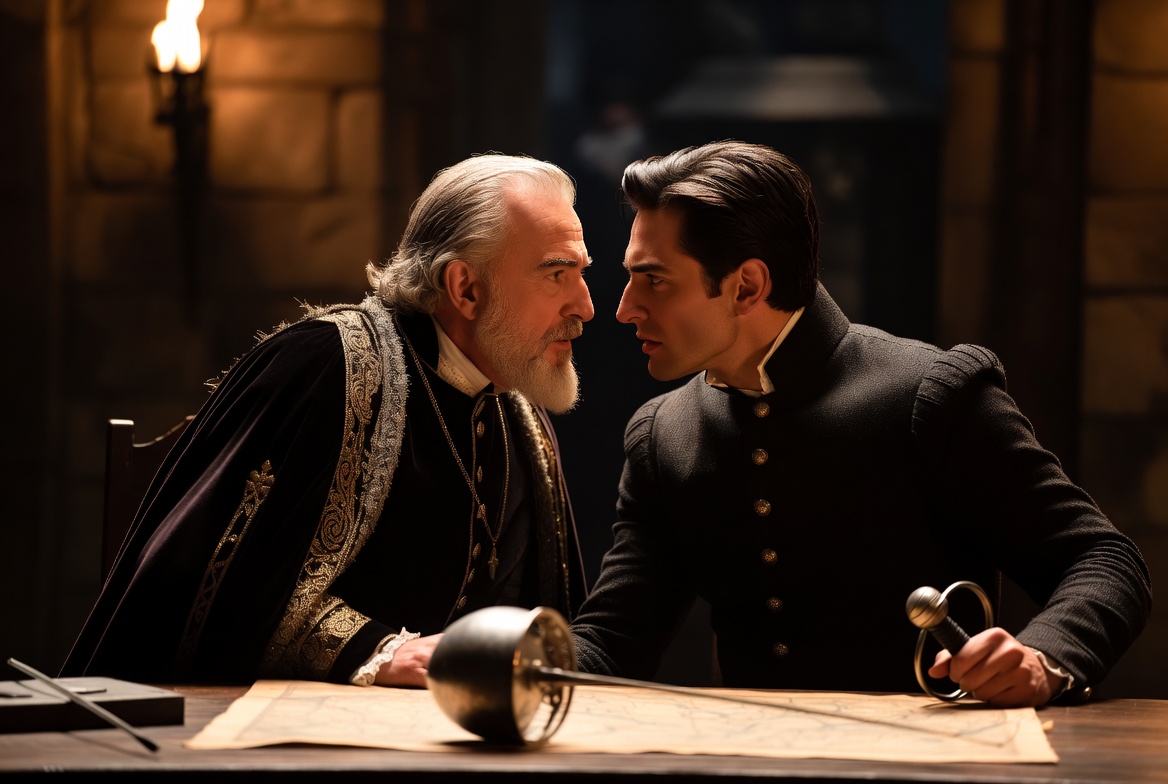
Conversely, Laertes’ absolute lack of moral hesitation becomes his undoing. Because he operates purely on emotion and traditional codes of blood-revenge, he is incredibly easy for the Machiavellian Claudius to manipulate.
When Claudius asks Laertes how far he would go to avenge Polonius, Laertes replies famously: “To cut his throat i’ the church.” This is a direct, brilliant contrast to Hamlet sparing Claudius at prayer. Laertes does not care about the sanctity of a church or the state of a soul; he only cares about the kill.
Because of this blinding rage, Laertes compromises the very honor he claims to defend. He agrees to Claudius’s cowardly plot to use an unbated (sharpened) and poisoned fencing foil during what is supposed to be a friendly exhibition match. Hamlet is paralyzed by thinking too much; Laertes is undone by thinking too little.
Deep-Dive Scene Analysis: The Climax of the Contrast
Act 5, Scene 1: The Graveyard Confrontation
The parallel trajectories of Hamlet and Laertes violently collide in the graveyard. Ophelia’s tragic drowning serves as the ultimate catalyst for both men.
When Laertes leaps into Ophelia’s open grave, begging to be buried alive with her, his grief is loud, theatrical, and performative. Hamlet, watching from the shadows, is disgusted by this display. It triggers a massive shift in the Prince. Hamlet leaps into the grave after Laertes, grappling with him and delivering a raw, explosive reclamation of his own identity: “This is I, / Hamlet the Dane!”
For the first time, Hamlet openly asserts his royal authority and steps into his role, mirroring the aggressive energy of Laertes.
Act 5, Scene 2: The Fencing Match and Mutual Redemption
The final scene of the play transforms a courtly game of skill into a bloodbath of double assassination. The fencing match is the physical manifestation of their psychological duel.
However, as the poison takes effect and both men realize they are dying, the contrast between them dissolves into a powerful mutual understanding. Laertes realizes he has been manipulated by Claudius and confesses the plot, stating he is “justly kill’d with [his] own treachery.”
In their final moments, they exchange forgiveness. “Exchange forgiveness with me, noble Hamlet,” Laertes pleads. “Mine and my father’s death come not upon thee, / Nor thine on me.” This reconciliation restores a fleeting moment of moral order. They are no longer opposites; they are both victims of Elsinore’s poison, both literal and metaphorical.
The Ultimate Comparison Matrix
For a quick, scannable breakdown of how Shakespeare perfectly aligns these two characters as foils, refer to the matrix below:
| Comparison Criteria | Prince Hamlet | Laertes |
| Primary Motivation | Avenging King Hamlet & Cleansing Denmark’s corruption | Avenging Polonius and Ophelia’s tragic fates |
| Philosophical Base | Contemplative, existential, highly educated, hesitant | Impulsive, action-oriented, steeped in courtly tradition |
| Attitude Toward Fate | Overwhelmed by “the cursed spite” of a misaligned destiny | Defiant of consequence, completely ignores spiritual damnation |
| Method of Operation | Psychological warfare, feigned madness, intricate plotting | Direct military revolt, immediate confrontation, assassination |
| Fatal Flaw (Hamartia) | Over-analysis and profound, paralyzing procrastination | Lack of foresight, hot-headedness, easily manipulated by power |
Why This Foil Matters: Shakespeare’s Warning to the Audience
The Danger of Radical Extremes
Through the juxtaposition of Hamlet and Laertes, Shakespeare offers a profound commentary on the human condition. The play demonstrates the inherent dangers of living at radical extremes.
Hamlet’s analytical paralysis prevents him from curing the rot in Denmark until it is too late, resulting in immense collateral damage. He thinks so deeply about the moral implications of murder that he accidentally kills Polonius, drives Ophelia to madness, and gets Rosencrantz and Guildenstern executed.
On the other hand, Laertes’ unguided rage is equally destructive. His willingness to throw away morality for the sake of immediate revenge turns him into a murderer and a pawn of a corrupt king. Neither extreme achieves a clean, righteous victory.
The Illusion of Control in Revenge Tragedy
Ultimately, Shakespeare uses both characters to deconstruct the revenge tragedy genre itself. Historically, audiences loved revenge plays for their straightforward, bloody justice. But Hamlet argues that once the wheel of vengeance is set in motion, no one can control it. It is a contagion that consumes the righteous thinker and the reckless fighter alike, leaving the stage littered with bodies and a foreign prince taking the throne.
Frequently Asked Questions (FAQ)
How is Laertes a foil to Hamlet?
Laertes acts as a foil to Hamlet by embodying the immediate, physical action that Hamlet lacks. While Hamlet spends the majority of the play philosophizing about life, death, and the morality of revenge, Laertes reacts to his father’s murder by immediately raising a rebellion and seeking bloody retribution without second thought.
What do Hamlet and Laertes have in common?
Both are young noblemen whose fathers are murdered, plunging them into the role of avengers. Both deeply love Ophelia, and both ultimately fall victim to King Claudius’s poisonous machinations. Furthermore, both possess a strong sense of duty to their families, even if they express it differently.
Why does Hamlet apologize to Laertes before the fencing match?
Hamlet recognizes that Laertes is a mirror of himself. He states, “For, by the image of my cause, I see / The portraiture of his.” Hamlet apologizes to Laertes because he realizes they are both victims of the same tragic circumstances, attempting to separate his “madness” and his actions from his true, honorable intentions toward Laertes.
What does Laertes’ reaction to his father’s death say about his character?
Laertes’ immediate, aggressive response highlights his adherence to the traditional, hot-blooded courtier archetype of the Renaissance. It shows he values external honor and reputation above spiritual integrity, making him brave but highly susceptible to manipulation.
Conclusion
William Shakespeare’s Hamlet endures centuries after its first performance precisely because it refuses to offer simple answers to complex moral questions. By brilliantly contrasting Hamlet and Laertes, Shakespeare forces the audience to confront the inadequacies of both the pure intellectual and the pure man of action.
They are two sides of the exact same tragic coin—one paralyzed by the weight of a conscience, the other destroyed by the absence of one. Through their intertwined tragedies, the play leaves us with a haunting, timeless question: when profound tragedy strikes, how do we successfully balance the heavy burden of thought with the desperate necessity of action?