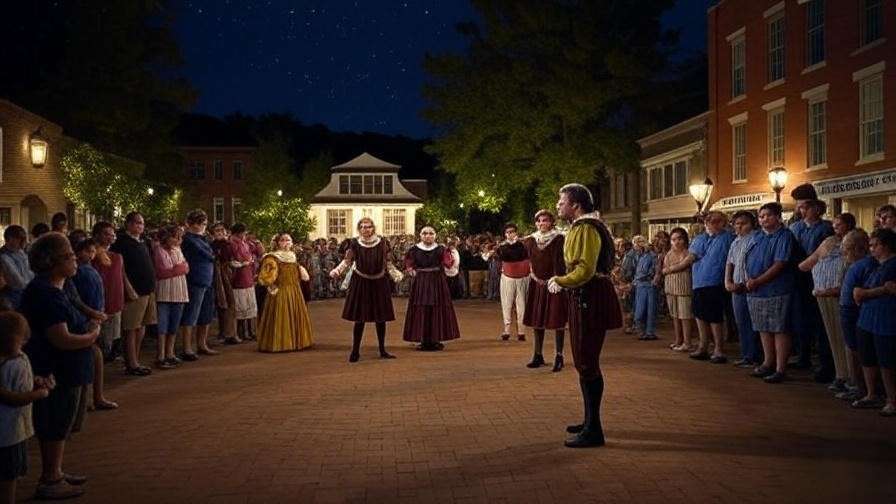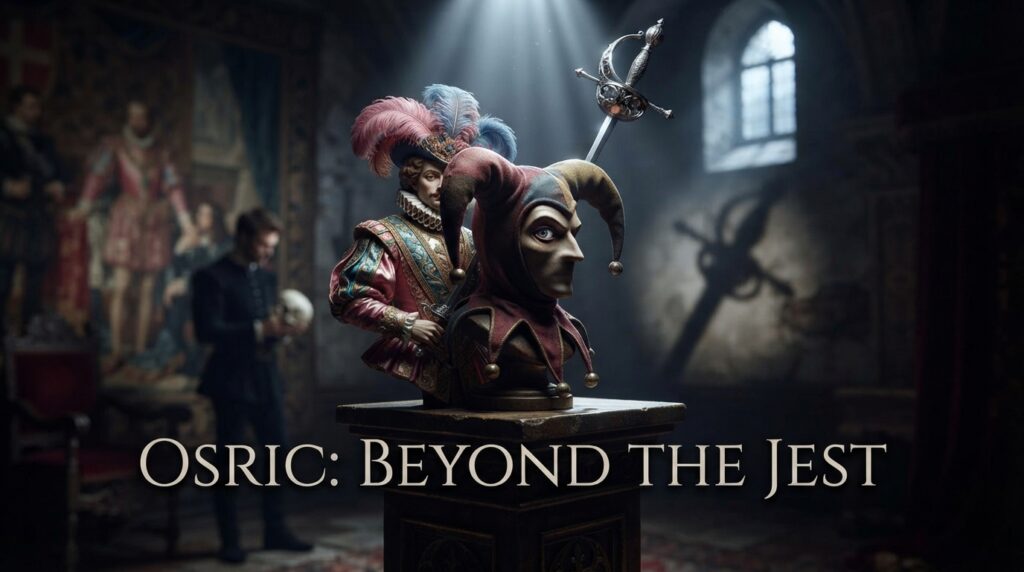
When the curtain rises on the final moments of William Shakespeare’s greatest tragedy, the stage is set for a bloodbath. Yet, before the poisoned cups are poured and the envenomed rapiers flash, Shakespeare introduces one of the most delightfully irritating figures in all of English literature. Mention the osric hamlet connection to casual theatergoers, and they will likely picture a feathered hat, a flurry of empty compliments, and a Prince of Denmark running intellectual circles around a linguistic buffoon.
Appearing in only a single scene—Act 5, Scene 2—Osric is frequently dismissed as a piece of lightweight comedic relief, a brief palate cleanser before the devastating catastrophe of the final duel. But this surface-level reading does a profound disservice to Shakespeare’s intricate dramaturgy. Osric is not mere filler. He is a razor-sharp satirical creation, a structural masterpiece, and a vital psychological mirror for Hamlet himself. Understanding why Osric matters unlocks a deeper appreciation of the moral rot at Elsinore and the transformation of Shakespeare’s most complex tragic hero.
Who Is Osric? Character Background and Context
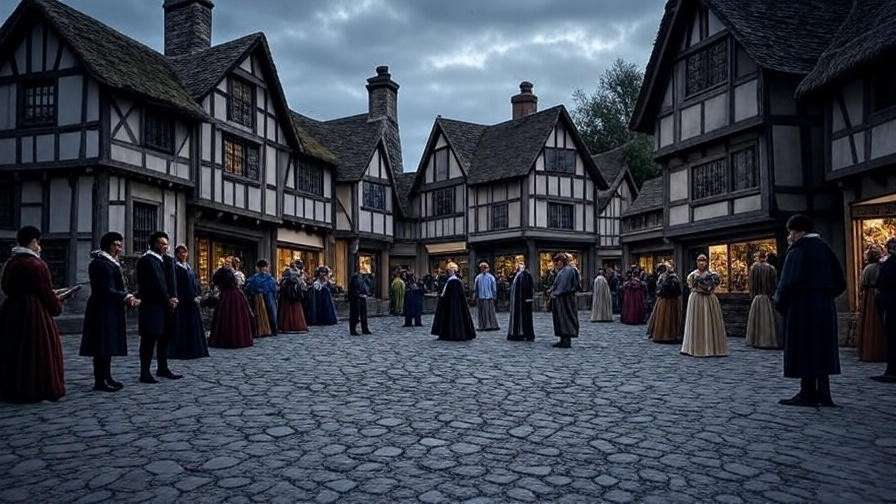
To truly understand Osric, we must examine the cultural landscape of late Elizabethan and early Jacobean England. Osric enters the play as a water-fly—a term Horatio uses to describe a creature that flits about aimlessly, signifying frantic, meaningless activity. But beneath his absurd exterior lies a very specific social type recognized immediately by Shakespeare’s contemporary audience.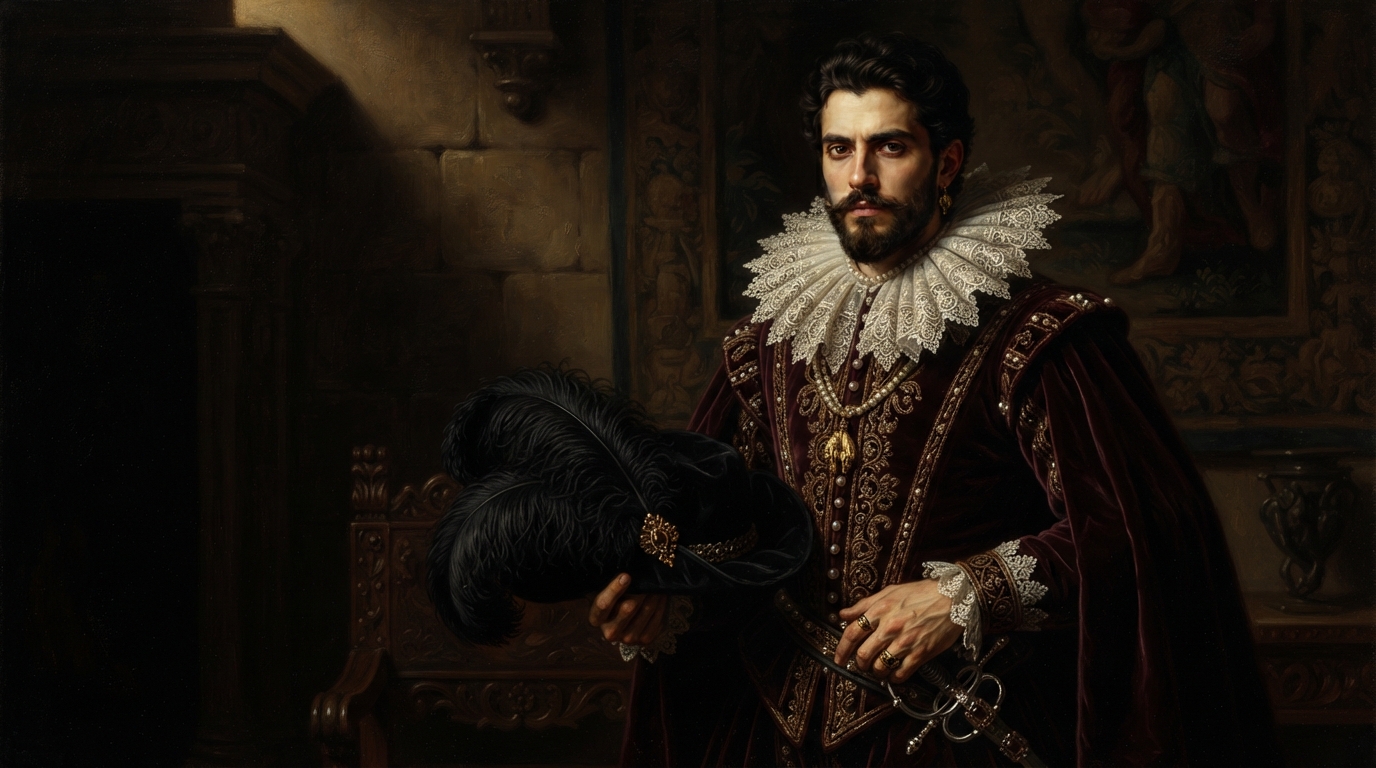
The Jacobean Fop: Understanding Renaissance Courtly Affectation
By the turn of the seventeenth century, the English court had undergone a massive shift in manners. Influenced by continental fashions, Italianate manners, and the burgeoning peace under King James I, a new class of courtiers emerged. These were men who prioritized style over substance, elaborate rhetoric over honest communication, and courtly favor over genuine honor.
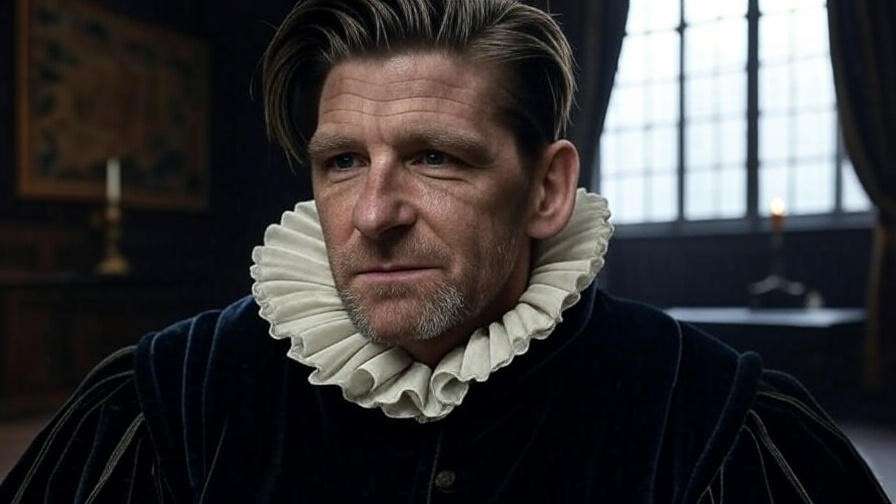
Osric is the quintessential embodiment of this new breed. He is a man defined entirely by externals: his velvet garments, his prized hat, his excessive bows, and his desperate need to remain in the good graces of the usurping king, Claudius. In a tragedy dominated by murder, incest, ghosts, and existential despair, Osric represents a different kind of horror—the terrifying triviality of human nature in the face of absolute doom.
Linguistic Gymnastics: Analyzing Osric’s Euphuism
Osric’s most defining characteristic is his speech. He speaks in a heavily affected, hyper-ornate dialect known as euphuism—named after John Lyly’s popular 16th-century prose works Euphues: The Anatomy of Wit. Euphuism is characterized by excessive use of antithesis, alliteration, classical allusions, and convoluted metaphors.
When Osric tells Hamlet that Laertes has “gained carriage of many excellent differences,” he is employing a linguistic style designed not to communicate meaning, but to display education, status, and refined taste. Every sentence is a labyrinth of flattery. Shakespeare uses Osric to mock the corruption of language itself, demonstrating how the court at Elsinore has replaced truth with decorative noise.
Osric’s Function as a Contrast to Polonius and Rosencrantz & Guildenstern
Osric serves as the final evolution of the sycophants who plague Hamlet throughout the play.
-
Unlike the pompous but politically entrenched Polonius, Osric has no real power; he is an accessory, a decorative object of the court.
-
Unlike Rosencrantz and Guildenstern, who were once Hamlet’s trusted university friends before turning into royal spies, Osric makes no pretense of genuine affection. He is purely transactional, a professional flatterer whose loyalty belongs entirely to whoever holds the crown.
Why Shakespeare Included Osric Right Before the Climax
One of the most remarkable structural choices in Hamlet is the placement of Osric’s scene. Why would Shakespeare insert a comedic, linguistic farce precisely when dramatic tension should be at its absolute peak?
The Dramatic Delay: Heightening Tension Before the Fatal Duel
Master playwrights understand the power of pacing. By introducing a ridiculous, time-wasting character right before the catastrophic finale, Shakespeare employs a brilliant theatrical technique known as tension deflation.
The audience knows that Claudius and Laertes have plotted Hamlet’s murder. The stakes could not be higher. Yet, Hamlet is forced to stand there, listening to a ridiculous fop waffle on about a fencing wager and the quality of Laertes’ weapon collection. This deliberate delay amplifies the audience’s anxiety, making the ensuing tragedy feel even more explosive when it finally breaks loose.
Comic Relief as a Dark Psychological Device
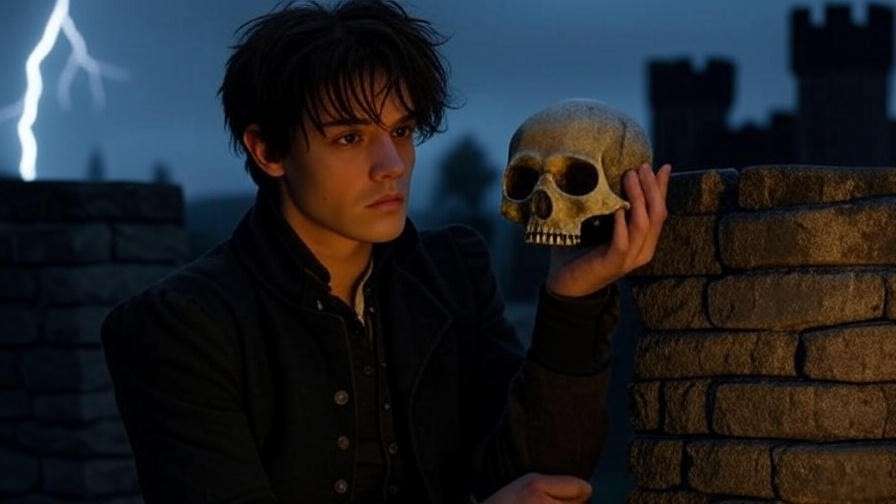
Shakespeare frequently uses humor adjacent to tragedy—think of the Gravedigger earlier in Act 5—not to relieve the audience entirely, but to sharpen the emotional contrast. Osric’s absurd behavior highlights the grotesque absurdity of the Danish court. While kingdoms rise and fall, and royal souls are damned, the courtiers are busy worrying about hat etiquette and courtly trends. It is a biting commentary on the triviality of human vanity in the shadow of death.
The Shift in Hamlet: From Existential Dread to Acceptance
Crucially, Osric’s scene marks a profound psychological milestone for Hamlet. If we look at Hamlet in Acts 2, 3, and 4, he is paralyzed by philosophical doubt, melancholic brooding, and angry outbursts.
When Osric appears, how does Hamlet react? He doesn’t descend into a bitter soliloquy about suicide or corruption. Instead, he plays along. He matches Osric’s absurd rhetoric, mocks him with a wink to Horatio, and demonstrates complete intellectual mastery over the courtier.
By the time Osric leaves, Hamlet delivers his famous philosophical realization:
“Not a whit, we defy augury. There is a special providence in the fall of a sparrow. If it be now, ’tis not to come; if it be not to come, it will be now; if it not be now, yet it will come: the readiness is all.”
Osric acts as the catalyst for this transformation. By dealing with something so utterly trivial, absurd, and finite as Osric’s affected manners, Hamlet achieves a state of calm acceptance regarding the infinite mystery of death.
Osric as Satire: Mocking the New Elite of Elizabethan and Jacobean England
To Shakespeare’s original audience at the Globe Theatre, Osric was not just a literary construct; he was a living, breathing caricature of contemporary social climbers.
Fashion, Flattery, and False Elegance in the Royal Court
Jacobean London was experiencing rapid social mobility, fueled by trade, colonialism, and changing political structures. With this came an obsession with outward appearances. Court manuals dictated how to bow, how to compliment a lady, and how to wear a rapier. Osric is a walking parody of these etiquette books. His interaction with his own hat—refusing to wear it in the cold because it is uncourtly, even when Hamlet urges him to—satirizes the rigid, mindless conformity demanded by ambitious courtiers.
The Rise of the “Feathered” Courtier
In Shakespeare’s time, feathers in hats were the ultimate symbol of flamboyant, superficial fashion. When Horatio notes that Osric “is rich of gewgaws,” he highlights how empty the man’s interior is compared to his flashy exterior. Osric’s value is entirely superficial—he is a human peacock strutting through a dying kingdom.
Shakespeare’s Critique of Language Hijacked by Pretension
Throughout Hamlet, words are weapons. Claudius uses poisoned words to manipulate the court; Polonius uses tedious words to obscure his lack of wisdom; Hamlet uses biting, razor-sharp words to expose hypocrisy. Osric, however, uses words as mere decoration. Shakespeare uses Osric to mourn the death of genuine eloquence, showing how sophisticated language can be hollowed out entirely when divorced from truth and moral integrity.
Literary and Thematic Analysis of Act 5, Scene 2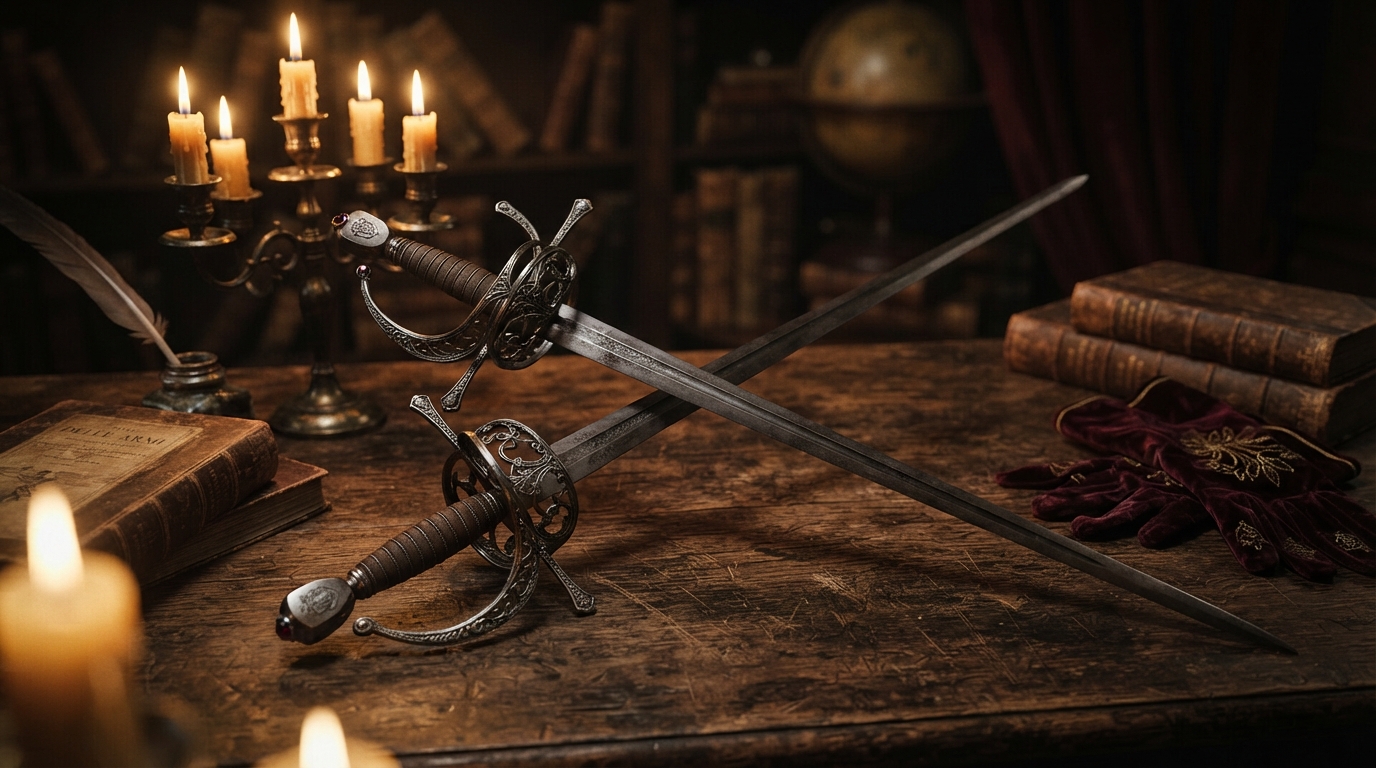
Let’s look closer at the mechanics of the scene itself. The exchange between Hamlet, Horatio, and Osric is a masterclass in dramatic irony and linguistic fencing.
The Wager of the Wager: Exposing the Superficiality of Elsinore
Osric arrives to announce the absurd fencing wager between Laertes and Hamlet, orchestrated by Claudius. The terms of the bet—involving French rapiers, daggers, and responsive hangers—are needlessly complicated. Osric relays this information with breathless admiration, treating a lethal setup as if it were a fashionable sporting event. This underscores the moral blindness of Elsinore’s minor officials; they are complicit in murder simply because they are too distracted by entertainment and royal favor to see the blood on their hands.
Hamlet Out-Osricing Osric: The Prince’s Linguistic Mastery
One of the most delightful aspects of the scene is watching Hamlet beat Osric at his own game. When Osric uses hyper-refined, convoluted phrasing (“Sir, you are not ignorant of what excellence Laertes is—”), Hamlet adopts the exact same exaggerated, pretentious style right back at him.
OSRIC: The carriages, sir, are the hangers...
HAMLET: The phrase would be more german to the matter if we could carry cannon by our sides.
Hamlet brilliantly exposes the ridiculousness of Osric’s vocabulary by pushing it to absurd extremes. Even Horatio remarks, “Is’t not possible a’ tongue can understand his own tongue? You’ll do’t, sir, rarely.” Hamlet proves that true intellect doesn’t need decorative linguistic armor; it can slip into the fool’s costume and outmaneuver the fool on his own terms.
The Metaphor of the Hat: Courtly Etiquette Overshadowing Human Life
The running gag involving Osric’s hat is rich with thematic significance. Osric refuses to put his hat back on because, in his mind, breaching court etiquette is a sin far worse than murder or treason. Shakespeare uses this comical physical business to underscore a dark thematic truth: in a corrupt society, adherence to superficial rules replaces true morality. People will worry about how they tilt their hats while their kingdom collapses around them.
Performance History: How Actors and Directors Interpret Osric Today
How has Osric been handled on stage and screen over the centuries? Directors have taken wildly different approaches to this small yet pivotal role.
Playing the Fool vs. Playing the Threat
-
The Comic Approach: In many traditional productions, Osric is played as a broad, effeminate, bumbling clown—a creature of pure mockery designed to elicit easy laughs from the audience.
-
The Sinister Approach: Modern directors often take a more chilling route. They play Osric not as a harmless idiot, but as a slick, dangerous sycophant. In a totalitarian or deeply corrupt state like Elsinore, people like Osric—who execute orders blindly without moral evaluation—are the true cogs of tyranny.
Notable Film Adaptations
-
Laurence Olivier (1948): Olivier trimmed Osric down significantly, treating him as a minor courtly eccentricity.
-
Kenneth Branagh (1996): Branagh’s full-text, four-hour epic features Robin Williams in a brilliantly memorable, highly manic cameo as Osric. Williams plays him as a breathless, jittery bureaucrat, highlighting both the comedy and the frantic artificiality of the character.
-
David Tennant / Royal Shakespeare Company (2009): In modern-dress adaptations, Osric is often portrayed as a sleek corporate lackey or a slick political PR man, proving that Shakespeare’s critique of empty corporate/courtly speak is timeless.
Expert Insight: Why Directors Can Never Afford to Cut Osric
While many minor characters in Shakespeare are regularly slashed for runtime, master directors know that cutting Osric ruins the rhythm of the play. He provides the vital psychological bridge between Hamlet’s dark introspection and his heroic, fatalistic acceptance on the dueling field. Without Osric, Hamlet’s transition lacks its necessary catalyst.
Frequently Asked Questions About Osric in Hamlet
Why does Hamlet mock Osric so mercilessly?
Hamlet mocks Osric because Osric represents everything Hamlet despises: artificiality, unearned flattery, empty rhetoric, and moral cowardice. By ridiculing Osric, Hamlet vents his wider frustration with the diseased culture of the Danish court.
What is “Euphuism” and why does Osric speak that way?
Euphuism was a highly stylized, fashionable prose style in Elizabethan England characterized by balanced clauses, intricate metaphors, and heavy use of classical references. Osric speaks this way to signal that he is a fashionable, educated courtier, though his execution makes him sound foolish and hollow.
Is Osric an original Shakespearean creation or borrowed from source material?
Osric does not appear in Shakespeare’s primary source material for Hamlet (such as Saxo Grammaticus’s Gesta Danorum or François de Belleforest’s Histoires Tragiques). He is an entirely original creation, invented by Shakespeare to satirize contemporary Jacobean court manners.
What role does Osric play in the fencing match setup?
Osric acts as Claudius’s messenger to deliver the challenge for the fencing match between Hamlet and Laertes, effectively sealing the trap that leads to the tragic deaths of the entire royal family.
Re-evaluating the Minor Characters of Elsinore
William Shakespeare’s genius lies not only in his monumental heroes and terrifying villains, but in the astonishing depth he gives to characters who appear for only a few minutes. Osric is a testament to this craft.
Far from being a disposable joke, Osric is a brilliant satirical creation, a structural genius stroke, and a psychological mirror that helps guide Hamlet from existential paralysis to heroic readiness. The next time you experience Hamlet—whether on the page, the stage, or screen—take a moment to appreciate the feathered, euphuistic water-fly. In Osric’s dizzying, empty bows, we see a timeless reflection of human vanity, proving once again that Shakespeare understood the comedy and tragedy of human nature better than anyone who ever lived.