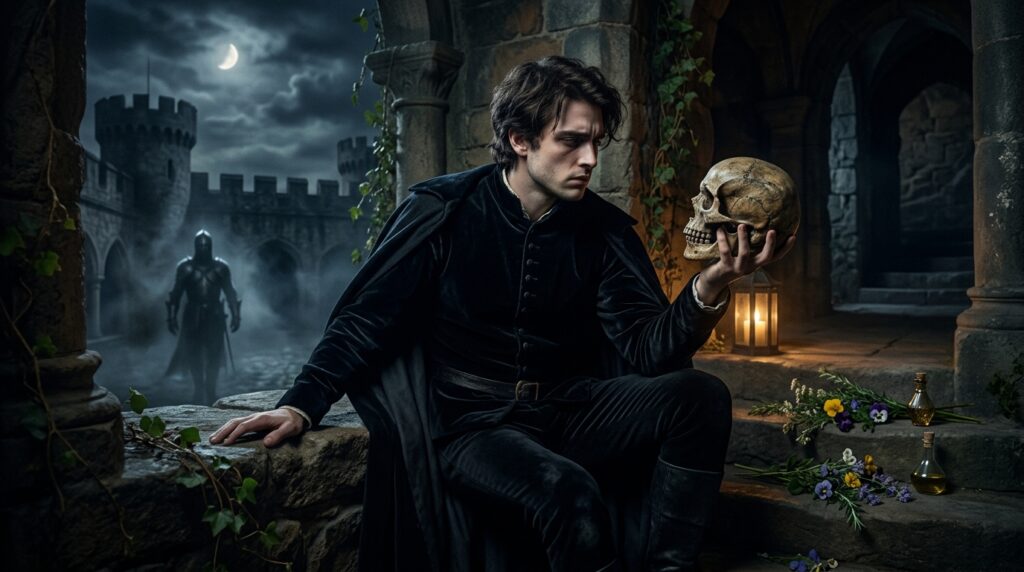
In the damp earth of an Elsinore graveyard, Prince Hamlet lifts a mud-stained, hollow-eyed skull into the light. Holding the physical remains of Yorick—the king’s court jester who once carried him on his back—the Prince realizes a terrifying truth: regardless of power, intellect, or station, every human life collapses into the exact same dust.
Understanding symbolism in Hamlet is the key to decoding William Shakespeare’s tragic masterpiece. Rather than stating his themes outright, Shakespeare embeds moral decay, unresolved grief, state political betrayal, and existential terror into physical objects, motifs, and dramatic devices.
This comprehensive literary guide breaks down the 7 primary symbols in Hamlet, complete with scene contexts, key quotes, thematic analyses, and ready-to-use essay insights.
Quick-Navigation Table
| Symbol | Primary Location | Key Thematic Meaning | Core Quote / Image |
| 1. Yorick’s Skull | Act 5, Scene 1 | Inevitability of mortality & human equality | “Alas, poor Yorick! I knew him, Horatio…” |
| 2. Poison (Hebenon) | Acts 1 through 5 | Moral corruption, political betrayal, spread of lies | “Leperous distilment” poured in the ear |
| 3. Ophelia’s Flowers | Act 4, Scene 5 | Silent dissent, grief, loss of courtly innocence | “There’s rosemary, that’s for remembrance” |
| 4. The Ghost | Act 1, Scenes 1–5 | Unsettled justice, ancestral guilt, political instability | “Something is rotten in the state of Denmark.” |
| 5. The Mousetrap | Act 3, Scene 2 | Art as a mirror of truth, internal conscience | “Catch the conscience of the King” |
| 6. The Inky Cloak | Act 1, Scene 2 | Genuine grief vs. false court performance | “‘Tis not alone my inky cloak, good mother” |
| 7. The Unweeded Garden | Act 1, Scene 2 | Ecological decay, usurpation, state rankness | “Things rank and gross in nature possess it merely” |
1. Yorick’s Skull: The Great Equalizer of Mortality
The Scene Context (Act V, Scene I)
In the famous graveyard scene, Hamlet encounters a gravedigger unearthing old bones. When Hamlet learns that a particular skull belonged to Yorick—the king’s jester from his childhood—abstract contemplation transforms into visceral, immediate reality.
┌─────────────────────────────────────────────────────────┐
│                    YORICK'S SKULL                       │
│                                                         │
│   Philosophical Reflection       Physical Reality       │
│   ("To be, or not to be")   ──>  ("Alas, poor Yorick")  │
│                                                         │
│                 THE GREAT EQUALIZER                     │
│     Alexander the Great  ───  Julius Caesar  ─── Dust   │
└─────────────────────────────────────────────────────────┘
Symbolic Meaning & Philosophical Analysis
Throughout Acts I through IV, Hamlet struggles with death as a philosophical problem (“To be, or not to be”). Yorick’s skull grounds this abstract dread in physical reality. The skull represents memento mori (a reminder of death) and illustrates the ultimate decay of all human ambition. Hamlet traces the decay of historical rulers: Alexander the Great died, was buried, and returned to dust; that dust turns to loam, which might then be used to plug a beer barrel. The skull demonstrates that death is the ultimate social equalizer, dismantling royal pride and physical beauty alike.
Key Quotes
“Alas, poor Yorick! I knew him, Horatio: a fellow of infinite jest, of most excellent fancy. He hath borne me on his back a thousand times… Here hung those lips that I have kissed I know not how oft.” — Act V, Scene I
Essay Takeaway Box
Thesis Application: Cite Yorick’s skull when analyzing Hamlet’s psychological journey. Holding the skull marks Hamlet’s transition from paralyzed hesitation to stoic acceptance of mortality, preparing him for the tragedy of Act V.
2. Poison (Hebenon): The Corrosive Spread of Moral Corruption
Physical Murder vs. Political Decay
Poison drives both the backstory and the climax of the drama. It enters the narrative when the Ghost reveals how Claudius murdered Old Hamlet: pouring hebenon (a deadly poison) into the sleeping King’s ear.
┌─────────────────────────────────────────────────────────┐
│                    THE POISON CYCLE                     │
│                                                         │
│   [Literal]  Hebenon poured into King Hamlet's ear     │
│       │                                                 │
│       ▼                                                 │
│   [Symbolic] Slander and lies spread through court      │
│       │                                                 │
│       ▼                                                 │
│   [Fatal]    Poisoned rapier & unspotted cup (Act V)    │
└─────────────────────────────────────────────────────────┘
The Symbolism of “The Poisoned Ear”
The ear serves as a vulnerable physical and metaphorical gateway. Poisoning through the ear symbolizes how deceptive words, courtly gossip, and political slander corrupt an entire nation. Once Claudius uses literal poison to usurp the throne, metaphorical poison spreads through Elsinore. By Act V, the motif culminates in literal bloodshed: a poisoned rapier tip kills Laertes and Hamlet, while a poisoned chalice kills Queen Gertrude and Claudius.
Key Quotes
“And in the porches of my ears did pour / The leperous distilment, whose effect / Holds such an enmity with blood of man…” — Act I, Scene V
3. Ophelia’s Flowers: A Secret Language of Grief and Betrayal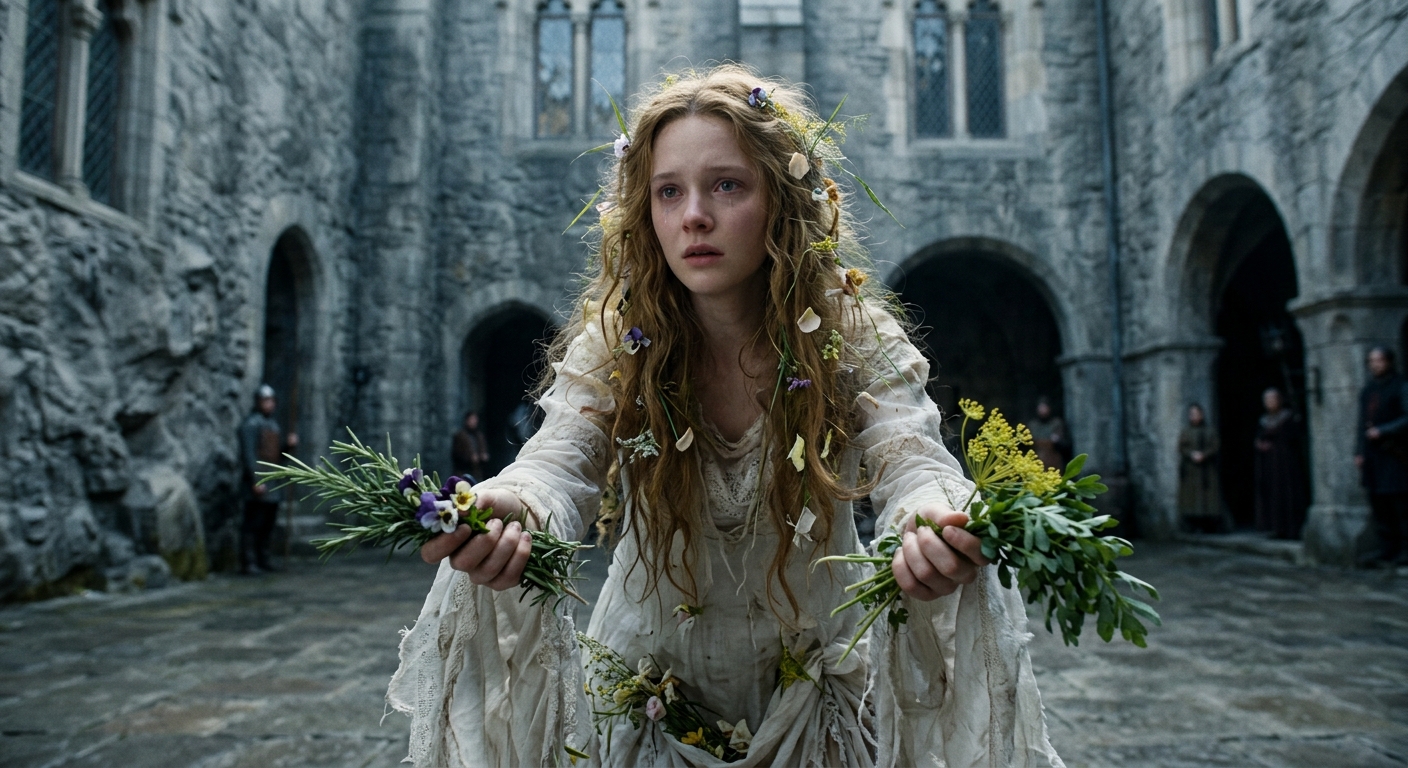
Decoding the Floral Breakdown (Act IV, Scene V)
In her mad scene following her father Polonius’s murder, Ophelia distributes flowers and herbs to members of the royal court. In Elizabethan England, floriography (the language of flowers) was widely understood, allowing Ophelia to deliver covert political critiques.
   ┌─────────────┬──────────────────────────┬────────────────────────┐
   │ FLOWER      │ TARGET RECIPIENT         │ SYMBOLIC MEANING       │
   ├─────────────┼──────────────────────────┼────────────────────────┤
   │ Rosemary    │ Laertes                  │ Remembrance            │
   │ Pansies     │ Laertes                  │ Thoughts & Meditation  │
   │ Fennel      │ King Claudius            │ Flattery & Deceit      │
   │ Columbines  │ King Claudius            │ Infidelity & Ingratitude│
   │ Rue         │ Queen Gertrude & Herself │ Repentance & Bitterness│
   │ Daisy       │ The Court / Unclaimed    │ Dissembling & Deceit   │
   │ Violets     │ None (Withered away)     │ Faithfulness & Purity  │
   └─────────────┴──────────────────────────┴────────────────────────┘
Thematic Purpose
Ophelia’s flowers represent her weapon of silent resistance. Denied a voice in court politics, she uses botanical symbolism to accuse Claudius of betrayal, Gertrude of infidelity, and the court of disloyalty. Her note that her violets “withered all when my father died” marks the absolute death of innocence within Denmark.
Key Quotes
“There’s rosemary, that’s for remembrance. Pray, love, remember. And there is pansies, that’s for thoughts… There’s fennel for you, and columbines. There’s rue for you, and here’s some for me…” — Act IV, Scene V
4. The Ghost of Old Hamlet: Purgatory, Guilt, and Unsettled Justice
Catholic Purgatory vs. Protestant Demonology
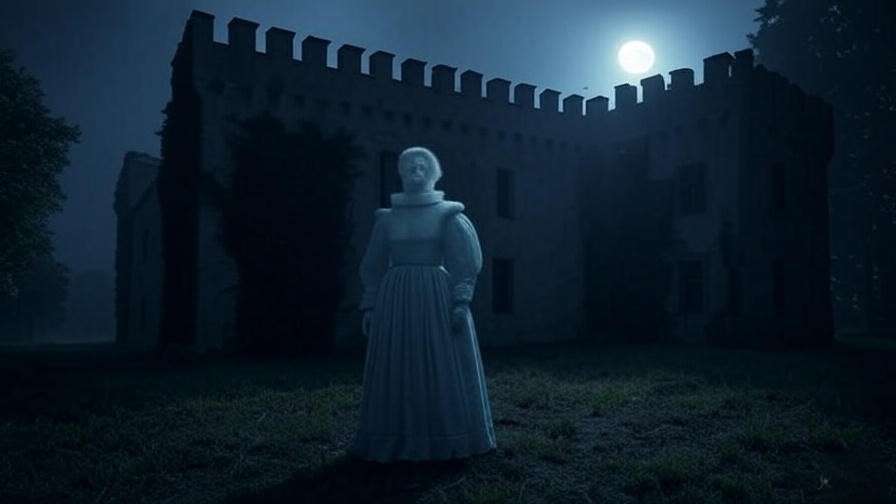
The Ghost appearing on the battlements of Elsinore introduces deep spiritual ambiguity. Elizabethan audiences faced a religious transition: the Catholic framework recognized Purgatory, while Protestant doctrine taught that apparitions were either divine angels or demonic illusions designed to damn souls.
                     THE GHOST'S DUAL NATURE

         Catholic Context             Protestant View
     ┌───────────────────────┐   ┌───────────────────────┐
     │ Spirit from Purgatory │   │ Demonic Illusion      │
     │ Seeking Justice       │   │ Tempting Damnation    │
     └───────────────────────┘   └───────────────────────┘
                 │                           │
                 └─────────────┬─────────────┘
                               │
                               ▼
                    [ HAMLET'S HESITATION ]
Symbolic Representation
The Ghost represents Denmark’s unresolved trauma and political fragility. Clad in full military armor, it signifies an external defense masking internal decay. The Ghost symbolizes the weight of ancestral expectation, forcing Hamlet to choose between moral conscience and feudal revenge.
Key Quotes
“Something is rotten in the state of Denmark.” — Act I, Scene IV
5. “The Mousetrap”: Art as the Mirror of Truth
The Meta-Theatrical Symbol
When Hamlet instructs the visiting players to perform The Murder of Gonzago—inserting lines that recreate his father’s murder—the play-within-a-play becomes a diagnostic tool.
           COURT REALITY                  STAGED PERFORMANCE
  ┌─────────────────────────────┐   ┌─────────────────────────────┐
  │  Deceit, Spying, Falsehoods │   │  Reflects Hidden Truths     │
  │  (Claudius hides his guilt) │ ──> │  (Murder of Gonzago scene)  │
  └─────────────────────────────┘   └─────────────────────────────┘
                                                   │
                                                   ▼
                                        CLAUDIUS'S CONSCIENCE
                                             EXPOSED
Symbolic Function
In a court defined by surveillance, feigned loyalty, and deception, artificial theatre paradoxically becomes the only space where truth can emerge. “The Mousetrap” symbolizes the power of art to breach psychological defenses, exposing hidden guilt when Claudius flees the chamber at the sight of the staged poisoning.
Key Quotes
“The play’s the thing / Wherein I’ll catch the conscience of the King.” — Act II, Scene II
6. Hamlet’s “Inky Cloak”: Grief as a Silent Protest
Contrast Against the Danish Court
In Act I, Scene II, the court of Elsinore gathers to celebrate the marriage of Claudius and Gertrude. Amid bright courtly attire, Prince Hamlet stands dressed in black mourning clothes.
                     COURT VS. HAMLET VISUALS

      Royal Court Attire                Hamlet's "Inky Cloak"
  ┌────────────────────────┐         ┌────────────────────────┐
  │ Bright, Festive        │   VS.   │ Dark, Black Garb       │
  │ Moving on from death   │         │ Unyielding Grief       │
  └────────────────────────┘         └────────────────────────┘
Psychological Symbolism
The black garment symbolizes authentic grief standing against superficial courtly behavior. It marks Hamlet’s alienation from a court that brushed aside his father’s death. Furthermore, his costume changes throughout the play mirror his psychological state—from his mourning cloak to his unbuttoned “antic disposition” attire, and finally to his simple traveler’s garb in Act V.
Key Quotes
“‘Tis not alone my inky cloak, good mother, / Nor customary suits of solemn black… / Together with all forms, moods, shapes of grief, / That can denote me truly.” — Act I, Scene II
7. The Unweeded Garden: Disease, Decay, and Rot in Elsinore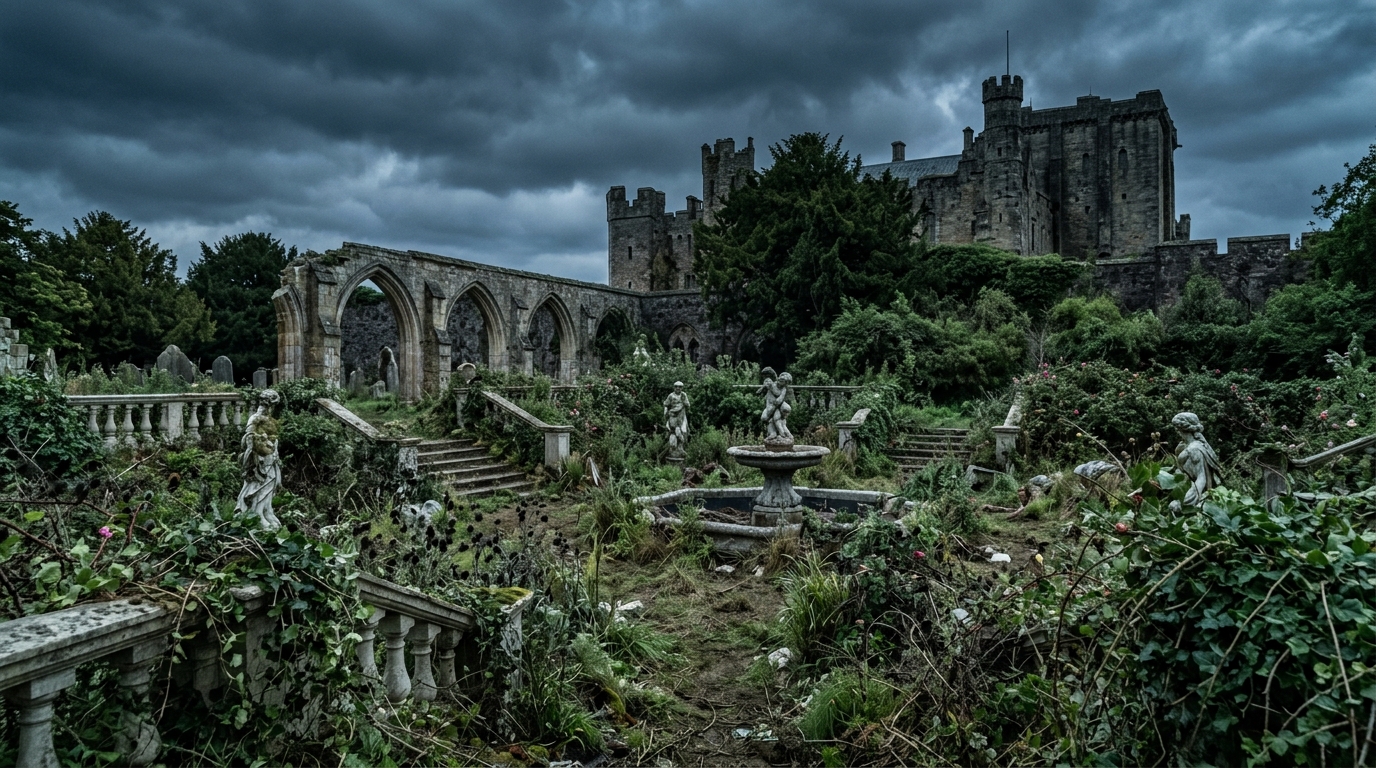
The Garden Motif
Throughout the play, Shakespeare uses garden imagery to highlight the contrast between a healthy state and an overgrown, corrupted realm.
                     GARDEN MOTIF TRANSITION

       Edenic Ideal (Past)             Corrupted State (Present)
  ┌─────────────────────────┐       ┌─────────────────────────┐
  │ Orderly, Fruitful State │  ───> │ Unweeded, Overgrown     │
  │ Under Old King Hamlet   │       │ Rank and Gross Decay    │
  └─────────────────────────┘       └─────────────────────────┘
Political and Ecological Decay
In his first soliloquy, Hamlet compares the world to an “unweeded garden” overrun by “things rank and gross in nature”. This ecological decay mirrors the moral corruption of Claudius’s reign. References to ulcers, rotted carcasses, and spreading rankness emphasize that sin acts like a disease within the body politic.
Key Quotes
“‘Tis an unweeded garden / That grows to seed; things rank and gross in nature / Possess it merely.” — Act I, Scene II
Frequently Asked Questions
What is the single most important symbol in Hamlet?
While poison drives the plot mechanics, Yorick’s skull is considered the primary philosophical symbol. It grounds the play’s existential questions about death, mortality, and the ultimate equality of all human beings.
What do ears symbolize in Hamlet?
Ears symbolize vulnerability to manipulation, deception, and false narratives. Physical poison poured into King Hamlet’s ear mirrors the metaphorical poison of slander and lies spread throughout the Danish court.
Why does Ophelia give away flowers in her mad scene?
Ophelia uses Elizabethan floriography to deliver covert political and moral critiques. Unable to speak directly against the royal family due to her gender and social standing, she uses flowers like fennel, rue, and columbine to expose deceit, infidelity, and hypocrisy.
Conclusion
Shakespeare’s Hamlet endures because its physical world reflects its internal themes. From the decaying rot of the unweeded garden to the stark coldness of Yorick’s skull, these symbols convert abstract questions of morality, grief, and justice into visible dramatic action. By understanding these 7 core symbols, readers can see how Shakespeare constructed a tragedy where every object, gesture, and floral spray echoes the downfall of Elsinore.