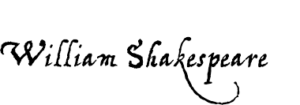

When William Shakespeare penned his most famous tragedy in 1597, he likely never imagined that his star-crossed lovers would one day become a permanent fixture in modern American jurisprudence. Yet, centuries later, the Romeo and Juliet law Washington stands as a crucial legal statute, bridging the gap between Elizabethan literary themes and contemporary statutory regulations. For many parents, educators, and teenagers in the Pacific Northwest, legal jargon can be incredibly confusing and intimidating. Navigating the intersection of adolescent romance and strict statutory laws requires clear, non-judgmental explanations rather than dense penal codes.
This comprehensive guide dissects both the literary origins of this famous phrase and the strict, modern legal definitions applied in Washington State. By examining the realities of Shakespeare’s original characters alongside today’s “close in age” exemptions, you will walk away understanding exactly how Washington protects consensual adolescent relationships, why these legal boundaries exist, and how a 400-year-old play continues to shape our modern justice system.
Expert Disclaimer: The following article is provided for educational, historical, and literary exploration purposes only. It does not constitute formal legal advice. For specific legal counsel regarding Washington State statutes or criminal defense, always consult a licensed attorney.
From the Stage to the Courtroom: Defining the Law
To understand how a tragic play became synonymous with criminal defense, we must first look at what a “Romeo and Juliet law” actually is. In the broader United States legal system, this colloquial term refers to a statutory “close in age” exemption. These exemptions are designed to protect consenting adolescents from severe felony charges—specifically statutory rape—when they engage in sexual activity with another teenager who is close to their own age.
Rather than treating a high school romance with the same punitive severity as a predatory adult exploiting a minor, these laws recognize the developmental and social realities of adolescence. The law draws a distinct line between mutual teenage exploration and criminal abuse.
How Shakespeare’s Star-Crossed Lovers Inspired the Name
The American legal system adopted this literary reference to quickly communicate the nature of these specific cases. In Shakespeare’s Romeo and Juliet, the protagonists represent the ultimate archetype of pure, albeit impulsive, teenage love. Their romance is defined by its intensity, mutual consent, and youthful rebellion against societal structures.
When courts and legislators debate the criminalization of teenage sexuality, invoking the names “Romeo and Juliet” immediately shifts the narrative. It reminds juries, judges, and the public that not all relationships involving minors are predatory. By utilizing the names of Western literature’s most famous adolescent lovers, the legal system differentiates consensual, peer-to-peer relationships from malicious exploitation.
The True Ages of Romeo and Juliet
To fully appreciate the irony of the modern legal namesake, one must look at the actual text of the play. How old were these iconic lovers?
In Act 1, Scene 3, Shakespeare leaves no ambiguity regarding Juliet’s age. Her nurse explicitly states:
“I’ll lay fourteen of my teeth—and yet, to my teen be it spoken, I have but four—she is not fourteen.”
Juliet Capulet is a mere thirteen years old, just two weeks shy of her fourteenth birthday. Romeo Montague’s exact age is never explicitly stated in the text, though literary scholars and historians generally place him between sixteen and twenty-one, given his independence, his carrying of a sword, and his societal standing in Verona.
Expert Insight: If Shakespeare’s play took place today, the modern legal system would not view their romance as a tragic misunderstanding. As we will explore below, based on the statutory age of consent and the strict math required by close-in-age exemptions, Romeo would be facing severe felony charges. The very law named after him would not actually protect him.
Navigating the Romeo and Juliet Law Washington State
While the literary reference is universal, the application of the law is not. “Romeo and Juliet” laws are not federal; they vary wildly from state to state. If you reside in the Pacific Northwest, understanding the specific mechanics of the Romeo and Juliet law Washington is critical, as the state relies on very precise mathematical guidelines rather than subjective interpretations of maturity.
The Baseline: Washington’s Age of Consent
Before examining the exemption, one must understand the baseline rule. In Washington State, the standard age of consent is 16 years old.
Under Washington law, an individual who is 16 or older is legally capable of consenting to sexual activity, provided the other party is also of legal age or the situation does not violate any other statutes (such as a relationship involving a person in a position of trust or authority). Conversely, anyone under the age of 16 is legally incapable of providing valid consent. Without an exemption, any sexual contact with a person under 16 constitutes a severe sex crime, regardless of whether the younger party enthusiastically agreed to the act.
The “Close in Age” Exemption (RCW 9.94A.093)
This is where the Washington state age of consent meets the Romeo and Juliet exemption. The state recognizes that a 15-year-old sophomore dating a 17-year-old senior is a common, normal societal occurrence. To prevent the older teenager from being branded a sex offender and sent to prison, Washington enacted a specific affirmative defense.
Under the Revised Code of Washington (RCW), specifically concerning statutory rape defenses, the law provides a strict mathematical safe harbor. If the younger party is 14 or 15 years old, the older party is protected from prosecution only if they are less than 48 months (4 years) older than the younger party.
It is vital to note that this is calculated down to the exact month and day. If the older party is 48 months and one day older than the younger party, the Romeo and Juliet law in Washington no longer applies, and the older individual is subject to full felony prosecution.
Key Conditions for the Law to Apply
The close in age exemption in WA is not a blanket permission slip for all teenage relationships. For this statutory defense to be valid in a courtroom, several strict conditions must be met simultaneously:
-
Strictly Consensual: The exemption only applies if the sexual activity was entirely consensual. If there is any evidence of physical force, coercion, emotional manipulation, or threats, the defense is immediately voided.
-
The 48-Month Limit: The age gap must be under four years (less than 48 months), calculated precisely from the birth dates of both individuals.
-
The 14-Year-Old Minimum: The younger party must be at least 14 years old. In Washington, there is no Romeo and Juliet protection if the younger party is 13 or younger, regardless of the age gap.
-
No Position of Authority: The exemption does not apply if the older individual holds a position of authority or trust over the younger person. This includes teachers, coaches, youth pastors, tutors, or supervisors, even if the age gap is less than 48 months.
The Purpose Behind the Legislation
Understanding the mechanics of the law is one thing, but understanding why legislators felt the need to create this carve-out requires a look at both human psychology and the rigid nature of the justice system. The creation of the Romeo and Juliet law in Washington was not intended to lower the age of consent, but rather to prevent a miscarriage of justice against adolescents engaging in normal developmental behaviors.
Protecting Teenage Romance vs. Punishing Predators
From a developmental standpoint, adolescence is a time of exploration, boundary-testing, and peer-to-peer relationship building. In any given Washington high school, it is entirely commonplace for a 15-year-old sophomore to attend a prom with a 17-year-old senior. Psychologically and socially, these teenagers are peers. They attend the same schools, navigate the same social circles, and are at relatively similar stages of cognitive and emotional development.
Without a “close in age” exemption, the law is binary and blind to these nuances. If the 15-year-old and 17-year-old were to engage in a consensual sexual relationship, the 17-year-old would technically be committing a severe crime. The Romeo and Juliet provision acts as a vital legal shield, preventing the criminal justice system from treating a high school sweetheart like a malicious, predatory adult.
The Harsh Realities of Statutory Rape Charges
To truly appreciate the necessity of this exemption, one must understand the severity of the alternative. When the Romeo and Juliet law Washington does not apply—either because the age gap is greater than 48 months or because the younger party is under 14—the older individual faces life-altering consequences.
In Washington State, statutory sex offenses (often classified legally as Rape of a Child or degrees of Child Molestation, depending on the specifics) are prosecuted as Class A, B, or C felonies. A conviction can carry:
-
Substantial prison sentences.
-
Steep financial fines.
-
Mandatory, potentially lifelong registration as a Tier 1, 2, or 3 Sex Offender.
-
Permanent loss of civil rights, including voting and firearm ownership.
-
Devastating impacts on future employment, housing, and educational opportunities.
By implementing RCW 9.94A.093, Washington lawmakers acknowledged that ruining a teenager’s life with a permanent felony record and a sex offender label for engaging in a consensual relationship with a peer is entirely disproportionate to the act.
Would Romeo and Juliet Survive Washington Law Today?
Given that this critical statutory rape defense in Washington bears the names of Shakespeare’s most famous characters, it begs a fascinating question for literary enthusiasts: If the Capulets and Montagues lived in modern-day Seattle or Spokane, would this law actually protect them?
Historical Context: Marriage and Age in Elizabethan England
To analyze this fairly, we must look at the historical context in which Shakespeare was writing in the late 16th century. During the Elizabethan era, the legal age of marriage under English ecclesiastical law was remarkably low: 12 years old for girls and 14 years old for boys.
However, legal did not mean common. Historical demographic studies show that the average age of marriage for commoners in Shakespeare’s England was actually in the mid-to-late twenties. The playwright deliberately made Juliet exceptionally young (thirteen) not because it was the societal norm, but to emphasize the sheer impulsivity, rashness, and tragic vulnerability of the lovers. He wanted the audience to feel the danger of their youth.
A Modern Verdict on the Capulets and Montagues
Let us bring Romeo and Juliet into a modern Washington State courtroom.
We know definitively from the text that Juliet is 13 years old. While Romeo’s exact age is debated, literary scholars generally agree he is older—likely between 16 and 18, given his societal mobility and combat experience.
If we apply the Romeo and Juliet law Washington to their relationship, the outcome is starkly unromantic:
-
Juliet’s Age: Because Juliet is only 13, she falls below the 14-year-old threshold required by the Washington exemption. The law strictly states that if the younger party is under 14, no “close in age” defense can be applied whatsoever.
-
The Age Gap: If Romeo is 18 and Juliet is 13, the age gap is five years (60 months). This exceeds the strict 48-month limit.
The Verdict: Under modern Washington State law, Romeo Montague would not be protected by the very law named after him. He would face severe felony charges for statutory rape, and the state would likely seek prison time and sex offender registration. The tragedy of Verona would end not in a tomb, but in a state penitentiary.
Understanding the Math: Two Fictional Scenarios
Legal statutes can be incredibly dense. To clarify exactly how the Washington state age of consent and the close-in-age exemption operate in the real world, let’s look at two hypothetical scenarios featuring a few familiar Shakespearean names.
Scenario A: The Protected Peers
-
The Characters: “Benvolio” is exactly 17 years and 2 months old. His girlfriend, “Rosaline,” is exactly 15 years and 4 months old.
-
The Situation: They engage in a wholly consensual sexual relationship.
-
The Math: The age gap between them is 22 months (1 year and 10 months).
-
The Legal Outcome: Because Rosaline is over 14, the relationship is consensual, and the age difference is well under the 48-month maximum limit, Benvolio is fully protected under Washington’s Romeo and Juliet exemption. He would not face prosecution.
Scenario B: The Legal Boundary Crossed
-
The Characters: “Paris” is 21 years old. He begins dating “Juliet,” who has recently turned 15.
-
The Situation: The relationship is mutually consensual, and Paris’s intentions are earnest.
-
The Math: The age gap is exactly 6 years (72 months).
-
The Legal Outcome: Even though Juliet enthusiastically consented, and even though she meets the 14-year-old minimum threshold, the age gap exceeds the strict 48-month rule. The exemption is completely void. Paris would face immediate felony prosecution, and Juliet’s consent would not be admissible as a defense in court.
FAQs About the Romeo and Juliet Law in Washington
When searching for the nuances of Washington’s statutory guidelines, readers frequently have overlapping questions. Here are the most critical, frequently asked questions regarding the close in age exemption in WA.
Does the Romeo and Juliet law apply if one person is 18 or older? Yes, it can. The law is not strictly limited to two minors. An 18-year-old or 19-year-old can be protected under this exemption if they engage in a consensual relationship with a 15-year-old, provided the exact age gap calculated by their birthdates is less than 48 months (4 years) and no position of authority exists.
Can parents override the age of consent in Washington? No. A common misconception is that a parent can give “permission” for their underage teenager to engage in a sexual relationship with an older partner. In Washington State, parents cannot legally consent to sexual activity on behalf of a minor. The state’s statutory laws remain strictly enforced regardless of parental approval.
What happens if the older teenager is in a position of authority? The Romeo and Juliet exemption is instantly invalidated. If the older teenager is a camp counselor, a tutor, an assistant coach, or holds any other recognized position of trust and authority over the younger teenager, the 48-month age gap rule is thrown out, and felony charges can be pursued.
How does Washington’s law compare to neighboring states? While the nickname is used nationwide, the laws are state-specific. For example, neighboring Oregon has a different standard, often looking at a 3-year age gap (36 months) depending on the specific ages of the minors involved. Idaho also has its own distinct statutory definitions. It is critical to never assume that the Washington 48-month rule applies if you cross state lines.
The Enduring Legacy of Verona’s Lovers
William Shakespeare’s Romeo and Juliet remains a masterpiece because it captures the beautiful, reckless, and profound nature of youth. While the Bard was exploring themes of family feuds, fate, and tragic destiny, he inadvertently cemented his characters into the bedrock of modern criminal justice.
Today, the Romeo and Juliet law Washington serves as a vital legal mechanism. It ensures that the justice system retains a degree of empathy and logical nuance, protecting young, consensual love from devastating legal destruction. It draws a necessary line in the sand between normal adolescent development and criminal exploitation.
Even more than 400 years after the ink dried on Shakespeare’s original folio, his unparalleled understanding of youth, passion, and societal conflict remains deeply woven into the very fabric of our modern laws. It proves that literature is never just words on a page—it is a mirror reflecting how we choose to govern, protect, and understand humanity.