

Imagine standing alone on a stage, the spotlight on you, delivering Hamlet’s iconic “To be or not to be” with such depth that the audience hangs on every word. Sounds thrilling, right? Yet, mastering techniques in Shakespearean soliloquies can feel daunting for actors and students alike. The complex Elizabethan language, emotional intensity, and pressure to perform or analyze these solo speeches often leave beginners overwhelmed. 😓 Fear not! This guide breaks down practical, beginner-friendly techniques to help you conquer soliloquies with confidence. Whether you’re performing on stage or acing a Shakespeare essay, you’ll discover actionable steps to unlock the power of these dramatic gems. Keep reading to transform intimidation into inspiration! 🌟
Understanding the Power of Soliloquies
A Shakespearean soliloquy is a moment where a character speaks their deepest thoughts aloud, alone on stage. Think of Hamlet wrestling with life and death in “To be or not to be” or Macbeth grappling with guilt in “Is this a dagger.” These speeches reveal a character’s inner world—emotions, conflicts, and desires—making them a goldmine for actors and students. 😊
 Why do soliloquies matter? They’re the heart of Shakespeare’s plays, driving character development and advancing the plot. For actors, they demand emotional authenticity to captivate audiences. For students, they’re key to analyzing themes like love, ambition, or betrayal. Mastering techniques in Shakespearean soliloquies helps you unlock these moments, whether you’re performing or writing an essay.
Overcoming the Barriers to Performing or Studying Soliloquies
Tackling Shakespearean soliloquies can feel like climbing a mountain for beginners. The language, emotion, and depth often intimidate actors and students alike. Let’s break down the common challenges in mastering techniques in Shakespearean soliloquies so you know exactly what you’re up against—and how to win! 😊

First, the Elizabethan language is tricky. Words like “thou” and “wherefore” can seem like a foreign code. Add iambic pentameter’s rhythmic structure, and it’s easy to feel lost. Actors also struggle to deliver raw emotion authentically, especially when a soliloquy demands vulnerability, like Juliet’s longing for Romeo. Memorizing long passages? That’s another hurdle, especially under performance pressure. For students, analyzing the subtext—what the character really means—can feel overwhelming.
Don’t worry! These barriers are normal, and they’re conquerable. With practical techniques in Shakespearean soliloquies, like paraphrasing the text or breaking down the rhythm, you’ll turn confusion into clarity. Ready to tackle these challenges? Keep reading for actionable solutions! 🎭
Step-by-Step Guide to Unlocking the Text
Analyzing Shakespearean soliloquies can feel like decoding a puzzle, but with the right techniques in Shakespearean soliloquies, it’s totally doable! Whether you’re an actor seeking to perform with depth or a student aiming to ace an essay, these practical steps will make the process clear and fun. Let’s dive in! 😊
Break Down the Language:
Start by paraphrasing the soliloquy in modern English. For example, in Romeo’s “But soft, what light through yonder window breaks,” he’s basically saying, “Wow, who’s that beautiful girl in the window?” This helps you grasp the meaning without getting stuck on old words.
Master Iambic Pentameter:
Shakespeare’s rhythm (da-DUM, da-DUM) guides how lines sound. Try clapping the beat of a line like “To be or not to be, that is the question” to find its natural flow. This makes delivery or analysis easier.
Uncover Subtext:
Ask, “What’s the character feeling?” and “What do they want?” In Hamlet’s famous soliloquy, he’s wrestling with life’s purpose. Look at the play’s context—plot events or character arcs—to understand their motivations.
Map the Emotions:
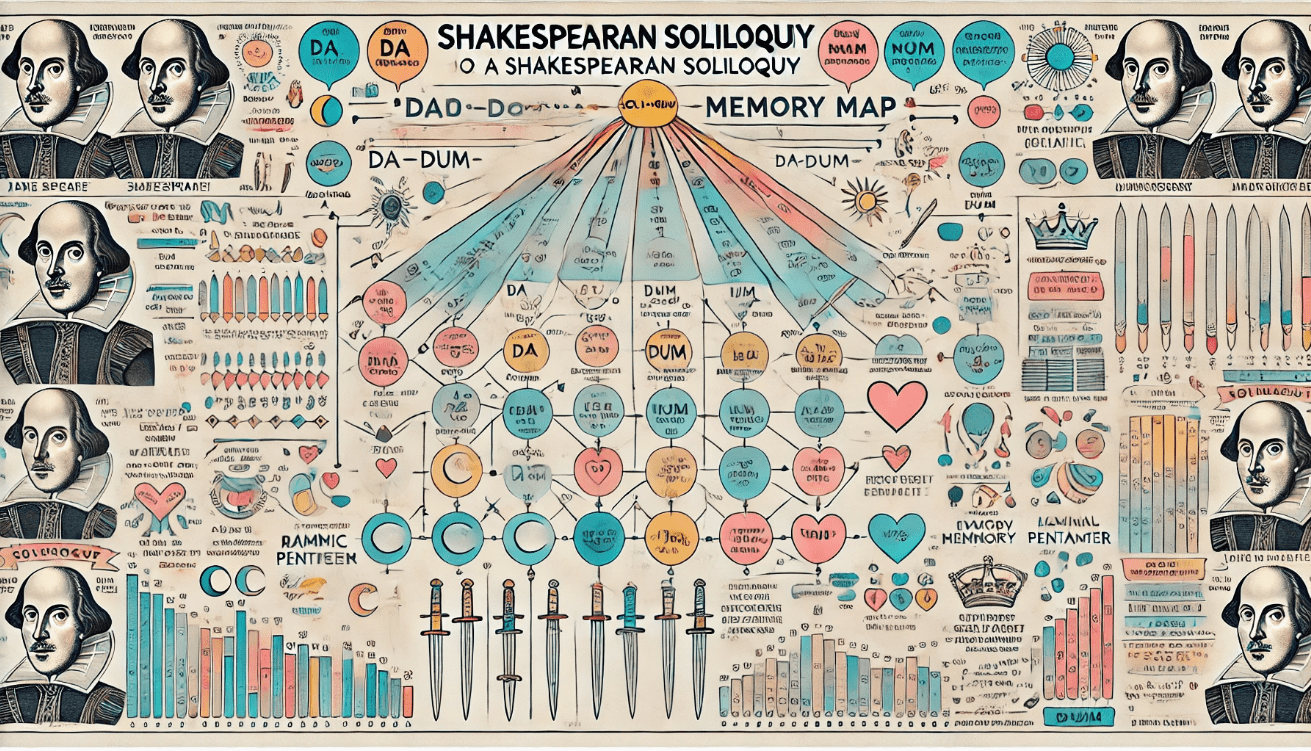
Create a “thought map” to track emotional shifts. Jot down key lines and note feelings like anger, hope, or fear. This visual helps you see the soliloquy’s journey.
Bringing Soliloquies to Life on Stage
Performing a Shakespearean soliloquy is like baring your soul to the audience—it’s thrilling but challenging! These techniques in Shakespearean soliloquies will help actors, even beginners, deliver powerful, authentic performances. Let’s break it down into simple, actionable steps to shine on stage. 🎭
Vocal Delivery: Speak clearly to make every word count, especially with tricky Elizabethan language. Practice varying your pitch, pace, and volume to match the character’s emotions. For example, in Lady Macbeth’s “Unsex me here,” start with fierce determination, then soften to show her inner conflict. Try recording yourself to hear what works!
Physicality: Use subtle gestures to reflect the character’s mood—like a clenched fist for Macbeth’s guilt or an outstretched hand for Juliet’s longing. Avoid overacting; small movements keep it real. Practice in front of a mirror to find what feels natural.
Emotional Connection: Tap into personal experiences to feel what the character feels. If Hamlet’s questioning life, think of a time you felt lost. This makes your delivery authentic and relatable. Stay in the moment—don’t just recite lines mechanically.
Audience Engagement: Treat the audience as your confidant. Make eye contact or speak as if sharing a secret, like Hamlet confiding his doubts. This pulls them into the character’s world.
How to Memorize Long Soliloquies with Ease
Memorizing a Shakespearean soliloquy can feel like a daunting task, but with the right techniques in Shakespearean soliloquies, it’s totally achievable! These beginner-friendly strategies will help you commit those long, poetic lines to memory without stress. Let’s make it fun and simple! 😊
Chunking Method: Break the soliloquy into smaller sections based on shifts in thought or emotion. For example, in Macbeth’s “Tomorrow and tomorrow,” divide it into chunks like despair, futility, and resignation. Memorize one chunk at a time, mastering each before moving on.
Use the Rhythm: Shakespeare’s iambic pentameter (da-DUM, da-DUM) is your secret weapon. Recite lines while tapping the beat or walking to its rhythm. This helps the words stick, like a catchy song. Try it with a line like “To be or not to be.”
Visualize the Lines: Create mental images for key phrases. For Juliet’s “O Romeo, Romeo,” picture a moonlit balcony. Linking words to visuals makes recall easier. You can even sketch a quick scene to reinforce it.
Practice in Character: Rehearse as the character, feeling their emotions. This ties the lines to their meaning, making them easier to remember. Say the lines aloud with passion, as if you’re on stage.
How to Memorize Long Soliloquies with Ease
Memorizing a Shakespearean soliloquy can seem overwhelming, but with smart techniques in Shakespearean soliloquies, it’s easier than you think! These beginner-friendly strategies will help you learn those poetic lines quickly and confidently. Let’s turn memorization into a breeze! 😊

Chunking Method: Split the soliloquy into small, manageable sections based on shifts in thought or emotion. For example, in Macbeth’s “Tomorrow and tomorrow,” separate it into parts about despair, time, and futility. Focus on one chunk at a time, mastering each before moving forward.
Leverage the Rhythm: Use iambic pentameter’s natural beat (da-DUM, da-DUM) to lock in the words. Try reciting lines like “To be or not to be” while tapping or walking to the rhythm. It’s like memorizing a song, making recall smoother.
Visualize the Words: Pair lines with vivid mental images. For Juliet’s “O Romeo, Romeo,” imagine a glowing balcony under moonlight. Sketching a quick scene or picturing the setting can cement the words in your mind.
Rehearse in Character: Say the lines as the character, feeling their emotions. This connects the text to its meaning, making it stick. For example, deliver Hamlet’s soliloquy with his doubt and intensity to boost retention.
Using Soliloquies to Ace Shakespeare Essays and Exams
Struggling to write a standout essay or ace a test on Shakespeare? Applying techniques in Shakespearean soliloquies can make your academic work shine. These beginner-friendly strategies will help you analyze soliloquies like a pro, turning complex texts into clear, compelling arguments. Let’s get started! 😊
Identify Themes and Motifs:
Soliloquies often reveal a play’s big ideas. In Macbeth, the “Tomorrow and tomorrow” speech highlights futility and despair. Link these themes to the play’s broader message, like ambition’s cost, to strengthen your analysis.
Analyze Character Development:
Soliloquies show how characters evolve. For example, Hamlet’s “To be or not to be” reveals his growing existential crisis. Explain how the soliloquy marks a shift in the character’s arc, using specific lines as evidence.
Use Textual Evidence:
Quote key lines to back up your points. In an essay on Romeo and Juliet, cite Juliet’s “O Romeo, Romeo” to show her inner conflict. Explain why the words matter to make your argument convincing.
Compare Soliloquies:
Contrast soliloquies to highlight Shakespeare’s craft. Compare Macbeth’s guilt in “Is this a dagger” with Lady Macbeth’s ambition in “Unsex me here” to explore their dynamic. This adds depth to your work.
Must-Know Soliloquies for Practice and Inspiration
Ready to dive into techniques in Shakespearean soliloquies? Practicing with iconic soliloquies is a great way to build your skills as an actor or student. Here are five must-know soliloquies, each with a key theme and a practical tip to make them approachable. Let’s get started! 😊
- Hamlet: “To be or not to be” (Hamlet, Act 3, Scene 1)
This famous speech explores existential doubt as Hamlet questions life and death. Its introspective tone is perfect for practicing emotional depth. Tip: Break it into chunks and focus on varying your vocal pace to reflect Hamlet’s uncertainty. - Macbeth: “Is this a dagger” (Macbeth, Act 2, Scene 1)
Macbeth’s guilt-driven hallucination reveals his inner turmoil before murdering Duncan. It’s great for mastering intense emotion. Tip: Use subtle hand gestures to “see” the dagger, enhancing physicality. - Juliet: “O Romeo, Romeo” (Romeo and Juliet, Act 2, Scene 2)
Juliet’s balcony speech expresses her love and conflict over Romeo’s identity. Its short length suits beginners. Tip: Visualize a moonlit balcony to connect emotionally and make memorization easier. - Lady Macbeth: “Unsex me here” (Macbeth, Act 1, Scene 5)
This powerful soliloquy shows Lady Macbeth’s ruthless ambition. It’s ideal for practicing bold vocal delivery. Tip: Emphasize strong words like “unsex” to convey her fierce determination. - Othello: “It is the cause” (Othello, Act 5, Scene 2)
Othello’s speech before killing Desdemona blends jealousy and remorse. It’s a chance to explore complex emotions. Tip: Practice soft-to-loud vocal shifts to show his inner conflict.
Gaining Confidence in Performance and Study
Feeling nervous about tackling Shakespearean soliloquies? You’re not alone! With these techniques in Shakespearean soliloquies, you can build confidence to perform or study with ease. These beginner-friendly tips will help you feel ready to shine, whether on stage or in the classroom. Let’s boost your skills! 😊

Practice Regularly: Set aside 10-15 minutes daily to read or rehearse a soliloquy, like Hamlet’s “To be or not to be.” Consistent practice builds familiarity and reduces anxiety. Start with just one line and grow from there.
Join a Group: Connect with a theater workshop or study group. Sharing your work with others offers feedback and builds a supportive community. Try performing Juliet’s balcony speech for peers to gain encouragement.
Record Yourself: Use your phone to record your performance or analysis. Watching yourself helps spot areas to improve, like vocal clarity or emotional delivery. It’s like having a personal coach! 📹
Start Small: Begin with a short soliloquy, like Romeo’s “But soft, what light.” Mastering a brief piece builds confidence before tackling longer ones like Macbeth’s “Tomorrow and tomorrow.”
Celebrate Progress: Acknowledge small wins, like memorizing a chunk or nailing an emotion. Each step forward is a victory, so reward yourself with a treat or a break! 🎉
Your Journey to Mastering Shakespearean Soliloquies

You’ve now got a toolkit of techniques in Shakespearean soliloquies to conquer Shakespeare’s iconic speeches! From analyzing complex language and mastering iambic pentameter to delivering authentic performances and acing essays, these strategies make soliloquies approachable and exciting. Whether you’re an actor bringing Hamlet’s doubts to life or a student analyzing Macbeth’s despair, you’re ready to shine. 😊
Start small—pick a soliloquy like Juliet’s “O Romeo, Romeo” and practice one technique, like chunking for memorization or mapping emotions. Keep at it daily, and share your progress with a theater group or study buddy. Every step builds your confidence and deepens your connection to Shakespeare’s genius.