

Imagine standing alone on a stage, words flowing like a river, revealing your deepest thoughts—this is the magic of Shakespearean soliloquies. For students and scholars, mastering the structure of Shakespearean soliloquies can unlock a deeper appreciation of his timeless works. Yet, their complexity often feels daunting, leaving readers puzzled about where to begin. Fear not! This practical guide simplifies the art of analyzing soliloquies, offering clear, step-by-step insights to boost your confidence. Whether you’re decoding Hamlet’s inner turmoil or exploring Juliet’s heart, this article will equip you with tools to unravel Shakespeare’s genius with ease. Ready to dive in? 😊
1: What is a Shakespearean Soliloquy?
A Shakespearean soliloquy is a moment when a character speaks their thoughts aloud, alone on stage, revealing their innermost feelings, conflicts, or plans to the audience. Think of it as a window into the character’s soul—raw, unfiltered, and deeply personal. Whether it’s Hamlet wrestling with life and death or Lady Macbeth plotting ambition, these speeches are dramatic gold. 😊
So, what makes a soliloquy special? Unlike a monologue, which might involve other characters, a soliloquy is a solo act—no one else on stage, just the character and their truth. Shakespeare used this tool to build intimacy, letting us peek into motivations and emotions that drive the story. For students, understanding this is key to analyzing plays.
Why does this matter? Soliloquies aren’t just old words on a page—they show universal human struggles. By studying them, you’ll not only ace your essays but also connect with timeless themes like love, doubt, or ambition. Ready to spot one? Look for a character alone, speaking in poetic verse, often in iambic pentameter, sharing thoughts they’d never say aloud to others. Let’s explore how they’re built next!
2: The Core Structure of Shakespearean Soliloquies
Understanding the structure of Shakespearean soliloquies is like unlocking a secret code to the Bard’s genius. These speeches follow a pattern that makes them powerful and memorable. Let’s break it down into simple, actionable parts so you can analyze them like a pro! 😊
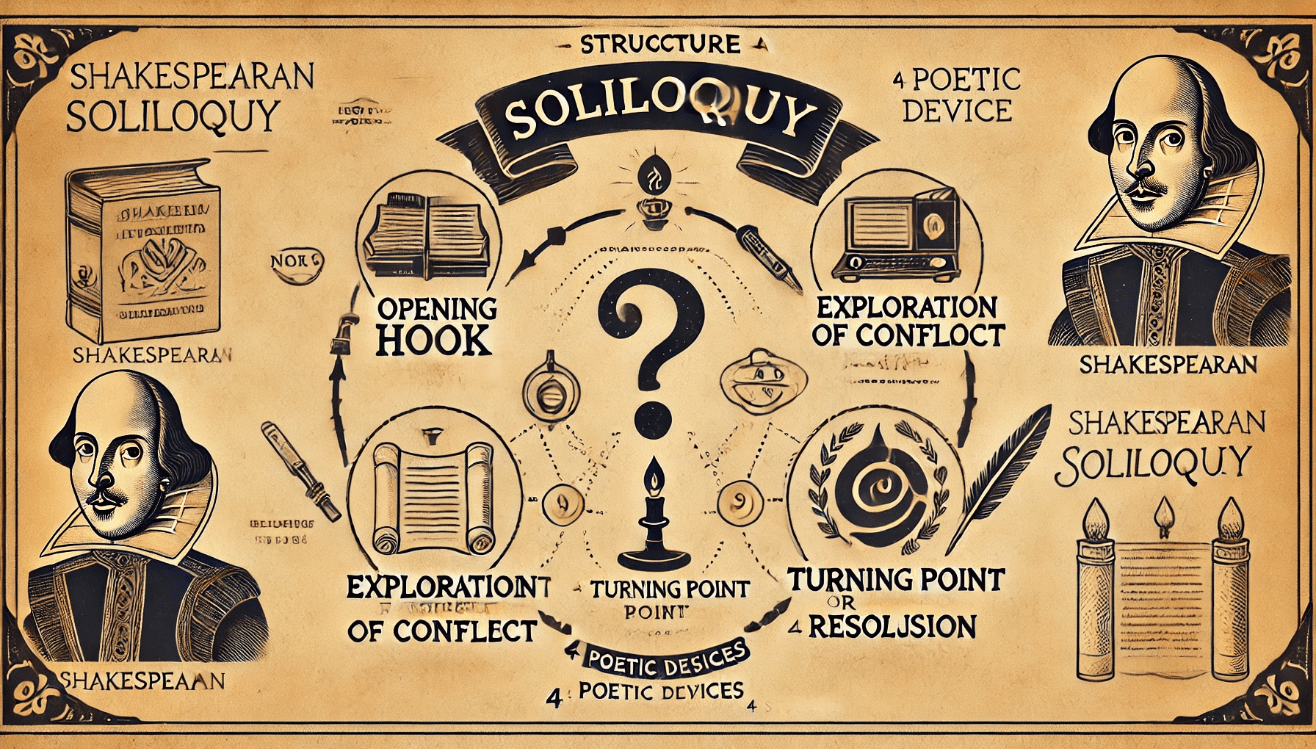
- Opening Hook: The Emotional Spark
A soliloquy often starts with a burst of emotion or a big question. Think Hamlet’s “To be, or not to be.” This grabs attention and sets the stage for the character’s inner struggle. Look for a bold statement or question that reveals their state of mind. - Exploration: Digging into the Conflict
Next, the character dives deeper, wrestling with their thoughts. They might debate options, reveal fears, or justify actions. For example, Macbeth ponders murder in his “Is this a dagger” speech. Notice how the language unravels their emotions or decisions. - Resolution or Shift: A Turning Point
Many soliloquies end with a decision, realization, or change in mood. The character might resolve to act (or not). In Juliet’s “Gallop apace” soliloquy, she moves from longing to anticipation. Spot this shift to understand the character’s arc. - Poetic Devices: The Magic Touch
Shakespeare uses iambic pentameter, metaphors, and imagery to make soliloquies sing. These aren’t just fancy words—they reflect the character’s heart. For students, jot down key images or rhymes to see how they amplify the message.
How to Apply This?
When analyzing, mark these parts in the text: hook, exploration, resolution. Ask: What’s the character feeling? What changes? This simple framework helps you decode any soliloquy, from Othello to Romeo, making essays and discussions a breeze. Ready to try it? 😄
3: Why Soliloquies Matter in Shakespeare’s Plays
Shakespearean soliloquies are more than just fancy speeches—they’re the heartbeat of his plays. These moments let characters bare their souls, giving you a front-row seat to their deepest thoughts. But why should students and scholars care? Let’s explore why soliloquies are key to understanding Shakespeare’s genius and how they can boost your analysis. 😊

Revealing Character Motivation
Soliloquies peel back the curtain on what drives a character. When Hamlet questions life in “To be, or not to be,” you see his inner turmoil. This insight helps you understand why characters act the way they do, making your essays richer.
Advancing the Plot
These speeches often signal major turning points. In Macbeth’s “Tomorrow and tomorrow” soliloquy, his despair hints at the story’s tragic end. Spotting these moments helps you connect the dots in the plot, making discussions or papers more compelling.
Connecting with Universal Themes
Soliloquies tackle timeless human struggles—love, guilt, ambition. Juliet’s longing in “Romeo, Romeo, wherefore art thou” resonates even today. By identifying these themes, you can relate Shakespeare to modern life, making your analysis stand out.
Practical Tip for Analysis
To use soliloquies effectively, ask: What does this speech reveal about the character’s mind? How does it push the story forward? Jot down one key emotion and one plot point per soliloquy. This simple trick will sharpen your essays and spark lively class discussions.
Why It’s Worth It
Mastering soliloquies doesn’t just help with grades—it deepens your connection to Shakespeare’s world. You’ll see characters as real people with struggles like yours. Ready to dive into specific examples and make your analysis shine? Let’s keep going! 😄
4: How to Analyze a Shakespearean Soliloquy
Analyzing a Shakespearean soliloquy can feel overwhelming, but it’s like solving a puzzle—once you know the steps, it’s fun and rewarding! This section gives you a clear, beginner-friendly guide to break down any soliloquy, making your essays and discussions shine. Let’s dive in with a simple, step-by-step approach. 😊

1: Identify the Context
Start by asking: Where does this soliloquy happen in the play? Who’s speaking, and what’s going on? For example, in Hamlet’s “To be, or not to be,” he’s alone, grappling with life and death after learning about his father’s murder. Context sets the stage for deeper analysis.
2: Spot the Structure
Look for the soliloquy’s core parts: the hook (opening question or emotion), exploration (the character’s inner debate), and resolution (a decision or shift). In Macbeth’s “Is this a dagger” speech, he starts with a hallucination, debates his ambition, then resolves to act. Mark these in the text to see the flow.
3: Unpack the Language
Shakespeare’s words are packed with meaning. Highlight metaphors, imagery, or rhymes. In Juliet’s “Gallop apace” soliloquy, her sun imagery shows her longing for Romeo. Ask: How do these word choices reveal the character’s feelings? Keep it simple—focus on one or two key images.
4: Connect to Themes and Plot
What big ideas does the soliloquy highlight? Love, revenge, or guilt? How does it move the story forward? For instance, Lady Macbeth’s “Unsex me here” speech reveals her ambition and sets up her role in the murder plot. Note one theme and one plot point to strengthen your analysis.
5: Write It Down

Jot down your findings in a clear structure: context, structure, language, themes, and plot impact. This outline makes essays easier and helps you sound confident in class. Try it with a short soliloquy first, like Romeo’s “But soft, what light” speech.
Pro Tip for Success
Practice with one soliloquy at a time. Read it aloud to feel the rhythm, then use these steps to break it down. This method works for any play, from Othello to The Tempest, and will make you feel like a Shakespeare expert in no time. Ready to try it? 😄
5: Common Challenges and How to Overcome Them
Tackling Shakespearean soliloquies can feel like climbing a mountain, especially for beginners. The language, emotions, and context can be tricky, but don’t worry! Here are the most common challenges students and scholars face when analyzing soliloquies, along with practical solutions to conquer them. Let’s make it easy and fun! 😊
Challenge 1: Understanding Old English
Shakespeare’s words, like “thou” or “wherefore,” can seem like a foreign language. This makes it hard to grasp the meaning of a soliloquy.
Solution: Use a modern translation alongside the original text. For example, when reading Hamlet’s “To be, or not to be,” check a side-by-side version online. Focus on the main idea first, then dive into specific words. Apps like No Fear Shakespeare are lifesavers!
Challenge 2: Getting Lost in the Structure
Soliloquies often jump between emotions or ideas, making it tough to follow the flow.
Solution: Break it down into the three-part structure: hook, exploration, resolution. For Macbeth’s “Tomorrow and tomorrow” speech, mark the opening despair, the middle reflection on life, and the final resignation. This keeps you grounded and makes analysis clear.
Challenge 3: Missing the Emotional Depth
It’s easy to skim over the feelings in a soliloquy, especially if you’re rushing.
Solution: Read the soliloquy aloud with expression, like you’re acting it. In Juliet’s “Gallop apace” speech, emphasize her longing for Romeo. This helps you feel the character’s emotions and spot key themes like love or desperation.

Challenge 4: Connecting to the Bigger Picture
Students often struggle to link a soliloquy to the play’s plot or themes.
Solution: Ask two questions: How does this speech show the character’s motives? How does it move the story? For Lady Macbeth’s “Unsex me here,” note her ambition and how it drives the murder plot. Write down one theme and one plot point to stay focused.
Challenge 5: Feeling Overwhelmed by Analysis
Trying to analyze everything at once—language, themes, context—can feel daunting.
Solution: Use a simple checklist: 1) Context (where’s this happening?), 2) Structure (hook, exploration, resolution), 3) Language (one or two key images), 4) Themes and Plot (one each). Practice with a short soliloquy, like Romeo’s “But soft, what light,” to build confidence.
Why This Works
These tips turn complex soliloquies into manageable pieces, helping you analyze with ease. Try them on any speech, from Othello’s jealous rants to The Tempest’s reflective moments. You’ll soon feel like a Shakespeare pro, ready to ace essays or spark class discussions. Keep going—you’ve got this! 😄
6: Practical Applications for Students and Scholars
Mastering Shakespearean soliloquies isn’t just about understanding old plays—it’s a skill that can boost your grades, sharpen your critical thinking, and even make you a better communicator. Whether you’re a student writing essays or a scholar diving deeper, here’s how to apply your soliloquy analysis in practical, real-world ways. Let’s make Shakespeare work for you! 😊
- Writing Standout Essays
Soliloquies are goldmines for essay topics. Use the structure (hook, exploration, resolution) to organize your analysis. For example, in Hamlet’s “To be, or not to be,” discuss how the opening question sets up his existential crisis, then connect it to themes of mortality. Tip: Always include one key quote and explain its imagery to impress your teacher. - Excelling in Class Discussions
Stand out in class by linking soliloquies to the play’s bigger picture. In Macbeth’s “Is this a dagger” speech, point out how his hallucination reveals guilt and drives the murder plot. Prepare by noting one emotion and one plot point per soliloquy. This makes you sound confident and prepared. - Performing or Directing Shakespeare
If you’re acting or directing, soliloquies are your chance to shine. Read them aloud to capture the character’s emotions—like Juliet’s longing in “Gallop apace.” For directors, use the soliloquy’s structure to guide staging: start with a bold gesture, shift energy during exploration, and end with a decisive move. Try this with Romeo’s “But soft, what light” for impact. - Connecting to Modern Contexts
Soliloquies explore universal emotions like love or ambition, making them relatable today. In a presentation, compare Lady Macbeth’s “Unsex me here” to modern discussions of power and gender. This shows your ability to bridge Shakespeare’s world with ours, wowing professors or peers. - Building Critical Thinking Skills
Analyzing soliloquies trains you to unpack complex ideas. Use the checklist from Section 4: context, structure, language, themes, plot. Apply this to any soliloquy, like Othello’s jealous rants, to practice breaking down arguments. This skill helps in debates, research, or even everyday problem-solving.
Quick Application Tip
Pick one soliloquy, like The Tempest’s “All the infections” by Prospero, and practice analyzing it with these steps: 1) Summarize the context, 2) Outline the structure, 3) Pick one image or theme, 4) Connect to the play’s arc. Write a short paragraph or discuss it with a friend to build confidence.
Why It Matters
These applications turn soliloquies into tools for success, whether you’re acing a paper, leading a discussion, or exploring Shakespeare’s relevance. You’ll not only master the plays but also gain skills that shine in school and beyond. Ready to put these tips into action? You’ve got this! 😄
7: Tips for Memorizing and Performing Soliloquies
Memorizing and performing Shakespearean soliloquies can feel daunting, but it’s a rewarding way to bring characters to life. Whether you’re a student preparing for a class performance or a scholar aiming to captivate an audience, these practical tips will help you master the art of delivering soliloquies with confidence and flair. Let’s make it fun and achievable! 😊

- Break It Down into Chunks
Long soliloquies, like Hamlet’s “To be, or not to be,” can overwhelm. Divide the speech into smaller sections based on its structure: hook, exploration, resolution. Memorize one chunk at a time, starting with the opening lines. Practice each part until it sticks before moving on. - Understand the Meaning First
Don’t just memorize words—grasp their meaning. For Macbeth’s “Is this a dagger” soliloquy, read a modern translation to understand his guilt and ambition. Knowing the story behind the words makes them easier to remember and perform with emotion. - Use the Rhythm of Iambic Pentameter
Shakespeare’s soliloquies often follow a da-DUM rhythm (iambic pentameter). Clap or tap the beat while reading aloud, like in Juliet’s “Gallop apace.” This rhythm helps you memorize lines naturally and adds a musical flow to your performance. - Connect Emotions to Movements
Link the character’s feelings to physical actions. In Lady Macbeth’s “Unsex me here,” stride boldly to show her ambition, then pause for her darker pleas. Practice these movements while reciting to make the soliloquy feel alive and anchor the words in your memory. - Practice with a Purpose
Perform in front of a mirror or record yourself to spot areas for improvement. For Romeo’s “But soft, what light,” exaggerate emotions to test your delivery, then refine it. Rehearse daily, starting slow, then build speed and confidence. Repetition is key! - Engage the Audience
A soliloquy is a conversation with the audience. Look at imaginary listeners or a friend during practice, as if sharing Othello’s jealous thoughts. Vary your tone—soft for reflection, loud for passion—to keep them hooked. This makes your performance authentic and gripping.
Quick Memorization Hack
Try the “line-by-line” method: write down the first line of a soliloquy, like Prospero’s “All the infections” from The Tempest, then cover it and recite. Add one line at a time, repeating until you’ve got it. Pair this with reading aloud to lock it in.
Performance Pro Tip
Before performing, take a deep breath and picture the character’s mindset. For example, channel Hamlet’s despair or Juliet’s excitement. Start with a strong, clear opening to grab attention, then let the soliloquy’s structure guide your pacing and energy.
Why It Works
These tips make memorizing and performing soliloquies manageable and exciting, whether for a class, audition, or personal challenge. You’ll not only nail the lines but also deliver them with heart, bringing Shakespeare’s words to life. Ready to step into the spotlight? You’ve got this! 😄
Shakespearean soliloquies are more than poetic speeches—they’re gateways to understanding characters, themes, and the heart of Shakespeare’s plays. By mastering their structure, from the emotional hook to the final resolution, you’ve gained tools to analyze, discuss, and even perform these powerful moments with confidence. Whether you’re crafting standout essays, leading class discussions, or stepping onto a stage, the practical steps in this guide—breaking down context, language, and themes—make soliloquies approachable and exciting. 😊 Keep practicing with speeches like Hamlet’s or Juliet’s, and you’ll unlock the Bard’s genius in no time. Ready to dive deeper into Shakespeare’s world? Go for it!