

Have you ever wondered why Shakespeare’s characters suddenly stop mid-scene to speak their thoughts aloud—alone, to no one in particular? 🎭 These moments, known as soliloquies, might seem puzzling at first, but they hold the key to understanding the emotional core of his most iconic works. The dramatic purpose of soliloquies in Shakespeare’s plays goes far beyond poetic flair—they’re powerful tools that reveal hidden motives, inner conflicts, and the true essence of each character. In this deep dive, we’ll unravel how these monologues shape the story, enhance dramatic tension, and offer timeless insights into the human condition. Ready to unlock their secret power? Keep reading.
1:What Is a Soliloquy? A Beginner-Friendly Explanation 😊
A soliloquy is a moment in a play when a character speaks their thoughts out loud—alone on stage—with no other characters listening. Think of it as a private conversation between the character and the audience. It’s not meant to move the plot forward through dialogue, but to reveal what’s going on inside the character’s mind.
In Shakespeare’s plays, soliloquies are powerful tools that give us a front-row seat to a character’s inner world. Whether it’s Hamlet wrestling with life and death or Macbeth debating his next dark move, these speeches let us hear their fears, desires, doubts, and secrets—unfiltered and raw. 🎭
Unlike a monologue, which can be spoken to other characters, a soliloquy is always delivered in isolation. That’s what makes it so intimate and emotionally intense. It’s as if time pauses, and the audience is invited into the character’s private thoughts.
Why does this matter? Because understanding soliloquies helps us connect more deeply with the characters. We don’t just see what they do—we understand why they do it. And that’s where the real magic of Shakespeare’s storytelling comes alive.
In short, a soliloquy is the ultimate window into a character’s soul—and a key to unlocking the deeper meaning behind Shakespeare’s most unforgettable moments.
2: The Dramatic Purpose of Soliloquies in Shakespeare’s Plays 🎭
So, why did Shakespeare use soliloquies—and why do they matter so much?
The dramatic purpose of soliloquies in Shakespeare’s plays is to reveal a character’s private thoughts, emotions, and dilemmas directly to the audience. This gives us access to a deeper layer of the story—one that’s hidden from other characters on stage.

🎯 1. Reveal True Intentions
Characters don’t always say what they really mean in dialogue. But in a soliloquy, masks come off. For example, in Macbeth, we hear Macbeth’s inner conflict and ambition long before he acts. These insights help the audience understand his motivations on a deeper level.
💥 2. Build Tension and Drama
When a character shares a dangerous plan or a dark thought in a soliloquy, the audience knows something the others don’t. This creates suspense. We’re left wondering: Will they really go through with it? What will happen next?
🧠 3. Explore Inner Conflict
Shakespeare’s characters are rarely one-dimensional. Through soliloquies, we see them wrestle with tough choices, guilt, fear, or moral dilemmas. Hamlet’s famous “To be or not to be” soliloquy, for instance, shows us the weight of his existential struggle.
🎨 4. Enhance Emotional Connection
Soliloquies invite us to feel what the character feels. We become more emotionally invested in their journey because we’ve been let in on their most personal thoughts. It’s like reading someone’s diary aloud—raw, honest, and often heartbreaking.
📚 5. Support Theme and Symbolism
Many soliloquies reflect the bigger ideas in Shakespeare’s plays—like fate, ambition, love, power, or betrayal. They often use vivid imagery and metaphor, making them key to understanding the play’s deeper message.
3: Why Soliloquies Matter to Modern Readers 📖
You might be wondering—what do centuries-old soliloquies have to do with me today? Surprisingly, a lot.
Soliloquies may come from Elizabethan stages, but their emotional depth and raw honesty still speak to us in the modern world. Here’s why understanding the dramatic purpose of soliloquies in Shakespeare’s plays isn’t just for scholars—it’s for anyone who wants to better understand storytelling, human nature, or even themselves.
🧠 1. They Help Us Understand Ourselves
Soliloquies give us a front-row seat to a character’s private thoughts—and that reflection often mirrors our own inner struggles. When Hamlet questions the meaning of life, or when Lady Macbeth wrestles with guilt, we see timeless human emotions in action.
🎬 2. They Influence Modern Storytelling
Today’s movies, TV shows, and novels often borrow Shakespeare’s technique. Think of voice-overs in shows like Breaking Bad or You—these are modern soliloquies! Learning how Shakespeare used them helps you become a more savvy viewer or reader.
❤️ 3. They Make Shakespeare Relatable
Let’s be honest: Shakespeare’s language can feel intimidating. But soliloquies are often the most relatable parts of his plays. They slow things down, strip away the noise, and let a character speak from the heart. Once you “get” a soliloquy, the whole play starts to click.
✍️ 4. They’re a Goldmine for Writers and Creatives
If you’re a writer, actor, or content creator, soliloquies are masterclasses in character development. They teach you how to explore motivation, build empathy, and create tension—all by letting a character think out loud.
4: How to Analyze a Soliloquy Like a Pro 🔍
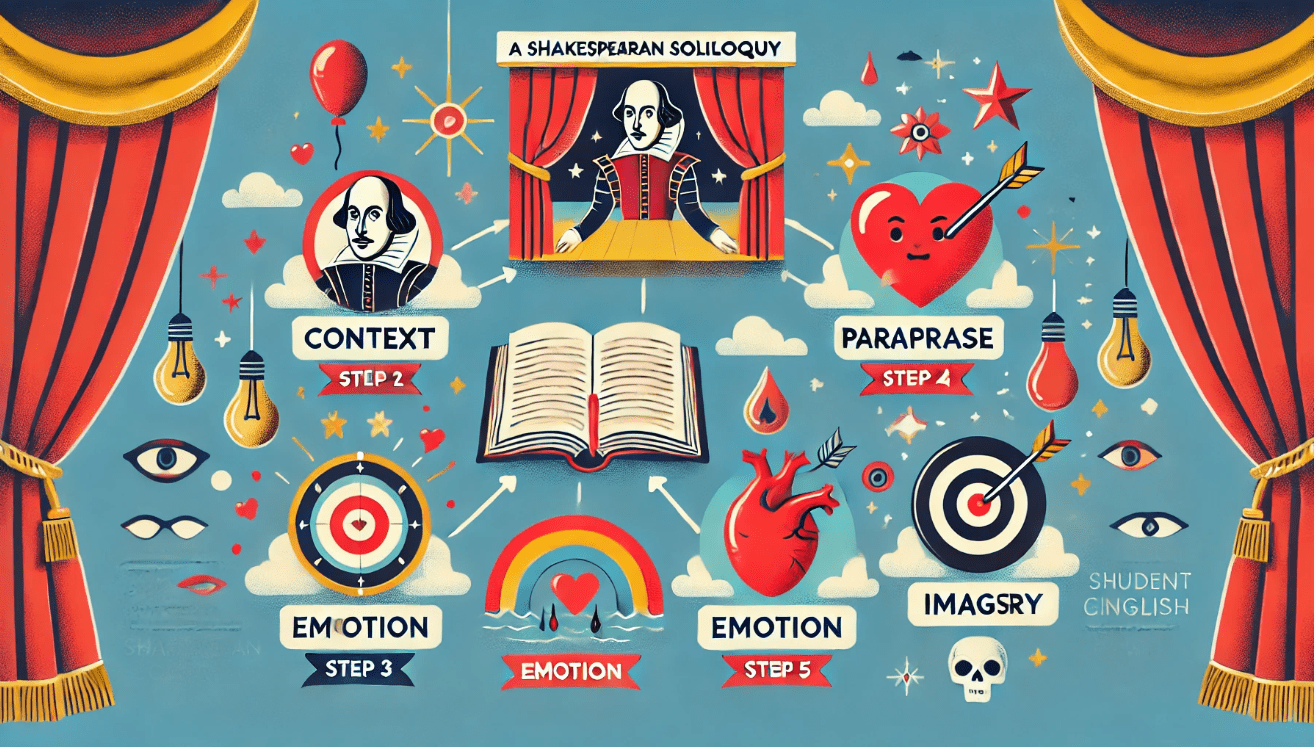
Analyzing a Shakespearean soliloquy might seem daunting—but with the right approach, it becomes surprisingly doable (and even fun!). Whether you’re a student, teacher, or curious reader, here’s a simple, step-by-step method to break down a soliloquy and uncover its full meaning.
🧩 1. Start with the Context
Ask: Where does this soliloquy appear in the play?
Understanding what just happened—and what’s about to happen—helps you see why the character is speaking alone. Soliloquies often come at turning points, revealing hidden motivations or conflicts.
🧠 2. Paraphrase It in Your Own Words
Read it slowly, and rephrase each line in plain English. Don’t worry about sounding perfect—just aim to understand what the character is saying. This step is key to making sense of Shakespeare’s older language.
Tip: Use line-by-line translation tools if you’re stuck, but always try paraphrasing yourself first—it boosts comprehension!
💬 3. Identify the Character’s Emotions
What’s the character feeling? Fear, guilt, love, ambition, confusion?
Shakespeare’s soliloquies are rich in emotion. Pinpointing how the character feels helps you understand their mindset and what’s driving them.
🎯 4. Look for Clues About Motivation
Ask: What does this character want?
Many soliloquies revolve around a dilemma or desire. By focusing on motivation, you uncover the dramatic purpose of the soliloquy and how it drives the story forward.
🔍 5. Spot Imagery and Figurative Language
Shakespeare often uses vivid metaphors, symbols, and contrasts. Highlight any recurring images (like blood, darkness, or time) and ask what they represent. These choices reveal deeper themes.
📢 6. Read It Aloud (With Feeling!)
Soliloquies were written to be spoken. Reading aloud helps you hear the rhythm, pacing, and emotion behind the words. It also brings the speech to life, making your analysis more personal and insightful. 🎭
5: Common Soliloquies to Know and Love ❤️
One of the best ways to understand the dramatic purpose of soliloquies in Shakespeare’s plays is to explore some of the most iconic examples. These speeches are more than famous quotes—they’re rich emotional moments that reveal character, drive the plot, and bring timeless themes to life.
Here are a few must-know soliloquies every literature lover should explore:
🎭 “To be, or not to be” – Hamlet (Act 3, Scene 1)
Arguably the most famous soliloquy in all of literature. Hamlet questions life, death, and the meaning of existence. It’s a powerful glimpse into his paralyzing indecision and deep existential angst.
Why it matters: This speech captures the internal battle between action and inaction—something we all face at times.
🩸 “Is this a dagger which I see before me?” – Macbeth (Act 2, Scene 1)
Just before murdering King Duncan, Macbeth hallucinates a bloody dagger leading him forward. This soliloquy exposes his fear, ambition, and descent into darkness.
Why it matters: It’s a masterclass in psychological tension, showing how guilt and desire can distort reality.
👑 “Now is the winter of our discontent” – Richard III (Act 1, Scene 1)
Richard opens the play by revealing his bitterness and ambition. He outlines his plan to seize the throne, all while pretending to be loyal and harmless.
Why it matters: This soliloquy sets the tone for a complex villain and reveals the power of manipulation and deceit.
💔 “O Romeo, Romeo! Wherefore art thou Romeo?” – Romeo and Juliet (Act 2, Scene 2)
Juliet speaks aloud, unaware Romeo is nearby. She questions why he must be a Montague, the enemy of her family.
Why it matters: It highlights the theme of forbidden love and the emotional innocence of youth.
😔 “Tomorrow, and tomorrow, and tomorrow” – Macbeth (Act 5, Scene 5)
After learning of Lady Macbeth’s death, Macbeth delivers a bleak reflection on the meaningless march of time.
Why it matters: This haunting speech captures despair, loss, and the futility of unchecked ambition.
6: Overcoming Common Challenges with Soliloquies 🚧
Let’s face it—soliloquies can feel tricky at first. The old language, long sentences, and poetic style can make them seem confusing or intimidating. But the good news? With the right approach, anyone can understand and appreciate them—even if you’re just starting out. 😊
Here’s how to tackle the most common challenges with Shakespeare’s soliloquies:
🌀 Challenge 1: The Language Feels Outdated
Solution:
Start by reading a modern translation alongside the original. Then, try paraphrasing it yourself line by line. Don’t worry about getting it perfect—just aim to understand the core message. Tools like No Fear Shakespeare can help, but your own version builds deeper understanding.
🧱 Challenge 2: It’s Hard to Know What the Character Really Means
Solution:
Ask yourself simple questions:
- What’s happening in the scene?
- What is the character thinking or feeling?
- What decision are they facing?
This turns the speech into a story rather than a puzzle. Look for emotional clues and recurring images to guide your interpretation.
😵💫 Challenge 3: It Feels Overwhelming to Memorize or Perform
Solution:
Break the soliloquy into smaller sections and focus on understanding the meaning of each part. Say it out loud with feeling—this helps with memory, rhythm, and confidence. 🎭 Bonus: acting it out helps you connect emotionally, not just intellectually.
🤔 Challenge 4: You’re Not Sure Why It Matters
Solution:
Always ask: What does this soliloquy reveal that we wouldn’t know otherwise?
This question helps you spot its dramatic purpose—whether it’s building tension, revealing a secret, or showing internal conflict. Understanding this “why” makes it more engaging and relevant.
💡 Quick Tips for Success:
- Use summaries before and after reading the full speech
- Watch live or filmed performances to hear how actors bring it to life
- Read it more than once—it gets clearer with each pass
- Don’t rush! Soliloquies are meant to be felt as much as understood
Remember: Struggling with Shakespeare is normal—it’s part of the learning journey. But with patience, curiosity, and the right tools, soliloquies can transform from confusing monologues into powerful, moving moments you’ll never forget. 💬✨
7: Bringing Soliloquies to Life: Practical Activities 🎭

Reading Shakespeare is one thing—but living his words is where the real magic happens. If you want to truly understand the dramatic purpose of soliloquies in Shakespeare’s plays, engaging with them actively is the key. Here are some fun, practical activities to help you bring these speeches off the page and into your world.
🎤 1. Perform It Out Loud
Choose a soliloquy and read it with emotion. Try different tones: sad, angry, sarcastic, confused. This helps you explore the character’s inner world and uncover hidden meanings.
Why it works: Shakespeare’s words were written for the stage. Saying them aloud reveals rhythm, tone, and emotion you might miss while reading silently.
✍️ 2. Write a Modern Version
Translate the soliloquy into today’s language—how would the character speak if they were alive in 2025?
Why it works: This helps you grasp the character’s intent and simplifies complex phrases. It’s also a great creative writing exercise!
🎥 3. Record Yourself
Film or voice record your performance. Then, watch or listen back to evaluate your tone, pacing, and interpretation.
Why it works: Seeing yourself perform helps build confidence and lets you refine your understanding of the speech.
🤝 4. Partner Up for Discussion
Work with a friend or classmate. One reads the soliloquy, and the other breaks down what each line means. Then switch roles!
Why it works: Talking it out boosts comprehension and helps uncover new insights.
🧠 5. Character Journal
Write a journal entry from the character’s point of view, based on what they reveal in the soliloquy.
Why it works: This deepens your understanding of motivation, conflict, and emotional stakes.
🎨 6. Visualize the Speech
Draw or create a mood board representing the soliloquy’s themes, imagery, and emotions.
Why it works: Visual learning engages your imagination and helps anchor abstract ideas.
Soliloquies are more than just beautiful speeches—they’re the emotional core of Shakespeare’s plays. They give us direct access to a character’s mind and reveal the real story unfolding beneath the surface. By understanding the dramatic purpose of soliloquies in Shakespeare’s plays, we unlock deeper meaning, richer characters, and timeless human truths that still resonate today.
Whether you’re a student, a teacher, a writer, or simply a curious reader, engaging with soliloquies can sharpen your critical thinking, deepen your empathy, and enhance your appreciation for language and storytelling.