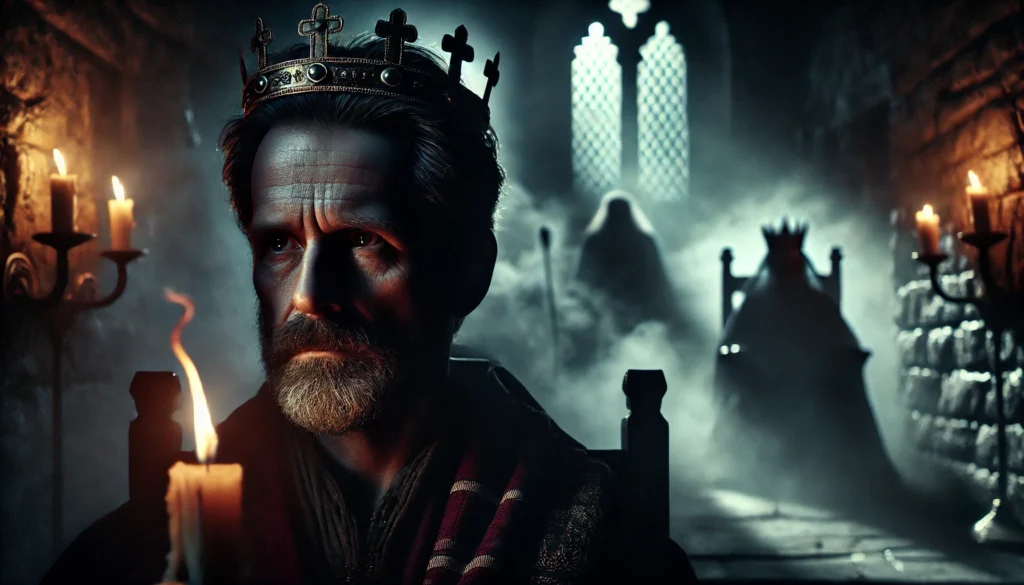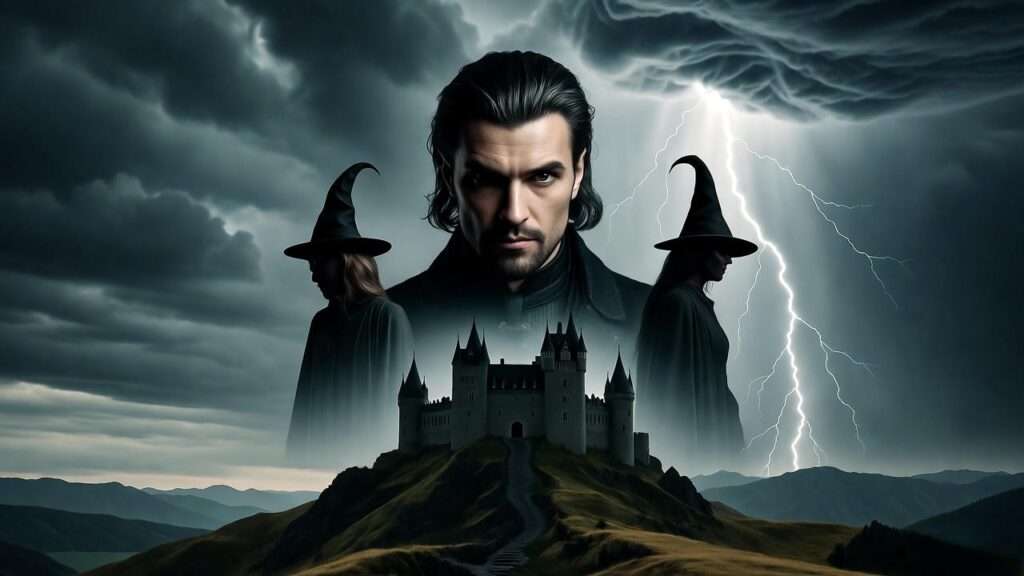
Darkness, thunder, and a lingering, suffocating sense of moral inversion—few openings in dramatic literature grip an audience quite like William Shakespeare’s Macbeth. If you are looking for a comprehensive act 1 of macbeth summary, you are diving into the exact mechanical gears that transform a celebrated national war hero into a haunted, paranoid regicide. Act 1 does not merely set the scene; it operates as a psychological pressure cooker, establishing the temptations, internal conflicts, and external forces that make the impending tragedy inevitable.
Throughout this deep-dive guide, we will break down Act 1 scene by scene, examine the shifting psychological architecture of its main characters, unpack its central motifs, and provide expert-level literary analysis designed for students, educators, and Shakespeare enthusiasts alike.
Act 1 Setting the Stage: Historical and Thematic Context
To truly understand Act 1, one must understand the political and cultural climate of Jacobean England in 1606. Shakespeare wrote Macbeth under the newly crowned King James I, a monarch deeply fascinated by witchcraft, demonology, and the divine right of kings—the political and religious doctrine that royal authority comes directly from God, making any rebellion or regicide a sin against both heaven and earth.
Furthermore, the Gunpowder Plot of 1605—an attempted assassination of King James I by Catholic conspirators—was fresh in the public consciousness. The themes of treason, hidden daggers, and the subversion of state stability resonate deeply within the opening movements of the play. Act 1 taps directly into these cultural anxieties, presenting a Scotland teetering on the edge of chaos, saved momentarily by martial might, only to be plunged into a far more insidious internal civil war of the soul.
Scene-by-Scene Breakdown of Act 1
Act 1, Scene 1: The Witches on the Heath
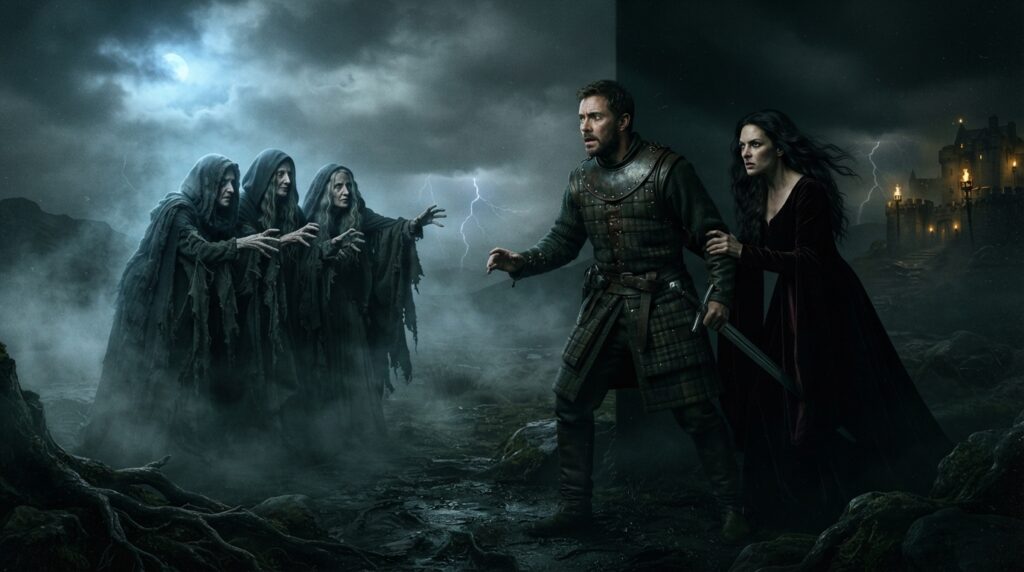
The play opens not in a king’s court, but on a desolate, storm-swept heath amidst thunder and lightning. Three Weird Sisters assemble with an eerie, rhythmic cadence, planning their next meeting with Macbeth.
-
The Atmospheric Hook: Shakespeare uses pathetic fallacy—matching the turmoil of the weather with the moral upheaval of the plot.
-
The Central Paradox: Their chilling closing chant, “Fair is foul, and foul is fair / Hover through the fog and filthy air,” establishes the play’s primary motif. Things are not as they appear; moral boundaries are about to blur into indistinction.
Act 1, Scene 2: The Camp Near Forres
Shifting rapidly from the supernatural to the brutal realities of earthly warfare, the scene takes place at a military camp. King Duncan hears reports of a double-fronted rebellion: Macdonwald’s invading rebels from the Western Isles, backed by the traitorous Thane of Cawdor, and a fresh assault led by the King of Norway.
-
Macbeth’s Introduction: Before Macbeth even appears on stage, he is mythologized through the bloody report of a wounded sergeant. He is valor personified, carving through the enemy lines, unseaming Macdonwald “from the nave to the chaps,” and fixing his head upon the battlements.
-
The Reward: Impressed by his peerless courage, King Duncan orders the execution of the traitorous Thane of Cawdor and bestows his title upon Macbeth, unconsciously handing the protagonist the very stepping stone prophesied by fate.
Act 1, Scene 3: The Witches’ Prophecy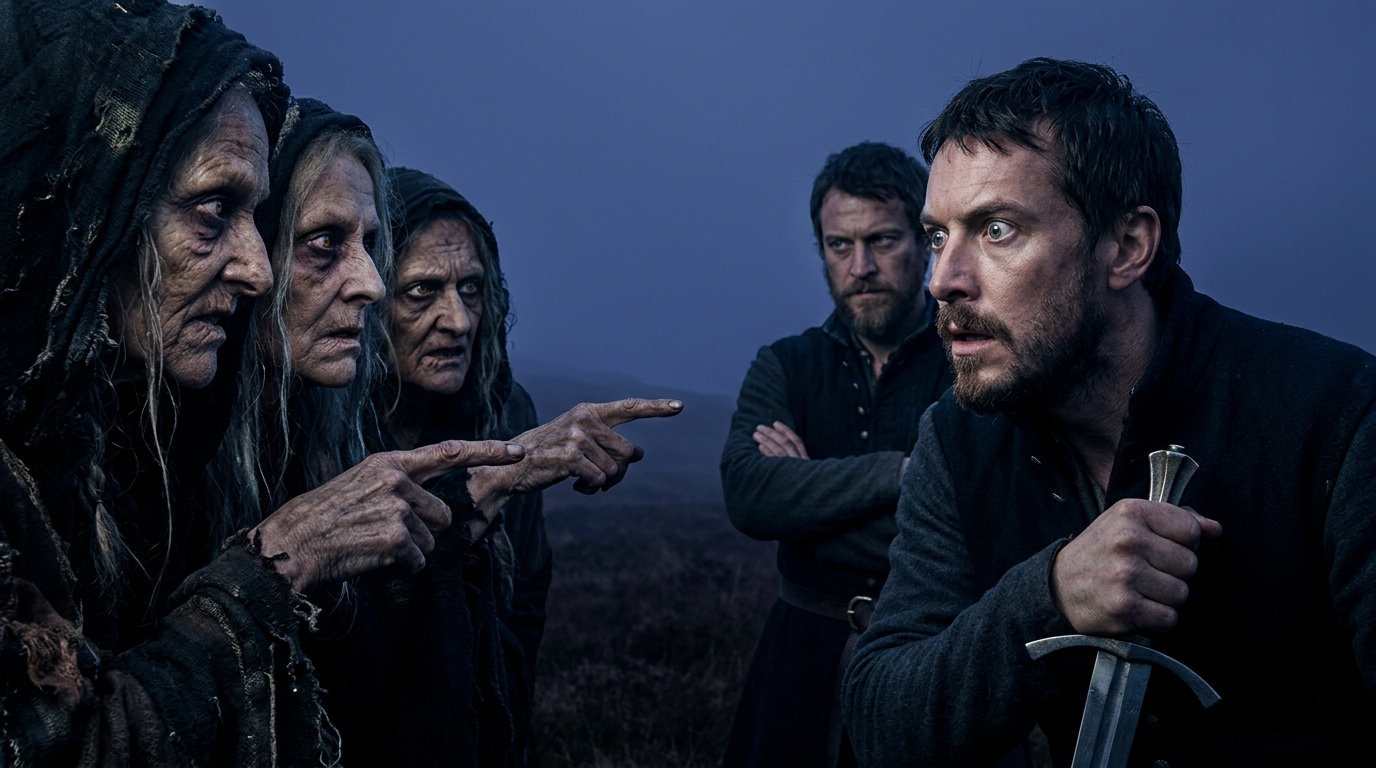
The Witches return on the heath, recounting petty acts of malice before Macbeth and Banquo arrive. When Macbeth utters his very first line—“So foul and fair a day I have not seen”—he unconsciously echoes the witches’ paradoxical philosophy, binding his fate to theirs.
-
The Prophecies: The sisters greet Macbeth with three titles: Thane of Glamis (his current title), Thane of Cawdor (unbeknownst to him yet), and “King hereafter.” They tell Banquo that he will be “lesser than Macbeth, and greater,” and the progenitor of a line of kings.
-
Divergent Reactions: While Banquo approaches the weird sisters with rational skepticism, warning that “instruments of darkness tell us truths,” Macbeth falls into a trance. The seeds of ambition are planted, instantly turning his thoughts toward murder: “My thought, whose murder yet is but fantastical, / Shakes so my single state of man that function / Is smother’d in surmise.”
Act 1, Scene 4: Palace at Forres
Macbeth and Banquo arrive at King Duncan’s palace, where the king heaps honors upon Macbeth and declares his eldest son, Malcolm, the Prince of Cumberland—naming him heir to the Scottish throne.
-
The Obstacle: For Macbeth, Malcolm is no longer just a fellow soldier, but a literal “step” over which he must either fall or oust.
-
The Mask Slips: In a dark aside, Macbeth reveals the full terror of his ambition, calling upon the stars to “hide your fires” so that “light let not see my black and deep desires.”
Act 1, Scene 5: Inverness, Macbeth’s Castle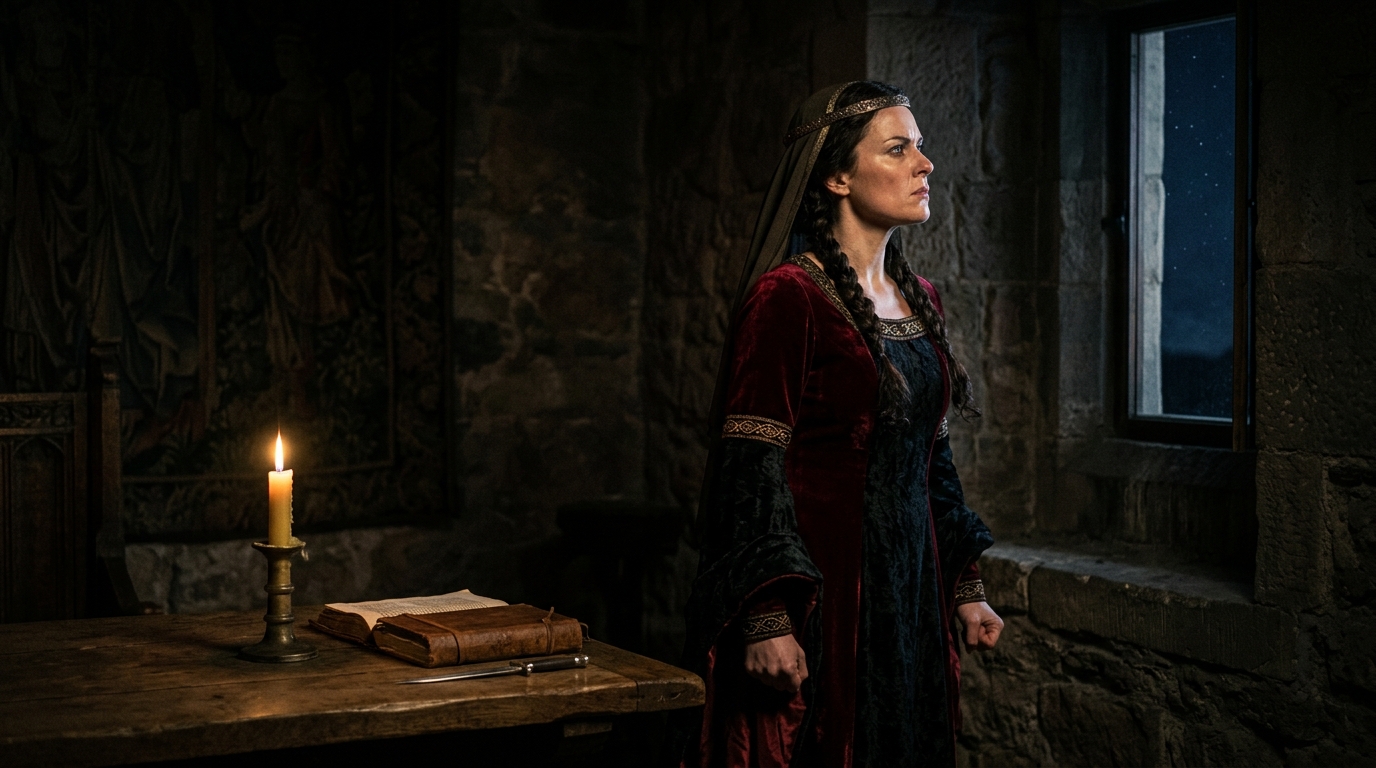
At Inverness, Lady Macbeth reads a letter from her husband detailing the encounter with the witches. Her response immediately establishes her as a formidable dramatic force.
-
The Analytical Assessment: She recognizes her husband’s potential but fears his temperament: “Yet do I fear thy nature; / It is too full o’ the milk of human kindness / To catch the nearest way.” She knows he has the ambition, but lacks the ruthless pragmatism required to seize the crown.
-
The “Unsex Me Here” Soliloquy: Upon hearing that Duncan is coming to stay at their castle tonight, she invokes dark, supernatural powers. She begs spirits to “unsex” her, stripping away maternal compassion, thickening her blood, and replacing feminine gentleness with “gall” to ensure nothing stays her hand from regicide.
Act 1, Scene 6: Arrival at Inverness
King Duncan, Banquo, and their retinue arrive at Macbeth’s castle. In a masterpiece of dramatic irony, Duncan remarks on the “sweet breath” and welcoming environment of the castle, blissfully unaware that he is walking into a deathtrap, greeted by a hostess plotting his assassination.
Act 1, Scene 7: The Turning Point (The Banquet and the Plot)
The climax of Act 1 takes place in the shadows of the castle while a feast unfolds. Macbeth wrestles with his conscience in a famous soliloquy, weighing the moral, political, and eternal consequences of assassinating Duncan.
-
Macbeth’s Hesitation: He acknowledges the deep bonds of loyalty: Duncan is his kinsman, his guest, and a virtuous king loved by his subjects. Macbeth admits he has “no spur / To prick the sides of my intent, but only / Vaulting ambition, which o’erleaps itself / And falls on th’ other.” He tells Lady Macbeth they will proceed no further.
-
Lady Macbeth’s Manipulation: Refusing to accept his hesitation, Lady Macbeth unleashes a devastating psychological attack. She questions his manhood, mocks his wavering courage, and paints a vivid, ruthless picture of commitment—claiming she would pluck her nursing babe from her breast and dash its brains out if she had sworn to do so.
-
The Plan: Subdued by her ferocious resolve, Macbeth asks what happens if they fail. Lady Macbeth lays out the plot: they will wait until Duncan is asleep, ply his two chamberlains with enough wine to knock them out, use their daggers to commit the murder, and smear the guards with blood to frame them for the crime. Macbeth yields: “I am settled, and bend up / Each corporal agent to this terrible feat.”
Key Character Transformations in Act 1
Macbeth: The Corruptible Hero
At the start of Act 1, Macbeth is defined by his fidelity to the state and his extraordinary physical courage. However, his fatal flaw—hamartia—is exposed the moment external ambition aligns with internal desire. He is not a natural villain initially; he is a man torn between moral imagination and destructive temptation. By the end of Act 1, he has fully subordinated his conscience to his wife’s will.
Lady Macbeth: The Architect of Willpower
Lady Macbeth emerges in Act 1 as one of the most complex psychological portraits in literature. She consciously attempts to suppress her human empathy, appealing to dark forces to harden her resolve. Her power in Act 1 rests entirely on verbal manipulation, weaponizing toxic concepts of masculinity and honor to force her husband across the threshold of treason.
Banquo: The Foil of Integrity
Banquo acts as Macbeth’s moral mirror throughout Act 1. Subjected to the exact same supernatural temptation, Banquo chooses vigilance and prayer over ambition. His presence highlights the agency involved in moral choice: both men hear prophecies, but only Macbeth chooses to turn them into bloody reality.
Major Themes Introduced in Act 1
-
Ambition and Corruption: Act 1 demonstrates how unchecked ambition acts as a corrosive acid, eating away at structural loyalty, friendship, and moral restraint.
-
Appearance vs. Reality: Encapsulated perfectly by the witches’ paradox, this theme permeates the action—from Macbeth hiding his “black and deep desires” behind a smiling face, to Lady Macbeth playing the gracious hostess while plotting murder.
-
Gender and Power: Shakespeare subverts Jacobean gender norms by inverting traditional roles: Lady Macbeth rejects nurturing femininity for martial cruelty, while Macbeth is emotionally paralyzed and manipulated like a child.
-
Fate vs. Free Will: A central philosophical debate of the play begins here: are the witches agents of unchangeable destiny, or do they merely act as catalysts that awaken desires already dormant within Macbeth’s heart?
Study Aids and Teaching Resources for Act 1
To maximize the value of this analysis for students and educators, consider these core quotations and discussion prompts for deeper classroom engagement or essay planning.
Essential Quotations with Analysis
-
“Fair is foul, and foul is fair / Hover through the fog and filthy air.” (Act 1, Scene 1) — Establishes the moral inversion and deceptive universe of the play.
-
“Stars, hide your fires; / Let not light see my black and deep desires.” (Act 1, Scene 4) — Marks Macbeth’s active transition from passive observer of prophecy to conscious conspirator.
-
“Come, you spirits / That tend on mortal thoughts, unsex me here…” (Act 1, Scene 5) — Demonstrates Lady Macbeth’s violent rejection of natural order and maternal compassion.
-
“Look like the innocent flower, / But be the serpent under ’t.” (Act 1, Scene 5) — The ultimate tactical advice on deception and appearance vs. reality.
Critical Discussion Prompts
-
Agency Check: Does Macbeth make the decision to kill Duncan of his own free will, or is he entirely manipulated by the witches and his wife? Support your argument with evidence from Scenes 3, 5, and 7.
-
Character Dynamics: Analyze how Lady Macbeth uses psychological pressure in Act 1, Scene 7 to overcome Macbeth’s moral objections. What does this reveal about power dynamics in their marriage?
Frequently Asked Questions (FAQs)
What are the three prophecies given to Macbeth in Act 1? In Act 1, Scene 3, the Witches greet Macbeth with three distinct titles: Thane of Glamis (his current title), Thane of Cawdor (which he does not yet know he has been granted), and King hereafter.
Why does Lady Macbeth want to be “unsexed”? In Act 1, Scene 5, Lady Macbeth calls upon spirits to “unsex” her because she fears her natural human empathy and feminine nurturing traits will prevent her from committing the brutal act of regicide. She wants her compassion replaced with pure, unyielding cruelty.
How does Macbeth feel about killing Duncan in Act 1, Scene 7? Initially, Macbeth experiences deep moral hesitation. In his soliloquy, he recognizes that killing Duncan violates bonds of kinship, hospitality, and loyalty. He decides to call off the plot, citing that ambition is his only driving motive, before Lady Macbeth pressures him back into action.
What role does Banquo play in Act 1? Banquo serves as a moral foil to Macbeth. While both men receive prophecies from the witches, Banquo remains skeptical, cautious, and loyal to the crown, highlighting that Macbeth’s descent into treason is a choice rather than an unavoidable destiny.
The Point of No Return
Act 1 of Macbeth is a masterclass in dramatic pacing, moving swiftly from a battlefield victory to a quiet, terrifying domestic conspiracy. By the time Macbeth resolves to “bend up each corporal agent to this terrible feat” in Scene 7, the tragedy is locked into motion. The descent has begun, and the glittering crown of Scotland is revealed to be nothing more than a trap forged by ambition and sealed in blood.
Whether you are studying for an exam, teaching a class, or exploring the psychological depths of Shakespearean drama, understanding the structural mechanics of Act 1 unlocks the core meaning of the entire play.