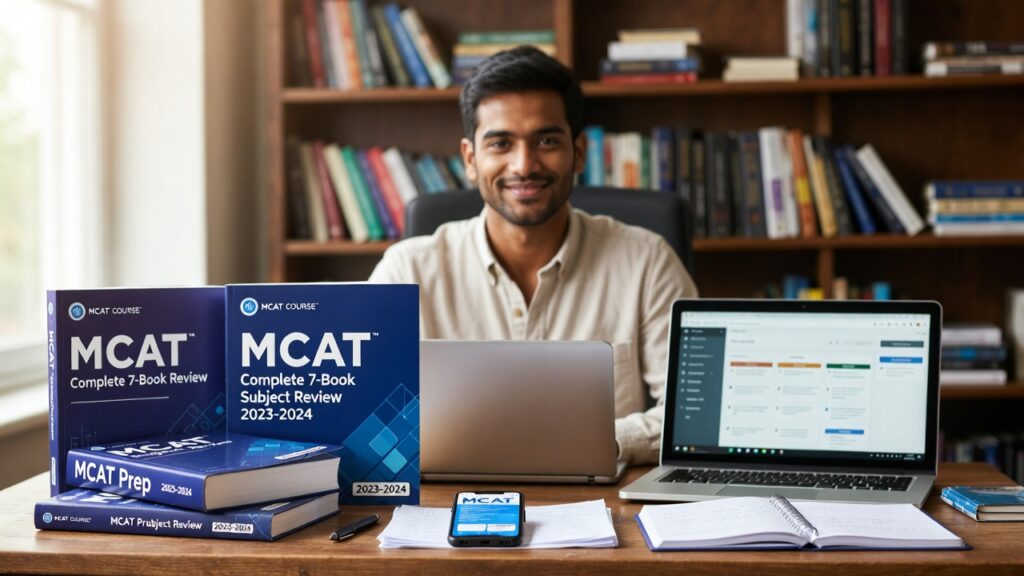
The best 10 MCAT study resources can make or break your preparation journey — and with the stakes as high as they are, choosing wisely is everything.
Imagine this: You’ve dedicated years to rigorous pre-med coursework, volunteered countless hours in clinics, and dreamed of that white coat. Yet the MCAT stands between you and medical school admission. Recent data shows that accepted applicants to allopathic medical schools typically need an average MCAT score around 511–512 (with top programs like Harvard often seeing averages near 520), while the overall test-taker mean hovers closer to 501. Falling short can mean delayed dreams, costly retakes, or settling for less competitive options.
The pressure is real. Many pre-med students face overwhelming stress from trying to master vast content across four sections — Chemical and Physical Foundations of Biological Systems, Critical Analysis and Reasoning Skills (CARS), Biological and Biochemical Foundations of Living Systems, and Psychological, Social, and Biological Foundations of Behavior — all while building critical thinking, stamina for a 7.5-hour exam, and the ability to apply knowledge to complex passages.
Common pitfalls compound the challenge: relying on outdated materials that don’t align with recent exam trends, overloading on passive reading without enough active practice, starting full-length exams too late, neglecting deep review of mistakes, or simply getting lost in the sea of options — from massive book sets to pricey online courses, question banks, and free videos. Many students waste months (and hundreds or thousands of dollars) on ineffective resources, leading to burnout, plateaued scores, or disappointing results on test day.
If you’re searching for the best 10 MCAT study resources, you’re not alone — thousands of pre-meds are in the same boat right now, especially those gearing up for 2026 test dates.
This comprehensive guide cuts through the noise. Drawing from current 2026 data — including Amazon best-seller rankings, recent student reviews, expert analyses from sites like Shemmassian Consulting and The Match Guy, Reddit/SDN success stories (with 520+ scorers), and AAMC-aligned recommendations — we’ve curated the most popular, highly rated, and proven-effective options. Whether you’re a self-studier on a budget, someone who thrives with structured video lessons, or you need exam-like practice to push past 515+, this article helps you make an informed decision.
We’ll cover a mix of comprehensive book sets, top question banks, full online courses, official AAMC materials, and powerful free tools — the exact combinations many high scorers swear by.
By the end, you’ll have clarity on what to buy (or access for free), why it works, and how to combine resources for maximum score improvement — so you can study smarter, reduce stress, and walk into test day confident.
Ready to find the right tools for your high-score breakthrough? Let’s dive in.
How We Chose the Best MCAT Study Resources
To build this list, we analyzed up-to-date 2026 data from multiple sources: Amazon best-sellers and customer ratings (thousands of verified reviews), expert rankings from sites like Test Prep Insight, Shemmassian Academic Consulting, and The Match Guy, real student score improvements shared on Reddit (r/MCAT) and SDN, AAMC alignment, features like question difficulty and explanations, updates for the current exam format, and overall value (price vs. features).
We prioritized resources that address core user needs: thorough content review for foundational mastery, realistic practice questions and full-length exams for stamina and strategy, strong CARS support (often the toughest section), and accessibility for different budgets and learning styles (visual, reading, self-paced, etc.).
Categories include book sets for structured content, question banks for active recall, online courses for guided learning, official AAMC materials for authenticity, and free/high-yield tools to supplement without breaking the bank.
Quick Comparison Table
| Rank & Resource | Type | Approx. Price (2026) | Key Strength | Avg. Rating (Amazon/Reviews) | Best For |
|---|---|---|---|---|---|
| 1. Kaplan MCAT 7-Book Set | Books + Online | Comprehensive content review | 4.6/5 (thousands) | Structured self-study | |
| 2. UWorld MCAT QBank/UBooks | Question Bank + Books | Best explanations & practice | Highly praised (expert lists) | Deep practice & reasoning | |
| 3. Blueprint MCAT Course | Online Course | Video lessons & FL exams | Top-rated videos | Visual learners & analytics | |
| 4. Princeton Review Box Set | Books | Detailed written materials | 4.5+/5 | In-depth reading & strategies | |
| 5. AAMC Official Prep Bundle | Official Questions/Exams | Most realistic practice | Essential (AAMC) | Final realistic simulation | |
| 6. Khan Academy MCAT (Free) | Videos + Passages | High-quality free content | Widely recommended | Budget content review | |
| 7. Magoosh MCAT Course | Online Course | Affordable all-in-one | Great value | Budget self-paced | |
| 8. Anki + Pre-made MCAT Decks | Flashcards (App) | $197.95 | Spaced repetition mastery | Community favorite | Active recall & retention |
| 9. Jack Westin CARS | CARS Passages | Daily CARS practice | Excellent for CARS | CARS improvement | |
| 10. Examkrackers Package | Books + Tools | High-yield & concise | Solid alternative | Quick, focused review |
The Top 10 Best MCAT Study Resources
1.Kaplan MCAT Complete 7-Book Subject Review (2026-2027 Edition)
This flagship set from Kaplan remains a top Amazon best-seller and a go-to for thousands of high scorers. It delivers streamlined, up-to-date content across all four MCAT sections in seven focused volumes (Biology Vol. 1 & 2, Biochemistry, General Chemistry, Organic Chemistry, Physics, Behavioral Sciences, Critical Analysis & Reasoning Skills). Paired with online access, it includes 3 full-length practice tests, chapter-end questions, and strategic tips aligned with current exam trends. The layout is intuitive with color-coded sections, high-yield summaries, and visual aids like charts and diagrams for better retention.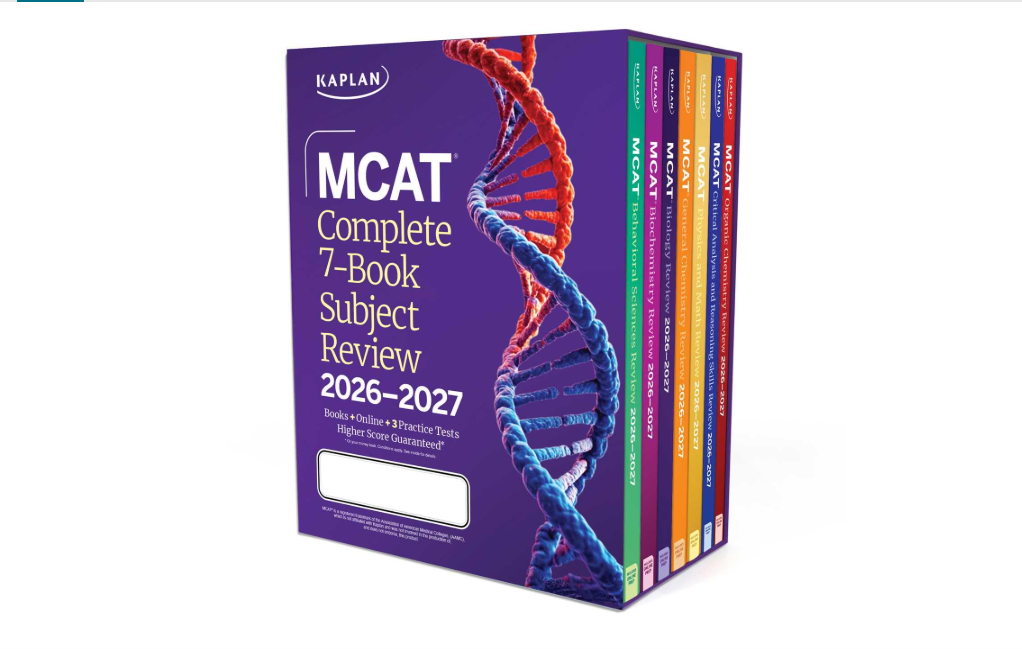
Current Price:
Key Features and Benefits:
- 7 comprehensive books covering every topic with proven strategies
- Online companion with 3 full-length exams and additional practice
- High-quality illustrations, concept checks, and test-like passages
- Updated for 2026 exam changes and AAMC-style reasoning
Pros: Extremely thorough and structured; great for building a strong foundation; includes online resources; trusted by 520+ scorers. Cons: Can feel dense for some readers; not the absolute best for CARS alone.
Amazon Customer Ratings and Reviews: 4.6/5 from thousands of reviews — praised for clarity, organization, and score improvements (many report +10–15 points); some note it’s lengthy but worth it.
Why It’s a Good Choice: It solves the common problem of scattered or outdated content by providing one cohesive, expert-curated system that covers everything needed without gaps.
Ideal Use Case / Who Should Buy It: Self-studiers who prefer reading and want a complete, structured content review on a moderate budget; perfect for 3–6 month prep timelines.
2.UWorld MCAT Question Bank (with UBooks 2025-2026)
UWorld’s QBank is widely regarded as the gold standard for MCAT practice, featuring over 3,000 high-quality, exam-like questions with unparalleled visual explanations and detailed rationales. The accompanying UBooks set includes 8 printed/digital volumes (6 science review + 2 CARS strategy books) with illustrations, charts, and interactive digital access. Questions emphasize critical thinking, experimental analysis, and AAMC-style passages.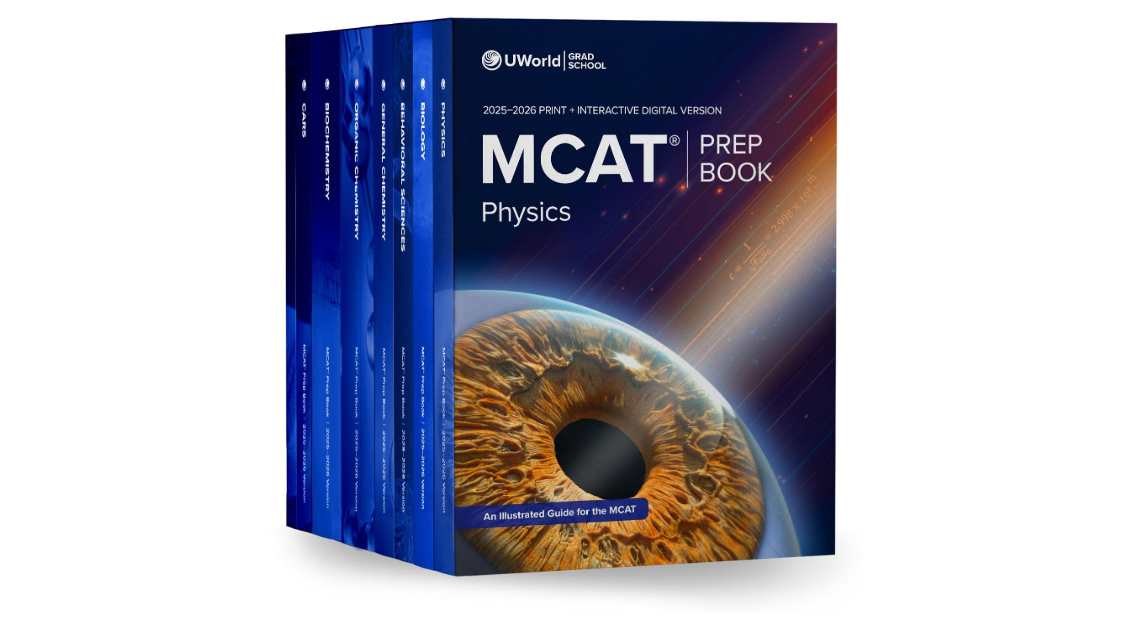
Current Price:
Key Features and Benefits:
- 3,000+ MCAT-level questions with step-by-step visual explanations
- Performance tracking and customizable practice
- High-yield illustrations and concept integration
- Often bundled with AAMC resources for added value
Pros: Explanations are the best in the industry (many say better than textbooks); builds reasoning skills fast; realistic difficulty. Cons: Primarily practice-focused (pair with content review); subscription-based access.
Amazon/Reviews: Highly praised in expert lists and Reddit (520+ scorers call it “essential”); 9/10+ recommendation rates.
Why It’s a Good Choice: It directly addresses the need for active practice and mistake analysis — the phase where most score jumps happen.
Ideal Use Case / Who Should Buy It: Students in the practice phase needing deep, explanatory questions; those aiming for 515+ who already have content basics.
3.Blueprint MCAT Prep Course (Self-Paced or Live Online)
Blueprint (formerly Next Step) stands out for its engaging, high-production-value video lessons taught by top-scoring instructors, making complex topics feel approachable and memorable. The course includes 600+ hours of on-demand videos, 15+ full-length practice exams (highly realistic and AAMC-style), advanced analytics to track weaknesses, 3,000+ practice questions, flashcards, and live office hours in premium tiers. Their 515+ guarantee package offers score improvement assurance with extra tutoring. Videos emphasize visual explanations, mnemonics, and strategy for all sections, including strong CARS support.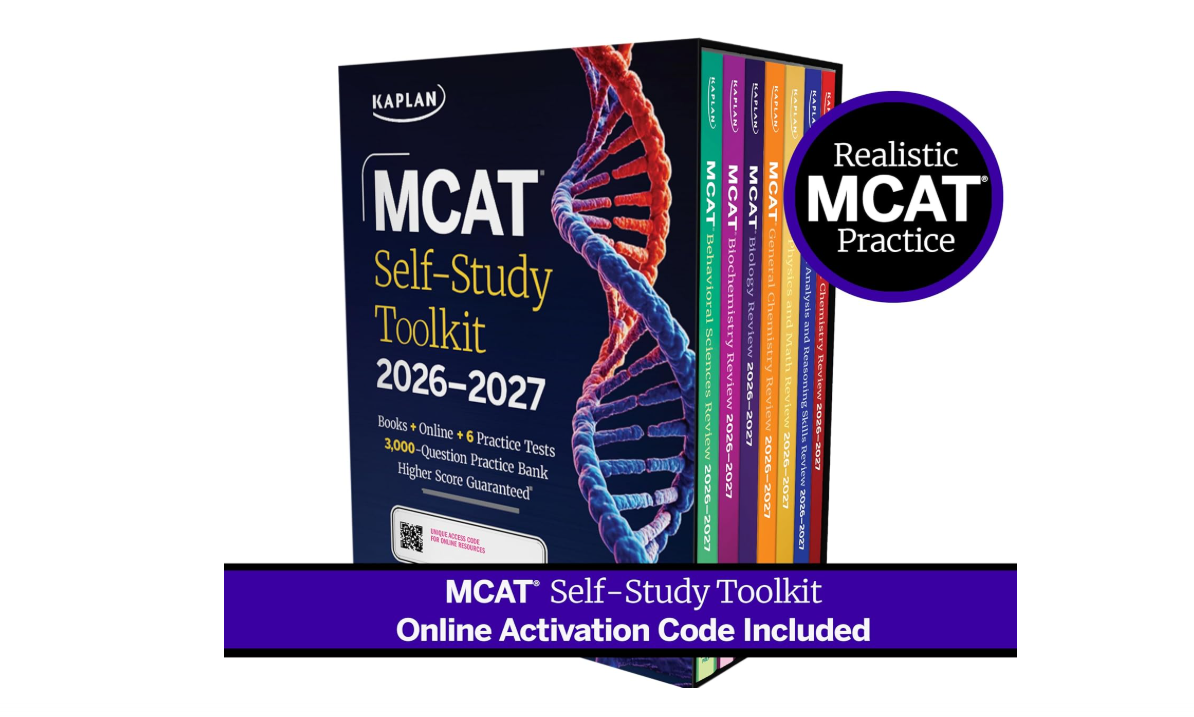
Current Price:
Key Features and Benefits:
- 600+ hours of engaging video content with animations and real-world analogies
- 15+ full-length practice tests with detailed score reports and analytics
- Customizable study plans, flashcards, and performance tracking
- Strong focus on strategy, stamina, and section-specific techniques
Pros: Excellent for visual/auditory learners; realistic exams help build test-day confidence; analytics pinpoint exact weaknesses; highly praised videos. Cons: Higher price point (especially premium tiers); some find videos lengthy if you prefer reading.
Amazon/Reviews: Not primarily Amazon-sold, but expert sites and Reddit rate it top-tier for videos (often called “best video lessons”); student reviews highlight +10–20 point jumps with consistent use.
Why It’s a Good Choice: It excels at making dense science engaging and provides abundant realistic practice — ideal for overcoming plateaus in content understanding or test stamina.
Ideal Use Case / Who Should Buy It: Visual learners or those needing guided structure and analytics; great for mid-to-high scorers aiming for 515+ or anyone who struggles with self-motivation in solo book study.
4.Princeton Review MCAT Subject Review Complete Box Set (Latest Edition)
Princeton Review’s 9-book box set offers in-depth, detailed written content with a focus on strategies, test-taking techniques, and passage-based practice. Volumes cover all sciences, CARS, and include high-yield summaries, drills, and online access to additional questions and 6+ practice tests. The writing is clear and conversational, with strong emphasis on critical thinking and experimental analysis.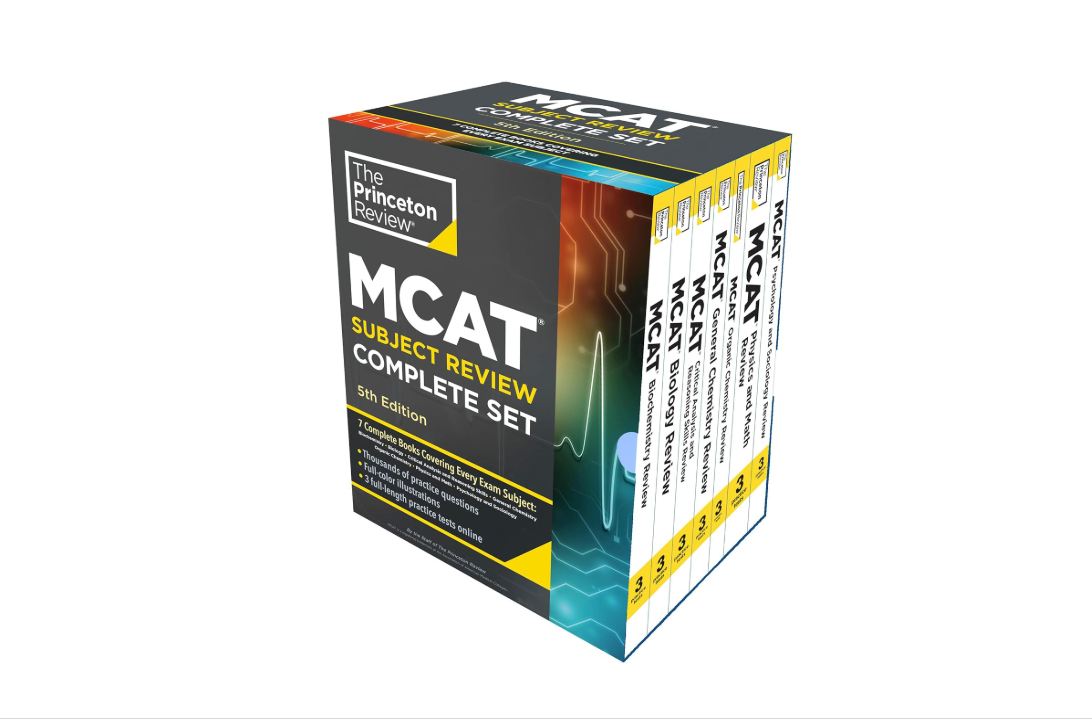
Current Price:
Key Features and Benefits:
- 9 comprehensive books with detailed explanations and strategies
- Online companion with practice questions and full-length tests
- Emphasis on CARS and reasoning skills
- Updated content aligned with current MCAT trends
Pros: Extremely thorough for deep readers; excellent strategies; good for building endurance through passages. Cons: Can be wordy/dense; less visual than some competitors.
Amazon Customer Ratings and Reviews: 4.5+/5 from hundreds of reviews — lauded for detail and score boosts; some mention it’s best paired with a QBank.
Why It’s a Good Choice: Perfect for students who learn best through comprehensive reading and need strong strategy guidance alongside content.
Ideal Use Case / Who Should Buy It: Detail-oriented self-studiers who prefer books over videos; solid for 3–6 month prep focusing on reading comprehension and analysis.
5.AAMC Official Prep Bundle (Online-Only or Full Bundle)
The AAMC Official Prep materials are the gold standard for realism — created by the test makers themselves. This bundle includes multiple full-length practice exams (Practice Exam 1–4+), Section Bank, Question Packs (Biology, Chemistry, Physics, etc.), Official Guide questions, and low-cost access to authentic passages and questions that mirror the real exam exactly.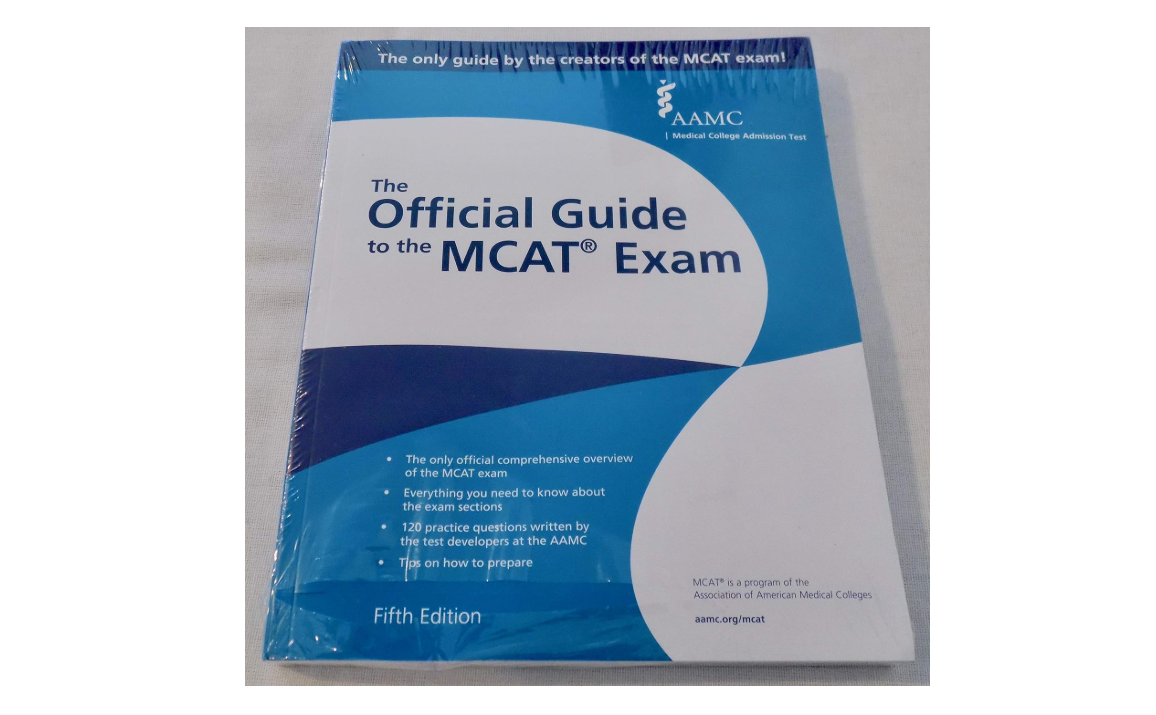
Current Price:
Key Features and Benefits:
- 100% official AAMC questions and full-length exams
- Passage-based and independent questions for all sections
- Detailed answer keys and scaling for accurate scoring
- Essential for understanding true difficulty and style
Pros: Most predictive of actual score; unbeatable realism; no better way to simulate test day. Cons: Limited explanations (focus on practice, not teaching); expensive if buying piecemeal.
Amazon/Reviews: Not Amazon-primary, but universally recommended as “must-have” by experts and 520+ scorers on Reddit/SDN.
Why It’s a Good Choice: It bridges the gap between practice and reality — every high scorer uses AAMC materials in the final months to calibrate expectations.
Ideal Use Case / Who Should Buy It: Everyone in the later stages (last 1–2 months); pair with other resources for content, save AAMC for realistic full-lengths and review.
6.Khan Academy MCAT Collection (Free)
Khan Academy partners with AAMC to offer completely free, high-quality video lessons, worked examples, and passage-based practice covering all MCAT topics. Videos are clear, bite-sized, and include interactive elements, with strong coverage of biology, biochemistry, chemistry, physics, psych/soc, and some CARS.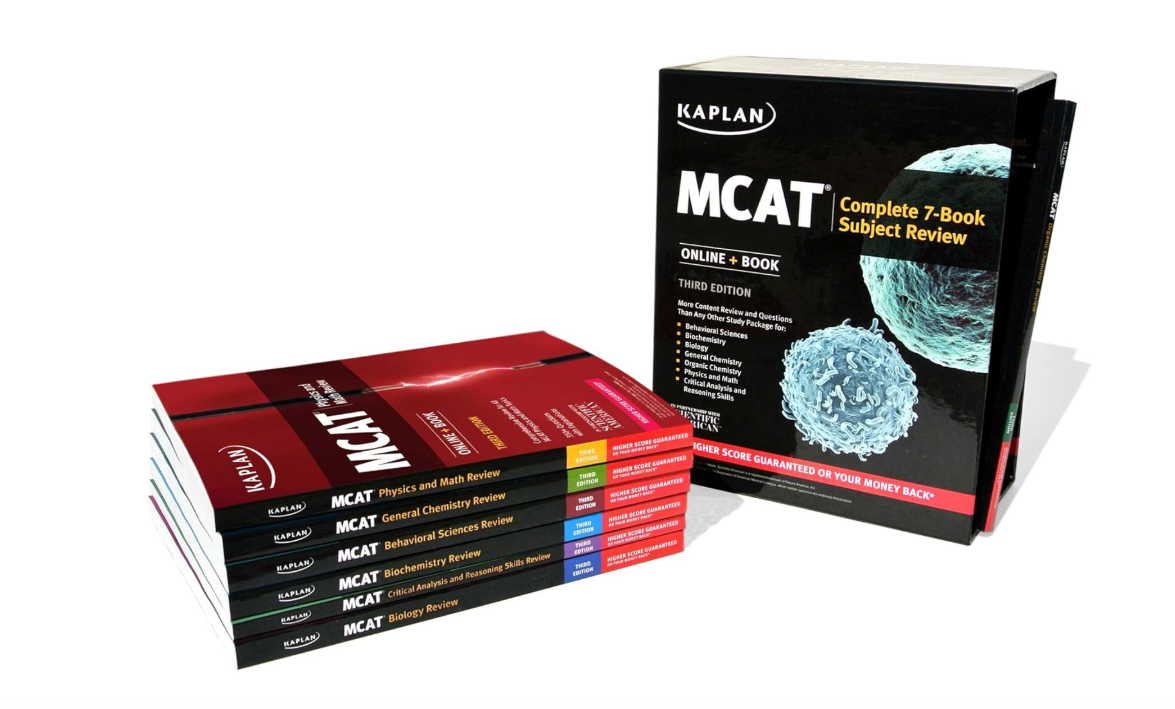
Current Price:
Key Features and Benefits:
- Hundreds of videos taught by experts
- Practice passages and questions tied to videos
- Aligned directly with AAMC content outlines
- Mobile-friendly and self-paced
Pros: Zero cost; excellent for foundational review; great supplement. Cons: Less practice volume; no full-length exams; some topics less deep.
Amazon/Reviews: Widely recommended as the best free resource in forums and expert guides.
Why It’s a Good Choice: Removes budget barriers while providing solid, official-aligned content — ideal starter or supplement.
Ideal Use Case / Who Should Buy It: Budget-conscious students or anyone needing video explanations for tough concepts; use alongside paid practice.
7.Magoosh MCAT Prep Course
Magoosh offers an affordable, self-paced online course with 400+ video lessons, 3,000+ practice questions, custom practice, full-length exams, and detailed explanations. It’s mobile-optimized with flashcards and progress tracking.![MCAT Prep Books 2025-2026 - 650+ Practice Test Questions, MCAT Secrets Study Guide and Exam Review with Step-by-Step Video Tutorials: [8th Edition]](https://williamshakespeareinsights.com/wp-content/uploads/2026/03/Screenshot-2026-03-06-142950.png)
Current Price:
Key Features and Benefits:
- Engaging videos and adaptive practice
- 3+ full-length exams
- Email support and study plans
- Great value for features
Pros: Budget-friendly all-in-one; flexible; strong explanations. Cons: Videos less polished than premium competitors; fewer exams.
Amazon/Reviews: Praised for value in expert comparisons.
Why It’s a Good Choice: Delivers comprehensive prep without high cost — excellent balance.
Ideal Use Case / Who Should Buy It: Self-paced learners on a budget wanting videos + practice.
8.Anki + Pre-made MCAT Decks (Free)
Anki is a free spaced-repetition flashcard app; pre-made MCAT decks (e.g., from Reddit or AnKing) cover thousands of high-yield facts with images, cloze deletions, and tags for all sections.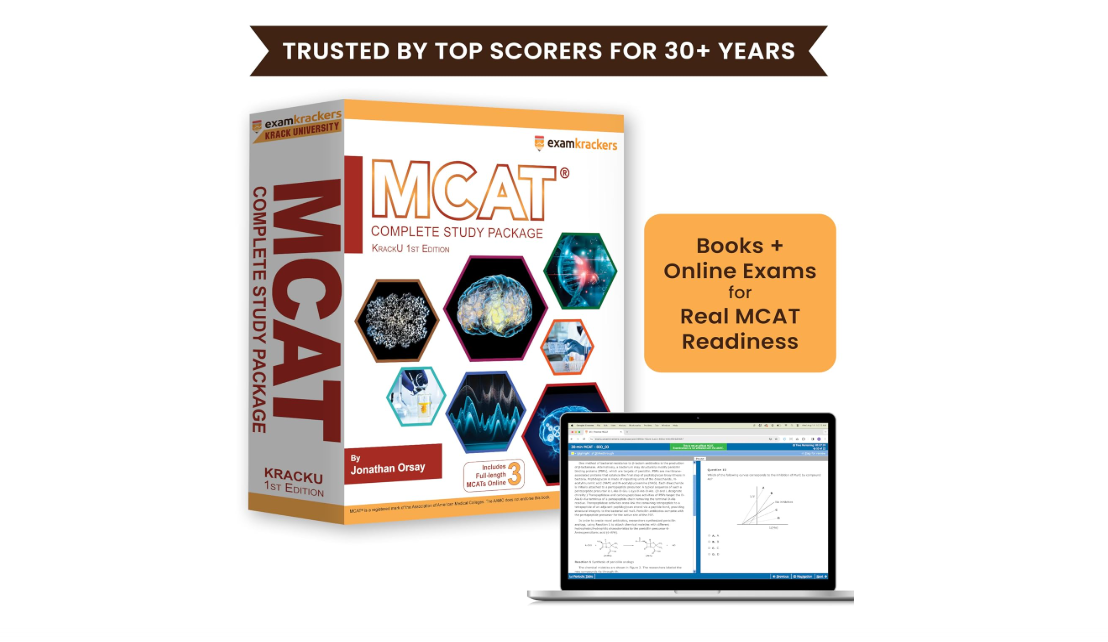
Current Price: $197.95
Key Features and Benefits:
- Spaced repetition for long-term retention
- Customizable and image-rich
- Community-maintained for updates
Pros: Extremely effective for memorization; free. Cons: Requires daily consistency; not for conceptual learning alone.
Amazon/Reviews: Community favorite for retention.
Why It’s a Good Choice: Reinforces content across all resources via active recall.
Ideal Use Case / Who Should Buy It: Anyone wanting to master facts long-term; integrate daily.
9.Jack Westin CARS Daily Passages (Free/Paid)
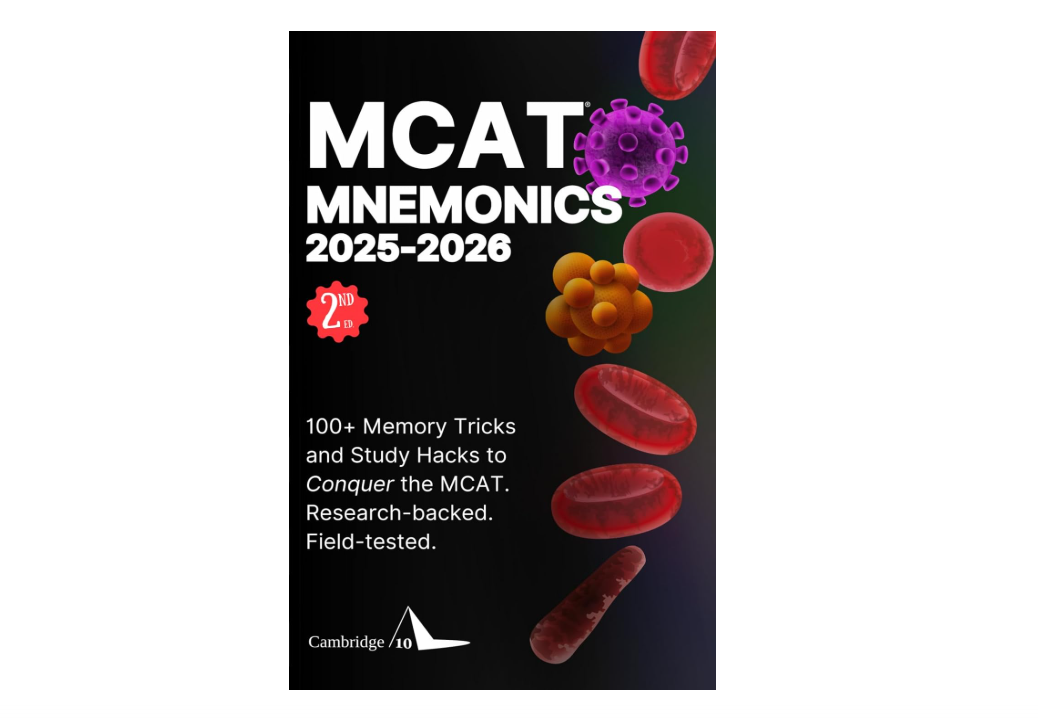
Current Price:
Key Features and Benefits:
- Realistic passages and questions
- Thorough breakdowns
- Builds CARS stamina
Pros: Top for CARS improvement; consistent practice. Cons: CARS-only focus.
Amazon/Reviews: Excellent Reddit reputation for CARS gains.
Why It’s a Good Choice: CARS is often the bottleneck — this targets it directly.
Ideal Use Case / Who Should Buy It: Students weak in CARS needing daily practice.
10.Examkrackers MCAT Complete Package
Examkrackers offers concise, high-yield books (often 1000-page manuals + audio), with focus on reasoning, mnemonics, and quick review; includes practice questions.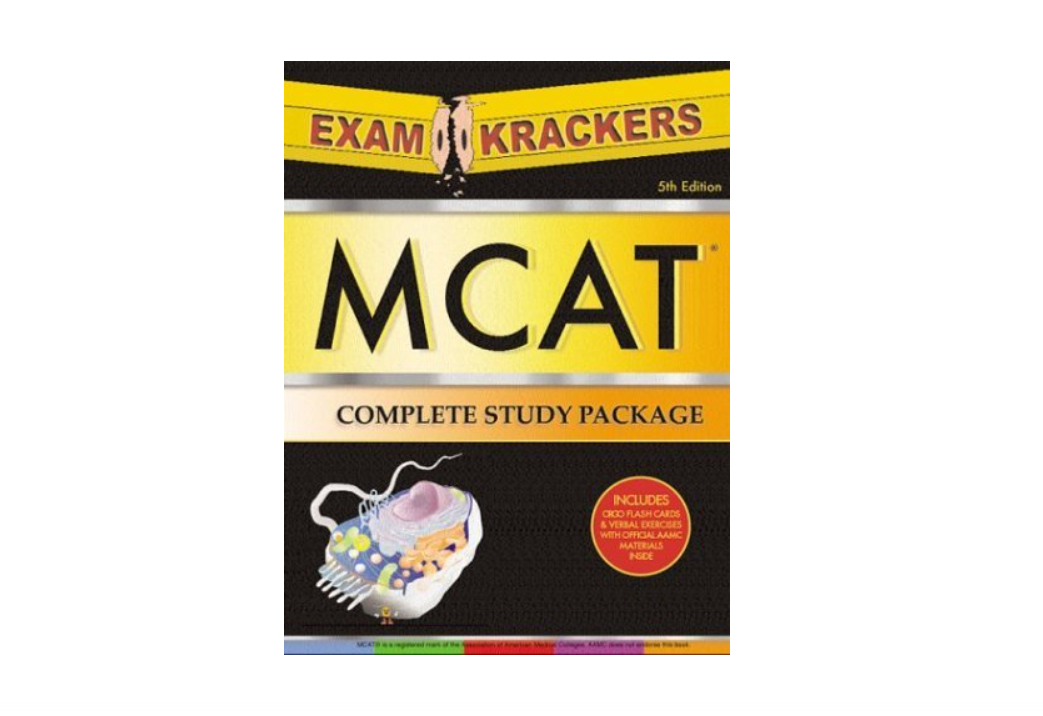
Current Price:
Key Features and Benefits:
- Concise, engaging writing
- Strong reasoning emphasis
- Good for quick review
Pros: High-yield and fun; solid alternative. Cons: Less comprehensive than Kaplan/PR.
Amazon/Reviews: Solid ratings as a concise option.
Why It’s a Good Choice: Great for efficient, focused study.
Ideal Use Case / Who Should Buy It: Students wanting shorter books or supplementary high-yield tools.
In-Depth Head-to-Head Comparison
Books (Kaplan, Princeton, Examkrackers) excel at structured content review for foundational learning, ideal for early prep. Online courses (Blueprint, Magoosh) add videos and analytics for guided, visual learners. Qbanks (UWorld) dominate practice and reasoning — crucial for score jumps. Free tools (Khan, Anki, Jack Westin) provide essential supplements without cost. Official AAMC is non-negotiable for realism in the final phase.
Key decision factors:
- Learning style — Reading → books; visual → Blueprint/Khan; active → UWorld/Anki.
- Budget — Free/low: Khan/Anki/Jack Westin; mid: Kaplan/Magoosh (~$200–$400); premium: Blueprint/UWorld ($500+).
- Timeline — 3–6 months: Start with content (books/course), move to practice (Qbank), end with AAMC.
- Focus — Weak CARS? Jack Westin. Need stamina? Blueprint exams. Deep explanations? UWorld.
Common high-scorer stack: Kaplan/Princeton books + UWorld QBank + AAMC exams + Anki + Khan videos.
How to Build Your MCAT Study Plan
- Take a diagnostic (free AAMC half-length or Blueprint/Khan) to set baseline.
- Set timeline: 3–6 months typical (20–40 hrs/week).
- Phase 1 (Months 1–2/3): Content mastery — use Kaplan books or Blueprint/Khan videos + Anki daily.
- Phase 2 (Months 2/3–4): Active practice — UWorld QBank (untimed → timed), review mistakes deeply.
- Phase 3 (Last 1–2 months): Full-length simulation — AAMC exams weekly, review thoroughly; add Jack Westin for CARS.
- Track progress: Weekly reviews, adjust weak areas.
- Recommended stacks:
- Budget: Khan + Anki + UWorld + AAMC (~$600–$800 total).
- Balanced: Kaplan books + UWorld + AAMC.
- Premium: Blueprint course + AAMC.
Tips: Focus on active recall, review errors (why wrong?), simulate test conditions, prioritize sleep/exercise.
Frequently Asked Questions (FAQ)
- Is Kaplan or Princeton Review better? Kaplan for streamlined/online extras; Princeton for deeper strategies — both excellent; choose based on sample chapters.
- Do I need a full course or just books? Books + QBank often sufficient; courses help if you need structure/videos.
- What’s the best free MCAT resource? Khan Academy for content; Anki for retention; Jack Westin for CARS.
- How many full-length exams should I take? 8–12 total (AAMC + others); space them out.
- Is UWorld worth the price? Yes — most 520+ scorers call it essential for practice/explanations.
- When should I start AAMC materials? Last 4–8 weeks; they’re predictive.
- Best for CARS? Jack Westin + practice passages from AAMC/UWorld.
- Can I self-study successfully? Absolutely — many do with discipline and the right mix.
Final Thoughts / Conclusion
There’s no single “best” resource — success comes from the right combination tailored to your style, budget, and weaknesses. Start with a diagnostic, pick 2–3 core tools from this list (e.g., content + practice + official), and commit to consistent, active study