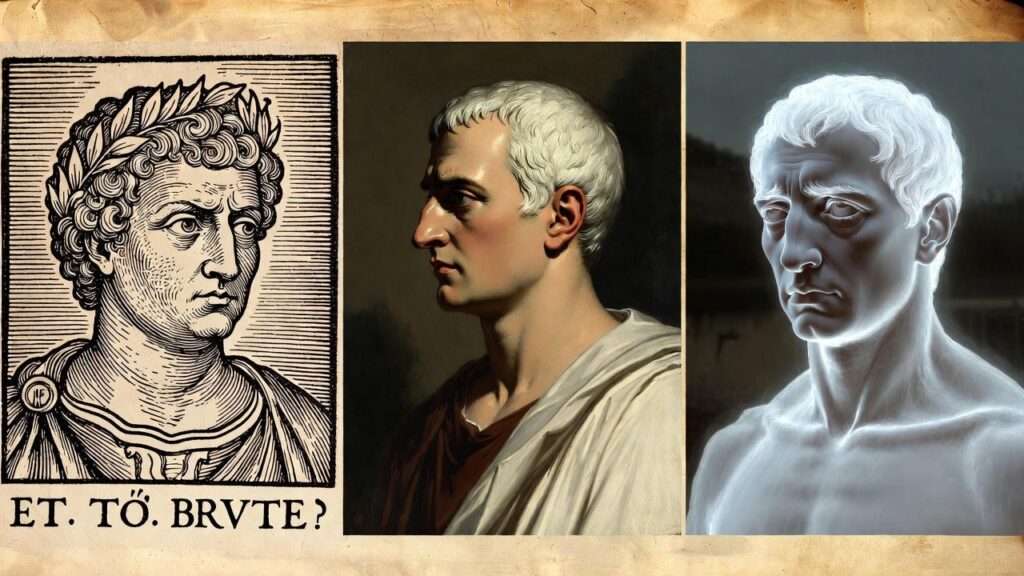
Imagine a Roman general, fresh from crushing an enemy army in mere days, sending a message back to the Senate in Rome that consisted of just three words: “Veni, vidi, vici”—I came, I saw, I conquered. This legendary declaration, known as Caesars boast, captured the essence of Julius Caesar’s unparalleled speed, confidence, and dominance. Far from humble, it was a bold proclamation of supremacy that stunned contemporaries and echoed through history. Yet, centuries later, William Shakespeare—master of human ambition, tragedy, and irony—wove this same boast into his plays, transforming a historical quip into a powerful motif of hubris, swift triumph, and inevitable downfall.
On your Shakespeare-focused blog, readers often search for explanations of classical allusions that puzzle students, theater lovers, and literature enthusiasts alike. Caesars boast frequently appears in crosswords, history quizzes, and Shakespeare studies, leaving many wondering: What exactly does it mean? Where does Shakespeare reference it directly? And how does it illuminate the Bard’s portrayal of power and pride? This comprehensive guide decodes the historical origins of “Veni, vidi, vici,” traces its explicit and subtle echoes across Shakespeare’s canon, and explores why this phrase resonates so deeply in themes of ambition and fate. By the end, you’ll gain fresh insights into how Shakespeare critiques unchecked confidence—insights that enhance your reading of the plays and enrich classroom discussions or essays.
The Historical Roots of Caesar’s Boast — “Veni, Vidi, Vici” in Context
To understand Shakespeare’s use of Caesars boast, we must first return to its real-world birthplace: the ancient Roman world of 47 BCE.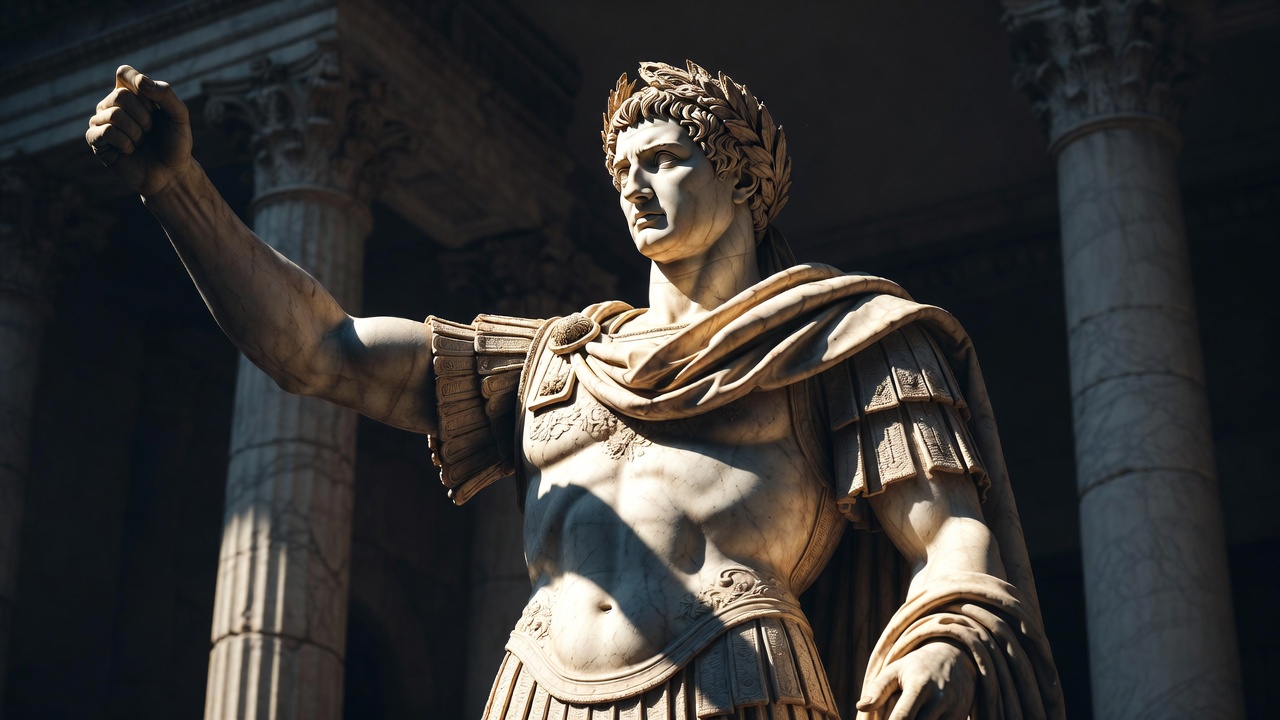
Julius Caesar’s Victory at the Battle of Zela (47 BCE)
Julius Caesar had just navigated the complexities of the Alexandrian War in Egypt, securing Cleopatra’s throne and fathering a child with her. But trouble brewed in the East. Pharnaces II, king of Pontus (in modern-day northern Turkey), seized the chaos of Rome’s civil wars to invade Roman territories, defeating a Roman force and boasting of his own conquests.
Caesar, ever the opportunist, marched north with remarkable speed. Arriving in Pontus, he faced Pharnaces’ larger army near the town of Zela. In a swift campaign lasting just five days—and the decisive battle itself only a few hours—Caesar routed the Pontic forces. Pharnaces fled, and the rebellion ended almost before it began.
Ancient historians preserve the famous report. Plutarch, in his Life of Caesar, describes Caesar writing the words to a friend in Rome, praising their brevity and persuasive power. Appian notes it as a letter to the Senate, contrasting Caesar’s quick success with Pompey’s longer Pontic campaigns. Suetonius adds that Caesar displayed the phrase on placards during his triumph in Rome in 46 BCE, parading it as a symbol of effortless victory.
Why “Veni, Vidi, Vici” Was Revolutionary
Traditional Roman dispatches were verbose, detailing strategies and casualties. Caesar’s three-word message broke convention with its laconic brilliance—rhythmic, alliterative, and arrogantly self-assured. It emphasized not just victory, but the speed and inevitability of it: arrival, observation, domination—all in rapid succession.
This brevity was revolutionary. It projected Caesar as a superhuman figure: decisive, unstoppable, almost godlike. Critics saw it as boastful (“thrasonical,” as Shakespeare would later call it), yet it captivated Rome, underscoring his military genius and political ambition.
Caesar’s Self-Promotion Style
Caesar’s Commentarii (his own war accounts) already showcased his third-person style, presenting himself as an objective hero. “Veni, vidi, vici” fits this pattern: a concise, personal triumph that doubled as propaganda. It foreshadowed his rise to dictatorship and the end of the Republic—ambition wrapped in eloquence.
“Caesar’s Thrasonical Brag” — Shakespeare’s Direct Reference in As You Like It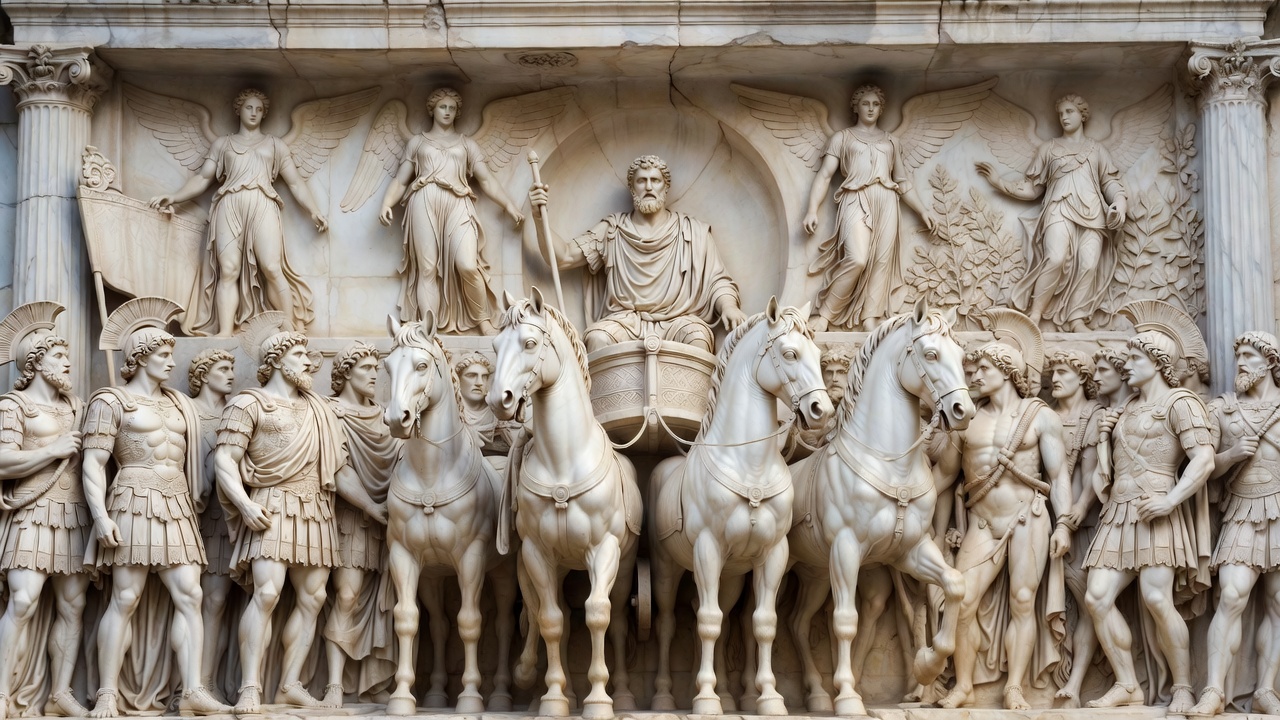
Shakespeare first explicitly invokes Caesars boast in his comedy As You Like It (c. 1599), using it for humorous effect.
The Key Passage — Act 5, Scene 2
In the Forest of Arden, Rosalind (disguised as Ganymede) reacts to the sudden romance between Oliver (Orlando’s reformed brother) and Celia (as Aliena):
There was never any thing so sudden but the fight of two rams and Caesar’s thrasonical brag of ‘I came, saw, and overcame:’ for your brother and my sister no sooner met but they looked; no sooner looked but they loved; no sooner loved but they sighed…
Here, Shakespeare translates “Veni, vidi, vici” directly as “I came, saw, and overcame,” adding “thrasonical”—a term from classical comedy meaning boastful or vainglorious (derived from Thraso, the braggart soldier in Terence’s plays).
Comic Context and Irony
Rosalind compares the lovers’ instant passion to violent rams clashing and Caesar’s arrogant dispatch. The parallel is playful: military conquest becomes romantic lightning-strike. Yet irony lurks—Oliver’s “sudden” love mirrors Caesar’s swift victory, but in comedy, such speed leads to harmony, not tragedy.
This early reference (in one of Shakespeare’s happiest plays) treats the boast lightly, as cultural shorthand for anything ridiculously abrupt and self-congratulatory.
Why This Matters for Readers
For students analyzing As You Like It, this allusion highlights Rosalind’s wit—she mocks romantic clichés while orchestrating love’s resolutions. It also shows Shakespeare’s Renaissance audience would recognize the phrase instantly, blending classical history with pastoral romance.
Echoes of Caesar’s Boast in Julius Caesar — Hubris and the “Northern Star”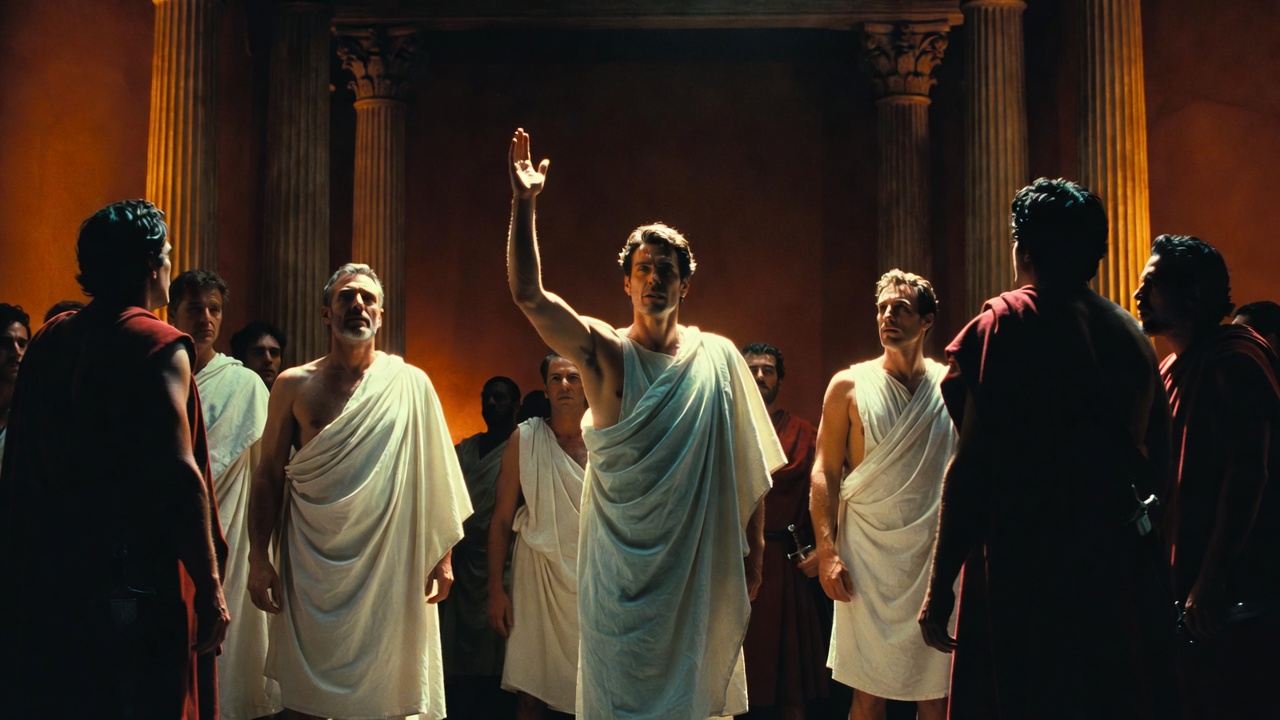
While Shakespeare never places the exact words “Veni, vidi, vici” in the mouth of his dramatic Julius Caesar, the spirit of Caesars boast permeates the tragedy. The historical phrase’s core qualities—supreme self-confidence, inevitability of success, and a refusal to acknowledge limitation—find their most powerful and ultimately fatal expression in the play’s portrayal of Caesar himself.
Caesar’s Most Famous Self-Boast in the Play
The clearest echo occurs in Act 3, Scene 1, moments before the assassination:
But I am constant as the northern star, Of whose true-fix’d and resting quality There is no fellow in the firmament. The skies are painted with unnumber’d sparks; They are all fire, and every one doth shine; But there’s but one in all doth hold his place. So in the world: ’tis furnish’d well with men, And men are flesh and blood, and apprehensive; Yet in the number I do know but one That unassailable holds on his rank, Unshaked of motion; and that I am he…
This speech is Caesar at his most imperious. He compares himself to the immovable North Star (Polaris), the one fixed point around which the heavens appear to revolve. The language drips with the same absolute certainty that animated “Veni, vidi, vici.” Just as the historical Caesar claimed to have seen, assessed, and conquered in a breath, the dramatic Caesar declares himself beyond challenge, beyond fluctuation, beyond mortal limitation.
Scholars frequently note this parallel: both statements are acts of rhetorical self-elevation that border on the divine. The historical boast reduced complex military and political realities to three triumphant verbs; the theatrical one reduces the entire Roman world to a single, unassailable point—himself.
Thematic Connections to Historical Caesar
Shakespeare drew heavily on Plutarch’s Parallel Lives and Appian’s Civil Wars for source material. In Plutarch, Caesar’s friends and flatterers warn him repeatedly of growing suspicion, yet he dismisses danger with supreme confidence. The play amplifies this trait into tragic flaw.
Caesars boast—whether the original dispatch or its dramatic equivalents—embodies hubris (hybris in Greek tragedy): the overweening pride that invites nemesis (retributive downfall). Caesar’s refusal to fear the Ides of March portents, his rejection of the crown thrice (yet acceptance in spirit), and his final comparison to the North Star all echo the same dangerous certainty that made “Veni, vidi, vici” both celebrated and resented in Rome.
The irony is devastating: the man who boasted of conquering others so swiftly is himself conquered in seconds by daggers. Speed of victory becomes speed of destruction.
Key Scenes Reinforcing the Motif
Several earlier moments build toward this climactic boast:
- Act 1, Scene 2: Caesar’s casual dismissal of the soothsayer (“He is a dreamer; let us leave him”) shows the same disdain for omens that the historical Caesar displayed.
- Act 2, Scene 2: Decius Brutus reinterprets Calpurnia’s nightmare as a positive prophecy, appealing directly to Caesar’s ambition and vanity: “The senate have concluded / To give this day a crown to mighty Caesar.” The flattery works because it aligns with Caesar’s self-image as inevitable victor.
- Cassius’s private conversations (Act 1) repeatedly frame Caesar as a mortal man pretending to godhood, planting the seeds of conspiracy by contrasting his physical frailty (swimming the Tiber, fever in Spain) with his public boasts.
Together, these scenes create a cumulative portrait: a leader whose swift triumphs and rhetorical confidence have become indistinguishable from tyranny.
Broader Echoes and Allusions Across Shakespeare’s Works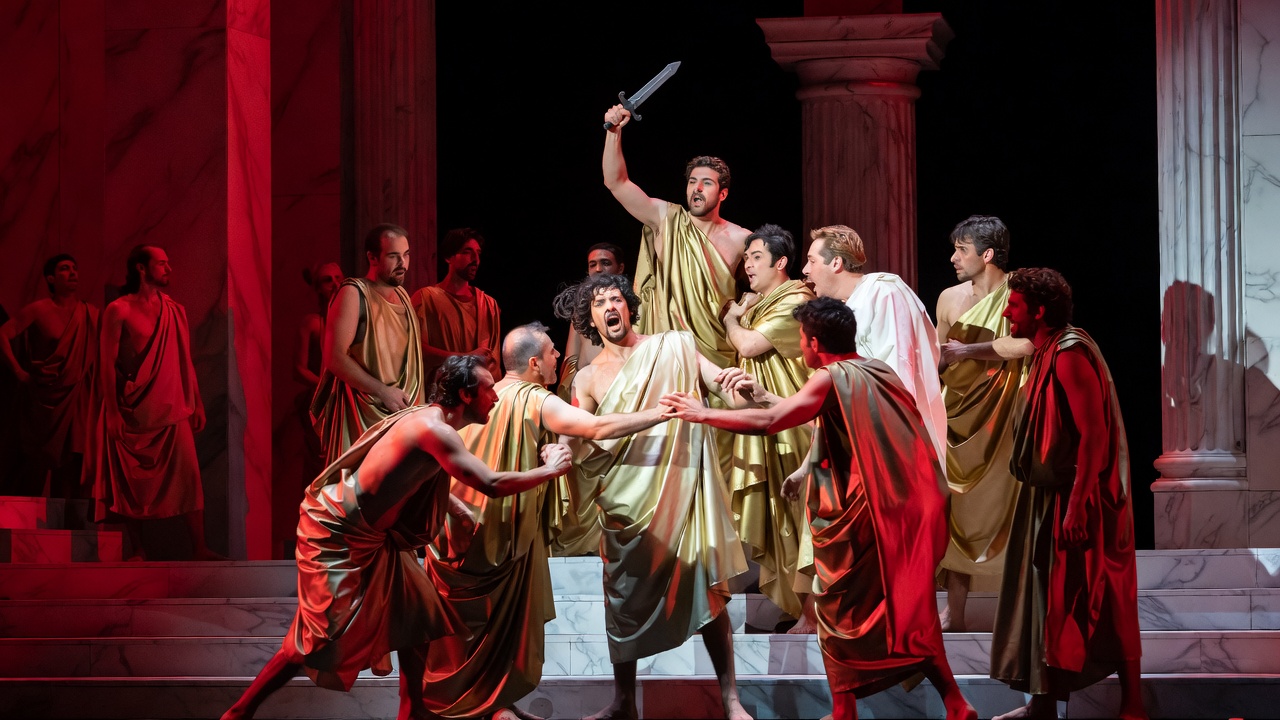
Shakespeare’s fascination with Caesar’s character and Caesars boast did not end with Julius Caesar (c. 1599). The motif appears in subtler forms across his canon, often as a shorthand for dangerous overconfidence.
Early Career — Love’s Labour’s Lost
In the earlier comedy Love’s Labour’s Lost (c. 1595–96), the braggart Armado attempts to impress with pseudo-scholarly rhetoric. At one point the play toys with numerical wordplay that scholars link to parodies of “Veni, vidi, vici.” Armado’s inflated style mocks the kind of self-aggrandizing brevity Caesar mastered—turning military triumph into comic pomposity.
Later Echoes — Structural and Thematic Parallels
- Antony and Cleopatra (c. 1606–07): Octavius Caesar (the future Augustus) is presented as the cool, calculating opposite of Antony’s passion. Yet his ultimate victory carries an echo of the original boast: methodical, inevitable conquest. The play implicitly asks whether the new Caesar has learned the dangers of the old one’s hubris.
- Cymbeline (c. 1609–10): The Roman empire’s demand for tribute from Britain is framed in terms of imperial arrogance. While not a direct allusion, the motif of Roman overreach resonates with Caesar’s legacy.
- Coriolanus (c. 1608): The title character’s refusal to flatter the plebeians mirrors Caesar’s refusal to bend—another case of pride leading to political catastrophe.
In each instance, Shakespeare uses the archetype of the boastful conqueror to explore recurring questions: When does justified confidence become destructive arrogance? Can any leader remain “constant as the northern star” without inviting rebellion?
Why Shakespeare Loved Caesar’s Boast — Themes of Ambition, Fate, and Irony
Shakespeare’s repeated return to the image of Caesars boast—whether in direct quotation, structural echo, or thematic resonance—reveals something profound about his dramatic imagination. The phrase and its spirit offered the playwright a perfect shorthand for several of his most enduring obsessions.
First, ambition. In the Renaissance worldview (heavily influenced by Seneca, Plutarch, and Machiavelli), ambition was both glorious and perilous. “Veni, vidi, vici” encapsulates the intoxicating thrill of rapid, decisive achievement—the dream of every Elizabethan courtier, merchant adventurer, or aspiring playwright. Yet Shakespeare never lets that thrill stand unchallenged. In Julius Caesar, the boastful certainty that makes Caesar magnificent is precisely what makes him blind to the conspiracy forming around him. The same quality that won Zela dooms the Capitol.
Second, fate and inevitability. The historical boast implies a universe that bends to Caesar’s will: he arrives, he sees, he conquers—almost as if the outcome were preordained. Shakespeare inverts this. In the tragedy, Caesar’s belief in his own constancy (“constant as the northern star”) is what seals his fate. The more he insists on inevitability, the more the conspirators feel compelled to prove him mortal. The boast becomes a self-fulfilling prophecy—not of victory, but of downfall.
Third, irony. Few devices are more Shakespearean than dramatic irony, and Caesars boast is irony distilled. The audience knows (from history and from the play’s early scenes) that Caesar will fall. Every assertion of permanence or supremacy therefore lands with crushing weight. When he declares himself the fixed star, we already hear the daggers being drawn. When Rosalind in As You Like It mocks the “thrasonical brag,” the comedy depends on our knowing how tragically that same attitude plays out elsewhere.
Shakespeare also uses the motif to comment on the Renaissance fascination with classical models. Elizabethan England was obsessed with Rome—its oratory, its republican ideals, its imperial grandeur. By turning Caesar’s most famous line into a warning rather than a celebration, Shakespeare subtly critiques blind admiration of antiquity. He reminds his audience that even the greatest conquerors are flesh and blood.
Modern parallels abound. Politicians still issue triumphalist soundbites after swift victories; business leaders adopt “veni vidi vici” as a motto for aggressive takeovers; social media thrives on instant, boastful declarations of success. Shakespeare’s treatment reminds us that such rhetoric often conceals fragility.
Practical Tips for Students and Readers
Encountering Caesars boast in Shakespeare can feel intimidating, but it becomes a powerful analytical tool once understood. Here are actionable ways to use this knowledge:
- In essays and exams When writing about hubris in Julius Caesar, cite both the historical “Veni, vidi, vici” and the “northern star” speech. Show how Shakespeare transforms a real boast of military success into a tragic boast of personal invulnerability. This demonstrates wider reading and contextual understanding—markers love that.
- Spotting allusions in other plays Look for moments of sudden triumph or arrogant certainty. Ask: Does this character claim effortless victory? Is their confidence framed as godlike or immovable? If so, you may be seeing an echo of Caesar’s boast.
- Comparison table: Historical vs. Shakespearean versions
| Aspect | Historical “Veni, vidi, vici” | Shakespearean Echoes (Julius Caesar) | Shakespearean Echoes (As You Like It) |
|---|---|---|---|
| Tone | Triumphant, laconic, self-assured | Imperious, almost divine | Comic, mocking (“thrasonical”) |
| Context | Military dispatch after swift victory | Political self-assertion before assassination | Metaphor for instantaneous romantic love |
| Outcome | Caesar’s rise to power | Caesar’s downfall | Comic harmony |
| Thematic function | Propaganda of inevitability | Hubris inviting nemesis | Parody of exaggerated certainty |
| Key quote | “I came, I saw, I conquered” | “I am constant as the northern star” | “Caesar’s thrasonical brag of ‘I came, saw…'” |
Use this table (or expand it in your notes) to structure comparative answers.
- Recommended further reading
- Plutarch’s Life of Julius Caesar (North’s 1579 translation—Shakespeare’s main source)
- Suetonius, The Twelve Caesars (especially the Caesar section)
- T. S. Dorsch’s Arden edition of Julius Caesar (excellent notes on classical allusions)
- Coppélia Kahn’s Roman Shakespeare (for gender and power readings)
Frequently Asked Questions (FAQs)
What does “Caesar’s boast” mean? It refers primarily to Julius Caesar’s famous dispatch “Veni, vidi, vici” (“I came, I saw, I conquered”) after his victory at Zela in 47 BCE—a succinct, boastful claim of total and effortless triumph.
Is “Veni, vidi, vici” actually spoken in Shakespeare’s Julius Caesar? No. The exact phrase never appears. However, Caesar’s “constant as the northern star” speech serves as its dramatic equivalent, expressing the same unshakeable self-confidence.
Where else does Shakespeare reference Caesar’s boast? Most explicitly in As You Like It (Act 5, Scene 2), where Rosalind calls it “Caesar’s thrasonical brag.” Subtler echoes appear in Love’s Labour’s Lost and across the Roman plays.
Why is it called “thrasonical”? “Thrasonical” means extravagantly boastful. It derives from Thraso, the miles gloriosus (braggart soldier) in Terence’s Roman comedies—a stock character known for empty vainglory.
How can I use this in a modern context or crossword? Crossword clues for “Caesar’s boast” or “Veni vidi vici” are common. In modern usage, the phrase symbolizes any swift, confident victory—often invoked (and parodied) in politics, sports, and business.
From a three-word battlefield dispatch in 47 BCE to a recurring motif across Shakespeare’s comedies and tragedies, Caesars boast has proven remarkably durable. What began as Julius Caesar’s proudest moment became, in Shakespeare’s hands, a cautionary emblem of the dangers of absolute certainty.
The historical Caesar used brevity to project invincibility; the dramatic Caesar uses grand metaphor to the same end—yet both versions blind the speaker to the knives (literal or political) closing in. Shakespeare does not simply borrow from antiquity; he refracts it through a Renaissance lens, asking timeless questions about power, pride, and the fragility of human achievement.
Whether you are a student preparing for an exam, a theatergoer noticing new layers in a production, or a reader simply curious why a 2,000-year-old Latin phrase still echoes in English literature, understanding Caesars boast unlocks deeper appreciation of Shakespeare’s genius. It reminds us that the most confident declarations often precede the most dramatic reversals—a truth as relevant in Rome, in Elizabethan London, and in our own time.