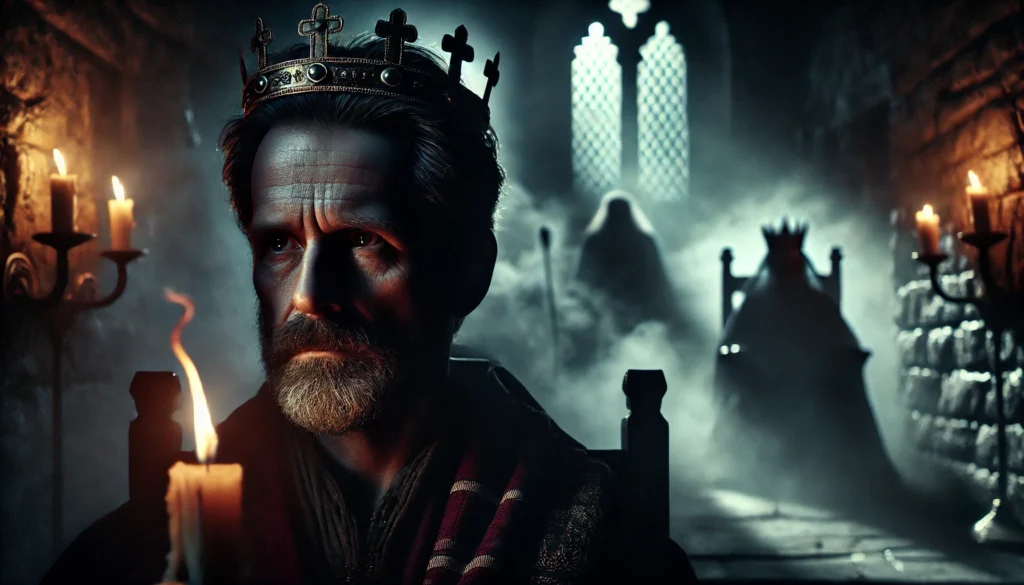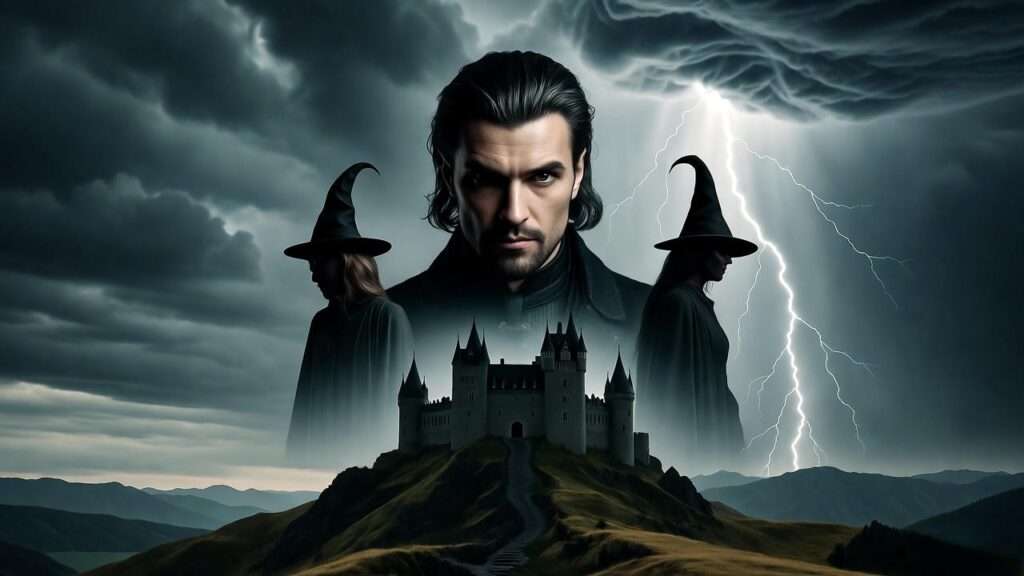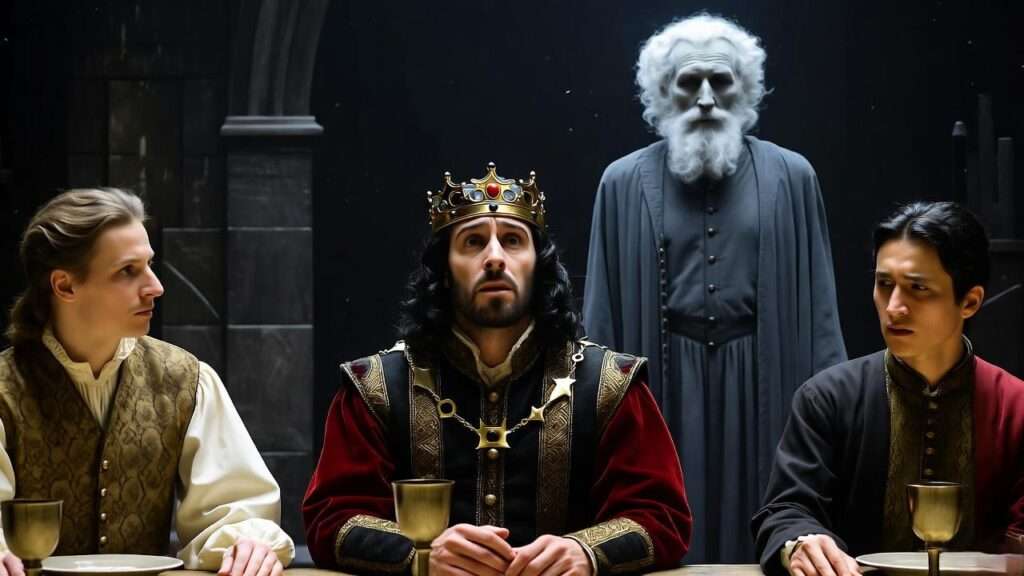
Picture a darkened stage, a feast in disarray, and a blood-soaked specter staring silently at a trembling king. This is the haunting image of Banquo’s ghost in Shakespeare’s Macbeth, a moment that encapsulates the character of Banquo in Macbeth as both a moral anchor and a chilling symbol of guilt. Who is Banquo, and why does his presence—living and spectral—resonate so deeply in this tragedy of ambition and betrayal? As a noble warrior, loyal friend, and moral counterpoint to Macbeth, Banquo’s character offers profound insights into Shakespeare’s exploration of human nature. This article delves into Banquo’s role, analyzing his loyalty, moral integrity, and tragic significance, providing students, educators, and Shakespeare enthusiasts with a comprehensive understanding of his impact. Drawing on textual evidence and scholarly perspectives, we uncover why Banquo remains a pivotal figure in Macbeth and a timeless study in virtue.
Who Is Banquo? A Brief Character Overview
Banquo’s Role in Macbeth
Banquo enters Macbeth as a Scottish nobleman and a trusted comrade of Macbeth, fighting alongside him in the play’s opening battles. In Act 1, Scene 3, he shares a pivotal moment with Macbeth, encountering the Weird Sisters who prophesy Macbeth’s rise to kingship and Banquo’s lineage as future kings. Unlike Macbeth, whose ambition is ignited, Banquo remains cautious, questioning the witches’ motives. His role is not merely that of a supporting character; he is a lens through which Shakespeare examines loyalty, fate, and moral choice.
Historically, Banquo’s inclusion may nod to King James I, a descendant of the real Banquo according to Holinshed’s Chronicles, a source for Macbeth. Shakespeare likely crafted Banquo’s nobility to flatter the Stuart king, but his character transcends political flattery, embodying universal themes of integrity and legacy.
Key Traits and First Impressions
Banquo is introduced as honorable, brave, and discerning. In Act 1, Scene 3, he warns Macbeth of the witches’ prophecy: “But ’tis strange: And oftentimes, to win us to our harm, The instruments of darkness tell us truths.” This skepticism highlights his wisdom and moral grounding, contrasting with Macbeth’s susceptibility to temptation. Renowned Shakespeare scholar A.C. Bradley describes Banquo as “a man of conscience,” noting his role as a foil to Macbeth’s descent into corruption. Banquo’s initial portrayal sets the stage for his evolution into a symbol of lost virtue.
Banquo as the Moral Compass of Macbeth
Loyalty to King and Country
Banquo’s loyalty to King Duncan is unwavering, even as the witches’ prophecy tempts him with a royal lineage. Unlike Macbeth, who plots Duncan’s murder, Banquo remains steadfast, prioritizing duty over ambition. In Act 3, Scene 1, his soliloquy reveals his hope for his descendants but rejects treacherous action: “If there come truth from them… may they not be my oracles as well?” This restraint underscores his allegiance to moral and political order.
| Trait | Banquo | Macbeth |
|---|---|---|
| Response to Prophecy | Skeptical, cautious | Ambitious, obsessive |
| Loyalty | Loyal to Duncan and Scotland | Betrays Duncan for power |
| Moral Action | Resists temptation | Succumbs to ambition |
This comparison highlights Banquo’s role as a moral exemplar, a beacon of virtue in a play steeped in betrayal.
Moral Integrity in the Face of Temptation
Banquo’s skepticism of the witches reflects his moral clarity. He recognizes their potential to manipulate, as seen in his warning about “instruments of darkness.” This foresight contrasts with Macbeth’s willingness to embrace the prophecy, setting Banquo apart as a figure of restraint. His integrity foreshadows his tragic murder in Act 3, Scene 3, as Macbeth, threatened by Banquo’s nobility, orders his death. Literary critic Marjorie Garber notes that Banquo’s refusal to act on the prophecy “marks him as a tragic figure whose virtue invites destruction.” His moral stand, while admirable, seals his fate in a world corrupted by ambition.
Banquo as Macbeth’s Foil
Contrasting Ambition and Restraint
In literary terms, a foil highlights a character’s traits through contrast, and Banquo serves as Macbeth’s perfect foil. Where Macbeth’s ambition drives him to murder, Banquo’s restraint keeps him honorable. In Act 2, Scene 1, Banquo admits to “cursed thoughts” but prays for divine strength to resist them, a stark contrast to Macbeth’s plotting. The banquet scene (Act 3, Scene 4), where Banquo’s ghost appears, crystallizes this contrast, with the specter embodying Macbeth’s guilt over betraying his friend’s virtue.
The Role of Banquo’s Lineage
The witches’ prophecy that Banquo’s descendants will inherit the throne (Act 1, Scene 3) introduces a political dimension. This prophecy, fulfilled through the historical Banquo’s connection to King James I, underscores Banquo’s legacy as one of enduring nobility. The Folger Shakespeare Library notes that this prophecy “elevates Banquo’s moral victory,” as his line outlives Macbeth’s fleeting reign. This contrast amplifies the play’s exploration of fate versus free will, with Banquo’s legacy symbolizing the triumph of integrity.
Banquo’s Ghost: Symbolism and Tragic Foreshadowing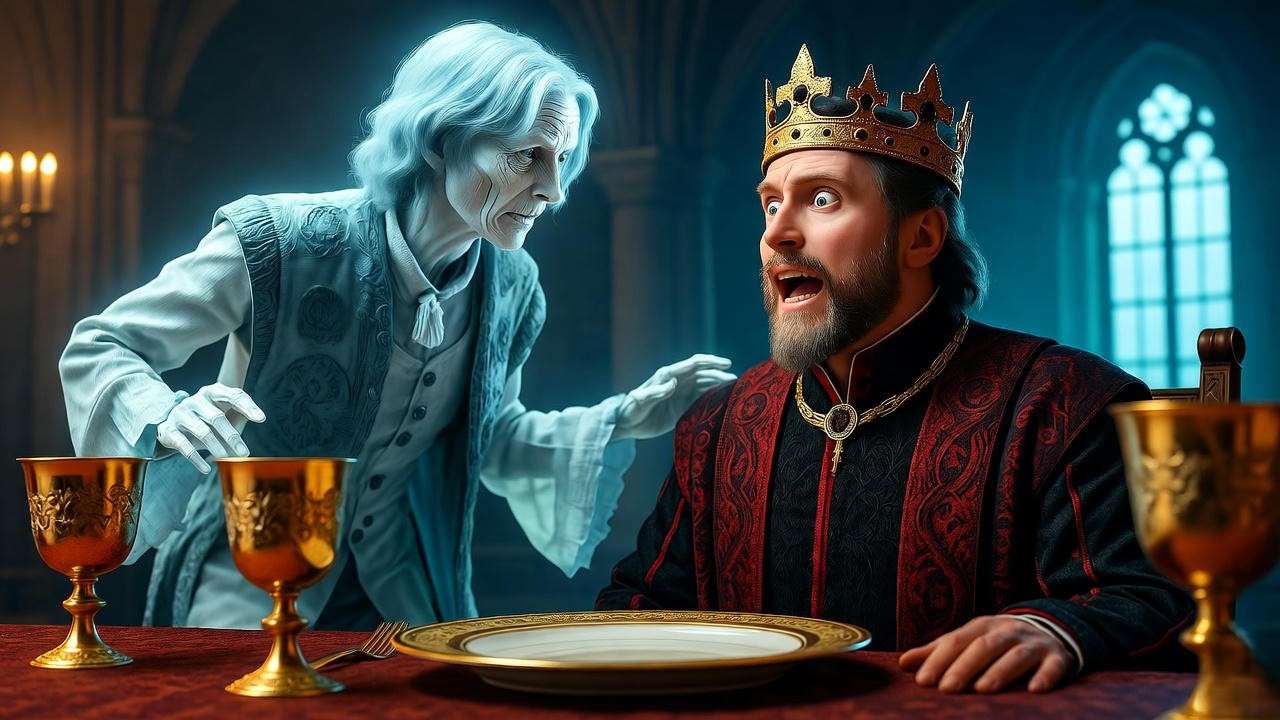
The Banquet Scene and Its Impact
The banquet scene in Act 3, Scene 4, is a dramatic pinnacle, where Banquo’s ghost confronts Macbeth before his court. As Macbeth raves, “Thou canst not say I did it: never shake Thy gory locks at me,” the ghost’s silent presence exposes his unraveling psyche. This moment, rich with dramatic irony, underscores Banquo’s role as a symbol of guilt and retribution. The ghost’s appearance disrupts Macbeth’s facade of power, foreshadowing his inevitable downfall.
Symbolism of Banquo’s Absence and Presence
Banquo’s dual role—living friend and ghostly accuser—amplifies his symbolic weight. In life, he represents the path Macbeth could have taken; in death, he embodies the consequences of Macbeth’s choices. The ghost’s silence, as noted by critic Stephen Greenblatt, “speaks louder than words,” haunting Macbeth with the moral cost of his ambition. Modern productions often stage the ghost as a spectral figure or an empty chair, emphasizing its psychological impact. This duality reinforces Macbeth’s themes of guilt, fate, and the supernatural.
Banquo’s Legacy in Macbeth and Beyond
Banquo’s Influence on the Play’s Themes
Banquo’s character is integral to Macbeth’s exploration of ambition, morality, and fate. His loyalty and restraint highlight the destructive consequences of unchecked ambition, serving as a moral counterpoint to Macbeth’s descent into tyranny. By resisting the witches’ prophecy, Banquo embodies the possibility of choosing virtue over power, a theme that resonates throughout Shakespeare’s works. His murder, ordered by Macbeth in Act 3, Scene 3, underscores the tragedy of virtue in a corrupt world, as his death eliminates a voice of reason. Scholar Janet Adelman, in her analysis of Macbeth, argues that Banquo’s “noble death reinforces the play’s meditation on the fragility of moral order.” His presence, both in life and as a ghost, amplifies the play’s warning against ambition’s corrosive effects.
Banquo also ties into the theme of fate versus free will. While Macbeth attempts to defy the witches’ prophecy by killing Banquo and his son Fleance, Fleance’s escape ensures the prophecy’s fulfillment. This outcome suggests that fate, as represented by Banquo’s lineage, prevails over human schemes, a concept Shakespeare weaves into the play’s tragic structure. For readers and audiences, Banquo’s story offers a lens to examine the tension between destiny and choice, a timeless philosophical question.
Banquo in Performance and Adaptation
Banquo’s character comes alive in theatrical and cinematic interpretations, each highlighting different facets of his role. In Roman Polanski’s 1971 film adaptation of Macbeth, Banquo is portrayed as a robust, honorable figure, with his ghost scene staged as a visceral, bloodied apparition that shocks both Macbeth and the audience. In contrast, Justin Kurzel’s 2015 adaptation emphasizes Banquo’s stoicism, with actor Paddy Considine delivering a understated yet powerful performance. Directors often face the challenge of balancing Banquo’s nobility with his spectral menace, a duality that requires nuanced acting.
Modern productions also experiment with the ghost’s staging. Some, like the Royal Shakespeare Company’s 2018 production, use lighting and sound to suggest Banquo’s presence without a physical actor, amplifying the psychological horror. Performance reviews, such as one from The Guardian (2018), praise these choices for “making Banquo’s ghost a manifestation of Macbeth’s fractured mind.” These interpretations underscore Banquo’s enduring relevance, as directors and actors continue to find new ways to bring his character to life.
Why Banquo Matters to Modern Readers
Lessons from Banquo’s Character
Banquo’s story offers timeless lessons about integrity, loyalty, and the consequences of moral choices. His refusal to compromise his values, even when tempted by the promise of a royal lineage, resonates with modern audiences navigating ethical dilemmas. For students studying Macbeth, Banquo serves as a model of principled decision-making, illustrating the strength required to resist temptation in high-stakes situations. His tragic fate—murdered for his virtue—also prompts reflection on the cost of standing firm in a world driven by ambition and betrayal.
For professionals or leaders, Banquo’s loyalty to his king and country mirrors the importance of maintaining integrity in competitive environments. A practical takeaway might be to approach decisions with Banquo’s skepticism, questioning motives and outcomes before acting. As Shakespeare scholar Emma Smith notes, “Banquo’s restraint is a reminder that moral choices define legacy more than fleeting power.” This universal appeal makes Banquo a compelling figure for readers beyond academic settings.
Banquo in Academic and Cultural Contexts
In academic settings, Banquo is a rich subject for analysis, appearing in essay prompts like “Compare Banquo and Macbeth as foils” or “Discuss the role of Banquo’s ghost in Macbeth’s themes.” His character encourages students to explore literary devices like foils, symbolism, and dramatic irony, making him a staple in Shakespearean studies. Resources like the Folger Shakespeare Library provide annotated texts and discussion guides that highlight Banquo’s significance, aiding educators and students alike.
Culturally, Banquo’s archetype as the virtuous yet doomed figure appears in modern media. For example, characters like Ned Stark in Game of Thrones echo Banquo’s blend of honor and tragic sacrifice, showing how his archetype endures in storytelling. By examining these parallels, readers can connect Macbeth to contemporary narratives, enriching their understanding of Banquo’s relevance.
Common Questions About Banquo Answered (FAQ Section)
Why Doesn’t Banquo Act on the Witches’ Prophecy?
Banquo’s refusal to act on the witches’ prophecy stems from his moral clarity and skepticism. In Act 1, Scene 3, he warns Macbeth that the witches may “win us to our harm” by offering half-truths. Unlike Macbeth, who sees the prophecy as a call to action, Banquo prioritizes loyalty to Duncan and distrusts supernatural promises. His restraint reflects a belief that fate, not treachery, should determine his descendants’ future.
What Does Banquo’s Ghost Represent?
Banquo’s ghost in Act 3, Scene 4, symbolizes Macbeth’s guilt and the moral consequences of his actions. Its silent presence at the banquet disrupts Macbeth’s attempt to maintain a facade of legitimacy, revealing his inner turmoil to the court. Critics like Stephen Greenblatt interpret the ghost as “a projection of Macbeth’s conscience,” amplifying the play’s themes of retribution and psychological unraveling.
How Does Banquo Compare to Other Shakespearean Characters?
Banquo shares similarities with characters like Horatio in Hamlet and Kent in King Lear, who embody loyalty and moral steadfastness. Like Horatio, Banquo serves as a trusted confidant and a voice of reason; like Kent, he remains loyal despite the protagonist’s flaws. However, Banquo’s unique role as a prophetic figure and ghostly symbol sets him apart, making him a complex blend of realism and supernatural significance.
Is Banquo a Historical Figure?
While Shakespeare drew on Holinshed’s Chronicles for Macbeth, the historical Banquo is largely fictionalized. Holinshed describes Banquo as a co-conspirator with Macbeth, but Shakespeare reimagines him as a noble figure, likely to honor King James I’s lineage. The Folger Shakespeare Library notes that this adaptation “serves both dramatic and political purposes,” elevating Banquo’s moral stature.
Banquo’s character in Macbeth is a masterful study in loyalty, morality, and tragic foreshadowing. As Macbeth’s foil, he illuminates the destructive power of ambition, while his ghost haunts the play as a symbol of guilt and retribution. His legacy, tied to the prophecy of his royal descendants, underscores the triumph of virtue over fleeting power. For students, educators, and Shakespeare enthusiasts, Banquo offers rich material for analysis, from his moral restraint to his spectral impact. Revisit Macbeth with fresh eyes to appreciate Banquo’s nuanced role, or explore related characters on our blog . Share your thoughts on Banquo’s legacy in the comments, and join the conversation about Macbeth’s enduring moral questions.