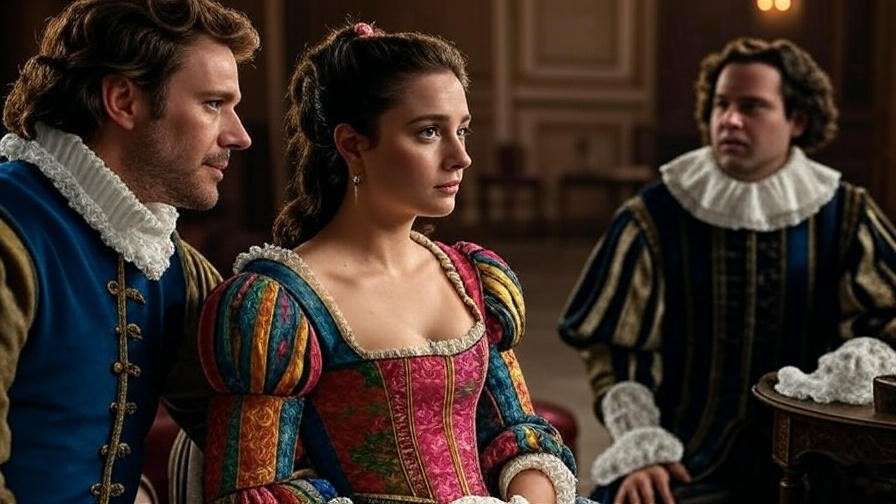
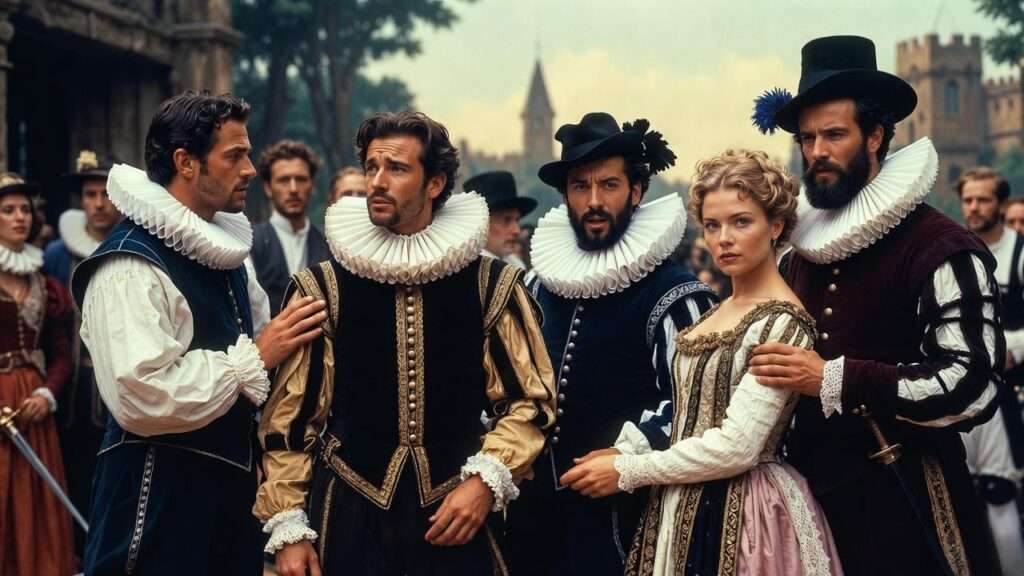
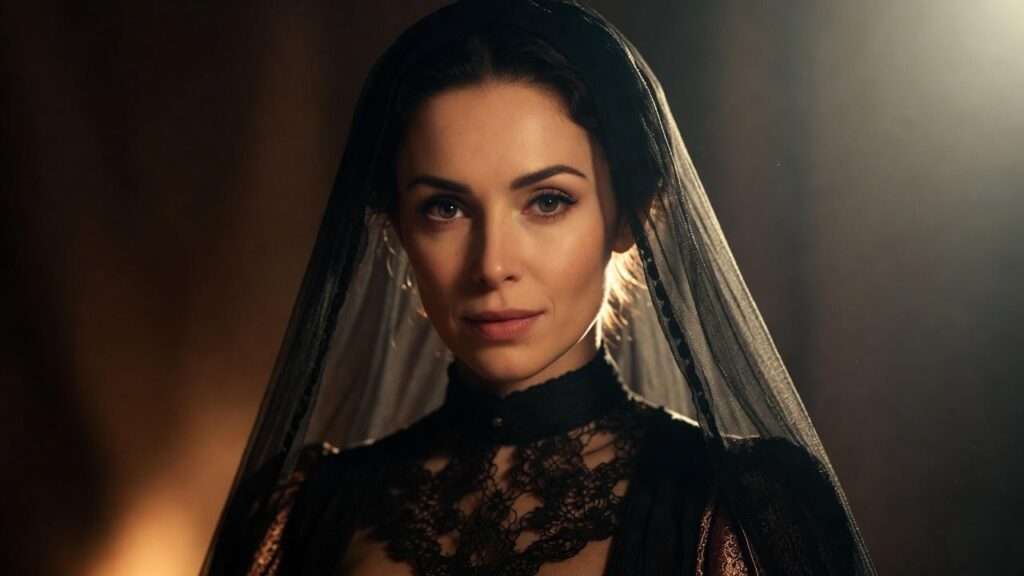
In the opening minutes of Shakespeare’s Twelfth Night, a young woman stands alone on a strange shore, believing her twin brother drowned, and makes a decision that will ripple through four centuries of theatre and scholarship: she will disguise herself as a boy and call herself Cesario. The character of Viola in Twelfth Night is born in that single, electrifying choice. Far from being merely the clever girl in boy’s clothing that generations of summaries reduce her to, Viola is the emotional, intellectual, and philosophical centre of one of Shakespeare’s most subtle and modern comedies. She is witty yet melancholic, courageous yet vulnerable, passionately in love yet sworn to silence—an embodiment of identity in flux that feels astonishingly contemporary in 2025.
This definitive guide explores every layer of Viola’s complexity: her psychological realism, her mastery of disguise, her emotional intelligence, her negotiation of desire and gender, and the deliberate ambiguity Shakespeare leaves at the play’s close. Whether you are a student writing an essay, a teacher preparing a unit, an actor seeking truth in the role, or a reader who simply loves Shakespeare, this article will give you the deepest, most up-to-date understanding available anywhere.
Viola’s Background and First Appearance: From Shipwreck to Cesario
The play does not open with music or courtly banter as many comedies do; it opens with devastation. Viola is shipwrecked on the coast of Illyria—an imagined Adriatic never-never land that functions as a liminal space where social rules can be suspended and identities reinvented. In her very first scene (1.2), we learn three crucial things about her:
- She is grieving but not paralysed by grief. “And what should I do in Illyria? / My brother he is in Elysium” (1.2.3–4). The understated pain here is heartbreaking.
- She is resourceful and decisive. Within fifty lines she has formulated a plan: disguise herself as a eunuch (later amended to page-boy) and serve Duke Orsino.
- She already demonstrates linguistic brilliance and self-awareness. Her speech to the Sea Captain—“I will believe that there are women’s souls in men’s bodies” (1.2.58–60)—is a masterclass in ironic foreshadowing.
Critics such as Penny Gay (As She Likes It, 1994) and Casey Charles (2018) note that Illyria itself is a “queer space” that authorises gender experimentation in a way Elizabethan England never could. Viola steps into that space with eyes wide open.
The Art of Disguise: Viola as Cesario
Elizabethan audiences watched a boy actor playing Viola pretending to be Cesario pretending (sometimes) to be Viola again—a triple layer of performance that delighted in its own artifice. Yet Shakespeare refuses to make the disguise farcical. Unlike Rosalind in As You Like It, who revels in Ganymede’s swagger and frequently breaks the fourth wall, Viola never forgets who she is underneath.
Her most famous confession comes after Olivia falls in love with “Cesario”:
“I am the man. If it be thus to dream, still let me sleep.” (2.2.25) and later, in agony: “O time, thou must untangle this, not I; / It is too hard a knot for me t’untie.” (2.2.39–40)
These lines reveal a profound psychological truth: disguise is never just external clothing. It becomes a second skin that both protects and wounds. Modern cognitive science (e.g., Paul Bloom’s work on identity and role-playing) confirms what Shakespeare intuited: prolonged performance of a role reshapes the self.
Key quote breakdown – “I am not what I am” (3.1.141) This deliberate echo of Iago’s “I am not what I am” (Othello 1.1) has fascinated scholars. Where Iago’s line signals malignant deception, Viola’s signals survival and reluctant duplicity. The difference is moral transparency: Viola hates lying, yet she recognises its necessity.
Viola’s Emotional Intelligence and Quiet Power
If Orsino is all passion and Olivia all impulse, Viola/Cesario is the only character who truly listens. In 1.5 she wins Olivia’s trust in under 200 lines; in 2.4 she becomes Orsino’s closest confidant. Her celebrated “willow cabin” speech (1.5.254–263) is not just beautiful—it is strategically devastating. By imagining how she would woo Olivia if she were a man, Viola simultaneously:
- Demonstrates poetic gifts superior to Orsino’s
- Indirectly declares her love for him
- Plants the idea of steadfast, imaginative devotion in Olivia’s mind
Directors as different as Trevor Nunn (1996 film) and Kwame Kwei-Armah (Regent’s Park 2018) have noted that Viola’s restraint is her superpower. In an age that often equates strength with volume, Viola proves that patience, empathy, and precise language are formidable weapons.
Love and Desire in a Tangled Triangle
The central erotic triangle—Orsino loves Olivia who loves Cesario who loves Orsino—has provided endless material for queer theorists since the 1990s. Landmark readings include:
- Laurie Osborne (1996): the homoerotic charge when Orsino caresses “Cesario” in 2.4
- Casey Charles (“Gender Trouble in Twelfth Night,” 2018): Olivia’s desire as genuinely queer rather than mistaken
- David M. Halperin and others: the play’s refusal of stable categories
Yet Shakespeare is careful never to reduce Viola to an object of desire. Even when she is most vulnerable—“My father had a daughter loved a man” (2.4.108)—she retains narrative control. She tells her own story on her own terms.
Contemporary scholarship (2020–2025) increasingly reads Viola through non-binary and gender-fluid lenses. Productions such as the Globe’s 2022 all-female Twelfth Night and the Public Theater’s 2018 musical adaptation cast trans and non-binary actors as Viola/Cesario precisely because the text supports it.
Viola’s Agency and Ultimate Self-Discovery
The final scene of Twelfth Night (Act 5, Scene 1) is one of the most discussed sixty minutes in the Shakespeare canon, and for good reason: Shakespeare deliberately withholds the neat resolution we expect from romantic comedy. When Sebastian appears and the twins stand side-by-side, we wait for Viola to throw off her masculine attire and step fully back into “woman’s weeds.” She never does.
Orsino’s last direct address to her is still “Cesario”:
“Cesario, come— For so you shall be while you are a man; But when in other habits you are seen, Orsino’s mistress, and his fancy’s queen.” (5.1.383–386)
The Captain who holds Viola’s “maiden weeds” has been conveniently imprisoned by Malvolio, and the play ends before those clothes are retrieved. Directors and scholars have argued about this ambiguity for centuries:
- Traditional view (Harold Jenkins, 1980s): simple comic oversight; the clothes will obviously be returned off-stage.
- Feminist and queer readings (Jean E. Howard 1988, Keir Elam 2008, Sawyer Kemp 2023): deliberate refusal of a return to normative femininity. Viola has discovered power in masculine presentation and is not eager to surrender it.
- Performance evidence: In the National Theatre’s 2017 production (directed by Simon Godwin with Tamara Lawrance as Viola), the final image had Viola still in doublet and hose, taking Orsino’s hand while looking directly at the audience—an unmistakable statement of retained agency.
This ending is not sloppiness; it is radical. Shakespeare grants Viola the rare privilege of choosing how the world will see her, at least for one more night.
Viola’s Enduring Legacy in Literature and Performance
Few Shakespearean roles have been claimed by as many iconic actors as Viola/Cesario:
- Judi Dench (RSC 1969) – emphasized melancholy and quiet steel
- Helena Bonham Carter (Trevor Nunn film, 1996) – youthful vulnerability mixed with mischief
- Anne-Marie Duff (Globe 2002, revived 2012) – working-class grit beneath the courtly language
- Tamara Lawrance (National Theatre 2017) – the first Black Viola at a major UK house, bringing new layers to colonial “stranger” readings of Illyria
- Recent non-binary and trans performances: Liv O’Donoghue (Dublin Shakespeare 2023), Tonderai Munyevu (Globe on Tour 2024)
Beyond the stage, Viola has infiltrated popular culture in ways Rosalind and Beatrice rarely manage. The 2006 teen rom-com She’s the Man (starring Amanda Bynes) is still quoted verbatim by Gen Z, and TikTok is full of “Cesario thirst traps” set to Olivia’s “make me believe that you are maiden’s weeds” speech.
In 2024–2025 alone, three major productions chose gender-nonconforming casting for Viola, confirming that contemporary audiences do not see her story as historical curiosity but as living commentary on identity formation.
Key Themes Through Viola’s Eyes
- Appearance vs. Reality Viola literalises the play’s central motif. Every major character is wearing a mask of some kind (Malvolio’s humility, Orsino’s lovesickness, Olivia’s mourning), but only Viola is aware of hers.
- Gender as Performance Long before Judith Butler’s Gender Trouble (1990), Shakespeare understood that “viola” and “cesario” are both roles. The difference is that Viola knows the script is improvised.
- Melancholy Beneath Comedy Feste’s final song reminds us that “the rain it raineth every day.” Viola carries that knowledge from her first line to her last. Her humour is never flippant; it is the defence mechanism of someone who has stared into the abyss.
- Time as Healer and Revealer “O time, thou must untangle this” is not passivity; it is wisdom. In an era of instant fixes and viral cancellations, Viola’s trust in gradual revelation feels revolutionary.
Expert Tips for Students and Teachers
Top 5 Viola Quotes for Essays (with quick thesis angles)
- “Conceal me what I am…” (1.2.51–53) → Agency in crisis
- “I am not what I am” (3.1.141) → Compare/contrast with Iago for identity theme
- The willow cabin speech (1.5.254–263) → Superior poetic imagination; indirect courtship
- “My father had a daughter…” (2.4.108–116) → Veiled declaration of love; emotional intelligence
- “I am all the daughters of my father’s house, / And all the brothers too” (2.4.120–121) → Gender fluidity in a single couplet
High-Scoring Essay Questions
- “To what extent is Viola the true protagonist of Twelfth Night?”
- “Disguise is a wickedness wherein the pregnant enemy does much.” How far do you agree with Viola’s assessment?
- “Twelfth Night is less a comedy of errors than a tragedy of unspoken truths.” Discuss with reference to Viola.
Directing/Acting Tips from Industry Professionals
- Never play the disguise for laughs in the final scene (Tamara Lawrance, 2017)
- Keep one physical detail consistent between Viola and Cesario so the audience always knows it’s the same soul (Patsy Ferran, Old Vic 2018 masterclass)
- Viola’s silences are as important as her lines—honour them (Mark Rylance, Globe 2012)
Viola as Shakespeare’s Mirror for the Modern Soul
Four hundred years after she first stepped onto the boards, Viola remains the character with whom the largest number of readers and theatregoers quietly identify. She is the outsider who learns the rules only to bend them, the lover who cannot speak her love, the survivor who turns grief into strategy and strategy into grace.
In 2025, when debates about identity, authenticity, and performance dominate every platform, Viola does not need updating—she has been waiting for us to catch up. She reminds us that courage is not always loud, that love can be patient without being weak, and that sometimes the bravest thing a person can say is nothing at all until the right moment arrives.
If Shakespeare’s comedies are laboratories of the human heart, Viola is the most delicate, most resilient, and most honest experiment he ever conducted. And the results are still unfolding, night after night, on stages and in classrooms around the world.
FAQ – Quick Answers for Students & Readers
Q: Who is Viola in Twelfth Night and why is she important? A: Viola is the shipwrecked heroine who disguises herself as the page Cesario, becoming the emotional and thematic centre of the entire play. She drives both plot and philosophy.
Q: Is Viola in love with Orsino from the beginning? A: Yes—almost certainly from Act 1, Scene 4 (“I’ll do my best / To woo your lady—[aside] yet a barful strife— / Whoe’er I woo, myself would be his wife”).
Q: What does Viola’s disguise symbolise? A: Survival, gender fluidity, the gap between inner truth and outer performance, and the liberating possibilities of role-playing.
Q: How does Viola differ from other Shakespearean heroines? A: Unlike Rosalind (playful) or Portia (commanding), Viola’s power lies in restraint, empathy, and strategic silence.
Q: Is Twelfth Night a queer play because of Viola? A: Many modern scholars and productions say yes—the text supports fluid readings of sexuality and gender without ever needing to label them.