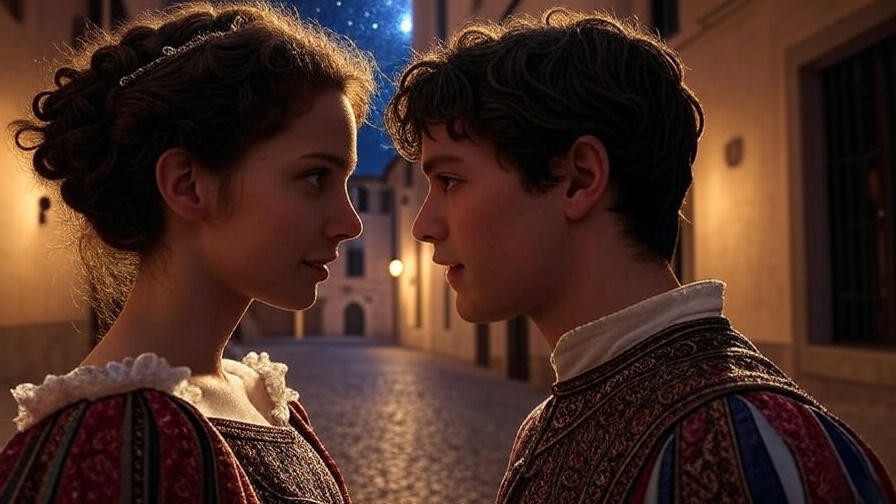
“From forth the fatal loins of these two foes A pair of star-crossed lovers take their life…”
These haunting lines from the Prologue of William Shakespeare’s Romeo and Juliet have captivated readers for over four centuries. If you’ve ever wondered about the true meaning of “star-crossed lovers” or wanted to crossed read online the complete play while diving deep into its themes of fate, passion, and tragedy, this comprehensive guide is for you. Here, you’ll find reliable sources to read the full text of Romeo and Juliet online for free, alongside expert analysis that uncovers why this story remains the ultimate archetype of doomed young love.
Shakespeare’s masterpiece, written around 1595-1596, isn’t just a simple tale of teenage romance gone wrong. It’s a profound exploration of how fate and human impulsiveness intertwine, set against the backdrop of a bitter family feud in Verona. While the stars seem to conspire against Romeo Montague and Juliet Capulet, their tragic end also stems from rash decisions, societal pressures, and miscommunications—making it a timeless warning about the perils of unchecked emotion.
In this in-depth article, we’ll provide direct access to the full play text from authoritative sources, break down the iconic Prologue, analyze the debate of fate versus free will, explore key themes like forbidden love and hatred, highlight unforgettable scenes and quotes, and discuss the play’s historical context and enduring relevance. Whether you’re a student preparing for exams, a literature enthusiast rediscovering a classic, or someone curious about Shakespeare’s most quoted tragedy, this resource offers everything you need to fully appreciate Romeo and Juliet.
Where to Read the Full Text of Romeo and Juliet Online for Free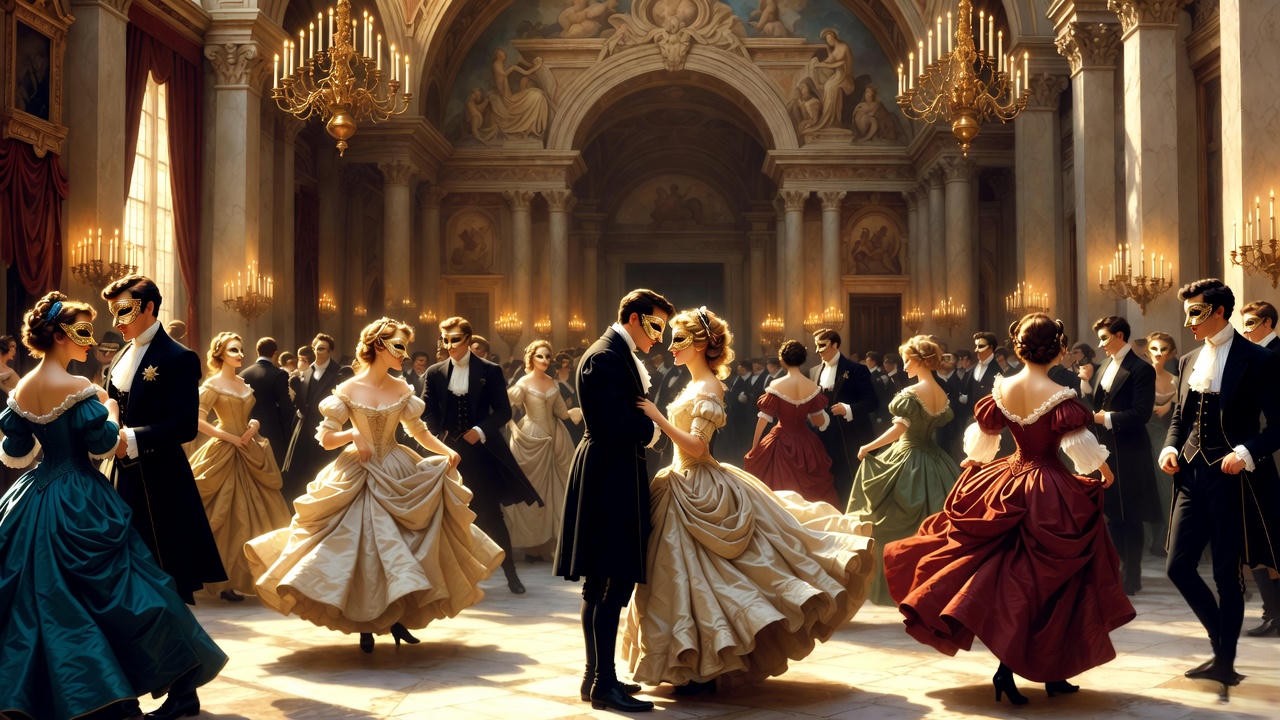
One of the biggest barriers to enjoying Shakespeare is accessing reliable, accurate texts. Fortunately, several prestigious institutions and projects offer the complete Romeo and Juliet online at no cost, with options for original spelling, modern annotations, or plain reading.
Here are the top recommended sources (current as of 2026):
- Folger Shakespeare Library: Widely regarded as the gold standard for scholarly editions. Their digital text includes expert notes, scene summaries, and historical insights. Read the entire play here: https://www.folger.edu/explore/shakespeares-works/romeo-and-juliet/read/
- MIT Shakespeare Edition: A clean, straightforward full text in original early modern English, hosted by the Massachusetts Institute of Technology. Ideal for uninterrupted reading: https://shakespeare.mit.edu/romeo_juliet/full.html
- Project Gutenberg: Offers free downloadable versions in multiple formats (ePub, Kindle, plain text, HTML). Perfect for offline or mobile reading: https://www.gutenberg.org/ebooks/1513
For those new to Shakespeare, consider pairing these with side-by-side modern translations, such as LitCharts’ Shakescleare edition, which clarifies archaic language without altering the original poetry.
Pro tip: Begin with the Folger edition if you want annotations to explain Elizabethan vocabulary, puns, and cultural references—they transform potentially confusing passages into vivid, accessible drama.
Understanding “Star-Crossed Lovers”: The Prologue and Shakespeare’s Use of Fate
The term “star-crossed lovers” was popularized—and possibly coined—by Shakespeare in Romeo and Juliet, describing lovers whose relationship is doomed by adverse fate.
The Prologue in Full – A Sonnet of Doom
The play opens with a Chorus delivering a 14-line sonnet that summarizes the plot, creating dramatic irony as the audience knows the ending from the start:
Two households, both alike in dignity, In fair Verona, where we lay our scene, From ancient grudge break to new mutiny, Where civil blood makes civil hands unclean. From forth the fatal loins of these two foes A pair of star-cross’d lovers take their life; Whose misadventured piteous overthrows Do with their death bury their parents’ strife. The fearful passage of their death-mark’d love, And the continuance of their parents’ rage, Which, but their children’s misadventur’d piteous overthrows, Nothing could remove, Is now the two hours’ traffic of our stage; The which if you with patient ears attend, What here shall miss, our toil shall strive to mend.
This is a perfect Shakespearean sonnet (three quatrains and a couplet, with iambic pentameter and ABAB CDCD EFEF GG rhyme scheme). The volta in the final couplet offers a glimmer of redemption: the lovers’ deaths end the feud.
Key breakdown:
- Lines 1-4: Introduce the noble families and escalating violence in Verona.
- Lines 5-8: Reveal the lovers from enemy houses whose suicides resolve the conflict.
- Lines 9-12: Describe the doomed love and persistent parental hatred.
- Lines 13-14: Frame it as a two-hour stage performance, engaging the audience directly.
What Does “Star-Crossed” Really Mean?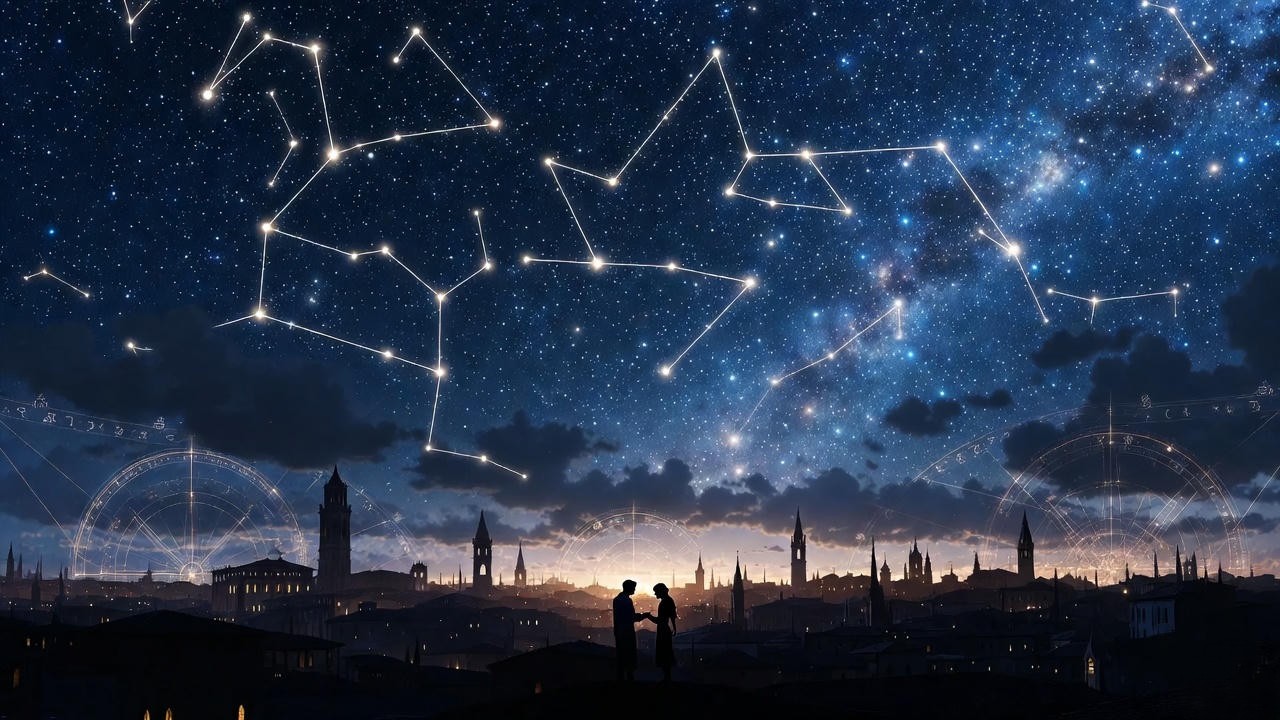
In Shakespeare’s era, astrology heavily influenced worldview—people believed celestial bodies dictated destiny. “Star-crossed” means thwarted by malignant planetary influences, implying misfortune from birth.
Shakespeare references stars, fortune, and heavens frequently in the play:
- Romeo cries, “O, I am fortune’s fool!” (Act 3, Scene 1) after killing Tybalt.
- Juliet exclaims, “Give me my Romeo; and, when he shall die, Take him and cut him out in little stars” (Act 3, Scene 2).
- Romeo defiantly shouts, “Then I defy you, stars!” (Act 5, Scene 1).
However, Shakespeare avoids pure fatalism. As scholar Brian Gibbons notes in the Arden edition, fate provides the tragic framework, but characters’ choices—haste, secrecy, vengeance—ignite the catastrophe. This blend makes the play a sophisticated commentary on Elizabethan beliefs rather than straightforward endorsement.
Expert insight: Contemporary critics like Jill Levenson emphasize Shakespeare’s innovation: he humanizes fate, showing how societal structures (feuds, patriarchal control) amplify cosmic misfortune.
The Role of Fate vs. Human Choice in the Tragedy
One of the play’s enduring debates is whether Romeo and Juliet are helpless victims of destiny or architects of their own downfall.
Evidence for Fate’s Dominance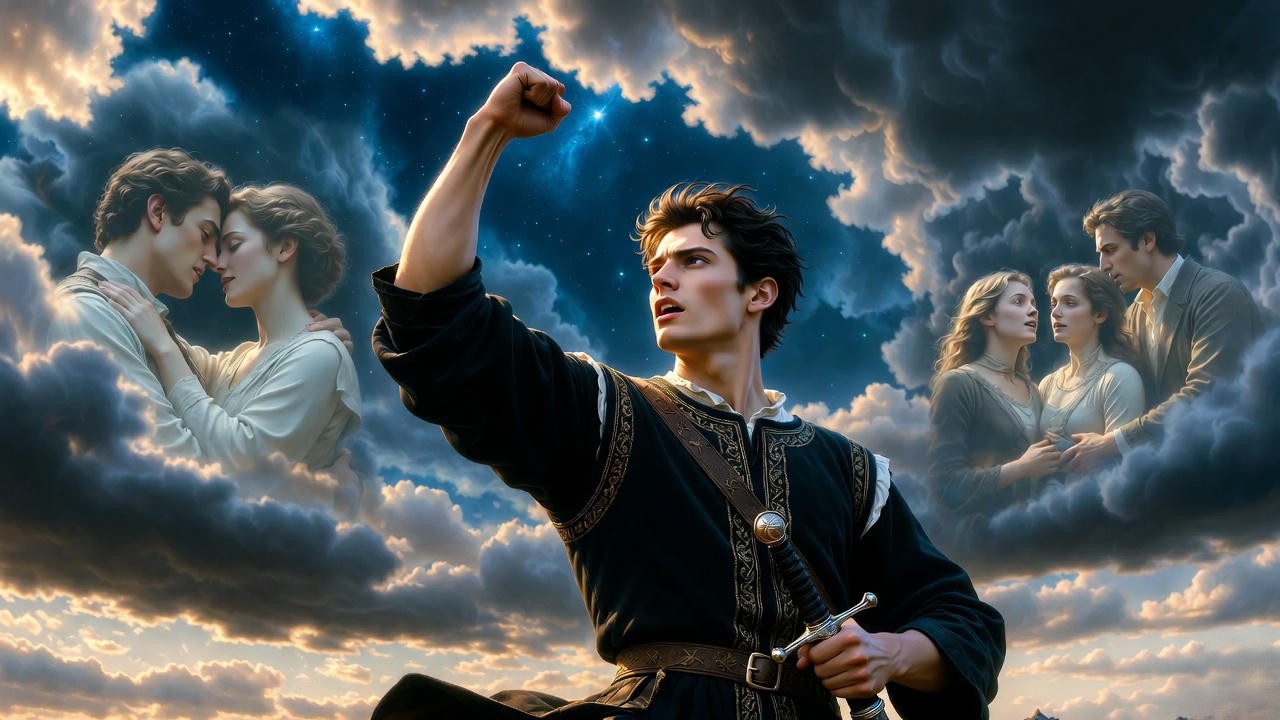
Several “coincidences” suggest inexorable doom:
- Romeo learns of the Capulet party via an illiterate servant—pure chance.
- The plague quarantines Friar John, preventing Romeo from receiving the crucial letter about Juliet’s feigned death.
- Romeo arrives at the tomb moments too early, seeing Juliet “dead.”
- Premonitions abound: Juliet fears her wedding bed becoming her grave; Romeo dreams of death bringing life.
The Prologue explicitly labels their love “death-mark’d,” reinforcing predestination.
Human Flaws and Impulsivity as the True Drivers
Counterarguments highlight free will:
- Romeo’s hot-tempered slaying of Tybalt escalates consequences.
- Juliet hastily agrees to the sleeping potion without contingency plans.
- Friar Laurence’s well-intentioned but risky schemes (secret marriage, fake death) backfire due to poor execution.
- The feud itself is sustained by adult choices—Lord Capulet’s insistence on Juliet marrying Paris, Tybalt’s aggression.
As Romeo matures from lovesick youth to decisive man, his choices drive action. Friar Laurence warns, “These violent delights have violent ends” (Act 2, Scene 6), cautioning against haste.
Scholarly Perspectives
Critics are divided:
- Romantic views (e.g., early 19th century) emphasize fate’s cruelty.
- Modern interpretations (e.g., Harold Bloom) stress character psychology—youthful idealism clashing with rigid society.
- Feminist readings highlight patriarchal control forcing desperate actions.
Balanced view: Shakespeare masterfully intertwines both, creating tragedy where fate and choice are inseparable. This ambiguity elevates the play beyond melodrama.
Key Themes Explored Through the Star-Crossed Lovers
Shakespeare weaves multiple themes through the lovers’ story, making it resonate across eras.
Love at First Sight vs. Enduring Passion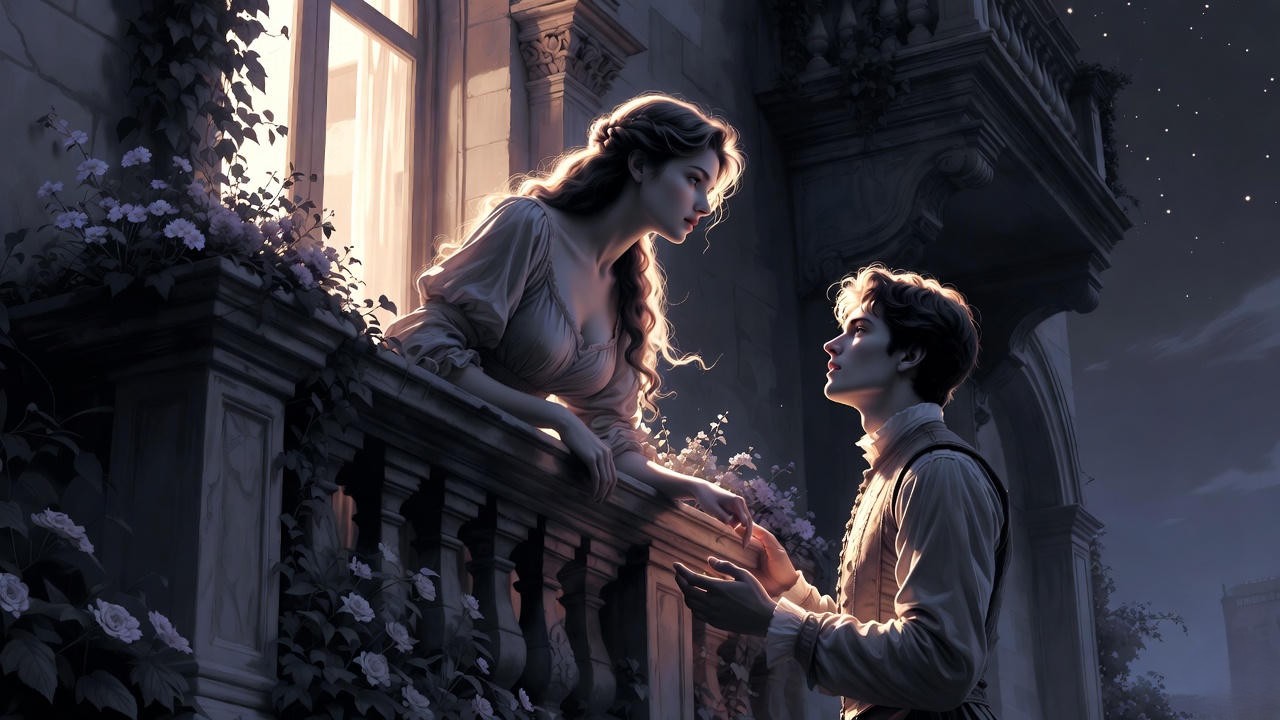
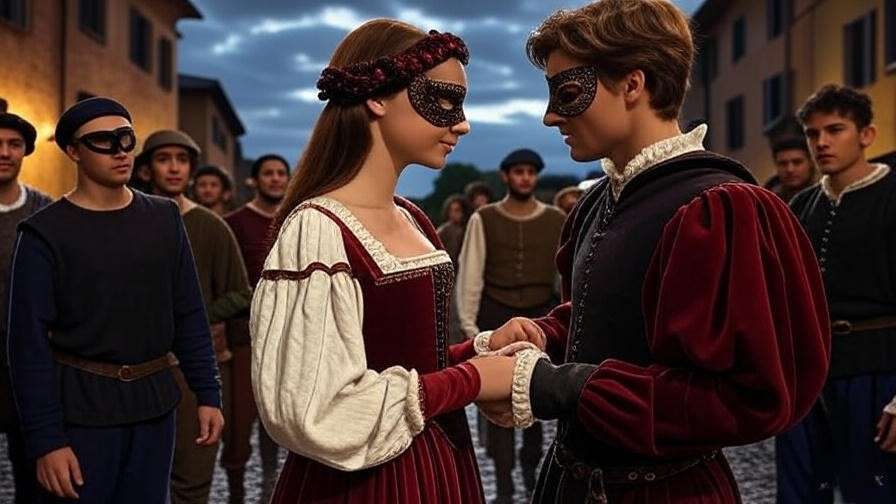
The instantaneous attraction at the masked ball evolves into profound commitment. Their first dialogue forms a shared sonnet, symbolizing harmony amid chaos.
Yet Shakespeare contrasts infatuation (Romeo’s initial obsession with Rosaline) with transformative love. The balcony scene’s poetry—”But soft, what light through yonder window breaks?”—captures transcendent romance.
The Destructive Power of Family Feuds and Hatred
The “ancient grudge” poisons Verona, turning private hatred public. Innocent youth suffer most: Mercutio dies cursing “a plague o’ both your houses!”
Ironically, only the lovers’ deaths reconcile families, underscoring hatred’s futility.
Youth, Haste, and Tragedy
Romeo (around 16-18) and Juliet (13-14) embody adolescent intensity. References to time’s urgency (“gallop apace, you fiery-footed steeds”) reflect impatience.
Light/dark imagery (Juliet as sun, night as cloak for meetings) symbolizes fleeting beauty against encroaching doom.
Other themes: Social class, gender roles, reconciliation through sacrifice.
Iconic Scenes and Quotes That Define the Star-Crossed Romance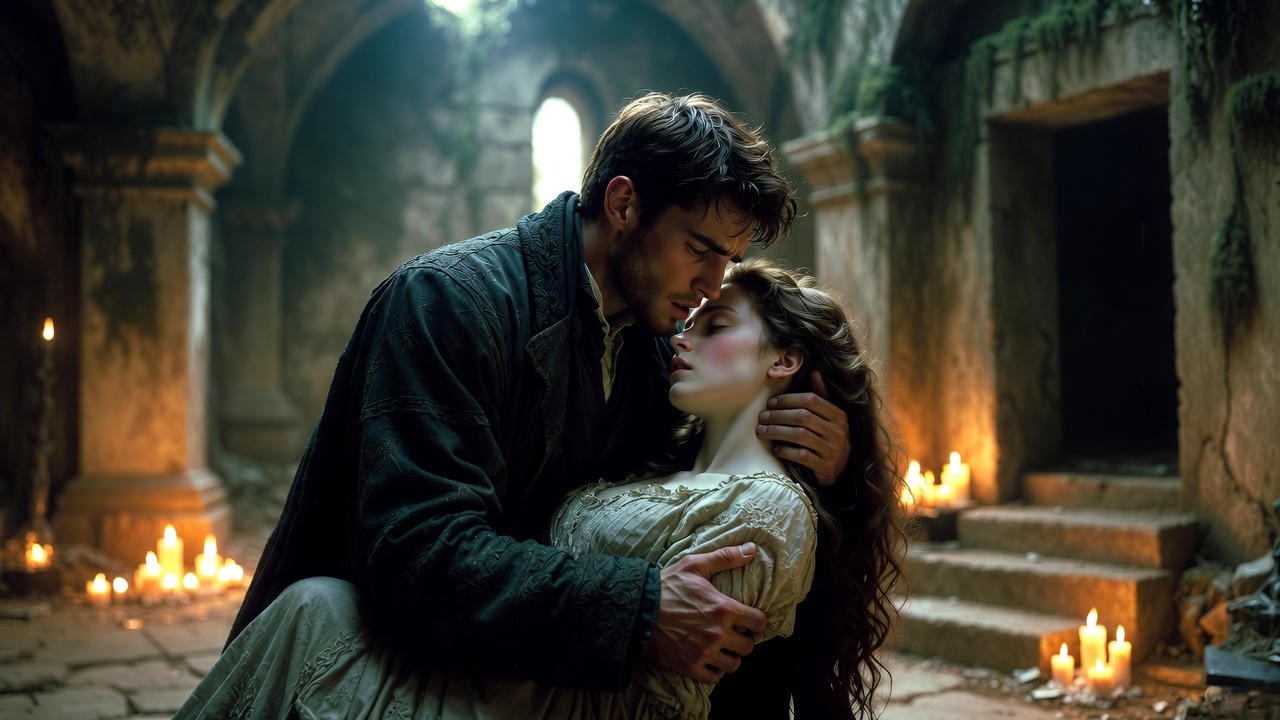
Several moments crystallize the tragedy:
- Act 1, Scene 5 (Masked Ball): First meeting—shared sonnet, kiss. Quote: “Did my heart love till now? Forswear it, sight! / For I ne’er saw true beauty till this night.”
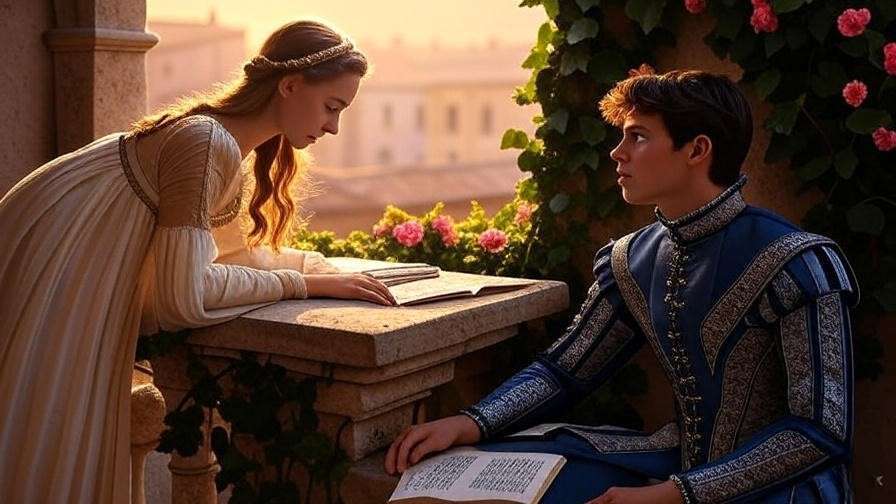
- Act 2, Scene 2 (Balcony Scene): Immortal declarations. Quote: “Romeo, Romeo, wherefore art thou Romeo?” (meaning “why are you a Montague?”).
- Act 2, Scene 6 (Marriage): Friar’s warning of haste.
- Act 3, Scene 1 (Duel): Turning point—Mercutio’s death, Romeo’s banishment.
- Act 5, Scene 3 (Tomb): Double suicide, poignant reunion in death.
These scenes build emotional crescendo, blending lyricism with violence.
Tips for readers: Note how Shakespeare uses oxymorons (“beautiful tyrant,” “loving hate”) to mirror conflicted emotions.
Historical and Literary Context of Romeo and Juliet
Shakespeare drew from Arthur Brooke’s 1562 poem The Tragicall Historye of Romeus and Juliet, itself based on Italian novellas tracing to Masuccio Salernitano (1476).
Innovations: Compressed timeline (days instead of months) heightens urgency; added depth to Mercutio, Nurse; elevated language.
Performed at the Globe Theatre, it was hugely popular. Early quartos (1597, 1599) show textual variations; modern editions blend sources.
Parallels ancient tales like Pyramus and Thisbe (Ovid’s Metamorphoses).
Why Romeo and Juliet Remains Timeless – Modern Relevance and Adaptations
The play endures because it captures universal experiences: first love, family conflict, societal pressure.
Modern lessons:
- Dangers of tribalism (feuds mirror modern divisions).
- Youth mental health—impulsivity amid crisis.
- Communication failures in relationships.
Adaptations abound:
- Films: Franco Zeffirelli (1968, romantic), Baz Luhrmann (1996, contemporary Verona Beach).
- Musicals: West Side Story (gangs in NYC), High School Musical echoes.
- Ballet (Prokofiev), operas (Gounod), novels retellings.
Its quotes permeate culture: “star-crossed” for ill-fated romance, “What’s in a name?” for superficial divisions.
Frequently Asked Questions (FAQs)
What does “star-crossed lovers” exactly mean? Ill-fated lovers opposed by destiny, particularly unfavorable stars in astrology.
Is Romeo and Juliet based on a true story? No, but inspired by fictional Italian tales; some claim loose historical parallels in Verona feuds.
Who is most to blame for the tragedy? Debated—Friar Laurence’s plans, parental pressure, Tybalt’s aggression, or lovers’ haste. Shakespeare distributes responsibility.
Best modern English translations for beginners? No Fear Shakespeare (SparkNotes), Shakescleare (LitCharts)—side-by-side originals and paraphrases.
How long is the full play, and how to read it effectively? About 3,000 lines; 2-3 hours performed. Read act-by-act, watch a production alongside, note character motivations.
Romeo and Juliet remains Shakespeare’s most heartbreaking celebration of love’s power—and its fragility. The star-crossed lovers remind us that while fate may deal harsh cards, human choices determine how we play them.
Dive into the full text today using the links above, reflect on the interplay of destiny and decision in your own life, and rediscover why this tragedy continues to move generations.