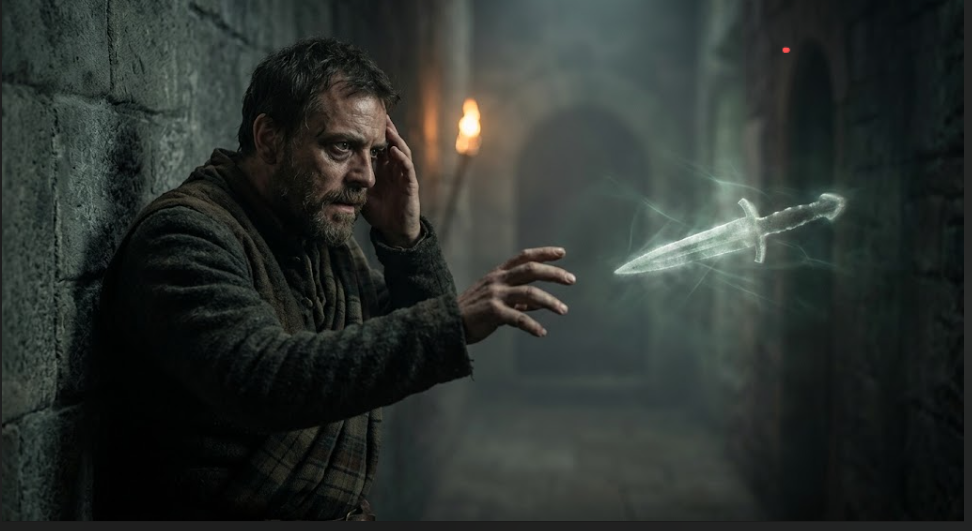
“Is this a dagger which I see before me, the handle toward my hand?” With these fourteen words, William Shakespeare crafts one of the most psychologically chilling moments in world literature. The apparition of the dagger from Macbeth in Act 2, Scene 1 marks the exact, irreversible threshold where tragic ambition hardens into brutal reality. As Macbeth stands in the dimly lit corridors of Inverness Castle, poised to commit regicide against King Duncan, his fractured psyche manifests an air-drawn weapon that guides him toward damnation.
For students analyzing this text, educators seeking definitive teaching resources, and theatre enthusiasts exploring Shakespearean performance history, this famous soliloquy poses a profound question: What is the true nature of this vision? Is it a supernatural warning, a demonic summons, or the fatal hallucination of a mind unraveling under terror? This comprehensive analysis delves into the symbolism, psychological mechanisms, and literary techniques behind the dagger, providing an authoritative guide to mastering Act 2, Scene 1.
Scene Context: Act 2, Scene 1 Overview
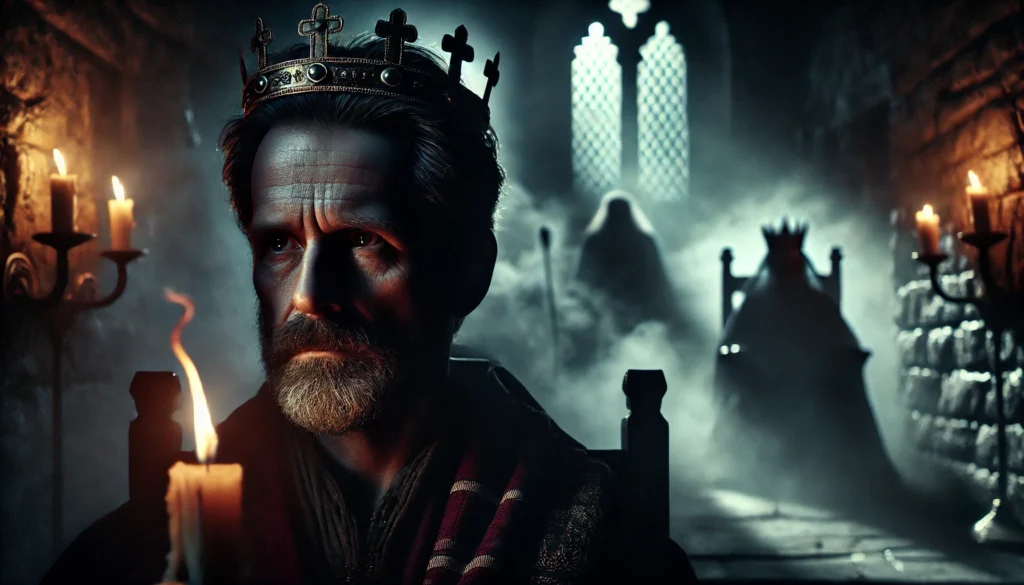
To understand why the vision appears, one must first examine the high-stakes environment of Inverness Castle at midnight. The atmosphere in Act 2, Scene 1 is thick with cosmic dread. Banquo and his son Fleance cross the courtyard, noting that “There’s husbandry in heaven; / Their candles are all out.” The heavy, starless darkness reflects the moral blackout descending upon Scotland.
When Banquo encounters Macbeth, the tension is palpable. Banquo reveals he has dreamt of the Three Witches (“the Weird Sisters”), testing Macbeth’s reaction. Macbeth lies smoothly, claiming, “I think not of them,” yet offers Banquo future honor if he remains loyal to him when the time comes. Banquo agrees, but only on the condition that he keeps his conscience clear and his loyalty to King Duncan intact. This interaction highlights a stark contrast between two honorable generals: Banquo relies on moral integrity, whereas Macbeth surrenders to treasonous desire.
Once Banquo departs and Macbeth dismisses his servant with instructions to tell Lady Macbeth to ring a bell when his drink is ready, Macbeth is left entirely alone with his thoughts. The silence of the castle becomes deafening. The psychological pressure cooker—compounded by his wife’s relentless coercion, the prophecies of the witches, and his own suppressed morality—reaches its boiling point. In this moment of intense isolation, the physical world recedes, and the visual hallucination materializes.
Is the Dagger Real or Hallucinated? (Psychological vs. Supernatural)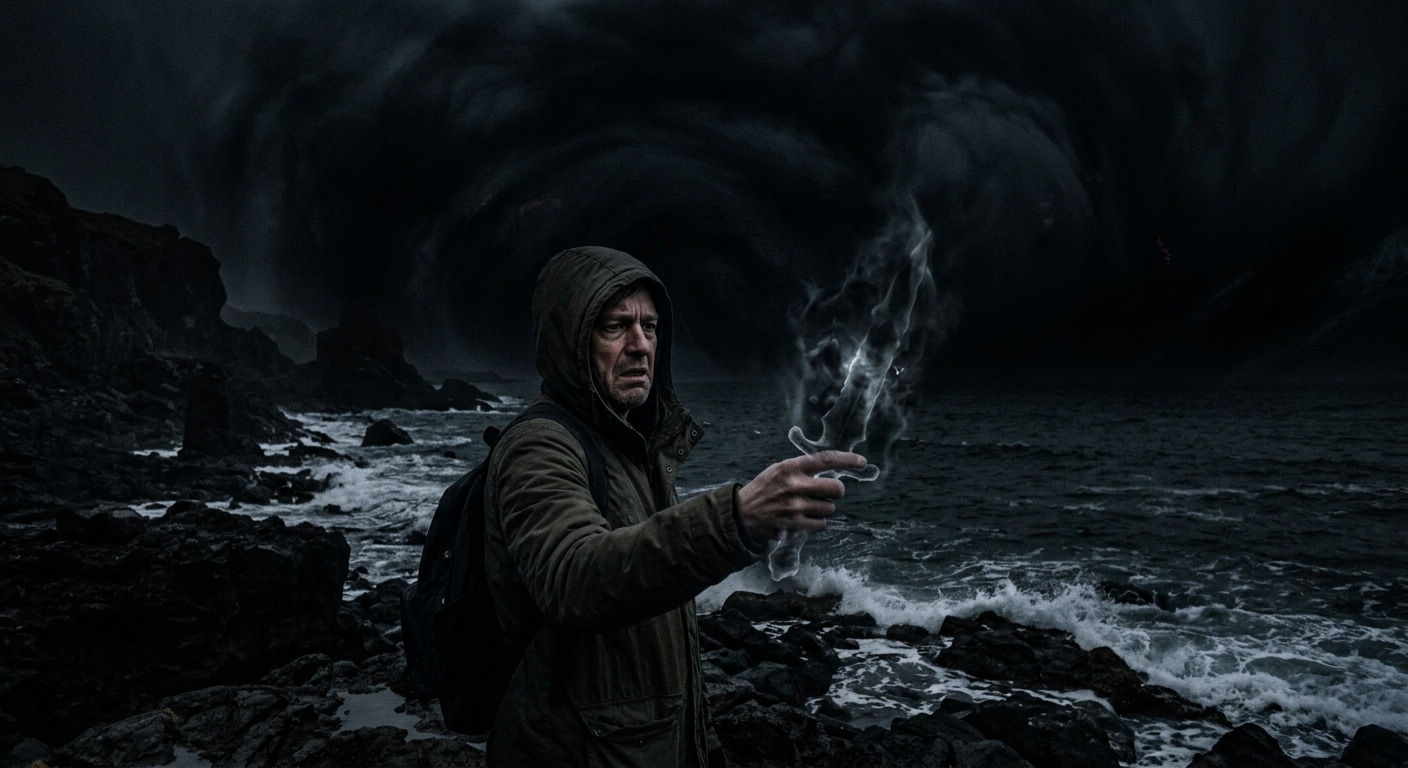
Literary scholars and theatrical directors have debated the nature of Macbeth’s vision for centuries. Shakespeare intentionally leaves the apparition ambiguous, allowing it to function simultaneously as an internal mental breakdown and an external supernatural force.
1. The Hallucination Theory (Internal Psychosis)
The primary evidence for an internal, psychological hallucination comes directly from Macbeth’s own words:
“A dagger of the mind, a false creation,
Proceeding from the heat-oppressed brain.”
From a modern psychological perspective, Macbeth displays classic symptoms of acute stress, severe sleep deprivation, and extreme anxiety. His “heat-oppressed brain”—a state of feverish cognitive overload—can no longer process the moral weight of his impending crime. The vision is a projection of his subconscious mind, converting latent violent thoughts into a vivid visual illusion. Notably, Macbeth tries to grab the object (“Come, let me clutch thee”), but his hand grasps only empty air. This physical failure confirms to him that the weapon cannot be held, pointing directly to a subjective hallucination.
2. The Supernatural Theory (External Manipulation)
Conversely, in the context of Jacobean beliefs, early 17th-century audiences would readily recognize the manifestation as an instrument of evil. King James I, who wrote Daemonologie (1597), believed fervently in the literal presence of demons and witches capable of placing illusions before human eyes.
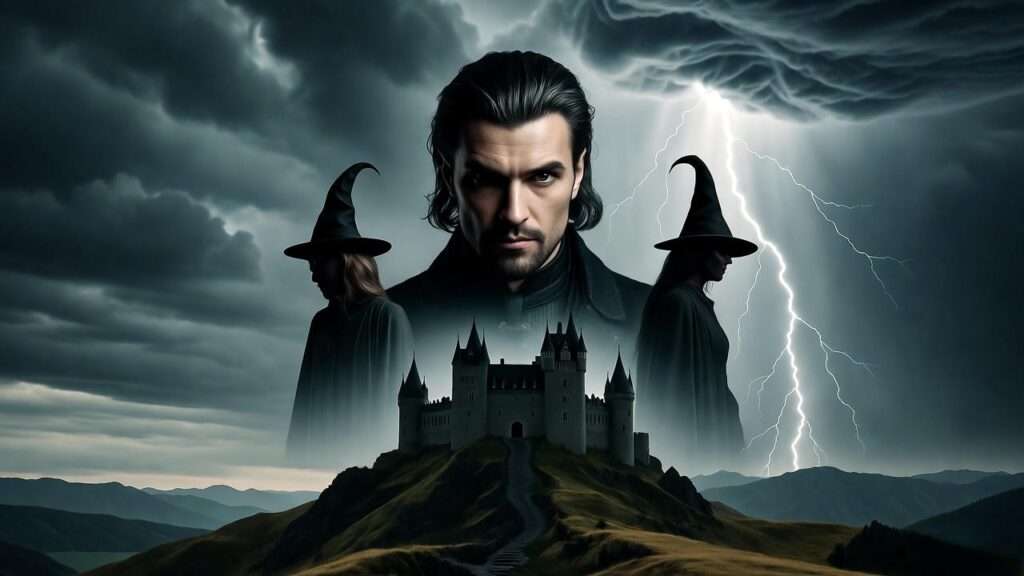
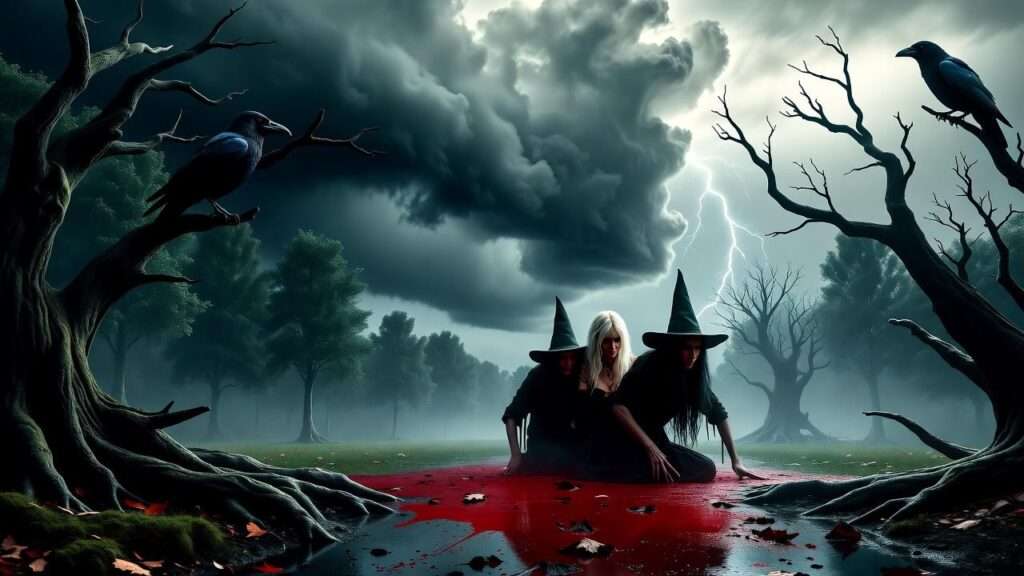
Within the framework of the play, the Three Witches function as agents of fate and chaos. The spectral weapon points directly toward King Duncan’s bedchamber, acting as a guide: “Thou marshall’s me the way that I was going.” If viewed as a supernatural construct, the vision is not merely a product of Macbeth’s guilt, but a demonic lure deployed by dark forces to ensure he completes the act of regicide.
3. The Dual Nature
Shakespeare’s genius lies in declining to choose between these two readings. The apparition is simultaneously an projection of Macbeth’s internal desire and an echo of external evil. It shows that Macbeth cannot separate his own free choices from the external temptations around him.
Key Symbolism of the Dagger in Macbeth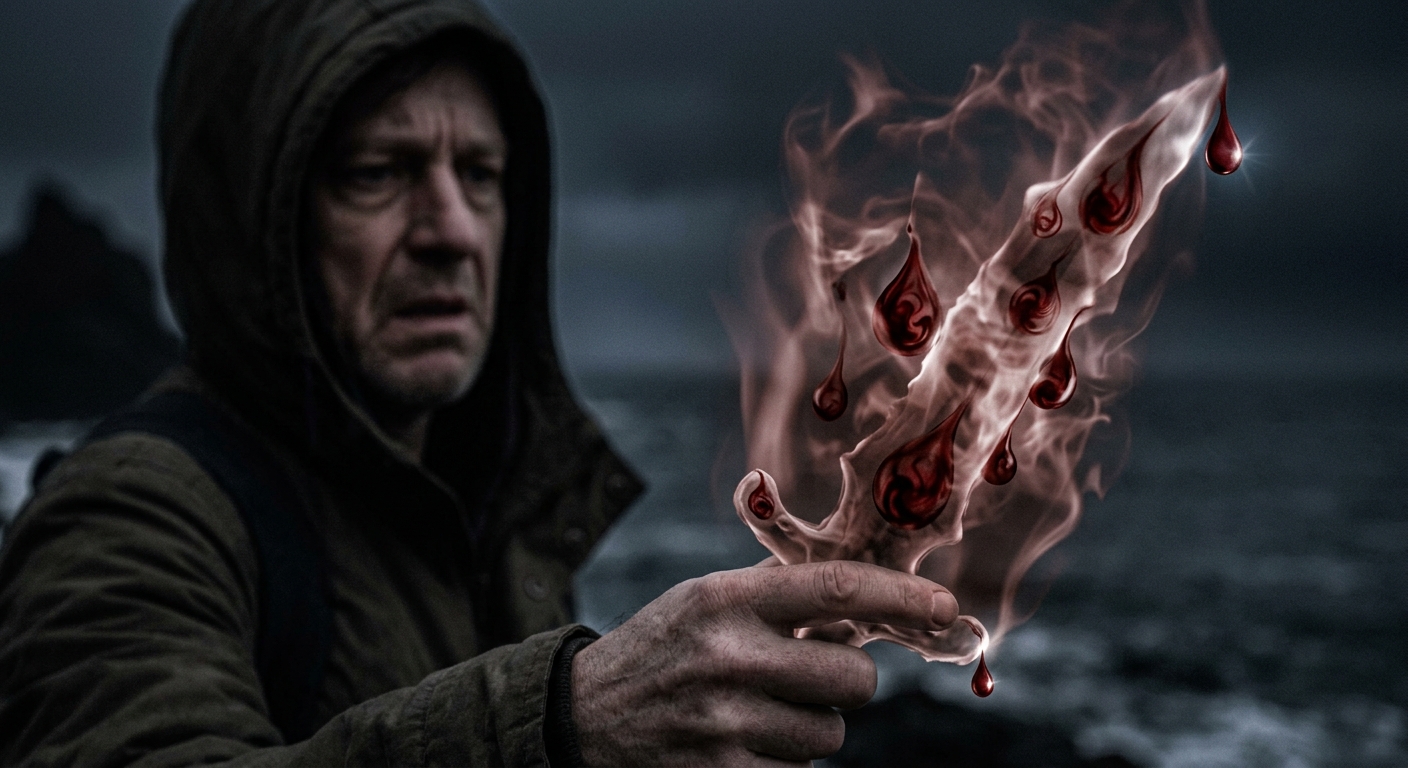
Beyond its role in the plot, the vision serves as a rich, multi-layered symbol central to the play’s major themes.
| Symbolic Dimension | Meaning & Significance | Key Textual Evidence |
| Ambition as a Weapon | The visual manifestation of “vaulting ambition,” showing how abstract desire turns into concrete violence. | “Thou marshall’s me the way that I was going;” |
| Pre-Crime Guilt | The physical transformation from a clean blade to a bloody one highlights guilt felt before the act. | “…and on thy blade and dudgeon gouts of blood, / Which was not so before.” |
| Fate vs. Free Will | Illustrates the tension between external destiny and personal agency. | “I see thee yet, in form as palpable / As this which now I draw.” |
| Cosmic Disruption | Represents the violation of the Divine Right of Kings and the destruction of natural order. | “Nature seems dead, and wicked dreams abuse / The curtain’d sleep;” |
-
Ambition Made Visible: Before this scene, Macbeth’s ambition exists purely as spoken thought and internal conflict. The vision forces him to face the physical reality of what he is about to do. It transforms abstract ambition into a concrete weapon.
-
Pre-Crime Guilt & “Gouts of Blood”: As Macbeth watches the vision, it undergoes a gruesome transformation: “I see thee still, / And on thy blade and dudgeon gouts of blood, / Which was not so before.” This shift is crucial. The sudden appearance of thick drops of blood (“gouts”) shows that Macbeth is already suffering from intense guilt before Duncan is harmed. His conscience anticipates the horrific bloodbath that will follow.
-
Fate vs. Free Will: The weapon acts as a “marshal”—an officer who leads high-ranking officials in a procession. While it appears to lead Macbeth toward the murder, he explicitly acknowledges that he was already heading that way (“the way that I was going”). This reveals that while fate or the supernatural may offer direction, Macbeth retains total free will over his actions.
-
Violation of the Divine Right of Kings: In Jacobean political theory, a king was appointed by divine authority. Murdering a monarch was considered a sin against God that upset the natural balance of the world. The bloody weapon symbolizes this unnatural rupture, setting off a chain reaction of cosmic chaos that plunges Scotland into darkness.
Detailed Line-by-Line Analysis: “Is this a dagger which I see before me?”
To analyze Act 2, Scene 1 deeply, one must work through the soliloquy section by section, paying close attention to its shifting tone, imagery, and poetic structure.
Lines 33–39: The Illusion & Physical Unreachability
“Is this a dagger which I see before me,
The handle toward my hand? Come, let me clutch thee.
I have thee not, and yet I see thee still.
Art thou not, fatal vision, sensible
To feeling as to sight? or art thou but
A dagger of the mind, a false creation,
Proceeding from the heat-oppressed brain?”
-
Explication: Macbeth begins with a direct question, revealing his confusion. The weapon is positioned perfectly for his grip (“handle toward my hand”), offering itself as an invitation. When he attempts to grasp it, his hands close on empty space. He questions his senses, introducing the core theme of appearance versus reality. The phrase “fatal vision” carries a double meaning: it is a vision foretelling death, and a vision brought forth by fate.
Lines 40–49: The Transformation & Blood Imagery
“I see thee yet, in form as palpable
As this which now I draw.
Thou marshall’s me the way that I was going;
And such an instrument I was to use.
Mine eyes are made the fools o’ the other senses,
Or else worth all the rest; I see thee still,
And on thy blade and dudgeon gouts of blood,
Which was not so before. There’s no such thing:
It is the bloody business which informs
Thus to mine eyes.”
-
Explication: Macbeth draws his own real steel blade, holding it alongside the phantom image. The physical similarity shocks him into recognizing that the vision matches his actual intentions. Then, the illusion changes: “gouts of blood” appear on the blade and handle (“dudgeon”). This grotesque visual shift brings Macbeth back to reality. He breaks the illusion himself, concluding, “There’s no such thing.” He realizes the image is created entirely by the “bloody business” he is planning.
Lines 50–60: The Shift to Darkness & Witchcraft
“Now o’er the one halfworld
Nature seems dead, and wicked dreams abuse
The curtain’d sleep; witchcraft celebrates
Pale Hecate’s offerings, and wither’d murder,
Alarum’d by his sentinel, the wolf,
Whose howl’s his watch, thus with his stealthy pace,
With Tarquin’s ravishing strides, towards his design
Moves like a ghost.”
-
Explication: Here, the language shifts from internal psychological analysis to poetic nightmarish description. Macbeth aligns himself with night, witchcraft, and crime. He invokes “Pale Hecate,” the goddess of witchcraft, linking his actions to dark magic. He personifies “wither’d murder,” describing it as a predatory figure guided by a wolf’s howl. By comparing his movement to “Tarquin’s ravishing strides”—a reference to the legendary Roman prince Sextus Tarquinius, who committed a notorious sexual assault—Macbeth acknowledges that his assault on King Duncan is an unpardonable violation of innocence, hospitality, and virtue.
Lines 61–64: The Bell & Action
“Thou sure and firm-set earth,
Hear not my steps, which way they walk, for fear
Thy very stones prate of my whereabout,
And take the present horror from the time,
Which now suits with it. Whiles I threat, he lives:
Words to the heat of deeds too cold breath gives.
[A bell rings.]
I go, and it is done; the bell invites me.
Hear it not, Duncan; for it is a knell
That summons thee to heaven or to hell.”
-
Explication: Macbeth asks the earth to mute his footsteps, terrified that the environment itself will betray his treason. He recognizes that prolonged speaking (“words”) delays action (“deeds”). The ringing bell—a pre-arranged signal from Lady Macbeth that Duncan’s guards are drugged—snaps him out of his trance. The soliloquy concludes with a rhyming couplet (knell / hell), striking a tone of absolute, grim finality.
Literary Devices & Theatrical Techniques
Shakespeare uses specific poetic and literary devices to heighten the psychological intimacy and dramatic intensity of this scene.
1. Apostrophe
Apostrophe occurs when a speaker addresses an abstract idea, an absent person, or an inanimate object. Macbeth speaks directly to the hallucinated weapon (“Come, let me clutch thee,” “I see thee still,” “Thou marshall’s me”). This device emphasizes his profound isolation: unable to confide in anyone, he talks to a ghostly illusion.
2. Contrast of Sensory Details
The soliloquy relies heavily on the tension between sight and touch. Macbeth’s visual sense is active, but his tactile sense fails him completely. This sensory conflict creates an eerie atmosphere, pulling the audience into his disorientation.
3. Metrical Instability (Iambic Pentameter Disruptions)
While the play is primarily written in unrhymed iambic pentameter (10 syllables per line with alternating unstressed and stressed beats), Shakespeare breaks this rhythm during the speech. For instance, line 33 begins with a feminine ending (an unaccented extra syllable at the end of the line):
“Is this | a dag | ger which | I see | be fore me”
This metrical imbalance mirrors Macbeth’s fractured psychological state. The rhythm stumbles just as his mind reels.
4. Staging Challenges and Performance History
Over centuries of performance, directors have tackled the challenge of staging this vision in two distinct ways:
-
The Visible Illusion: Some productions use physical props suspended by wires, light projections, or modern holographic technology to show the weapon to the audience. This choice emphasizes the supernatural influence of the witches, putting the audience in Macbeth’s position.
-
The Empty Air (Invisible Projection): Many classical and modern productions—including David Garrick’s famous 18th-century performances and Ian McKellen’s acclaimed performance for the Royal Shakespeare Company—opt to show no physical prop at all. Macbeth stares into empty space. This choice shifts the focus entirely to psychological breakdown, forcing the actor to convey the reality of the vision purely through facial expression, body language, and vocal tone.
Character Comparative Analysis: Macbeth vs. Lady Macbeth’s Visions
The phantom weapon is not the only vision in Macbeth. By comparing it with other manifestations of guilt across the play, we gain deeper insight into how psychological breakdown affects both Macbeth and Lady Macbeth.
Macbeth’s Dagger vs. Banquo’s Ghost
In Act 3, Scene 4, Macbeth is haunted by the ghost of Banquo at his royal feast. There are critical structural similarities and differences between these two moments:
-
Timing: The weapon appears before the crime (pre-crime guilt), serving as an invitation to murder. Banquo’s ghost appears after the murder (post-crime guilt), serving as punishment.
-
Control: Macbeth can reason with the vision of the weapon, recognizing it as a “false creation.” In contrast, he loses all composure in front of his lords when Banquo’s ghost appears, showing his complete psychological collapse over time.
Macbeth’s Dagger vs. Lady Macbeth’s “Damned Spot”
In Act 5, Scene 1, Lady Macbeth sleepwalks, desperately attempting to wash imaginary blood from her hands (“Out, damned spot! out, I say!”).
-
Sensory Modality: Macbeth’s breakdown begins as a visual phenomenon (“Is this a dagger which I see before me”). Lady Macbeth’s breakdown is rooted in olfactory and tactile sensations (“Here’s the smell of the blood still; all the perfumes of Arabia will not sweeten this little hand”).
-
Gender and Action: Macbeth’s vision occurs while he is fully awake and preparing to commit violence, leading to action. Lady Macbeth’s hallucination occurs during sleep, reflecting her suppressed, internalized guilt that ultimately drives her to self-destruction.
Expert Essay Guide: How to Write About the Dagger Soliloquy
For students tasked with analyzing Act 2, Scene 1, incorporating expert insights can significantly raise the caliber of an essay.
Common Student Mistakes to Avoid:
-
Treating the Vision as Real: Avoid describing the weapon as an actual physical object hanging in the room. Always clarify whether you are discussing it as a subjective hallucination or a supernatural manifestation.
-
Ignoring the Blood Transformation: Many analyses focus entirely on the first six lines of the soliloquy. Always mention the transition in line 45 where “gouts of blood” appear, as this illustrates Macbeth’s rapidly mounting guilt.
-
Overlooking the Bell: Do not forget the structural function of the ringing bell at line 62. It serves as the real-world trigger that breaks his internal trance and forces him to commit the act.
3 High-Level Thesis Statements for Essays:
-
Thesis 1 (Psychological Focus): In Act 2, Scene 1 of Macbeth, Shakespeare utilizes the hallucinatory dagger to illustrate how unbridled ambition destabilizes human sanity, transforming latent guilt into a psychological catalyst for violence.
-
Thesis 2 (Supernatural vs. Free Will Focus): While the spectral weapon in Act 2, Scene 1 appears to act as an external guide toward regicide, Shakespeare ultimately uses the illusion to emphasize Macbeth’s free will and moral responsibility for King Duncan’s murder.
-
Thesis 3 (Literary/Theatrical Focus): Through dramatic apostrophe, shifting sensory imagery, and disrupted iambic pentameter, Shakespeare constructs the dagger soliloquy as a micro-representation of Macbeth’s broader journey from tragic hero to corrupted tyrant.
Key Quotes to Memorize & Cite:
-
“Is this a dagger which I see before me, / The handle toward my hand?” (Act 2, Scene 1, Lines 33–34)
-
“Art thou not, fatal vision, sensible / To feeling as to sight?” (Act 2, Scene 1, Lines 36–37)
-
“A dagger of the mind, a false creation, / Proceeding from the heat-oppressed brain.” (Act 2, Scene 1, Lines 38–39)
-
“Thou marshall’st me the way that I was going;” (Act 2, Scene 1, Line 42)
-
“I see thee still, / And on thy blade and dudgeon gouts of blood,” (Act 2, Scene 1, Lines 44–45)
Frequently Asked Questions (FAQs)
What does the dagger symbolize in Macbeth?
It symbolizes unchecked ambition, the psychological tension between free will and fate, and the immediate presence of guilt. It also acts as a physical emblem of regicide, representing the tragic disruption of divine order.
Why does Macbeth see a vision before killing Duncan?
He sees it due to extreme psychological stress, sleep deprivation, and intense anxiety over committing regicide. It represents his subconscious mind attempting to process the violent act he is about to commit, while simultaneously serving as a visual catalyst guiding him toward the crime.
Is the apparition in Macbeth real or imaginary?
Shakespeare deliberately leaves this open to interpretation. From a psychological standpoint, it is an imaginary projection (“a false creation”) produced by Macbeth’s anxious mind. From a Jacobean supernatural perspective, it can be viewed as an illusion generated by the Three Witches to ensnare him.
What is the significance of the “gouts of blood”?
The “gouts of blood” (thick drops or splashes of blood) that appear mid-soliloquy symbolize pre-crime guilt. They show that Macbeth’s conscience already foresees the horrific, bloody consequences of his betrayal before the murder even occurs.
Final Reflection
The vision of the dagger from Macbeth remains one of the most powerful moments in Western drama because it captures the precise moment a human mind surrenders to temptation. By blending psychological realism with dramatic suspense, Shakespeare crafts a scene that is both deeply intimate and profoundly terrifying. The vision is not merely a phantom guide leading a murderer down a hall; it is a mirror reflecting the horrifying cost of uncontrolled ambition. Centuries after its first performance, Macbeth’s tragic question still echoes through theatres worldwide, forcing audiences to confront the fragile line separating moral choice from psychological ruin.