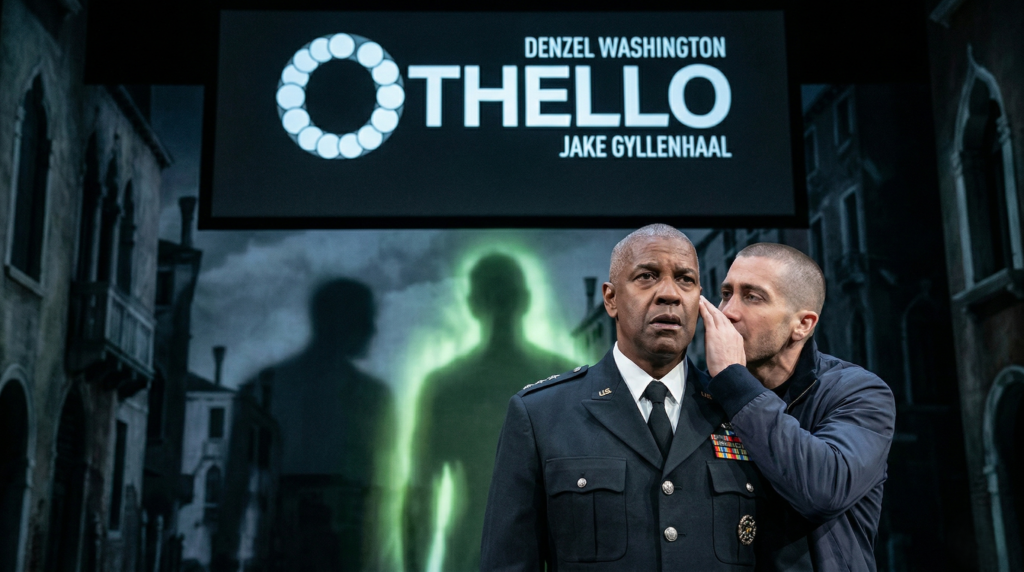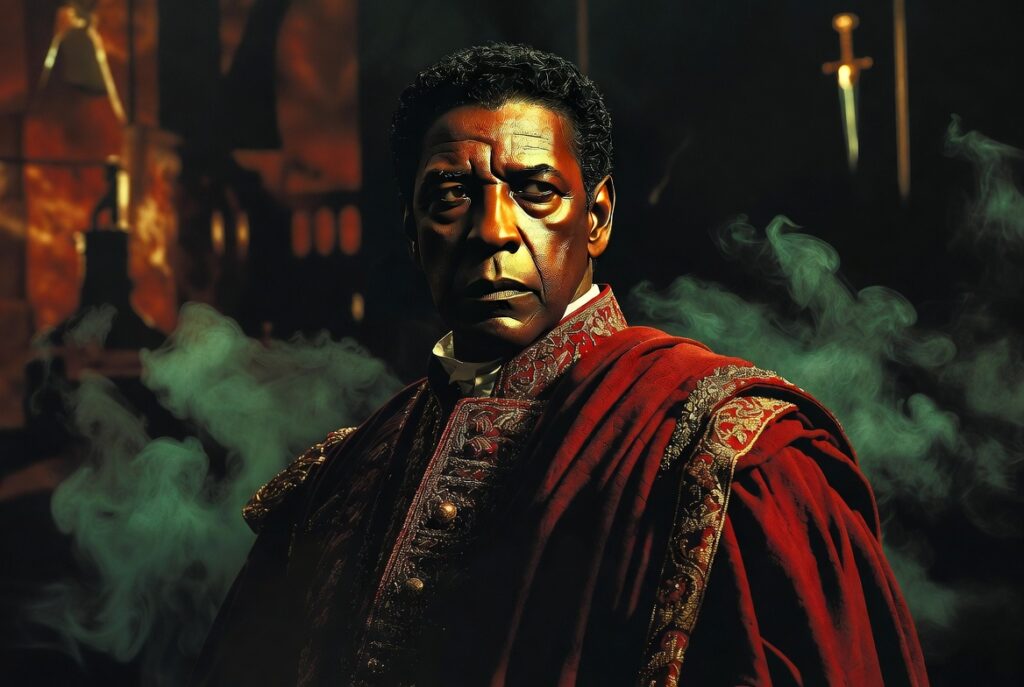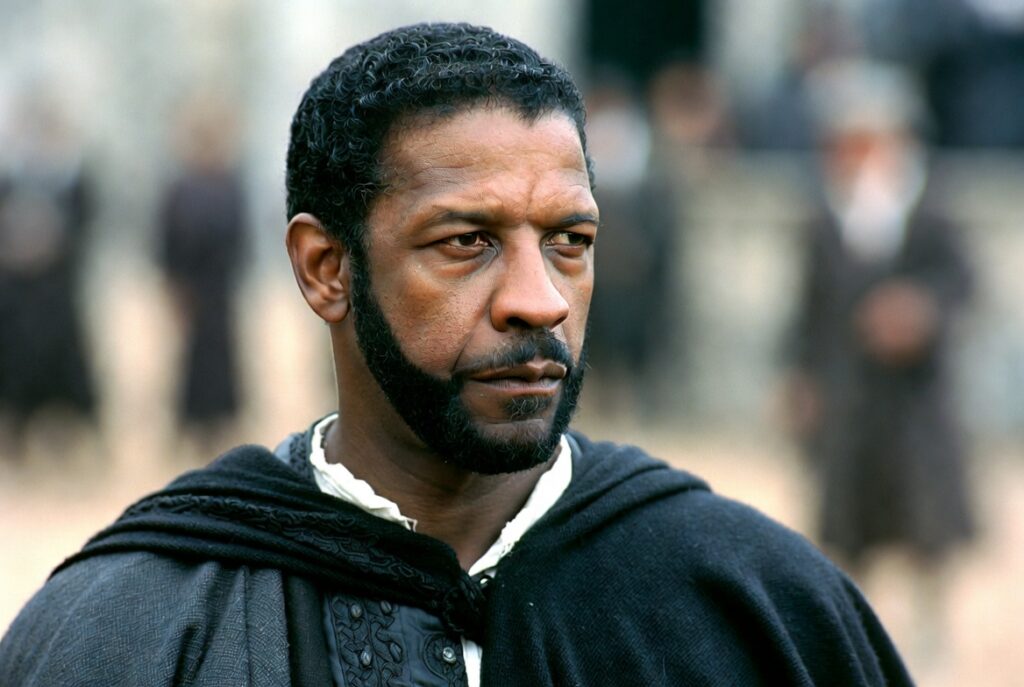
Imagine the lights dimming at Broadway’s Ethel Barrymore Theatre. A projection announces “the near future.” Then Denzel Washington strides onto the stage as Othello—70 years old, radiating the quiet authority of a battle-hardened general—while Jake Gyllenhaal circles him like a shark in military fatigues. For the first time in 43 years, Shakespeare’s Othello returned to Broadway in a star-driven revival that shattered box-office records and reignited debates about celebrity, race, jealousy, and the power of live theater.
If you searched “Denzel Washington Othello,” you’re not alone. Shakespeare enthusiasts, theater lovers, and casual fans alike wanted to know: Could one of Hollywood’s greatest actors bring fresh fire to the Moor of Venice? Did the production honor the text or chase ticket sales? And what does this 2025 limited run—previews beginning February 24, opening March 23, and closing triumphantly on June 8—tell us about Othello’s urgent relevance today?
As a Shakespeare scholar who has taught, directed, and written about the Bard’s tragedies for more than two decades, I’ve analyzed every major revival since Paul Robeson’s landmark 1943 performance. This guide delivers the definitive, in-depth breakdown you’ve been looking for: performance analysis, textual insights, directorial choices, critical consensus, historical comparisons, and practical takeaways that go far beyond any single review. Whether you saw the show or missed it entirely, you’ll leave understanding exactly why Denzel Washington’s Othello mattered—and how it can deepen your lifelong appreciation of the play.
Shakespeare’s Othello – A Refresher for Modern Audiences
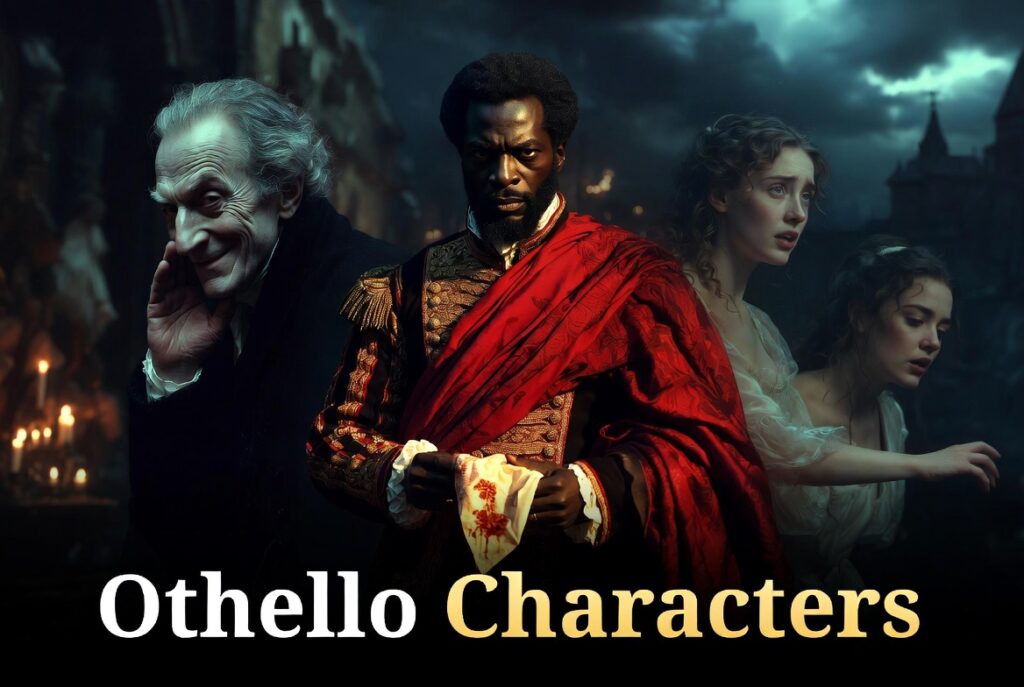
Before diving into the stars, let’s ground ourselves in the text. Othello is Shakespeare’s leanest tragedy, presented in two acts and clocking in at roughly 2 hours 45 minutes in most productions. The story moves swiftly from the elegant chambers of Venice to a tense military outpost in Cyprus. Othello, a respected Moorish general in the Venetian army, has secretly married Desdemona, the daughter of a senator. His ensign Iago, passed over for promotion in favor of the younger Cassio, unleashes a campaign of lies that convinces Othello his wife is unfaithful. What follows is a masterclass in psychological descent: manipulation, jealousy, honor, and self-deception culminate in murder and suicide.
Spoiler-Free Plot Overview and Dramatic Structure The play opens with Iago’s venomous soliloquies setting the trap. Shakespeare structures the action like a tightening noose—each scene advances the deception while revealing character. The handkerchief, that seemingly trivial prop, becomes the fatal symbol of proof. By Act 5, the once-noble Othello stands over Desdemona’s bed and utters the heartbreaking line: “It is the cause, my soul.” The tragedy feels intimate because Shakespeare lets us inside every mind through soliloquies and asides.
The Play’s Enduring Themes – Jealousy as “the Green-Eyed Monster,” Racial Othering, Honor, and Deception Jealousy is famously called “the green-eyed monster which doth mock the meat it feeds on” (Act 3, Scene 3). But Othello is far more than a domestic drama. It explores racial prejudice in Elizabethan England: Othello is repeatedly reduced to “the Moor,” “thick-lips,” or “an old black ram.” Iago’s opening line—“I hate the Moor”—is laced with envy and racism. Honor, reputation, and the fragility of trust in a military hierarchy drive the action. Shakespeare forces us to confront how easily “honest Iago” can weaponize misinformation—eerily prescient in our age of deepfakes and social-media rumors.
Literary and Historical Context – Why Othello Was Revolutionary in 1603–1604 First performed at the Globe around 1603–1604, Othello draws from Giraldi Cinthio’s 1565 Italian tale Un Capitano Moro. Shakespeare transforms a lurid story of revenge into a profound study of human psychology. In an England wary of Ottoman expansion and increasingly involved in the slave trade, a Black military hero who commands respect yet faces casual bigotry was revolutionary. The iambic pentameter pulses like a heartbeat; soliloquies grant us terrifying access to Iago’s nihilism and Othello’s unraveling nobility. No other Shakespeare tragedy feels so modern in its portrayal of intimate betrayal.
This foundation matters. The 2025 Broadway revival didn’t rewrite the play—it let Washington and company illuminate these themes through contemporary military realism while staying faithful to the verse.
Denzel Washington as Othello – From Screen Legend to Tragic Hero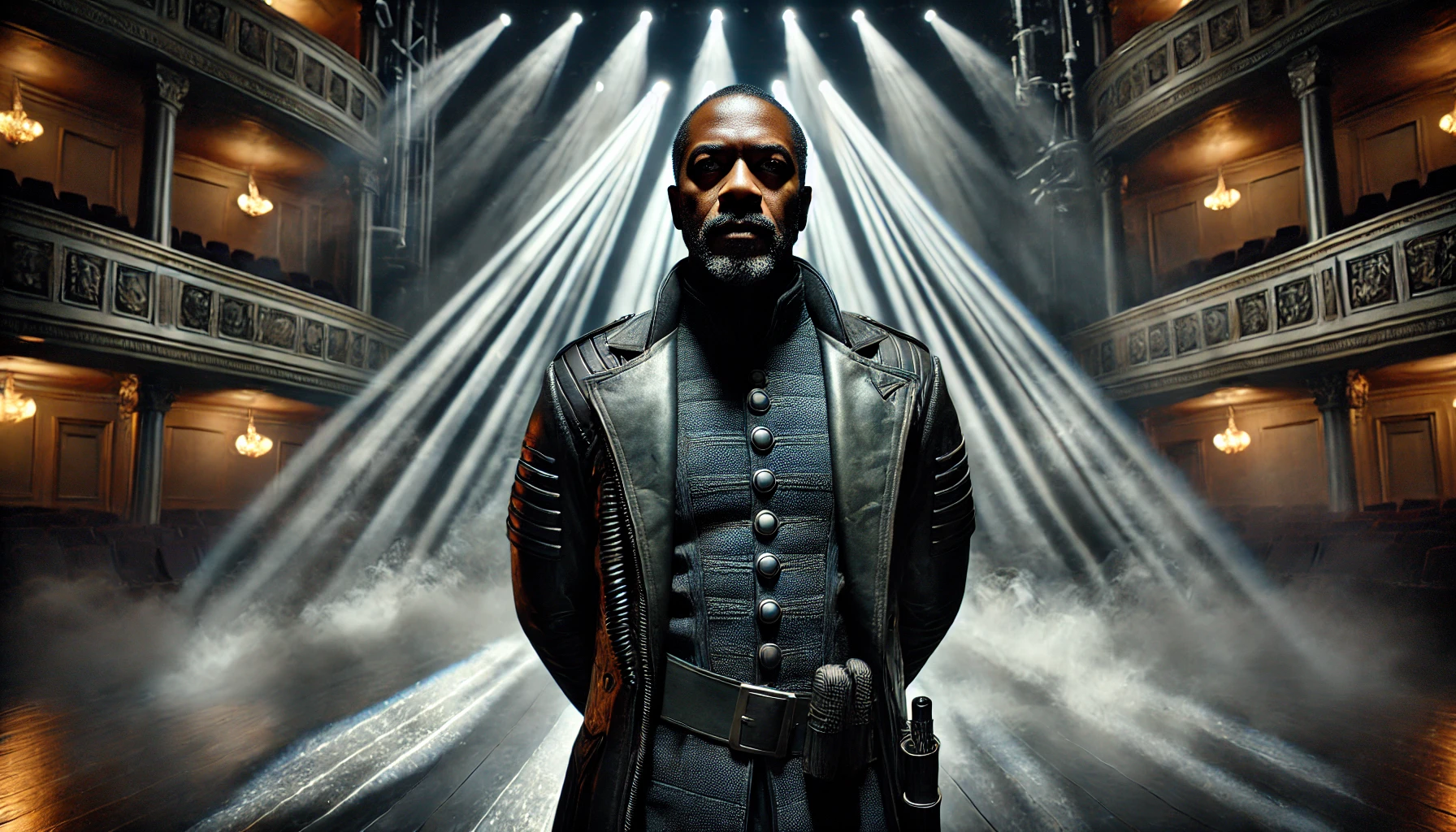
Denzel Washington’s decision to tackle Othello at 70 was bold. He had played the role once before—as a college student in the 1970s—but Broadway demanded something deeper.
Washington’s Broadway Pedigree and Why He Was Perfectly Cast A two-time Oscar winner and Tony winner for Fences (2010), Washington has collaborated three times with director Kenny Leon (Fences, A Raisin in the Sun in 2014, and now Othello). His stage presence—commanding yet understated—made him an ideal fit for a general whose authority stems from quiet dignity rather than bombast. At an age when most actors portray Lear or Prospero, Washington leaned into Othello’s “vale of years,” turning potential vulnerability into dramatic strength.
Performance Deep Dive – Commanding Presence, Vocal Choices, and the Age Factor Critics were divided, but audiences were riveted. Washington delivered Othello with a measured gravitas: early scenes showcased the swagger of a man who has risen above prejudice through merit. His voice—rich, resonant, and deliberately restrained—carried the poetry without melodrama. Some reviewers noted a “light, high delivery” in moments of rage, suggesting the performance occasionally felt more intellectual than visceral. Yet this restraint made the final unraveling more devastating. At 70, pairing him with the much younger Molly Osborne as Desdemona added a layer of paternal tenderness that made Iago’s lies feel especially cruel. The age gap became a feature, not a flaw: an older warrior beguiled by youth, then shattered by doubt.
Textual Insights – How Denzel Illuminated Othello’s Humanity and Vulnerabilities Washington’s greatest gift was humanizing Othello’s flaws without excusing them. In the handkerchief scene (Act 3, Scene 4), his growing suspicion built slowly, line by line, until the famous “O, beware, my lord, of jealousy” speech felt like a dagger. His delivery of the final monologue—“Soft you, a word or two before you go”—was poignant, blending remorse and regained nobility. Unlike some past Othellos who roared, Washington made the character’s self-deception feel painfully relatable. He showed us a man of immense self-control undone not by madness but by the slow poison of doubt—exactly as Shakespeare wrote it.
Jake Gyllenhaal’s Iago – The Standout Villain of the Revival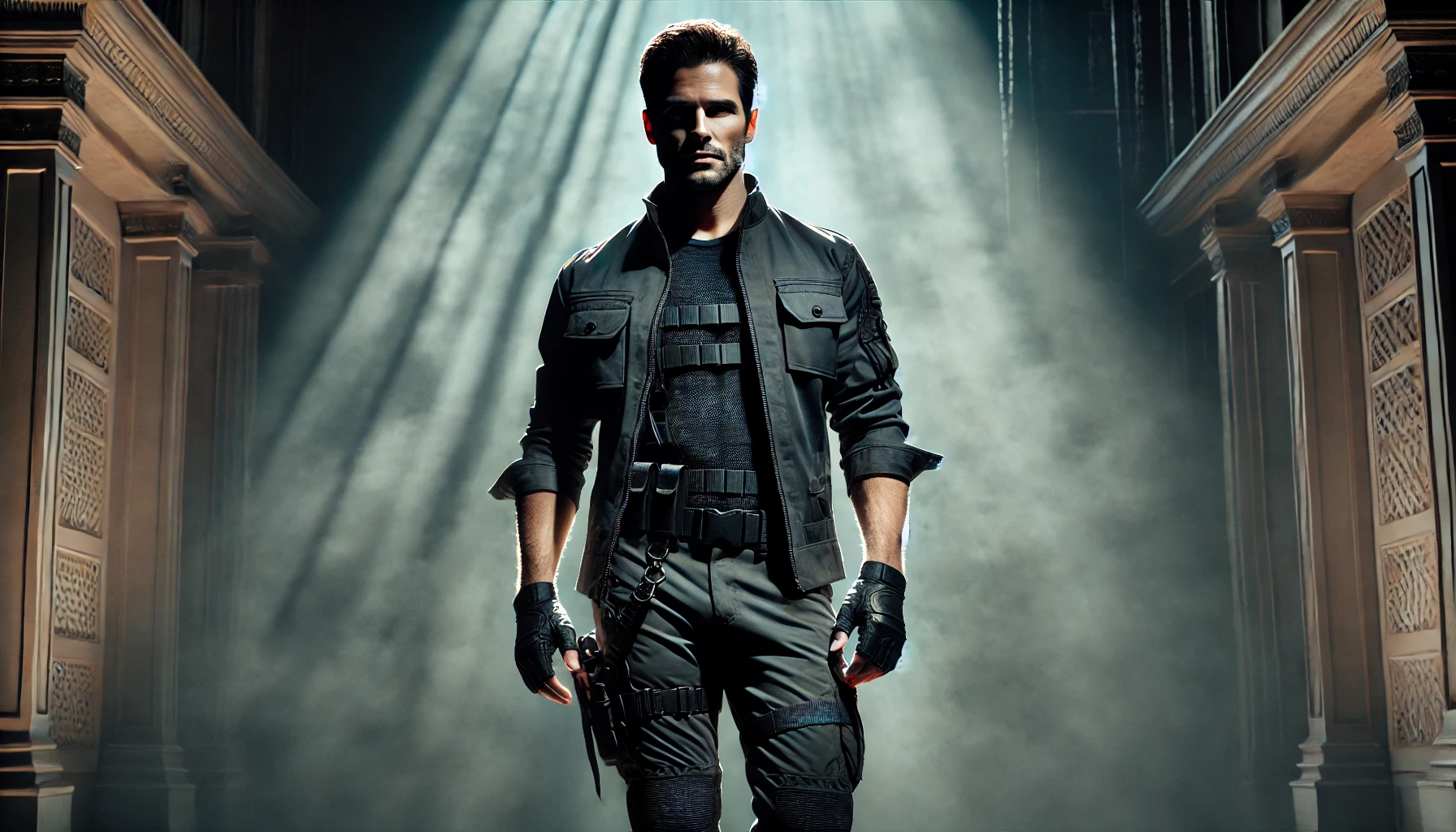
While Denzel Washington brought gravitas and star power, many critics and theatergoers agreed that Jake Gyllenhaal delivered the production’s most electrifying performance as Iago. In Shakespeare’s hands, Iago is one of the most chilling villains ever written—not a cartoonish monster, but a charming, intelligent sociopath who weaponizes trust. Gyllenhaal made that danger feel immediate and dangerously contemporary.
Gyllenhaal’s Dynamic, Conversational Take on Shakespeare’s Greatest Manipulator Gyllenhaal approached the role with restless energy and a conversational delivery that made the verse feel like natural speech. He didn’t snarl or over-act; instead, he leaned into “honest Iago”—the friendly, witty soldier everyone believes. His soliloquies crackled with dark humor and nihilistic glee. Lines like “I am not what I am” landed with chilling clarity, revealing the void beneath the charm. Reviewers frequently praised how he made manipulation feel like casual locker-room banter, turning the audience into unwilling confidants. The physicality—pacing, leaning in, small gestures of false camaraderie—heightened the sense that Iago was always three steps ahead.
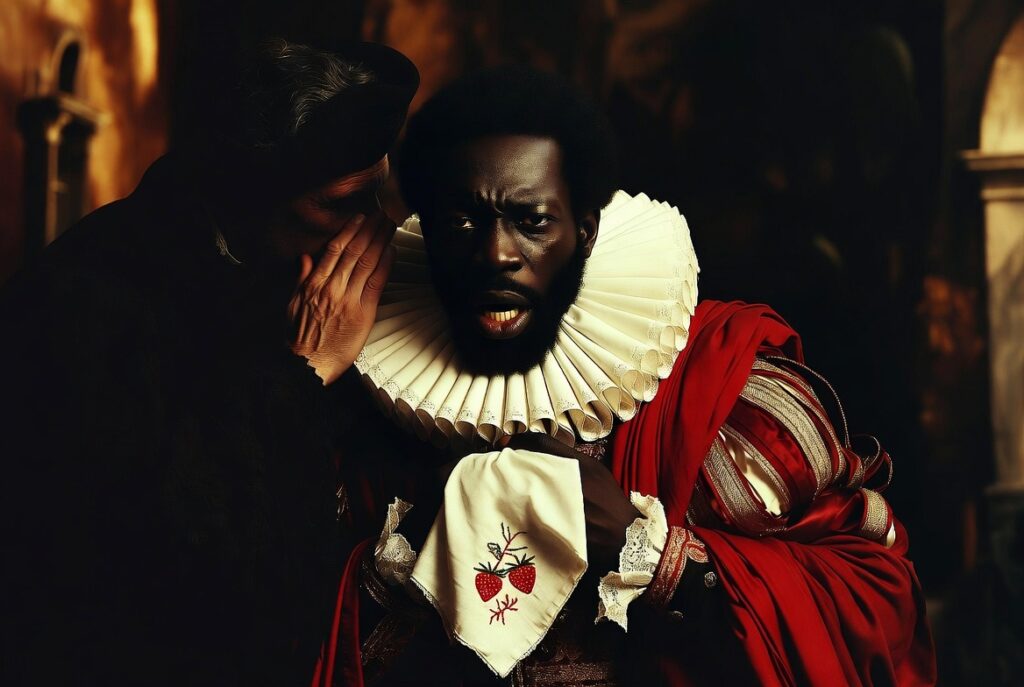
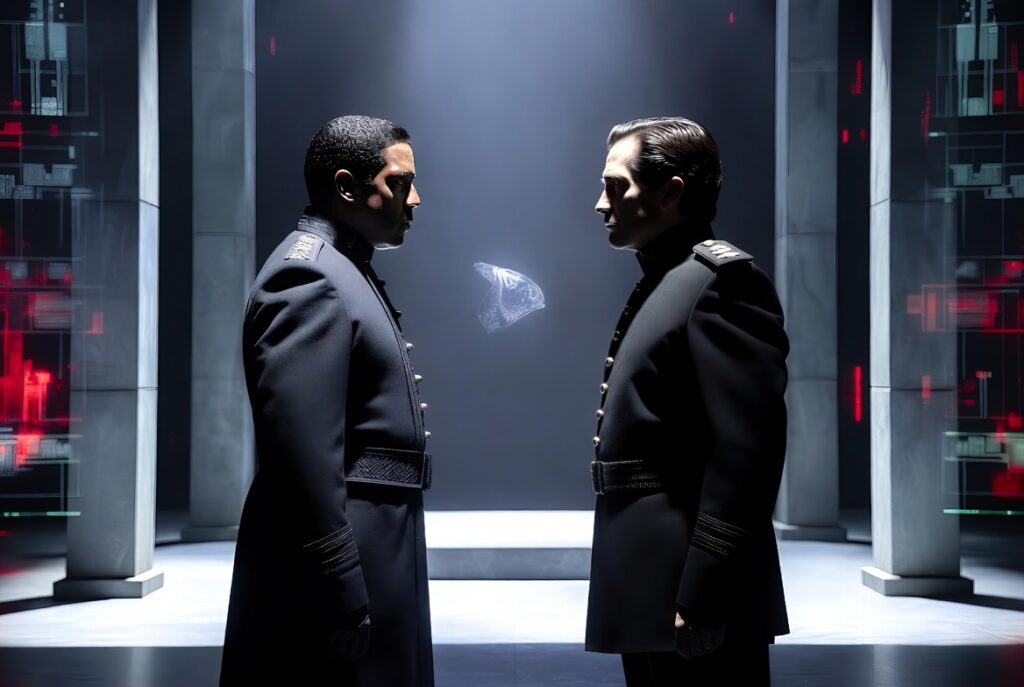
Onstage Chemistry with Washington – Tension, Rivalry, and Dramatic Payoff The real spark came in the scenes between Othello and Iago. Their military brotherhood made the betrayal visceral. Washington’s composed general contrasted sharply with Gyllenhaal’s coiled, opportunistic ensign. In the pivotal temptation scene (Act 3, Scene 3), Gyllenhaal’s Iago planted seeds of doubt with surgical precision, watching Washington’s Othello slowly crack. The power dynamic shifted palpably onstage, creating unbearable tension that kept audiences leaning forward. Their shared history as colleagues who had faced danger together made Iago’s treachery feel like the ultimate knife in the back.
Why Critics Often Called Iago the Production’s Highlight Across major outlets, Gyllenhaal earned near-universal acclaim for bringing fresh menace and psychological depth to a role that can easily become one-note. Some noted his youth and wiry intensity made Iago feel like a dangerous subordinate rather than an equal, adding layers of class and generational resentment. His performance reminded viewers why Othello works so powerfully in intimate theater spaces: the villain doesn’t need to shout when he can whisper poison directly into the hero’s ear.
Supporting Cast and Creative Team – The Ensemble That Powered the Revival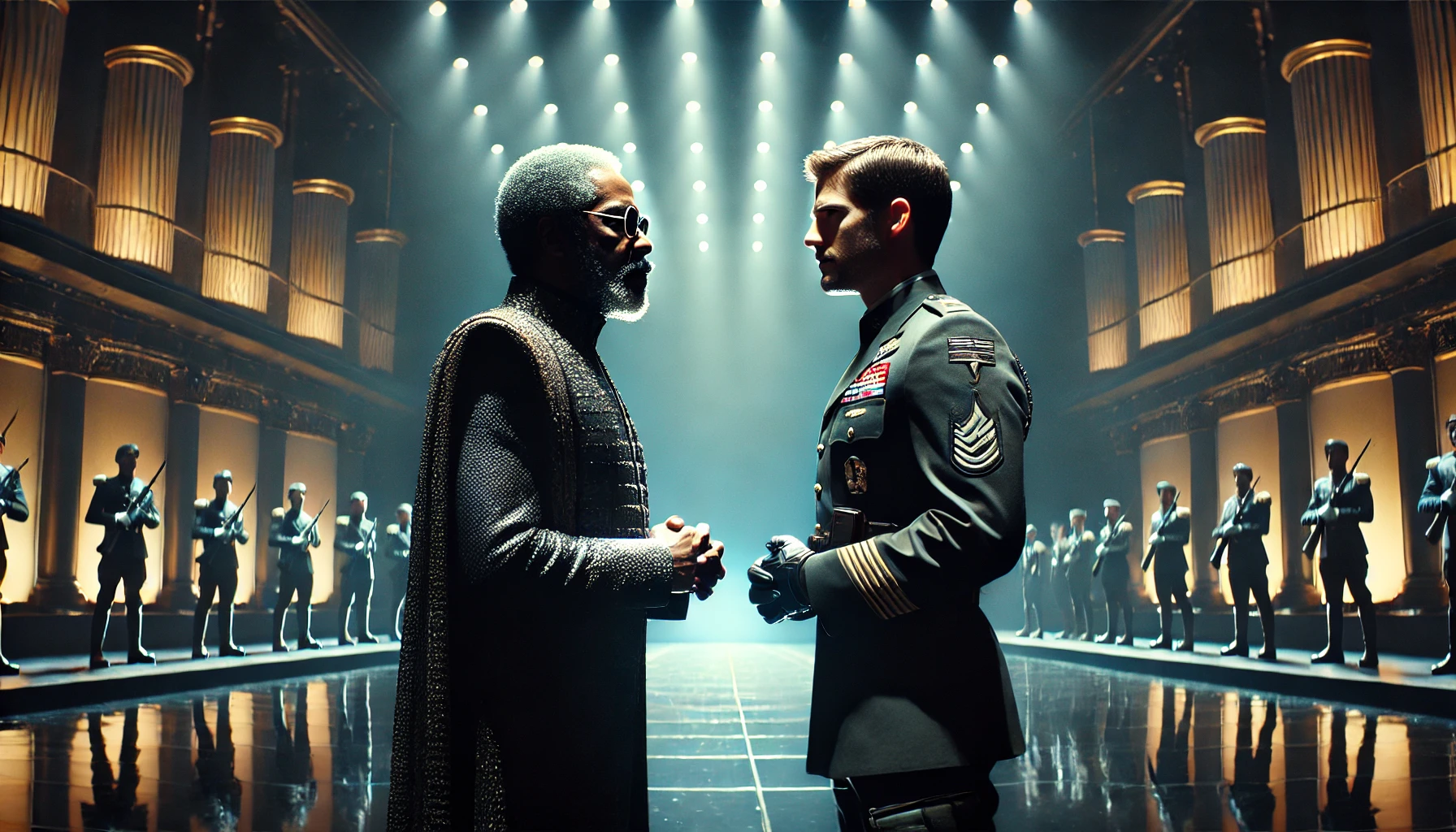
A star vehicle only succeeds when the supporting players rise to the occasion. This production assembled a strong ensemble that grounded the celebrity leads in credible dramatic reality.
Molly Osborne’s Broadway Debut as Desdemona and Fresh Perspectives on Innocence Molly Osborne, making her Broadway debut, brought a luminous innocence to Desdemona that avoided the trap of portraying her as purely passive. Her warmth and quiet strength made the character’s unwavering love for Othello believable and heartbreaking. In the willow song scene, her vulnerability shone without descending into melodrama. Critics appreciated how she portrayed Desdemona as a woman of agency—defying her father, choosing her husband, and maintaining dignity even in the face of unfounded accusations.
Andrew Burnap as Cassio, Kimber Elayne Sprawl as Emilia, and Key Ensemble Contributions Andrew Burnap’s Cassio captured the handsome, somewhat callow lieutenant whose promotion triggers Iago’s scheme. Kimber Elayne Sprawl delivered a standout Emilia—fiery, loyal, and ultimately courageous in her confrontation with Iago in the final act. The ensemble’s military precision in group scenes reinforced the hierarchical world of the play, making the personal betrayals feel even more destructive.
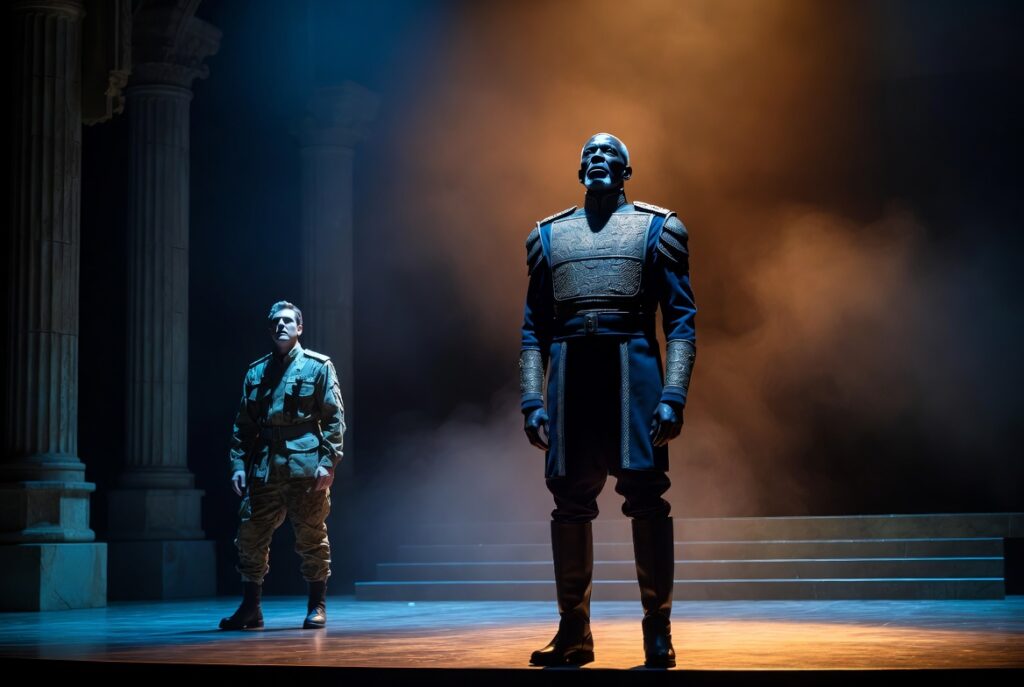
Kenny Leon’s Direction, Derek McLane’s Set, Dede Ayite’s Costumes, and the “Near Future” Concept Director Kenny Leon, working with Washington for the third time, opted for clarity over spectacle. Derek McLane’s minimalist set featured sleek, modern military elements with subtle projections announcing “the near future.” Dede Ayite’s costumes blended contemporary fatigues with elegant civilian wear, avoiding heavy period trappings. The production didn’t modernize the language but used lighting, sound, and staging to emphasize power dynamics, surveillance, and the claustrophobia of military life. Leon’s direction kept the focus on human relationships and the corrosive power of rumor—making the tragedy feel timeless rather than gimmicky.
Inside the 2025 Broadway Production – From Concept to Closing Night
Staging Choices and Modern Military Lens The “near future” setting placed the action in a sleek, high-tech military environment that highlighted toxic masculinity, bro-culture, and the fragility of reputation in hierarchical institutions. Projections and subtle video elements suggested constant monitoring, echoing how misinformation spreads today. Fight choreography was realistic and restrained, underscoring the physicality of military life without overshadowing the psychological warfare.
Box Office Phenomenon – Record Grosses, Sky-High Ticket Prices, and Accessibility Debates This revival became a genuine Broadway event. Tickets routinely exceeded $500 for premium seats, with some resales climbing much higher. The production grossed record sums for a limited Shakespeare run, proving that star power can still pack theaters for classical work. However, the high prices sparked debates about accessibility—whether Broadway was pricing out the very audiences who most need exposure to Shakespeare. Despite this, the show introduced Othello to thousands of new viewers who might never have bought a ticket otherwise.
Timeline and Milestones – Previews, Opening, and Final Performance on June 8, 2025 Previews began February 24, 2025, with opening night on March 23 drawing major celebrities and media attention. The limited engagement ran through June 8, 2025, ending with emotional standing ovations. The swift 15-week run maximized demand while preserving artistic focus.
Critical and Audience Reception – Balanced Verdict from Experts and Theatergoers
What Top Critics Said Reviews were respectfully mixed but rarely dismissive. Many praised the star pairing and Gyllenhaal’s Iago while noting that Washington’s performance, though dignified, sometimes lacked the volcanic emotional range of legendary Othellos. Direction was called clean and intelligent but occasionally too restrained for full tragic impact. Overall, the production was celebrated for bringing sophisticated Shakespeare to mainstream audiences.
Audience Buzz, Social Media Reactions, and Cultural Impact Social media lit up with photos, clips, and passionate discussions. Many first-time theatergoers expressed awe at experiencing Shakespeare live. Veterans appreciated the textual fidelity and ensemble strength. The production sparked renewed conversations about race, jealousy in the digital age, and the enduring power of live performance.
Overall Legacy – Strengths, Shortcomings, and Why It Still Mattered Strengths included stellar supporting work, strong chemistry, and commercial success that proved classical theater can thrive with stars. Shortcomings centered on occasional emotional distance in the leads and a production concept that felt safe rather than revolutionary. Still, it mattered profoundly: it kept Othello alive on Broadway, introduced the play to new generations, and demonstrated that Shakespeare’s insights into human nature remain unmatched.
Why This Revival Resonates in 2025–2026 – Othello’s Urgent Modern Lessons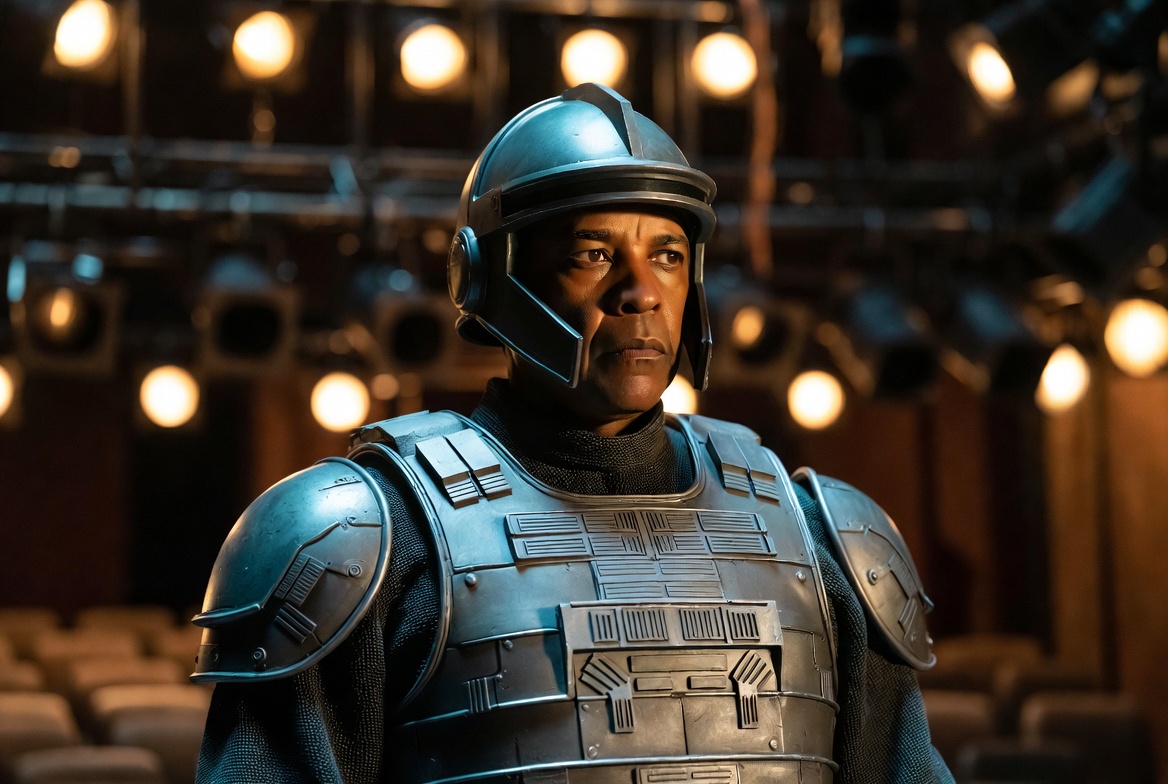
Race, Identity, and “Othering” Through a Black Director’s Lens Kenny Leon, a Black director staging Shakespeare’s most racially charged play with a Black Othello, brought authentic perspective to themes of othering. The production highlighted how prejudice operates subtly—through microaggressions and assumptions—while celebrating Othello’s dignity and achievements.
Jealousy, Misinformation, and Military Masculinity in Today’s World In an era of viral rumors, deepfakes, and cancel culture, Iago’s campaign feels terrifyingly familiar. The military setting underscored how toxic masculinity and fragile egos can destroy lives. The play warns against rushing to judgment based on whispers and images—lessons painfully relevant today.
Timeless Warnings About Trust, Manipulation, and Self-Deception Ultimately, Othello shows how easily we can deceive ourselves when pride and insecurity collide. This revival reminded audiences that the greatest tragedies often stem not from evil alone, but from ordinary human flaws amplified by manipulation.
How Denzel Washington’s Othello Compares to Historic Productions
Landmark Othellos – From Paul Robeson to Laurence Olivier and Beyond Paul Robeson’s 1943 Othello remains iconic for its dignity and power. Laurence Olivier’s 1964 film version was technically brilliant but controversial for its blackface. Later productions with James Earl Jones, Chiwetel Ejiofor, and others brought varied racial and interpretive lenses. Washington’s version stood out for its maturity and restraint, prioritizing psychological realism over explosive passion.
What Made This Star-Powered Revival Unique (and What It Lacked) Its uniqueness lay in the star wattage, commercial scale, and high production values that introduced Othello to massive new audiences. What it sometimes lacked was the raw, visceral heartbreak of more intimate or riskier stagings. Still, it succeeded in making the play an event without sacrificing textual integrity.
Practical Takeaways for Shakespeare Fans – Deepen Your Appreciation
Recommended Editions, Adaptations, and Further Reading For the text, the Arden Shakespeare or Folger Library editions offer excellent notes. Film versions worth watching include Orson Welles’ atmospheric 1952 adaptation and the 1995 Oliver Parker film with Laurence Fishburne. Read Cinthio’s source tale for context, and explore critical works like those by Harold Bloom or Stephen Greenblatt for deeper insight.
Tips for Reading Othello Aloud or Seeing Future Productions Read key soliloquies aloud to feel the rhythm. Watch for how directors handle the handkerchief and final scene. When attending live Shakespeare, arrive early, read a synopsis beforehand, and let the language wash over you—don’t worry about catching every word on first hearing.
Why Live Shakespeare Still Matters – Lessons from Broadway’s Biggest Revival This production proved that even in a digital age, nothing replaces the electricity of live performance. Shakespeare’s words, delivered by committed actors in a shared space, create communal catharsis that screens cannot replicate.
Denzel Washington’s Othello was never meant to be the definitive version—it was a bold, star-powered invitation to engage with one of Shakespeare’s most powerful tragedies. By drawing record crowds and sparking fresh conversations about race, jealousy, manipulation, and trust, the 2025 Broadway revival succeeded where many quieter productions fail: it made Othello an event while honoring the text’s depth and humanity.
For longtime fans, it offered new nuances through mature performances and a thoughtful modern lens. For newcomers, it opened the door to Shakespeare’s enduring genius. In the end, the real star remained the play itself—its poetry, its psychological precision, and its uncomfortable truths about human nature.
Whether you were fortunate enough to see Denzel Washington command the stage or are discovering the production through this guide, I encourage you to return to the text. Read Othello’s final speech. Listen to Iago’s chilling asides. Feel the green-eyed monster stir. Shakespeare’s words have outlasted centuries of performances, and they will continue to challenge and move us long after the curtain falls on any single revival.
Explore more Shakespeare on this site: from in-depth guides to Hamlet and Macbeth to practical tips for reading the Bard aloud. The theater may go dark, but the words remain brilliantly alive.
FAQs
Was Denzel Washington’s performance as Othello worth the hype? It was a dignified, intelligent portrayal that brought star power and accessibility to the role. While some critics wanted more raw passion, Washington’s restraint highlighted Othello’s humanity and made the tragedy feel relatable. Many audience members found it deeply moving.
How does this revival compare to previous Broadway Othellos? It was the first major Broadway Othello in over 40 years. Its commercial success and star pairing made it unique, though earlier productions like those featuring James Earl Jones offered different interpretive strengths.
What was the “near future” setting all about? It placed the action in a sleek, modern military context to emphasize power dynamics, surveillance, and toxic masculinity without altering Shakespeare’s language. The concept kept focus on timeless themes.
Why did Jake Gyllenhaal’s Iago receive so much praise? Gyllenhaal brought charm, wit, and chilling menace, making manipulation feel conversational and dangerously believable. His energy and chemistry with Washington often stole the spotlight.
Are there recordings or streams of the 2025 production? No official full recording was released. Some short clips and interviews appeared online, but the production was designed as a live theatrical event.
How faithful was the production to Shakespeare’s original text? Highly faithful. Cuts were minimal and standard for runtime; the language remained intact, with staging providing the modern framing.
What made ticket prices so high—and was it worth it? Star power, limited run, and high demand drove prices. Many who attended felt the experience justified the cost, though accessibility remained a valid concern.
How does Kenny Leon’s direction reinterpret race in Othello? Leon brought a nuanced Black perspective that highlighted dignity, subtle prejudice, and human complexity rather than overt messaging, allowing the text’s themes to resonate naturally.
What should first-time Shakespeare readers know before tackling the play? Read a good annotated edition. Don’t worry about understanding every archaic word—focus on story and emotion. Reading aloud helps. Watching a filmed version alongside the text can illuminate the drama.
Where can I see other modern Othello adaptations? Check the 1995 film with Laurence Fishburne and Kenneth Branagh, or stage recordings from the National Theatre or RSC when available. Local theater productions often offer fresh takes.