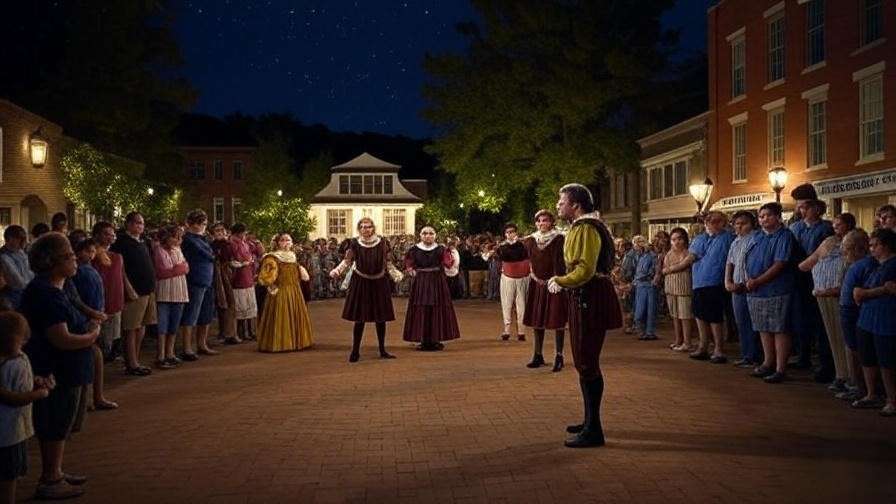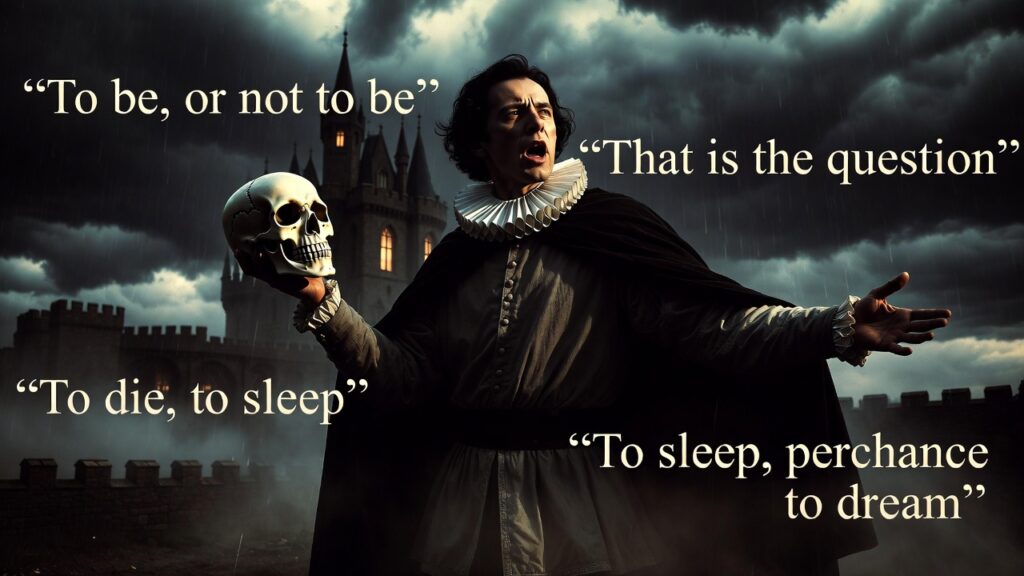
Imagine a single line so powerful that it has haunted philosophers, inspired countless adaptations, and still stops audiences in their tracks centuries later: “To be, or not to be—that is the question.” This iconic phrase, spoken by Hamlet himself, captures the essence of existential doubt, grief, and the human struggle to find meaning amid suffering. Famous quotes by Hamlet are more than mere lines from a 400-year-old play—they are profound meditations on life, death, betrayal, and the human condition that continue to resonate deeply today.
William Shakespeare’s Hamlet, written around 1600–1601, stands as one of the greatest tragedies in English literature. At its center is the Prince of Denmark, a young intellectual torn between duty, revenge, and paralyzing introspection. Unlike other Shakespeare protagonists who act decisively, Hamlet speaks his inner turmoil through soliloquies and charged dialogues, revealing a mind wrestling with profound questions. His words blend poetic brilliance with raw emotion, making them enduring sources of wisdom.
In this comprehensive guide, we explore the most famous quotes spoken directly by Hamlet, drawn from the original text (primarily the Folio and Quarto editions). We’ll provide the exact wording, scene context, modern paraphrases, in-depth analysis of themes like mortality, madness, revenge, and existentialism, and insights into their lasting relevance—from mental health discussions to everyday decision-making. Whether you’re a student analyzing the play, a literature enthusiast seeking deeper understanding, or someone drawn to timeless inspiration, these lines offer genuine insight into Shakespeare’s genius and the universal struggles they illuminate.
Who Is Hamlet? A Quick Character Portrait
Hamlet, Prince of Denmark, is no typical revenge hero. A scholar from Wittenberg University, he returns home for his father’s funeral only to find his uncle Claudius has married his mother Gertrude and claimed the throne. The Ghost of his father reveals murder, thrusting Hamlet into a world of deception and moral ambiguity.
What sets Hamlet apart is his introspective nature. He is highly intelligent, philosophical, and prone to overthinking—traits that fuel his famous soliloquies. His “antic disposition” (feigned madness) masks genuine grief and moral paralysis, while his wit and wordplay expose the corruption around him. As literary critics have long noted, Hamlet embodies Renaissance humanism: he marvels at humanity’s potential yet despairs at its flaws. His quotes stand out because they are private revelations—spoken alone or to trusted friends like Horatio—offering unfiltered access to a tormented soul.
This depth explains why Hamlet’s words endure. They don’t just advance the plot; they probe the psyche, making him one of literature’s most relatable tragic figures.
The Most Famous Soliloquies by Hamlet
Hamlet’s soliloquies are the heart of the play, where he confronts his deepest thoughts. These private speeches reveal his evolving mindset—from despair to resolve—and contain some of Shakespeare’s most quoted lines.
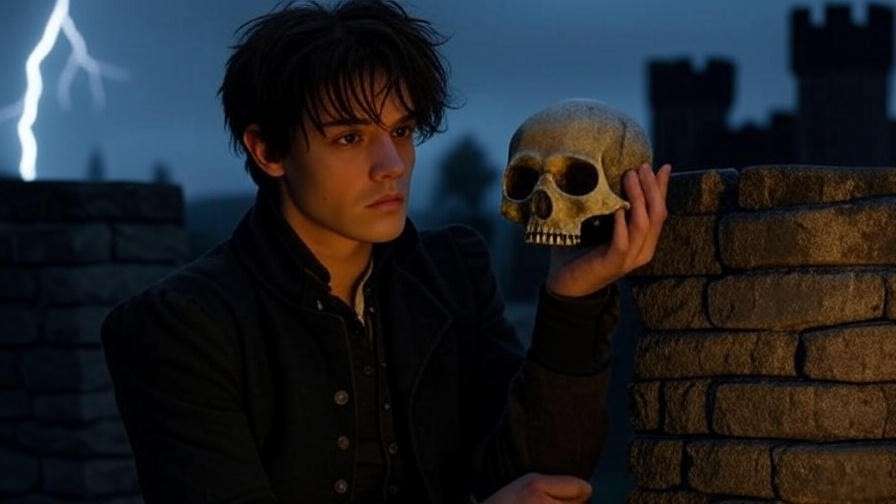
“To be, or not to be—that is the question” (Act 3, Scene 1)
The full excerpt begins:
To be, or not to be—that is the question: Whether ’tis nobler in the mind to suffer The slings and arrows of outrageous fortune, Or to take arms against a sea of troubles And by opposing end them. To die—to sleep, No more; and by a sleep to say we end The heart-ache and the thousand natural shocks That flesh is heir to: ’tis a consummation Devoutly to be wish’d. To die, to sleep; To sleep, perchance to dream—ay, there’s the rub: For in that sleep of death what dreams may come, When we have shuffled off this mortal coil, Must give us pause…
Context: In the famous “nunnery scene,” Hamlet believes he is alone (though Claudius and Polonius spy). Overwhelmed by grief, betrayal, and the burden of revenge, he contemplates suicide.
Modern paraphrase: Is it better to live and endure suffering, or to end it all through death? Death seems like peaceful sleep, but what if the afterlife brings unknown torments? Fear of the unknown stops us from acting.
Deep analysis: This is not merely about suicide but the broader existential dilemma: action versus inaction. Hamlet weighs life’s pains (“slings and arrows,” “whips and scorns of time”) against the terror of death’s uncertainty (“the undiscovered country”). The “rub” (obstacle) is conscience and fear of afterlife punishment, which “makes cowards of us all.” Themes include mortality, free will, and how overthinking paralyzes resolve. In performance, actors like Laurence Olivier emphasized contemplative pauses, while modern interpretations (e.g., in mental health contexts) highlight depression’s grip.
Modern relevance: Today, this soliloquy speaks to mental health crises, chronic stress, and tough choices. It reminds us that fear of change often keeps us enduring hardship.
“O, that this too too solid flesh would melt…” (Act 1, Scene 2 – First Soliloquy)
O, that this too too solid flesh would melt, Thaw, and resolve itself into a dew! Or that the Everlasting had not fix’d His canon ‘gainst self-slaughter! O God! O God! How weary, stale, flat, and unprofitable Seem to me all the uses of this world! Fie on’t, ah fie! ‘Tis an unweeded garden That grows to seed. Things rank and gross in nature Possess it merely…
Context: Immediately after the court scene where Claudius and Gertrude dismiss Hamlet’s grief, he is alone, disgusted by his mother’s hasty remarriage.
Modern paraphrase: I wish my body could dissolve away or that God hadn’t forbidden suicide. The world feels worthless, like an overgrown garden full of corruption.
Analysis: This reveals suicidal ideation tempered by religious prohibition. The “unweeded garden” metaphor symbolizes moral decay in Denmark and personal betrayal. Hamlet contrasts his father’s nobility (“Hyperion”) with Claudius (“a satyr”). Themes: grief, incestuous betrayal (in Elizabethan views), world-weariness.
“What a piece of work is a man…” (Act 2, Scene 2)
What a piece of work is a man, how noble in reason, how infinite in faculty, in form and moving how express and admirable, in action how like an angel, in apprehension how like a god—the beauty of the world, the paragon of animals—and yet to me what is this quintessence of dust?
Context: Speaking to Rosencrantz and Guildenstern, Hamlet shifts from praising humanity to despair.
Analysis: A pinnacle of Renaissance humanism undercut by cynicism. Man is godlike yet ultimately “dust.” This reflects Hamlet’s depression and disillusionment.
“How all occasions do inform against me…” (Act 4, Scene 4 – Final Soliloquy)
How all occasions do inform against me And spur my dull revenge! What is a man, If his chief good and market of his time Be but to sleep and feed? A beast, no more…
Context: Witnessing Fortinbras’s army marching to battle for little gain, Hamlet shames himself for inaction.
Analysis: A turning point—Hamlet resolves to embrace “bloody” action, marking his shift from thought to deed.
Other Iconic Quotes Spoken by Hamlet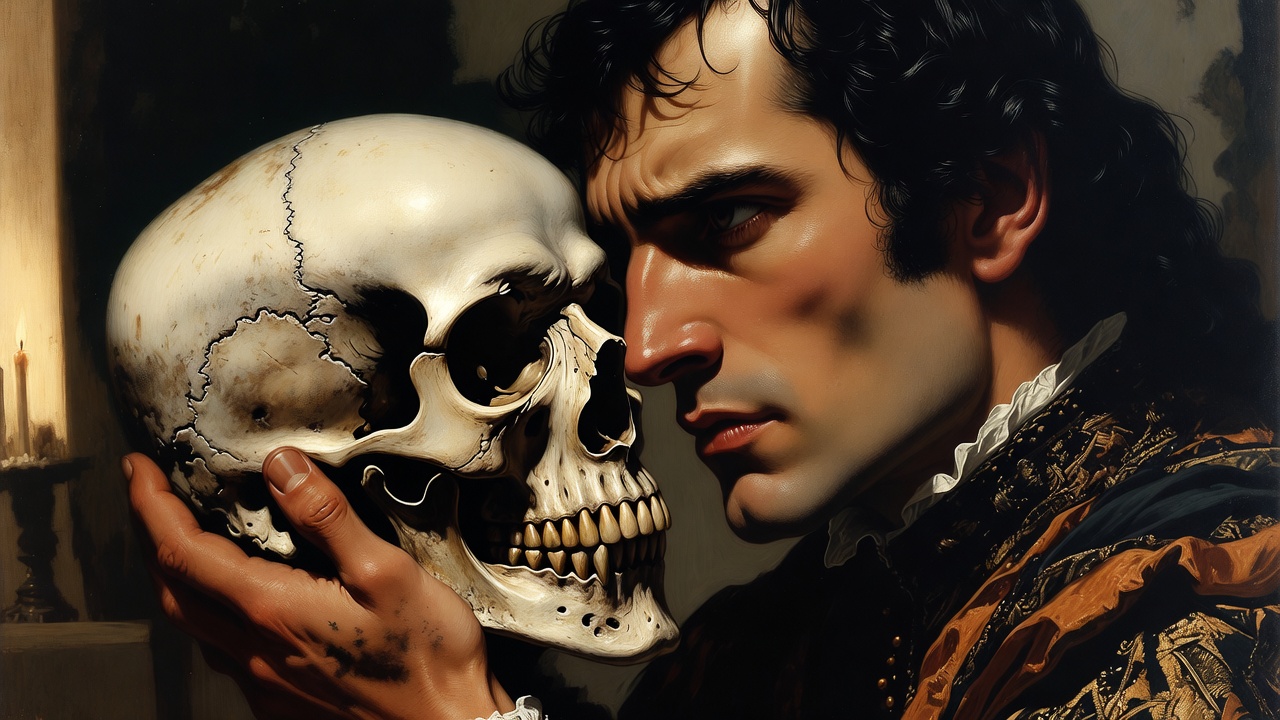
Beyond the major soliloquies, Hamlet delivers many other lines that have become cultural touchstones. These shorter but equally powerful statements reveal his wit, cynicism, moral outrage, and philosophical depth. Here we group them thematically for clarity, with full original text (or key excerpts), precise act/scene references, context, analysis, and contemporary applications.
On Grief and Authenticity
Seems, madam? Nay, it is. I know not “seems.” ’Tis not alone my inky cloak, good mother, Nor customary suits of solemn black… But I have that within which passeth show— These but the trappings and the suits of woe. (Act 1, Scene 2)
Context: In the opening court scene, Gertrude asks why Hamlet’s grief “seems” so particular. He responds sharply, insisting his mourning is genuine, not performative.
Analysis: This exchange establishes Hamlet’s disdain for falsehood and outward show. The contrast between “seems” and “is” foreshadows the play’s obsession with appearance versus reality—central to Claudius’s deception, Polonius’s spying, and Hamlet’s own feigned madness. It also reveals deep filial loyalty and authentic emotion in a court rife with hypocrisy.
Modern relevance: In an age of curated social media personas and performative grief, this quote speaks to anyone who has felt pressured to “get over” loss quickly or hide real pain behind a polished exterior.
On Corruption and Hidden Villainy
That one may smile, and smile, and be a villain. (Act 1, Scene 5)
Context: Immediately after the Ghost reveals Claudius’s murder, Hamlet reacts with horror at the possibility of smiling treachery.
Analysis: One of Shakespeare’s most quoted single lines, it crystallizes the theme of deceptive appearances. The repetition of “smile” heightens the chilling irony: outward charm can mask profound evil. This observation becomes tragically prophetic as Hamlet navigates a court where nearly everyone wears a false face.
Modern application: A timeless warning about trusting charm over character—relevant in politics, workplaces, dating, and leadership. It reminds us to look beyond surface behavior.
The time is out of joint. O cursèd spite, That ever I was born to set it right! (Act 1, Scene 5)
Context: Still reeling from the Ghost’s command to avenge his father, Hamlet laments the burden placed upon him.
Analysis: This couplet captures existential anguish: the world is disordered (“out of joint”), and Hamlet feels cursed to be the one who must restore justice. It reveals his reluctance to embrace the role of avenger—he would rather philosophize than act.
Relevance today: Many people feel overwhelmed by systemic injustice, family dysfunction, or global crises and sense a personal responsibility they never asked for.
On Madness, Wit, and Method
I am but mad north-north-west. When the wind is southerly, I know a hawk from a handsaw. (Act 2, Scene 2)
Context: Speaking to Rosencrantz and Guildenstern, who have been sent to spy on him, Hamlet playfully admits to madness—but only under certain conditions.
Analysis: This line demonstrates Hamlet’s brilliant wordplay and control. “North-north-west” suggests partial, strategic madness; “I know a hawk from a handsaw” (a pun on “herons-handsaw”) proves his sharp perception. It shows his “antic disposition” is deliberate, not deranged.
Though this be madness, yet there is method in’t. (Act 2, Scene 2 – spoken by Polonius about Hamlet, but frequently associated with Hamlet’s behavior)
Note: While Polonius says this line, it perfectly describes Hamlet’s calculated performance of insanity, which conceals his true intentions.
Philosophical Reflections
There are more things in heaven and earth, Horatio, Than are dreamt of in your philosophy. (Act 1, Scene 5)
Context: After seeing the Ghost, Hamlet chides his skeptical friend Horatio for limiting reality to rational explanation.
Analysis: A cornerstone of Shakespeare’s exploration of the supernatural and the limits of human understanding. It defends openness to mystery, intuition, and the inexplicable—countering strict rationalism.
Modern resonance: In an era dominated by science and skepticism, this quote gently reminds us that not everything can be reduced to empirical proof—valuable for discussions of spirituality, intuition, grief visions, and unexplained phenomena.
There is nothing either good or bad, but thinking makes it so. (Act 2, Scene 2)
Context: Hamlet tells Rosencrantz and Guildenstern that Denmark is a prison—then immediately undercuts the statement by saying perception shapes reality.
Analysis: One of Shakespeare’s most proto-existential statements. It anticipates cognitive behavioral therapy by centuries: our judgments, not events themselves, determine suffering or contentment.
On Fate, Acceptance, and Resolve
If it be now, ’tis not to come; if it be not to come, it will be now; if it be not now, yet it will come—the readiness is all. (Act 5, Scene 2)
Context: In the final scene, before the deadly duel with Laertes, Hamlet accepts whatever fate awaits.
Analysis: A mature shift from earlier paralysis to calm acceptance. “The readiness is all” suggests spiritual preparedness rather than control over outcomes—an attitude of equanimity in the face of death.
Modern application: Profoundly useful for dealing with anxiety, terminal illness, uncertainty, or high-stakes moments. It encourages presence and courage over futile resistance.
Why Hamlet’s Words Still Matter Today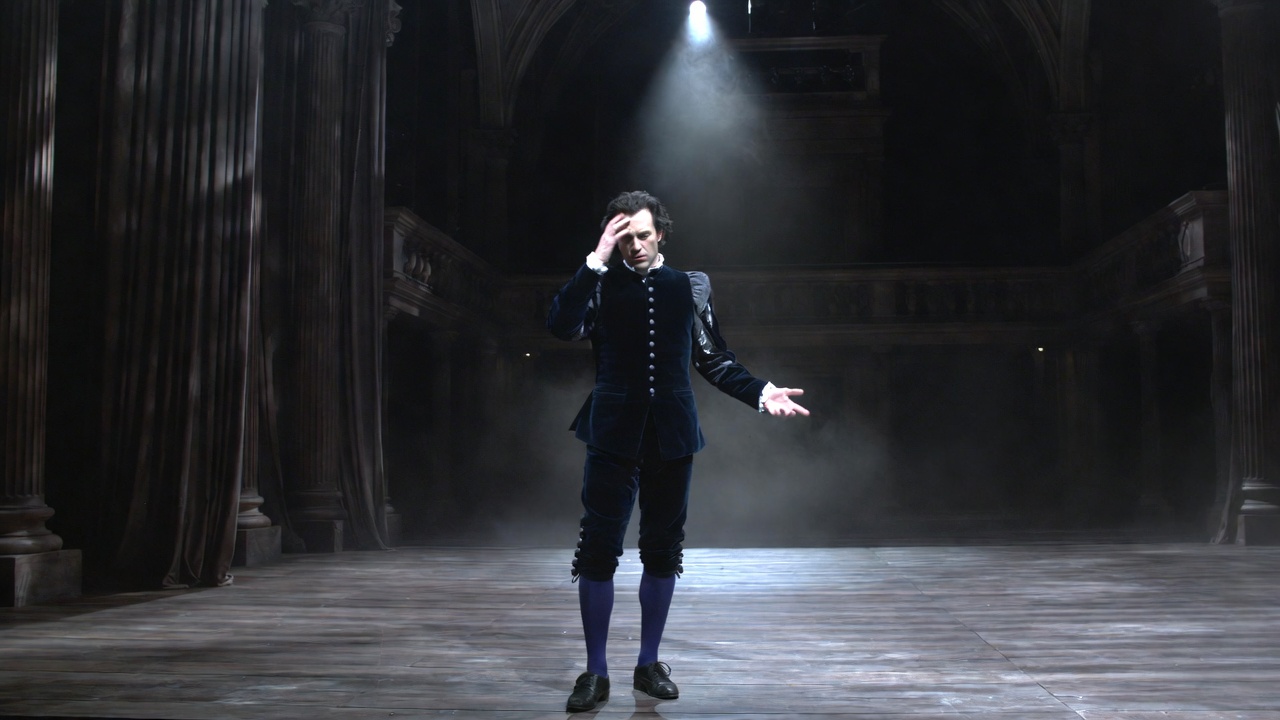
Hamlet’s language endures because it speaks directly to the human condition in ways that feel startlingly modern. Psychologists and literary scholars alike have noted how his soliloquies map symptoms of clinical depression: hopelessness, anhedonia, suicidal ideation, rumination, and indecisiveness. Freud famously saw Hamlet’s delay as rooted in the Oedipus complex, while existentialists like Kierkegaard and Camus found in him a precursor to their own philosophies of absurdity and authentic choice.
Culturally, Hamlet’s lines have permeated film, theater, literature, and popular media. The “To be or not to be” soliloquy has been parodied, reimagined, and quoted in contexts from The Simpsons to political speeches. The Lion King draws heavily on Hamlet’s plot and themes, while countless self-help books borrow “There is nothing either good or bad, but thinking makes it so” to promote mindset shifts.
In performance history, actors from David Garrick to Benedict Cumberbatch have reinterpreted these lines, each bringing new emotional nuance—proving their elasticity and depth. For contemporary readers, Hamlet offers companionship in moments of doubt, grief, moral conflict, or existential questioning. His words remind us that profound suffering and profound insight often coexist.
How to Apply Hamlet’s Wisdom in Modern Life
Here are practical ways to draw strength from Hamlet’s most famous lines:
- When facing betrayal or hidden motives → Remember “That one may smile, and smile, and be a villain.” Cultivate discernment; trust actions over words.
- When overwhelmed by indecision or analysis paralysis → Reflect on “The readiness is all.” Focus on preparation and presence rather than perfect outcomes.
- During periods of grief or depression → Let “Seems, madam? Nay, it is” validate authentic emotion. Give yourself permission to feel deeply without apology.
- When questioning life’s meaning or value → Turn to “What a piece of work is a man” to reconnect with human potential, and “There is nothing either good or bad, but thinking makes it so” to reframe suffering.
- When confronting the unknown → Embrace “There are more things in heaven and earth” as permission to accept mystery rather than demand certainty.
These lines aren’t just literary artifacts—they are tools for resilience, reflection, and courage.
Frequently Asked Questions (FAQs)
Who says “To be, or not to be”? Hamlet himself, in his most famous soliloquy (Act 3, Scene 1).
What is the most famous quote from Hamlet? “To be, or not to be—that is the question” is widely regarded as the single most recognized line.
Are Hamlet’s quotes relevant in the 21st century? Absolutely. They address timeless issues: mental health, authenticity, moral responsibility, grief, and the search for meaning.
Did Shakespeare invent phrases like “To be or not to be”? He coined or popularized many expressions that remain in English today, including “the slings and arrows of outrageous fortune,” “the undiscovered country,” and “method in his madness.”
What does “the readiness is all” mean? It means being mentally and spiritually prepared for whatever comes—accepting life’s unpredictability with calm resolve rather than fear.
Is Hamlet truly mad, or is it all an act? Most scholars agree his madness is largely feigned (“antic disposition”), though genuine grief and stress push him close to the edge.
Hamlet’s voice—witty, anguished, philosophical, defiant—speaks across four centuries because it speaks the truth of human experience. His famous quotes do not offer easy answers; instead, they ask the hardest questions and invite us to live with uncertainty, grief, and moral complexity.
Whether you return to these lines for academic study, personal inspiration, creative work, or simply to feel less alone in your struggles, they remain a rich source of insight. As Hamlet himself might say, the readiness is all—so take these words, reflect on them, and carry their wisdom forward.
Re-read Hamlet. Watch a powerful performance. Consider your own “to be or not to be” moments. In Shakespeare’s tragic prince, we find not just literature’s greatest character, but a mirror for our own searching souls.