The screen flickers to life not with the grand, sweeping vistas of a traditional period drama, but with the grainy, stark reality of security footage. A palpable sense of paranoia hangs in the air, and Elsinore is no longer a dusty medieval castle—it is a cold, modern surveillance state. When director Gregory Doran’s Royal Shakespeare Company (RSC) production transitioned from the stage to the screen, it broke every mold of conventional Shakespearean cinema. At the heart of this cinematic revolution was the Hamlet 2009 cast, a brilliant ensemble that traded velvet doublets for sharp suits, shattered mirrors, and raw psychological intensity.
While casual viewers may instantly recognize David Tennant and Patrick Stewart from their iconic roles in massive sci-fi franchises like Doctor Who and Star Trek, they may not realize that these two titans delivered one of the most accessible, thrilling, and emotionally complex versions of Hamlet in modern history.
This deep dive goes inside the phenomenal ensemble to explore how they didn’t just recite 400-year-old lines, but used modern staging, dual casting, and fierce emotional intelligence to completely redefine how 21st-century audiences experience the Bard.
The Complete Hamlet 2009 Cast List
Before analyzing the specific performances that made this adaptation so groundbreaking, it is essential to look at the core ensemble. This film was a direct screen adaptation of the massively successful 2008 RSC stage run, retaining the exact same principal actors who had spent months perfecting their chemistry on stage in Stratford-upon-Avon and London’s West End.
| Actor | Character | Role in the Danish Court |
| David Tennant | Prince Hamlet | The grieving, erratic Prince of Denmark |
| Patrick Stewart | King Claudius / The Ghost | The usurping King and his murdered brother |
| Penny Downie | Queen Gertrude | Hamlet’s mother, the newly remarried Queen |
| Mariah Gale | Ophelia | Polonius’s daughter and Hamlet’s love interest |
| Oliver Ford Davies | Polonius | The King’s manipulative chief counselor |
| Edward Bennett | Laertes | Ophelia’s brother, driven to violent revenge |
| Peter de Jersey | Horatio | Hamlet’s loyal friend and confidant |
David Tennant as Prince Hamlet: The Frenetic Mad Dane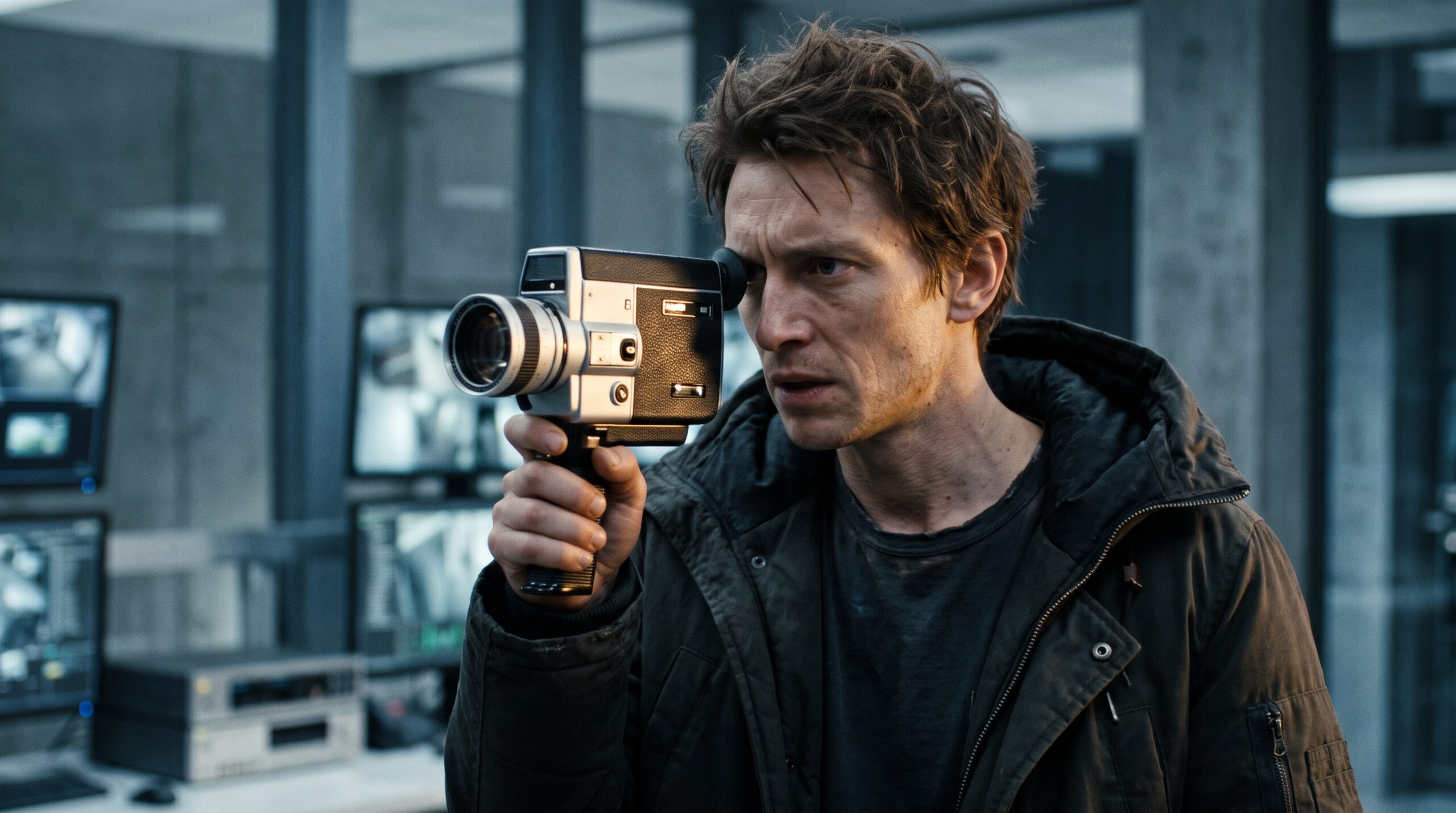
Breaking the Mold of the “Melancholy” Prince
For decades, the standard blueprint for Prince Hamlet on film was heavily influenced by Laurence Olivier—a deeply melancholic, subdued, and agonizingly slow-brooding intellectual. David Tennant took that blueprint, tore it to shreds, and threw it into the cold winds of modern Elsinore.
Tennant’s Hamlet is a live wire of nervous energy. He prowls the sterile halls of the palace barefoot, wearing a muscle shirt and a parka, his eyes darting with a mix of terror and manic glee. By leaning heavily into the physical comedy of the text, Tennant manages to make Hamlet remarkably funny, which in turn makes his descent into despair all the more devastating. He blurs the line between feigned madness and a genuine psychological break so masterfully that the audience is constantly kept off balance. You never quite know if this Hamlet is playing a strategic game of 4D chess or if he has entirely lost his grip on reality.
The Doctor Who Effect & Expanding the Audience
Context is crucial to understanding the impact of this performance. In 2008 and 2009, David Tennant was arguably the most famous television actor in Britain, riding the massive pop-culture tidal wave of his tenure as the Tenth Doctor in Doctor Who.
His casting in a rigorous Royal Shakespeare Company production created a seismic cultural shift. Suddenly, thousands of young fans and first-time theatergoers were flocking to Shakespeare. Tennant proved that classical theater does not have to be an elitist, gatekept art form; it can possess genuine pop-culture mass appeal. His fast-paced, highly articulate delivery of Elizabethan dialogue made the archaic language sound as natural and urgent as a modern political thriller, bridging the gap between classical purists and a new generation of fans.
The Super 8 Camera: Hamlet as the Director
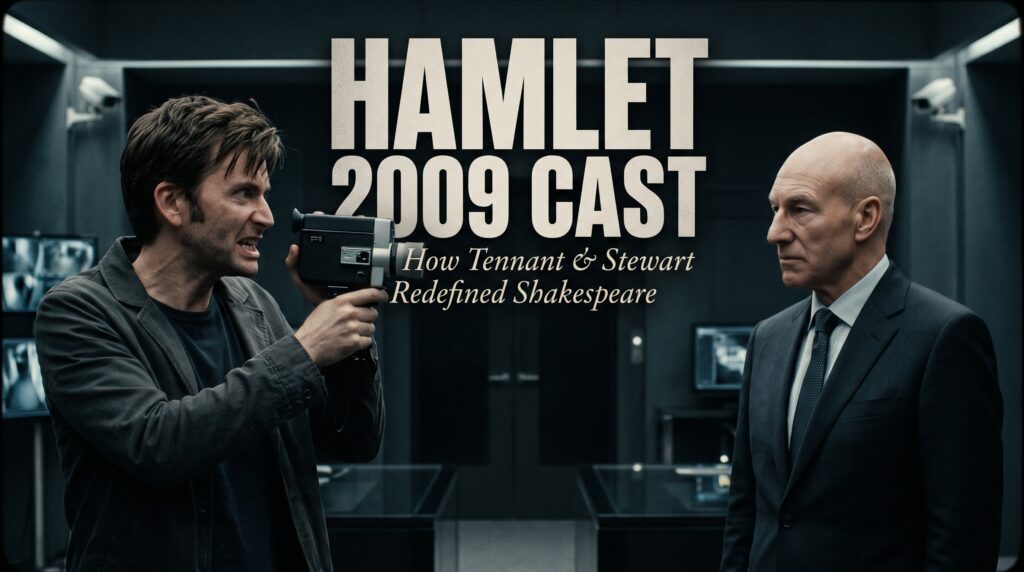
One of the most striking visual motifs of the 2009 film adaptation is Hamlet’s use of a handheld Super 8 camera. During the pivotal “play within a play” (The Murder of Gonzago), Hamlet essentially becomes a film director. He aggressively points the lens at Claudius, desperately trying to capture a micro-expression of guilt on film.
This brilliant prop choice modernizes Hamlet’s obsessive search for the truth. In a world where the court is watching him through CCTV cameras, Hamlet fights back by turning his own lens on the establishment. It grounds his existential crisis in a tangible, modern medium: the frantic need for documented, empirical proof in a world built on lies.
Patrick Stewart’s Masterclass: Claudius and The Ghost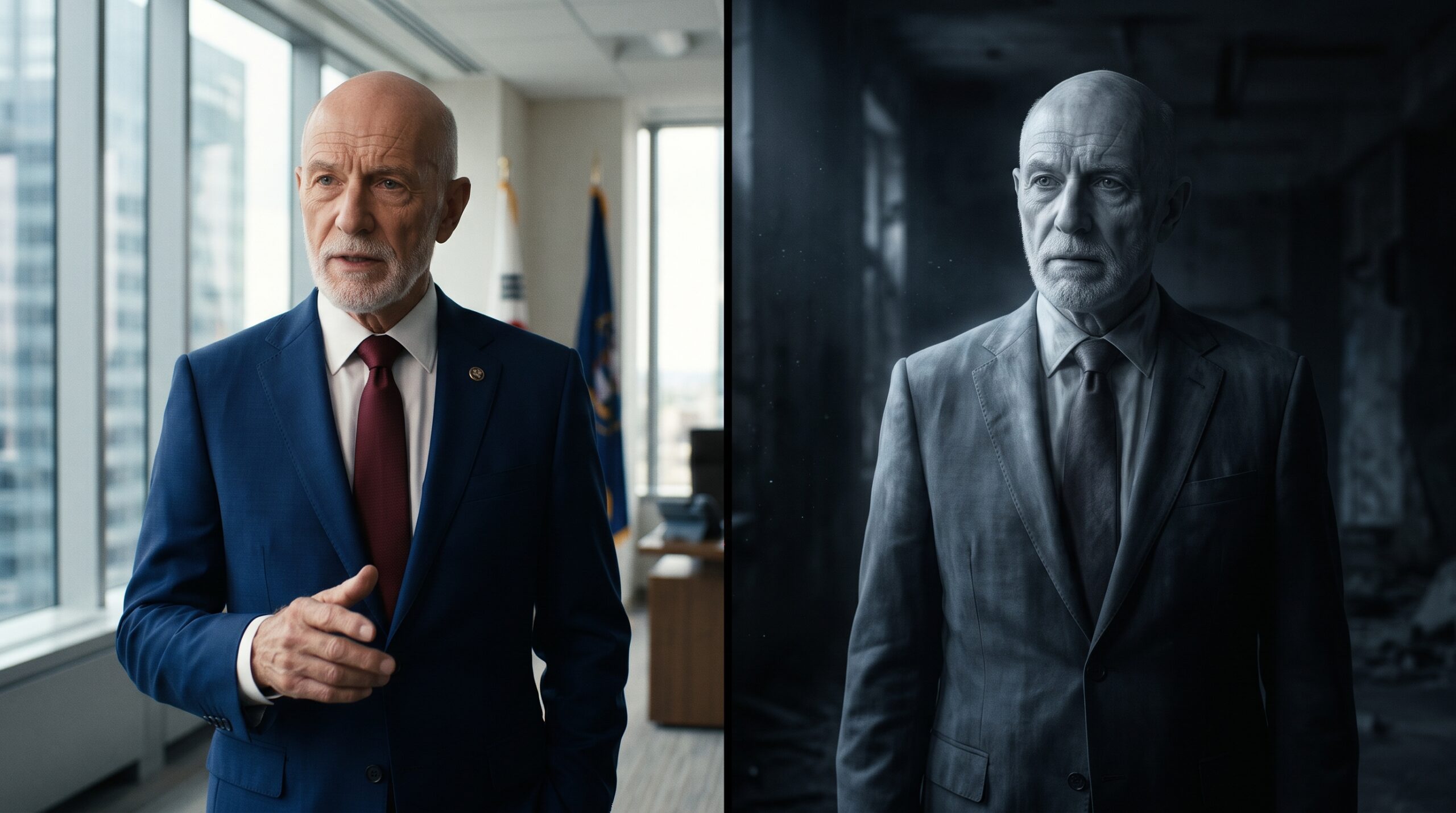
A Calculated, Cold-Blooded King Claudius
Opposite Tennant’s erratic energy is the chillingly still, calculated presence of Patrick Stewart as King Claudius. Stewart does not play Claudius as a mustache-twirling villain. Instead, he is introduced as an impeccably dressed, highly competent politician. When he addresses the court in the opening scenes, he is smooth, authoritative, and entirely convincing as a monarch who stepped in to stabilize a nation in mourning.
This polished exterior makes the unmasking of his true nature utterly terrifying. As Hamlet’s erratic behavior threatens the carefully constructed optics of the court, Stewart’s Claudius transitions from a subdued diplomat to a ruthless, cornered schemer. His delivery of the confession scene—where he admits to the murder but refuses to give up the crown or his new wife—is a masterclass in portraying a man paralyzed by his own ambition and guilt.
The Psychological Weight of the Dual Role
Perhaps the most ingenious directorial decision by Gregory Doran was casting Patrick Stewart as both King Claudius and the Ghost of King Hamlet. While doubling roles is a historic theatrical tradition, doing it with these specific characters adds a profound layer of psychological horror to the film.
When the Ghost appears to Hamlet, it is not a CGI apparition or a booming voice from the rafters; it is Patrick Stewart, pale, statuesque, and terrifyingly solemn. For Hamlet, the trauma is magnified exponentially: every time he looks at the uncle he despises, he sees the exact face of the father he idolized and mourns. Stewart brilliantly differentiates the two men—the Ghost speaks with a hollow, ancient resonance, while Claudius operates with the crisp, pragmatic cadence of a modern CEO—yet their shared visage haunts every frame of the film.
The Supporting Pillars: Ophelia, Gertrude, and Polonius
While Tennant and Stewart command the screen with their sheer star power, the architecture of this RSC production is held together by its phenomenal supporting cast. They ground the high-stakes political thriller in domestic tragedy, proving that modern staging works best when backed by nuanced, deeply human performances.
Mariah Gale’s Ophelia: From Cipher to Violent Tragedy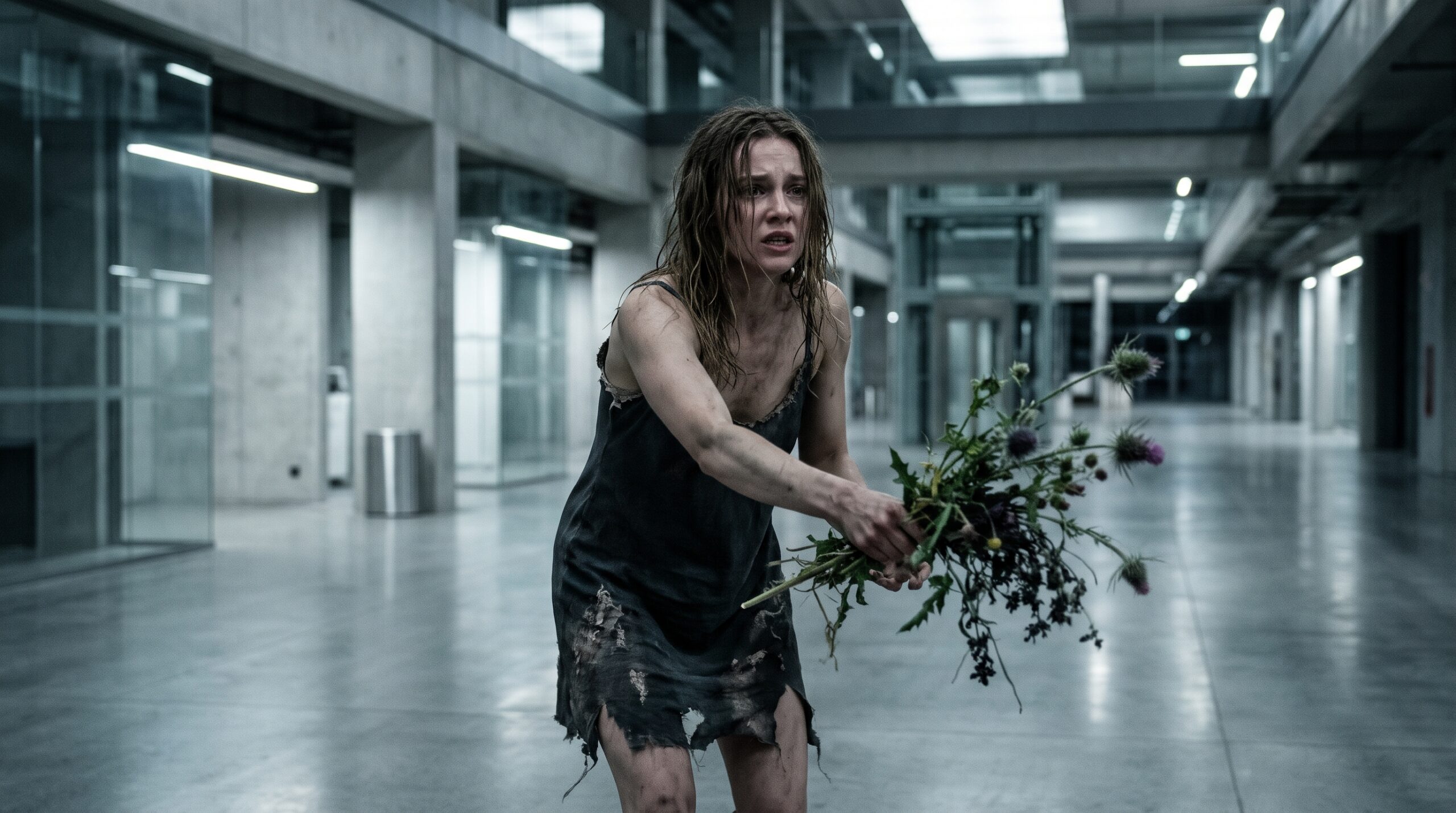
Historically, Ophelia is often portrayed as a fragile, romanticized victim, drifting ethereally into madness. Mariah Gale strips away this romanticism, delivering an interpretation that is deeply unsettling and rooted in trauma. Initially, her Ophelia is a cipher—a quiet, heavily controlled young woman navigating a dangerous, patriarchal modern court. She wears stiff, conservative clothing, physically embodying the restrictions placed upon her by her father and brother.
When her psychological break occurs following Polonius’s murder, it is not a delicate descent; it is a violent, explosive rupture. In the famous “mad scene,” Gale enters in a ragged slip, her movements aggressive and unpredictable. Instead of delicately handing out imaginary flowers, she forcefully distributes weeds and herbs to the horrified court. Gale’s performance highlights the profound isolation of Ophelia, making her eventual off-screen death feel like an inevitable consequence of a society that stripped her of all agency.
Penny Downie’s Gertrude: Caught in the Crossfire
Penny Downie breathes incredible life into Queen Gertrude, a character whose internal motivations are notoriously ambiguous in the text. Does she know Claudius murdered her first husband? Downie plays the role with a desperate, willful ignorance, clinging to the comfort and stability her new marriage provides. She is a woman who has chosen political and personal survival over uncomfortable truths.
The tension in Downie’s performance peaks during the pivotal “closet scene” (Act 3, Scene 4). When Hamlet aggressively confronts her, pinning her to the bed and forcing her to look at the photos of her two husbands, Downie’s facade shatters. Her physical terror and profound grief anchor the scene, shifting the dynamic from a prince lecturing his mother to a deeply broken family engaging in a traumatic, overdue reckoning.
Oliver Ford Davies’ Polonius: The Dangerous Fool
It is easy to play Polonius as mere comic relief—a rambling, out-of-touch old man. Oliver Ford Davies, a veteran of classical theater, leans into the comedy but adds a crucial, sinister undertone. His Polonius is a bumbling, long-winded bureaucrat, but this affable exterior masks a manipulative, calculating spymaster.
Davies perfectly fits the film’s overarching theme of surveillance. He intercepts letters, plants informants, and uses his own daughter as bait in a political trap. When he is ultimately killed while hiding behind the mirrored doors of Gertrude’s bedroom, it feels like the natural, fatal consequence of a man who built his life on eavesdropping and espionage.
Paranoia and CCTV: Gregory Doran’s Directorial Vision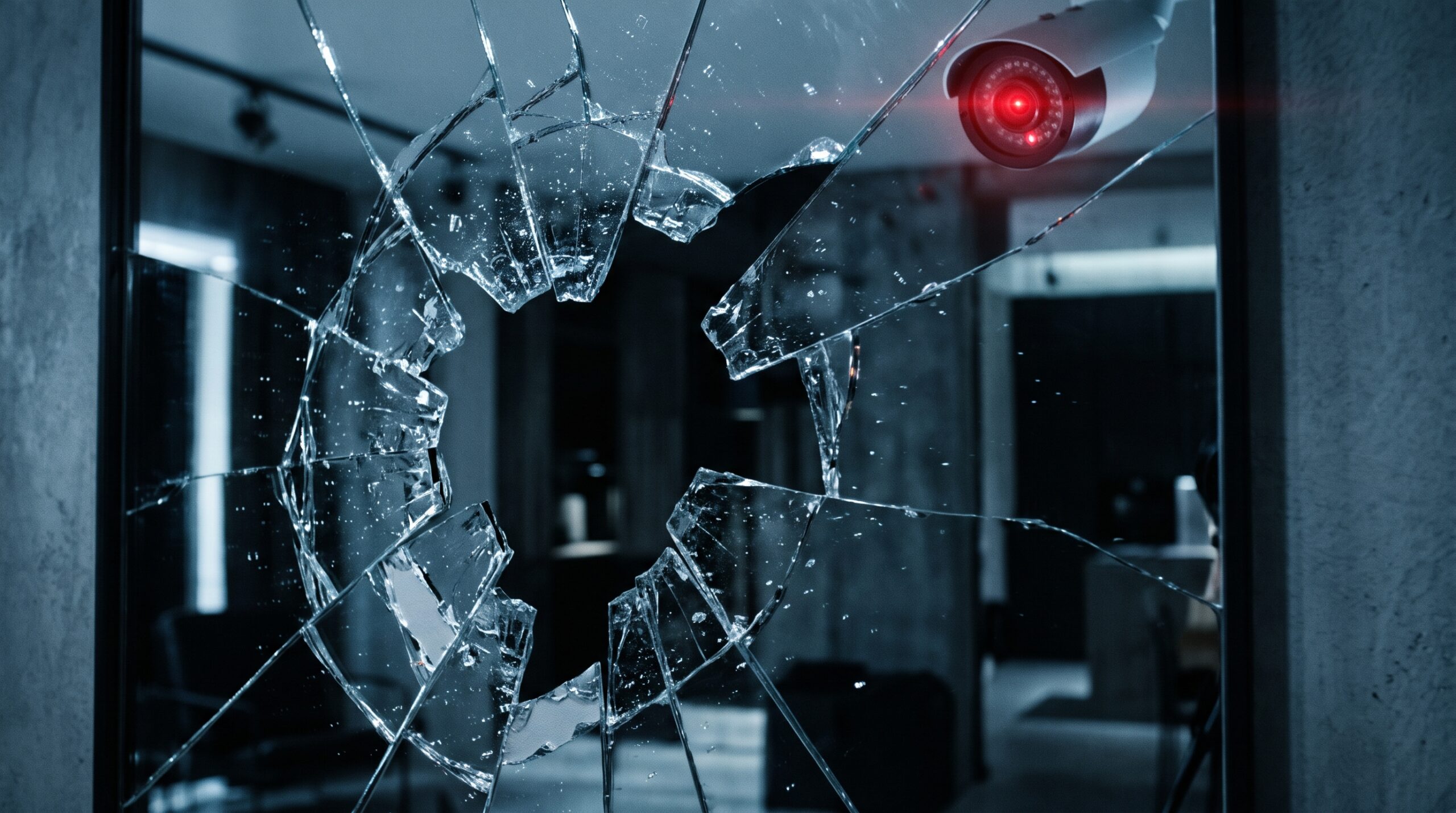
Elsinore as a Modern Surveillance State
The genius of Gregory Doran’s adaptation lies in how it visually translates Elizabethan themes of espionage into a contemporary context. In the original text, characters are constantly hiding behind tapestries (the arras) to spy on one another. Doran modernizes this by turning Elsinore into a high-tech surveillance state.
The film makes heavy use of security cameras, sterile modern architecture, and cold, fluorescent lighting. Transitions between scenes frequently cut to grainy, black-and-white CCTV footage. This visual language makes the play’s themes of mistrust instantly relatable to modern audiences. Hamlet is not just fighting his own internal demons; he is trapped in a panopticon where every whisper is recorded, and every movement is monitored by Claudius’s regime.
The Symbolism of the Shattered Mirrors
Mirrors and reflections are central to the film’s visual aesthetic, reinforcing the themes of deceit and fractured identities. The turning point of the film’s cinematography occurs when Hamlet shoots Polonius through a mirrored wardrobe door.
From that moment onward, the mirror remains shattered. For the remainder of the film, characters are frequently framed through these cracked reflections. This specific blocking and framing symbolize the completely fractured reality of the Danish court. The illusion of the polished, modern monarchy has been violently broken, and what remains is a fragmented, deadly reality where no one can hide from their own reflection.
The Enduring Legacy of the 2009 Production
When examining the pantheon of Shakespearean cinema, the 2009 Hamlet occupies a unique and vital space. Kenneth Branagh’s 1996 epic gave us an uncut, historical cinematic masterpiece. Ethan Hawke’s 2000 film placed the prince in a literal modern-day New York City. Gregory Doran’s version, however, achieved something different: it proved that emotional resonance trumps both period accuracy and extreme modernization.
By retaining the classical text but delivering it with the pacing of a modern thriller, the Hamlet 2009 cast created a definitive adaptation for the 21st century. It demonstrated that Shakespeare’s work does not require dusty costumes to be authentic. The production’s legacy lives on in its use in classrooms and universities worldwide, serving as the perfect entry point for students who might otherwise struggle with Elizabethan English.
Frequently Asked Questions (FAQs)
Is the 2009 Hamlet a movie or a filmed stage play? It is a bespoke film shot on location and on soundstages. While it uses the cast and modern aesthetic of the 2008 Royal Shakespeare Company stage production, it is a fully directed television film (produced by the BBC and Illuminations), not a live recording of a stage performance.
Why does Patrick Stewart play two roles in Hamlet? Patrick Stewart plays both King Claudius and the Ghost of King Hamlet. Director Gregory Doran made this choice to emphasize the psychological trauma inflicted on Prince Hamlet. Seeing his father’s face on the uncle who murdered him heightens the emotional stakes and blurs the lines of Hamlet’s sanity.
Where can I watch the Hamlet 2009 film today? The film is widely available on DVD and Blu-ray. Digitally, it can frequently be found on streaming platforms like Amazon Prime Video, Apple TV, and educational streaming services such as Digital Theatre or BritBox, depending on your regional licensing.
Did David Tennant win any awards for his portrayal of Hamlet? Yes. For his initial stage performance with the RSC, which laid the groundwork for this film, David Tennant won the prestigious Critics’ Circle Theatre Award for Best Shakespearean Performance. The film itself was highly acclaimed and nominated for several broadcasting awards.
Whether you are a classical theater purist or a newcomer drawn in by the star power of the cast, the 2009 adaptation remains a masterclass in acting and directing. The combined genius of the ensemble—led by the frenetic brilliance of David Tennant and the chilling duality of Patrick Stewart—stripped the text of its theatrical pretension, leaving only the raw, pulsating heart of Shakespeare’s greatest tragedy. It is a production that demands to be watched, re-watched, and studied.
What is your take on modern Shakespeare adaptations? Did Tennant’s erratic, contemporary interpretation of the Prince work for you, or do you prefer the traditional, historical approach of actors like Laurence Olivier and Kenneth Branagh? Share your thoughts in the comments below, and explore our other deep dives into the greatest Shakespearean performances in history.