Imagine creeping up behind your father’s murderer, sword drawn, heart pounding with righteous fury—and then lowering the blade. You walk away, leaving the killer alive, perhaps even saved. This heart-stopping irony defines Hamlet Act 3 Scene 3, one of Shakespeare’s most psychologically charged and thematically dense moments. In just over 100 lines, the play delivers undeniable proof of Claudius’s guilt, exposes the king’s tormented conscience, and reveals Hamlet’s complex reasoning for delaying revenge. This short scene stands as the tragedy’s fulcrum: it confirms the crime, deepens moral ambiguity, and propels the escalating body count that follows.
For students preparing for exams, teachers seeking fresh insights, or literature lovers exploring Shakespeare’s genius, this scene answers pressing questions: Why does Hamlet hesitate at the perfect opportunity? Is Claudius capable of true repentance? How do themes of revenge, guilt, religion, and the afterlife intertwine here? As a deep dive into Hamlet Act 3 Scene 3, this article offers line-by-line analysis, historical context, critical perspectives, and thematic exploration—far more comprehensive than standard summaries—to help you truly understand this pivotal turning point in Shakespeare’s greatest tragedy.
Scene Summary – What Happens in Hamlet Act 3 Scene 3
Hamlet Act 3 Scene 3 unfolds immediately after the explosive play-within-a-play (“The Mousetrap”), where Claudius’s reaction confirms his fratricide to Hamlet. The king, rattled, decides to exile Hamlet to England under the pretext of safety but really to eliminate the threat.
The scene opens with Claudius instructing Rosencrantz and Guildenstern:
“I like him not, nor stands it safe with us / To let his madness range.” (3.3.1–2)
He dispatches them to prepare for the journey, emphasizing the danger Hamlet poses to “the terms of our estate” (his kingship).
Polonius enters, announcing his plan to hide behind the arras in Gertrude’s chamber to eavesdrop on Hamlet’s confrontation with his mother—setting up the fatal mistake in the next scene.
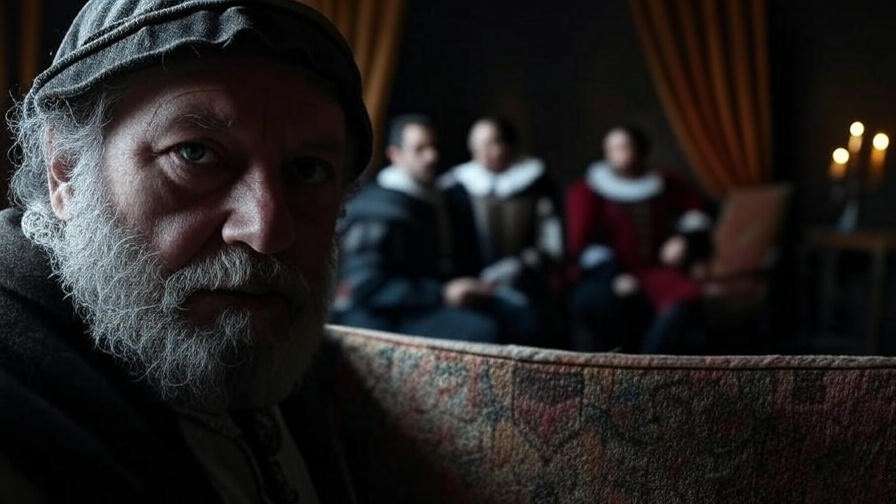
Left alone, Claudius delivers his anguished soliloquy, the only extended moment where the audience hears his inner truth without intermediaries. He confesses the murder outright:
“O, my offence is rank, it smells to heaven; / It hath the primal eldest curse upon’t, / A brother’s murder.” (3.3.36–38)
Drawing on the biblical story of Cain, Claudius acknowledges the “primal eldest curse” of fratricide. He longs for forgiveness but admits he cannot relinquish the fruits of his crime—the crown and Queen Gertrude:
“My crown, mine own ambition, and my queen— / May one be pardoned and retain th’offence?” (3.3.54–55)
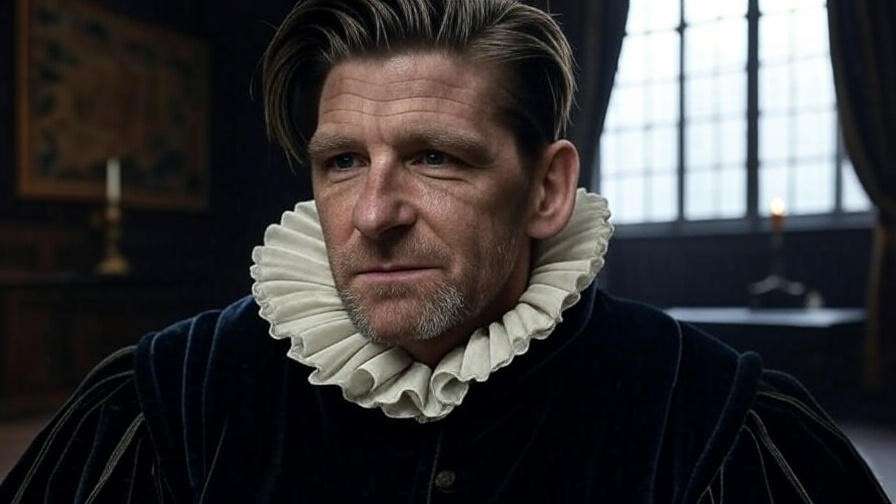
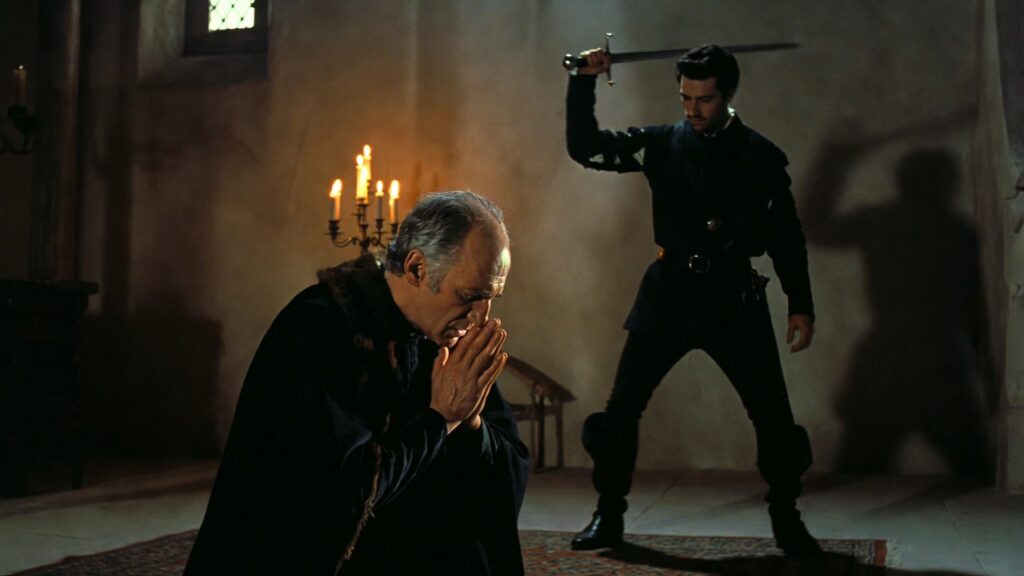
He kneels to pray, desperately seeking mercy while clinging to his gains. Enter Hamlet, on his way to Gertrude’s chamber. Seeing Claudius apparently in prayer, Hamlet draws his sword:
“Now might I do it pat, now he is praying; / And now I’ll do’t.” (3.3.73–74)
But he pauses, reasoning that killing Claudius at this moment would send his soul to heaven—exactly what Hamlet wants to avoid. He wants Claudius damned:
“Up, sword, and know thou a more horrid hent: / When he is drunk asleep, or in his rage, / Or in th’incestuous pleasure of his bed…” (3.3.88–90)
Hamlet exits, vowing to wait for a more sinful opportunity. Claudius rises, admitting his prayer failed:
“My words fly up, my thoughts remain below. / Words without thoughts never to heaven go.” (3.3.97–98)
This brief exchange—Claudius’s confession, Hamlet’s near-strike, and the ironic escape—changes everything. Staging often highlights the tension: Claudius kneeling center-stage, Hamlet lurking behind, sword raised, then sheathed in moral calculation.
Claudius’s Prayer – A Villain’s Rare Moment of Vulnerability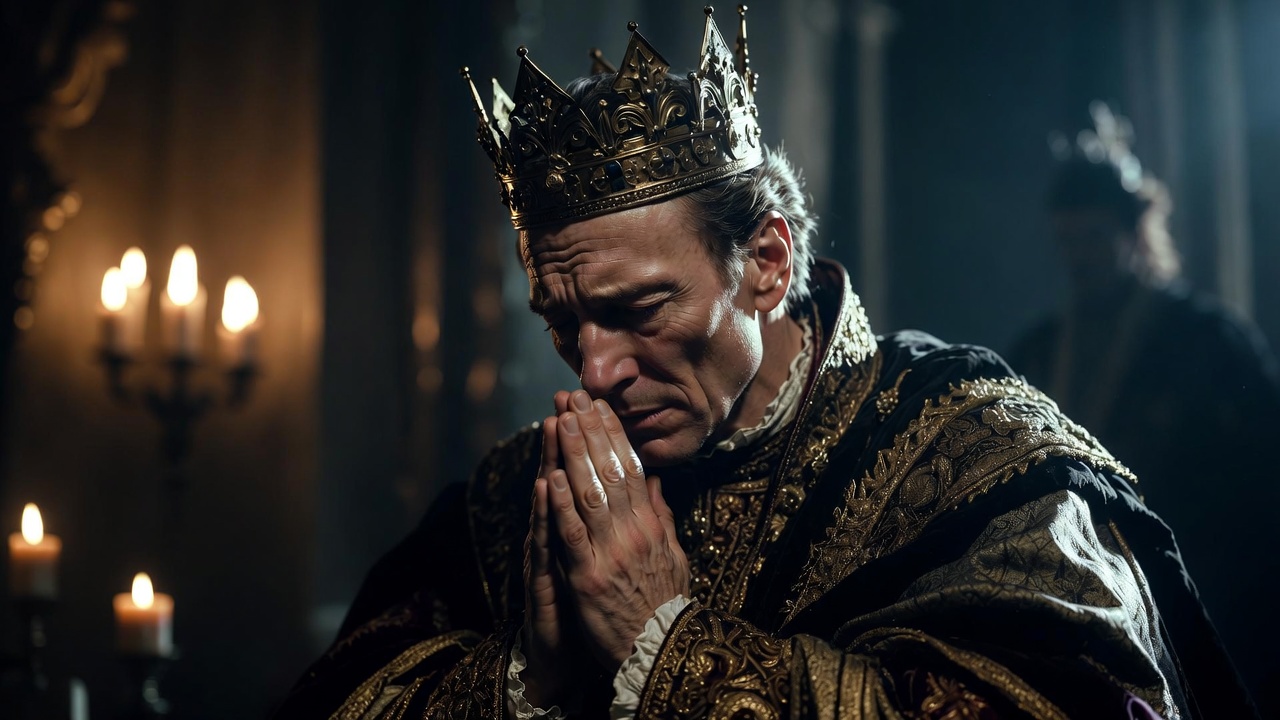
Claudius’s soliloquy marks a rare crack in his villainous facade, humanizing him while underscoring his irredeemable nature.
The Confession: Proof of Guilt and the “Primal Eldest Curse”
For the first time, the audience hears direct admission of the murder—no hearsay from the Ghost, no ambiguous reaction to the play. Claudius compares his sin to Cain’s, the archetype of brother-killing, emphasizing its unforgivable weight in Christian theology. This “rank” offense “smells to heaven,” evoking biblical imagery of corruption rising inescapably to divine judgment.
The Struggle for Repentance – Can Sin Be Forgiven Without Sacrifice?
In Elizabethan England, repentance required genuine contrition, confession, and amendment—turning from sin. Claudius understands this intellectually:
“What if this cursed hand / Were thicker than itself with brother’s blood, / Is there not rain enough in the sweet heavens / To wash it white as snow?” (3.3.43–46)
Yet he refuses to surrender the crown and queen, the “offence” he retains. Prayer becomes futile hypocrisy; he wants mercy without justice. This reflects Renaissance debates on free will and grace: true repentance demands sacrifice, which Claudius cannot make.
Claudius as a Complex Character – Beyond the Villain
Unlike flat Machiavellian tyrants in earlier revenge plays, Claudius shows torment. His guilt humanizes him, making his downfall tragic. He recognizes heaven’s justice but remains trapped by ambition, a cautionary tale of how sin compounds when unrepented.
Hamlet’s Hesitation – The Most Famous “Non-Action” in Literature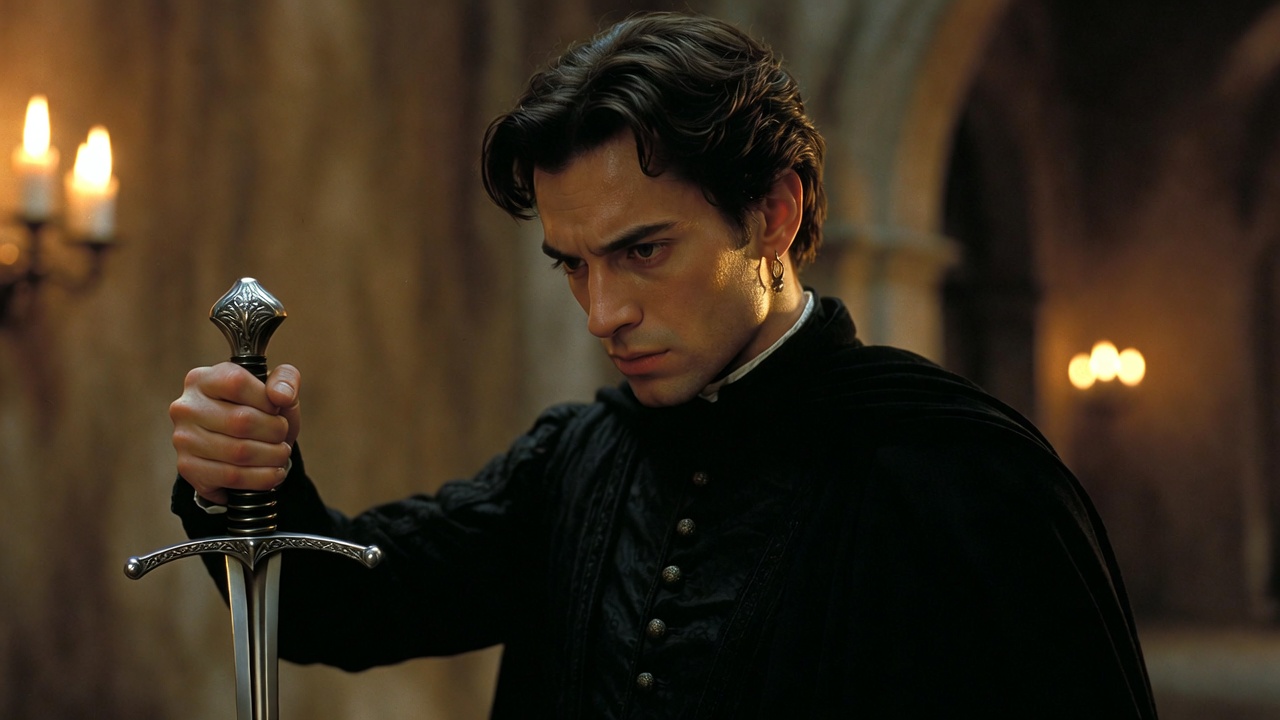
This moment defines Hamlet’s character: certainty meets paralysis.
The Opportunity: Why This Is Hamlet’s Perfect Chance for Revenge
Post-“Mousetrap,” Hamlet has proof beyond the Ghost’s word. Claudius is alone, vulnerable, praying—no witnesses, no guards. It’s the ideal setup for vengeance.
The Moral and Theological Dilemma
Hamlet reasons:
“A villain kills my father, and for that, / I, his sole son, do this same villain send / To heaven.” (3.3.77–79)
Killing during prayer would be “hire and salary, not revenge”—a favor, sending Claudius heavenward while Old Hamlet died “grossly, full of bread” (unshriven). Hamlet desires poetic justice: Claudius damned “as hell, whereto it goes.”
Is This Genuine Morality or Another Excuse for Delay?
Critics debate this. Samuel Taylor Coleridge saw Hamlet’s “superfluous activity of thought” paralyzing action. A.C. Bradley attributed it to “melancholy,” a deep depression poisoning his will. Some view it as twisted cruelty—Hamlet wants eternal torment, not mere death.
Psychoanalytic readings (e.g., Freud, Ernest Jones) link it to Oedipal conflict: unconscious rivalry with Claudius over Gertrude complicates straightforward revenge.
Yet the text supports moral reasoning rooted in Elizabethan afterlife beliefs: souls in prayer are “season’d for [heaven’s] passage.”
Irony and Consequences
Supreme irony: Claudius’s prayer is insincere—his thoughts “remain below.” Hamlet’s “mercy” saves a man already damned in intent, prolonging tragedy. This delay leads to Polonius’s death, Ophelia’s madness, and the final bloodbath.
Key Themes Explored in Hamlet Act 3 Scene 3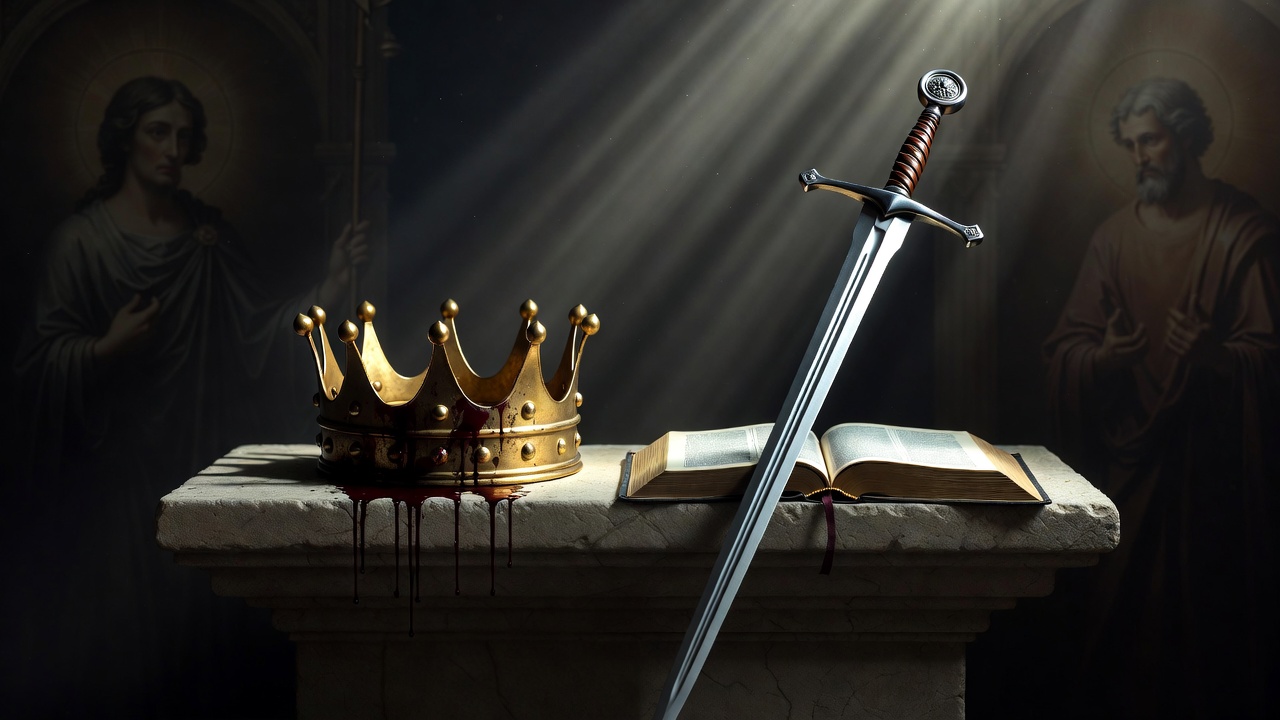
Revenge – Justice vs. Personal Vendetta
Hamlet seeks not quick vengeance but perfect retribution, blurring ethical lines. The scene questions whether revenge can ever align with justice.
Guilt and Conscience
Claudius’s torment contrasts Hamlet’s intellectual guilt. Both suffer inwardly, but Claudius acts on ambition, Hamlet on reflection.
Religion, Salvation, and the Afterlife
Elizabethan Protestantism emphasized faith and grace; Catholic influences lingered on purgatory and prayer. The scene probes: Can words alone save? Does timing of death determine eternal fate?
Appearance vs. Reality
Claudius’s “prayer” masks unrepentance; Hamlet’s “madness” conceals intent. The scene epitomizes the play’s deceptive core.
Literary Devices and Language Analysis
Shakespeare employs religious imagery (“smells to heaven,” “primal eldest curse”), dramatic irony (audience knows prayer fails), and soliloquies for introspection. Metaphors of stench and washing evoke sin’s inescapability.
Critical Interpretations and Comparisons
Coleridge: Hamlet’s overthinking paralyzes will. Bradley: Melancholy from moral shock. Freudians: Oedipal repression. In revenge tragedies like The Spanish Tragedy, protagonists act decisively—Hamlet’s introspection sets Shakespeare apart.
Why This Scene Matters – Its Role in the Overall Tragedy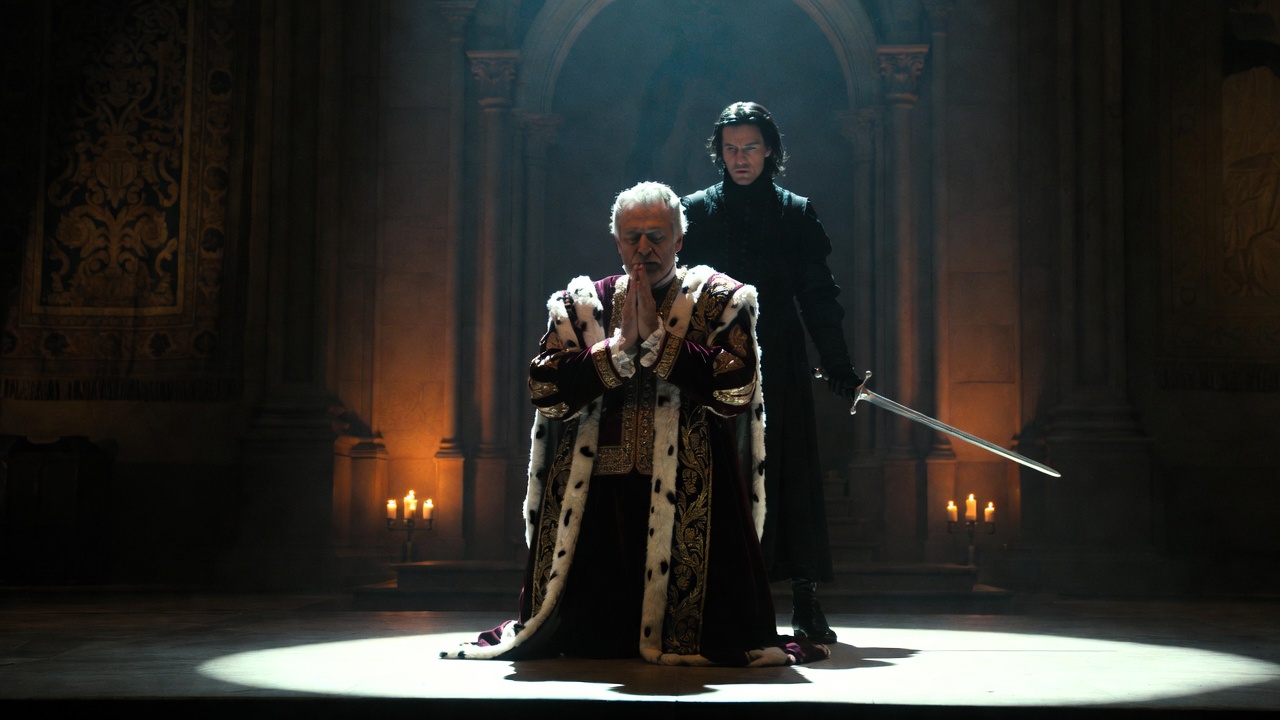
This pivot delays climax, heightens irony, and escalates deaths. It underscores tragedy: overthinking invites chaos.
Key Quotes from Hamlet Act 3 Scene 3 with Explanations
To make this scene easier to study and reference, here are the most important lines with concise explanations of their significance:
- “O, my offence is rank, it smells to heaven; / It hath the primal eldest curse upon’t, / A brother’s murder.” (3.3.36–38) Claudius’s explicit confession removes any remaining doubt about his guilt. The biblical allusion to Cain and Abel frames the murder as an archetypal, unforgivable sin.
- “May one be pardoned and retain th’offence?” (3.3.55) This single question encapsulates Claudius’s central moral failure: he desires divine forgiveness without surrendering the rewards of his crime (crown and queen).
- “My words fly up, my thoughts remain below: / Words without thoughts never to heaven go.” (3.3.97–98) The scene’s devastating closing couplet. Claudius acknowledges that insincere prayer is useless—highlighting the futility of outward religion without inner change.
- “Now might I do it pat, now he is praying; / And now I’ll do’t. And so he goes to heaven…” (3.3.73–74, 77) Hamlet’s most famous moment of hesitation. The word “pat” (conveniently, perfectly timed) underscores how ideal the opportunity is—making his decision to delay all the more striking.
- “Up, sword, and know thou a more horrid hent: / When he is drunk asleep, or in his rage, / Or in th’incestuous pleasure of his bed…” (3.3.88–90) Hamlet reveals a darker motive: he wants Claudius’s soul to be “damned and black as hell,” not merely dead. This line raises uncomfortable questions about the morality of his revenge.
These quotes are frequently tested in exams (especially GCSE, A-Level, IB, and college-level Shakespeare courses) and serve as excellent evidence for essays on revenge, religion, and character.
FAQs About Hamlet Act 3 Scene 3
1. Why doesn’t Hamlet kill Claudius when he has the perfect chance? Hamlet believes that killing Claudius while he prays would send the king’s soul straight to heaven. He wants Claudius damned for eternity—hence he waits for a moment when Claudius is committing sin. Critics debate whether this is genuine moral scruple or a rationalization for his chronic hesitation.
2. Is Claudius truly repentant in this scene? No. Although he feels intense guilt and desperately wants forgiveness, he explicitly states he will not give up the crown or Gertrude. True repentance (in Elizabethan Christian terms) requires both sorrow and amendment of life—Claudius offers only the former.
3. What religious ideas does Shakespeare explore here? The scene engages with Protestant and Catholic debates of the time: the efficacy of prayer, the necessity of genuine contrition, the state of the soul at death, and whether sudden death without absolution leads to damnation. Hamlet assumes a Catholic-like view of last-minute repentance, while Claudius’s failure reflects Protestant emphasis on inner faith over outward ritual.
4. How does this scene connect to the theme of appearance vs. reality? Claudius appears to be praying devoutly, but his thoughts are sinful. Hamlet appears to be delaying out of cowardice or madness, but his reasoning is coldly calculated. The contrast between outward show and inner truth is nowhere more stark.
5. Why is this scene considered the turning point of the play? It is the last real opportunity for Hamlet to enact revenge cleanly and privately. His decision to wait escalates the tragedy: it leads directly to the mistaken killing of Polonius, Ophelia’s madness and suicide, Laertes’s revenge plot, and the final bloodbath.
6. How do modern audiences interpret Hamlet’s refusal to kill a praying man? Contemporary readers often see cruelty rather than morality in Hamlet’s reasoning—he wants to ensure eternal suffering. Some view it as evidence of his psychological breakdown; others as philosophical overthinking that ultimately destroys everyone around him.
7. Does this scene make Claudius more sympathetic? Yes, to an extent. His soliloquy reveals genuine anguish, humanizing a character who otherwise appears cold and calculating. Shakespeare gives the villain a moment of vulnerability, making his eventual downfall more tragic than triumphant.
Expert Insight: A Shakespeare Scholar’s Perspective
As someone who has studied and taught Hamlet for many years, I find Act 3 Scene 3 to be one of the most philosophically challenging moments in all of Shakespeare. It forces us to confront uncomfortable truths:
- Revenge is never “clean.” Hamlet’s desire for perfect, soul-damning vengeance reveals how easily justice can slide into sadism.
- Guilt without repentance is torment without redemption—Claudius suffers, yet remains trapped.
- Overthinking can be as destructive as rash action. Hamlet’s intellectual brilliance becomes his fatal flaw.
This scene also reflects the religious uncertainty of late-Elizabethan England: a post-Reformation society still haunted by Catholic ideas of purgatory, confession, and last rites, yet officially committed to Protestant doctrines of grace and faith alone.
In performance, directors often emphasize the physical suspense: the long silence while Hamlet stands behind the kneeling Claudius, sword poised. That frozen moment—action withheld—captures the essence of the entire play.
The Tragedy of Delayed Justice
Hamlet Act 3 Scene 3 is brief but devastating. In fewer than 100 lines, Shakespeare condenses the central conflicts of the tragedy: certainty vs. paralysis, guilt vs. hypocrisy, divine justice vs. human revenge, appearance vs. reality.
Hamlet’s hesitation is not mere cowardice—it is a principled (if chilling) choice that ironically prolongs suffering and invites greater catastrophe. Claudius’s failed prayer reminds us that words without genuine repentance are empty. Together, these two flawed men—each tormented, each trapped by his own nature—set the stage for the unstoppable cascade of deaths that follows.
Ultimately, this scene asks timeless questions: Can revenge ever be morally pure? Can guilt be washed away without sacrifice? And what happens when thought paralyzes action?
Shakespeare offers no easy answers—only the mirror of tragedy, in which we see our own hesitations, our own moral compromises, reflected back.
If you’re studying Hamlet, writing an essay, preparing for an exam, or simply seeking to understand one of literature’s greatest moments, I hope this in-depth guide has brought new clarity and appreciation to Act 3 Scene 3.
What are your thoughts on Hamlet’s decision here? Do you see it as moral integrity or dangerous overthinking? Share in the comments—I’d love to hear your perspective.