In the final, breathtaking moments of William Shakespeare’s Hamlet, the tragedy reaches its explosive climax in Act 5 Scene 2. Here, the long-delayed revenge erupts with dizzying speed: poisoned swords clash, a treacherous cup is drunk, and nearly every major character meets their end in a cascade of death. This single scene—Hamlet Act 5 Scene 2—transforms the play’s philosophical brooding into brutal action, resolving (or complicating) the prince’s central dilemma: whether to act or endure in a corrupt world. As Hamlet himself reflects, “There’s a divinity that shapes our ends, / Rough-hew them how we will.” What begins as a quiet recounting to Horatio spirals into chaos, underscoring themes of fate, divine providence, revenge, and the inescapable cost of moral corruption.
For students preparing for exams, teachers seeking deeper classroom insights, or literature enthusiasts craving more than surface-level summaries, this comprehensive guide offers a line-by-line breakdown, expert analysis of key quotes, character psychology, thematic interconnections, historical context, and modern relevance—going far beyond standard resources like SparkNotes or LitCharts. By the end, you’ll understand not just what happens in this pivotal scene, but why it stands as one of Shakespeare’s most profound meditations on human agency and destiny.
Hamlet’s Return and Recounting of the Voyage to England
The scene opens in a hall at Elsinore Castle, with Hamlet and Horatio alone. Hamlet picks up mid-conversation, eager to share the “other” part of his adventures since leaving Denmark. This narrative flashback is crucial: it reveals Hamlet’s transformation from a paralyzed intellectual to a decisive figure capable of ruthless cunning.
Hamlet describes his sleepless turmoil aboard the ship to England—”Sir, in my heart there was a kind of fighting / That would not let me sleep”—evoking the image of a prisoner in irons (“Worse than the mutines in the bilboes”). In a moment of rash inspiration, he praises “rashness” as providential: “Our indiscretion sometime serves us well / When our deep plots do pall.” This marks a philosophical shift. Earlier, Hamlet agonized over action; now, he credits impulsive instinct with saving him, suggesting a higher power intervenes when human schemes fail.
Sneaking into Rosencrantz and Guildenstern’s cabin under cover of darkness, Hamlet unseals Claudius’s sealed commission. He discovers the king’s order for his own execution in England—”no leisure bated, / No, not to stay the grinding of the axe”—disguised with diplomatic flattery. In response, Hamlet forges a new letter in Claudius’s style, commanding the immediate beheading of the bearers (Rosencrantz and Guildenstern) “Not shriving-time allow’d”—no time for confession or absolution.
This act raises profound moral questions. Hamlet dismisses any guilt: “They are not near my conscience; their defeat / Does by their own insinuation grow.” He views his former friends as expendable tools of Claudius’s treachery, likening them to “baser nature” caught between “mighty opposites.” Scholars often debate this moment’s ethics: is Hamlet justified in self-preservation, or has he adopted the Machiavellian ruthlessness he once condemned in Claudius? In Elizabethan revenge tragedy tradition (e.g., Thomas Kyd’s The Spanish Tragedy), such plot reversals were common, but Shakespeare infuses them with philosophical depth, showing how revenge corrupts even the avenger.
The pirates’ timely attack—allowing Hamlet’s escape—reinforces providence. What seems like chance aligns with a larger design, preparing us for Hamlet’s later declaration of acceptance.
The Duel Setup: Osric, the Challenge, and Hamlet’s Premonitions
The tone shifts with the arrival of Osric, a foppish courtier whose overly elaborate language parodies courtly excess. Osric delivers the king’s challenge: a friendly fencing match between Hamlet and Laertes, with bets on the outcome. Hamlet senses the trap but agrees, showing newfound resolve: “I am constant to my purpose; they follow the king’s pleasure.”
Yet foreboding lingers. Hamlet confesses to Horatio, “Thou wouldst not think how all here about my heart, but it is no matter.” He rejects augury, famously declaring: “There is special providence in the fall of a sparrow. If it be now, ’tis not to come; if it be not to come, it will be now; if it be not now, yet it will come—the readiness is all.”
This is one of Shakespeare’s most quoted passages, encapsulating Hamlet’s evolution. The sparrow reference echoes Matthew 10:29 in the Bible, emphasizing divine oversight even in the smallest events. Hamlet no longer fears death or questions fate; he embraces “readiness”—a serene resignation that contrasts sharply with his earlier “To be or not to be” soliloquy. Critics like A.C. Bradley note this as Hamlet’s tragic maturation: he achieves peace only when action is inevitable.
The Fatal Duel: Step-by-Step Breakdown of the Climax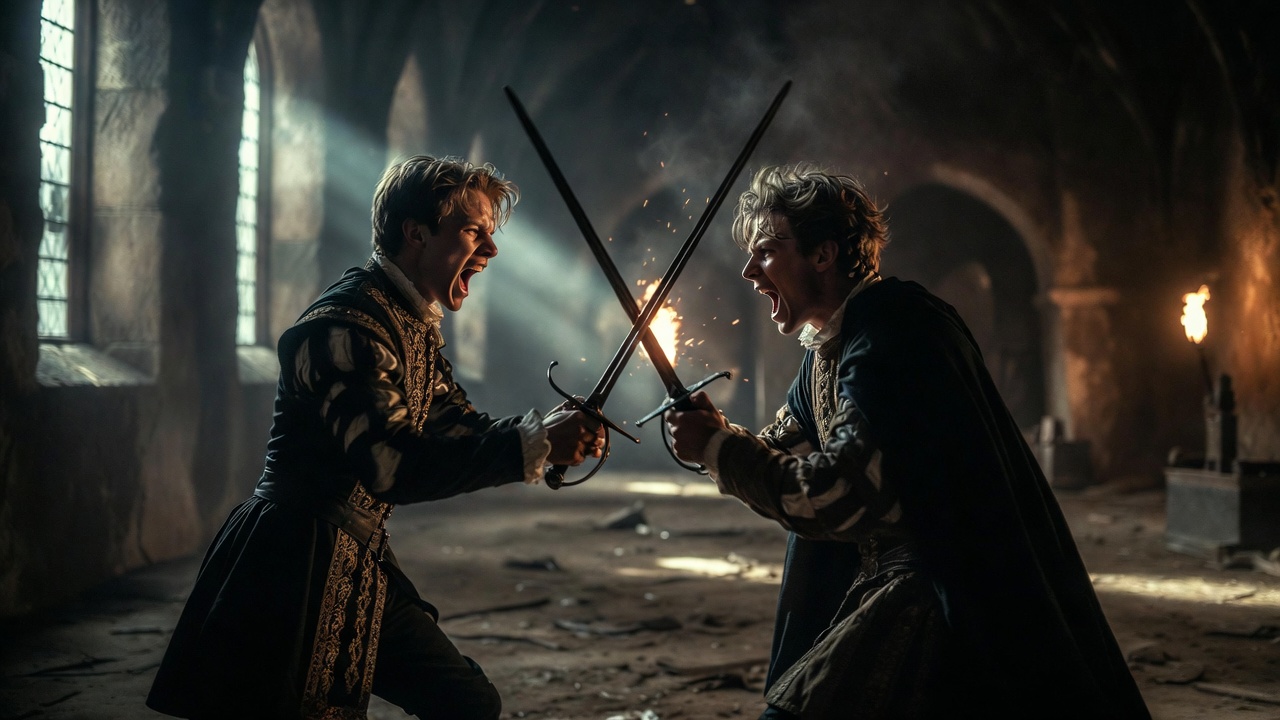
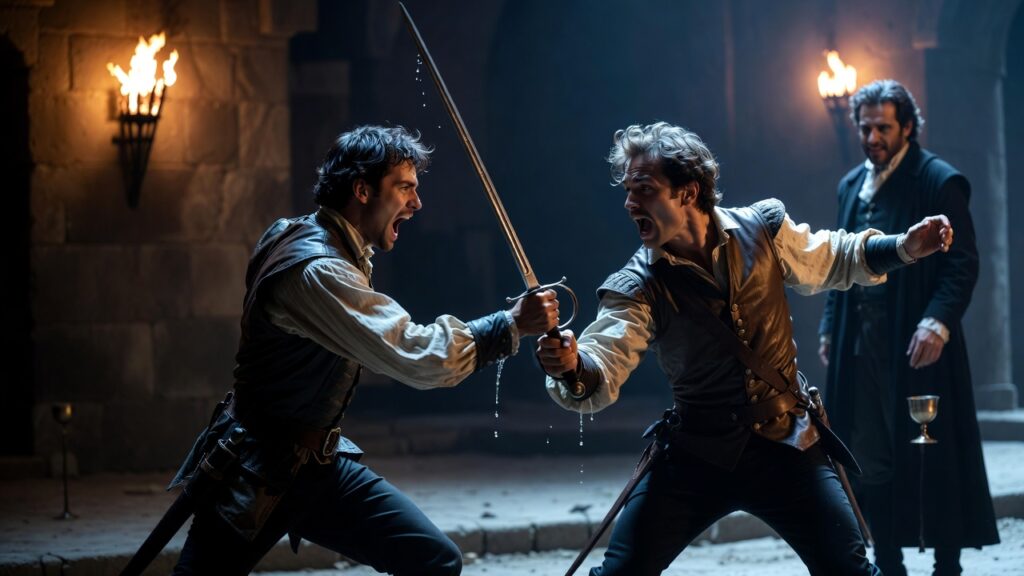
The court enters: Claudius, Gertrude, Laertes, lords, and attendants. The duel begins amid false cheer. Claudius places a poisoned cup for Hamlet as backup, should the anointed rapier fail.
The bouts unfold rapidly:
- Hamlet wins the first two exchanges, prompting Claudius to offer the cup (which Gertrude drinks, unaware of the poison).
- In the third bout, Laertes wounds Hamlet with the poisoned blade.
- In the scuffle, swords are exchanged; Hamlet wounds Laertes with the same tainted weapon.
- Gertrude collapses, crying, “The drink, the drink! I am poison’d.”
- Laertes confesses: “It is here, Hamlet. Hamlet, thou art slain… The treacherous instrument is in thy hand, / Unbated and envenom’d.”
Hamlet, realizing the plot, stabs Claudius with the poisoned rapier and forces him to drink the remaining poison: “Here, thou incestuous, murd’rous, damned Dane, / Drink off this potion!”
The deaths cascade: Gertrude dies first, then Laertes (apologizing and forgiving Hamlet), Claudius (after begging for help), and finally Hamlet himself, poisoned and dying.
This sequence is Shakespeare’s masterpiece of dramatic pacing—chaos erupts after four acts of delay. Poison symbolizes corruption spreading uncontrollably, while the switched swords represent poetic justice: treachery rebounds on its perpetrators.
Major Themes in Act 5 Scene 2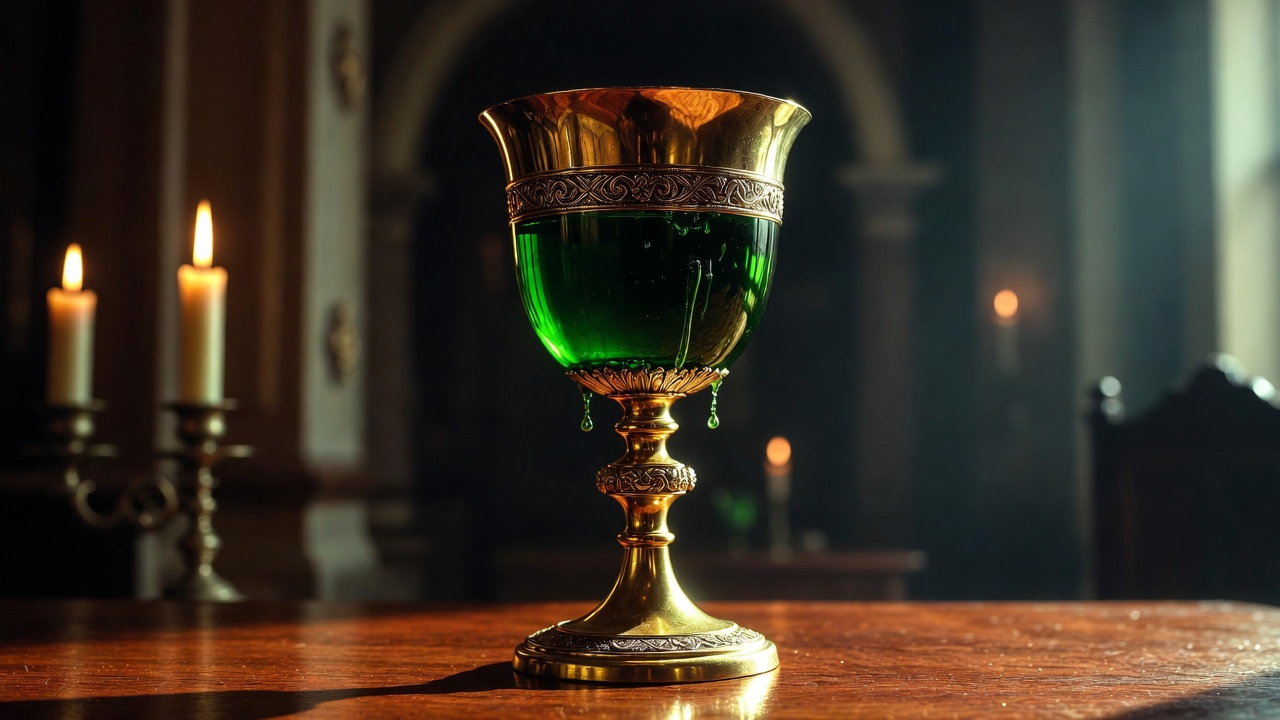
Shakespeare packs an extraordinary density of thematic resonance into this final scene, making it the philosophical and emotional culmination of the entire tragedy. Below are the most significant themes, explored with textual evidence and cross-references to the broader play.
Revenge and Justice The play has been driven by the Ghost’s command: “Remember me” and “Revenge his foul and most unnatural murder.” Yet Act 5 Scene 2 reveals the devastating cost of revenge. Hamlet finally kills Claudius, but not in a clean act of justice—rather in the heat of chaos, after multiple innocents (Gertrude, Laertes) have already died. Laertes himself admits the cycle of vengeance: “The foul practice / Hath turn’d itself on me.” Shakespeare questions whether private revenge can ever deliver true justice, or whether it merely perpetuates corruption. This ambiguity sets Hamlet apart from simpler Elizabethan revenge plays.
Fate vs. Free Will / Divine Providence Hamlet’s sparrow speech is the scene’s theological centerpiece. By invoking “special providence in the fall of a sparrow,” he aligns himself with a Christian providential worldview: nothing is accidental; even apparent chance (the pirates, the sword exchange) serves a divine plan. Yet the play refuses easy answers. Claudius’s meticulously planned murder scheme unravels through unpredictable events, suggesting that human plots are ultimately subordinate to a higher order. Scholars such as Roland Mushat Frye argue that this tension reflects Renaissance debates between Calvinist predestination and human responsibility—Hamlet acts, but only when “readiness” aligns with cosmic timing.
Poison, Corruption, and Death Poison operates on multiple levels: literal (the rapier and cup), metaphorical (Claudius’s regicide and incest tainting the state), and moral (the spreading rot of revenge). Gertrude’s death from the poisoned cup—intended for Hamlet—underscores how corruption inevitably claims the innocent as well as the guilty. The final stage picture, littered with bodies, visually realizes Marcellus’s earlier line: “Something is rotten in the state of Denmark.” The cleansing comes at catastrophic cost—almost the entire royal family is eradicated.
Action vs. Inaction For four acts, Hamlet has wrestled with paralysis (“Thus conscience does make cowards of us all”). In Scene 2, he acts decisively—forging the letter, stabbing Claudius, forcing the drink—yet only after accepting that action may be futile against fate. The contrast is stark: earlier soliloquies were reflective and delaying; here, reflection gives way to instantaneous violence. This resolution is bittersweet—Hamlet achieves his goal, but loses his life and nearly everyone he loves.
Appearance vs. Reality The duel itself is a performance: outwardly sporting, inwardly murderous. Claudius’s false concern (“Give me the cups”), Osric’s obsequious flattery, and the staged bouts all mask lethal intent. The theme reaches its climax when truth erupts: confessions, swapped weapons, and dying revelations tear away every pretense.
These themes interlock across the play, making Act 5 Scene 2 not an isolated event but the inevitable convergence of every major motif.
Character Analysis: Key Figures in the Final Scene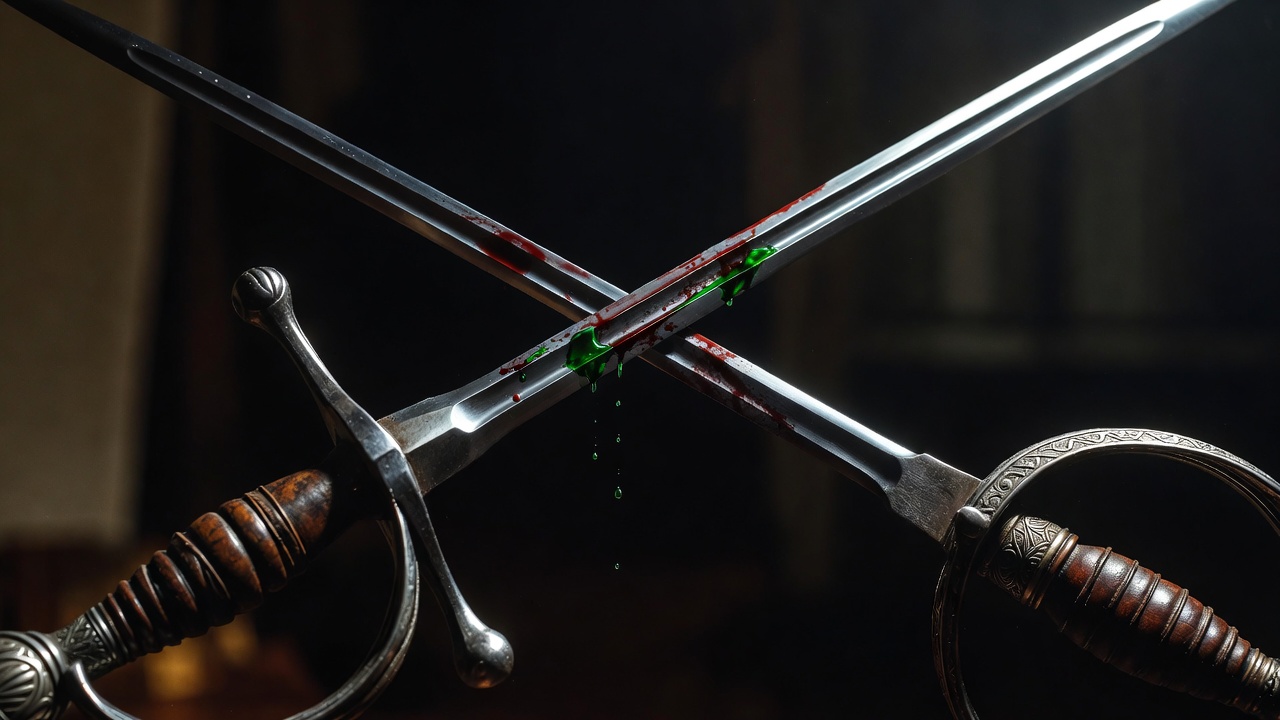
Hamlet By the end, Hamlet has achieved a tragic equilibrium. He apologizes to Laertes with genuine humility (“I am sorry… ’tis not my madness / But mine own indiscretion”), showing moral growth. His final lines—“The rest is silence”—suggest acceptance rather than despair. Yet he remains a tragic figure: his revenge is complete, but his life, love, and kingdom are destroyed.
Laertes Laertes functions as Hamlet’s foil—impulsive where Hamlet is reflective, quick to revenge where Hamlet delays. His arc ends in remorse and reconciliation: “Exchange forgiveness with me, noble Hamlet. / Mine and my father’s death come not upon thee, / Nor thine on me.” This mutual pardon offers the play’s only moment of genuine grace.
Claudius The arch-villain dies unrepentant yet terrified. His final plea—“O yet defend me, friends”—reveals cowardice beneath his composure. His elaborate scheme collapses spectacularly, proving the biblical warning that the wicked are ensnared in the work of their own hands.
Gertrude Her death is especially poignant—she drinks unknowingly, becoming collateral damage in Claudius’s plot. Her cry, “No, no, the drink,—O my dear Hamlet!—The drink, the drink! I am poison’d,” is one of the most heartbreaking lines in Shakespeare, revealing maternal love too late.
Horatio The loyal friend survives to become the play’s narrator. Hamlet entrusts him with the truth: “Absent thee from felicity awhile, / And in this harsh world draw thy breath in pain, / To tell my story.” Horatio’s survival ensures that Hamlet’s tragedy will not be forgotten.
The Ending and Its Aftermath: Fortinbras and Legacy
Fortinbras’s arrival restores political order. Hamlet gives him his “dying voice,” symbolically endorsing the Norwegian prince as Denmark’s new ruler. The final stage direction—“Exeunt, bearing off the bodies”—leaves a silent, corpse-strewn hall, punctuated only by the distant sound of cannon.
This ending is deeply ambiguous. Fortinbras brings external resolution, but the internal cost is staggering: the Danish royal line is extinguished. Shakespeare seems to suggest that revenge, even when successful, leaves a vacuum filled by new power—often no less violent.
Why This Scene Matters: Modern Relevance and Interpretations
Today, Hamlet Act 5 Scene 2 resonates in discussions of delayed justice, moral injury, political corruption, and the ethics of revenge. The sparrow speech speaks to anyone facing existential uncertainty: acceptance does not mean passivity, but readiness to act when the moment arrives.
Film adaptations—Kenneth Branagh’s 1996 full-text version, Franco Zeffirelli’s 1990 interpretation, and even parallels in The Lion King—highlight the scene’s cinematic power: the rapid cuts, mounting tension, and tragic inevitability.
For modern readers, the scene also prompts reflection on personal vendettas, systemic corruption, and the search for meaning in a seemingly indifferent universe.
Key Quotes from Hamlet Act 5 Scene 2 with Explanations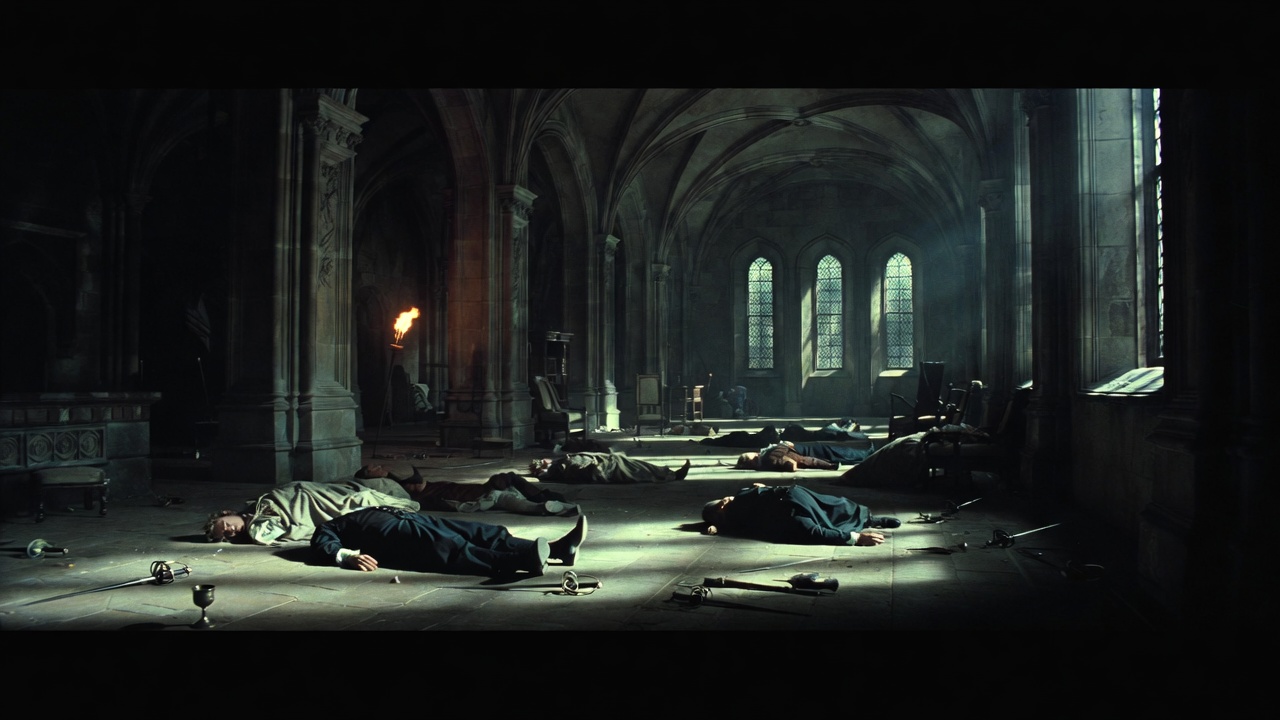
- “Our indiscretion sometime serves us well / When our deep plots do pall…” → Hamlet credits rash action with saving him, suggesting providence works through human imperfection.
- “There is special providence in the fall of a sparrow… The readiness is all.” → Hamlet’s acceptance of fate; one of Shakespeare’s most famous philosophical statements.
- “I am sorry… I have shot mine arrow o’er the house / And hurt my brother.” → Hamlet’s sincere apology to Laertes, showing remorse and maturity.
- “The drink, the drink! I am poison’d.” (Gertrude) → Heart-wrenching realization of betrayal.
- “Here, thou incestuous, murd’rous, damned Dane, / Drink off this potion!” → Hamlet’s final, furious act of retribution.
- “Good night, sweet prince, / And flights of angels sing thee to thy rest.” (Horatio) → The play’s most tender farewell, immortalizing Hamlet’s nobility.
- “The rest is silence.” → Hamlet’s last words—profound in their simplicity and finality.
FAQs About Hamlet Act 5 Scene 2
What happens in Hamlet Act 5 Scene 2? Hamlet recounts his escape from death, agrees to duel Laertes, and in the match everyone—Hamlet, Laertes, Gertrude, and Claudius—dies from poison or wounds.
Why does Hamlet agree to the duel? He senses danger but accepts fate, declaring “the readiness is all.” His newfound calm reflects philosophical resignation.
What is the significance of “There is special providence in the fall of a sparrow”? It shows Hamlet’s belief that even small events are part of a divine plan, helping him overcome fear of death.
Who dies in the final scene and how? Gertrude (poisoned wine), Laertes (poisoned rapier), Claudius (stabbed and forced to drink poison), Hamlet (poisoned rapier).
Does Hamlet achieve justice? He kills Claudius, fulfilling the Ghost’s command, but the victory is pyrrhic—innocents die, and Denmark falls to foreign rule.
Act 5 Scene 2 is Shakespeare at his most masterful: a whirlwind of action, philosophy, and heartbreak that resolves the play’s central questions while leaving others hauntingly open. Hamlet achieves revenge, but the cost is almost total annihilation. In the end, the tragedy is not merely personal but cosmic—Denmark’s corruption is purged, yet the wheel of power turns again.
This scene reminds us why Hamlet endures: it confronts the deepest questions of human existence—fate, guilt, action, forgiveness—with unflinching honesty and heartbreaking beauty. Re-read it, watch it performed, and let its final silence resonate.