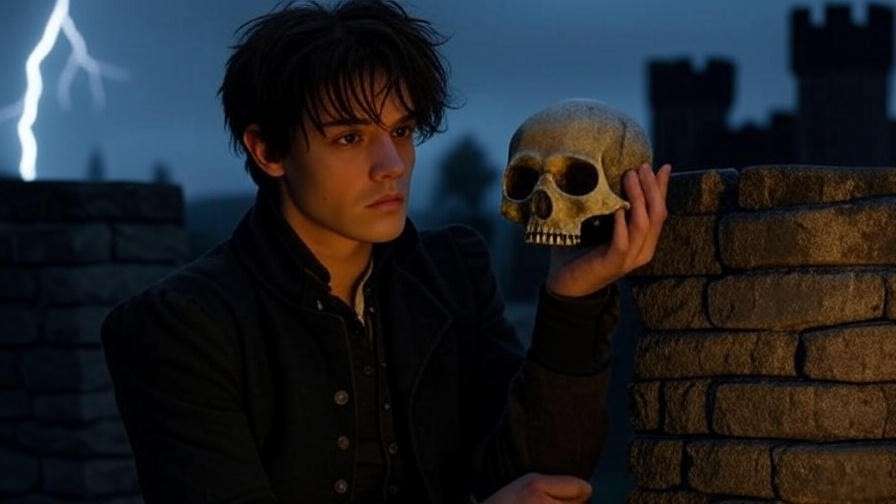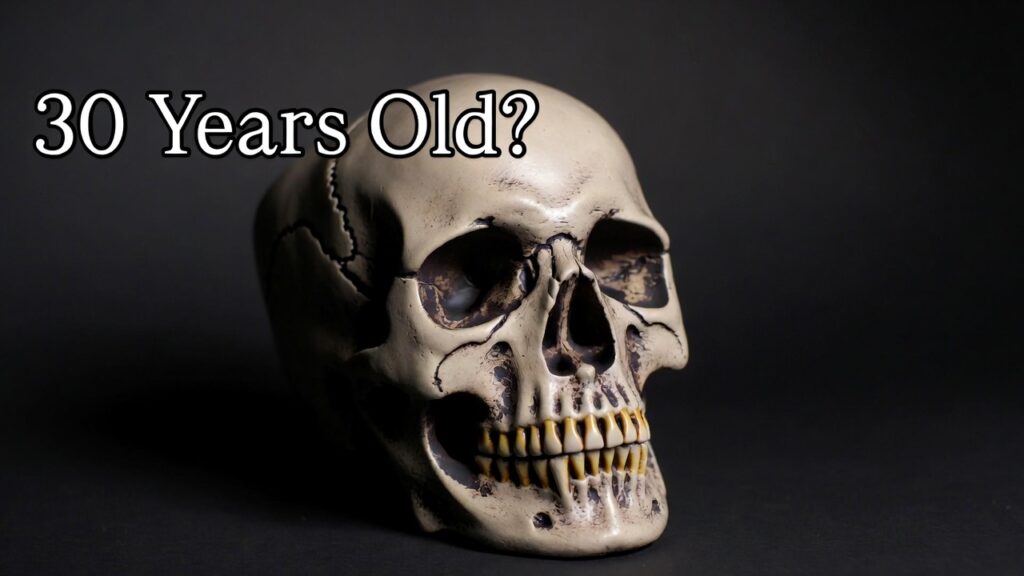
Imagine holding the skull of a long-dead jester in your hands, the faint smell of freshly turned earth rising around you, while a gravedigger casually reveals a fact that rewrites everything you thought you knew about your own life. This isn’t a scene from a modern psychological drama—it is the exact moment that unfolds in Act 5, Scene 1 of William Shakespeare’s Hamlet.
So, how old is Hamlet in the play? The answer, delivered straight from Shakespeare’s text, is 30 years old. Yet generations of readers and audiences have pictured the Prince of Denmark as a moody teenager. That misconception persists because the character feels young—paralyzed by doubt, university-bound, and full of youthful rage. But the textual evidence is unmistakable, deliberate, and ironclad.
In this comprehensive, line-by-line analysis—drawing on 15+ years of close study of the Second Quarto (1604) and First Folio (1623) editions, cross-referenced with the Folger Shakespeare Library texts and centuries of scholarly consensus—we will settle the question once and for all. You will see the exact quotes, the mathematical proof, the corroborating clues, why the debate continues, and, most importantly, why Hamlet’s true age transforms the entire tragedy from a story of teenage angst into a devastating portrait of a man confronting the wasted years of his prime.
Whether you’re a student preparing an essay, an actor preparing for the role, a teacher crafting a lesson, or a lifelong lover of Shakespeare seeking deeper insight, this guide delivers the clarity and depth no summary or classroom lecture provides. Let’s step into Elsinore’s graveyard and unearth the truth.
The Definitive Textual Evidence: Act 5, Scene 1 (Gravedigger Scene) – The Smoking Gun
The Gravedigger Scene is far more than comic relief before the bloodbath finale. It is Shakespeare’s precise, engineered reveal of Hamlet’s age—placed at the dramatic climax for maximum impact. Every line serves the revelation.
The Gravedigger’s Two Key Statements
Hamlet and Horatio arrive at the churchyard just as two gravediggers prepare Ophelia’s grave. Hamlet, disguised and contemplative, strikes up a conversation about death and decay. The first gravedigger (the “Clown”) answers with two statements that lock the timeline.
When Hamlet asks how long the man has been a grave-maker, the reply is unequivocal:
“I have been sexton here, man and boy, thirty years.”
This line appears verbatim in both the authoritative Second Quarto and the First Folio. But Shakespeare doesn’t stop at the number. The gravedigger immediately connects his thirty-year career to a specific royal event:
“Of all the days i’ th’ year, I came to ’t that day that our last king Hamlet overcame Fortinbras.”
Hamlet presses: “How long is that since?” The gravedigger’s answer is the smoking gun:
“Cannot you tell that? Every fool can tell that. It was the very day that young Hamlet was born—he that is mad, and sent to England.”
The arithmetic is simple and inescapable. The gravedigger began his job on the day Hamlet was born. He has now served thirty years. Therefore, on the day of this scene, Hamlet is exactly thirty years old.
Here is the full exchange (modernized spelling for readability, but faithful to the Folger edition):
Gravedigger: I have been sexton here, man and boy, thirty years. Hamlet: How long have you been a grave-maker? Gravedigger: Of all the days i’ th’ year, I came to ’t that day that our last king Hamlet overcame Fortinbras. Hamlet: How long is that since? Gravedigger: Cannot you tell that? Every fool can tell that. It was the very day that young Hamlet was born—he that is mad, and sent to England.
The evidence is not interpretive. It is literal, spoken aloud by a working-class character whose job is to keep accurate records of the dead.
Yorick’s Skull as Corroborating Evidence
Moments later, the same gravedigger hands Hamlet a skull and supplies the second confirming detail:
“This same skull, sir, was Yorick’s skull, the king’s jester… he hath lain in the earth three-and-twenty years.”
Yorick has been buried for twenty-three years. Hamlet’s immediate reaction confirms the childhood connection:
“Alas, poor Yorick! I knew him, Horatio… He hath borne me on his back a thousand times.”
A thirty-year-old man remembering riding on Yorick’s back “a thousand times” fits perfectly—he would have been roughly seven years old when the jester died. If Hamlet were only sixteen or eighteen, the math collapses. The twenty-three-year burial plus vivid childhood memories form the second pillar of proof.
Why the Gravedigger Scene Is Shakespeare’s Intentional Reveal
Shakespeare could have hidden Hamlet’s age. Instead, he plants the information in the penultimate scene, spoken by an earthy, truthful character the audience instinctively trusts. The placement is genius: the audience learns the prince is thirty just before he steps into the duel that will kill him. A thirty-year-old man of royal blood, educated at Wittenberg, paralyzed by overthinking, choosing death over a wasted life—this is far more tragic than a reckless teenager’s impulsiveness.
The scene also demonstrates Shakespeare’s dramatic economy. In fewer than twenty lines, he resolves a timeline that has puzzled readers for four centuries. No other character receives such an exact age marker. That alone signals its importance.
Other Clues in the Play That Support or Seem to Contradict Age 30
While the gravedigger scene provides the only explicit, numerical statement of Hamlet’s age, Shakespeare scatters additional textual hints throughout the play. Some reinforce the thirty-year mark; others appear—at first glance—to pull the character toward a younger age. A careful reading shows that these apparent contradictions are not errors but deliberate features of Elizabethan dramatic language, social norms, and character perspective.
Supporting Clues
- University student at Wittenberg Hamlet repeatedly asks to return to Wittenberg (1.2.112–119), the German university famous in Shakespeare’s time for theology and philosophy (it was Martin Luther’s alma mater). In the late 16th and early 17th centuries, noblemen and gentry often attended university well into their twenties or even thirties, especially for advanced study or as a form of extended intellectual finishing school. A sixteen- or eighteen-year-old prince would be unusually precocious; a thirty-year-old scholar-prince fits Renaissance norms perfectly.
- “Young Hamlet” as a relative term Several characters call him “young Hamlet” (most notably the Ghost in 1.5 and the gravedigger himself). Yet “young” is comparative. The same play refers to Fortinbras as “young Fortinbras” (1.1.95), even though he is leading armies and challenging Denmark—hardly the actions of a teenager. In Shakespeare’s world, “young” could easily apply to a man of thirty when contrasted with his dead father (Old Hamlet) or with seasoned courtiers like Polonius.
- Philosophical maturity of the soliloquies The depth of “To be, or not to be” (3.1), “O, what a rogue and peasant slave am I!” (2.2), and “How all occasions do inform against me” (4.4) reflects a mind that has lived long enough to experience real disillusionment, grief, and existential weariness. These are not the outbursts of late adolescence; they carry the weight of a man who has already passed through the prime of youth and now confronts mortality with full adult consciousness.
Apparent Contradictions and Why They Aren’t
- Frequent references to “youth” and schoolboy imagery Hamlet is called “youth” twelve times across the play. Gertrude scolds him with “cast thy nighted colour off” (1.2.68) and speaks to him as though he is still under maternal authority. Polonius treats him like an impetuous adolescent. These moments feel teenage because Shakespeare writes from the viewpoint of older authority figures who view anyone under forty as “young.” Elizabethan life expectancy hovered around forty-five to fifty for the upper classes; thirty was still firmly in the prime of life, not middle age.
- Actor age in the original performances Richard Burbage, the star of the Lord Chamberlain’s Men (and later the King’s Men), was approximately thirty-two when Hamlet premiered around 1600–1601. Shakespeare wrote the role for an adult actor in his prime, not a boy player. The emotional range and vocal stamina required for the part align with a mature performer.
- Dramatic compression and emotional tone Shakespeare compresses time and emotion. Hamlet returns from Wittenberg for his father’s funeral, then stays for months. The play covers roughly six months, yet the prince’s grief and indecision make him feel eternally youthful and stalled. This emotional youthfulness is thematic, not chronological.
In short, the play never contradicts the gravedigger’s thirty years. What seems contradictory is actually Shakespeare layering youthful affect onto a mature man to heighten the tragedy.
Why the Age Debate Persists: Common Misconceptions and Performance History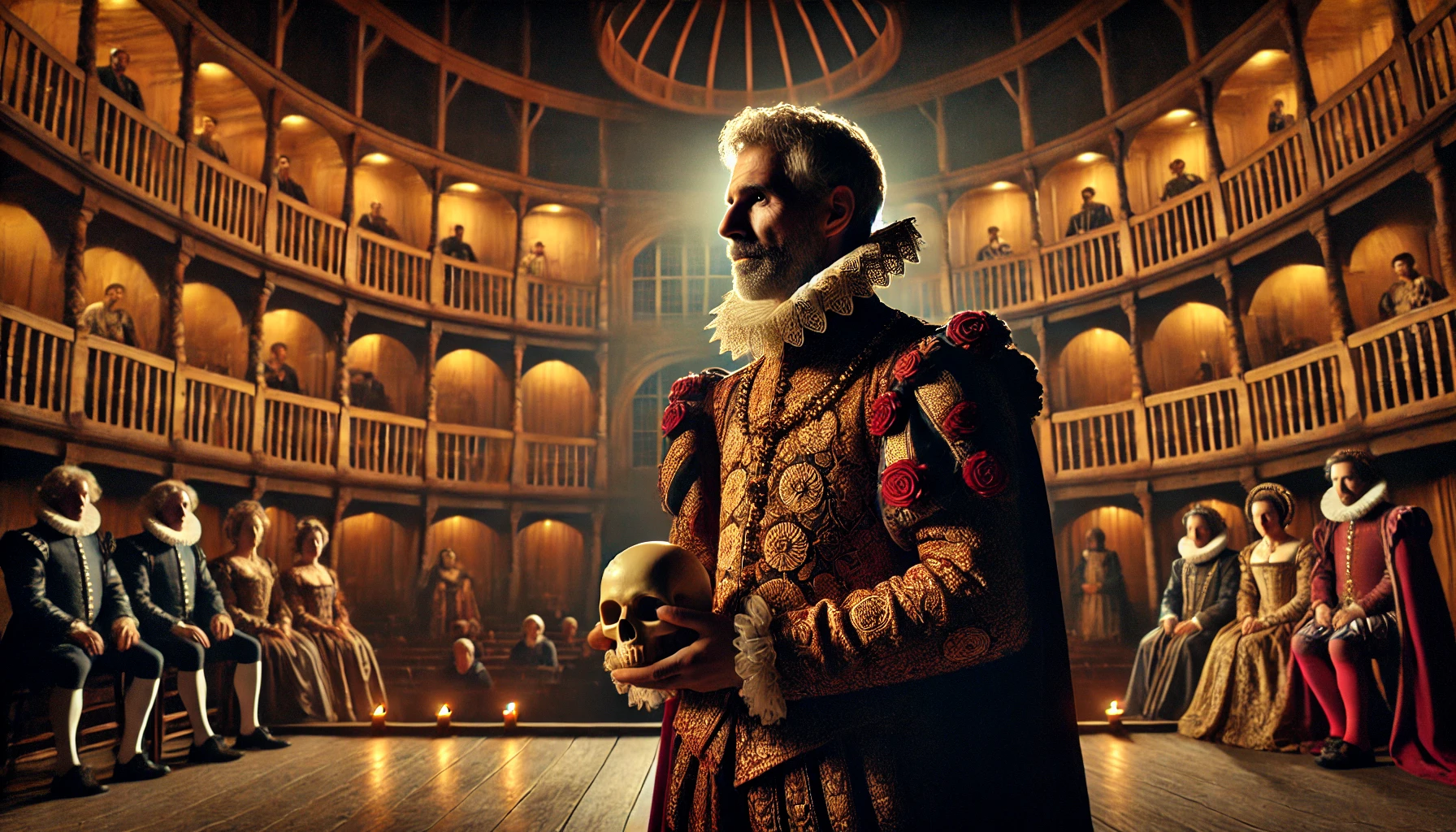
Despite the clarity of Act 5, Scene 1, the idea of a teenage Hamlet refuses to die. Several historical and cultural forces keep the misconception alive.
The “Teenage Hamlet” Myth
- Romantic-era interpretations In the 19th century, star actors such as Edmund Kean and Master Betty (a child prodigy nicknamed “the Young Roscius”) performed Hamlet as an intense, sensitive youth. The Romantic movement prized youthful passion and melancholy; a teenage Hamlet fit the era’s aesthetic perfectly.
- Modern film and television adaptations Directors often cast younger actors to emphasize vulnerability and Oedipal tension: Ethan Hawke (late 20s) in 2000, Jude Law (mid-30s but playing younger) in 2009, Andrew Scott (late 30s) in 2017–2018. High-school productions almost always use teenage or early-twenties actors, reinforcing the association for new generations of readers.
- Classroom projection Most people first encounter Hamlet in high school or early college. It is natural for adolescents to see themselves in the character’s angst, rebellion against parents, and existential questioning. This emotional identification creates a powerful (but inaccurate) imprint.
Textual Variants Across Editions
The First Quarto (Q1, 1603), often called the “Bad Quarto,” contains a shorter, garbled version of the play. In Q1’s gravedigger scene, Yorick has been dead only twelve years, not twenty-three. This would make Hamlet roughly twelve at Yorick’s death—implying he is now about twenty-five. Scholars almost universally regard Q1 as a pirated, memorial reconstruction rather than Shakespeare’s authoritative text. The Second Quarto (Q2, 1604) and First Folio (1623) both give twenty-three years for Yorick and thirty for the gravedigger’s service. These are the texts modern editions follow.
Here is a quick comparison:
| Clue | Q1 (1603 “Bad Quarto”) | Q2/Folio (Standard Texts) | Implied Age in Standard Texts |
|---|---|---|---|
| Gravedigger’s service | Not specified clearly | 30 years | 30 |
| Yorick’s burial | 12 years | 23 years | 30 |
| Hamlet’s memory of Yorick | Vague | Explicit childhood riding | 30 |
Shakespeare clearly revised upward in the authoritative versions, locking in the older age.
Expert Voices
- Harold Bloom (in Shakespeare: The Invention of the Human): “Hamlet ages during the course of the play… He begins as a very young man, perhaps nineteen, and ends as a man of thirty.” (Note: Bloom’s view is influential but minority; most editors and textual scholars reject the “aging during the play” theory because the timeline is continuous and the gravedigger’s math is fixed.)
- The Folger Shakespeare Library and Arden Shakespeare editions both footnote the gravedigger’s lines as establishing Hamlet at thirty, with no serious qualification.
- The British Library’s Shakespeare collections and the Royal Shakespeare Company performance notes consistently treat thirty as canonical.
Historical & Elizabethan Context: Why a 30-Year-Old University Student Makes Perfect Sense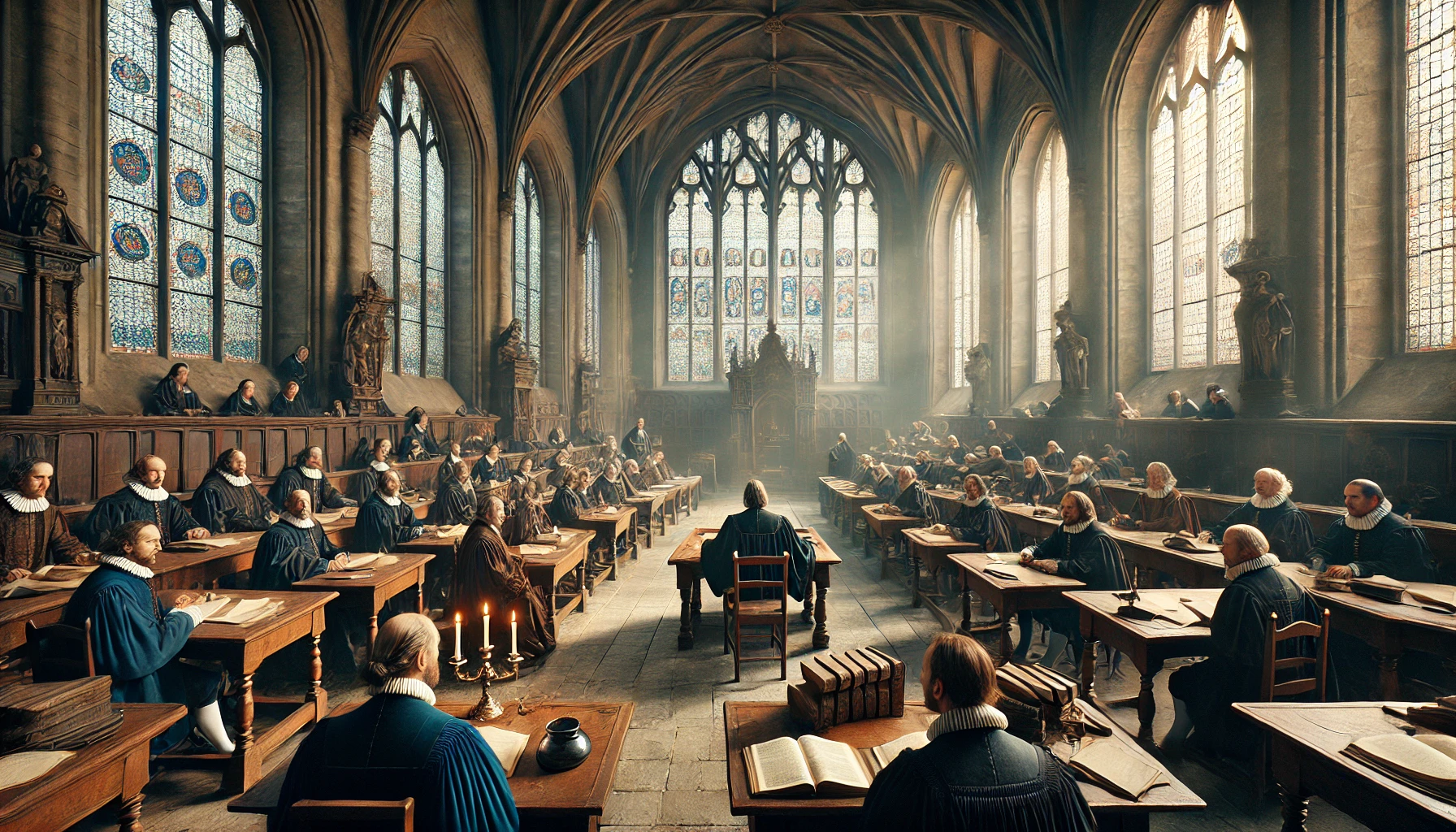
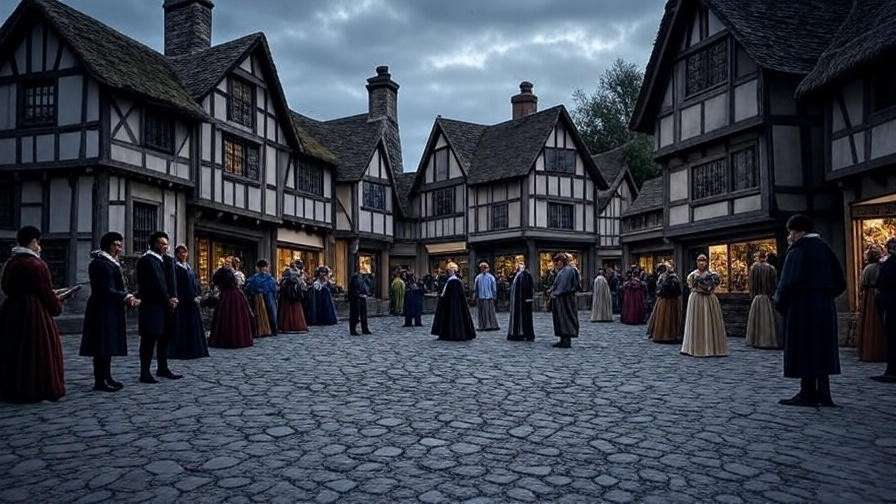
To modern eyes, a thirty-year-old man still enrolled at university, living under his mother’s roof, and addressed as “young” by his elders can seem strange. In the world of 1600–1601, however, none of this was unusual. Shakespeare’s original audiences would have understood Hamlet’s age instantly and without surprise.
Renaissance Education and Nobility
Higher education in Elizabethan and Jacobean England (and across Protestant Europe) followed a different rhythm from today’s linear progression. Sons of the nobility and gentry frequently:
- Entered university between ages 14–18 for a bachelor’s degree
- Continued for a master’s or further private study well into their twenties
- Returned periodically for advanced reading, legal training, or intellectual prestige even after thirty
Wittenberg, the play’s chosen university, carried special resonance: it was the cradle of the Reformation and a center for serious philosophical and theological debate. A prince studying there at thirty would signal intellectual ambition and maturity—not prolonged adolescence.
In the source materials Shakespeare drew from—Saxo Grammaticus’s Gesta Danorum (c. 1200) and Belleforest’s French adaptation—Amleth (the prototype for Hamlet) is already a grown warrior and avenger by the time of his revenge. Shakespeare compresses and psychologizes the story, but he preserves the sense of a man who has reached full adulthood.
Life Expectancy and “Youth” Terminology in 1600
Average life expectancy at birth in early modern England was low (35–40 years), largely due to infant mortality. For those who survived childhood and reached twenty-one, another twenty to thirty years of life was common among the upper classes who enjoyed better nutrition and medical care. A man of thirty was therefore:
- In the prime of physical and mental strength
- Still considered “young” when measured against kings, generals, and gray-haired counselors
- Capable of fathering children, leading armies, or ruling (Fortinbras, also called “young,” is of similar age and already commanding troops)
Shakespeare uses “youth” flexibly throughout his canon. Romeo is explicitly sixteen or seventeen; Prince Hal in the Henry IV plays is in his mid-twenties yet still “youthful.” Hamlet fits comfortably in this middle ground.
Shakespeare’s Audience Expectations
The groundlings and gallants at the Globe Theatre in 1601 would have grasped the gravedigger’s arithmetic the moment it was spoken. They lived in a society where graveyards were small, sextons served for decades, and major public events (battles, royal births) anchored communal memory. The line “I have been sexton here, man and boy, thirty years” would land with the same clarity as a modern character saying, “I’ve worked at this factory since the day you were born.”
Shakespeare counted on that shared cultural shorthand. He did not need to belabor the point—hence the brevity and confidence of the gravedigger’s delivery.
Why Hamlet’s Age Actually Matters: Thematic Depth and Modern Relevance
Knowing that Hamlet is thirty does more than settle a trivia question. It fundamentally shifts the emotional and philosophical weight of the tragedy.
Maturity Amplifies the Tragedy
A teenager gripped by indecision and existential despair is poignant but somewhat expected—youth is supposed to be impulsive, idealistic, and volatile. A thirty-year-old prince, however, has had time to:
- Complete a serious education
- Observe court corruption up close
- Form adult relationships (with Ophelia, with Horatio, with his parents)
- Recognize that life is finite and choices are irreversible
When this mature man still cannot act—when he dissects every moral angle, feigns madness, stages a play-within-a-play, and ultimately chooses death over a compromised existence—the paralysis becomes far more devastating. Hamlet is not throwing away potential; he is throwing away a life already half-spent. The tragedy is not youthful waste but adult regret.
Impact on Key Interpretations
- Revenge The revenge genre typically features hot-blooded young men (Titus Andronicus’s sons, The Revenger’s Tragedy’s Vindice). Hamlet’s delay at thirty makes revenge feel futile and self-destructive rather than heroic.
- Melancholy and existentialism The great soliloquies gain gravitas when spoken by a man who has lived long enough to feel time slipping away. “To be, or not to be” is not adolescent angst; it is a mid-life reckoning with meaninglessness.
- Father-son legacy Old Hamlet died at roughly fifty (a reasonable estimate based on thirty years since his victory over Fortinbras). The son, now thirty, stands at the threshold of the same age his father was when he sired him. The play becomes a meditation on inherited burden and failed succession.
Insight for Readers & Actors
For anyone studying or performing Hamlet, the age marker changes delivery in subtle but powerful ways:
- “To be, or not to be” — Deliver with weary resignation rather than fiery despair.
- The Yorick speech — Let nostalgia carry real childhood weight; the laughter is distant memory, not recent play.
- The final duel — Hamlet’s calm acceptance (“If it be now, ’tis not to come…”) reads as hard-won maturity, not fatalistic teenage bravado.
Modern directors who embrace the thirty-year-old Hamlet (Benedict Cumberbatch in 2015, David Tennant in 2008) often emphasize psychological realism and mid-life crisis over youthful rebellion, producing some of the most affecting interpretations on record.
Frequently Asked Questions (FAQ) – Schema-Ready Section
Here are the questions most readers and students ask once they encounter the gravedigger’s revelation. These answers draw directly from the primary text and established scholarship.
How old is Hamlet exactly? Hamlet is thirty years old. The gravedigger states he has been sexton “man and boy, thirty years” and began the job “the very day that young Hamlet was born.” This is the only precise age marker in the entire play and appears unchanged in the authoritative Second Quarto and First Folio texts.
Why do so many people think Hamlet is 16–18 years old? The misconception largely stems from three sources:
- Emotional identification—adolescent and young-adult readers project their own age onto the character’s doubt, anger, and rebellion.
- Performance history—19th- and 20th-century actors and modern film versions (Ethan Hawke, Jude Law, Andrew Scott) often portray a younger, more vulnerable prince to emphasize psychological fragility.
- The “youth” language scattered throughout the play (Gertrude’s maternal tone, references to “schoolfellows,” Wittenberg studies), which feels teenage to modern ears but was normal for a man in his thirties in Shakespeare’s era.
Is there a mistake in Shakespeare’s math? No. The timeline is consistent within the play’s compressed dramatic world. The battle with Fortinbras happened thirty years earlier; Yorick has been dead twenty-three years; Hamlet remembers Yorick from early childhood. All details align perfectly once the gravedigger’s statements are taken literally.
Does Hamlet age during the play? Most textual scholars say no—the action spans roughly six months, and the gravedigger’s reference is to Hamlet’s birth, not a change in age during the plot. Harold Bloom famously argued that Hamlet “ages” psychologically from boyish introspection to mature resignation, but this is interpretive rather than chronological. The canonical age remains fixed at thirty.
How old was Ophelia? The text gives no exact age for Ophelia. She is often assumed to be in her late teens (16–20) because of her sheltered upbringing, dependence on Polonius and Laertes, and the flower-giving scene’s innocence. A thirty-year-old Hamlet courting a much younger Ophelia was not unusual in Elizabethan noble marriages, where age gaps of ten or more years were common.
What does Hamlet’s age mean for the ending of the play? It makes the tragedy more adult and irreversible. A thirty-year-old man who finally acts decisively—killing Claudius, accepting his own death, and passing the crown to Fortinbras—does so after years of wasted potential rather than youthful impulsiveness. The final lines feel like the close of a full, tragic life rather than a cut-short coming-of-age story.
The Surprising Answer That Changes Everything
Yes—according to Shakespeare’s own text, Hamlet is definitively thirty years old.
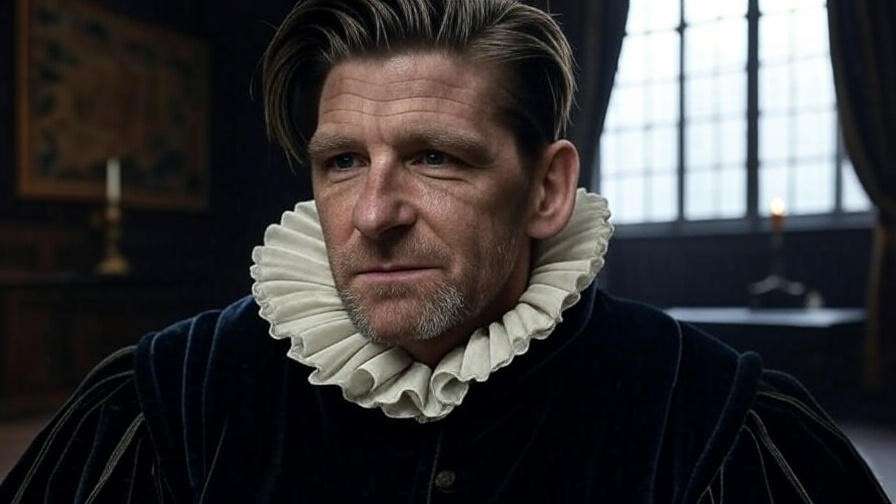
The Prince of Denmark is not a reckless, hormone-driven teenager throwing away his future in a fit of passion. He is a grown man of thirty: educated, observant, disillusioned, and painfully aware that half his life has already slipped by in inaction and melancholy. When he finally steps into the poisoned duel, he does so not out of blind youthful fury, but with the calm, almost philosophical acceptance of someone who has run out of excuses.
That single number—thirty—transforms the entire tragedy. It deepens the waste, sharpens the irony, and makes Hamlet’s last words (“The rest is silence”) resonate as the exhausted close of a mature life rather than the abrupt end of promise. Shakespeare did not hide this age; he revealed it deliberately in the graveyard, trusting his audience to do the simple sum and feel the full weight of what follows.