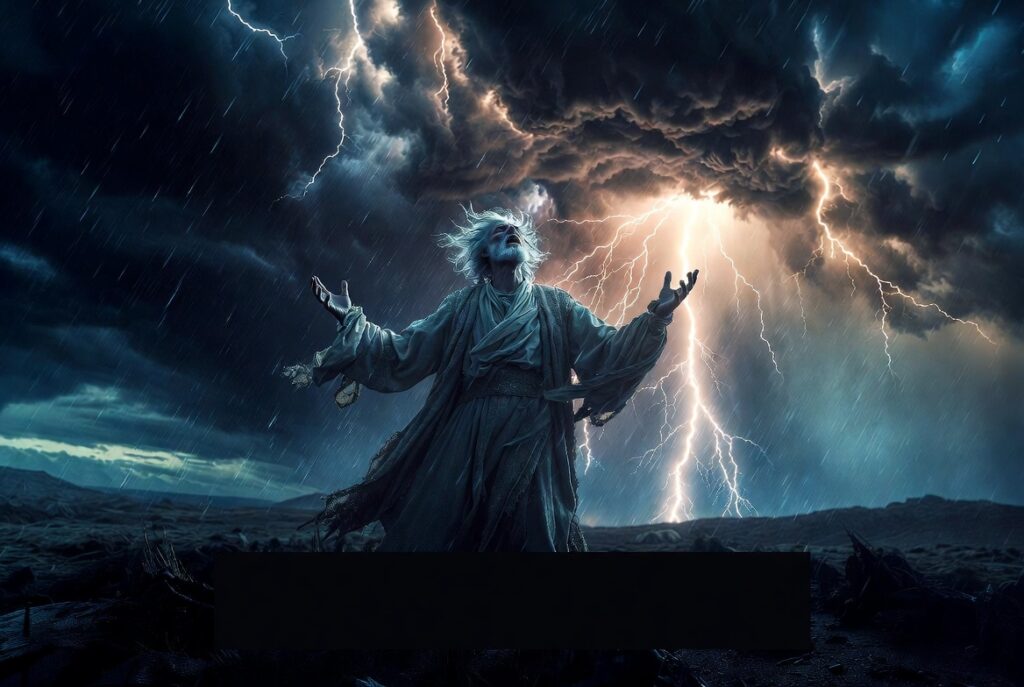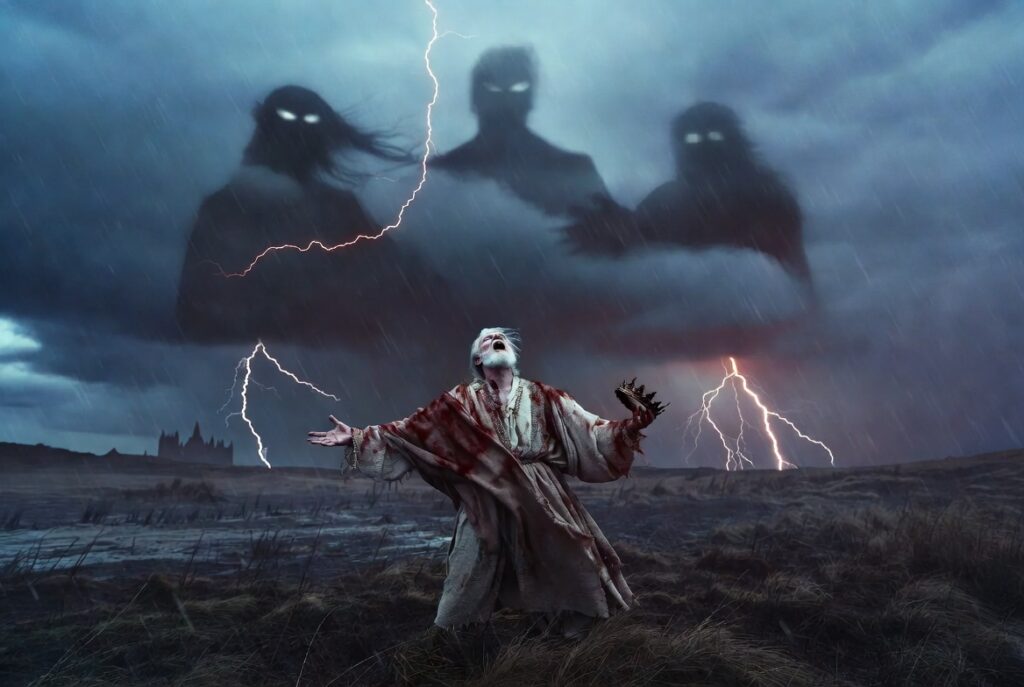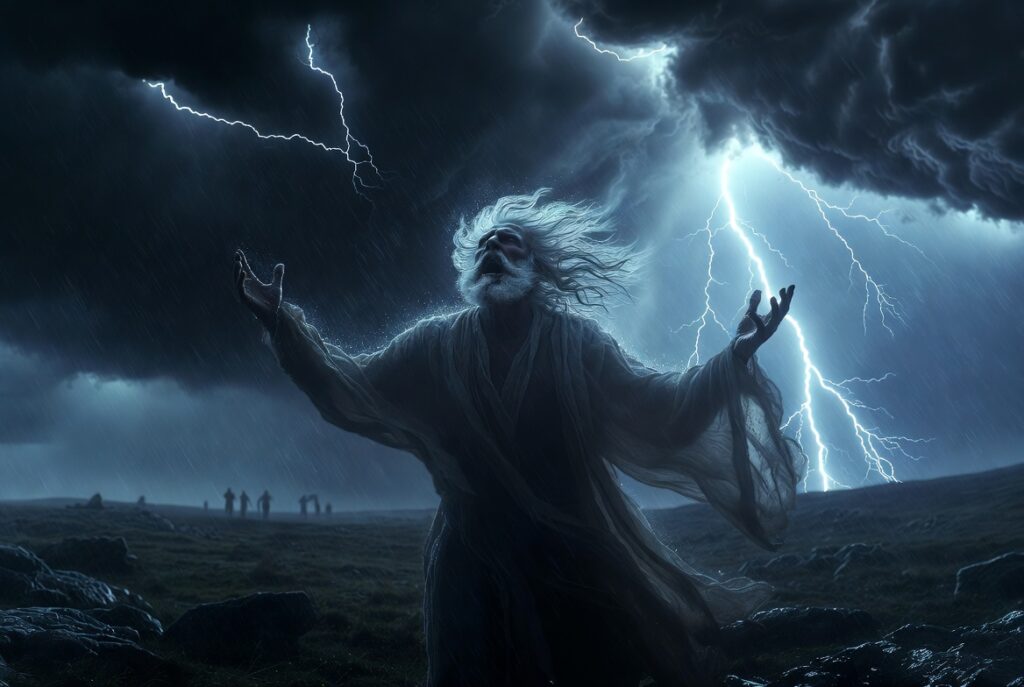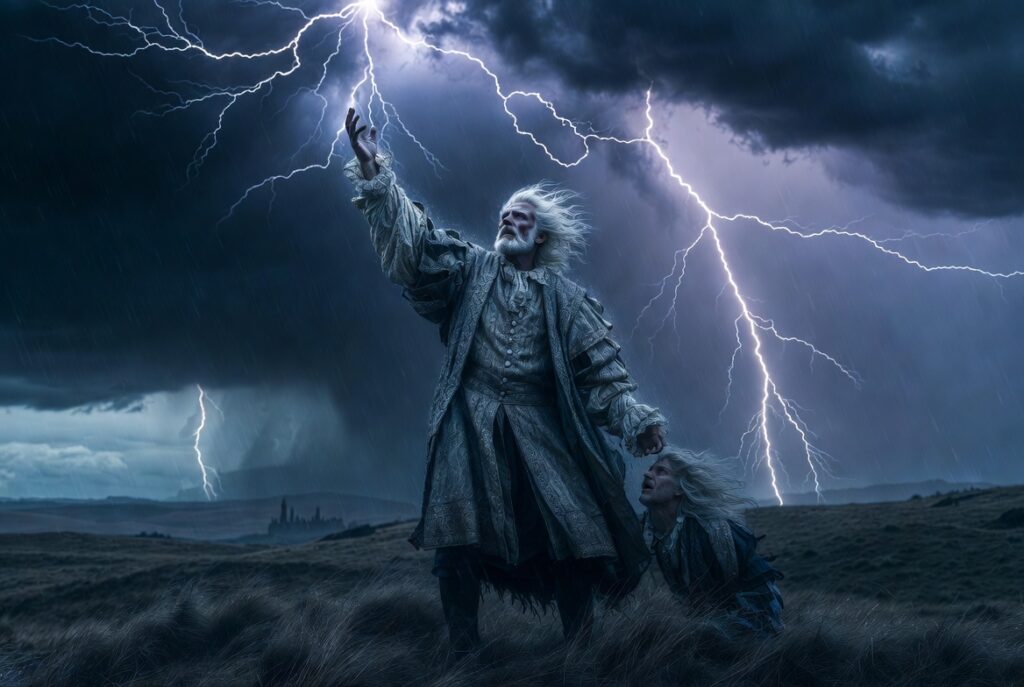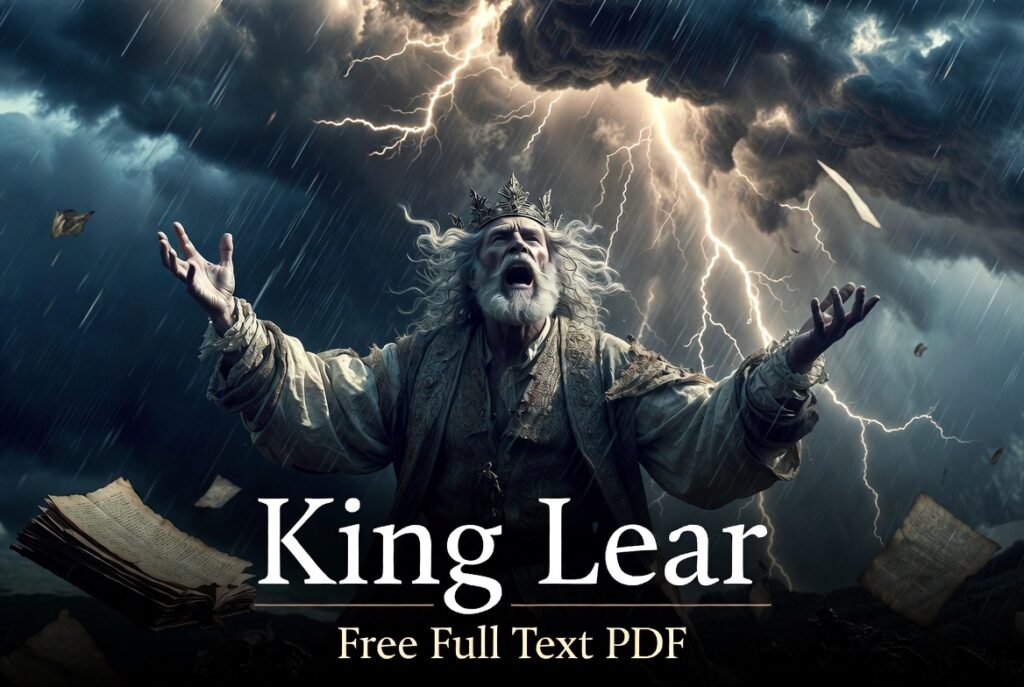
Imagine a once-mighty king standing alone on a windswept heath, drenched by a raging storm, screaming at the heavens as his own daughters turn against him. In that single, shattering moment, Shakespeare captures the raw terror of betrayal, the fragility of power, and the agony of a parent cast aside by the children he trusted most. This is the unforgettable core of King Lear—and the reason it remains one of the most devastating tragedies ever written.
If you’re searching for a King Lear synopsis that actually delivers the complete, clear, and spoiler-inclusive plot summary you need, you’ve come to the right place. Whether you’re a student preparing for an exam, a theater lover wanting to understand the play before seeing it performed, a teacher building lesson plans, or simply a reader drawn to Shakespeare’s greatest works, this article gives you everything in one authoritative resource.
Here you will find a detailed act-by-act breakdown, in-depth character analysis, exploration of the major themes, historical context, Shakespeare’s dramatic techniques, critical reception across centuries, modern relevance, and practical insights you won’t find in most study guides or CliffsNotes-style summaries. Written by a specialist in Shakespeare’s canon with years of teaching and analyzing his plays, this guide is designed to be the definitive King Lear plot summary and full synopsis—more comprehensive and insightful than anything else available online.
Historical and Literary Context of King Lear
Understanding the world in which Shakespeare created King Lear deepens our appreciation of its power. The play was written and first performed between 1605 and 1606, during the early reign of King James I. Shakespeare was at the height of his career, working for the King’s Men, the premier acting company of the day. The timing was no accident. The kingdom was still recovering from the uncertainty of Queen Elizabeth I’s final years and the smooth but tense transition to a Scottish king. Questions of royal succession, political division, and filial duty were very much on people’s minds.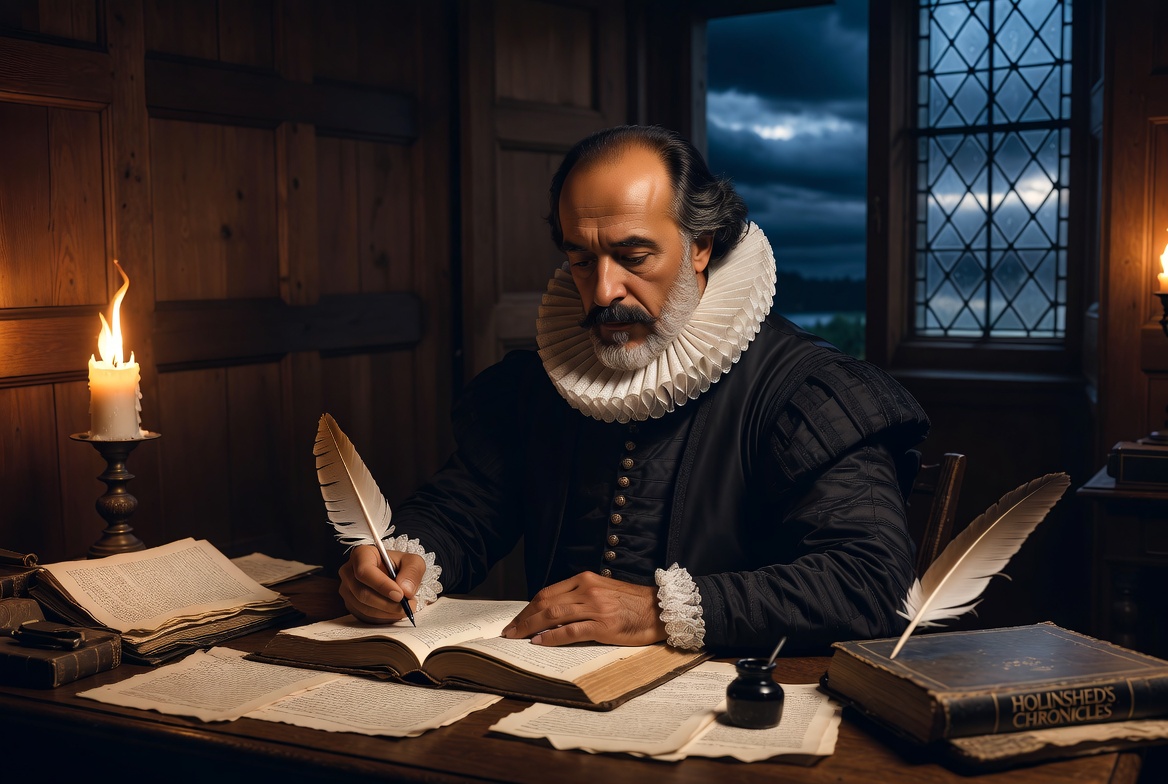
Shakespeare drew his story from multiple sources. The main outline comes from Raphael Holinshed’s Chronicles of England, Scotland, and Ireland (1587), which recounts the legendary ancient British king Leir. He also knew the anonymous earlier play The True Chronicle Historie of King Leir (published 1605 but performed earlier), and he wove in elements from Sir Philip Sidney’s Arcadia for the Gloucester subplot. What Shakespeare did, however, was transform a simple moral tale into a profound psychological and political tragedy that feels startlingly modern.
Two versions of the play survive: the 1608 Quarto (titled The True Chronicle Historie of the life and death of King Lear and his three Daughters) and the 1623 First Folio. Scholars continue to debate which is “better,” but most modern editions combine the two, noting that the Folio is slightly shorter and contains significant revisions—especially in the final scenes. These textual differences affect everything from the portrayal of Cordelia’s death to the role of the Fool. Knowing this context helps readers see why King Lear feels both ancient and urgently contemporary.
The play was controversial even in its time. Some early audiences found its bleakness almost unbearable. In 1681, Nahum Tate rewrote the ending with a happy marriage between Edgar and Cordelia and the survival of Lear and Gloucester—an adaptation that held the English stage for over 150 years because theatergoers simply could not stomach the original catastrophe. Only in the 19th and 20th centuries did directors and critics rediscover the power of Shakespeare’s uncompromising vision.
Complete Plot Summary – Act by Act
Spoiler Warning: This section contains a full, detailed, scene-by-scene synopsis of the entire play. If you prefer to experience the story fresh, stop here and return after reading or watching King Lear.
Act 1 – The Division of the Kingdom
The play opens in the court of King Lear, an aging monarch who has decided to retire and divide his kingdom among his three daughters: Goneril, Regan, and Cordelia. To determine the size of each share, Lear demands a public contest of flattery: whichever daughter professes the greatest love for him will receive the largest portion.
Goneril, the eldest, delivers an extravagant speech declaring her love “dearer than eye-sight, space, and liberty.” Regan, the middle daughter, outdoes her sister, claiming to be “an enemy to all other joys” except her father’s love. Cordelia, the youngest and Lear’s favorite, refuses to play the game. Her simple, honest reply—“Nothing, my lord”—stuns the court. When pressed, she explains that she loves him “according to my bond; no more nor less.” Enraged by what he sees as ingratitude, Lear disinherits Cordelia, banishes her, and divides the kingdom between Goneril and Regan.
The Earl of Kent, one of Lear’s most loyal nobles, protests this rash decision and is immediately banished for his honesty. Meanwhile, in a parallel subplot, the Earl of Gloucester introduces his two sons: the legitimate Edgar and the illegitimate Edmund. Edmund, resentful of his bastard status, begins scheming to frame Edgar and seize his inheritance.
Goneril and Regan, now in power, quickly reveal their true colors. They begin reducing Lear’s retinue of 100 knights, complaining about the expense and disorder. The old king, already feeling the sting of lost authority, senses the coming betrayal.
Act 2 – Betrayal and Exile
Tensions escalate rapidly. Lear arrives at Gloucester’s castle seeking hospitality from Regan and her husband, the Duke of Cornwall. Instead, he finds Kent (disguised) in the stocks—punished for attacking Oswald, Goneril’s steward. Regan and Cornwall refuse to see Lear immediately, further humiliating him.
Edmund’s plot advances: he tricks Edgar into fleeing and then stages a fake fight so that Gloucester believes Edgar tried to murder him. Edgar, now a fugitive, disguises himself as “Poor Tom,” a mad beggar.
Lear’s confrontation with Regan and Goneril is devastating. The two daughters coldly insist he dismiss most of his followers and live alternately with them. Lear, realizing too late the consequences of his earlier decision, erupts in fury and rushes out into the gathering storm, accompanied only by the loyal Kent, the Fool, and a small number of knights.
The act ends with the storm breaking—both literally and metaphorically—as Lear is cast out into the night by his own children.
Act 3 – The Storm and Descent into Madness
The storm that breaks at the end of Act 2 becomes a powerful dramatic force in Act 3, mirroring Lear’s inner turmoil. On the heath, the old king rages against the elements, calling on the thunder and rain to punish his ungrateful daughters. He declares, “Blow, winds, and crack your cheeks! rage! blow!” — one of the most famous passages in the play, blending cosmic fury with personal betrayal.
Lear is joined by his loyal Fool, who offers bitter, witty commentary on the king’s folly, and by Kent (still disguised). They take shelter in a hovel, where they encounter Edgar disguised as Poor Tom, a mad beggar tormented by demons. Lear, his mind unraveling, begins to identify with the suffering of the poor and questions the nature of justice and authority. He stages a mock trial of his daughters in the hovel, exposing his growing madness and deepening insight into human hypocrisy.
Meanwhile, the parallel Gloucester subplot intensifies. Edmund betrays his father by revealing to Cornwall and Regan that Gloucester is aiding the king and has received news of a French invasion. Cornwall and Regan capture Gloucester at his castle, interrogate him brutally, and — in one of Shakespeare’s most shocking scenes — Cornwall gouges out Gloucester’s eyes. As Gloucester calls for his son Edmund, Regan reveals the betrayal: “Thou call’st on him that hates thee.” A servant tries to intervene and is killed, highlighting the spreading chaos and moral collapse.
The act ends with the blinded Gloucester being led away by an old tenant, while Edgar (as Poor Tom) encounters his father and begins guiding him toward Dover. Lear’s madness and Gloucester’s literal blindness become intertwined symbols of insight gained through suffering.
Act 4 – Blindness and Insight
Act 4 shifts toward partial reconciliation and further horror. Goneril and Regan’s rivalry over Edmund emerges, with both sisters showing ruthless ambition and jealousy. Goneril poisons her relationship with her husband Albany, who begins to question the sisters’ cruelty.
Gloucester, now blind, is led by Edgar (still disguised) toward Dover. In a famous scene, Edgar tricks his father into believing he has jumped from the cliffs of Dover and miraculously survived, curing Gloucester’s despair and teaching him patience. “Men must endure / Their going hence, even as their coming hither; / Ripeness is all.”
Lear, still mad, is brought to Dover. In a poignant encounter, the mad king meets the blinded Gloucester. Their dialogue is profound: Lear recognizes the parallel in their sufferings and delivers a powerful speech on the illusions of power and justice. Cordelia’s forces arrive from France, and she is reunited with her father. Lear, beginning to regain his sanity, begs forgiveness from Cordelia in one of the most moving scenes in Shakespeare: “Pray you now, forget and forgive. I am old and foolish.”
The act closes with preparations for battle between Cordelia’s French army and the British forces led by Edmund, Goneril, and Regan. Edgar kills Oswald and discovers a letter from Goneril plotting against Albany.
Act 5 – Catastrophe and Resolution
The final act delivers the devastating climax. The battle is brief and offstage; Cordelia’s forces are defeated, and she and Lear are captured. Edmund orders their execution but later repents when mortally wounded.
In the closing scenes, the betrayals among the villains unravel quickly: Goneril poisons Regan out of jealousy over Edmund, then kills herself when her plot is exposed. Edgar reveals his identity and duels Edmund, mortally wounding his brother. The dying Edmund confesses and tries to stop the execution of Lear and Cordelia, but it is too late.
Lear enters carrying the dead body of Cordelia, uttering the heartbreaking repeated cry: “Howl, howl, howl, howl!” He dies of grief, believing for a moment that Cordelia still breathes. Kent, Albany, and Edgar are left to restore order, with Edgar (or Kent in some readings) implied to take leadership. The play ends on a note of utter desolation, with no easy consolation.
This complete King Lear synopsis reveals a double tragedy: the personal destruction of Lear through filial ingratitude and the political chaos that follows the division of the kingdom. The two plots — Lear’s with his daughters and Gloucester’s with his sons — echo and amplify each other, creating a unified vision of a world in moral and cosmic collapse.
In-Depth Character Analysis – Who’s Who in King Lear
King Lear features some of Shakespeare’s most complex and psychologically rich characters. Their arcs drive the exploration of human nature under extreme pressure.
King Lear – The Tragic Hero’s Arc
Lear begins as an imperious, absolute monarch accustomed to flattery and obedience. His “love test” reveals profound flaws: vanity, poor judgment, and a failure to distinguish genuine love from empty rhetoric. As the play progresses, stripping away his power, retinue, and sanity, Lear undergoes a harrowing journey toward self-knowledge. In the storm, he gains empathy for the “poor naked wretches” of the world and confronts his own complicity in injustice. His reconciliation with Cordelia marks a moment of humility and redemption, but it comes too late. Lear’s death, cradling Cordelia, embodies the play’s bleak view that insight often arrives only through unbearable suffering. Many actors, from Ian McKellen to Anthony Hopkins, have noted the role’s physical and emotional demands — requiring a performer to portray regal authority crumbling into childlike vulnerability and raw madness.
The Three Daughters
Goneril: The eldest, ambitious and cold. She quickly resents her father’s remaining authority and orchestrates the reduction of his knights. Her cruelty escalates to adultery with Edmund and plotting against her husband. Goneril represents calculated malice masked by eloquence.
Regan: Often seen as even more vicious than Goneril, Regan matches her sister’s flattery in Act 1 but delights more openly in violence (urging the blinding of Gloucester). Her rivalry with Goneril over Edmund exposes her lust for power and pleasure. Both sisters embody the theme of ingratitude and the dangers of unchecked ambition.
Cordelia: The moral center of the play. Her refusal to flatter (“I love your Majesty / According to my bond”) stems from integrity, not lack of love. Banished yet loyal, she returns with an army not for conquest but to rescue her father. Her quiet strength and forgiveness contrast sharply with her sisters’ hypocrisy. Her unjust death is one of the play’s greatest shocks, denying traditional poetic justice.
The Loyal vs. the Treacherous
Earl of Kent: The embodiment of true loyalty. Banished for honesty, he disguises himself to serve Lear, enduring the stocks and the storm. His devotion persists to the end.
The Fool: One of Shakespeare’s most profound fools. Through songs, riddles, and bitter jokes, he speaks uncomfortable truths about Lear’s folly. His disappearance midway through the play (after Act 3) is often interpreted as symbolic — once Lear internalizes the lessons, the external Fool is no longer needed.
Earl of Gloucester: A parallel tragic figure to Lear. Gullible and morally blind at first, he misjudges his sons. His literal blinding leads to greater insight. His arc highlights themes of parental misjudgment and redemption through suffering.
Edgar: Gloucester’s legitimate son. Forced into hiding, he adopts the persona of Poor Tom, using madness as disguise while protecting his father. Edgar matures from a naive young man into a resilient figure who delivers justice and survives to restore order.
Edmund: The play’s charismatic villain. Illegitimate and resentful, he manipulates everyone with intelligence and charm. His “bastard” soliloquy rejects societal prejudice and claims nature as his goddess. Edmund drives much of the subplot’s treachery but shows a late flicker of remorse.
Minor but Pivotal Figures: The Duke of Albany evolves from weakness to moral outrage. The Duke of Cornwall is pure sadism. The King of France values Cordelia’s virtue over dowry, while Burgundy rejects her when disinherited.
Expert Insight: Directors often emphasize the doubling of roles (e.g., the same actor playing the Fool and Cordelia in some productions) to heighten thematic echoes. Famous interpretations, such as Peter Brook’s stark 1971 film, strip away sentimentality to reveal the play’s raw nihilism.
Major Themes and Timeless Lessons in King Lear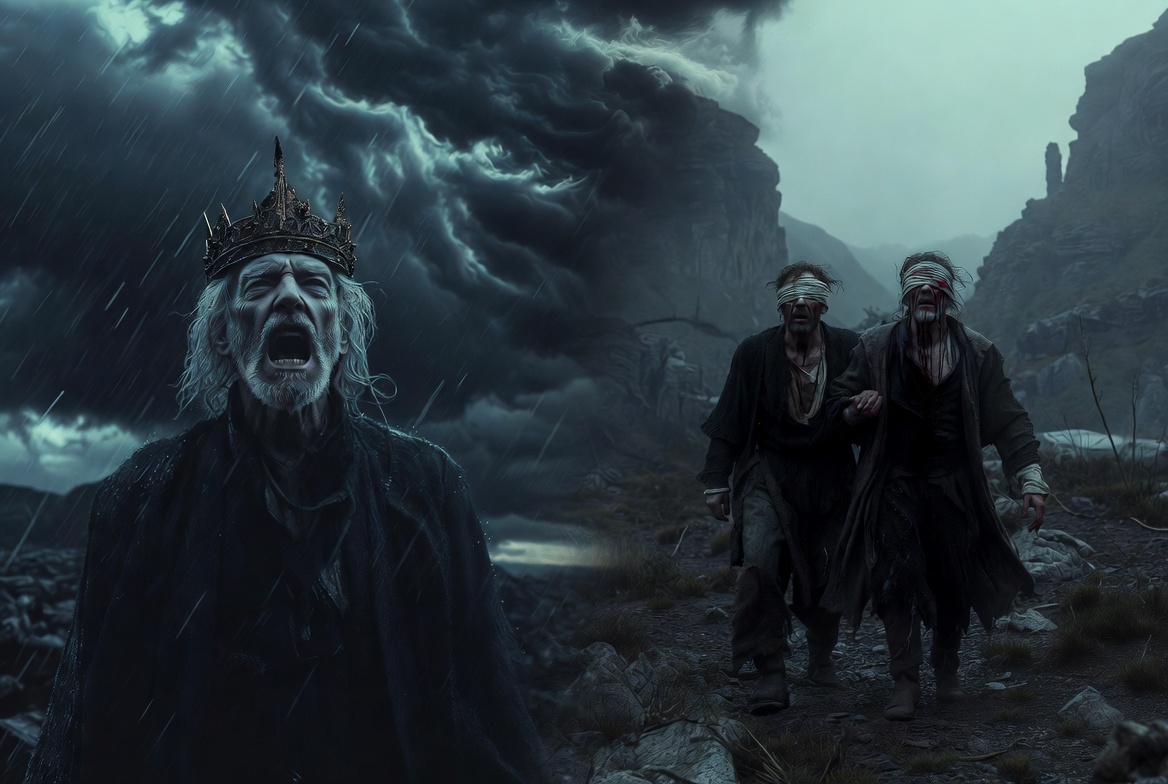
King Lear is Shakespeare’s most philosophically dense tragedy, weaving multiple interconnected themes.
The Ingratitude of Children and the Pain of Aging
At its heart, the play examines the heartbreak of parental expectations unmet and the vulnerability of old age. Lear’s demand for public love exposes how easily familial bonds can fracture when power dynamics shift. The suffering of both Lear and Gloucester underscores the cruelty of children toward aging parents — a theme painfully relevant in discussions of elder care and family estrangement today.
Appearance vs. Reality
Flattery, disguise, and self-deception dominate. Lear mistakes words for truth; Gloucester is deceived by forged letters. Kent and Edgar’s disguises, conversely, reveal true loyalty. The play repeatedly asks: what is authentic in a world of performance and power?
Madness and Insight
Lear’s descent into madness on the heath is not mere breakdown but a painful path to wisdom. Stripped of illusions, he sees society’s injustices clearly. Gloucester’s blinding is literal but leads to metaphorical sight: “I stumbled when I saw.” Shakespeare suggests that extreme suffering can pierce self-deception, though at terrible cost.
Justice, Fate, and the Gods
The play offers a bleak worldview. Characters invoke the gods, yet evil often prospers temporarily while the innocent (Cordelia) suffer. The absence of clear divine justice leads many critics to see King Lear as nihilistic or existential. Questions of cosmic order versus chaos remain unresolved, making the tragedy feel modern.
Power and Political Division
Lear’s division of the kingdom unleashes civil war and invasion. The play warns of the dangers of abdicating responsibility and fragmenting authority — echoes of political instability that resonate across centuries.
Comparison Table: Parallel Plots
| Aspect | Lear’s Story | Gloucester’s Story |
|---|---|---|
| Father Figure | Lear (misjudges daughters) | Gloucester (misjudges sons) |
| “Good” Child | Cordelia (honest, banished) | Edgar (loyal, exiled) |
| “Bad” Children | Goneril & Regan (flatterers) | Edmund (scheming bastard) |
| Suffering | Madness, storm | Blinding, despair |
| Insight Gained | Empathy for poor, humility | Patience, recognition of Edgar |
Shakespeare’s Craft – Language, Structure, and Dramatic Techniques
Shakespeare’s artistry in King Lear reaches its zenith through masterful integration of language, dramatic structure, and symbolic imagery that elevates the play far beyond a simple family drama.
Use of Verse, Prose, and the Fool’s Songs
The play shifts fluidly between blank verse (unrhymed iambic pentameter) for noble characters and moments of high emotion, and prose for madness, common speech, and the Fool’s earthy wisdom. Lear’s early speeches are commanding and formal; as his mind fractures, his language becomes fragmented, repetitive, and laced with raw exclamations. The Fool’s songs and riddles—often in rhyming couplets or simple prose—provide ironic counterpoint, delivering harsh truths in the guise of entertainment. This linguistic variety mirrors the play’s central theme of appearance versus reality and makes the dialogue feel dynamic and alive on stage.
The Storm as Metaphor and Pathetic Fallacy
The raging storm in Act 3 is one of Shakespeare’s most brilliant uses of pathetic fallacy, where nature reflects and amplifies human emotion. The thunder, wind, and rain externalize Lear’s inner chaos while also serving as a cosmic judgment on the breakdown of order. Lear addresses the elements directly (“Nor rain, wind, thunder, fire, are my daughters”), contrasting their impersonal cruelty with the deliberate betrayal of his children. The storm scenes are technically demanding in performance, requiring lighting, sound, and physical acting that convey both grandeur and vulnerability.
Irony and Dramatic Foreshadowing
Dramatic irony abounds: the audience knows Kent and Edgar’s true identities long before the characters do. Lear’s early curse on Cordelia (“Better thou / Hadst not been born than not t’have pleased me better”) tragically foreshadows her fate. Gloucester’s casual remark about Edmund’s conception plants seeds for the subplot’s treachery. Even small details, like the letter Edmund forges, reverberate throughout the action, demonstrating Shakespeare’s tight control over plot and theme.
Why the Ending Is So Devastating
Unlike Hamlet or Othello, King Lear denies the audience traditional catharsis or poetic justice. The deaths of Cordelia and Lear feel gratuitous and almost nihilistic. Shakespeare refuses to soften the blow with a surviving hero or moral restoration. The final image—Lear cradling his dead daughter—shatters any illusion of cosmic fairness. This uncompromising ending is precisely why the play feels so powerful and modern: it confronts the worst possibilities of human existence without offering easy comfort. Many scholars argue this bleakness reflects Shakespeare’s mature vision after the optimism of his earlier comedies and histories.
Critical Reception Through the Centuries
King Lear has provoked strong reactions from the moment it was written, evolving from controversy to universal acclaim as one of Shakespeare’s supreme achievements.
From Nahum Tate’s “Happy Ending” (1681) to 20th-Century Revival
Early audiences found the original ending too painful. Nahum Tate’s 1681 adaptation replaced the tragedy with a romantic comedy: Cordelia survives, marries Edgar, and Lear is restored to the throne. This version dominated the English stage for 150 years because it satisfied the Restoration demand for moral order and poetic justice. Only in the early 19th century did performers and critics begin returning to Shakespeare’s text, influenced by Romantic emphasis on emotion and individual suffering.
Key Scholarly Interpretations
A.C. Bradley’s influential Shakespearean Tragedy (1904) treated Lear as a classic tragic hero whose flaw (vanity) leads to catastrophe, emphasizing psychological realism. In the mid-20th century, Jan Kott’s Shakespeare Our Contemporary (1964) interpreted the play through an absurdist lens, linking it to Beckett’s Endgame and the horrors of World War II—portraying a world of meaningless cruelty. Feminist critics have examined the play’s treatment of patriarchy and the daughters’ rebellion, while psychoanalytic readings explore Lear’s regression to childlike dependence and the theme of father-daughter incestuous undertones. Modern scholarship often focuses on ecocritical angles (the storm as environmental chaos) and political readings about divided nations and authoritarian decline.
Why King Lear Is Considered Shakespeare’s Most Modern Tragedy
Its refusal of easy resolution, its psychological depth, and its unflinching look at aging, mental breakdown, and societal collapse make King Lear feel strikingly contemporary. Unlike the more structured tragedies of his earlier career, this play embraces ambiguity and chaos, resonating with existential and postmodern sensibilities. Many consider it the pinnacle of Shakespeare’s tragic vision precisely because it offers no comforting illusions.
Modern Relevance and Adaptations
Far from being a dusty museum piece, King Lear continues to speak powerfully to 21st-century concerns.
Why King Lear Still Speaks to 21st-Century Audiences
The play’s exploration of family estrangement, elder abuse, the burdens of caregiving, and the fragility of parental authority feels urgently relevant in an aging society. Lear’s division of the kingdom mirrors contemporary political polarization and the dangers of leaders clinging to or abruptly relinquishing power. Themes of madness and insight connect to modern conversations about mental health, while the play’s bleak worldview invites reflection on justice in an unpredictable world. Readers often find themselves confronting personal questions: How do we treat our aging parents? What happens when flattery replaces honesty in relationships? How do we respond when power structures crumble?
Notable Film, Stage, and Literary Adaptations
- Peter Brook’s 1971 film: A stark, existential vision starring Paul Scofield that emphasizes cruelty and desolation.
- Akira Kurosawa’s Ran (1985): A masterful Japanese transposition that relocates the story to feudal Japan with stunning visuals and epic battle scenes.
- Ian McKellen’s 2008 stage and 2009 TV version: Celebrated for its emotional depth and physical commitment to the role of Lear.
- Other notable versions include Anthony Hopkins in a 2018 Amazon film, and recent stage productions by directors like Sam Gold and Gregory Doran that highlight contemporary issues such as dementia and political division.
- Jean-Luc Godard’s experimental 1987 King Lear offers a meta-commentary on the play itself.
Literary adaptations and retellings, including novels that reimagine the story from the daughters’ perspectives, continue to expand the play’s cultural footprint.
Lessons for Today’s Readers
King Lear teaches the high cost of vanity and poor judgment, the value of honest love over flattery, and the necessity of empathy forged through suffering. It warns against dividing power irresponsibly and reminds us that true insight often comes only after everything else has been stripped away. For families, it prompts reflection on communication across generations; for leaders, it cautions against surrounding oneself with yes-men.
Why King Lear Remains Essential Reading
King Lear stands as Shakespeare’s most profound meditation on the human condition—on love, power, betrayal, madness, and the search for meaning in a chaotic world. Its complete plot reveals not just a family tragedy but a universal one, where the personal and political collapse into one another with devastating force.
In an age still grappling with generational conflict, political fragmentation, and the vulnerabilities of old age, the play offers no simple answers but demands that we confront difficult truths. Reading or watching King Lear is rarely comfortable, yet it is profoundly enriching. It challenges us to value honesty, practice humility, and recognize the shared fragility beneath all human authority.
For those new to the play, I strongly encourage experiencing the full text—preferably in a well-annotated edition such as the Arden, Folger, or Oxford Shakespeare—alongside a strong stage or film production. The emotional and intellectual rewards are immense.
If you enjoyed this King Lear synopsis and complete plot summary, explore more of Shakespeare’s timeless works on this site, including detailed guides to Hamlet, Macbeth, and Othello. Share your thoughts in the comments: Which character did you find most compelling? How does King Lear resonate with your own experiences of family or power?
Thank you for reading. Shakespeare’s greatest tragedy continues to illuminate the darkest corners of the human heart—and that is why it will never lose its power.
Frequently Asked Questions (FAQs)
What is the main plot of King Lear in simple terms? An aging king divides his kingdom based on his daughters’ declarations of love. When his honest youngest daughter refuses to flatter him, he banishes her. His elder daughters betray him, driving him into madness during a storm. A parallel subplot involves a nobleman betrayed by his illegitimate son. The play ends in tragic deaths with little redemption.
Is King Lear based on a true story? No. It draws from ancient British legends recorded in Holinshed’s Chronicles and an earlier anonymous play, but Shakespeare transformed the material into an original tragedy.
Why does King Lear go mad? Lear’s madness results from the cumulative shock of betrayal by his daughters, the loss of power and authority, exposure to the elements, and overwhelming guilt over his misjudgment of Cordelia. The storm scenes mark the peak of his psychological collapse, which paradoxically brings deeper insight.
What is the difference between the Quarto and Folio versions? The 1608 Quarto is longer and includes scenes cut from the 1623 Folio, while the Folio has revisions, different endings in some passages, and tighter pacing. Most modern editions blend both for a fuller text.
Does King Lear have a happy ending? No. Shakespeare’s original version is relentlessly tragic. Cordelia and Lear both die, and the surviving characters are left in despair. The 17th–18th century adaptation by Nahum Tate added a happy ending, but it is no longer performed.
Who is the real villain in King Lear? There is no single villain. Goneril, Regan, and Edmund drive much of the cruelty through ambition and resentment. However, Lear’s own vanity and poor judgment set the tragedy in motion. The play explores systemic moral failure rather than one evil character.
How long does it take to read King Lear? A careful reading typically takes 4–6 hours, depending on annotation use. Performances usually run 3–3.5 hours with interval.
Which is the best film version of King Lear? Many consider Peter Brook’s 1971 film with Paul Scofield or Akira Kurosawa’s Ran (1985) among the finest. Ian McKellen’s 2009 television version is also highly praised for accessibility and emotional power. Personal taste varies—some prefer traditional, others experimental approaches.
Is King Lear suitable for students? Yes, for senior high school and university level, with guidance. It contains mature themes including violence (blinding), madness, family betrayal, and death. Teachers often provide trigger warnings for graphic content and emotional intensity. Younger students may benefit from simplified summaries first.
How does King Lear compare to other Shakespeare tragedies? It is often ranked as Shakespeare’s greatest alongside Hamlet. While Hamlet focuses on individual indecision and revenge, King Lear examines generational conflict, societal breakdown, and cosmic injustice on a broader scale. Its bleakness exceeds most other tragedies, making it uniquely powerful and challenging.