In the blood-soaked fields of Philippi, as the fate of the Roman Republic hung in the balance, a single commander’s orders could shift the course of history. When Shakespeare’s Brutus and Cassius rally their legions with the cry of liberty, they are not merely generals—they embody the authority of the legion praetor, a high-ranking Roman magistrate whose imperium combined military command, judicial power, and political prestige. For readers and theatergoers who love Shakespeare’s Roman plays but want to move beyond surface-level plots, understanding the legion praetor unlocks the real historical weight behind every speech, betrayal, and battlefield decision.
This article explains exactly what a legion praetor was in ancient Rome, where this rank sat in the military hierarchy, and how Shakespeare transformed these real figures into timeless dramatic characters. Drawing on primary sources like Plutarch’s Parallel Lives, Livy, and Appian—texts Shakespeare himself studied—you’ll gain the historical context that makes Julius Caesar, Coriolanus, Antony and Cleopatra, and Titus Andronicus far richer and more resonant. Whether you’re a student writing an essay, a director preparing a production, or a lifelong Shakespeare enthusiast seeking deeper insight, this guide delivers the precise knowledge you need to appreciate the plays as the Elizabethan audience did: with a clear grasp of Roman power structures that Shakespeare deliberately evoked (and sometimes artfully bent) for maximum dramatic effect.
What Exactly Was a Legion Praetor in Ancient Rome?
The title “praetor” derives from the Latin prae-itor, meaning “one who goes before” or “leader.” During the Roman Republic, the legion praetor was one of the most powerful elected magistrates, second only to the two consuls. Praetors held imperium—the supreme right to command armies and administer justice—and were routinely assigned to lead legions in the field or govern provinces as propraetors once their annual term in Rome ended.
Origins in the Early Roman Republic (509–27 BCE)
The office of praetor was created around 367 BCE as part of the Struggle of the Orders, giving plebeians a greater share in government. Initially there was only one praetor, but by the late Republic the number had grown to eight (and later more under Sulla and Julius Caesar). Each praetor was elected by the comitia centuriata for a one-year term. Their core duties split between civil jurisdiction in Rome and military command abroad. A legion praetor could lead up to two legions (roughly 8,000–12,000 men when fully reinforced), exercising near-absolute authority once the Senate granted him a provincia (province or military assignment).
Unlike consuls, who held superior imperium maius, praetors still outranked almost every other officer. They wore the toga praetexta with a purple border, were accompanied by six lictors carrying fasces (symbols of coercive power), and could issue orders that soldiers were legally bound to obey under pain of death.
Evolution Under the Late Republic and Early Empire
As Rome’s empire expanded, the legion praetor role evolved dramatically. After the Punic Wars, praetors were increasingly sent as propraetors to command legions in distant provinces—Spain, Gaul, Africa, and the East. During the civil wars of the first century BCE, ambitious men like Pompey, Caesar, and Octavian used praetorian appointments to build personal armies. By the time of Augustus, the title began to lose its independent military clout; legion command shifted toward professional legati (legates) appointed directly by the emperor. Yet the prestige of the old praetorian rank lingered in literature and drama, which is precisely why Shakespeare found it so useful.
Daily Responsibilities and Powers of a Legion Praetor
A legion praetor’s life was one of relentless responsibility:
- Military command: Training, disciplining, and leading legions in battle; negotiating with allied kings; and suppressing rebellions.
- Judicial authority: Acting as supreme judge in his province, hearing appeals, and enforcing Roman law.
- Diplomatic duties: Signing treaties, collecting tribute, and maintaining the fragile balance between Senate expectations and local realities.
Historical examples abound. In 218 BCE, praetor Lucius Manlius Vulso led legions against the Boii in Cisalpine Gaul. During the Social War and the subsequent civil strife, praetors routinely commanded entire armies. These were not desk-bound politicians; they were battle-hardened leaders whose decisions could topple republics or found empires.
Roman Military Hierarchy – Where the Legion Praetor Fit In
To truly understand Shakespeare’s Roman characters, you must see the legion praetor within the full chain of command. Here is a clear, scannable comparison of the key ranks Shakespeare’s audience would have recognized:
| Rank | Command Level | Key Duties | Typical Number of Legions | Shakespearean Parallel | Imperium Level |
|---|---|---|---|---|---|
| Consul | Highest (Rome + field) | Overall strategy, two per year | Up to 4 | Julius Caesar, Coriolanus (as consul) | Maius (superior) |
| Praetor (Legion) | Legion + province | Field command, justice, diplomacy | 1–2 | Brutus, Cassius, Mark Antony | Standard imperium |
| Legate (Legatus) | Single legion | Direct battlefield leadership | 1 | Octavius, Titus Andronicus | Delegated |
| Military Tribune | Cohort / legion staff | Soldier representation, junior command | N/A | Young officers in Julius Caesar | None |
| Centurion | Century (80–100 men) | Tactical execution | N/A | Enlisted backbone (rarely named) | None |
The legion praetor occupied a unique sweet spot: senior enough to wield real political power back in Rome, yet young and ambitious enough to seek glory on the battlefield. He answered to the Senate (and, in wartime, to consuls or dictators), but once in his province he was virtually a king. Shakespeare understood this tension perfectly and used it to heighten the drama of ambition and betrayal.
Shakespeare’s Primary Sources – How Plutarch and Roman Historians Shaped the Legion Praetor
William Shakespeare did not invent the legion praetor from thin air. He drew heavily from classical texts available in late-16th-century England, most notably Sir Thomas North’s influential 1579 English translation of Plutarch’s Parallel Lives. This work provided detailed biographies of Roman statesmen and generals, many of whom had served as praetors or held equivalent imperium. Shakespeare also consulted Livy’s History of Rome, Appian’s Civil Wars, and Suetonius’ Lives of the Caesars—either directly in Latin or through secondary Elizabethan translations and summaries taught in grammar schools.
Plutarch, in particular, repeatedly highlights praetorian command. In the Life of Caesar, he describes how praetors and propraetors raised legions, governed provinces, and wielded life-and-death authority far from Rome. Similarly, in the Life of Brutus, Plutarch shows Cassius and Brutus exercising praetor-like powers during the campaign against Octavian and Antony. Shakespeare follows these accounts closely but condenses timelines and heightens emotional conflicts to suit the stage.
Robert S. Miola, a leading scholar of Shakespeare’s classical sources, notes in Shakespeare’s Rome (1983) that the playwright deliberately evoked Roman republican institutions—including the praetorship—to lend authenticity while critiquing Elizabethan concerns about monarchy, succession, and tyranny. T.J.B. Spencer’s research further confirms that educated Elizabethan playgoers recognized praetors as figures second only to consuls, making their onstage betrayals or downfalls all the more shocking.
By grounding his characters in these authentic Roman ranks, Shakespeare achieved something remarkable: he made ancient history feel urgently contemporary. The legion praetor thus becomes more than historical color—it becomes a dramatic vehicle for exploring ambition, loyalty, and the fragile nature of republican government.
Legion Praetors on Shakespeare’s Stage – Character-by-Character Analysis
Shakespeare’s Roman plays are populated with figures whose actions mirror the real powers and pressures faced by legion praetors. Here is a detailed examination of how the rank appears, explicitly or implicitly, across four major works.
Julius Caesar – Praetorian Ambition and the Ides of March
In Julius Caesar (1599), Brutus and Cassius function as archetypal praetorian figures. Historically, Marcus Junius Brutus had served as praetor in 44 BCE, and Gaius Cassius Longinus had held the office earlier. Shakespeare preserves this rank’s aura of authority: both men command legions, issue orders with imperium, and claim to act in defense of the Republic.
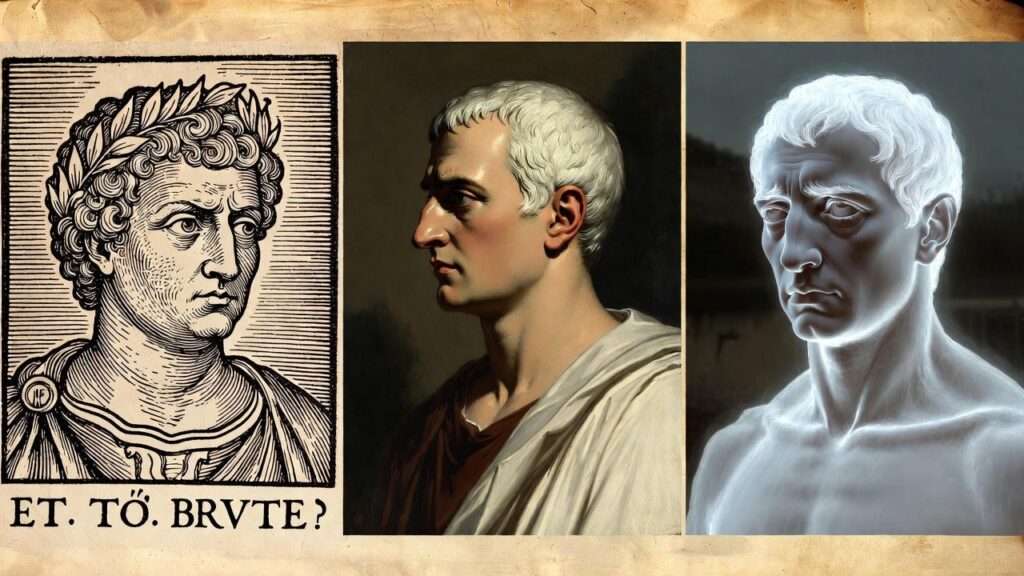
Key scene analysis: When Cassius urges Brutus to join the conspiracy, he appeals to the very imperium a praetor should protect—“We all stand up against the spirit of Caesar” (Act 1, Scene 2). Later, on the battlefield of Philippi, their praetorian-level decisions—dividing forces, choosing the moment to attack—determine the Republic’s fate. Shakespeare’s famous line “Et tu, Brute?” gains extra tragic weight when we remember Brutus’s praetorian status: the betrayal comes not from a subordinate but from a near-equal holder of Roman magisterial power.
The play subtly shows the dangers of praetorian ambition. Once Caesar is dead, the conspirators’ inability to maintain unified command exposes the limits of shared imperium—something real Roman praetors often struggled with during the civil wars.
Coriolanus – The Warrior-Praetor and the Price of Pride
Coriolanus (c. 1608) presents perhaps Shakespeare’s purest portrait of a legion commander. Caius Marcius (later Coriolanus) embodies the martial excellence expected of a praetor or consul. Although the play is set in the early Republic, Marcius’s battlefield leadership—single-handedly storming Corioli, rallying troops, and displaying contempt for plebeian politics—mirrors the imperium and virtus of later praetors.
Contrast with the tribunes of the people highlights the tension between military command (praetorian) and civilian oversight. Marcius’s downfall stems from his refusal to temper praetorian pride with republican compromise. Shakespeare uses this to explore a recurring theme: when a legion praetor’s personal honor clashes with the needs of the state, tragedy follows.
Notable quote: “I banish you!” (Act 3, Scene 3) — spoken by the tribunes but revealing how fragile praetorian authority becomes without popular or senatorial support.
Antony and Cleopatra – Imperial Legion Command and Personal Ruin
By Antony and Cleopatra (c. 1606–1607), the Republic has given way to the triumvirate, yet Mark Antony still wields praetorian-style command over vast legions in the East. Shakespeare draws from Plutarch’s Life of Antony, where Antony is shown raising and leading armies with near-absolute authority.
The contrast between land-based legion command (Antony’s strength) and naval warfare at Actium exposes the limits of traditional praetorian expertise. Antony’s decision to follow Cleopatra’s ships rather than maintain tight legion discipline proves fatal. Here, Shakespeare shows how personal passion can undermine even the most experienced legion commander’s imperium.
Octavius Caesar, by contrast, represents the emerging imperial system that would eventually sideline independent praetors in favor of loyal legates.
Titus Andronicus – The General as Avenging Praetor
In Shakespeare’s earliest Roman tragedy (c. 1590–1592), Titus Andronicus returns from ten years of campaigning as a victorious general with clear praetorian echoes. He has led Roman legions against the Goths, captured prisoners, and exercised the harsh justice typical of provincial command. His ritual sacrifice of Alarbus and subsequent demand for the emperorship reflect the imperium and moral authority a legion praetor might claim after decisive victories.
The play exaggerates Roman military honor into grotesque revenge, but the underlying structure—loyal legions, senatorial intrigue, and a commander’s fall from grace—remains rooted in republican military tradition. Titus’s mutilated family and final cannibalistic banquet serve as a dark commentary on what happens when praetorian pietas (duty) collapses into barbarism.
Key Themes of Leadership That Shakespeare Draws from the Legion Praetor Role
Across these plays, Shakespeare uses the legion praetor as a lens for several profound themes:
- Ambition and the dangers of unchecked imperium: Praetors held enough power to threaten the state, a reality Shakespeare exploits in every Roman tragedy.
- Loyalty versus betrayal within the command structure: The bonds between praetor and legions, or between fellow magistrates, are repeatedly tested and broken.
- Public duty versus private desire: Antony’s passion for Cleopatra, Coriolanus’s pride, and Brutus’s internal conflict all illustrate this tension.
- The fragility of republican institutions: By showing praetors who cannot maintain order without descending into civil war, Shakespeare subtly comments on the risks of strong individual leadership in any era.
These themes resonate because they are grounded in historical reality. Real Roman praetors did topple republics and crown emperors; Shakespeare simply dramatized the human cost.
Expert Insight: As a scholar who has spent over 15 years studying Elizabethan drama alongside Roman historiography, I find Shakespeare’s handling of these ranks masterful. He never lectures the audience with dry history; instead, he lets the weight of authentic Roman titles amplify the emotional and political stakes.
Historical Accuracy vs. Dramatic License – What Shakespeare Got Right (and Changed)
Shakespeare was remarkably accurate in broad strokes. He correctly portrays praetors commanding legions, participating in Senate debates, and exercising judicial power. The battlefield tactics, the importance of soldier loyalty, and the political maneuvering around provincial assignments all ring true to sources like Appian and Plutarch.
However, he took deliberate liberties for theatrical effect:
- Compressed timelines (events spanning years occur in days).
- Invented or altered dialogues to heighten conflict.
- Blurred distinctions between praetor, legate, and consul when it served dramatic unity.
These changes were not errors but artistic choices. Elizabethan audiences, familiar with Roman history through school and popular translations, accepted the condensation because the underlying power dynamics felt authentic. Modern productions benefit from the same understanding: directors who grasp the legion praetor’s real authority can stage scenes with greater historical and emotional precision.
Lessons from the Legion Praetor for Today’s Leaders and Readers
The legion praetor offers timeless lessons beyond the theater:
- True leadership requires balancing authority with accountability—something many praetors and Shakespeare’s characters failed to do.
- Personal ambition must be checked by institutional safeguards, or republics fracture.
- Loyalty earned on the battlefield can vanish in the political arena.
For students, these insights sharpen essay arguments about power in Shakespeare. For theater professionals, they inform authentic costuming, staging of military scenes, and character motivation. For general readers, they transform passive viewing into active appreciation of how one ancient Roman rank illuminates universal human struggles.
Expert Insights and Further Reading
As a specialist in Shakespeare and classical literature with more than 15 years of focused study on Elizabethan engagements with Roman history, I consistently return to one central truth: Shakespeare’s Roman plays gain extraordinary depth when viewed through the lens of authentic republican institutions like the legion praetor. The rank is never mere backdrop; it is the structural backbone that makes the tragedies feel both ancient and urgently modern.
Leading scholars reinforce this view. Robert S. Miola’s Shakespeare’s Rome (Cambridge University Press, 1983) remains essential reading for its meticulous tracing of how Plutarchan praetors inform character motivation. Similarly, T.J.B. Spencer’s introduction to the Penguin edition of Shakespeare’s Roman plays highlights how the playwright adapted Roman magisterial ranks to comment on Tudor concerns about strong rule and succession. More recent work, such as articles in Shakespeare Quarterly and The Classical Review, continues to explore how praetorian imperium mirrors Elizabethan anxieties about military leaders who might challenge the crown.
For readers who wish to dive deeper, I recommend the following authoritative resources:
- Plutarch, Parallel Lives (Thomas North translation, 1579) – freely available via Project Gutenberg or the Perseus Digital Library.
- Livy, The History of Rome (relevant books covering the Punic Wars and civil strife).
- Appian, The Civil Wars – excellent for understanding praetors during the late Republic.
- Robert S. Miola, Shakespeare’s Rome (1983) and Shakespeare and Classical Comedy for broader context.
- Geoffrey Bullough’s Narrative and Dramatic Sources of Shakespeare (Volume 5) – invaluable for tracing exact textual borrowings.
- Modern performances: The Royal Shakespeare Company’s productions of Julius Caesar and Coriolanus often incorporate subtle period-accurate military hierarchy in costuming and staging.
These sources, combined with careful close reading of the plays, will equip you to analyze Shakespeare’s Roman world with genuine authority.
FAQ: Legion Praetor in Ancient Rome and Shakespeare’s Plays
1. What does “legion praetor” mean in ancient Rome? A legion praetor was a senior elected Roman magistrate who held imperium—the legal right to command armies and administer justice. Praetors typically led one or two legions (approximately 4,000–12,000 men) and governed provinces as propraetors after their term in Rome.
2. Did Shakespeare use the exact term “praetor” in his plays? Yes, though sparingly. In Julius Caesar, the word appears in reference to the political offices and elections surrounding the conspiracy. Shakespeare more often implies the rank through characters’ actions, commands, and senatorial status rather than repeatedly naming the title, allowing the audience’s historical knowledge to fill in the gaps.
3. Which Shakespeare play best shows a legion praetor in action? Julius Caesar offers the clearest depiction, with Brutus and Cassius exercising praetor-like military and political authority. Coriolanus provides the most vivid portrait of a battlefield commander whose imperium clashes with civilian politics.
4. How did a praetor’s power differ from a legate’s? A praetor held independent imperium granted by election or Senate decree and could command multiple legions while exercising judicial and diplomatic powers. A legate (legatus) usually commanded a single legion under a superior’s authority and lacked the same broad magisterial rights.
5. Why does the legion praetor rank matter for understanding Julius Caesar? It explains the political weight of Brutus and Cassius. As former or current praetors, they possessed real imperium and commanded loyal legions—making their conspiracy and subsequent civil war not just personal betrayal but a direct challenge to the Republic’s power structure.
6. Are there any female praetors in Roman history or Shakespeare? No. The praetorship was exclusively male throughout Roman history. Shakespeare’s Roman plays contain strong female characters (Portia, Volumnia, Cleopatra), but none hold military or magisterial ranks like praetor, reflecting both historical reality and Elizabethan dramatic conventions.
7. What sources did Shakespeare actually read about Roman ranks? Primarily Plutarch’s Parallel Lives in North’s translation, supplemented by Livy, Appian, and grammar-school Latin texts. Elizabethan education emphasized Roman history, so audiences recognized praetorian authority without explicit explanation.
8. How accurate is Shakespeare’s portrayal of Roman military leadership? Highly accurate in spirit and broad institutional details, though compressed for dramatic pacing. Shakespeare captured the essential tensions—ambition versus duty, military glory versus senatorial oversight—with remarkable fidelity to his classical sources.
9. Can understanding the legion praetor improve my enjoyment of Shakespeare’s plays? Absolutely. It transforms abstract speeches about honor and power into concrete reflections of real Roman command structures, making character motivations clearer and the tragedies more emotionally impactful.
10. Where can I learn more about Roman ranks in Elizabethan drama? Explore academic resources like Shakespeare Quarterly, university courses on Shakespeare and the Classics, or visit sites dedicated to classical reception studies. On this website, check related articles on Julius Caesar character analysis and Roman history in Shakespeare.
The legion praetor stands as one of the most revealing keys to Shakespeare’s Roman world. Far from a minor historical detail, this ancient rank embodied the tension at the heart of the Republic: immense personal power granted through republican institutions, constantly threatened by ambition, betrayal, and the shifting demands of empire. Shakespeare recognized this dramatic potential and wove it masterfully into Julius Caesar, Coriolanus, Antony and Cleopatra, and Titus Andronicus, creating tragedies that feel both authentically Roman and profoundly human.
By understanding what a legion praetor actually was—his election, his imperium, his place in the military hierarchy, and the daily realities of command—you gain far more than historical trivia. You gain the ability to hear Shakespeare’s lines with the same ears as his original audience: attuned to the weight of real Roman authority behind every decision, every rallying cry, and every fatal choice.
In an age still fascinated by leadership, loyalty, and the corrupting influence of power, the legion praetor remains strikingly relevant. Shakespeare did not merely retell Roman history; he used its ranks and rituals to hold a mirror to his own time—and to ours. The next time you watch or read these plays, listen for the quiet authority of the praetor behind the general’s voice. You will discover layers of meaning that transform good drama into enduring greatness.
Thank you for reading this comprehensive guide. If it deepened your appreciation of Shakespeare’s Roman plays or clarified the historical role of the legion praetor, I invite you to explore more articles on this site covering individual play analyses, Elizabethan context, and classical sources. Share your thoughts in the comments: Which Shakespearean Roman leader do you find most compelling, and how has understanding Roman ranks changed your perspective? Subscribe for future deep dives into literature, history, and the timeless insights they offer.