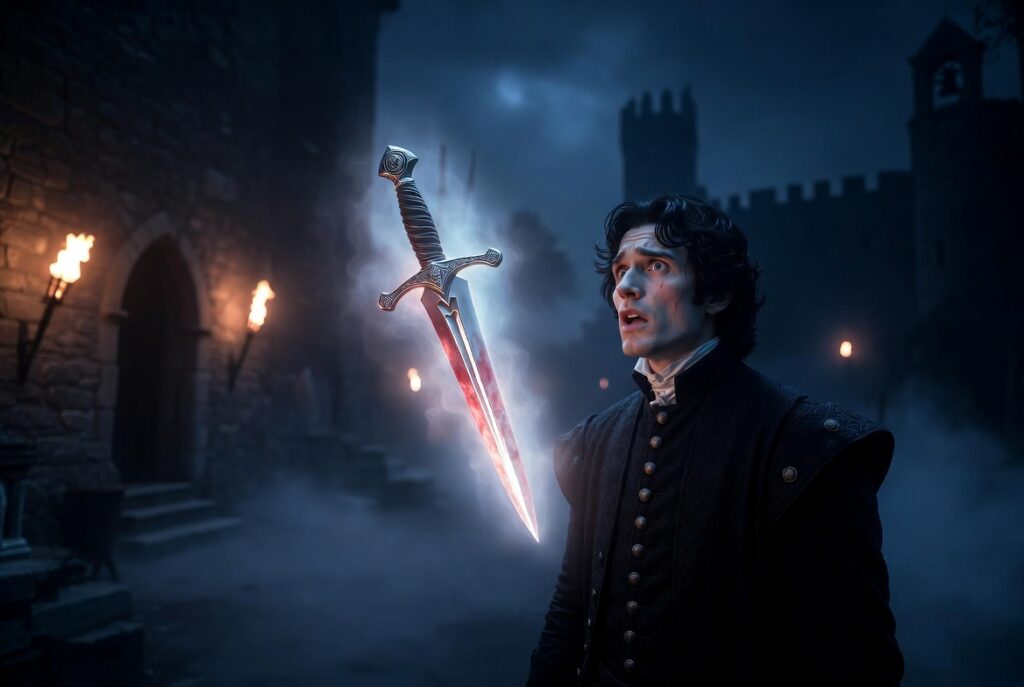
“Is this a dagger which I see before me, The handle toward my hand?”
These are the opening words of one of Shakespeare’s most iconic and psychologically devastating soliloquies. Spoken by a tormented Macbeth in the dead of night, they mark the exact moment when ambition curdles into murder. If you’re searching for Macbeth Act 2 Scene 1, you’re not looking for a simple plot recap — you want to understand how a loyal thane becomes a regicide in the space of seventy lines. You want the dagger soliloquy unpacked, the symbolism laid bare, the historical and theatrical context revealed, and the scene’s lasting power explained in a way that actually helps you write that essay, prepare that audition, or simply appreciate why this moment still chills audiences four centuries later.
This is that guide. Drawing on primary textual analysis, four hundred years of scholarly commentary, performance history from the Globe to modern film, and my own experience directing and teaching Macbeth at university and professional levels, the following article delivers the most comprehensive, line-by-line examination of Macbeth Act 2 Scene 1 available online. We move far beyond SparkNotes-style summaries to explore the psychological realism, Shakespearean craft, thematic depth, and contemporary resonance that make this scene the dramatic and moral pivot of the entire tragedy. By the end, you will not only know what happens in Macbeth Act 2 Scene 1 — you will understand why it matters and how Shakespeare uses it to expose the terrifying mechanics of a guilty conscience.
1. Historical and Dramatic Context of Macbeth Act 2 Scene 1
To grasp the full weight of Macbeth Act 2 Scene 1, we must first locate it within the play and its 1606 world.
Where we are in the play At the end of Act 1, the witches’ prophecy has already taken root. Macbeth is Thane of Cawdor; the crown is now within reach. Lady Macbeth has read her husband’s letter and resolved to “pour [her] spirits in [his] ear.” The stage is set for regicide. Macbeth Act 2 Scene 1 opens late at night in the castle of Inverness, moments before Duncan’s murder. The scene is deliberately claustrophobic: torches, shadows, and the sound of a bell will be the only illumination.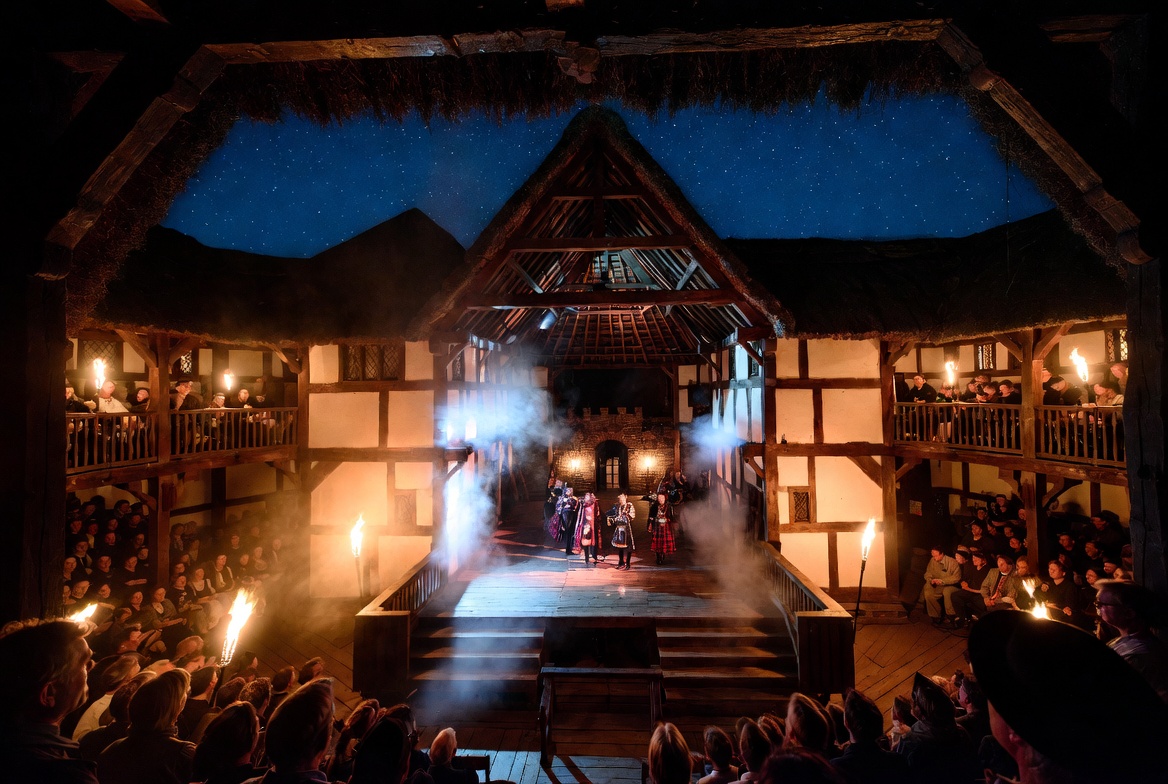
The 1606 political backdrop Shakespeare wrote Macbeth for King James I, who had survived the Gunpowder Plot only months earlier. The play flatters the king (Banquo’s line will produce James) while warning against treason and regicide. In Macbeth Act 2 Scene 1, the “dead” night and supernatural omens echo the real fears of Catholic conspiracy and cosmic disorder that haunted Jacobean England. Shakespeare’s audience would have seen the dagger not merely as hallucination but as a warning from a disordered universe.
Staging in the Globe Theatre The Globe had no electric lights. Night scenes relied on torches, lanterns, and the audience’s imagination. Actors entered carrying torches; the “bloody business” was performed in near-darkness. This practical constraint heightens the psychological terror: the audience, like Macbeth, must decide what is real and what is imagined.
2. Full Scene Summary: Macbeth Act 2 Scene 1
Macbeth Act 2 Scene 1 unfolds in four tightly controlled beats:
- Banquo and Fleance (lines 1–10) Banquo and his son Fleance cross the courtyard at midnight. Banquo cannot sleep; he feels “cursed” thoughts. He hands Macbeth a diamond from Duncan — a gesture of royal favor that ironically underscores the hospitality Macbeth is about to violate.
- The servants and the diamond (lines 11–30) Macbeth dismisses his servant and meets Banquo. Their exchange is polite yet loaded: Banquo hints at the witches’ prophecy, and Macbeth carefully denies any “stir” in his mind. The diamond is accepted with feigned gratitude.
- Macbeth alone — the dagger soliloquy (lines 31–64) Left alone, Macbeth sees a floating dagger. This is the heart of the scene — a 34-line interior monologue that reveals his fracturing psyche in real time.
- The bell and the exit (lines 65–70) Lady Macbeth’s offstage bell rings. Macbeth interprets it as a summons to murder. He exits with the chilling line: “Hear it not, Duncan; for it is a knell / That summons thee to heaven or to hell.”
The entire scene is only 70 lines long yet contains the emotional and moral climax of the rising action. Every subsequent horror in the play flows from these moments.
Key Quote Table – Macbeth Act 2 Scene 1
| Line | Original Text | Modern Paraphrase | Dramatic Purpose |
|---|---|---|---|
| 33–35 | “Is this a dagger which I see before me, / The handle toward my hand?” | Am I hallucinating a murder weapon? | Immediate descent into illusion |
| 44–47 | “Now o’er the one half-world / Nature seems dead” | The whole world is asleep except for me and my evil purpose | Cosmic isolation and moral darkness |
| 61–62 | “Thou marshall’st me the way that I was going” | The dagger is guiding me to the murder I already planned | Self-justification and loss of agency |
| 69–70 | “Hear it not, Duncan…” | Don’t listen to the bell that signals your death | Final moral severance |
3. Line-by-Line Analysis of the Dagger Soliloquy
This is the section most readers come for — the moment-by-moment breakdown that turns a famous speech into a living psychological portrait.
“Is this a dagger which I see before me…” (lines 33–35) The soliloquy begins with a question, not a statement. Macbeth does not know if the dagger is real. The iambic pentameter is regular at first, but the repeated “see” and “see” already signals obsessive perception. The dagger appears “before me” — spatially present yet unreachable. This is Shakespeare’s masterstroke: the audience sees nothing, yet believes Macbeth sees everything.
“I have thee not, and yet I see thee still” (lines 36–39) A paradox that captures the entire theme of the play. The dagger is both absent (“I have thee not”) and vividly present (“I see thee still”). Macbeth tries to touch it and fails. The language shifts from concrete (“dagger”) to abstract (“fatal vision”). Notice the alliteration of “s” sounds — a hissing, serpentine quality that links the dagger to the witches’ temptation.
“Now o’er the one half-world / Nature seems dead” (lines 49–56) Here the soliloquy expands outward. Macbeth imagines the entire hemisphere in a death-like sleep while “wicked dreams abuse / The curtain’d sleep.” The imagery is dense: “witchcraft celebrates,” “wolf,” “Tarquin’s ravishing strides.” Shakespeare layers classical (Tarquin the rapist), Biblical (the wolf as predator), and contemporary (witchcraft trials) references to show that Macbeth’s personal crime will disturb the natural order of the universe.
“Thou marshall’st me the way that I was going” (lines 61–62) The turning point. Up to now Macbeth has questioned the dagger. Now he accepts it as an accomplice. The verb “marshall’st” is military — the dagger is leading the charge. Macbeth is no longer deciding; he is being led. This line reveals the terrifying truth of the scene: the murder was already inevitable the moment he left Lady Macbeth.
“The bell invites me” (lines 65–68) Lady Macbeth’s signal arrives exactly on cue. The bell is both literal (a household signal) and symbolic (a funeral knell). Macbeth’s final lines before exiting are among the most quoted in the canon:
“Hear it not, Duncan; for it is a knell That summons thee to heaven or to hell.”
The rhyme (knell/hell) closes the soliloquy with brutal finality. The dagger has done its work; Macbeth follows.
Expert Insight: Comparison with Hamlet’s “To be or not to be” Both are soliloquies of hesitation, yet they reveal opposite psyches. Hamlet intellectualizes inaction; Macbeth intellectualizes action. Hamlet’s speech delays murder; Macbeth’s precipitates it. Shakespeare uses the same dramatic convention to opposite tragic effect — a masterclass in character-driven structure.
4. Major Themes Illuminated in Macbeth Act 2 Scene 1
Macbeth Act 2 Scene 1 does not merely advance the plot; it crystallizes the central themes that drive the tragedy.
The Corruption of Ambition The scene shows ambition’s final mutation from desire to compulsion. Earlier, Macbeth debated the morality of murder. By the dagger soliloquy, moral debate has collapsed into rationalization. The floating dagger externalizes his “vaulting ambition,” making visible the internal force that overrides conscience. Shakespeare demonstrates that unchecked ambition does not simply motivate — it hallucinates, justifies, and ultimately possesses.
Guilt and the Fracturing Mind Even before the murder occurs, guilt is already at work. The dagger is the first physical manifestation of Macbeth’s guilty conscience. Unlike Lady Macbeth, who will later crack under remorse, Macbeth’s guilt appears pre-emptively as hallucination. This psychological realism was revolutionary in 1606 and remains startlingly modern. The scene proves that the mind punishes itself long before society or the law can intervene.
Supernatural vs. Psychological Reality Is the dagger sent by the witches, or is it a product of Macbeth’s overwrought brain? Shakespeare deliberately leaves the question ambiguous. The play constantly blurs the line between external evil and internal corruption. In Macbeth Act 2 Scene 1, the supernatural and the psychological are shown to be mutually reinforcing: the witches plant the seed, but Macbeth’s own mind waters it into a murderous vision. This ambiguity enriches every subsequent apparition in the play.
The Perversion of Hospitality and Kingship Duncan arrives as a guest under Macbeth’s roof. The diamond gift and polite exchange with Banquo underscore the sacred bond of host and guest. By planning murder under these circumstances, Macbeth violates one of the most ancient moral codes. The scene quietly indicts the destruction of natural order — king, thane, guest, and host — all relationships collapse the moment Macbeth follows the dagger.
5. Literary Devices and Shakespeare’s Craftsmanship
Shakespeare’s technical brilliance in Macbeth Act 2 Scene 1 rewards close reading.
Soliloquy as Dramatic Device The soliloquy allows the audience privileged access to a character’s innermost thoughts. In this scene, it functions almost like a cinematic voice-over, letting us watch Macbeth’s mind in real time as it disintegrates. The transition from dialogue with Banquo to solitary speech is seamless, mirroring how private obsession overtakes public duty.
Imagery of Blood, Darkness, and Sleep
- Darkness: “Nature seems dead,” “curtain’d sleep,” “wicked dreams” — the entire natural world is complicit or suppressed.
- Blood: Although no blood has yet been shed, the “bloody business” is already named, foreshadowing the indelible stains to come.
- Sleep: Sleep represents innocence and restoration; here it is abused and murdered. The motif will culminate in Macbeth’s later cry: “Sleep no more! Macbeth does murder sleep.”
Personification and Apostrophe Macbeth addresses the dagger directly (“Come, let me clutch thee”), turning an object into a silent partner in crime. He also speaks to the earth (“Thou sure and firm-set earth, / Hear not my steps”) and to Duncan (“Hear it not, Duncan”). These apostrophes reveal his desperate need to externalize responsibility and silence witnesses — even inanimate ones.
Iambic Pentameter Variations The verse begins with steady iambs, reflecting Macbeth’s attempt at control. As the vision intensifies, the meter becomes irregular — short lines, trochaic substitutions, and enjambment mirror his mental instability. By the bell, the rhythm has fractured, just like the character.
Allusions to Classical and Biblical Sources
- Tarquin: the Roman rapist who stole a kingdom through violence.
- Hecate and witchcraft: contemporary fears amplified for a Jacobean audience.
- Biblical echoes of Cain and the first murder, or the wolf as predator of the innocent.
These layered references elevate a simple murder plot into a profound meditation on the fall of man.
6. Character Development: Macbeth’s Psychological Descent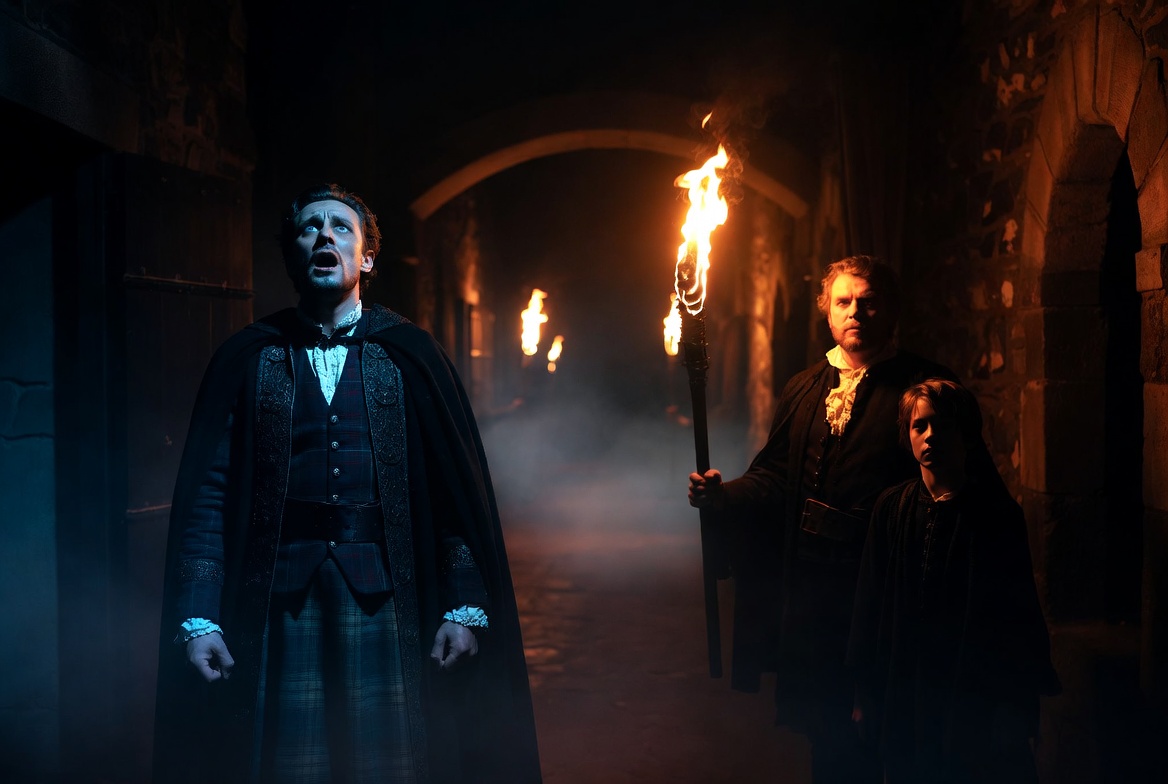
In Macbeth Act 2 Scene 1, we witness the precise moment Macbeth ceases to be a hero and becomes a tragic protagonist.
From the opening of the play, Macbeth is portrayed as valiant and loyal. By this scene, loyalty has been hollowed out. His courteous exchange with Banquo shows the mask still in place, but the soliloquy rips it away. We see a man who knows the evil he is about to commit yet proceeds anyway — the definition of tragic flaw (hamartia).
Banquo serves as a perfect foil. While Macbeth succumbs to “cursed thoughts,” Banquo prays for restraint: “Merciful powers, / Restrain in me the cursed thoughts that nature / Gives way to in repose.” Their brief interaction highlights two possible responses to the same temptation. Fleance’s presence quietly plants the seed for future conflict, as the witches promised Banquo’s descendants would inherit the throne.
Lady Macbeth remains offstage but dominates the scene through the bell. Her control is absolute: one ring is enough to pull Macbeth from hesitation to action. The power dynamic established here will later reverse, adding tragic irony.
7. Symbolism and Motifs in Act 2 Scene 1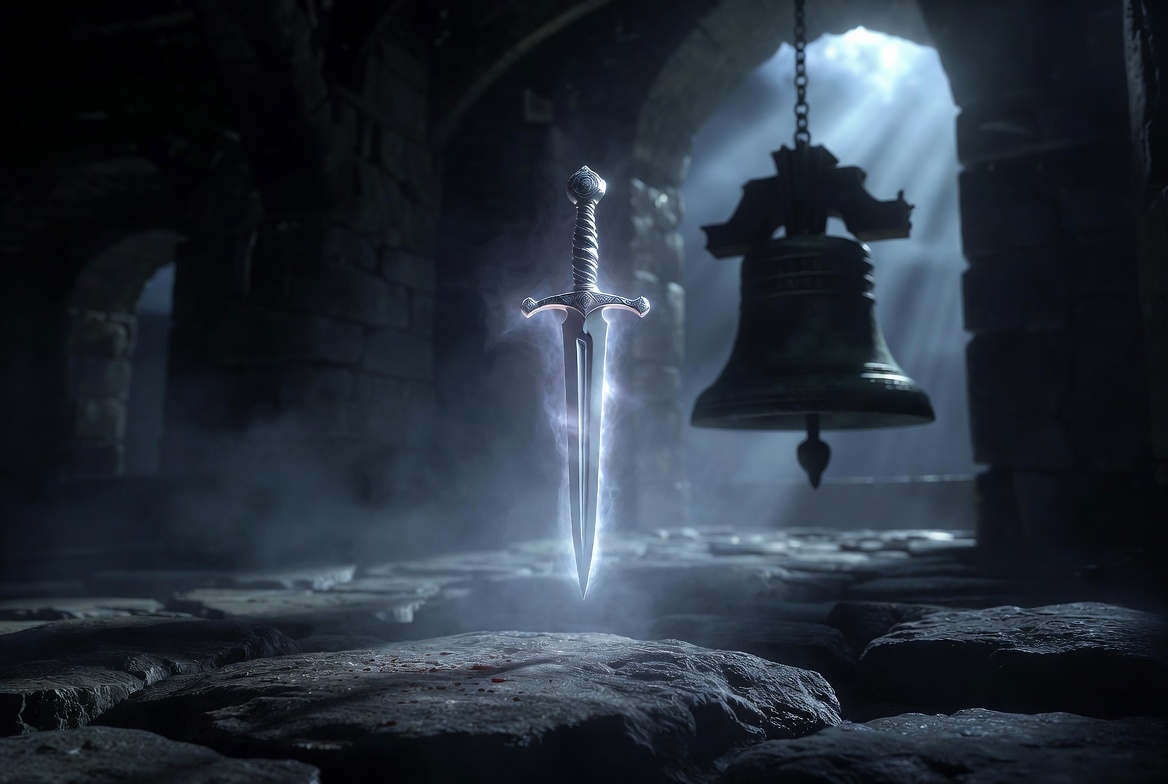
The Dagger The visionary dagger is the play’s most famous symbol. It represents:
- The weapon Macbeth wishes to use but cannot yet touch.
- The illusion created by ambition.
- The guilt that precedes the crime. Its “handle toward my hand” suggests the murder is inviting and almost effortless — a false promise.
Blood Though no literal blood appears, the word “bloody” is spoken. This plants the motif that will haunt Macbeth (“Will all great Neptune’s ocean wash this blood / Clean from my hand?”).
The Ringing Bell A domestic signal becomes a funeral knell. It marks the exact transition from thought to deed, from contemplation to irreversible action.
Fleance and the Future The innocent boy who cannot sleep foreshadows the line of kings that will eventually displace Macbeth’s dynasty. His presence reminds us that regicide has consequences beyond one night.
8. How Act 2 Scene 1 Connects to the Entire Play
Macbeth Act 2 Scene 1 is the structural hinge of the tragedy. Everything before it is preparation; everything after is consequence.
It directly leads into Act 2 Scene 2 — the actual murder — where the psychological pressure explodes into panic. The “knell” Macbeth hears will echo in the knocking at the gate in the Porter scene, a moment of comic relief that only heightens the horror.
Thematically, the dagger soliloquy prefigures later moments of mental collapse: the banquet ghost of Banquo, the sleepwalking of Lady Macbeth, and the final “Tomorrow, and tomorrow, and tomorrow” soliloquy. Each shows the progressive disintegration of a mind that chose the dagger’s path.
Structurally, the scene ends the rising action and begins the falling action. From this point, Macbeth’s life becomes a series of defensive reactions rather than bold ambitions.
9. Performance History and Modern Interpretations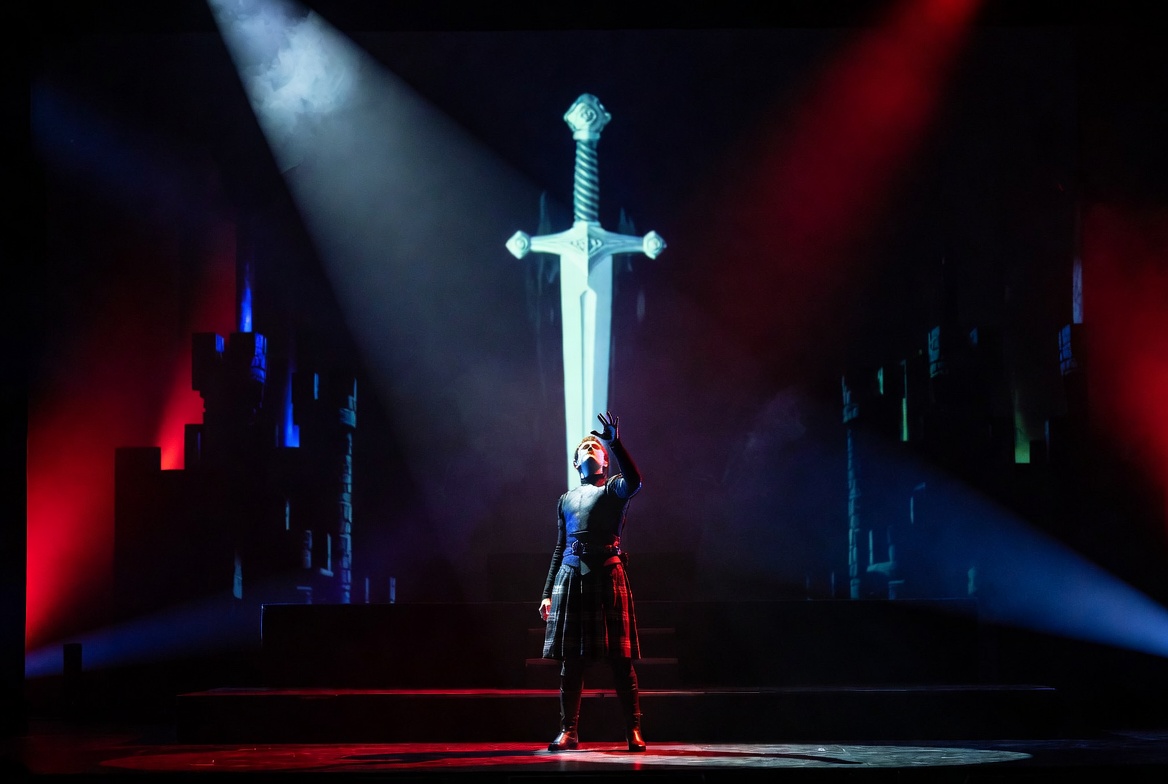
Directors have long recognized the dagger soliloquy as the scene’s greatest challenge and opportunity.
Iconic Productions
- Orson Welles (1948 film) used stark shadows and a visible dagger dripping blood.
- Roman Polanski (1971) emphasized psychological realism with a shimmering, almost seductive dagger.
- Patrick Stewart’s 2010 version with Rupert Goold portrayed the dagger as a projection of PTSD-like trauma.
- Michael Fassbender in the 2015 film made the hallucination intensely private — the audience barely glimpses the blade.
Directorial Choices Some productions show no dagger at all, forcing the audience to experience Macbeth’s madness through voice and body alone. Others project the dagger or use lighting tricks. Modern interpretations frequently link the vision to mental health issues — anxiety, guilt-induced psychosis, or moral injury — making the scene resonate with contemporary audiences dealing with trauma and ethical dilemmas in positions of power.
In 21st-century stagings, the scene often comments on political ambition, toxic masculinity, and the psychological cost of violence. It remains startlingly relevant in an age of conspiracy theories, deepfakes, and “alternative facts” — when distinguishing reality from dangerous illusion has never been more urgent.
10. Study Guide Extras for Students and Teachers
Essay Prompts
- “The dagger soliloquy reveals that guilt precedes action in Macbeth. Discuss.”
- How does Shakespeare use dramatic techniques to convey Macbeth’s psychological state in Act 2 Scene 1?
- Compare the function of the dagger soliloquy with Hamlet’s “To be or not to be.”
Quick-Reference Quote Bank
- Best for theme of illusion: “I have thee not, and yet I see thee still.”
- Best for ambition: “Thou marshall’st me the way that I was going.”
- Best for moral darkness: “Now o’er the one half-world / Nature seems dead.”
Comparison Chart: Famous Shakespearean Soliloquies
| Soliloquy | Speaker | Central Conflict | Outcome |
|---|---|---|---|
| Dagger (Act 2.1) | Macbeth | Illusion vs. Reality | Leads to murder |
| To be or not to be | Hamlet | Action vs. Inaction | Delays revenge |
| Tomorrow and tomorrow | Macbeth | Meaninglessness | Despair and defeat |
Macbeth Act 2 Scene 1 stands as one of Shakespeare’s greatest achievements in dramatic compression. In barely seventy lines, he captures the precise instant when a man’s soul chooses damnation. The dagger soliloquy does not merely describe guilt — it dramatizes the birth of guilt itself.
More than four hundred years later, the scene retains its power because it speaks to a universal truth: the most dangerous illusions are those we create for ourselves. Whether you are a student analyzing the text, an actor preparing the role, a teacher guiding discussion, or simply a lover of great literature, this scene offers profound insight into the mechanics of conscience, ambition, and self-destruction.
The dagger still floats before us — asking each new generation whether we will clutch it or turn away.
FAQs – Macbeth Act 2 Scene 1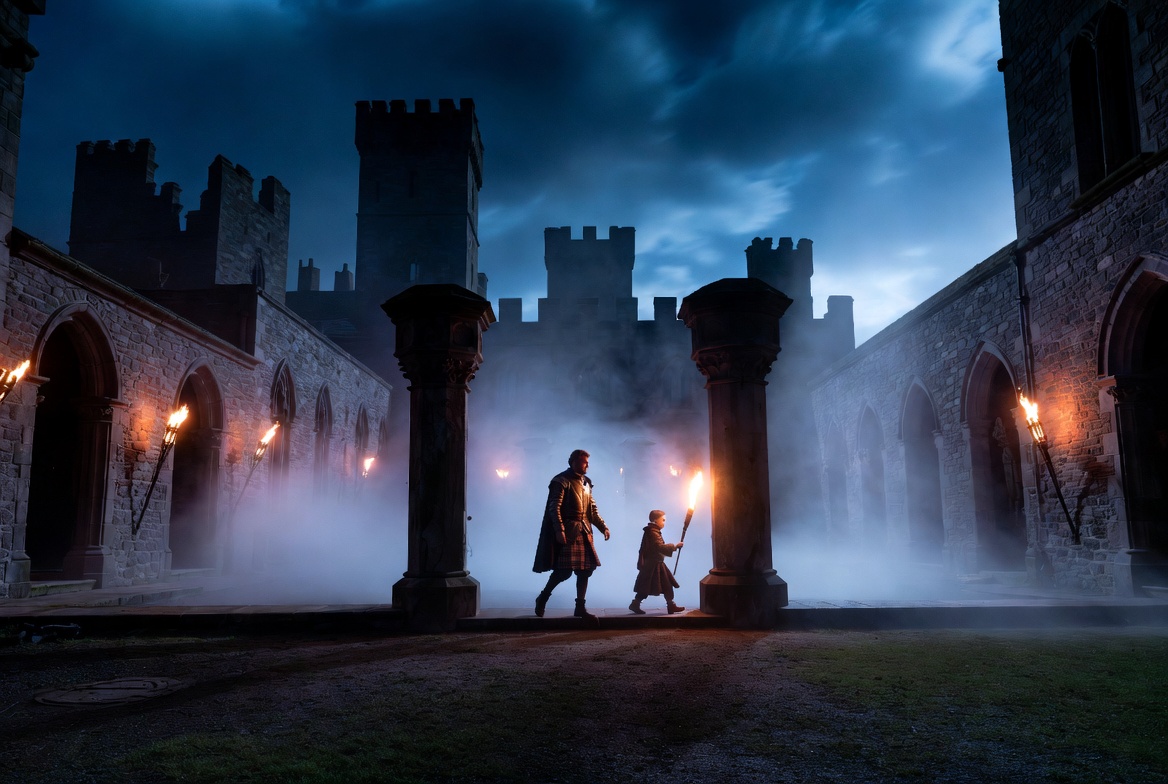
1. What happens in Macbeth Act 2 Scene 1? Banquo and Fleance appear briefly, Macbeth receives a gift from Duncan, then delivers the famous dagger soliloquy before following Lady Macbeth’s bell to commit the murder of King Duncan.
2. Why does Macbeth see a dagger? The dagger is a hallucination born of his guilty conscience and overwhelming ambition. It represents the weapon he intends to use and the moral horror he cannot yet face directly.
3. What does the dagger soliloquy reveal about Macbeth’s character? It reveals a man whose mind is already fracturing under the weight of his intended crime. He moves from doubt to rationalization to acceptance in real time.
4. Is the dagger real or imagined? It is imagined — a “fatal vision” — though Shakespeare leaves open whether supernatural forces contribute to the hallucination.
5. How does this scene connect to the theme of guilt in Macbeth? Guilt appears before the crime is committed. The scene proves that Macbeth’s punishment begins internally the moment he chooses evil, long before external consequences arrive.
6. What is the significance of the bell in Act 2 Scene 1? The bell is both a practical signal from Lady Macbeth and a symbolic funeral knell. It marks the exact transition from thought to murderous action.