As the curtain rises on the final movement of William Shakespeare’s darkest tragedy, Scotland is no longer a kingdom—it is a pressure cooker. The psychological decay of its ruler has infected every corner of the realm, and the chickens are finally coming home to roost. If you are searching for comprehensive macbeth act 5 notes to master your literature exam, decode the intricate symbolism, or simply understand how the Scottish Play reaches its explosive climax, you have arrived at the definitive guide.
Act 5 of Macbeth wastes no time. Gone are the contemplative pauses of the middle acts; instead, Shakespeare delivers a relentless, fast-paced sequence of short, tense scenes that mirror the chaos of impending warfare. From the haunted corridors of Dunsinane Castle to the muddy battlefields of Birnam Wood, the play hurtles toward its inevitable, bloody reckoning.
The Psychological and Political Stakes of the Final Act
The stakes in Act 5 could not be higher, operating on two distinct yet deeply intertwined levels: the political and the psychological.
-
The Political Level: The rightful heir to the Scottish throne, Malcolm, alongside his uncle Siward and the grieving expatriate Macduff, leads an English-backed liberation army. For Scotland, Act 5 is about purging a toxic parasite—Macbeth—and restoring the Great Chain of Being.
-
The Psychological Level: For Macbeth and his queen, this act represents the ultimate bankruptcy of ambition. They built an empire on regicide, betrayal, and paranoia, only to discover that the currency of power is entirely worthless when death comes knocking.
As students and literary scholars, examining Act 5 requires looking beyond the sword fights and stage blood. It requires analyzing how Shakespeare maps the complete disintegration of the human psyche. Let’s dive deep into a scene-by-scene breakdown, character evolutions, key quotes, and thematic masterclasses to ensure you completely master this crucial act.
II. Act 5 Summary by Scene (The Comprehensive Breakdown)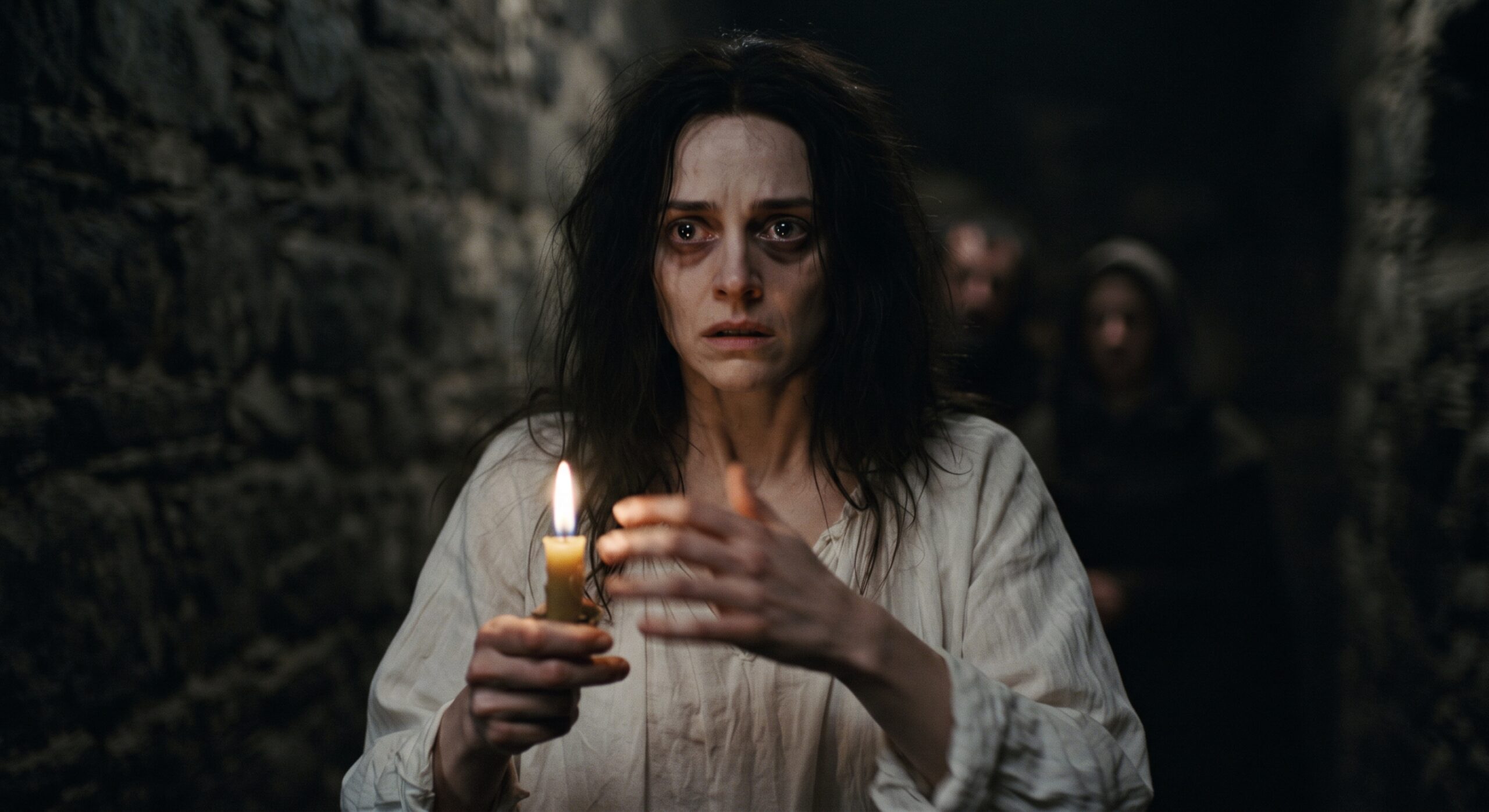
Scene 1: Lady Macbeth’s Descent into Madness and Guilt
The act opens in a dim room at Dunsinane, where a doctor and a gentlewoman observe Lady Macbeth in her sleep. Once the mastermind behind Duncan’s murder—the woman who commanded spirits to “unsex” her—she is now a broken, terrified shell of her former self.
-
Key Plot Points: Walking in her sleep with a lit taper (a desperate defense against the dark she now fears), Lady Macbeth compulsively mimics the act of washing her hands. She mutters haunting fragments of her past crimes: “Out, damned spot! out, I say!”, “Yet who would have thought the old man to have so much blood in him?”, and “The Thane of Fife had a wife: where is she now?”
-
Analysis: This scene is a masterclass in psychological realism. Lady Macbeth’s physical insomnia and ritualistic hand-washing externalize her unassailable guilt. The Doctor realizes this is beyond medical science, noting, “More needs she the divine than the physician.” It foreshadows her off-stage suicide and shows that repressed guilt eventually demands a reckoning.
Scene 2: The Gathering Storm at Dunsinane
Shift of scene to the countryside near Dunsinane, where Scottish lords—Menteith, Caithness, Angus, and Lennox—march to join Malcolm’s invading forces.
-
Key Plot Points: The Scottish noblemen explicitly brand Macbeth a tyrant, noting that his control is maintained solely by fear, not loyalty. They report that Macbeth is frantically fortifying Dunsinane Castle while his mind unhinges. Crucially, they state that those who serve him do so only by command, not affection.
-
Analysis: Shakespeare uses this brief scene to establish public consensus. Macbeth is utterly isolated. The imagery of clothing and disease returns: Angus remarks that Macbeth’s title sits upon him like “a giant’s robe upon a dwarfish thief.”
Scene 3: Macbeth’s Desperation and Overconfidence
Back inside Dunsinane, Macbeth tries to steel himself against the oncoming army, clinging desperately to the Witches’ equivocations.
-
Key Plot Points: Despite reports that ten thousand Englishmen are approaching, Macbeth flies into a rage at frightened servants, shouting down bad news. He reminds himself of the prophecy: “The mind I sway by and the heart I bear / Shall never sag with doubt nor shake with fear.” Yet, he privately admits to the Doctor that his life is beginning to wither into the “yellow leaf,” lamenting the absence of honor, love, obedience, and troops of friends.
-
Analysis: This scene highlights Macbeth’s tragic dichotomy. He is simultaneously arrogant (trusting invincibility) and deeply depressed. His harsh treatment of the servant and the desperate summoning of Seyton show a man lashing out because he realizes his world is crumbling.
Scene 4: The March of Birnam Wood
The English and Scottish allied forces gather in Birnam Wood under Malcolm’s command.
-
Key Plot Points: Malcolm gives a simple, brilliant military order: “Let every soldier hew him down a bough / And bear’t before him: thereby shall we shadow / The numbers of our host and make discovery / Err in report of us.”
-
Analysis: This tactical maneuver serves a dual purpose. Practically, it conceals the exact size of the invading army from Macbeth’s scouts. Thematically, it sets the trap that will fulfill the Witches’ seemingly impossible prophecy: Birnam Wood is literally moving toward Dunsinane.
Scene 5: The Death of Lady Macbeth and “Tomorrow, and tomorrow”
Inside the castle, Macbeth remains confident in his fortress’s physical strength, believing a siege can last until starvation forces the enemy back.
-
Key Plot Points: A cry of women rings out offstage. Seyton investigates and returns to announce that the Queen is dead. Macbeth responds with one of the most famous soliloquies in English literature—the “Tomorrow, and tomorrow, and tomorrow” speech. Immediately following this, a messenger arrives with a terrifying report: as he looked toward Birnam, the wood appeared to be moving.
-
Analysis: Lady Macbeth’s death is reported flatly, reflecting the emotional detachment Macbeth has developed. His subsequent soliloquy is the ultimate expression of existential nihilism. Life is a “tale / Told by an idiot, full of sound and fury, / Signifying nothing.” When he hears about the moving wood, the first crack appears in his supernatural armor.
Scene 6 & 7: The Battle Begins and Young Siward’s Death
The siege has officially begun. Malcolm orders his forces to drop their leafy camouflage and draw their swords.
-
Key Plot Points: Macbeth rushes onto the battlefield, trapped like a bear tied to a stake (the “bear-baiting” metaphor). He encounters Young Siward, the English general’s son. They fight, and Macbeth slays him easily, gloating that the young man was “born of woman.” Energized by this, Macbeth moves across the field seeking out Macduff.
-
Analysis: Young Siward’s death reinforces Macbeth’s reliance on the Witches’ prophecy. It keeps his false sense of security alive just long enough to draw him into the final, fatal confrontation.
Scene 8 & 9: The Climax and Resolution
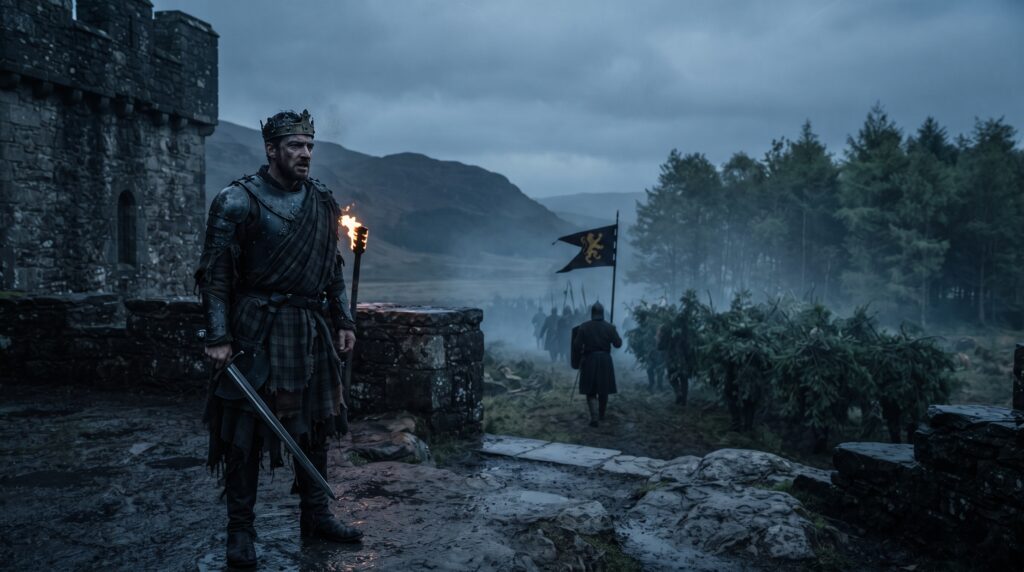
The final showdown unfolds on the ramparts of the ruined castle.
-
Key Plot Points: Macduff confronts Macbeth. Macbeth initially holds back, warning Macduff that his soul is already too charged with his family’s blood and boasting, “I bear a charmed life, which must not yield, / To one of woman born.” Macduff delivers the devastating blow: “Macduff was from his mother’s womb / Untimely ripp’d” (a Cesarean section). Stripped of his invincibility, Macbeth briefly hesitates to fight, then rushes in out of desperate pride. Macduff slays him offstage and returns with Macbeth’s severed head. Malcolm is hailed as the new King of Scotland, and order is restored.
-
Analysis: The resolution ties up every thematic thread. The equivocation of the witches is exposed; the tyrant is dead; the natural order (the Great Chain of Being) is mended; and Scotland looks toward a unified, peaceful future.
III. Deep-Dive Character Analysis in Act 5
Macbeth: From Tragic Hero to Trapped Tyrant
In Act 5, Macbeth completes his tragic arc. He is no longer the noble, hesitant warrior of Act 1, nor the panicked, hallucinating murderer of Act 2 and 3. He has evolved—or rather, devolved—into an isolated fatalist.
-
The Psychology of Isolation: Macbeth recognizes that he has traded everything that makes life worth living—friendship, love, honor, a peaceful old age—for a crown that brings only misery. Yet, rather than repenting, he doubles down on defiance.
-
The Tragic Irony: His reliance on the Witches’ prophecies acts as psychological scaffolding. When that scaffolding collapses piece by piece (Birnam Wood moving, then the revelation about Macduff’s birth), Macbeth faces a moment of pure, unadulterated terror. He realizes he has been cheated by the equivocal forces of darkness: “And be these juggling fiends no more believed, / That palter with us in a double sense.”
Lady Macbeth: The Tragic Cost of Ambition
Lady Macbeth’s absence for much of Act 4 makes her dramatic return in Act 5.1 all the more shocking.
-
The Reversal of Roles: Early in the play, she was the structural pillar of their partnership, chastising Macbeth for his “infirmity of purpose.” By Act 5, the roles are entirely reversed. Macbeth is hardening into a ruthless dictator, while Lady Macbeth is completely destroyed by her conscience.
-
Symbolism of Sleep and Water: Sleep represents peace of mind and innocence. By destroying Duncan’s sleep, Lady Macbeth destroyed her own. Her compulsive hand-washing is a futile attempt to scrub away the metaphorical stains of absolute moral corruption. Her death—widely accepted as suicide—underscores the devastating psychological toll of unchecked ambition.
Macduff: The Instrument of Divine Retribution
Macduff serves as the ultimate moral counterbalance to Macbeth. While other characters flee or submit, Macduff is driven by a twin engine of personal grief and patriotic duty.
-
The Avenging Foil: When Macbeth hesitates to fight him, citing the blood already on his hands, Macduff brushes aside mercy. He represents poetic justice—the unstoppable force of moral rectitude colliding with corrupted power. His miraculous birth (“untimely ripp’d”) places him outside the natural order just enough to dismantle the supernatural shield protecting the tyrant.
Malcolm: The Restoration of Order
Malcolm’s evolution across the play is subtle but crucial. In Act 4, he tests Macduff’s loyalty through an elaborate self-deprecating lie; in Act 5, he steps up as a mature, tactical, and wise leader.
-
The Healer King: Unlike his father Duncan (who was too trusting) or Macbeth (who was a butcher), Malcolm displays tactical brilliance and emotional intelligence. In his final speech, he honors his supporters, brings home the exiled countrymen, and pledges to rule by grace rather than terror, signaling a golden dawn for Scotland.
IV. Top Key Quotes Explained
1. “Out, damned spot! out, I say!” (Lady Macbeth, Act 5, Scene 1)
-
Context: Lady Macbeth is sleepwalking, desperately trying to wash invisible blood from her hands while the Doctor and Gentlewoman watch in horror.
-
Deep Meaning: This is arguably the most famous line in the play. The “spot” represents permanent moral contamination. Despite her earlier boast that “a little water clears us of this deed,” she discovers that the stain of regicide is eternal and indelible. It highlights how guilt manifests physically when the conscious mind can no longer suppress trauma.
2. “Tomorrow, and tomorrow, and tomorrow…” (Macbeth, Act 5, Scene 5)
-
Context: Macbeth receives news of his wife’s death and delivers a famous meditation on the passage of time right before learning that Birnam Wood is moving.
-
Deep Meaning: This soliloquy is the ultimate expression of existential despair in Western literature. Macbeth reduces human history to a meaningless sequence of trivial days (“creeps in this petty pace”), compares life to a fleeting shadow and a poor actor (“a poor player / That struts and frets his hour upon the stage”), and concludes that existence is a meaningless tale told by an idiot. It marks the absolute nadir of his soul.
3. “Macduff was from his mother’s womb / Untimely ripp’d.” (Macduff, Act 5, Scene 8)
-
Context: The climax of the final duel, when Macbeth feels secure behind the prophecy that no man born of woman can harm him.
-
*Deep Meaning: This line shatters the linguistic loopholes of the Witches’ prophecies. By revealing he was delivered via Cesarean section, Macduff proves that supernatural promises are deceitful traps designed to lure sinners to their doom. It is the narrative turning point where fate catches up with free will.
V. Major Themes and Motifs in Act 5
Poetic Justice and Fate vs. Free Will
Shakespeare navigates a complex philosophical question in Act 5: Are Macbeth’s actions predetermined by the Witches, or is he the author of his own downfall?
-
The Synthesis: The play argues for a terrifying synthesis. The Witches do not force Macbeth to murder Duncan; they merely expose the dark ambitions already lurking within his heart. However, once he chooses evil, he walks willingly into the semantic traps laid by the supernatural. Act 5 demonstrates that poetic justice is inescapable: those who subvert moral order will inevitably be destroyed by the very forces they tried to manipulate.
Order vs. Chaos (The Restoration of the Great Chain of Being)
In Elizabethan worldview, the universe is organized into a strict hierarchical chain. Killing a divinely appointed king disrupts this chain, plunging nature itself into chaos (manifested earlier in horses eating each other, dark skies, and fierce storms).
-
Healing the State: Act 5 portrays the violent, necessary purging of a disease. Scotland is described as a sick body (“The medicine of the sickly weal”). Once the cancerous tyrant is removed and the rightful king (Malcolm) is restored, natural and political order snaps back into place, symbolizing cosmic harmony.
The Mask of Guilt: Blood, Sleep, and Clothing Imagery
Motifs that have run throughout the play reach their explosive thematic climax in Act 5:
-
Blood: Shifts from a symbol of martial honor in Act 1 to an inescapable mark of criminality and terror.
-
Sleep: Transitions from a natural restorative state to a haunted, tortured void characterized by insomnia and sleepwalking.
-
Clothing: Continues the motif of ill-fitting garments, illustrating how Macbeth’s stolen crown is a burden that crushes rather than adorns him.
VI. Expert Study Tips & Essay Strategies
How to Write a High-Scoring Essay on Macbeth Act 5
When tackling an exam essay or a critical paper on Act 5, students frequently fall into traps that pull down their grades. Use these expert strategies to stand out:
-
Tip 1: Avoid Plot Summary: Examiners already know that Macbeth dies and Malcolm becomes king. Do not waste precious word count retelling what happens. Instead, focus entirely on how Shakespeare conveys meaning through language, structure, and imagery.
-
Tip 2: Integrate Textual Evidence Seamlessly: Weave short, punchy quotations directly into your analytical sentences rather than dropping block quotes in isolation. For example, write: Shakespeare emphasizes Macbeth’s spiritual bankruptcy through nihilistic metaphors, viewing life merely as a “walking shadow.”
-
Tip 3: Track Character Transformation: Contrast Macbeth’s mindset in Act 1 Scene 2 (a valiant, hesitant hero) with Act 5 Scene 5 (a fatalistic nihilist) to prove a sophisticated understanding of character arc.
Common Student Pitfalls to Avoid in Shakespearean Analysis
-
Treating the Witches as Puppeteers: Avoid arguing that Macbeth had no free will. Emphasize that he chose to act on their prophecies.
-
Oversimplifying Lady Macbeth: Do not view her as a one-dimensional monster. Her complete psychological collapse in Act 5 proves her humanity and highlights the gender subversions and emotional costs of ambition.
VII. Frequently Asked Questions (FAQs)
What does “Birnam Wood moving to Dunsinane” mean in Act 5?
It refers to Malcolm’s military strategy where every soldier cuts down a tree branch from Birnam Wood to use as camouflage during their march on Dunsinane Castle. Physically, it hides their numbers; symbolically, it fulfills the Witches’ prophecy that Macbeth would never be defeated until Birnam Wood moved to high Dunsinane Hill.
Why does Lady Macbeth kill herself?
Though Shakespeare leaves the exact mechanics offstage, textual evidence and historical sources suggest she dies by suicide. Consumed by unassailable guilt, overwhelming paranoia, and chronic sleepwalking, she becomes completely broken by the psychological trauma of regicide, unable to bear the weight of her conscience any longer.
How does Macbeth die, and who kills him?
Macbeth dies in single combat during the siege of Dunsinane Castle. He is killed and decapitated by Macduff, who seeks vengeance for the brutal murder of his wife and children.
What is the significance of Macduff not being “born of woman”?
This phrase means Macduff was delivered via an early form of Cesarean section (“untimely ripp’d”). It subverts the Witches’ deceptive prophecy, proving that supernatural promises are literal traps designed to inflate Macbeth’s arrogance until the moment of his destruction.