Let’s be honest: trying to read a 17th-century Elizabethan script can sometimes feel like trying to decipher a secret code without the cipher. You know there is a thrilling story hidden in the text—a tale of bloody ambition, supernatural prophecies, and psychological horror—but the dense, archaic language stands in the way. If you find yourself constantly flipping to a dictionary just to figure out what “prithee” means, you aren’t alone. Missing these linguistic nuances often means missing the very essence of the characters’ motivations and fears.
That is why you need a reliable Macbeth play with translation right at your fingertips.
This guide is designed to be your ultimate companion for mastering the Scottish play. Whether you are an AP Literature student writing a thesis on Lady Macbeth’s ambition, an actor preparing for a challenging audition, a dedicated teacher, or simply a casual theater fan who wants to finally “get it,” this resource is built for you. By presenting the original First Folio text alongside a clear, modern English translation, this side-by-side guide removes the friction from reading Shakespeare. You won’t just learn the plot; you will understand every word.
II. How to Read and Use This Side-by-Side Translation
To get the most out of this comprehensive guide, it helps to understand how it is structured and the best practices for reading it.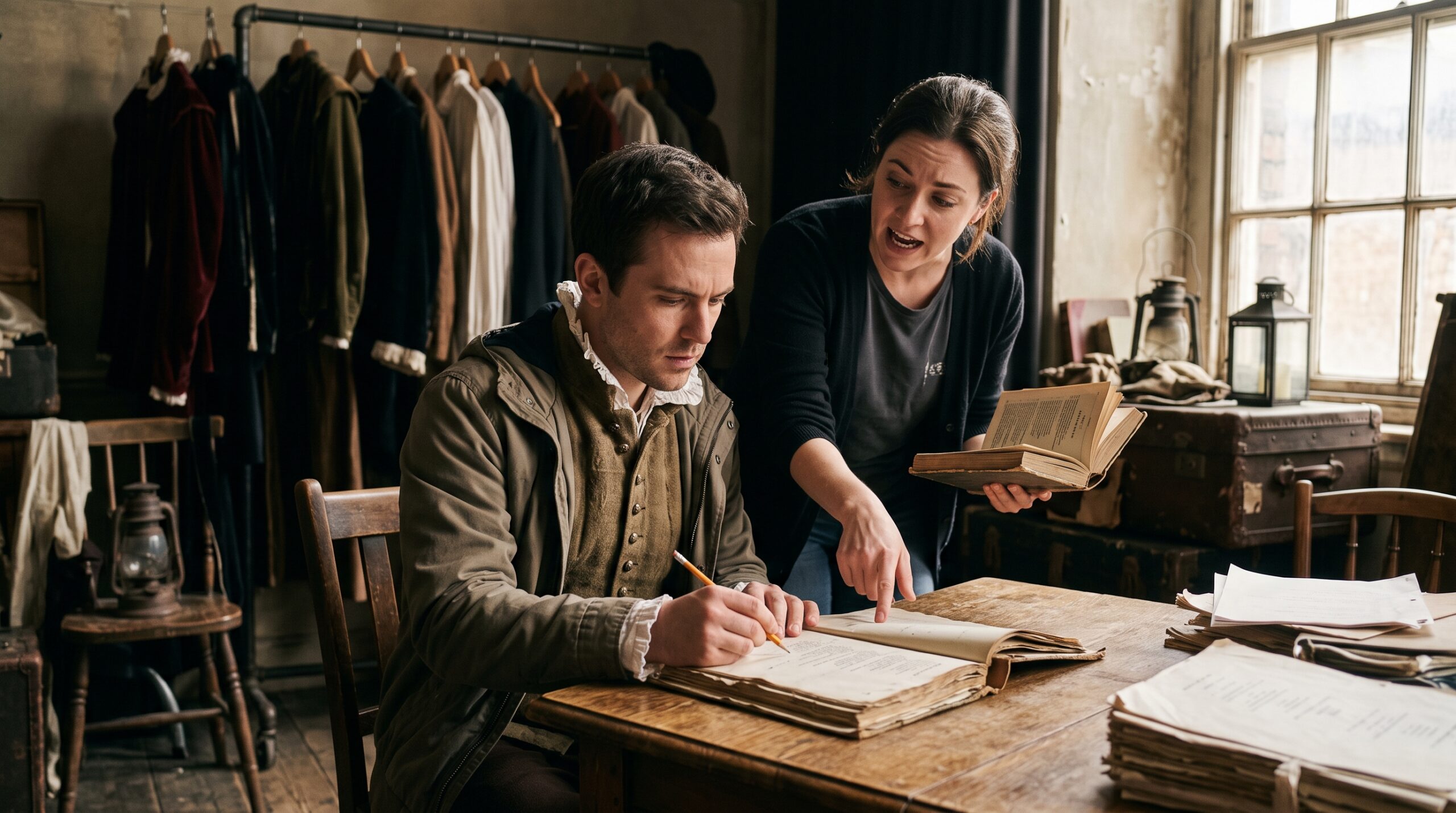
The Structure of the Guide
In the sections below (and in the linked Act deep-dives), you will find the text laid out in two columns:
-
The Left Column (Original Text): This contains William Shakespeare’s original text, primarily based on the First Folio of 1623. We have retained the original poetic meter (iambic pentameter) and vocabulary, with only minor modern spelling updates (like changing “v” to “u” where appropriate) for readability.
-
The Right Column (Modern Translation): This contains the contemporary English translation. It is not just a summary of the action; it is a line-by-line decoding that explains exactly what the characters are saying, feeling, and plotting in today’s language.
Why Modern Translation Matters
It is tempting to simply read a plot summary on SparkNotes and skip the actual play. However, doing so robs you of the actual literature. Reading a modern translation side-by-side with the original text builds your comprehension muscles. You begin to recognize patterns in the Elizabethan dialogue, grasp the extended metaphors, and appreciate the rhythm of the poetry, all while having a safety net to ensure you never lose the narrative thread.
Expert Tip: Reading Shakespeare Out Loud
Shakespeare was a playwright, not a novelist; his words were meant to be spoken, not just read silently on a page. Even if you don’t understand every word in the left column initially, try reading the original text out loud. You will start to feel the driving rhythm of the iambic pentameter (da-DUM da-DUM da-DUM). Once you feel the rhythm, glance at the modern translation to lock in the meaning.
III. Macbeth Act-by-Act: The Complete Play with Modern Translation
(Note: To keep this master guide navigable, we have highlighted the most crucial, study-essential scenes from each Act below. For the complete, unabridged side-by-side text of every single scene, use the hub links provided at the end of each section).
Act 1: The Prophecy and the Plot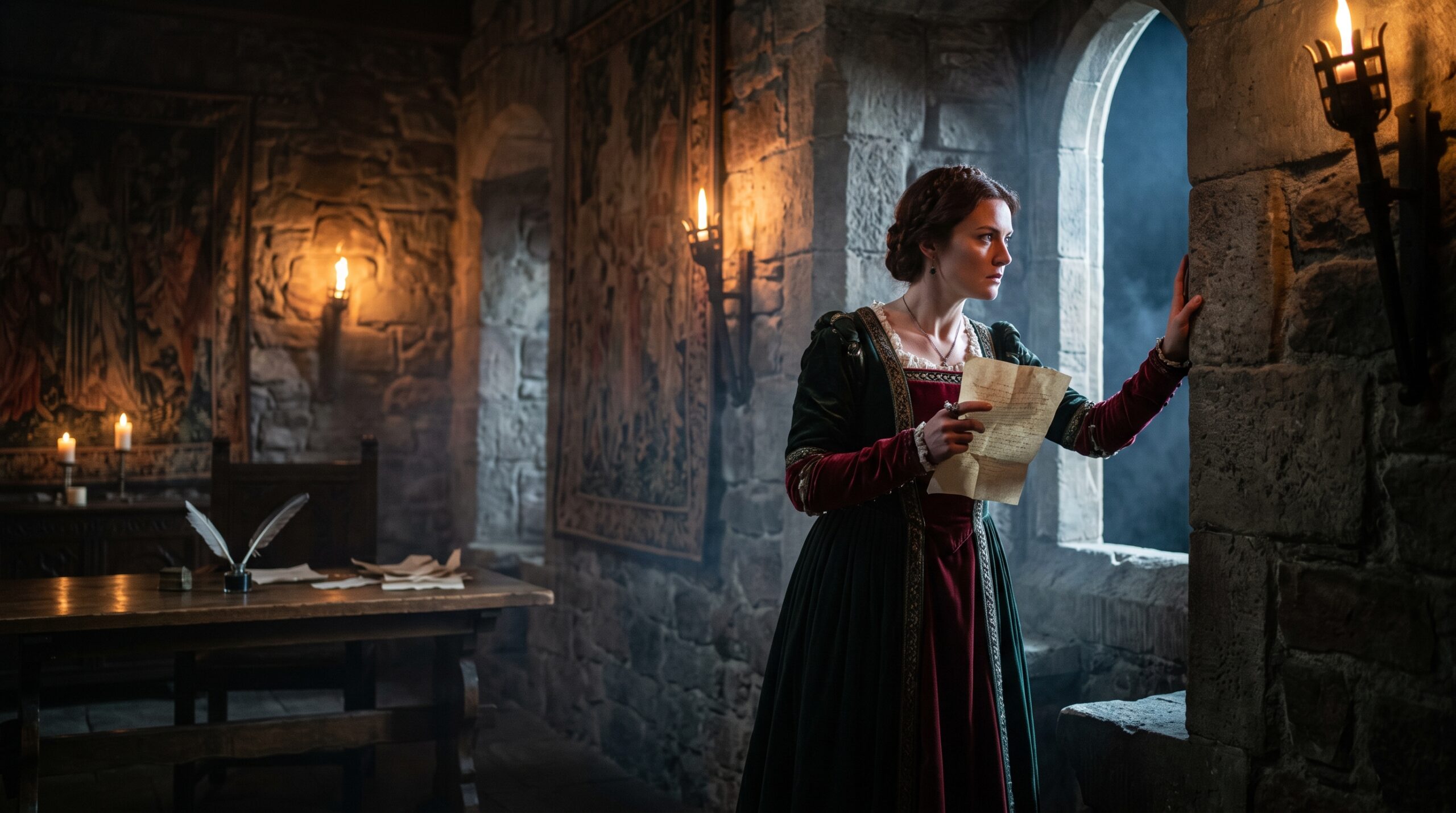
Act 1 sets the tragedy in motion. We are introduced to the eerie supernatural elements of the play and the immediate corrupting influence of ambition.
Act 1, Scene 1 Highlight: The Witches
The play opens not with kings or soldiers, but with three witches setting a dark, chaotic tone for everything that follows.
| Original Text (1623 Folio) | Modern English Translation |
|
ALL:
Fair is foul, and foul is fair:
Hover through the fog and filthy air. |
ALL WITCHES:
What is good is bad, and what is bad is good.
Let’s fly away through the fog and dirty air. |
Act 1, Scene 5 Highlight: Lady Macbeth’s Ambition
Upon reading Macbeth’s letter about the witches’ prophecy, Lady Macbeth fears her husband is too kind to do what is necessary (murder the King) to take the crown.
| Original Text | Modern English Translation |
|
LADY MACBETH:
Glamis thou art, and Cawdor; and shalt be
What thou art promised: yet do I fear thy nature;
It is too full o’ the milk of human kindness
To catch the nearest way: thou wouldst be great;
Art not without ambition, but without
The illness should attend it…
|
LADY MACBETH:
You are the Thane of Glamis, and now Cawdor; and you will be
King, just as you were promised. But I worry about your personality;
You are too gentle and kind
To take the fastest route to the throne (murder). You want to be powerful;
You definitely have ambition, but you lack
The ruthlessness that needs to go with it… |
Act 1, Scene 7 Highlight: Macbeth’s Hesitation
Macbeth debates whether to go through with the assassination of King Duncan.
| Original Text | Modern English Translation |
|
MACBETH:
If it were done when ’tis done, then ’twere well
It were done quickly: if the assassination
Could trammel up the consequence, and catch
With his surcease success; that but this blow
Might be the be-all and the end-all here,
But here, upon this bank and shoal of time,
We’ld jump the life to come. |
MACBETH:
If this whole business was completely finished once the murder was done, then it would be best
to just do it quickly. If the assassination
could tie up all the loose ends, and guarantee
success with Duncan’s death; so that this one stab
would be the absolute beginning and end of the whole affair,
right here, right now, in this moment of time,
I would risk what happens to my soul in the afterlife. |
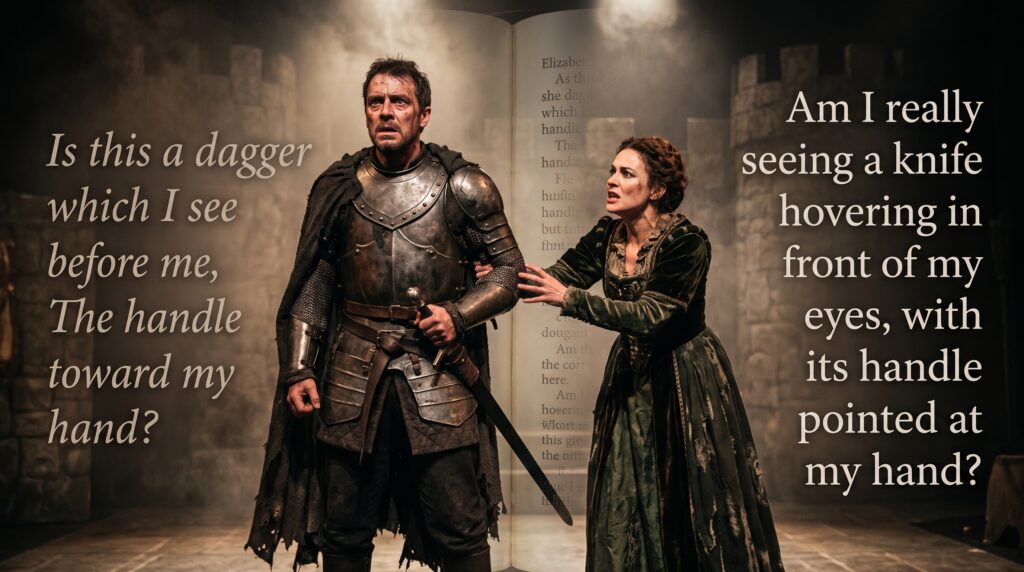
The handle toward my hand? Come, let me clutch thee.
I have thee not, and yet I see thee still.
Art thou not, fatal vision, sensible
To feeling as to sight? or art thou but
A dagger of the mind, a false creation,
Proceeding from the heat-oppressed brain? | MACBETH:
Am I really seeing a knife hovering in front of my eyes,
with its handle pointed at my hand? Let me grab you.
I can’t hold you, but I can still see you clearly.
Deadly illusion, is it impossible
to touch you even though I can see you? Or are you just
a hallucination, a fake image
created by my feverish, stressed-out mind? |
Act 2, Scene 2 Highlight: The Aftermath and the Blood
Following the assassination, the dialogue between the Macbeths breaks down into short, terrified fragments.
Key Translation Challenge: Decoding the frantic, broken syntax post-murder is essential. Shakespeare uses short, choppy lines here to mimic the hyperventilation and panic of the characters. When you read the modern equivalent side-by-side, the sheer terror of the scene becomes much more visceral.
Act 3: Paranoia and the Ghost at the Feast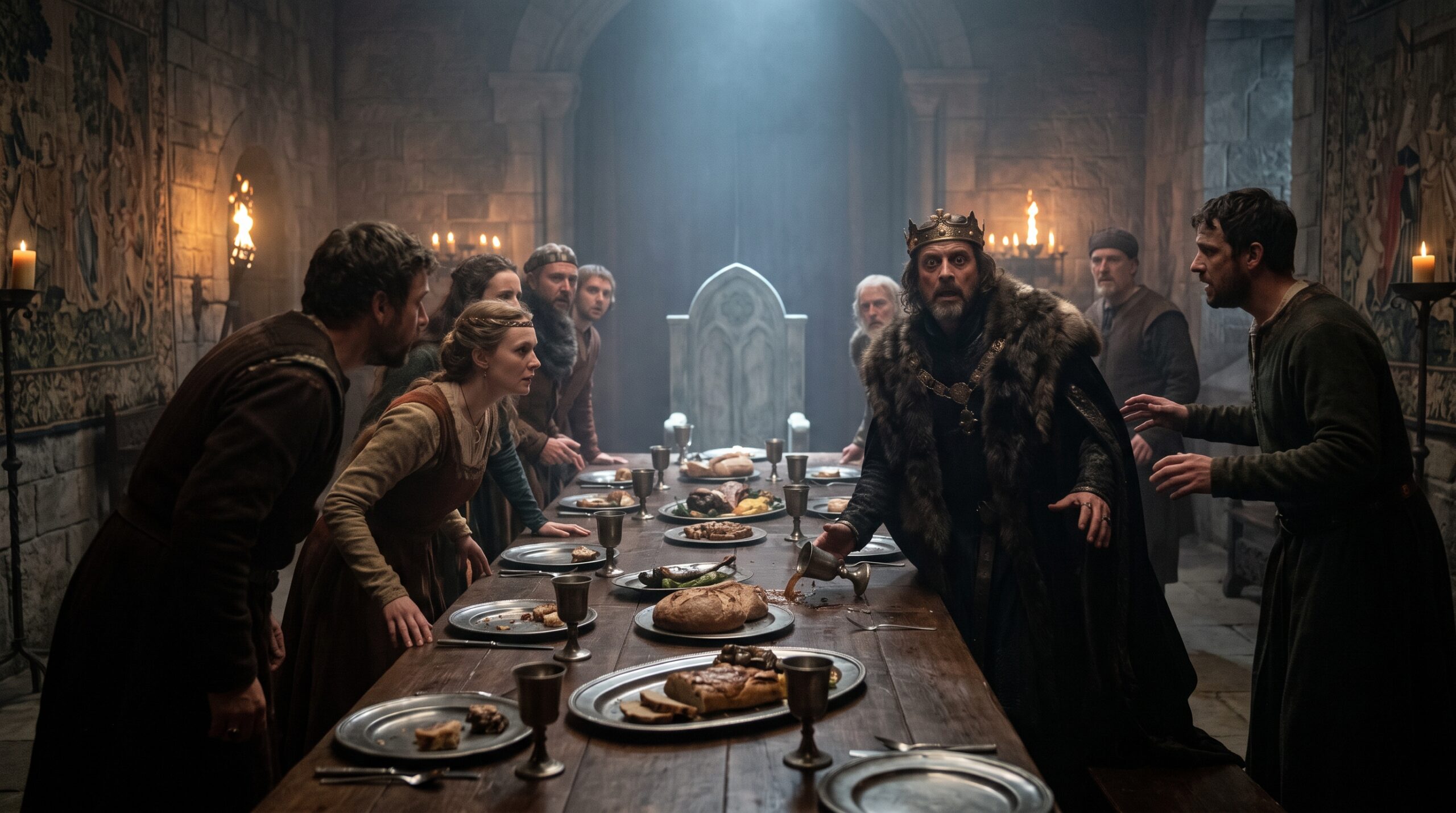
Having secured the throne, Macbeth realizes his position is fragile. His paranoia leads him to order the murder of his friend, Banquo.
Act 3, Scene 4 Highlight: Banquo’s Ghost
During a royal banquet, Macbeth is confronted by the bloody ghost of Banquo—a spirit only he can see.
Act 4: The Witches Return and Macduff’s Grief
Macbeth seeks out the Weird Sisters again to demand answers about his future, while his political enemies gather in England.
Act 4, Scene 1 Highlight: The Witches’ Brew
Act 5: Guilt, Battle, and the Bitter End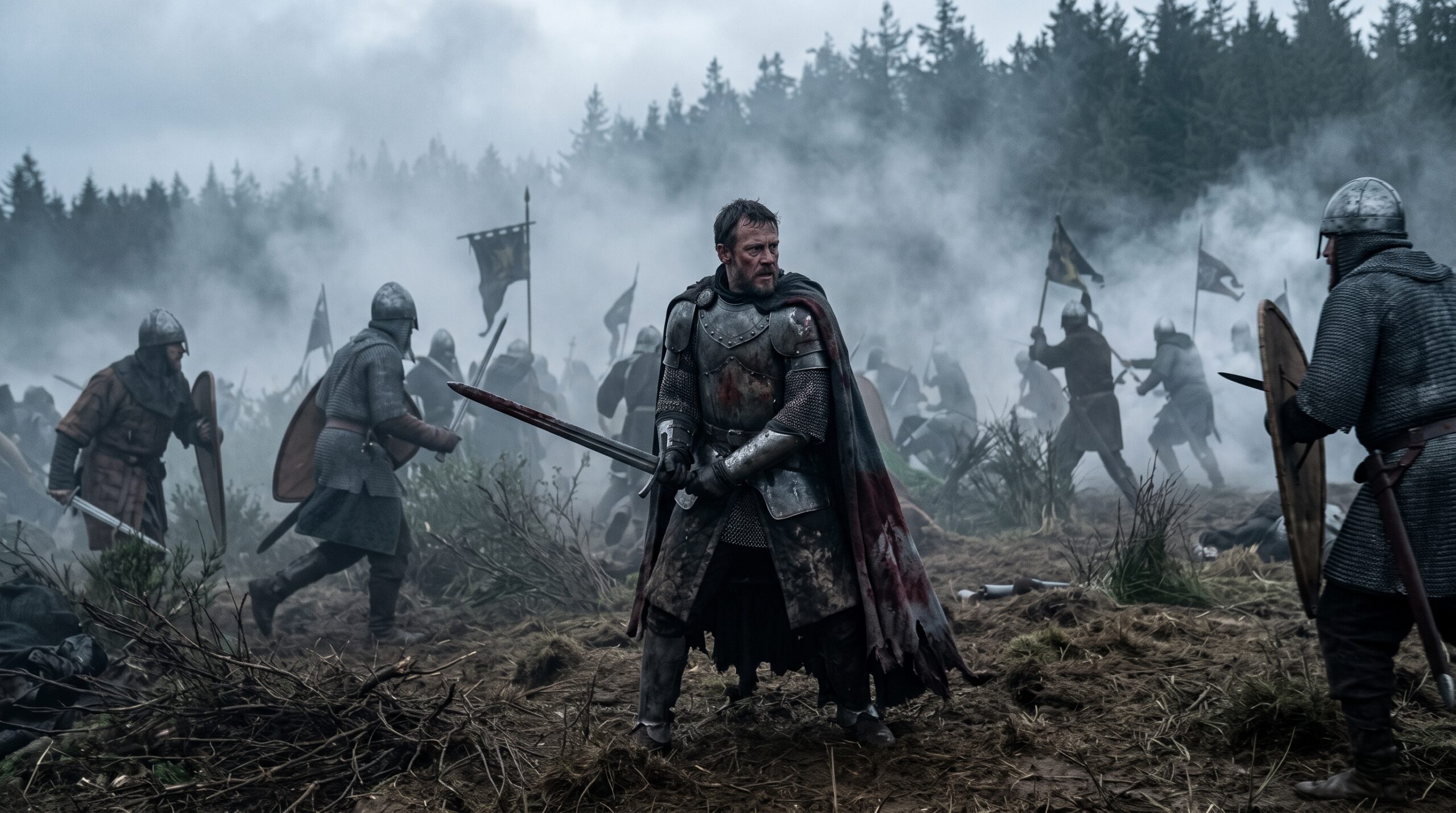
The final act brings the psychological collapse of Lady Macbeth and the physical defeat of Macbeth.
Act 5, Scene 1 Highlight: Lady Macbeth’s Sleepwalking
Act 5, Scene 5 Highlight: Macbeth’s Final Despair
Upon hearing of his wife’s death, Macbeth delivers one of literature’s most profound reflections on the meaninglessness of life.
IV. Deep Dive: Key Themes Revealed Through Translation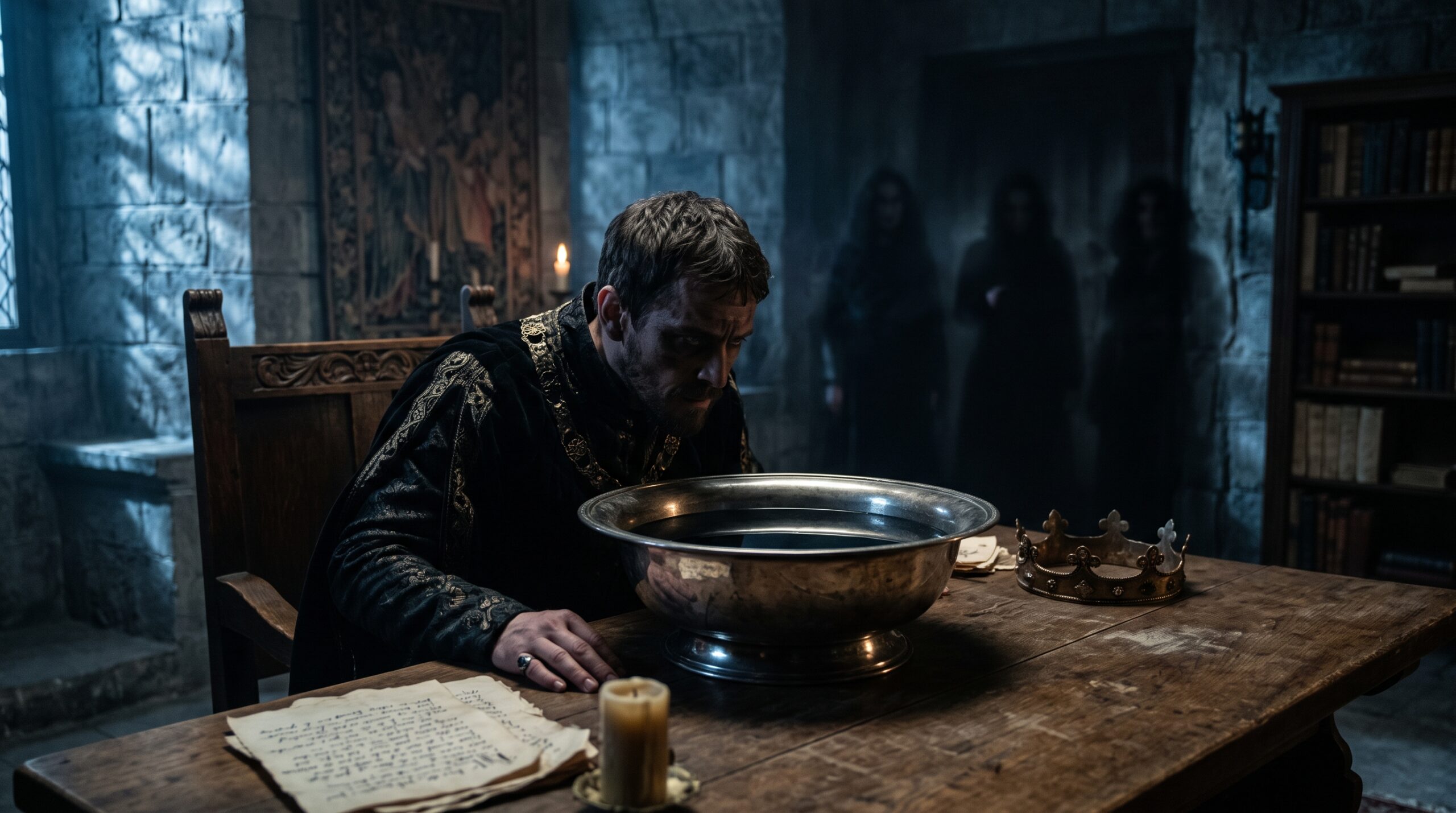
When reading a Macbeth play with translation, certain thematic elements that might be obscured by archaic vocabulary suddenly snap into focus.
-
Ambition vs. Morality: In the 17th century, the “Great Chain of Being” dictated that a king was appointed by God. Thus, Macbeth isn’t just committing a crime; he is breaking the spiritual order of the universe. Modern translations help clarify these spiritual stakes, showing that Macbeth knows he is damning his soul.
-
Gender Roles and Power: Lady Macbeth frequently uses language associated with stripping away her femininity to gain the cruelty of a man (e.g., her famous plea to spirits to “unsex me here”). Translating these passages into modern English highlights her belief that compassion is a weakness tied to being a woman.
-
The Supernatural: Are the witches real, or are they psychological projections? By modernizing their cryptic, rhyming riddles, readers can better analyze how the witches never actually force Macbeth to do anything—they simply plant a seed of ambition that he chooses to water.
V. The “Lost in Translation” Glossary: Essential Shakespearean Vocabulary
Even with a side-by-side guide, recognizing a few common Elizabethan words will vastly improve your reading speed. Here are essential terms that appear repeatedly in Macbeth:
-
Alarum: A call to arms or a battle cry.
-
Anon: Right away; coming soon. (Often said by servants).
-
Ere: Before. (e.g., “Ere the sun sets” means “Before the sun sets”).
-
Fain: Gladly or willingly.
-
Hie: Hurry up.
-
Hither: Here. (Conversely, thither means there, and whither means where).
-
Prithee: Please; I pray thee.
-
Sooth: Truth. (A “soothsayer” is a truth-teller or prophet).
-
Wherefore: Why. (Not “where,” but “for what reason”).
-
Withal: With, or in addition to.
VI. Frequently Asked Questions (FAQs) About Translating Macbeth
Is it better to read the original Macbeth or a translation? For the best experience, use a side-by-side text. Reading only a modern translation causes you to lose the beauty of Shakespeare’s poetic meter (iambic pentameter) and his brilliant wordplay. The original text gives you the art, while the translation ensures you grasp the plot and character motivations.
What is the most famous quote in Macbeth, and what does it actually mean? Macbeth’s “Tomorrow, and tomorrow, and tomorrow” speech in Act 5 is arguably the most famous. In modern English, it is a profoundly nihilistic realization that life is incredibly short (“a brief candle”) and ultimately meaningless, ending only in death.
Why did Shakespeare write Macbeth in such complicated language? Elizabethan theater relied heavily on spoken word rather than elaborate sets or special effects. Shakespeare used complex imagery, metaphors, and specific poetic rhythms to paint the scene for the audience and to differentiate upper-class characters (who usually speak in verse) from lower-class characters (who speak in regular prose).
How historically accurate is the play Macbeth? Not very. While there was a real King Macbeth of Scotland in the 11th century, Shakespeare heavily altered the history to please his patron, King James I (who traced his lineage back to the real-life Banquo). The historical Macbeth was actually considered a relatively successful and fair ruler.
VII. Mastering the Scottish Play
Conquering Shakespeare’s language unlocks access to one of the greatest psychological thrillers ever written. By utilizing a side-by-side Macbeth play with translation, you strip away the barrier of 400-year-old vocabulary, allowing the true brilliance of the narrative to shine through. You are no longer just decoding words; you are witnessing the tragic, terrifying unraveling of the human mind.
Bookmark this page for your studies, refer back to the glossary when you get stuck, and remember: Shakespeare was meant to be enjoyed, not just endured.