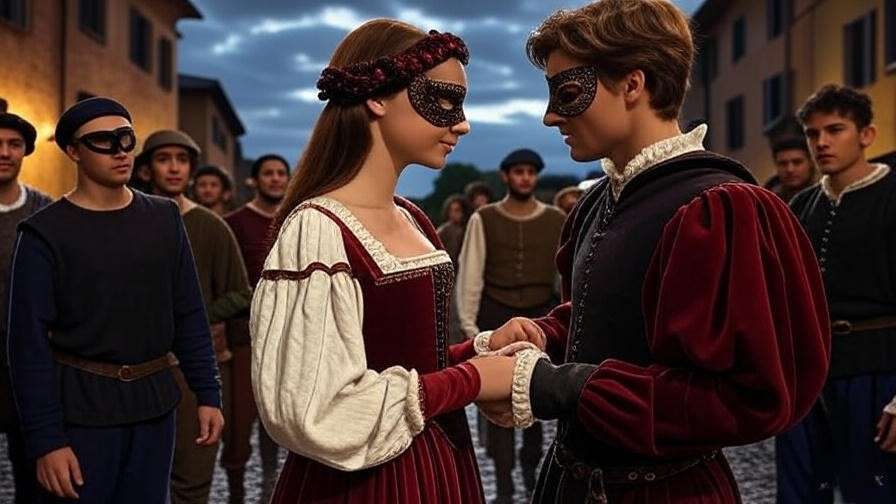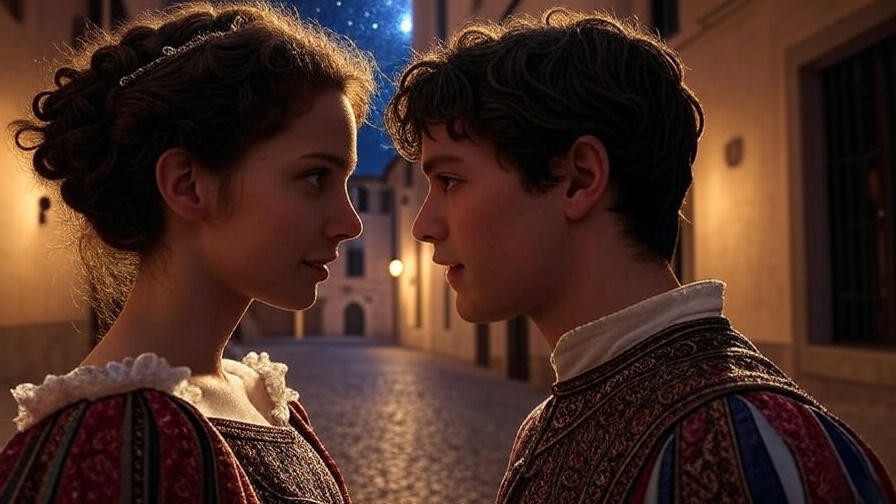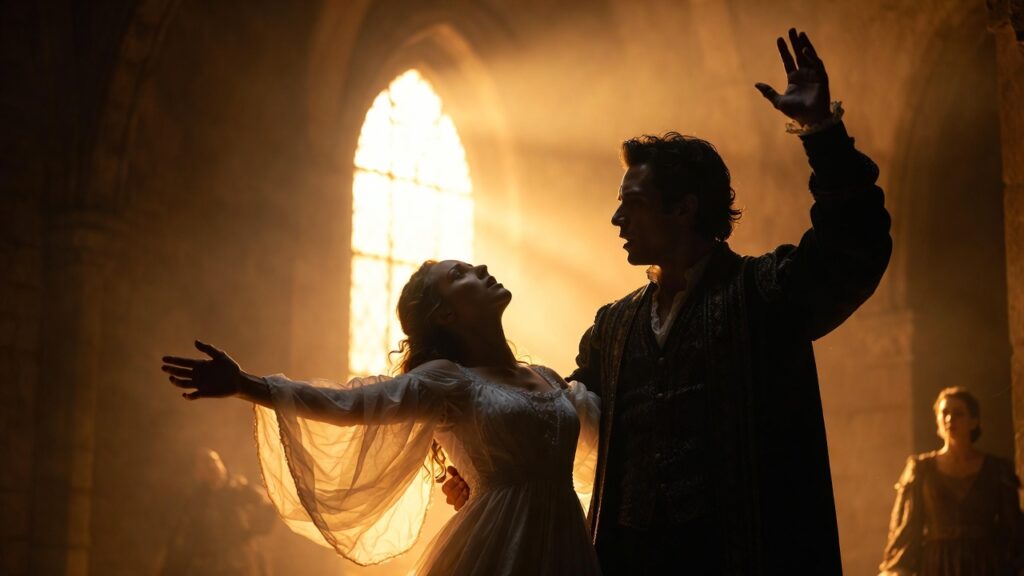
Imagine stepping onto a stage—or into an audition room—where the weight of centuries rests on your next words. The air thickens as you speak lines that have stirred hearts since 1597: passionate declarations of love, wrenching grief, playful fantasy. These monologues from Romeo and Juliet are not mere speeches; they are windows into the raw, turbulent soul of young love clashing against fate, family, and society. Whether you’re a drama student dissecting Shakespeare’s language for an essay, an actor hunting the perfect audition piece, or a literature lover seeking deeper insight into the Bard’s genius, finding the right monologue can feel overwhelming.
In this comprehensive guide from William Shakespeare Insights, we go beyond basic excerpts. We curate the most iconic and versatile monologues, provide full original texts (drawn from reliable public-domain sources like the MIT Shakespeare archive and Open Source Shakespeare), offer modern paraphrases for clarity, deliver line-by-line analysis, explore performance tips, and uncover why these speeches reveal Shakespeare’s mastery of human emotion. By the end, you’ll have everything needed to study, perform, or appreciate these timeless pieces with confidence—far more depth than typical online lists provide.
Why Romeo and Juliet Monologues Remain Essential for Actors, Students, and Readers
Shakespeare’s tragedies thrive on internal conflict revealed through soliloquy and monologue—moments where characters speak their private thoughts aloud, often alone or overheard. In Romeo and Juliet, these speeches expose the lovers’ ecstasy and agony, making them ideal for exploring themes of desire, despair, and defiance.
The Power of Soliloquy and Monologue in Shakespeare A true soliloquy is spoken in solitude, revealing the character’s innermost mind (e.g., Juliet’s anticipation speeches). Monologues can address others but still feel introspective. Here, Shakespeare uses iambic pentameter to mirror heartbeat-like urgency, shifting rhythms for emotional peaks—tools that actors exploit to show vulnerability or intensity.
Common Uses Today
- Auditions: Casting directors love Romeo and Juliet pieces for their emotional range, but overdone ones (like the balcony speech) risk blending in.
- School Assignments: Students analyze language, themes, and character arcs.
- Personal Enjoyment: Readers return for the poetry’s beauty amid tragedy.
Challenges and How This Guide Helps Archaic words confuse beginners; cutting for time (1–2 minutes) loses context; fresh interpretations evade clichés. We address all: full texts, paraphrases, context, and practical advice.
Top Iconic Monologues from Romeo and Juliet – Ranked by Popularity and Versatility
We select standout examples, prioritizing emotional depth, versatility, and audition potential. Texts are from the First Folio tradition (via Open Source Shakespeare and MIT editions).
Romeo’s Early Lament (Act 1, Scene 1 – “Alas, that love…”) Full text (excerpted for focus; full scene available online): “Alas, that love, so gentle in his view, Should be so tyrannous and rough in proof! … O brawling love! O loving hate! O any thing, of nothing first create! O heavy lightness, serious vanity, Misshapen chaos of well-seeming forms, Feather of lead, bright smoke, cold fire, sick health, Still-waking sleep, that is not what it is!”
Modern paraphrase: Romeo pines over Rosaline’s rejection, using oxymorons to show love’s contradictory pain—gentle yet cruel, light yet heavy.
Context: Before meeting Juliet, Romeo wallows in Petrarchan melancholy. Analysis: These paradoxes foreshadow the play’s tragic irony: love brings both bliss and destruction. The speech showcases Shakespeare’s early skill with wordplay.
The Balcony Scene Classic – Romeo (Act 2, Scene 2 – “But soft! What light…”) Full text: “But, soft! what light through yonder window breaks? It is the east, and Juliet is the sun. Arise, fair sun, and kill the envious moon, Who is already sick and pale with grief, That thou her maid art far more fair than she: Be not her maid, since she is envious; Her vestal livery is but sick and green And none but fools do wear it; cast it off. It is my lady, O, it is my love! O, that she knew she were! She speaks yet she says nothing: what of that? Her eye discourses; I will answer it. I am too bold, ’tis not to me she speaks: Two of the fairest stars in all the heaven, Having some business, do entreat her eyes To twinkle in their spheres till they return. What if her eyes were there, they in her head? The brightness of her cheek would shame those stars, As daylight doth a lamp; her eyes in heaven Would through the airy region stream so bright That birds would sing and think it were not night. See, how she leans her cheek upon her hand! O, that I were a glove upon that hand, That I might touch that cheek!”
Context: Romeo spots Juliet on her balcony, unaware he’s watching. Analysis: Celestial imagery (sun, moon, stars) elevates Juliet to divine status, symbolizing transcendent love. The glove line reveals physical longing. Performance tip: Emphasize wonder over cheesiness—focus on discovery and vulnerability to avoid cliché.
Juliet’s “Wherefore Art Thou Romeo?” (Act 2, Scene 2 – “O Romeo, Romeo…”) Full text (key portion): “O Romeo, Romeo! wherefore art thou Romeo? Deny thy father and refuse thy name; Or, if thou wilt not, be but sworn my love, And I’ll no longer be a Capulet. ‘Tis but thy name that is my enemy; Thou art thyself, though not a Montague. What’s Montague? it is nor hand, nor foot, Nor arm, nor face, nor any other part Belonging to a man. O, be some other name! What’s in a name? that which we call a rose By any other name would smell as sweet; So Romeo would, were he not Romeo call’d, Retain that dear perfection which he owes Without that title. Romeo, doff thy name, And for that name which is no part of thee Take all myself.”
Context: Juliet, alone, laments the family feud barring their love. Analysis: “Wherefore” means “why,” not “where”—questioning why Romeo must bear a hated name. The rose metaphor argues identity transcends labels, hinting at feminist defiance against patriarchal constraints.
Juliet’s Impatient Anticipation (Act 3, Scene 2 – “Gallop apace, you fiery-footed steeds…”)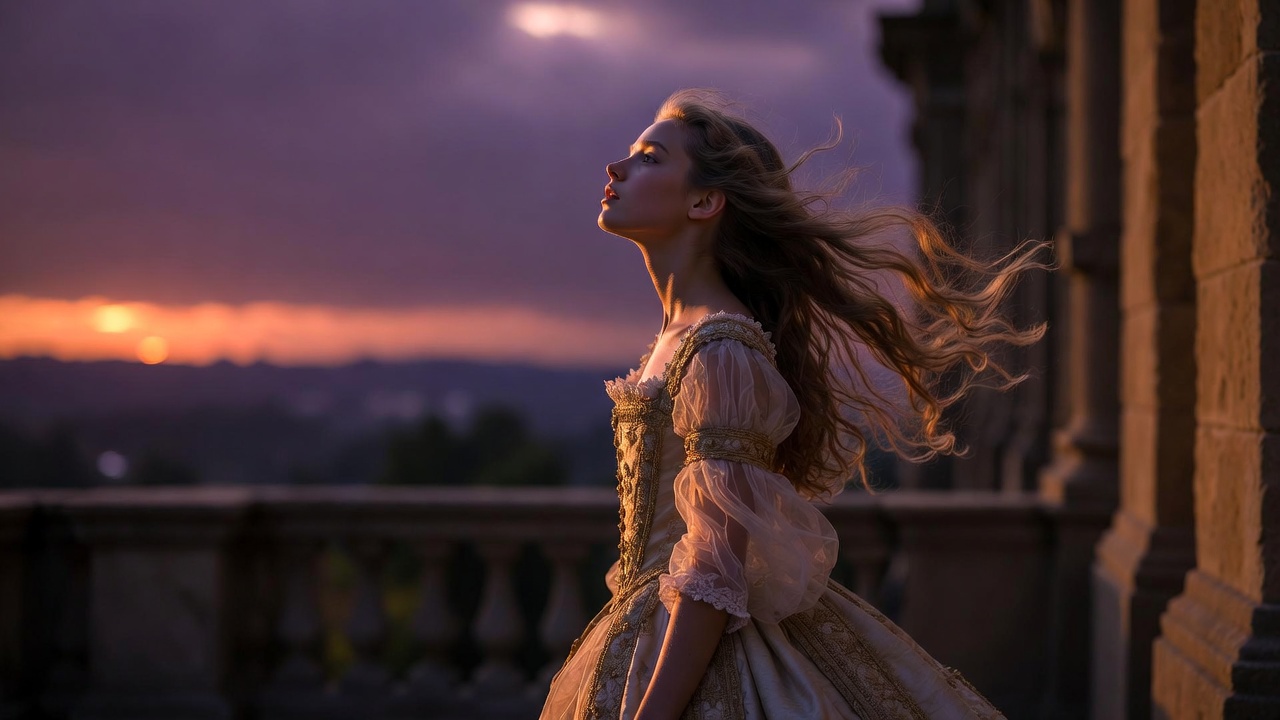
Full text: “Gallop apace, you fiery-footed steeds, Towards Phoebus’ lodging: such a wagoner As Phaethon would whip you to the west, And bring in cloudy night immediately. Spread thy close curtain, love-performing night, That runaway’s eyes may wink and Romeo Leap to these arms, untalk’d of and unseen. Lovers can see to do their amorous rites By their own beauties; or, if love be blind, It best agrees with night. Come, civil night, Thou sober-suited matron, all in black, And learn me how to lose a winning match, Play’d for a pair of stainless maidenhoods: Hood my unmann’d blood, bating in my cheeks, With thy black mantle; till strange love, grown bold, Think true love acted simple modesty. Come, night; come, Romeo; come, thou day in night; For thou wilt lie upon the wings of night Whiter than new snow on a raven’s back. Come, gentle night, come, loving, black-brow’d night, Give me my Romeo; and, when he shall die, Take him and cut him out in little stars, And he will make the face of heaven so fine That all the world will be in love with night And pay no worship to the garish sun.”
Modern paraphrase: Juliet impatiently urges the sun-god’s horses to race toward sunset so night can arrive faster. She begs darkness to hide their secret love, imagines Romeo leaping into her arms unseen, and dreams of their wedding night. She even fantasizes that when Romeo dies (a chilling foreshadowing), he’ll be transformed into stars, making the night sky so beautiful the world will abandon daylight.
Context: This speech comes right after Juliet learns she will marry Romeo that night. It’s one of the most sensual, forward-looking monologues in all of Shakespeare—spoken by a 13-year-old girl in Elizabethan terms.
Analysis:
- Mythological allusions (Phoebus, Phaethon) heighten the cosmic scale of her desire.
- Erotic imagery (“lose a winning match,” “unmann’d blood”) is strikingly bold for a young female character.
- The speech contrasts light/dark, innocence/experience, and foreshadows the tragic end with the star imagery. Audition favorite because it demands emotional intensity, sensuality, and vulnerability—perfect for showing range without relying on tears.
Juliet’s Conflicted Grief (Act 3, Scene 2 – “Shall I speak ill… Romeo is banished”) Full text (excerpted key portion for length): “Shall I speak ill of him that is my husband? Ah, poor my lord, what tongue shall smooth thy name, When I, thy three-hours wife, have mangled it? But, wherefore, villain, didst thou kill my cousin? That villain cousin would have kill’d my husband: Back, foolish tears, back to your native spring; Your tributary drops belong to woe, Which you, mistaking, offer up to joy. My husband lives, that Tybalt would have slain; And Tybalt’s dead, that would have slain my husband: All this is comfort; wherefore weep I then? Some word there was, worser than Tybalt’s death, That murder’d me: I would forget it fain; But, O, it presses to my memory, Like damned guilty deeds to a sinner’s mind: ‘Tybalt is dead, and Romeo—banished;’ That ‘banished,’ that one word ‘banished,’ Hath slain ten thousand Tybalts.”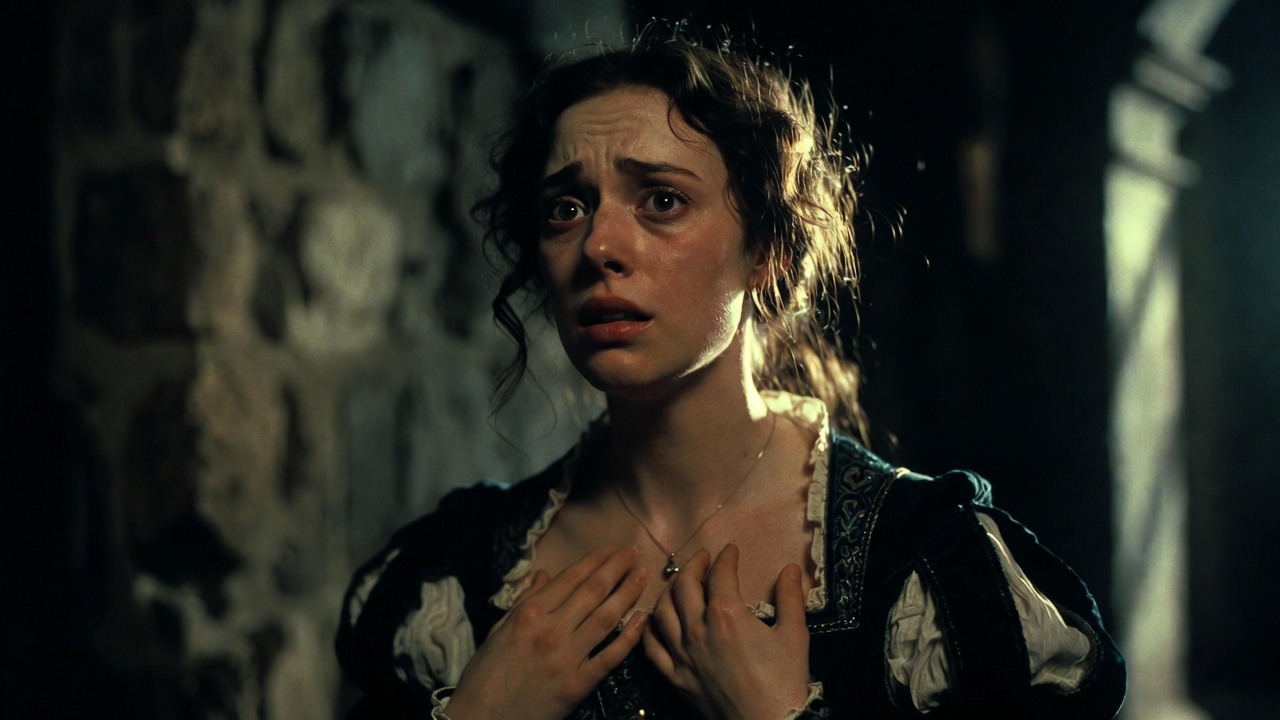
Context: Juliet receives news of Tybalt’s death and Romeo’s banishment in rapid succession.
Analysis: This monologue is a masterclass in emotional whiplash—rage at Romeo, loyalty to him, grief for Tybalt, joy that Romeo lives, despair at banishment. The repetition of “banished” becomes a hammer blow, showing how one word can devastate. It marks Juliet’s rapid maturation from naive girl to tragic heroine.
Supporting Gems – Lesser-Used but Powerful Monologues
- Mercutio’s Queen Mab Speech (Act 1, Scene 4) Full excerpt: “O, then, I see Queen Mab hath been with you…” Why it’s great: Witty, fantastical, darkly comic—ideal for actors wanting humor and verbal dexterity.
- The Nurse’s Reminiscence (Act 1, Scene 3) “Even or odd, of all days in the year, / Come Lammas-eve at night shall she be fourteen…” Earthy, humorous, maternal—perfect for character roles or comic relief auditions.
- Lady Capulet’s Persuasion (Act 1, Scene 3) “By my count, I was your mother much upon these years…” Underrated for showing authority and manipulation—great for female actors seeking maturity.
In-Depth Literary Analysis – What These Monologues Reveal About Shakespeare’s Craft
Shakespeare’s genius in Romeo and Juliet lies not only in the tragic plot but in how he uses monologue to make abstract emotions visceral and immediate. These speeches transform private inner worlds into public poetry, allowing audiences to witness the birth, peak, and collapse of passionate love in real time.
Themes Illuminated Through Speech
- Love vs. Hate / Light vs. Dark The play’s central tension is mirrored in every major monologue. Romeo’s balcony speech bathes Juliet in sunlight imagery (“It is the east, and Juliet is the sun”), while Juliet repeatedly calls for night to conceal and enable their love (“Spread thy close curtain, love-performing night”). This recurring motif shows love as both illuminating and dangerously hidden—beautiful yet doomed by the daylight world of feuds and social order.
- Fate vs. Free Will Juliet’s “Gallop apace” speech is filled with cosmic urgency—she wants to accelerate time itself. Yet the mythological references (Phaethon crashing the sun chariot) subtly remind us that humans cannot control cosmic forces. Romeo’s early oxymorons (“O brawling love! O loving hate!”) already suggest that passion is a force larger than rational choice.
- Youth vs. Society Both lovers speak against the adult world: Juliet rejects her name and her family’s expectations (“Deny thy father and refuse thy name”), while Romeo dismisses the moon (symbol of chastity and tradition) in favor of his sun-like beloved. These monologues give voice to youthful rebellion that is both idealistic and tragically naïve.
Language Techniques That Create Emotional Power
- Iambic Pentameter and Rhythm Shifts Shakespeare often deviates from strict iambic pentameter to mirror emotional states. In Juliet’s grief monologue, the hammering repetition of “banished” breaks the meter, simulating shock and obsession. In “Gallop apace,” the rapid succession of imperatives (“Come, night; come, Romeo”) accelerates the rhythm like galloping horses.
- Extended Metaphor and Imagery Romeo compares Juliet to celestial bodies; Juliet imagines Romeo cut into stars. These cosmic images elevate personal desire to mythic scale—making their love feel eternal even as it is fleeting.
- Oxymoron and Paradox Romeo’s opening lament piles contradiction upon contradiction (“bright smoke, cold fire”). This linguistic tension reflects the contradictory nature of first love: ecstatic yet painful, hopeful yet doomed.
Character Development Through Monologue
- Romeo: Evolves from self-indulgent Petrarchan lover (Act 1 lament) to ecstatic worshipper (balcony scene) to despairing outcast (banishment rage in Act 3, Scene 3—not covered in full here but worth noting: “There is no world without Verona walls”). Each speech marks a stage in his emotional maturation—and descent.
- Juliet: Begins with romantic idealism (“Wherefore art thou Romeo?”), surges into sensual anticipation (“Gallop apace”), then collapses into mature, conflicted grief. Her speeches trace the fastest character arc in Shakespeare—from child to tragic heroine in days.
Expert Insight: These monologues feel strikingly modern because Shakespeare grants Juliet an interior life and sexual agency rare for female characters of the period. Her “Gallop apace” speech, in particular, is astonishingly frank—proof that Shakespeare understood and dramatized female desire centuries before it became a mainstream literary topic.
Practical Tips for Performing or Studying a Monologue from Romeo and Juliet
Whether you’re preparing for drama school auditions, teaching a class, or exploring the text for personal enrichment, here are actionable strategies.
Audition Advice
- Length: Most casting calls want 1–2 minutes. Cut strategically—keep emotional peaks but remove exposition. For example, trim Romeo’s balcony speech after “O, that I were a glove upon that hand” if time is tight.
- Avoid the Overdone: The balcony speech and “Gallop apace” are beautiful but ubiquitous. Consider Juliet’s grief monologue (“Shall I speak ill…”) or Mercutio’s Queen Mab for originality.
- Subtext is Key: Directors want to see inner conflict. Even in ecstatic speeches, hint at impending tragedy—let the joy feel fragile.
Delivery Techniques
- Classical vs. Modern Pronunciation: Decide based on the production. “Gallop apace” sounds more sensual with modern vowels (“fiery-footed” rather than “feery-footed”).
- Pacing and Breath: Use pauses after imperatives (“Come, night…”) to build anticipation. Breathe at line ends to sustain momentum.
- Physicality: Juliet’s speeches reward stillness and focus—small gestures (a hand to the cheek, looking upward) can speak louder than sweeping movements.
For Students – Essay and Study Prompts
- Compare Romeo’s and Juliet’s use of celestial imagery. How does each character’s language reflect their gender and social position?
- How does Juliet’s language in Act 3, Scene 2 show her maturation compared to Act 2?
- Analyze the role of repetition in conveying obsession (e.g., “banished”).
- Compare stage vs. film interpretations (Zeffirelli 1968 vs. Luhrmann 1996—Luhrmann’s balcony scene uses water and guns to reframe the imagery).
Common Pitfalls and How to Avoid Them
- Over-dramatizing: Don’t shout every line—Shakespeare’s verse already has built-in crescendos.
- Ignoring Context: Never perform a monologue in isolation. Know what happened immediately before and after.
- Forgetting the Humor: Even tragic speeches have wit (Juliet’s playful wordplay in “Gallop apace”).
Lesser-Known Monologues Worth Exploring
While the balcony scene and “Gallop apace” dominate anthologies and audition lists, Shakespeare embedded several other powerful speeches in Romeo and Juliet that deserve more attention. These pieces offer originality, emotional complexity, and often a different tonal palette—making them excellent choices for standing out.
Romeo’s Despair After Banishment (Act 3, Scene 3 – “There is no world without Verona walls”) Key excerpt: “There is no world without Verona walls, But purgatory, torture, hell itself. Hence ‘banishèd’ is banished from the world, And world’s exile is death. Then ‘banishèd’ Is death mistermed. Calling death ‘banishèd’ Thou cuttest my head off with a golden axe And smilest upon the stroke that murders me.”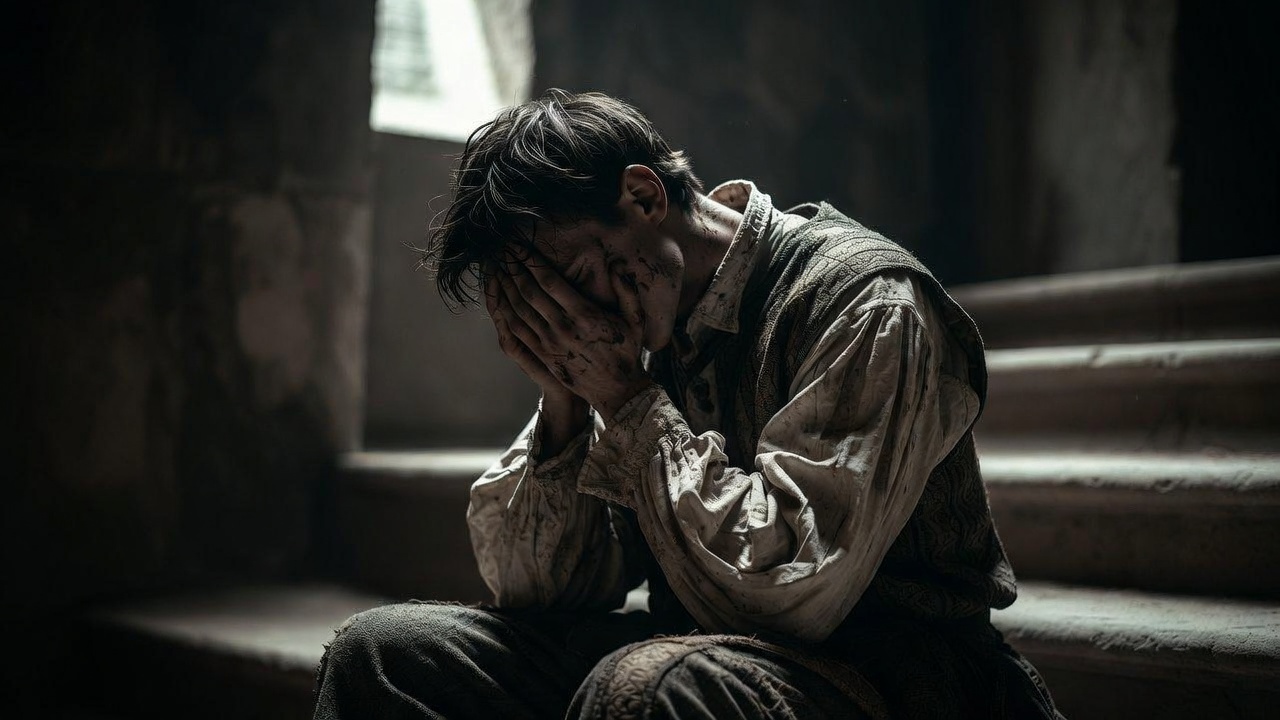
Context: Romeo, hiding in Friar Laurence’s cell, learns of his banishment and reacts with suicidal despair.
Why explore it:
- Raw emotional intensity—ideal for actors who want to showcase breakdown without melodrama.
- Reveals Romeo at his most fragile, contrasting his earlier romantic idealism.
- The speech contains sharp legalistic wordplay (“banishèd” / “death”) that rewards precise delivery.
- Less commonly chosen, giving you an edge in auditions.
Friar Laurence’s Rebuke to Romeo (Act 3, Scene 3 – “O, then I see that madmen have no ears”) Excerpt: “Hold thy desperate hand. Art thou a man? Thy form cries out thou art. Thy tears are womanish, thy wild acts denote The unreasonable fury of a beast.”
Why it’s valuable:
- A strong male monologue with moral authority and biting rhetoric.
- Excellent for older actors or those playing authority figures.
- Allows exploration of contrasting tones: paternal concern mixed with sharp condemnation.
These lesser-known pieces remind us that Romeo and Juliet is not just a love story—it’s a study in how passion collides with reason, society, and mortality.
Frequently Asked Questions (FAQ)
What is the most famous monologue in Romeo and Juliet? The balcony scene speech (“But soft! what light through yonder window breaks?”) is the single most recognized, followed closely by Juliet’s “Gallop apace, you fiery-footed steeds…” for its emotional and sensual power.
Are Romeo and Juliet monologues good for beginners? Yes—especially Juliet’s shorter, more contained speeches (“O Romeo, Romeo! wherefore art thou Romeo?”). They use clear emotional arcs and beautiful imagery, though beginners should work with a coach on verse rhythm and archaic pronunciation.
How long should an audition monologue be? Most professional auditions request 1–2 minutes (roughly 20–35 lines). Always prepare a longer version too, in case they ask to “keep going.” Cut thoughtfully—preserve the emotional climax and avoid chopping mid-thought.
Where can I find reliable full texts of these monologues? Public-domain sources include:
- MIT Shakespeare (shakespeare.mit.edu)
- Open Source Shakespeare (opensourceshakespeare.org)
- Folger Digital Texts (folger.edu/explore) Always cross-reference with a scholarly edition (Arden, Oxford, or Folger) if you’re studying for academic purposes.
How do these monologues differ in film vs. stage? Stage demands vocal clarity and sustained energy to reach the back row. Film (e.g., Zeffirelli 1968, Luhrmann 1996) often uses close-ups, music, and visual symbolism (water in Luhrmann’s balcony scene) to replace some of the spoken imagery. Actors must adjust: stage leans on text and voice; screen emphasizes subtlety and reaction shots.
Conclusion
More than four centuries after its first performance, Romeo and Juliet continues to speak because its monologues capture the universal experience of first love—its blinding joy, its reckless urgency, its shattering fragility. From Romeo’s starstruck awe to Juliet’s bold anticipation and wrenching grief, these speeches remind us why Shakespeare remains the greatest chronicler of the human heart.
Whether you’re preparing to step onto a stage, write an essay that earns top marks, teach a class that inspires, or simply reread the play with fresh eyes, these monologues offer endless layers of discovery. They are not museum pieces—they are living, breathing arguments for why love, even when doomed, is worth every risk.
Take one of these speeches. Speak it aloud. Feel its rhythm in your breath, its images in your mind. You may discover, as so many have before you, that in giving voice to Shakespeare’s words, you also give voice to something deeply your own.
Thank you for reading this in-depth guide from William Shakespeare Insights. If a particular monologue resonates with you, or if you’d like help analyzing another Shakespeare speech, leave a comment below—I read and respond to every one.