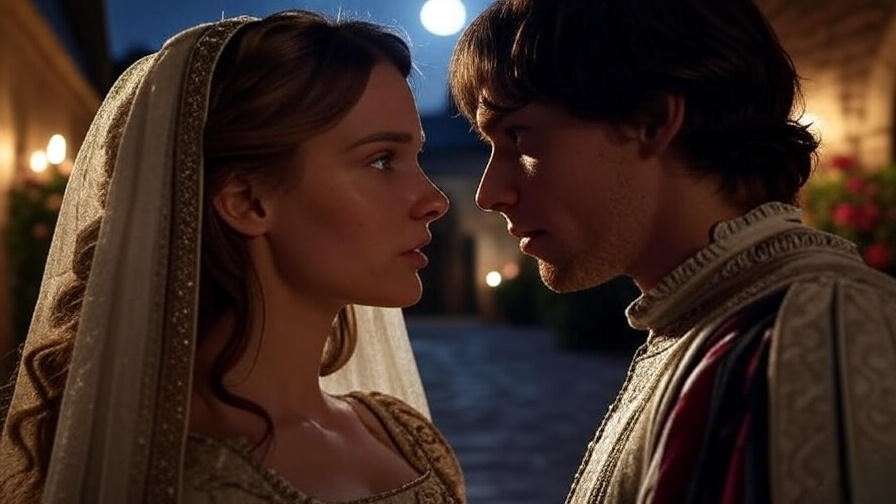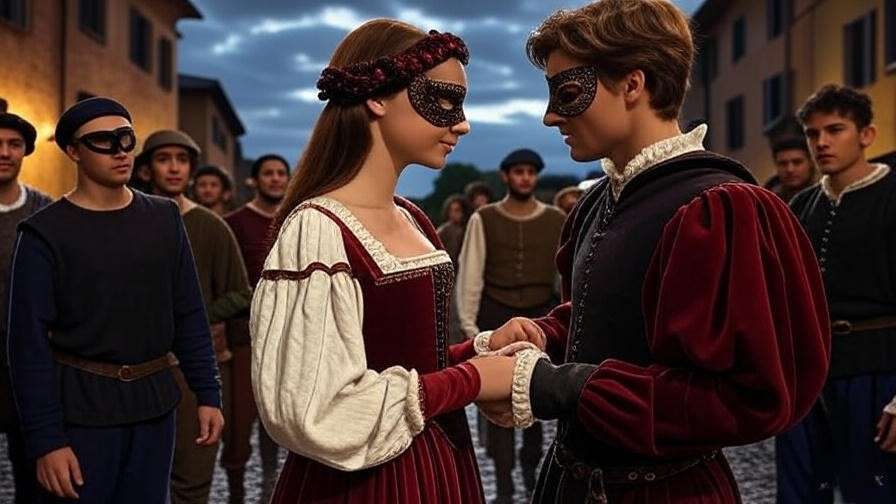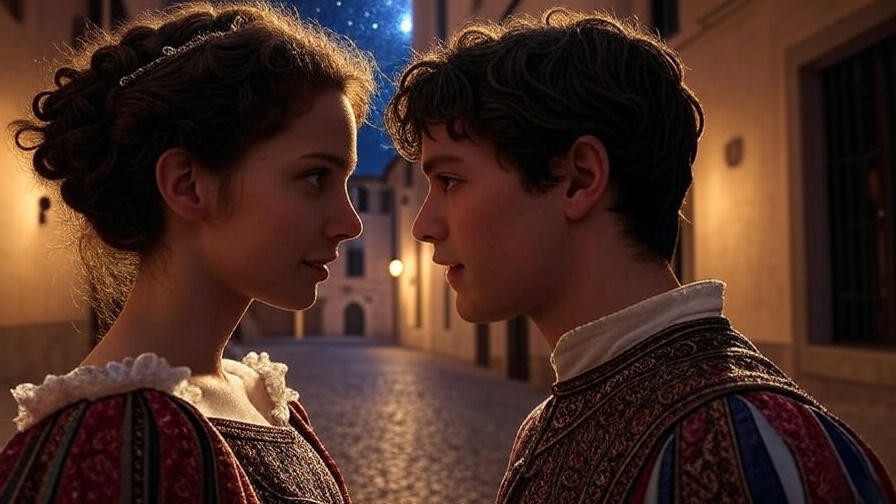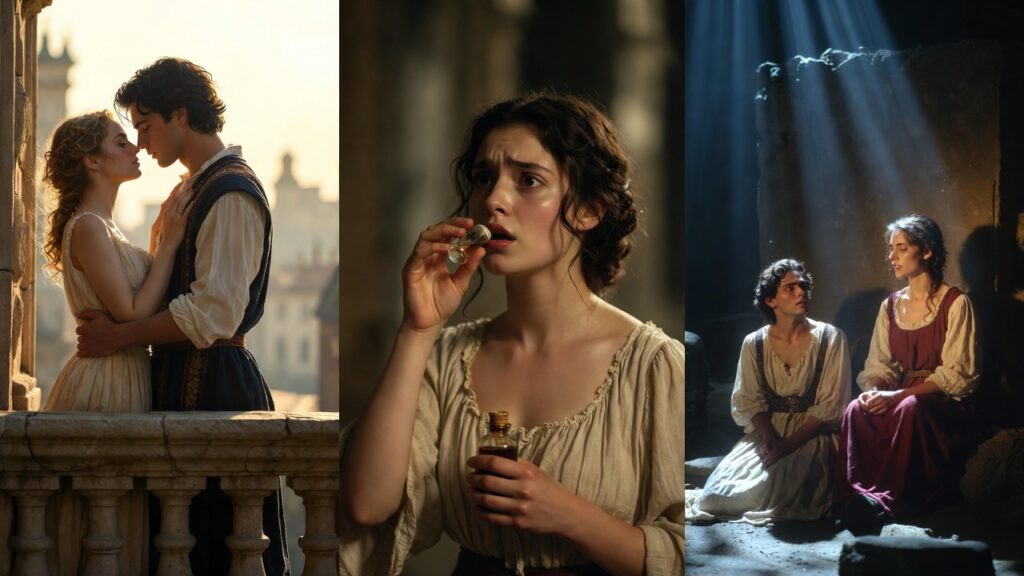
Imagine standing alone on a moonlit balcony, heart racing, whispering words that have echoed through centuries: “O Romeo, Romeo! wherefore art thou Romeo?” Or picture a young man hidden in shadows, gazing upward in awe: “But soft! What light through yonder window breaks? It is the east, and Juliet is the sun.” These lines aren’t just poetry—they are windows into the soul of Shakespeare’s most beloved tragedy. A monologue on Romeo and Juliet captures the raw intensity of young love, forbidden passion, fate’s cruelty, and the human struggle against societal constraints. In this comprehensive guide, we explore the play’s most iconic monologues and soliloquies, providing full context, original text excerpts, modern translations, deep literary analysis, thematic insights, and practical tips for students, actors, teachers, and literature enthusiasts. Whether you’re preparing for an exam, audition, or simply seeking to understand why these speeches still move us today, this article delivers the depth and clarity often missing from shorter overviews.
Shakespeare’s Romeo and Juliet (written around 1595–1596) is a masterclass in dramatic language. The play’s monologues—extended speeches by a single character, often soliloquies when spoken alone—reveal inner conflicts, advance the plot, and heighten emotional stakes. Unlike dialogue, these moments allow audiences to eavesdrop on private thoughts, building empathy and foreshadowing tragedy. The feud between the Montagues and Capulets serves as the backdrop, but the monologues focus on personal turmoil: infatuation turning to devotion, impatience for union, grief over violence, and despair in the face of death.
Why Monologues Matter in Romeo and Juliet
Monologues in this tragedy serve multiple purposes. They showcase Shakespeare’s poetic genius through iambic pentameter, metaphors, imagery (light/dark, heaven/earth), and oxymorons (“sweet sorrow”). They reflect Renaissance themes like fate versus free will, the impulsiveness of youth, and the destructive power of hate. For modern readers, they address universal questions: What does true love feel like? How do societal labels divide us? Can passion overcome destiny?
The play features standout examples from Romeo, Juliet, Mercutio, the Nurse, and others. Below, we decode the most famous ones, starting with the balcony scene that defines the play.
1. Romeo’s Balcony Soliloquy (Act 2, Scene 2) – The Icon of Romantic Yearning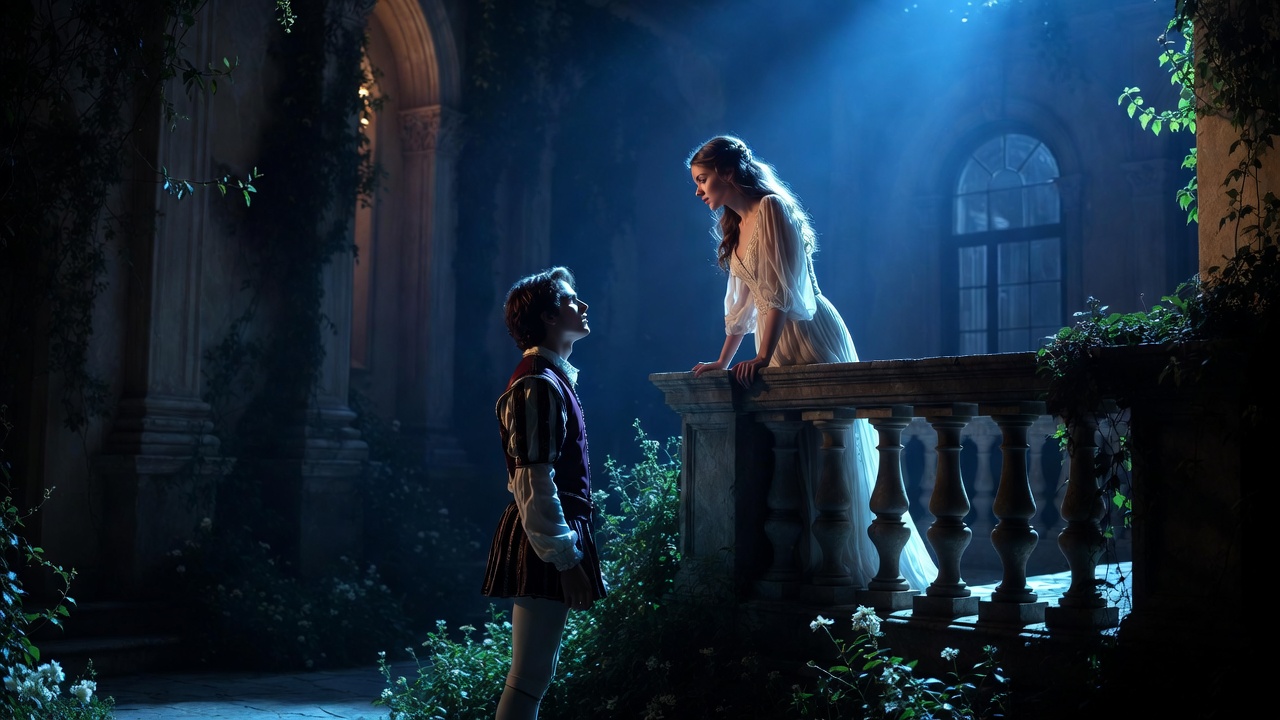
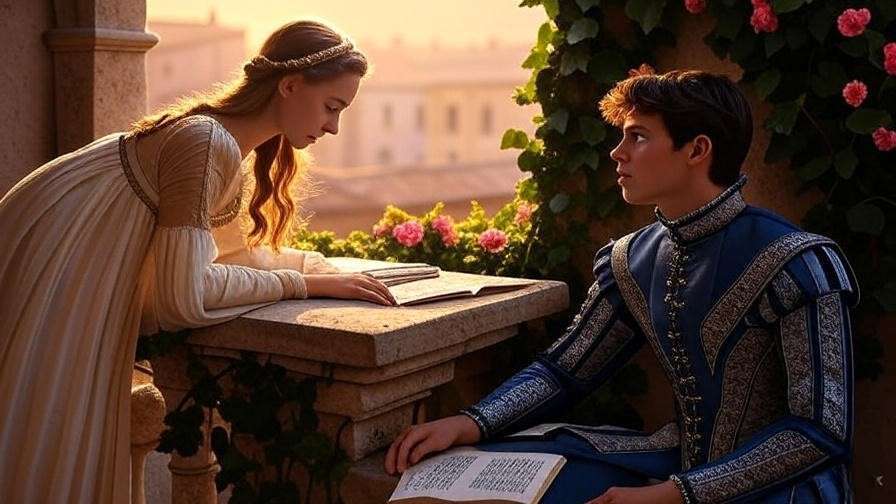
This is arguably the most celebrated monologue on Romeo and Juliet, spoken as Romeo sneaks into the Capulet orchard and sees Juliet above.
Original Text (excerpt):
But soft! What light through yonder window breaks? It is the east, and Juliet is the sun. Arise, fair sun, and kill the envious moon, Who is already sick and pale with grief That thou her maid art far more fair than she. Be not her maid, since she is envious. Her vestal livery is but sick and green, And none but fools do wear it. Cast it off. It is my lady; O, it is my love! O that she knew she were! She speaks, yet she says nothing. What of that? Her eye discourses; I will answer it. I am too bold; ’tis not to me she speaks. Two of the fairest stars in all the heaven, Having some business, do entreat her eyes To twinkle in their spheres till they return. What if her eyes were there, they in her head? The brightness of her cheek would shame those stars As daylight doth a lamp; her eyes in heaven Would through the airy region stream so bright That birds would sing and think it were not night. See how she leans her cheek upon her hand! O that I were a glove upon that hand, That I might touch that cheek!
Modern Translation/Paraphrase: Romeo spots a light in the window—it’s Juliet, radiant like the sun rising in the east. He urges the sun to rise and eclipse the jealous, pale moon (symbolizing chastity). Juliet outshines everything; her beauty makes the night feel like day. He fantasizes about being close enough to touch her cheek, revealing his instant, overwhelming infatuation.
Analysis and Timeless Meaning: This soliloquy marks Romeo’s shift from lovesick melancholy over Rosaline to genuine passion. Light/dark imagery dominates: Juliet as sun banishes the “envious moon,” symbolizing how love illuminates darkness. Religious undertones (Juliet as a “bright angel”) elevate her to divine status, foreshadowing the tragic holiness of their bond. Romeo’s impulsiveness shines— he’s only just met her, yet he’s ready to forsake all. For actors, this demands vulnerability: start with awe, build to longing. Students often analyze how it contrasts Romeo’s earlier artificial love speeches.
This monologue solves a common problem: readers wonder if Romeo’s love is “real.” It shows infatuation evolving into something deeper, though still hasty.
2. Juliet’s “Wherefore Art Thou Romeo?” Soliloquy (Act 2, Scene 2) – The Essence of Identity and Love
Immediately following Romeo’s speech, Juliet unknowingly speaks her heart aloud.
O Romeo, Romeo! wherefore art thou Romeo? Deny thy father and refuse thy name; Or, if thou wilt not, be but sworn my love, And I’ll no longer be a Capulet. ‘Tis but thy name that is my enemy; Thou art thyself, though not a Montague. What’s Montague? It is nor hand nor foot, Nor arm nor face, nor any other part Belonging to a man. O, be some other name! What’s in a name? That which we call a rose By any other name would smell as sweet. So Romeo would, were he not Romeo call’d, Retain that dear perfection which he owes Without that title. Romeo, doff thy name, And for that name which is no part of thee Take all myself.
Modern Translation/Paraphrase: Why are you Romeo (a Montague)? Reject your family name, or swear your love, and I’ll abandon mine. Your name is the only barrier—it’s not you. A rose by any name smells the same; Romeo’s essence remains perfect without “Montague.” Drop the name, and take me entirely.
Analysis and Timeless Meaning: This soliloquy addresses the core conflict: societal labels versus personal identity. Juliet’s logic is profound—names are arbitrary, yet they fuel hate. The rose metaphor illustrates that true worth transcends nomenclature, a radical idea in a feud-driven world. It highlights Juliet’s maturity; she’s more pragmatic than Romeo, willing to defy convention for love. Themes of fate, rebellion, and essentialism resonate today in discussions of prejudice, identity politics, and love across divides.
3. Juliet’s “Gallop Apace, You Fiery-Footed Steeds” Soliloquy (Act 3, Scene 2) – Impatient Passion and Sexual Longing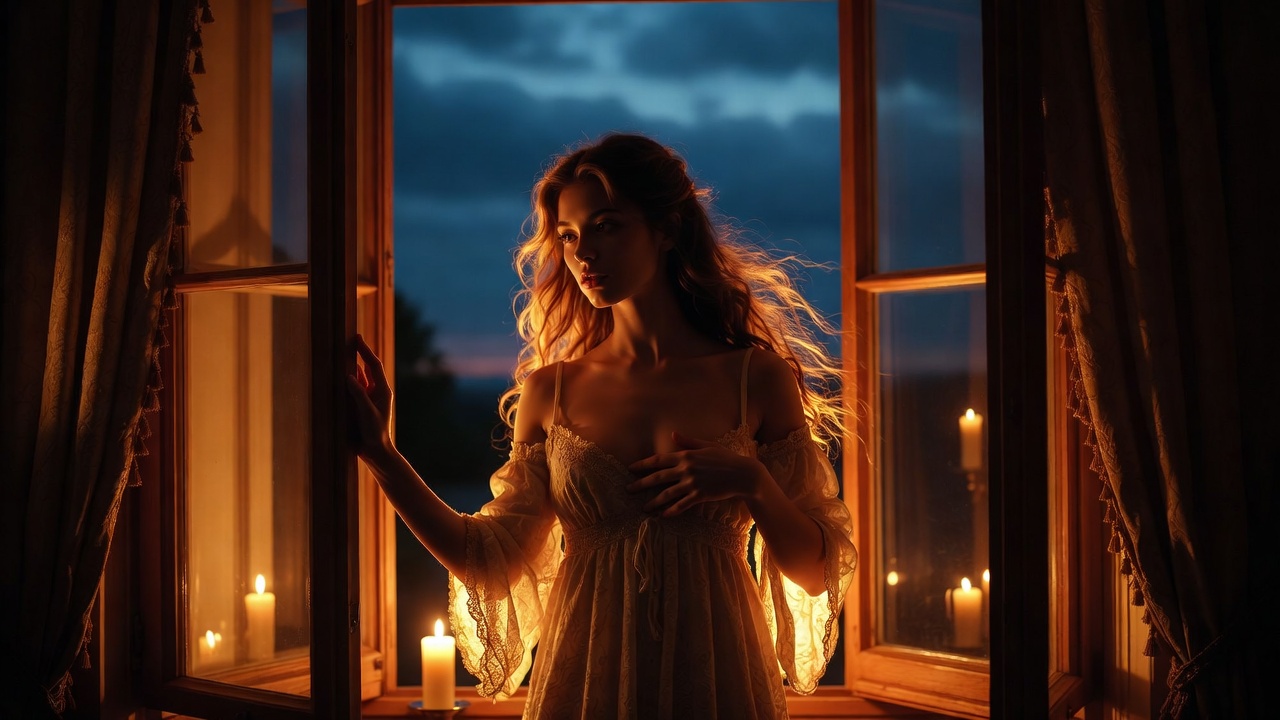
After the secret marriage ceremony, Juliet waits alone for nightfall and her new husband. This monologue is one of the most sensual and psychologically complex in the entire Shakespeare canon.
Gallop apace, you fiery-footed steeds, Towards Phoebus’ lodging! Such a waggoner As Phaëton would whip you to the west And bring in cloudy night immediately. Spread thy close curtain, love-performing night, That runaway’s eyes may wink, and Romeo Leap to these arms untalked of and unseen. Lovers can see to do their amorous rites By their own beauties; or, if love be blind, It best agrees with night. Come, civil night, Thou sober-suited matron all in black, And learn me how to lose a winning match, Played for a pair of stainless maidenhoods. Hood my unmanned blood, bating in my cheeks, With thy black mantle till strange love grow bold, Think true love acted simple modesty. Come, night. Come, Romeo. Come, thou day in night, For thou wilt lie upon the wings of night Whiter than new snow upon a raven’s back. Come, gentle night, come, loving, black-browed night; Give me my Romeo. And when I shall die, Take him and cut him out in little stars, And he will make the face of heaven so fine That all the world will be in love with night And pay no worship to the garish sun.
Modern Translation/Paraphrase: Hurry up, fast horses of the sun—race toward sunset so night can arrive! Let darkness hide us so Romeo can come to me unseen. Night, teach me how to surrender my virginity gracefully. Cover my blushing cheeks until my passion feels natural. Come quickly, Romeo—you shine brighter than snow on a raven’s feathers. When I die, let Romeo become stars so the whole world falls in love with night instead of day.
Analysis and Timeless Meaning: This soliloquy explodes with erotic anticipation and inversion of conventional imagery. Juliet invokes classical mythology (Phaëton driving the sun chariot too fast) to express her impatience, then personifies night as a “sober-suited matron” who will guide her through the “amorous rites.” The speech boldly confronts female desire in a patriarchal Elizabethan context—Juliet is not passive; she actively longs for physical union and even imagines Romeo’s death poetically as stellar transformation.
The light/dark motif returns, but inverted: night is now the desired realm, the “garish sun” rejected. This foreshadows the play’s tragic trajectory—love that thrives in secrecy and darkness cannot survive daylight’s scrutiny. For performers, the challenge is balancing youthful exuberance with sophisticated metaphor; many actresses describe this as one of the most liberating speeches for female characters in Shakespeare.
This monologue addresses a frequent reader question: “How sexual is Romeo and Juliet really?” Shakespeare gives Juliet one of the most explicit expressions of female desire in his works, making the play far more adult and psychologically nuanced than many sanitized school versions suggest.
4. The Nurse’s Reminiscence Monologue (Act 1, Scene 3) – Comic Relief, Memory, and Maternal Warmth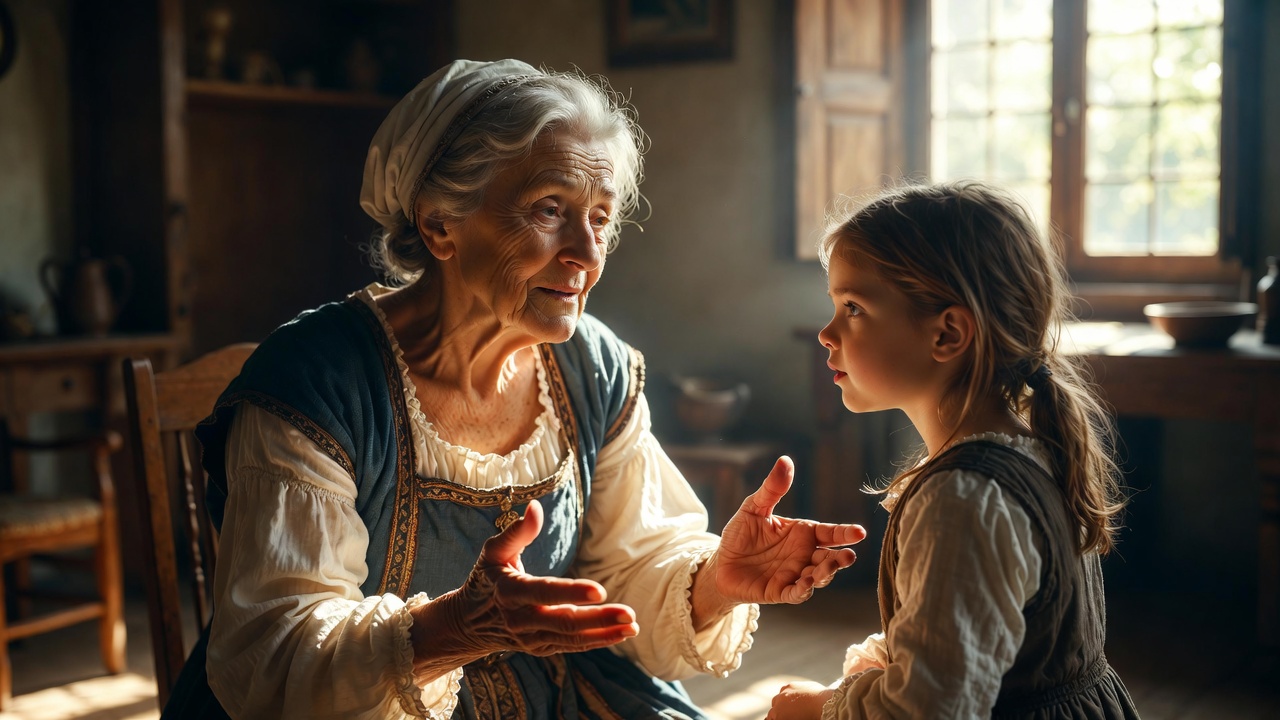
The Nurse’s long, rambling speech about Juliet’s childhood provides comic contrast and emotional grounding.
Even or odd, of all days in the year, Come Lammas-eve at night shall she be fourteen. Susan and she—God rest all Christian souls!— Were of an age. Well, Susan is with God; She was too good for me. But, as I said, On Lammas-eve at night shall she be fourteen; That shall she, marry; I remember it well. ’Tis since the earthquake now eleven years, And she was weaned—I never shall forget it— Of all the days of the year, upon that day; For I had then laid wormwood to my dug, Sitting in the sun under the dove-house wall. My lord and you were then at Mantua. Nay, I do bear a brain. But, as I said, When it did taste the wormwood on the nipple Of my dug and felt it bitter, pretty fool, To see it tetchy and fall out with the dug! “Shake!” quoth the dove-house. ’Twas no need, I trow, To bid me trudge. And since that time it is eleven years, For then she could stand high-lone; nay, by th’ rood, She could have run and waddled all about; For even the day before, she broke her brow, And then my husband—God be with his soul! A’ was a merry man—took up the child. “Yea,” quoth he, “dost thou fall upon thy face? Thou wilt fall backward when thou hast more wit, Wilt thou not, Jule?” And, by my holidam, The pretty wretch left crying and said “Ay.” To see now how a jest shall come about! I warrant, an I should live a thousand years, I never should forget it. “Wilt thou not, Jule?” quoth he. And, pretty fool, it stinted and said “Ay.”
Modern Translation/Paraphrase: Juliet turns fourteen on Lammas Eve. I remember because my daughter Susan (now dead) was the same age. The day Juliet was weaned, there was an earthquake. I put bitter wormwood on my breast; she hated it and cried. My late husband joked that she’d fall backward when she grew up (implying marriage and sex). She stopped crying and said “yes.” I’ll never forget that moment.
Analysis and Timeless Meaning: This monologue humanizes the Nurse as a earthy, garrulous surrogate mother whose humor and affection contrast the play’s escalating tragedy. The sexual innuendo (“fall backward”) and casual mention of death (Susan, the husband) remind us that life is both joyful and brutal. It establishes Juliet’s innocence while foreshadowing her sexual awakening and eventual doom.
5. Mercutio’s Queen Mab Speech (Act 1, Scene 4) – Dreams, Imagination, and the Subversion of Romance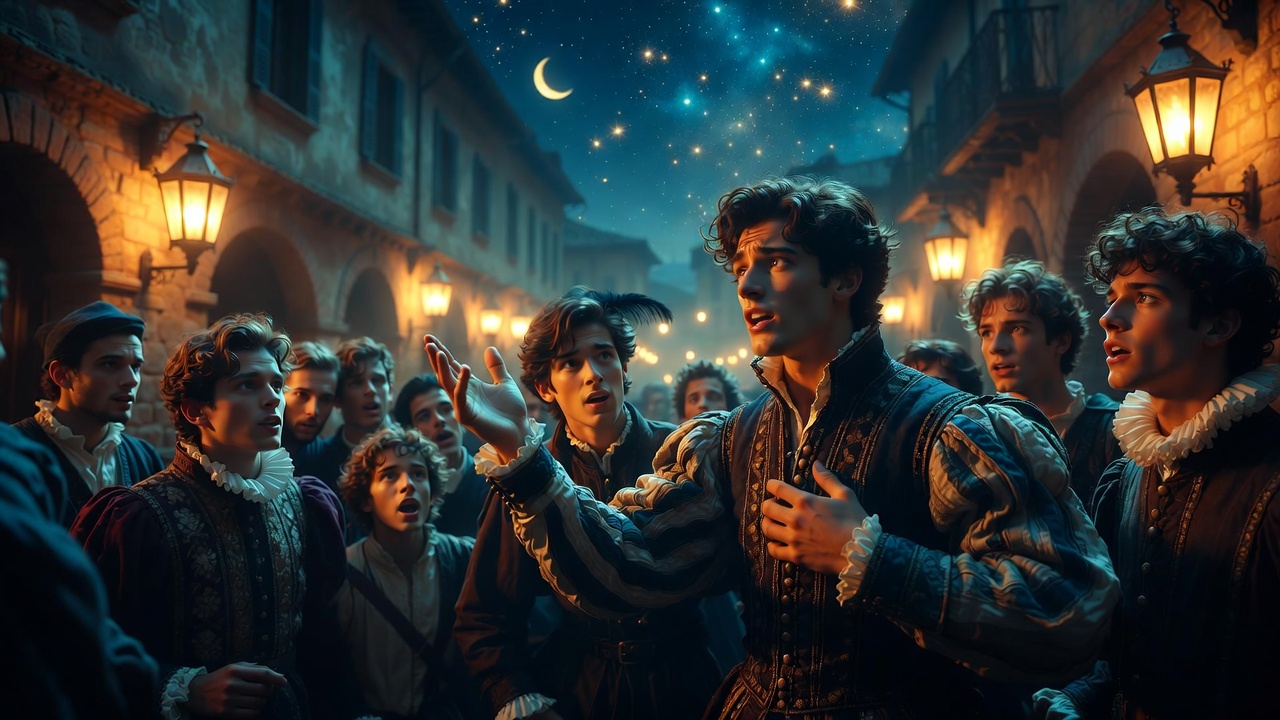
Just before Romeo attends the Capulet feast where he first sees Juliet, Mercutio delivers one of Shakespeare’s most dazzling and thematically rich monologues. It serves as both comic relief and a philosophical counterpoint to the emerging love story.
O, then, I see Queen Mab hath been with you. She is the fairies’ midwife, and she comes In shape no bigger than an agate stone On the forefinger of an alderman, Drawn with a team of little atomies Over men’s noses as they lie asleep. Her wagon spokes made of long spinners’ legs, The cover of the wings of grasshoppers, Her traces of the smallest spider’s web, Her collars of the moonshine’s watery beams, Her whip of cricket’s bone, the lash of film, Her wagoner a small gray-coated gnat, Not half so big as a round little worm Pricked from the lazy finger of a maid. Her chariot is an empty hazelnut Made by the joiner squirrel or old grub, Time out o’ mind the fairies’ coachmakers. And in this state she gallops night by night Through lovers’ brains, and then they dream of love; O’er courtiers’ knees, that dream on curtsies straight; O’er lawyers’ fingers, who straight dream on fees; O’er ladies’ lips, who straight on kisses dream, Which oft the angry Mab with blisters plagues, Because their breaths with sweetmeats tainted are. Sometimes she gallops o’er a courtier’s nose, And then dreams he of smelling out a suit; And sometimes comes she with a tithe-pig’s tail Tickling a parson’s nose as ’a lies asleep, Then he dreams of another benefice. Sometimes she driveth o’er a soldier’s neck, And then dreams he of cutting foreign throats, Of breaches, ambuscadoes, Spanish blades, Of healths five fathom deep; and then anon Drums in his ear, at which he starts and wakes, And being thus frighted swears a prayer or two And sleeps again. This is that very Mab That plats the manes of horses in the night And bakes the elflocks in foul sluttish hairs, Which once untangled, much misfortune bodes. This is the hag, when maids lie on their backs, That presses them and learns them first to bear, Making them women of good carriage. This is she—
Modern Translation/Paraphrase: Queen Mab, the fairies’ midwife, is tiny—smaller than an agate stone—and rides in a hazelnut chariot pulled by atoms and driven by a gnat. She gallops through people’s dreams at night: lovers dream of love, courtiers of bowing, lawyers of fees, ladies of kisses (which she sometimes blisters because of their sugary breath). Soldiers dream of battles and drinking, then wake in fright. She tangles horses’ manes and braids dirty hair into “elflocks,” bringing bad luck. She’s the one who presses on sleeping girls and teaches them to bear children—making them women.
Analysis and Timeless Meaning: This monologue is a tour de force of imaginative language, piling miniature detail upon miniature detail to create a vivid, almost hallucinatory world. Mercutio uses it to mock Romeo’s romantic melancholy, reducing dreams of love to the work of a mischievous fairy. Yet the speech darkens toward the end—Queen Mab also brings nightmares, misfortune, and sexual awakening framed in crude, almost violent terms (“presses them and learns them first to bear”).
Scholars often see this as Shakespeare’s commentary on the fragility and artificiality of dreams, including romantic ones. It foreshadows how the lovers’ “dream” of perfect love will be shattered by reality (violence, death). For actors, the challenge is sustaining the breathless, escalating rhythm while shifting from whimsical to ominous.
This speech solves a common interpretive puzzle: Why does Shakespeare give so much space to Mercutio early on? It establishes him as the voice of skepticism and earthy realism, making Romeo and Juliet’s idealism appear both beautiful and dangerously naive.
6. Juliet’s Potion Soliloquy (Act 4, Scene 3) – Terror, Doubt, and Psychological Realism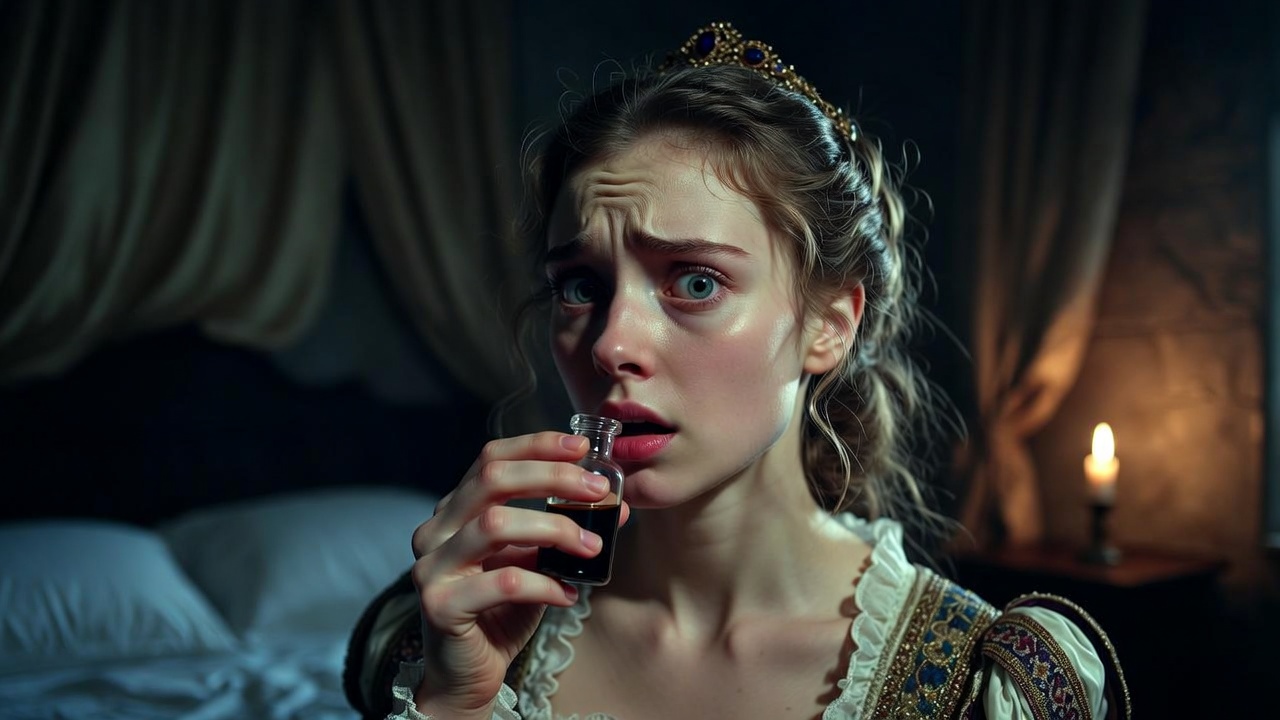
Alone in her chamber before drinking the Friar’s sleeping potion, Juliet confronts fear, isolation, and the possibility of madness or death.
What if it be a poison which the friar Subtly hath ministered to have me dead, Lest in this marriage he should be dishonored Because he married me before to Romeo? I fear it is; and yet methinks it should not, For he hath still been tried a holy man. How if, when I am laid into the tomb, I wake before the time that Romeo Come to redeem me? There’s a fearful point! Shall I not then be stifled in the vault, To whose foul mouth no healthsome air breathes in, And there die strangled ere my Romeo comes? Or, if I live, is it not very like The horrible conceit of death and night, Together with the terror of the place— As in a vault, an ancient receptacle Where for this many hundred years the bones Of all my buried ancestors are packed; Where bloody Tybalt, yet but green in earth, Lies fest’ring in his shroud; where, as they say, At some hours in the night spirits resort— Alack, alack, is it not like that I, So early waking, what with loathsome smells, And shrieks like mandrakes torn out of the earth, That living mortals, hearing them, run mad— O, if I wake, shall I not be distraught, Environèd with all these hideous fears, And madly play with my forefathers’ joints, And pluck the mangled Tybalt from his shroud, And in this rage with some great kinsman’s bone As with a club dash out my desp’rate brains? O look! Methinks I see my cousin’s ghost Seeking out Romeo, that did spit his body Upon a rapier’s point. Stay, Tybalt, stay! Romeo, Romeo, Romeo! Here’s drink. I drink to thee.
Modern Translation/Paraphrase: What if the Friar poisoned me to cover up the secret marriage? He seems holy, but what if? Worse—what if I wake too early in the tomb? I’d suffocate, or go mad from the stench, the darkness, Tybalt’s rotting corpse nearby, ghosts, mandrake shrieks. I might lose my mind, play with bones, smash my head with a femur. Oh—I see Tybalt’s ghost hunting Romeo! Stay away! Romeo, here’s to you—I drink.
Analysis and Timeless Meaning: This is Juliet’s longest solo speech and one of Shakespeare’s most psychologically penetrating portrayals of fear. Unlike earlier ecstatic monologues, this one spirals into horror through vivid sensory detail (smells, shrieks, rotting flesh) and escalating “what if” scenarios. It showcases Juliet’s intelligence and imagination turning against her—her mind creates terrors more frightening than reality.
The speech humanizes her: she’s not a passive victim but a young woman facing existential dread. It also foreshadows the tragic mis-timing that dooms the lovers. Modern readers and performers often connect this to anxiety disorders, claustrophobia, or the fear of being buried alive—a terror that still resonates deeply.
7. Romeo’s Final Monologue in the Tomb (Act 5, Scene 3) – Despair, Eternal Love, and Tragic Closure
The play’s emotional climax arrives in the Capulet tomb. Believing Juliet dead, Romeo delivers a series of anguished speeches before taking poison. This final monologue (and its immediate precursors) represents the culmination of his character arc—from impulsive romantic to grief-stricken fatalist.
Original Text (key excerpt – Romeo addressing the “dead” Juliet):
O my love, my wife! Death, that hath sucked the honey of thy breath, Hath had no power yet upon thy beauty. Thou art not conquered. Beauty’s ensign yet Is crimson in thy lips and in thy cheeks, And death’s pale flag is not advancèd there. Tybalt, liest thou there in thy bloody sheet? O, what more favor can I do to thee Than with that hand that cut thy youth in twain To sunder his that was thine enemy? Forgive me, cousin.—Ah, dear Juliet, Why art thou yet so fair? Shall I believe That unsubstantial Death is amorous, And that the lean abhorrèd monster keeps Thee here in dark to be his paramour? For fear of that I still will stay with thee And never from this palace of dim night Depart again. Here, here will I remain With worms that are thy chambermaids. O, here Will I set up my everlasting rest And shake the yoke of inauspicious stars From this world-wearied flesh. Eyes, look your last! Arms, take your last embrace! And, lips, O you The doors of breath, seal with a righteous kiss A dateless bargain to engrossing death. Come, bitter conduct, come, unsavory guide. Thou desperate pilot, now at once run on The dashing rocks thy seasick weary bark! Here’s to my love! [Drinks] O true apothecary, Thy drugs are quick. Thus with a kiss I die.
Modern Translation/Paraphrase: My love, my wife—death has taken your breath but not your beauty. Your lips and cheeks are still flushed; death hasn’t claimed you fully. Tybalt, lying there bloody—forgive me; I’ll join you by killing myself. Juliet, why are you still so beautiful? Is Death in love with you and keeping you here as his lover? I won’t leave you. I’ll stay forever in this dark tomb with the worms. I shake off the cruel stars that cursed me. Eyes, look one last time; arms, embrace her; lips, seal this final deal with death. Here’s to my love—I drink and die with a kiss.
Analysis and Timeless Meaning: Romeo’s language is saturated with paradox and inversion: death cannot conquer beauty, yet beauty tempts death. The speech transforms the tomb into a “palace of dim night,” echoing earlier light/dark imagery but now fully embracing darkness as eternal union. Romeo attempts to wrest control from fate (“shake the yoke of inauspicious stars”), only to surrender immediately. The final lines are devastatingly intimate—physical gestures (embrace, kiss) become the last acts of agency before oblivion.
This monologue resolves the central tension: love that began in light (the balcony) ends in darkness (the tomb). It underscores the play’s warning about unchecked passion and miscommunication. For performers, the challenge is conveying both tenderness and suicidal resolve without melodrama. Modern audiences often find Romeo’s death speech profoundly moving because it captures the irrational power of grief—how love can make someone choose annihilation over separation.
Comparative Overview: How the Monologues Evolve Across the Play
Tracing the major monologues reveals a clear emotional and thematic arc:
- Act 1–2 (beginning): Optimism and idealism dominate. Romeo’s balcony speech and Juliet’s “wherefore” soliloquy radiate hope, light imagery, and defiance of social barriers.
- Act 3 (middle): Passion intensifies but darkens. Juliet’s “Gallop apace” inverts light/dark (night becomes desirable), while Mercutio’s Queen Mab speech injects cynicism and foreshadows illusion.
- Act 4 (rising crisis): Isolation and terror emerge. Juliet’s potion speech strips away romance, exposing raw fear and the limits of human control.
- Act 5 (catastrophe): Despair and resignation. Romeo’s tomb speech closes the circle—light is extinguished, love becomes inseparable from death.
This progression mirrors the tragedy’s structure: from private ecstasy to public catastrophe, from youthful rebellion to fatal inevitability.
Performance and Audition Tips for the Major Romeo and Juliet Monologues
- Romeo’s Balcony Speech
- Start softly, with wonder (“But soft!”). Build intensity gradually.
- Use pauses after metaphors (sun/moon, stars/eyes) to let imagery land.
- Physicalize the upward gaze—direct energy toward an imagined Juliet above.
- Juliet’s “Wherefore Art Thou Romeo?”
- Emphasize logical progression: frustration → reasoning → tender offer.
- The rose metaphor is the emotional peak—deliver it with quiet conviction.
- Avoid over-dramatizing; Juliet is thoughtful here, not hysterical.
- Juliet’s “Gallop Apace”
- Embrace the erotic charge—allow sensuality without exaggeration.
- Vary tempo: rush through the opening invocation, slow for intimate fantasies.
- End on a note of radiant hope (“all the world will be in love with night”).
- Juliet’s Potion Soliloquy
- Build terror incrementally—each “what if” should feel more suffocating.
- Use the space: mime smelling rot, hearing shrieks, seeing Tybalt’s ghost.
- The sudden shift to drinking (“Romeo, Romeo, Romeo! Here’s drink”) should feel desperate and decisive.
- Romeo’s Tomb Speech
- Layer grief, tenderness, and resolve.
- Physical actions (embrace, kiss, drink) are as important as words.
- Let the final “Thus with a kiss I die” land quietly—devastating simplicity.
Why These Monologues Remain Powerful in the 21st Century (2026 Perspective)
In an era of instant communication, identity politics, mental health awareness, and debates over fate versus choice, Shakespeare’s words feel strikingly contemporary:
- The rejection of arbitrary labels (“What’s in a name?”) speaks to ongoing conversations about race, gender, nationality, and belonging.
- Juliet’s bold expressions of desire challenge outdated stereotypes of female passivity.
- The potion soliloquy resonates with anyone who has experienced panic attacks, claustrophobia, or anticipatory dread.
- Romeo’s final embrace of death mirrors modern discussions of love, loss, and the search for meaning in a seemingly indifferent universe.
These monologues endure because they capture the full spectrum of human emotion—ecstasy, doubt, terror, devotion, despair—in language that remains fresh and piercing after more than four centuries.
The Enduring Power of a Monologue on Romeo and Juliet
A monologue on Romeo and Juliet is never just a speech—it is a heartbeat laid bare. From the luminous hope of the balcony to the suffocating darkness of the tomb, these solitary voices chart the course of young love colliding with an unforgiving world. Shakespeare gives us characters who think, feel, and speak with breathtaking intensity, inviting us to witness—and perhaps recognize—our own capacity for passion and pain.
Whether you are a student annotating lines for an essay, an actor preparing an audition cut, a teacher guiding a class discussion, or simply a reader returning to the play for comfort or catharsis, these monologues reward close attention. They remind us why Shakespeare remains essential: because no other writer has so perfectly captured the beautiful, terrible truth that to love deeply is to risk everything.