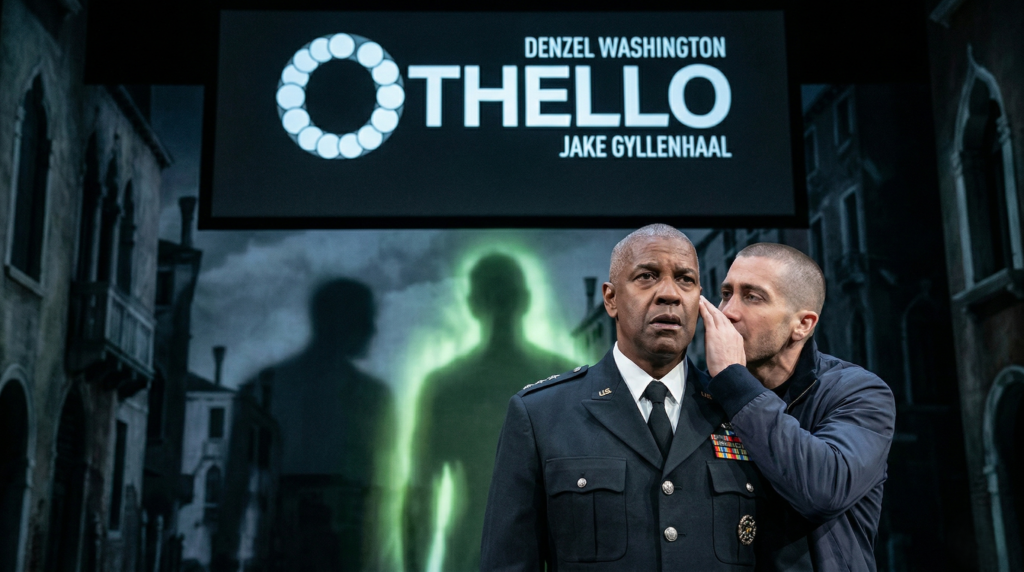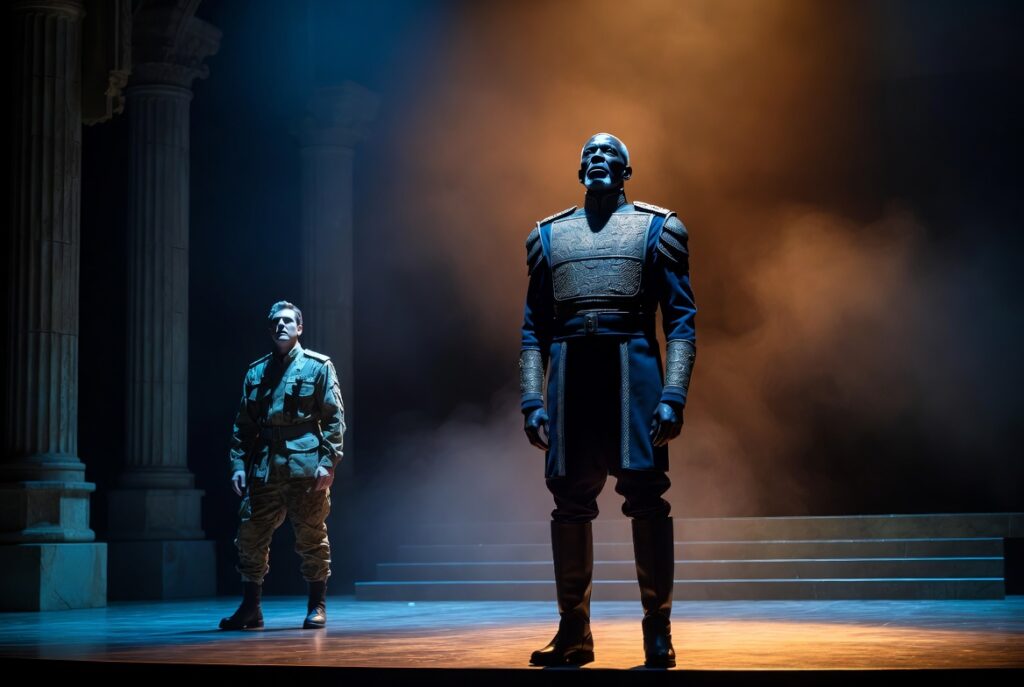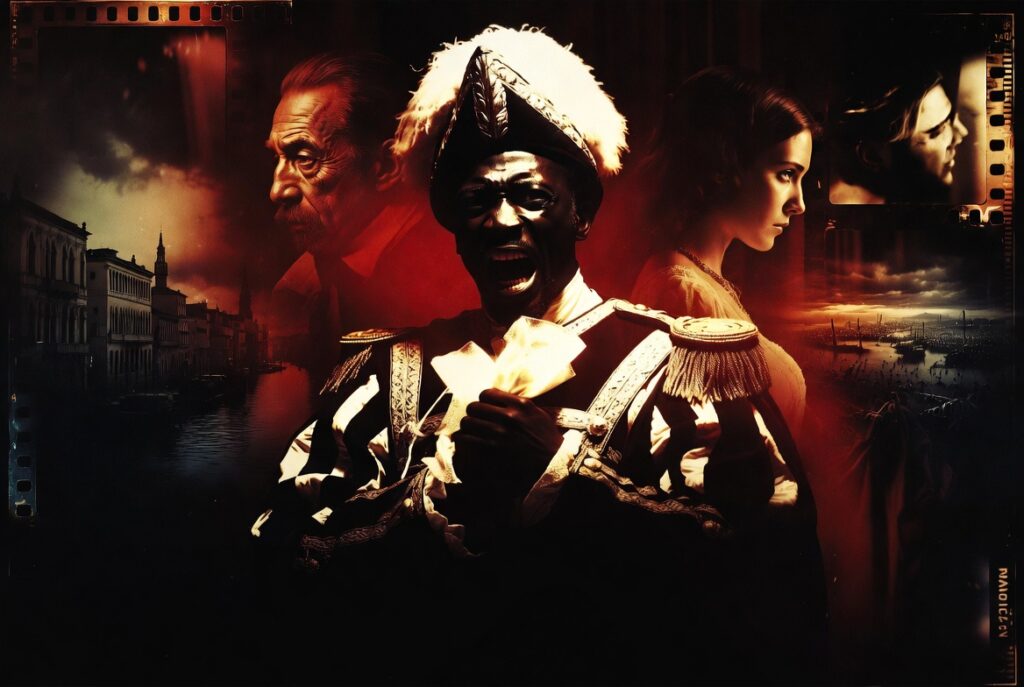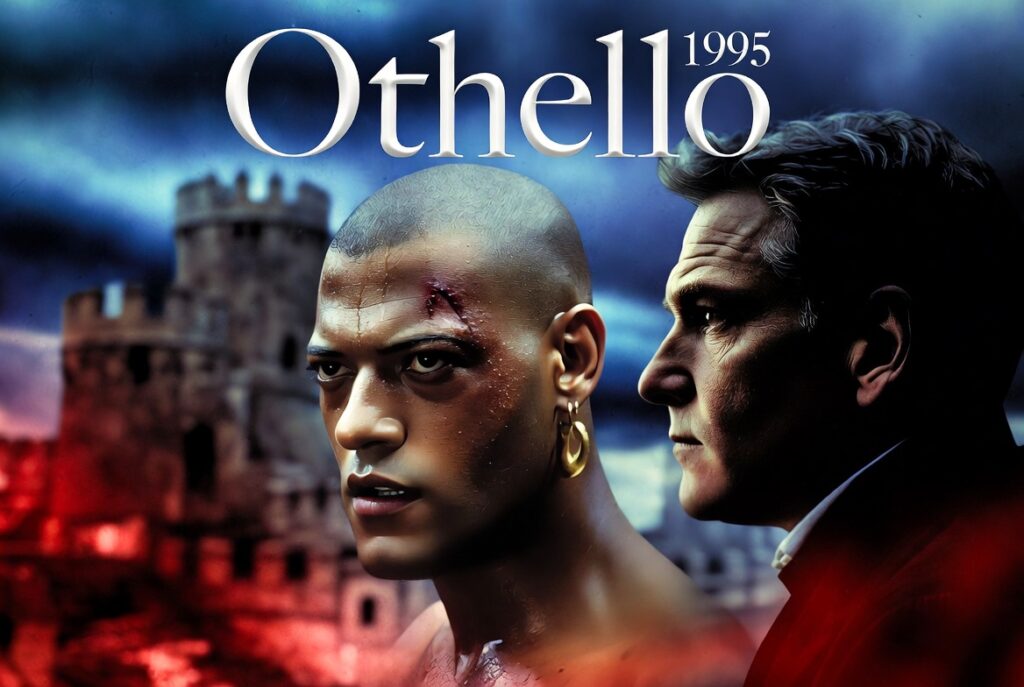
Imagine a battle-hardened Moorish general standing on the battlements of a sun-scorched Cypriot fortress, his noble bearing suddenly shattered by a single, poisonous whisper. In one devastating moment, trust evaporates and jealousy ignites a wildfire that will consume love, honor, and life itself. That visceral, heart-pounding intensity is exactly what Othello 1995 delivers. Directed by Oliver Parker and starring Laurence Fishburne as Othello, Kenneth Branagh as Iago, and Irène Jacob as Desdemona, this bold 1995 film adaptation transforms William Shakespeare’s 1603 tragedy into a cinematic experience that feels urgent, erotic, and dangerously contemporary.
For readers who love Shakespeare but sometimes find the Elizabethan language a barrier, or for film lovers seeking a gripping drama that explores race, manipulation, and toxic jealousy without feeling like a classroom lecture, Othello 1995 solves a real problem: it makes one of literature’s most powerful plays accessible, visually stunning, and emotionally immediate while remaining deeply respectful of the original text. Whether you’re a student preparing for an exam, a theater enthusiast comparing adaptations, or simply someone who wants to experience the play’s raw power on screen, this article gives you everything you need—production insights, performance breakdowns, thematic depth, and practical viewing advice—to fully appreciate why Oliver Parker’s Othello 1995 continues to stand out among Shakespeare screen adaptations more than three decades later.
Shakespeare’s Othello: The Play That Still Shocks
William Shakespeare’s Othello, the Moor of Venice (first performed around 1604) remains one of the most explosive tragedies in the English canon. Set against the backdrop of Venetian military and political intrigue, the play follows the noble general Othello, a Moorish outsider in a white Christian society, whose marriage to the virtuous Desdemona is systematically destroyed by the scheming ensign Iago.
At its core, the tragedy is driven by jealousy—not the petty envy of a rival, but a corrosive, all-consuming monster that Iago plants and cultivates with surgical precision. Shakespeare weaves together themes of racial otherness, the fragility of reputation, the dangers of unchecked emotion, and the destructive power of misogyny. The play’s language is some of Shakespeare’s most poetic and psychologically penetrating, yet its stage history has long been complicated by questions of race and representation. For centuries, white actors in blackface portrayed Othello; Parker’s 1995 film marks a landmark shift by casting Laurence Fishburne, an African-American actor, in the title role for a major studio production.
Film offers advantages that the stage cannot match. Close-ups capture the subtle flicker of doubt in a character’s eyes. Sweeping location shots turn Cyprus into a pressure-cooker fortress. And the camera can linger on intimate moments—touches, glances, silences—that amplify the erotic charge and emotional stakes. Parker understood this perfectly, and Othello 1995 uses every cinematic tool to make Shakespeare’s 400-year-old story feel like a modern psychological thriller.
Oliver Parker’s Bold Directorial Vision for Othello 1995
Who Was Oliver Parker? From Stage to Screen
Oliver Parker came to directing Othello 1995 as a seasoned Shakespearean actor with a fresh directorial eye. This was his feature debut, and he approached the material not as a reverent museum piece but as an “erotic thriller.” Parker wanted to strip away the dusty academic veneer and restore the play’s raw passion, violence, and psychological tension. In interviews at the time, he emphasized filming on location to create an immersive, lived-in world rather than a stylized stage set.
His vision was clear: make Othello feel immediate and dangerous for contemporary audiences. By casting actors who brought star power and fresh interpretations—rather than relying solely on classically trained British Shakespeare veterans—Parker aimed for accessibility without sacrificing depth.
Production Context and Challenges
Released in December 1995 during a wave of 1990s Shakespeare revivals (think Kenneth Branagh’s Henry V and Much Ado About Nothing), Othello 1995 had a respectable $11 million budget and was shot primarily on location in Italy, including a historic castle near Rome that stood in for the Venetian and Cypriot settings. The production spent six weeks filming in the fortress-like environment, which helped create the claustrophobic atmosphere essential to the tragedy.
One of the most significant production choices was casting Laurence Fishburne as Othello—the first time a Black actor had portrayed the role in a major English-language studio film. This decision brought authentic racial tension and dignity to the character while sparking important conversations about representation that continue today. Parker’s screenplay stayed largely faithful to Shakespeare’s verse but streamlined dialogue for pacing and added visual sequences that heighten the story’s emotional and erotic undercurrents.
The Unforgettable Cast of Othello 1995
Laurence Fishburne as Othello – Dignity and Danger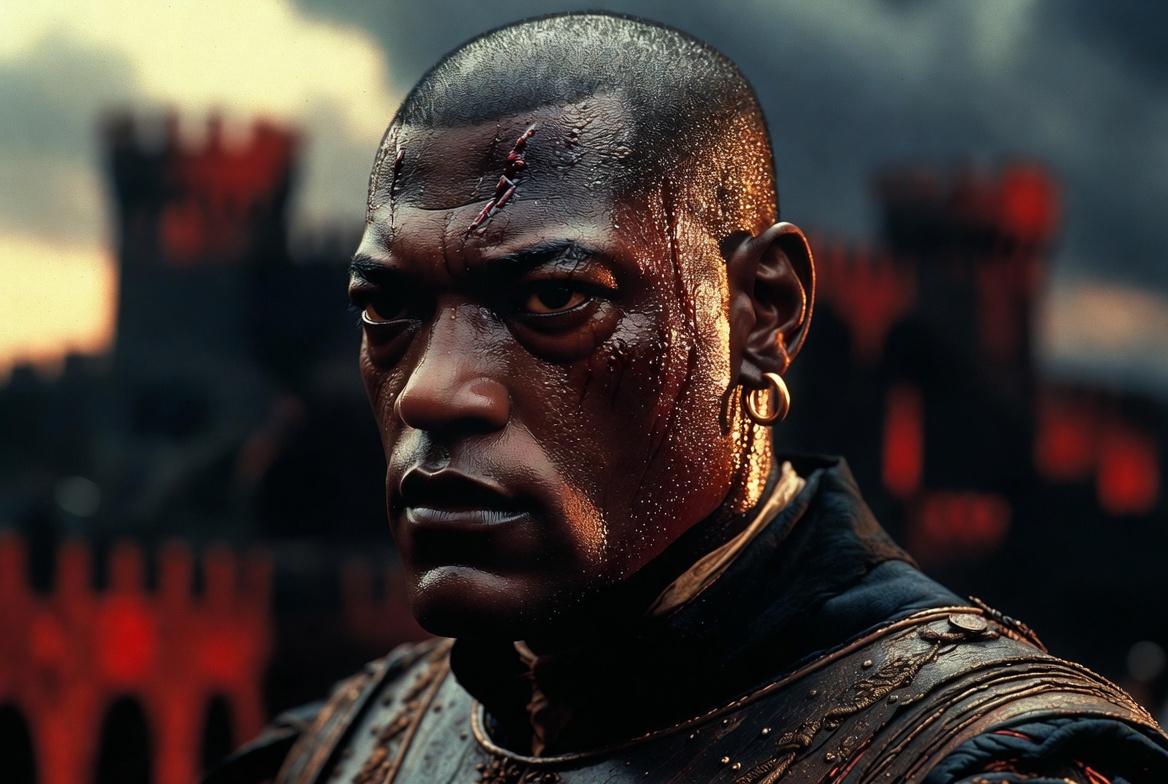
Laurence Fishburne’s Othello is a commanding physical presence—shaved head, muscular frame, and a voice that carries both authority and vulnerability. As the only African general in the Venetian army, Fishburne’s Othello radiates quiet nobility and hard-won respect. His early scenes with Desdemona crackle with genuine passion and tenderness, making the later descent into jealous rage all the more heartbreaking.
Critics noted that Fishburne brought a “dangerous edge” to the role, allowing audiences to feel the character’s internal storm rather than simply watching it unfold. His performance anchors the film’s exploration of race: Othello is not a caricature but a complex man whose outsider status makes him both revered and resented.
Kenneth Branagh as Iago – The Ultimate Villain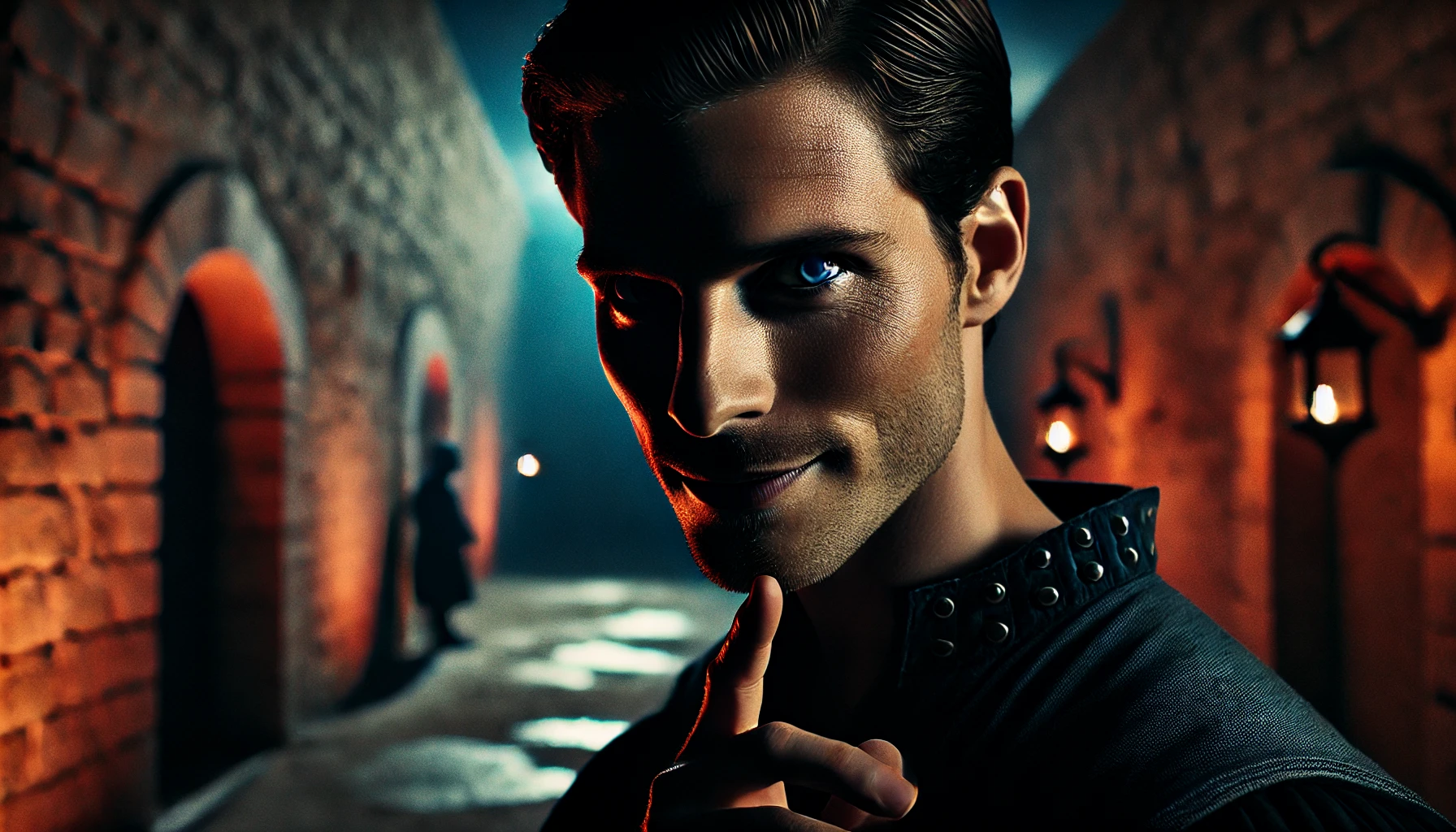
If Fishburne is the tragic hero, Kenneth Branagh is the film’s magnetic monster. Branagh’s Iago is widely regarded as one of the most chilling portrayals ever captured on screen. He delivers Shakespeare’s soliloquies directly to the camera with a conspiratorial wink, turning viewers into unwilling accomplices. Branagh plays Iago not as a cartoonish villain but as a disarmingly ordinary, even likable soldier whose envy and resentment simmer beneath a charming surface.
His performance earned widespread critical praise and a Screen Actors Guild Award nomination. Branagh’s Iago is intellectually brilliant, psychologically manipulative, and terrifying precisely because he feels so human.
Irene Jacob as Desdemona and Supporting Standouts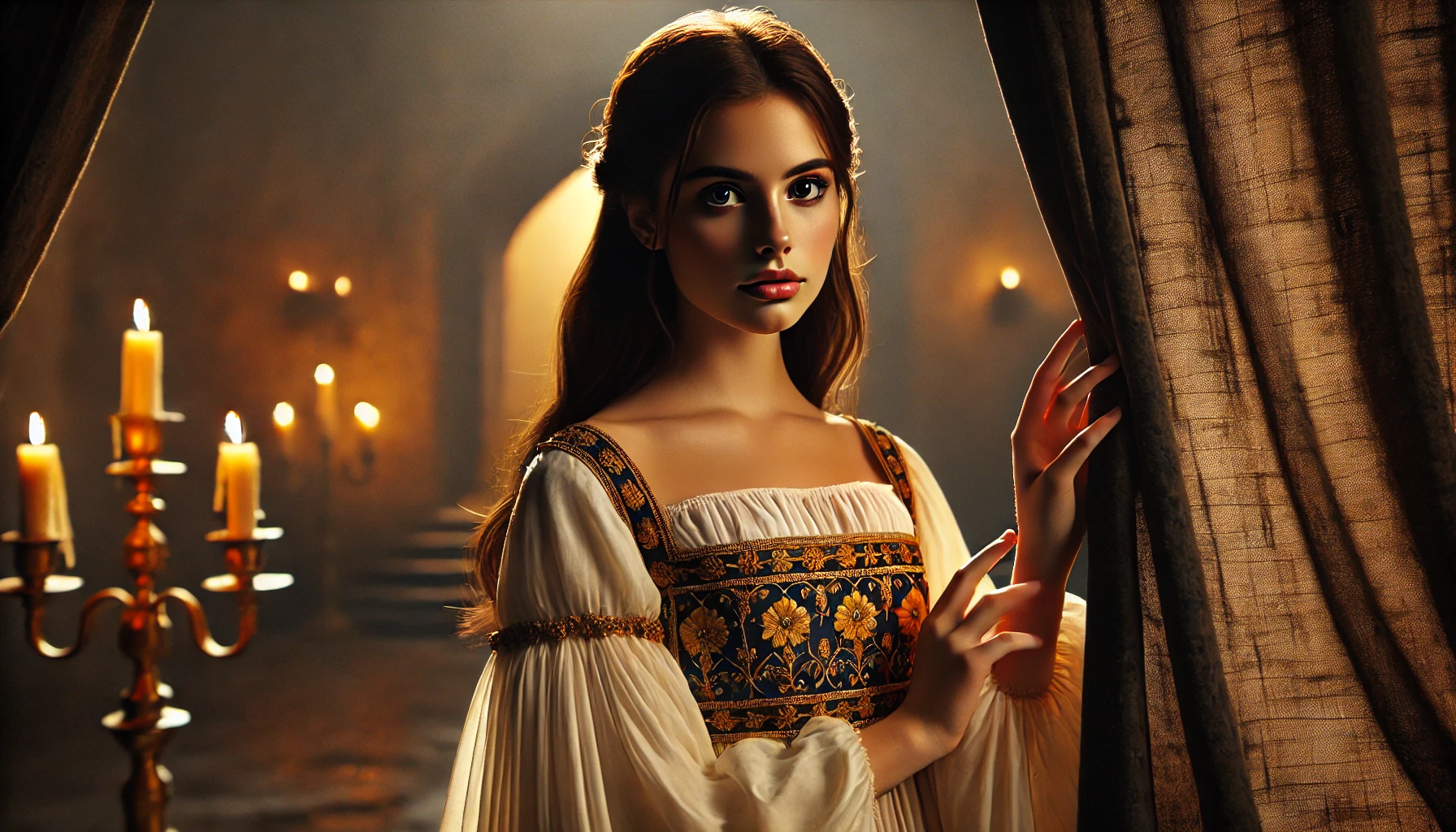
Irène Jacob brings innocence, strength, and sensuality to Desdemona. Her French-Swiss background gives the character a slight otherworldly quality that complements Othello’s outsider status. The chemistry between Jacob and Fishburne makes their love story feel urgent and believable.
Supporting roles are equally strong. Nathaniel Parker (the director’s brother) plays Cassio with youthful charm and military competence. Anna Patrick delivers a standout performance as Emilia, Iago’s wife, whose final confrontation with her husband is one of the film’s most powerful feminist moments. Michael Maloney’s Roderigo adds tragicomic depth, and smaller roles feature future stars like Michael Sheen.
The ensemble’s chemistry turns Parker’s Othello 1995 into a true ensemble tragedy where every character’s choices matter.
How Faithful Is Othello 1995 to Shakespeare’s Text?
Parker’s adaptation is remarkably faithful while embracing the strengths of cinema. Much of the original verse is preserved verbatim, but the film trims longer speeches and repetitive passages for cinematic pacing. Key additions include dream-like fantasy sequences that visualize Othello’s growing suspicions—most notably a haunting montage of Desdemona and Cassio in an imagined embrace. These moments externalize the psychological torment Shakespeare describes in soliloquy.
Parker also expands the sensual dimension of Othello and Desdemona’s marriage with tasteful but passionate love scenes that underscore the physical and emotional stakes. Cyprus is portrayed as a remote, sun-drenched military outpost rather than an abstract stage setting, heightening the isolation and pressure-cooker atmosphere.
A helpful comparison table (often used in classrooms and study guides):
| Aspect | Shakespeare’s Play | Othello 1995 Film |
|---|---|---|
| Text Fidelity | Full verse, long soliloquies | Streamlined dialogue + visual equivalents |
| Race Representation | Textual references only | Visual emphasis with Black actor |
| Erotic Elements | Implied | Explicit but tasteful love scenes |
| Iago’s Soliloquies | Spoken to audience | Direct-to-camera confessions |
| Cyprus Setting | Suggested | Lush, isolated fortress location |
Cinematic Craft That Elevates the Tragedy
Oliver Parker’s Othello 1995 succeeds as a Shakespeare adaptation largely because it fully embraces the language of cinema rather than merely photographing a stage production. Cinematographer David Johnson, editor Tony Lawson, and composer Charlie Mole work in harmony to transform Shakespeare’s verse into a visually and aurally immersive psychological thriller. The film’s aesthetic choices amplify the play’s central themes of jealousy, isolation, and passion while making the story accessible to viewers new to the Bard.
Cinematography and Visual Symbolism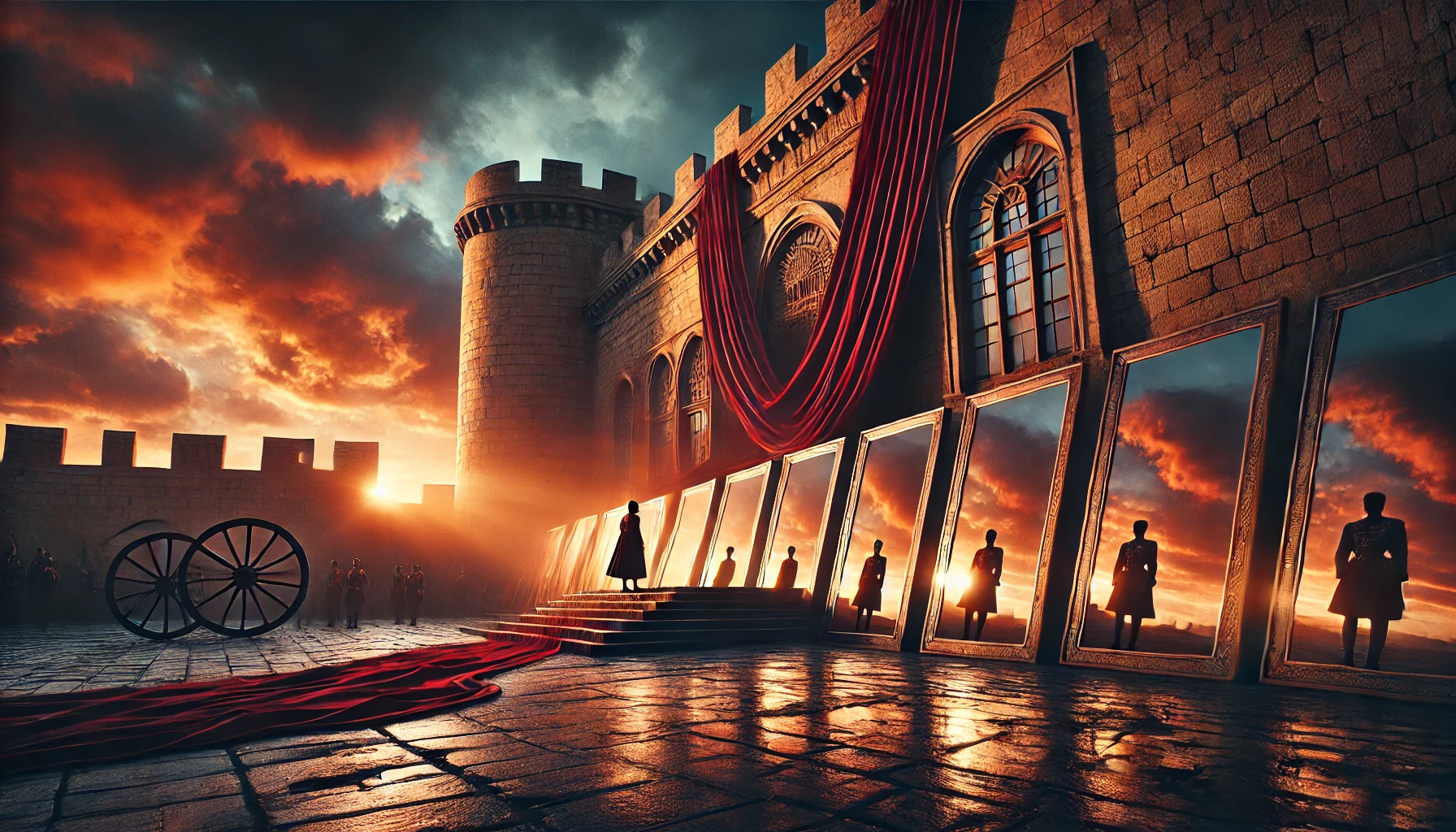
The film opens with striking imagery: a veiled figure (Desdemona) moving through Venetian canals at night, followed by Othello and Desdemona’s secret marriage. These early sequences establish a tone of forbidden romance and secrecy. Once the action shifts to Cyprus, the fortress setting—shot on location in Italy—becomes a character itself. Sun-drenched battlements contrast with shadowy interiors, mirroring the bright surface of Othello and Desdemona’s love against the darkening suspicions planted by Iago.
Mirrors and reflective surfaces appear repeatedly, symbolizing fractured perception and self-doubt. Red motifs (costumes, blood, flames) underscore passion turning violent. Parker and Johnson use tight close-ups during key confrontations, allowing audiences to witness the micro-expressions of doubt creeping across Fishburne’s face. Dream-like fantasy sequences—montages showing imagined embraces between Desdemona and Cassio—externalize Othello’s tormented imagination in ways the stage cannot, heightening the erotic undercurrents and the horror of gaslighting.
The color palette shifts as jealousy takes hold: vibrant Mediterranean tones give way to cooler, more oppressive hues, visually charting Othello’s emotional descent. These choices make Othello 1995 feel cinematic rather than theatrical, solving the common problem of Shakespeare films feeling static or overly wordy.
Score, Sound Design, and Editing
Charlie Mole’s original score blends orchestral grandeur with intimate, haunting themes that echo the characters’ inner turmoil. Percussive rhythms during military scenes convey tension, while softer, sensual strings accompany the lovers’ moments. The sound design is equally deliberate: echoing footsteps in stone corridors emphasize isolation, and the roar of the sea outside the fortress constantly reminds viewers of the precarious world beyond.
Editor Tony Lawson maintains a brisk pace (the film runs just under two hours) by trimming repetitive passages while preserving the poetry of key speeches. Cross-cutting between Iago’s direct-to-camera confessions and the growing suspicion in Othello’s eyes creates a rhythmic manipulation that mirrors Iago’s psychological control. The editing never feels rushed; instead, it builds dread methodically, making the final tragic acts land with devastating force.
These technical elements elevate Othello 1995 above many other adaptations by translating Shakespeare’s psychological depth into purely visual and auditory terms.
Deep Dive into Themes: What Othello 1995 Reveals About Shakespeare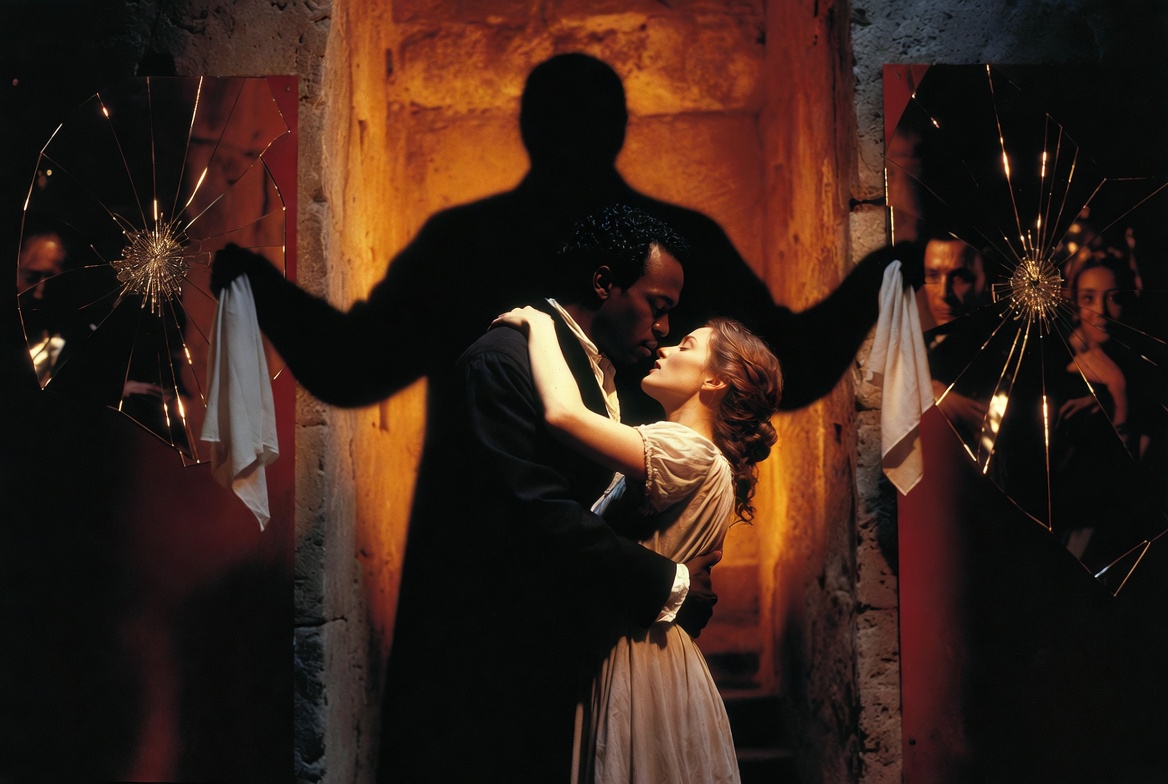
Parker’s film does not merely retell the plot—it illuminates Shakespeare’s timeless concerns through a 1990s lens while staying rooted in the text. The result is a richer understanding of the play’s exploration of human darkness.
Race and Otherness Laurence Fishburne’s casting as the first Black actor in a major English-language cinematic Othello brings visceral weight to the play’s racial dynamics. In Shakespeare’s text, Othello is repeatedly called “the Moor,” “thick-lips,” and compared to animals. The film visualizes this prejudice through lingering glances from Venetian soldiers and Brabantio’s horror at the interracial marriage. Fishburne’s dignified yet vulnerable performance avoids stereotype, presenting Othello as a respected general whose achievements cannot fully shield him from societal suspicion. In the mid-1990s context, this resonated with ongoing conversations about race in Western societies, making the tragedy feel urgently relevant.
Toxic Masculinity, Honor, and Jealousy The film powerfully depicts how patriarchal notions of honor and reputation destroy lives. Othello’s need to “prove” his manhood through violent action, Iago’s resentment of perceived slights to his status, and the casual misogyny toward Desdemona and Emilia all receive clear treatment. Parker emphasizes the erotic intensity of Othello and Desdemona’s relationship early on, making the later accusations of infidelity feel like a profound betrayal of that intimacy. The tragedy becomes not just personal but a critique of how unchecked male jealousy and fragile egos can weaponize love.
Gaslighting and Manipulation Kenneth Branagh’s Iago masterfully demonstrates psychological manipulation. His direct-to-camera addresses turn the audience into confidants, forcing viewers to confront their own complicity in watching evil unfold. The film shows how subtle suggestions, repeated lies, and fabricated “evidence” (the handkerchief) erode trust faster than overt confrontation. This aspect makes Othello 1995 especially valuable for modern audiences navigating misinformation, toxic relationships, and emotional abuse.
Expert Insight Shakespeare scholar Ayanna Thompson has noted that performance history of Othello reveals evolving societal attitudes toward race. Parker’s version, by centering a Black actor’s perspective, invites viewers to engage with the play’s commentary on otherness without the distancing effect of blackface. The film also highlights Emilia’s proto-feminist outburst in the final act, giving voice to the silenced women in the tragedy.
These thematic layers make Othello 1995 far more than entertainment; it serves as an accessible entry point for discussing complex social issues through great literature.
Critical Reception and Legacy of Othello 1995
Upon its December 1995 release, Othello 1995 received generally positive but mixed reviews. Critics praised the lead performances while noting that the film sometimes felt conventional compared to more experimental adaptations like Orson Welles’ 1952 version. As of late 2024, it holds a 68% approval rating on Rotten Tomatoes based on 41 reviews, with the consensus highlighting its entertainment value and strong acting despite not fully transcending its parts.
Roger Ebert appreciated the passion but found some elements uneven. Other reviewers celebrated Branagh’s chilling Iago and Fishburne’s commanding presence. The film earned a Screen Actors Guild Award nomination for Branagh and remains a staple in educational settings due to its clear storytelling and visual accessibility.
Commercially, it underperformed at the box office (grossing roughly $2 million domestically against an $11 million budget), yet its legacy has grown through home video, streaming, and academic study. It influenced later discussions on race in Shakespeare performance and is frequently recommended as one of the most watchable film versions for students and general audiences. In 2026, Othello 1995 continues to be valued for bridging classic literature and modern cinema without diluting the source material’s power.
Othello 1995 vs. Other Major Adaptations
Choosing the right Othello adaptation depends on what viewers seek. Parker’s 1995 film stands out for balancing fidelity, accessibility, and cinematic appeal.
Here is a comparative overview:
| Adaptation | Director / Year | Othello Actor | Key Strength | Best For | Notable Difference from 1995 |
|---|---|---|---|---|---|
| Orson Welles | 1952 | Orson Welles | Bold expressionistic visuals | Artistic experimentation | More fragmented, abstract style |
| BBC Complete Works | 1981 | Anthony Hopkins | Textual completeness | Strict literary study | More stage-like, less sensual |
| Oliver Parker | 1995 | Laurence Fishburne | Balanced performances + visuals | General audiences & students | — |
| 2001 TV version | Geoffrey Sax | Eamonn Walker | Modern urban setting | Contemporary racial context | Updated to present day |
| National Theatre (filmed) | 2016 (Iqbal Khan) | Various (stage) | Live theatrical energy | Theater enthusiasts | Different casting approach |
Othello 1995 is often called the best “starter” version because it respects the verse, delivers strong acting, and uses film techniques effectively without extreme modernization or heavy stylization. Unlike Welles’ experimental approach, Parker’s film remains emotionally straightforward and easier to follow on a first viewing.
Why Watch Othello 1995 in 2026 and Beyond
More than 30 years after release, Othello 1995 retains remarkable relevance. In an era of social media-fueled jealousy, deepfakes, and polarized discussions about race and identity, the play’s warnings about manipulation and prejudice feel prescient. The film’s focus on intimate relationships and the destructive speed of unfounded suspicion resonates with anyone who has witnessed or experienced gaslighting.
Practical Viewing Tips
- Stream it on platforms where available (check current services like Amazon Prime, Criterion Channel, or rental options).
- Watch with subtitles the first time to catch every line of Shakespeare’s poetry.
- Pair it with reading key scenes from the Folger or Arden edition of the play for maximum insight.
- Ideal for classroom use, book clubs, or date-night Shakespeare experiences—its two-hour runtime and passionate tone keep viewers engaged.
- For younger audiences (15+), it provides a powerful introduction, though parental guidance is advised for intense themes and violence.
The film rewards multiple viewings: once for the story, again for the performances, and a third time to analyze how Parker visualizes Shakespeare’s psychology.
Frequently Asked Questions
Is Othello 1995 appropriate for students? Yes, particularly high school and college students. It is more accessible than purely stage versions while staying faithful enough for literary analysis. The runtime and visual style help maintain attention.
How accurate is the 1995 film to the original play? Highly accurate in plot, characters, and core themes. Parker trims roughly 60% of the text for pacing but preserves the poetry of major speeches and adds visual equivalents that enhance rather than contradict the source.
Why did they cast Laurence Fishburne? To bring authenticity and dignity to the role of the Moor. It was a landmark choice as the first Black actor in a major studio English-language film adaptation, highlighting the racial dimensions Shakespeare wrote into the text.
Are there significant differences between the theatrical cut and any other versions? No major director’s cut exists; the released version is the primary one available. Minor edits for television may exist, but the core film remains consistent.
What age is suitable to introduce teens to Othello via this film? Generally 15–16 and older, due to sexual content, violence, and mature themes of jealousy and murder. It can spark excellent discussions when viewed with guidance.
Othello 1995 stands as a compelling achievement in Shakespeare on screen. Oliver Parker’s direction, combined with powerhouse performances from Laurence Fishburne and Kenneth Branagh, brings the tragedy’s themes of love, jealousy, race, and manipulation into sharp, cinematic focus. It honors the original text while making it vividly alive for modern viewers.
Whether you are encountering Shakespeare’s Othello for the first time or returning to compare adaptations, this film offers a rewarding, emotionally charged experience. Watch it, then revisit the play—the two illuminate each other beautifully. The ultimate value lies in how Parker’s version reminds us why this 400-year-old story still has the power to shock, move, and provoke thought in 2026 and beyond.
For more Shakespeare film guides, explore our articles on Macbeth adaptations, Hamlet on screen, or the best ways to introduce teens to the Bard. Share your thoughts on Othello 1995 in the comments—which performance moved you most, and how does the film hold up today?