Imagine standing beneath a vast, velvet sky pierced by countless twinkling lights—each one a silent witness to human longing. For centuries, lovers have looked upward, seeking metaphors for the infinite, the eternal, the unchangeable. In the hands of William Shakespeare, the greatest poet of the English language, stars become far more than distant orbs: they transform into powerful symbols of unwavering devotion, guiding beacons in life’s storms, and even the immortal essence of beloved souls.
Quotes about stars and love hold a special magic because they capture romance on a cosmic scale. Whether you’re searching for the perfect line for a wedding vow, an anniversary message, a heartfelt letter, or simply inspiration to express deep affection, Shakespeare’s celestial imagery offers timeless beauty. As a dedicated explorer of Shakespeare’s works on williamshakespeareinsights, I’ve spent years delving into his plays and sonnets, analyzing original texts, historical contexts, and enduring interpretations. In this comprehensive guide, we uncover the Bard’s most romantic declarations involving stars—complete with exact quotes, scene-by-scene context, literary analysis, and practical ways to use them today. These lines don’t just describe love; they elevate it to something divine and everlasting.
Why Stars and Love? Shakespeare’s Celestial Symbolism
In Elizabethan England, where Shakespeare wrote, the night sky was both a scientific marvel and a philosophical map. Astronomy and astrology intertwined: stars represented divine order in the “great chain of being,” guiding sailors across oceans and symbolizing fate’s hand in human affairs. Shakespeare masterfully drew on this to portray love—not as fleeting emotion, but as something fixed, eternal, and navigational.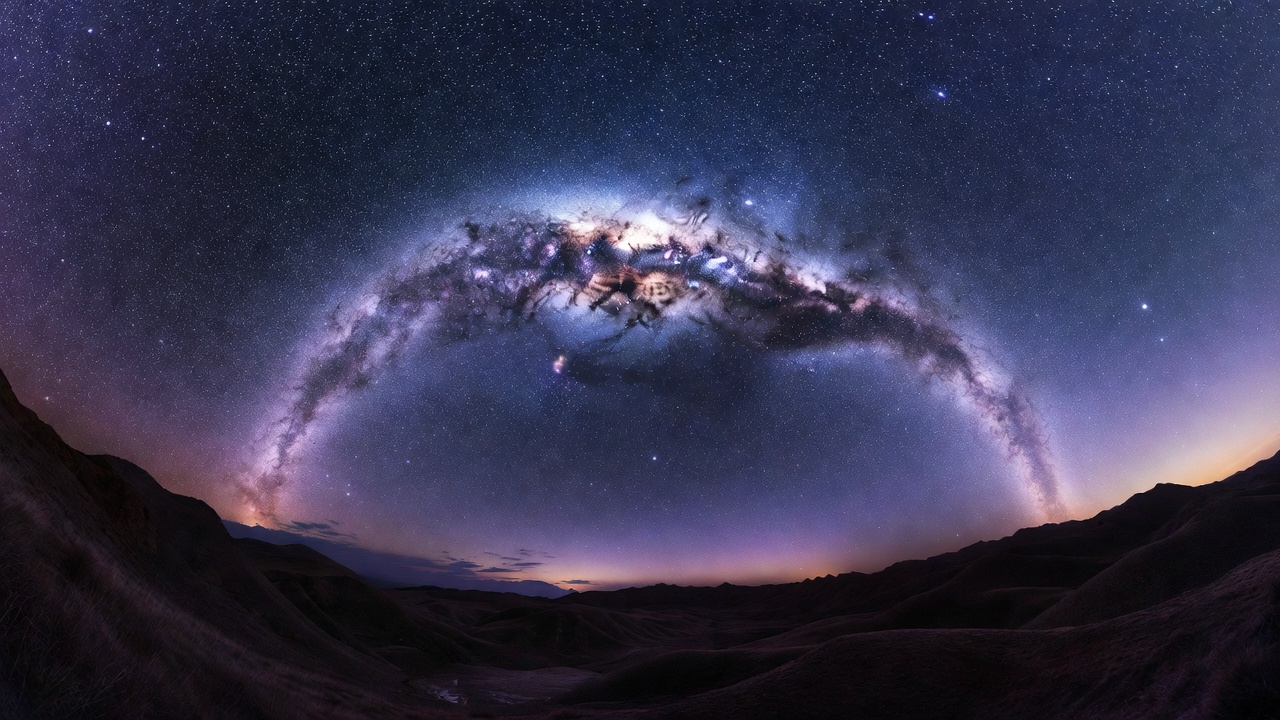
Stars often stood for constancy and guidance, contrasting sharply with the moon, which waxes and wanes, symbolizing fickleness. This distinction appears repeatedly in his romantic works. Stars evoke eternity: they burn unchanging across generations, much like true love endures trials. They guide “wand’ring barks” (lost ships) through darkness, mirroring how genuine affection provides direction amid life’s uncertainties.
This symbolism solves a profound human need: in a world of change, loss, and doubt, how do we express love that feels infinite? Shakespeare answers by borrowing the cosmos itself, making his declarations feel vast yet deeply personal. His star imagery resonates today because it speaks to our universal desire for enduring connection—whether in modern relationships facing distance, hardship, or time itself.
The Most Iconic Quote About Stars and Love: Hamlet’s Declaration
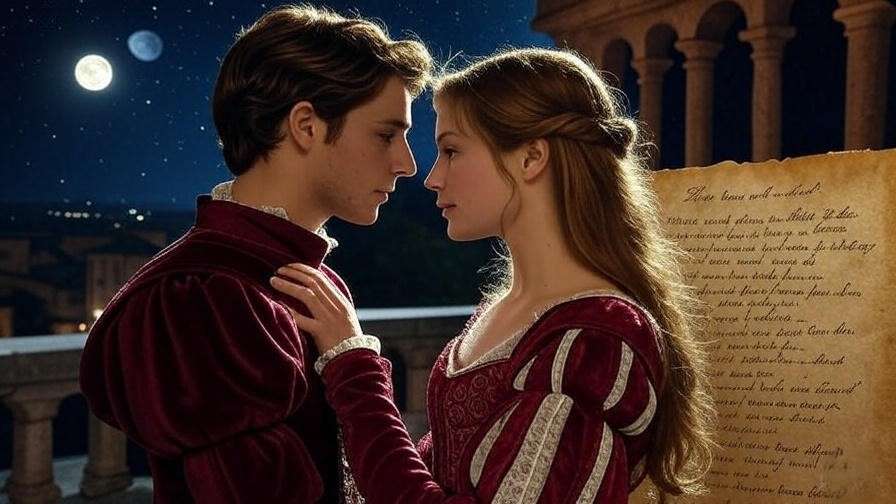
Perhaps the single most quoted line pairing stars directly with love comes from Hamlet, Act 2, Scene 2:
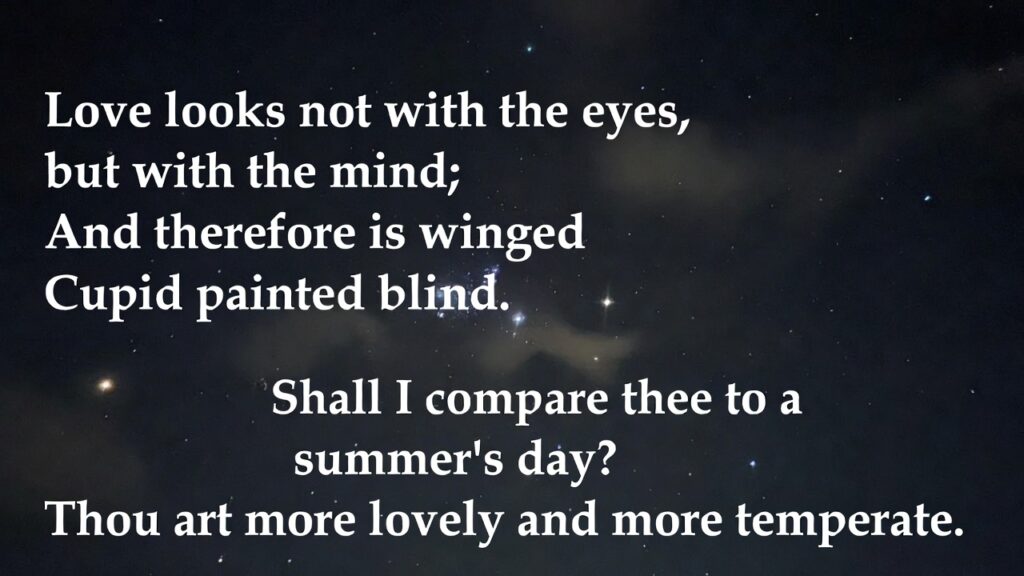
Doubt thou the stars are fire; Doubt that the sun doth move; Doubt truth to be a liar; But never doubt I love.
This appears in a letter Hamlet writes to Ophelia, read aloud by her father, Polonius. In context, Hamlet feigns madness to mask his revenge plot, yet the words carry genuine tenderness amid tragedy. The structure builds progressively: question cosmic certainties (stars as fire, the geocentric sun’s motion—beliefs of the era), then truth itself, only to affirm love’s certainty beyond doubt.
The power lies in scale: if universal truths can be questioned, love stands firmer. It’s hyperbolic yet sincere, perfect for expressing unshakeable commitment. Note a common misquote variation (“Doubt that the sun doth shine”)—the original uses “move,” reflecting pre-Copernican views.
Today, this remains a favorite for proposals or vows: “In a world of uncertainties, my love for you is the one constant.” Its brevity makes it ideal for engravings, tattoos, or captions, while its depth rewards closer reading.
The Guiding Star of True Love: Sonnet 116’s Ever-Fixed Mark
Shakespeare’s Sonnet 116 offers perhaps the profoundest meditation on love’s constancy, using the star as its central metaphor:
Let me not to the marriage of true minds Admit impediments. Love is not love Which alters when it alteration finds, Or bends with the remover to remove. O no! it is an ever-fixed mark That looks on tempests and is never shaken; It is the star to every wand’ring bark, Whose worth’s unknown, although his height be taken.
Here, love is the Pole Star (North Star), fixed while others wheel around it. Sailors measured their latitude by its “height,” yet its true value—priceless guidance—remains incalculable. This nautical image, drawn from real Elizabethan navigation, underscores love as a reliable beacon through life’s “tempests.”
Unlike passionate but changeable romance, this love endures time, obstacles, and change. The sonnet defines ideal partnership: unchanging, selfless, eternal. It’s frequently recited at weddings for good reason—promising steadfastness amid storms.
Expert insight: Shakespeare innovates by blending practical science (navigation) with emotional truth, making abstract constancy tangible. In an age of arranged marriages and uncertainty, this offered hope for authentic bonds.
Romeo and Juliet: Stars as Eternal Beauty and Destiny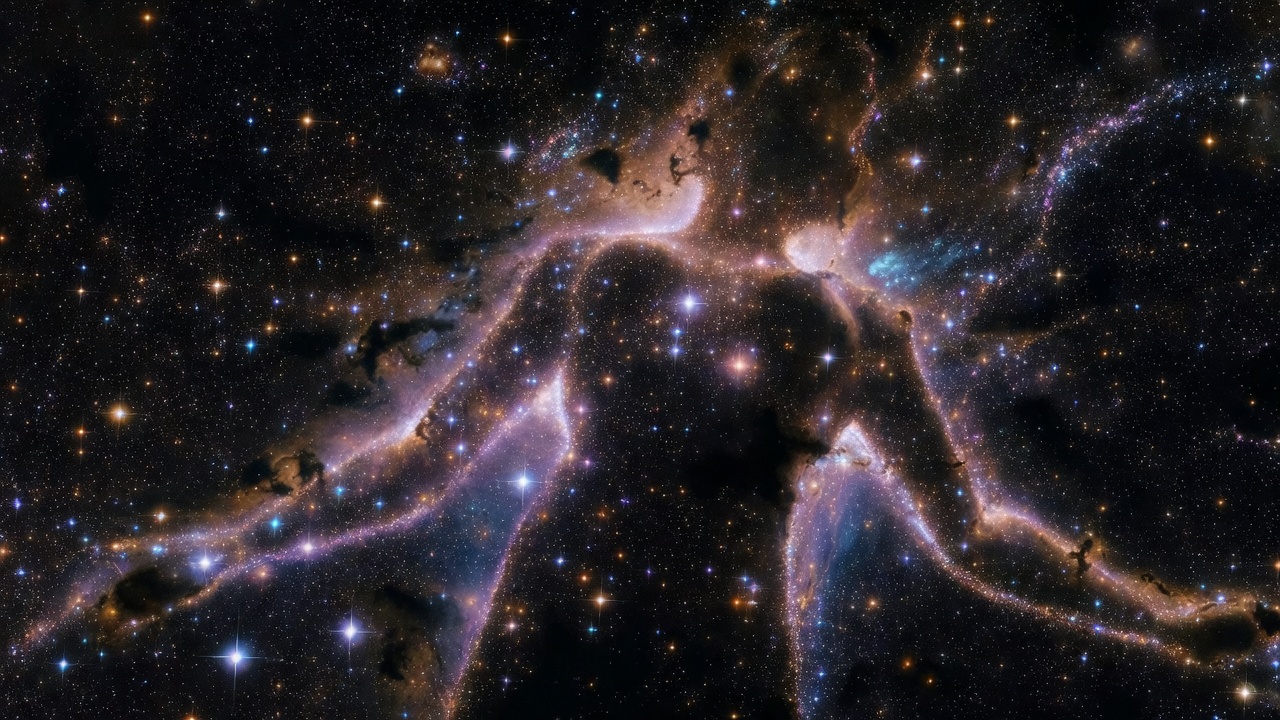
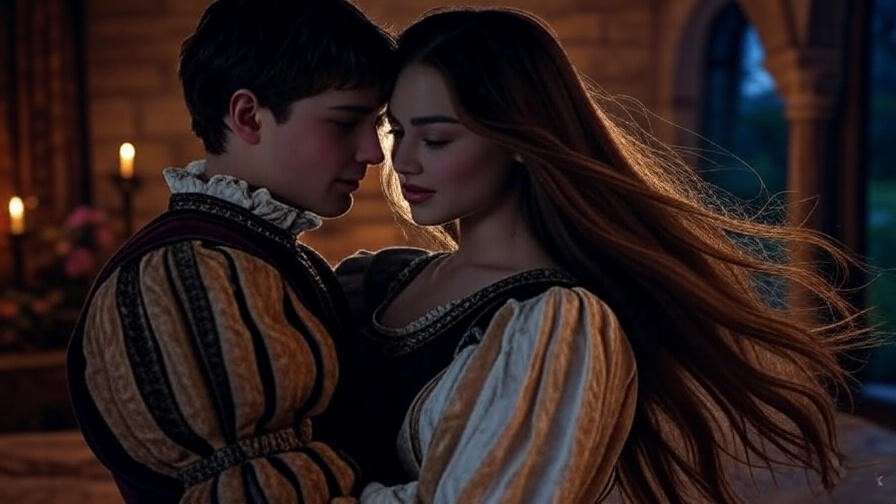
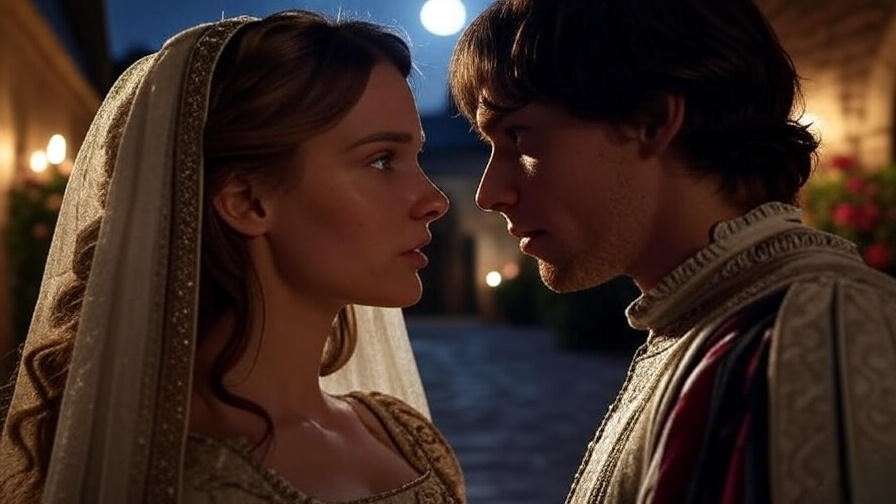
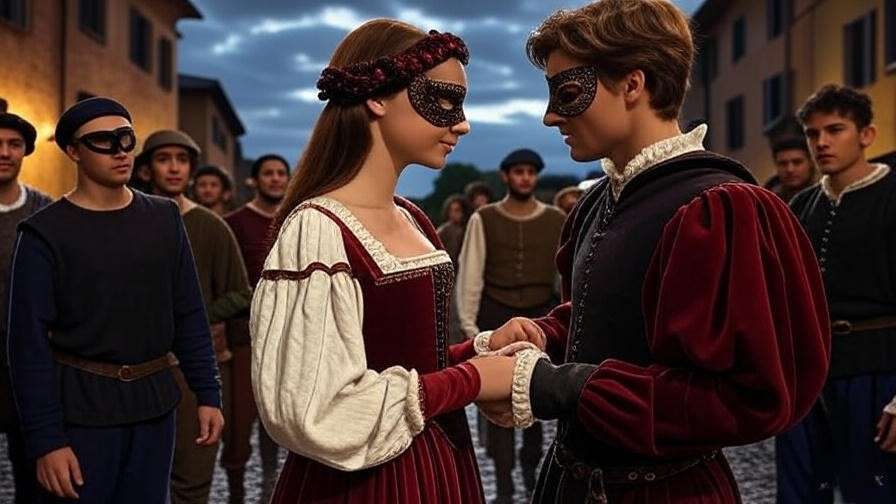
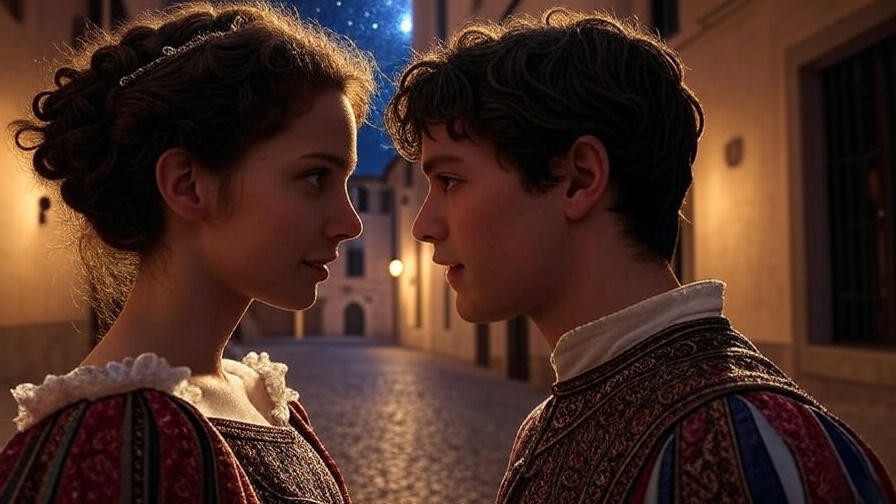
No Shakespeare play weaves stars into romance more vividly than Romeo and Juliet. The prologue famously calls them “a pair of star-cross’d lovers”—meaning fate (the stars) opposes their union, dooming it from the start. “Star-crossed” implies crossed paths of destiny, tragic inevitability, not romantic serendipity as often misinterpreted today.
Yet Juliet’s most breathtaking celestial declaration comes in Act 3, Scene 2:
Give me my Romeo; and, when he shall die, Take him and cut him out in little stars, And he will make the face of heaven so fine That all the world will be in love with night And pay no worship to the garish sun.
Grieving yet adoring after Romeo’s banishment, Juliet imagines transforming her lover into stars upon death—immortalizing his beauty across the sky. The imagery shifts night from darkness to splendor, eclipsing the sun itself. It’s passionate, almost divine worship: love so intense it reorders the cosmos.
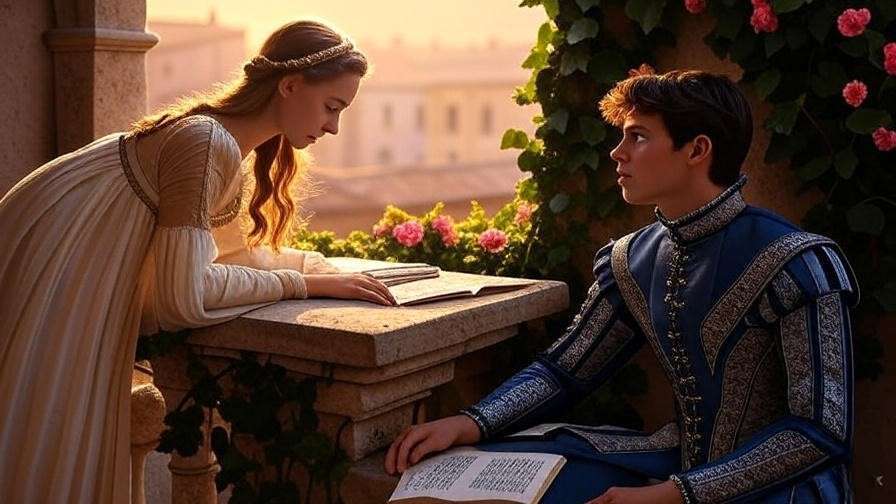
Earlier, Romeo’s balcony speech contrasts stars with Juliet’s eyes: “Two of the fairest stars in all the heaven… her eyes in heaven / Would through the airy region stream so bright / That birds would sing and think it were not night.” Here, her radiance outshines celestial bodies.
These lines capture young, all-consuming love—ideal for deep expressions of adoration, memorials, or capturing grief-tinged passion.
Other Notable Shakespearean Celestial Love References
Shakespeare scatters star imagery across his canon, often tying it to constancy or fate.
- In Julius Caesar (Act 3, Scene 1), Caesar declares: “But I am constant as the northern star, / Of whose true-fix’d and resting quality / There is no fellow in the firmament.” While political, the northern star’s unchanging nature applies to loyal love—unswayed by persuasion.
- Romeo rejects swearing by the moon’s inconstancy: “O, swear not by the moon, th’ inconstant moon, / That monthly changes in her circled orb, / Lest that thy love prove likewise variable” (Romeo and Juliet, Act 2, Scene 2). He seeks firmer vows, preferring stars’ steadfastness.
- In Sonnet 14, astrological references tie love to heavenly influence, while other plays like Othello invoke “chaste stars” as witnesses to morality.
These reinforce the theme: true love aligns with the fixed heavens, not fickle elements.
How to Use These Quotes About Stars and Love Today
These timeless lines solve a common problem: how to articulate profound feelings when everyday words fall short. Here are practical ways:
- Weddings and vows: Sonnet 116’s “ever-fixed mark” or Hamlet’s declaration for unbreakable promises.
- Love letters or messages: Juliet’s “little stars” for eternal beauty; pair with personal astronomy references.
- Social media captions: Short excerpts like “Doubt thou the stars are fire… But never doubt I love” for romantic posts.
- Tattoos and gifts: The northern star motif symbolizes guidance; engrave with “constant as the northern star.”
- Creative dates: Stargaze while reading aloud—use apps to find the Pole Star, reflecting on love’s navigation.
Modern adaptations appear in songs, films, and poetry, proving Shakespeare’s relevance.
Expert Insights: What Makes Shakespeare’s Star-Love Imagery Unmatched
Shakespeare’s genius lies in synthesizing mythology, emerging science, and raw emotion. Stars weren’t mere decoration; they embodied philosophical debates on fate vs. free will. By making love cosmic, he universalizes it—anyone under the night sky can feel the same awe.
In uncertain times, these metaphors remind us love can be a fixed point. As someone immersed in Shakespeare’s texts for years—studying folios, performances, and scholarship—I find their endurance lies in authenticity: no artifice, just profound truth.
Frequently Asked Questions
What is the most famous Shakespeare quote about stars and love? Hamlet’s “Doubt thou the stars are fire… But never doubt I love” stands out for its direct pairing and emotional punch.
Are there any Shakespeare sonnets directly about stars? Sonnet 116 uses the star metaphor centrally; others reference celestial bodies indirectly.
How do stars symbolize love in Romeo and Juliet? As destiny (star-crossed), beauty (Juliet’s eyes outshining stars), and immortality (Romeo cut into stars).
Is “star-crossed lovers” a positive or negative reference? Negative—fate opposes them, leading to tragedy, though their love shines brightly.
Can these quotes be used in modern proposals/weddings? Absolutely—many couples incorporate them for timeless elegance.
Shakespeare’s quotes about stars and love remind us that true affection transcends the earthly: it guides, endures, and illuminates like the heavens themselves. From Hamlet’s unshakeable vow to Juliet’s starry vision of eternity, these declarations offer comfort and inspiration.