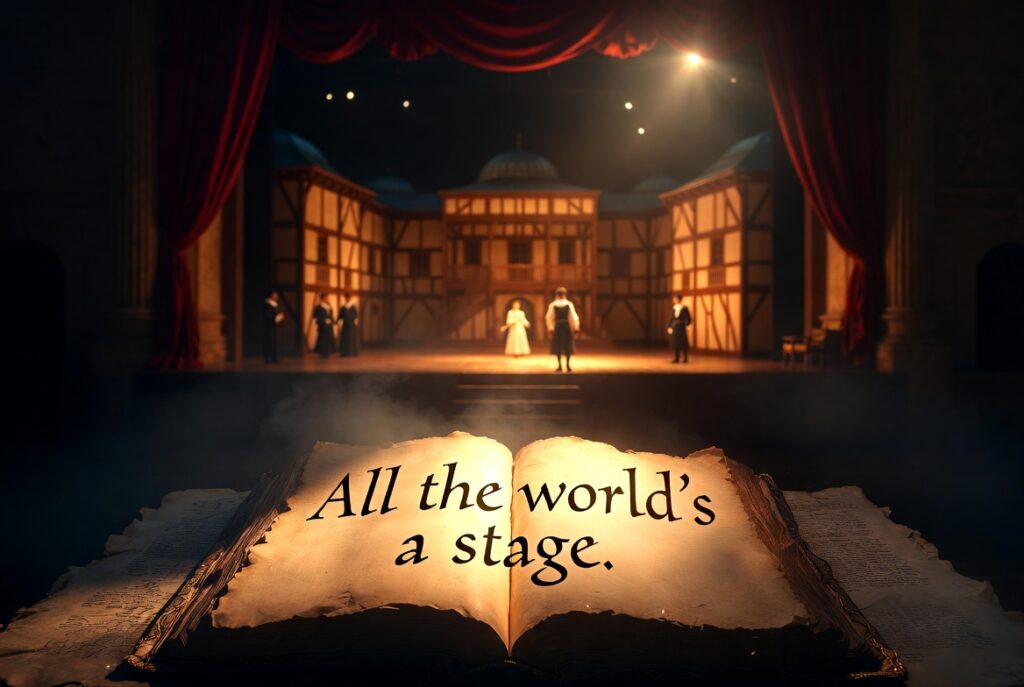
“All the world’s a stage, and all the men and women merely players.” With these immortal words, William Shakespeare captured the essence of human existence and the very art form he helped elevate to new heights. Quotes on theater from the Bard of Avon continue to resonate deeply with actors, directors, educators, students, and theater enthusiasts more than four centuries later. Whether you seek inspiration for an audition, guidance for directing a production, or profound reflections on the power of performance, Shakespeare’s lines offer far more than poetic beauty—they deliver practical wisdom drawn from his own life inside the Elizabethan playhouse.
Shakespeare was no distant observer of the stage. As an actor, playwright, and shareholder in the Lord Chamberlain’s Men (later the King’s Men), he understood the craft of theater from the inside: the roar of groundlings at the Globe Theatre, the demands of live performance without modern lighting or sound, and the delicate balance between illusion and truth. His quotes on theater explore meta-theatrical themes—life as performance, the mirror held up to nature, the transient magic of the stage, and drama’s power to reveal conscience. This comprehensive guide curates, contextualizes, and analyzes his most insightful lines, providing historical background, line-by-line breakdowns, and actionable applications for today’s performers and audiences.
By the end, you’ll have a rich resource to deepen your appreciation of Shakespearean drama, enhance your craft, or simply savor the enduring relevance of these Shakespeare theater quotes. Let’s step onto the stage and explore why his insights remain unmatched.
Shakespeare the Theater Man – Why His Insights on Theater Carry Unmatched Authority
William Shakespeare (1564–1616) was not merely a writer but a working professional in one of London’s most vibrant and competitive industries. By the late 1590s, he had become a key member of the Lord Chamberlain’s Men, performing at venues like The Theatre in Shoreditch before helping finance and build the famous Globe Theatre in 1599 on Bankside, south of the Thames.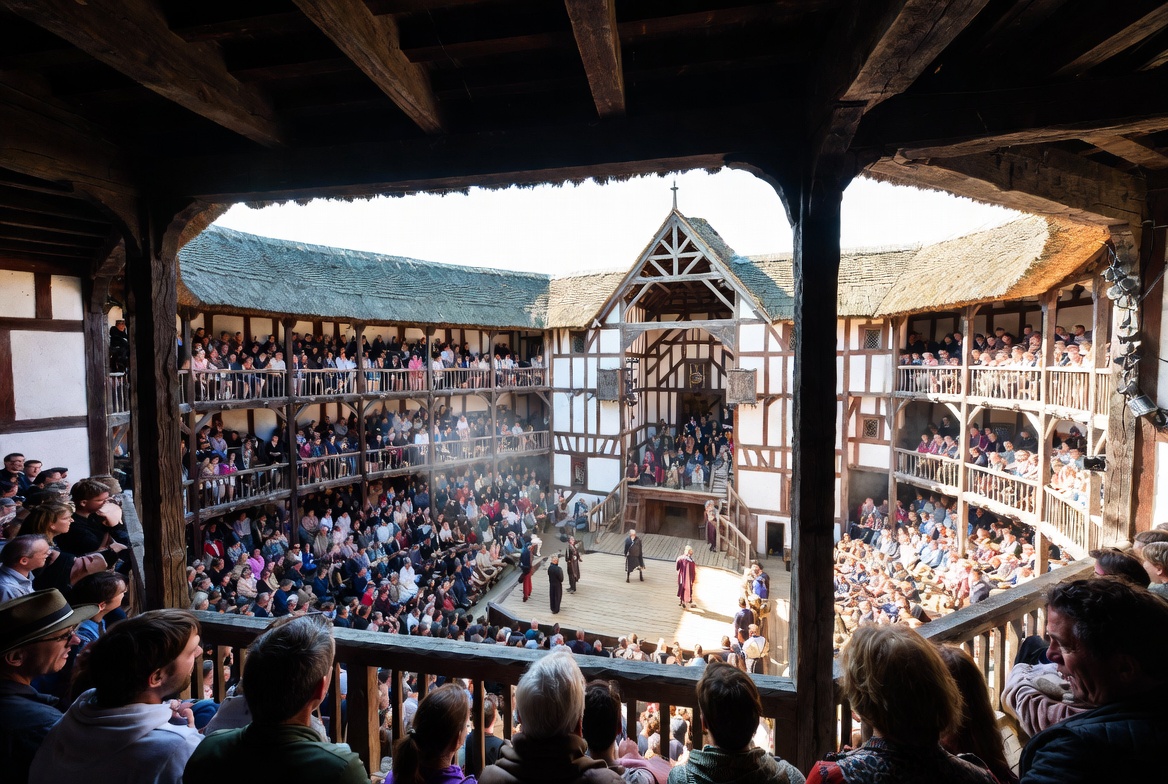
The Globe was an open-air amphitheater capable of holding up to 3,000 spectators, with a thrust stage surrounded by groundlings (standing audience members who paid a penny) and wealthier patrons in galleries. Performances occurred in natural daylight, relying on powerful language, physicality, and audience imagination rather than elaborate sets. Shakespeare acted in his own plays and those of others, navigated censorship under Queen Elizabeth I and King James I, and wrote with the specific constraints and opportunities of this space in mind.
This insider perspective gives his quotes on theater unparalleled authenticity. Unlike armchair philosophers, Shakespeare wrote from lived experience: the adrenaline of live performance, the risk of a restless audience, the collaborative magic between players and spectators, and the fleeting nature of theatrical art. Institutions like the Royal Shakespeare Company (RSC) and the Folger Shakespeare Library continue to draw on these insights in training and productions, affirming their authority. His meta-theatrical techniques—plays within plays, direct audience address, and reflections on acting—pioneered techniques that influenced everything from Brechtian epic theater to modern immersive productions.
Understanding this context transforms simple quotes into profound lessons. Shakespeare’s words reflect Elizabethan realities: a theater that was both entertainment and a potential vehicle for political or moral commentary, operating under constant scrutiny yet capable of profound emotional impact.
Core Themes in Shakespeare’s Quotes on Theater
Shakespeare’s quotes on theater cluster around several interconnected themes that reveal his philosophy of drama.
The Stage as Metaphor for Human Life Life itself becomes a performance, with roles, entrances, exits, and scripted ages. This theme underscores the performative nature of identity and society.
The Purpose of Playing – Holding a Mirror Up to Nature Theater’s highest calling, for Shakespeare, is not mere spectacle but truthful reflection of humanity—virtue, vice, and the “form and pressure” of the age.
The Craft of Acting – Technique, Truth, and Restraint Good acting requires natural delivery, emotional control, and alignment of word and gesture, avoiding bombast that alienates audiences.
The Transient, Magical Power (and Limits) of Performance The stage creates temporary illusions and dreams, yet it leaves lasting impressions—or fades into memory, highlighting mortality and legacy.
These themes interweave across his canon, making his Shakespeare quotes on acting and performance enduringly relevant for drama schools, professional companies, and anyone reflecting on life’s roles.
“All the World’s a Stage” – Shakespeare’s Most Famous Theater Metaphor Explained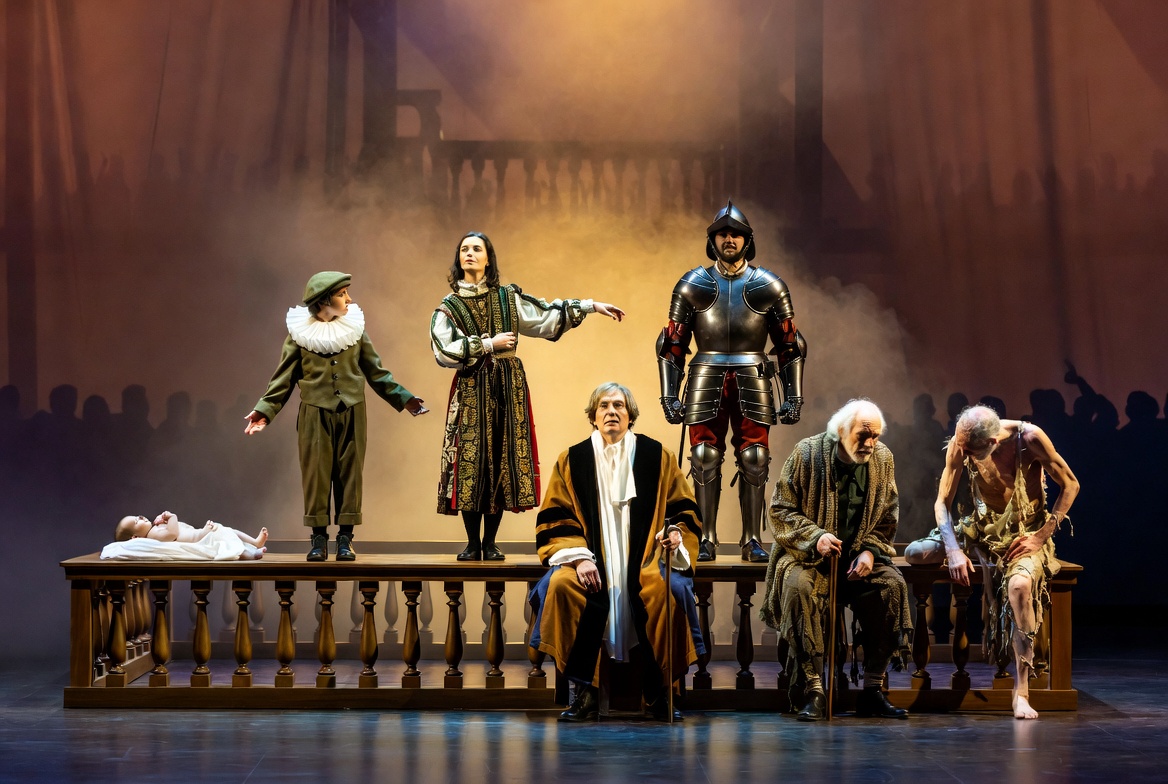
No quote on theater is more iconic than Jaques’ speech in As You Like It (Act 2, Scene 7):
“All the world’s a stage, And all the men and women merely players; They have their exits and their entrances; And one man in his time plays many parts, His acts being seven ages.”
Spoken by the melancholy Jaques in the Forest of Arden, this opens the “Seven Ages of Man” monologue. It compares life to a theatrical production: infants “mewling and puking” in the nurse’s arms, the schoolboy “creeping like snail unwillingly to school,” the lover sighing like a furnace, the soldier seeking “bubble reputation even in the cannon’s mouth,” the justice with a “fair round belly,” the lean pantaloon in old age, and finally second childishness and oblivion.
Context and Analysis: In a pastoral comedy exploring exile, love, and identity, Jaques’ speech adds philosophical depth. The metaphor draws directly from Elizabethan theater practice—literal “exits and entrances,” multiple roles played by the same actors (often doubling parts), and the Globe’s stage as a microcosm of the world. It reflects a Renaissance worldview influenced by medieval “ages of man” traditions while infusing them with theatrical vitality.
Line-by-line, the speech moves from birth to death with vivid, often humorous or poignant imagery, emphasizing life’s scripted yet inevitable progression. The soldier’s “strange oaths” and the justice’s “wise saws” highlight how social roles shape behavior like costumes and lines.
Modern Relevance: In today’s world of social media personas, professional identities, and personal branding, the quote feels prophetic. Leaders “perform” authority, influencers curate entrances and exits, and many navigate multiple “parts” across careers and relationships. Theater practitioners use it to discuss character arcs and ensemble dynamics. Scholars at the Folger and RSC note its endurance because it captures both the grandeur and absurdity of human performance.
This single passage alone makes Shakespeare’s quotes on theater essential reading for anyone interested in drama or life’s performative aspects.
Hamlet’s Advice to the Players – The Definitive Masterclass on Acting Craft
For practical guidance on the actor’s art, few passages rival Hamlet’s instructions in Hamlet (Act 3, Scene 2). Preparing the traveling players for “The Mousetrap” (the play-within-a-play), Prince Hamlet delivers what many consider the finest advice on acting ever written:
“Speak the speech, I pray you, as I pronounced it to you, trippingly on the tongue: but if you mouth it, as many of your players do, I had as lief the town-crier spoke my lines. Nor do not saw the air too much with your hand, thus, but use all gently; for in the very torrent, tempest, and, as I may say, whirlwind of passion, you must acquire and beget a temperance that may give it smoothness.”
He continues:
“Suit the action to the word, the word to the action; with this special observance, that you o’erstep not the modesty of nature: for any thing so overdone is from the purpose of playing, whose end, both at the first and now, was and is, to hold, as ’twere, the mirror up to nature; to show virtue her own feature, scorn her own image, and the very age and body of the time his form and pressure.”
Historical Context: In Elizabethan England, acting styles varied; some performers used exaggerated gestures to reach noisy audiences or played stock roles like the bombastic Herod (“out-Herods Herod”). Hamlet advocates for a more naturalistic style suited to the intimate yet public Globe environment, where subtlety could still project.
Practical Breakdown:
- “Trippingly on the tongue”: Clear, natural speech over mouthing or declaiming.
- Avoid “sawing the air”: Gestures should be restrained and purposeful, not excessive.
- Temperance in passion: Even intense emotion requires control for smoothness and believability.
- “Suit the action to the word”: Physicality must align with text—body and voice in harmony.
- “Mirror up to nature”: Theater’s purpose is truthful reflection, not exaggeration. It should reveal the age’s true form.
Actionable Tips for Today’s Actors:
- In auditions, prioritize clarity and listening over “big” choices; let the text drive emotion.
- Record rehearsals to check for unnecessary gestures—aim for economy.
- Use the “mirror” principle: Ask how your character reflects universal human truths rather than stereotypes.
- For voice work, practice speaking “trippingly” with varied pacing to build control.
- Directors can incorporate these lines into warm-ups or notes to foster ensemble truthfulness.
This speech remains a cornerstone in drama training worldwide, demonstrating why Shakespeare’s Shakespeare quotes on acting offer timeless technique alongside inspiration.
The Play’s the Thing” – Theater as a Weapon for Truth and Conscience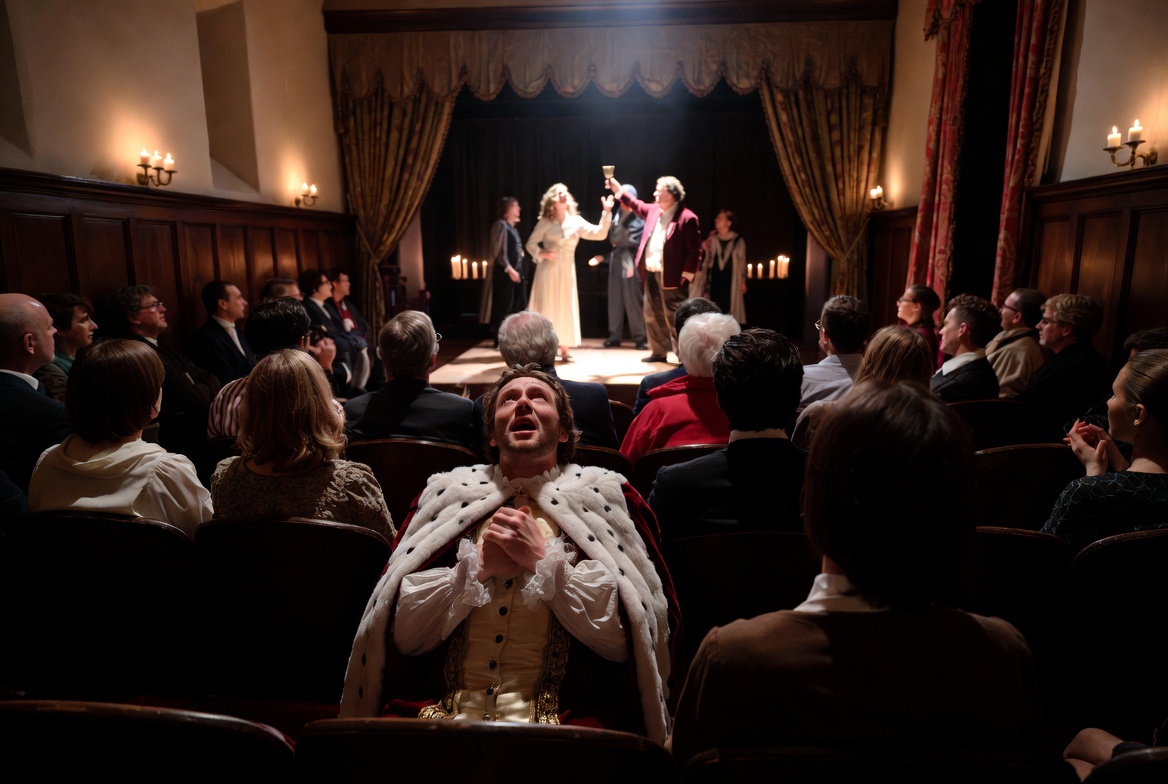
Another cornerstone quote on theater appears earlier in Hamlet (Act 2, Scene 2):
“The play’s the thing Wherein I’ll catch the conscience of the king.”
Hamlet, suspecting his uncle Claudius of murdering his father, arranges a performance that reenacts the crime. He hopes the staged murder will provoke a guilty reaction, confirming the ghost’s accusation.
Analysis: This meta-theatrical moment highlights drama’s unique power to bypass defenses and stir conscience. Shakespeare comments on theater’s dual potential—as entertainment and as a subtle (or not-so-subtle) tool for moral or political revelation. In an era of strict censorship, such lines also reflect awareness of the stage’s risks and responsibilities.
Real-World Parallels: From Elizabethan times to today, theater has exposed injustice—think of protest plays, verbatim theater, or productions tackling racism, climate change, or politics. Modern directors often invoke this quote when using Shakespeare to comment on contemporary issues, such as staging Hamlet in contexts of surveillance or corruption.
The line underscores a key need for audiences and creators: theater should provoke thought, not just provide escapism.
The Fleeting Nature of Performance – Quotes on Transience and Legacy
Shakespeare frequently meditates on the ephemeral quality of acting and life. In Macbeth (Act 5, Scene 5), after Lady Macbeth’s death, the title character laments:
“Life’s but a walking shadow, a poor player That struts and frets his hour upon the stage And then is heard no more: it is a tale Told by an idiot, full of sound and fury, Signifying nothing.”
Comparative Insight: Contrasting with the expansive “All the world’s a stage,” this view is darker, emphasizing brevity and potential meaninglessness. The “poor player” struts briefly before vanishing, mirroring Macbeth’s own doomed ambition.
These lines offer performers perspective on short runs, opening-night nerves, and the pursuit of legacy beyond any single production. They remind us that while individual performances fade, the impact on audiences—and the collective art of theater—endures.
Modern Application: In an age of digital recording and social media clips, actors can reflect on creating lasting resonance rather than fleeting virality. Educators use these quotes to discuss mortality, purpose, and artistic impermanence.
Magic, Illusion, and the Audience – Quotes from A Midsummer Night’s Dream and The Tempest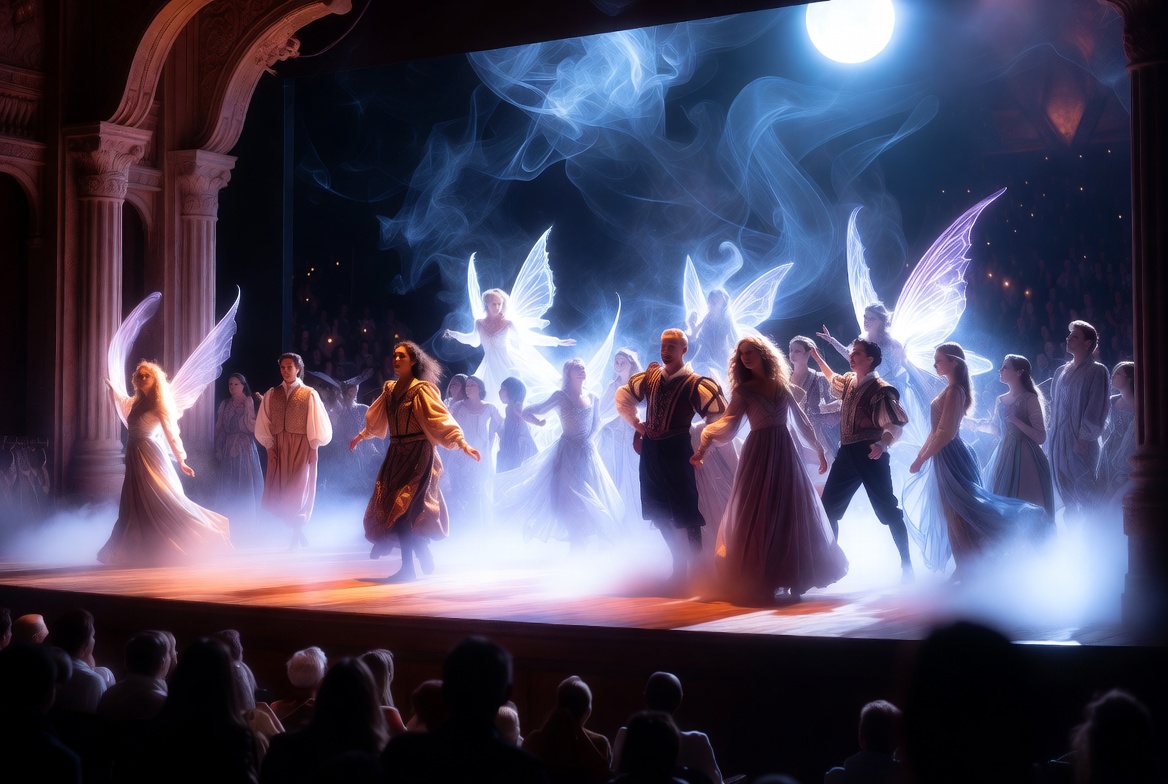
Shakespeare often invites audiences into the collaborative dream of theater. In A Midsummer Night’s Dream (Act 5, Scene 1, Epilogue), Puck says:
“If we shadows have offended, Think but this, and all is mended, That you have but slumbered here While these visions did appear.”
In The Tempest (Act 4, Scene 1), Prospero reflects on the insubstantial pageant:
“We are such stuff As dreams are made on, and our little life Is rounded with a sleep.”
These lines acknowledge theater as illusion while celebrating its power to enchant. Shakespeare directly addresses spectators, breaking the fourth wall and emphasizing the audience’s role in completing the magic. Productions worldwide still use these epilogues to close shows, fostering goodwill and reflection.
They solve a common audience need: bridging the gap between stage fiction and real-life emotion, reminding us that great theater lingers as a shared dream.
Additional Powerful Shakespeare Quotes on Theater and Acting
Beyond the major passages, Shakespeare offers many more insightful lines. Here is a curated selection presented in table form for easy reference:
| Quote | Play & Act/Scene | Key Insight | Modern Application |
|---|---|---|---|
| “A kingdom for a stage, princes to act, / And monarchs to behold the swelling scene!” | Henry V, Prologue | The power of imagination to transform a bare stage into epic worlds | Directors pitching low-budget productions; fostering audience engagement |
| “If it be true that good wine needs no bush, ’tis true that a good play needs no epilogue.” | As You Like It, Epilogue | Quality speaks for itself; avoid over-explaining | Streamlining program notes or post-show talks |
| “Like a dull actor now, I have forgot my part, and I am out, Even to a full disgrace.” | Coriolanus, Act 5, Scene 3 | Stage fright and the fear of forgetting lines | Actor anxiety management and rehearsal techniques |
| “Out, out, brief candle!” (contextualized with the player metaphor) | Macbeth, Act 5, Scene 5 | The brevity of performance and life | Reflections on career longevity or closing a production run |
Each quote rewards deeper study, revealing layers about craft, audience, and existence.
Practical Applications – Using Shakespeare’s Theater Wisdom Today
Shakespeare’s insights translate directly into contemporary practice.
For Actors and Audition Prep: Internalize “temperance” and “suit the action to the word” to deliver authentic, controlled performances. Use “mirror up to nature” to ground characters in observable human behavior rather than clichés.
For Directors and Theater Companies: Leverage “the play’s the thing” when choosing repertoire that challenges audiences. Apply meta-theatrical awareness to staging choices that highlight collaboration.
For Educators and Students: Incorporate these quotes into lessons on text analysis, performance history, and character development. They make abstract concepts tangible and spark discussion on theater’s societal role.
For Theater Lovers and Audiences: Recognize performances through this lens—appreciating restraint, emotional truth, and the shared illusion enhances enjoyment and critical viewing.
How-to Tips:
- Read the full scene aloud before isolating a quote.
- Workshop lines in rehearsal with physical improvisation.
- Journal personal “ages” or roles inspired by Jaques’ speech.
- Compare original context with modern adaptations.
How Shakespeare’s Theater Philosophy Continues to Shape Contemporary Drama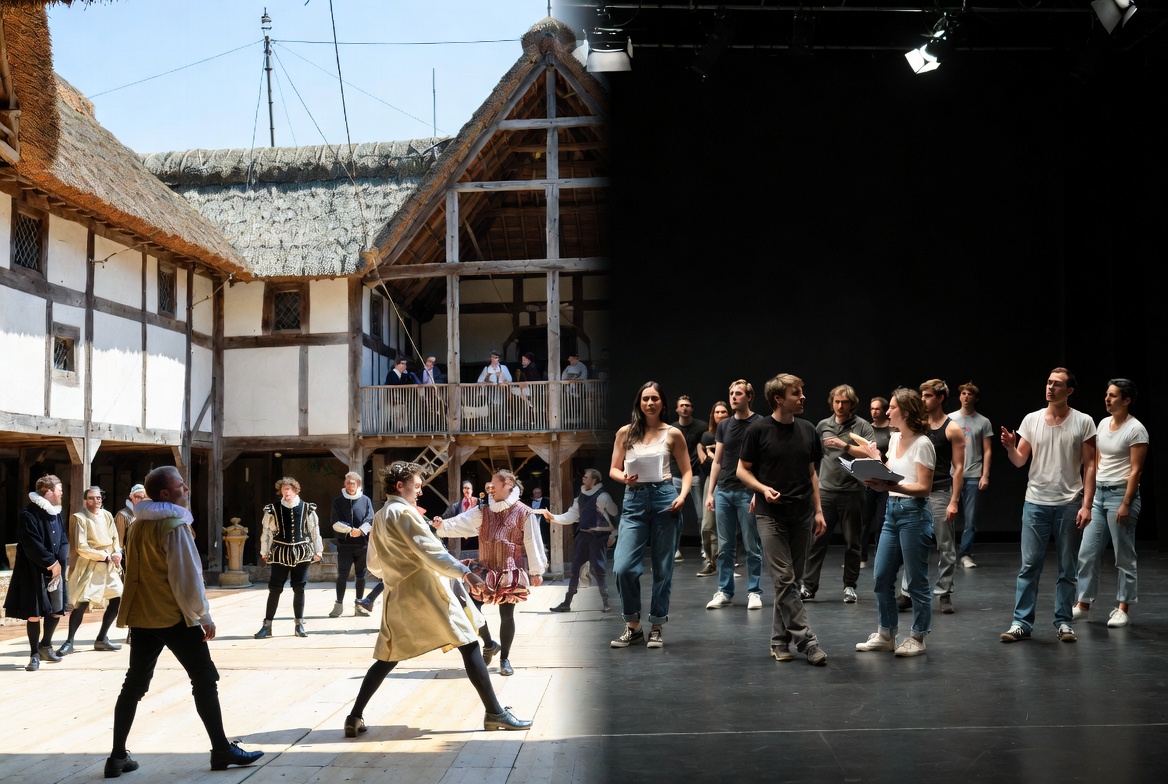
From Stanislavski’s emphasis on truth to Brecht’s alienation techniques, Shakespeare’s influence echoes in modern methods. Today’s immersive theater, site-specific productions, and digital livestreams build on his meta-theatrical foundations. Drama schools worldwide require study of these quotes because they build versatile skills transferable to film, TV, and new writing.
In an era of short attention spans and virtual performances, Shakespeare reminds us of theater’s irreplaceable live power: the electricity of shared presence, the mirror to our times, and the dream we co-create.
Conclusion
Shakespeare’s quotes on theater transcend quotation books or classroom exercises. They encapsulate a lifetime of professional insight into performance, audience, illusion, and human nature. From the expansive metaphor of “All the world’s a stage” to the precise craft advice in Hamlet, these lines address timeless needs: how to act truthfully, why theater matters, and how performance reflects—and shapes—life itself.
Whether preparing for the stage, teaching drama, directing a show, or simply attending your next production, return to these insights for guidance and inspiration. Revisit the plays in full, attend a live performance (perhaps at a reconstructed Globe or local theater), and apply one principle this week—temper your passion, hold up the mirror, or embrace the dream.
The stage awaits. As Shakespeare knew better than most, we are all players in this grand theater—and the insights he left behind help us perform our parts with greater truth, purpose, and joy.
FAQ Section
What is Shakespeare’s most famous quote on theater? “All the world’s a stage, and all the men and women merely players” from As You Like It remains the most widely recognized.
What does “All the world’s a stage” really mean? It portrays life as a theatrical performance where individuals play successive roles across seven ages, from infancy to old age, highlighting identity’s performative and transient nature.
Which Shakespeare play has the best advice for actors? Hamlet’s “Advice to the Players” (Act 3, Scene 2) is universally regarded as the definitive masterclass on acting technique and purpose.
How did Shakespeare view the purpose of theater? To “hold, as ’twere, the mirror up to nature”—reflecting virtue, vice, and the true form of the age with truthful restraint rather than exaggeration.
Are these quotes still used in professional theater training? Yes. Drama schools and companies like the RSC regularly reference them in voice, movement, and text classes.
How do Shakespeare’s theater quotes apply to film and TV acting? Principles like “suit the action to the word” and emotional temperance translate well to camera work, where subtlety and alignment with text remain crucial.
What makes Shakespeare’s meta-theatrical references unique? He frequently breaks the fourth wall, stages plays-within-plays, and comments on the art form itself, inviting audiences to reflect on the nature of performance.
Which quote is best for an audition or theater resume? Lines from Hamlet’s advice demonstrate knowledge of craft; “trippingly on the tongue” or the mirror metaphor show thoughtful engagement with acting principles.
How can teachers use these quotes in the classroom? Through scene work, discussions on life roles, or comparisons between Elizabethan and modern performance to make literature experiential.