
Have you ever tried reading Romeo and Juliet and felt completely lost in lines like “O, she doth teach the torches to burn bright” or “Wherefore art thou Romeo?” The beauty of Shakespeare’s passionate tragedy—its raw emotion, tragic fate, and timeless love story—often gets blocked by Elizabethan English. These R and J words (the distinctive vocabulary in Romeo and Juliet, often abbreviated R&J in classrooms and study guides) include archaic terms, poetic inventions, and words whose meanings have shifted over 400 years. Many students, teachers, actors, and literature lovers struggle with them, leading to confusion during exams, rehearsals, or personal reading.
This comprehensive guide changes that. Drawing from authoritative sources like the Folger Shakespeare Library editions, the Royal Shakespeare Company (RSC) resources, and Utah Shakespeare Festival glossaries, we go far beyond basic lists. You’ll find over 60 essential R and J words categorized by theme, spotlighted act-by-act, tied to Shakespeare’s literary devices, and paired with practical tips for mastery. Whether you’re prepping for GCSE or AP Literature exams, teaching the play, performing it, or simply wanting to appreciate why Romeo and Juliet remains one of Shakespeare’s most beloved works, these insights will transform Shakespeare’s language from a barrier into a gateway to deeper understanding.
Shakespeare’s vocabulary in Romeo and Juliet isn’t just old words—it’s carefully crafted to contrast tender romance with violent feud, foreshadow inevitable tragedy, and build emotional intensity. Mastering these terms boosts comprehension, improves quote analysis in essays, enhances authentic delivery on stage, and reveals the genius behind the world’s most famous love story.
Why R and J Words Are Challenging—and Why Mastering Them Transforms Your Experience
Elizabethan English differs from modern English in pronunciation, grammar, and word meanings. What Shakespeare wrote in the 1590s used words that have evolved or fallen out of use. For example, “wherefore” means “why” (not “where”), leading to the common myth that Juliet asks Romeo’s location on the balcony. Other terms like “choler” (anger) or “portentous” (ominous) carry nuances lost without context.
The rewards of mastery are huge. For students, it strengthens theme analysis (e.g., love vs. hate through contrasting lexicons) and quote integration for higher exam scores. Teachers gain tools to make lessons engaging. Actors deliver lines with authenticity, capturing rhythm and emotion. Readers connect more deeply to themes of fate, youthful passion, and family conflict.
As Folger Shakespeare Library editors Barbara Mowat and Paul Werstine note in their introduction to the play, understanding shifted meanings clarifies the text and highlights Shakespeare’s inventive wordplay. The RSC emphasizes how vocabulary builds atmosphere—romantic terms clash with violent ones to heighten tragedy.
Understanding Shakespeare’s Language Style in Romeo and Juliet
Shakespeare wrote Romeo and Juliet mostly in iambic pentameter—a rhythmic pattern of unstressed-stressed syllables (da-DUM da-DUM) repeated five times per line, mimicking a heartbeat. This blank verse (unrhymed) dominates serious moments, while prose appears in comic or lower-class scenes.
Vocabulary drives key contrasts: courtly love words (e.g., “amorous,” “conjure”) in romantic exchanges versus feud terms (e.g., “rapier,” “pernicious”) in fights. Light/dark imagery recurs, with words like “bright” or “envious” (moon jealous of sun) symbolizing hope vs. doom. The play opens with a sonnet prologue, using elevated language to foreshadow tragedy.
Wordplay—puns, oxymorons, double entendres—adds layers. These devices amplify vocabulary’s impact, turning simple words into profound poetry.
Essential R and J Words: The Ultimate Categorized Master List
This skyscraper section offers more than definitions: each word includes part of speech, key quote/scene, modern meaning, and significance. Prioritized by impact and frequency, the list draws from Folger, Vocabulary.com, and Utah Shakespeare Festival sources.
Use this table format for quick reference:
| Word | Part of Speech | Key Quote & Scene | Modern Equivalent/Meaning | Literary/Thematic Significance |
|---|---|---|---|---|
| Love, Romance, and Courtly Language | ||||
| Amorous | Adj | “Amorous rites” (2.2) | Loving, passionate | Highlights youthful desire in balcony scene |
| Conjure | Verb | “Arise, fair sun, and kill the envious moon… / It is my lady” (2.2) | Summon or invoke | Romeo “conjures” Juliet like a spirit, blending magic and love |
| Jocund | Adj | “Jocund day stands tiptoe” (3.5) | Cheerful, merry | Contrasts dawn’s joy with lovers’ impending separation |
| Wherefore | Adv | “Wherefore art thou Romeo?” (2.2) | Why | Famous misunderstanding; Juliet questions name/fate, not location |
| Invocation | Noun | “By whose direction found’st thou out this place?” (2.2) | Prayer or call | Juliet’s words invoke divine aid in secret love |
| Entreat | Verb | “Entreat her to speak” (1.3) | Beg or plead | Shows courtly persuasion in romance |
| Fain | Adv | “I fain would die” (3.2) | Gladly | Expresses desperate willingness |
| Chaste | Adj | “Chaste as ice” (echoed themes) | Pure, virtuous | Ties to ideals of maidenhood Juliet upholds |
| Feud, Violence, and Conflict | ||||
| Pernicious | Adj | “Pernicious rage” (Prince, 1.1) | Destructive, wicked | Describes feud’s deadly nature |
| Choler | Noun | “Patience perforce with willful choler” (1.5) | Anger, bile | Humoral theory; Tybalt’s hot temper |
| Rapier | Noun | “Draw thy rapier” (3.1) | Slender sword | Symbol of gentlemanly violence |
| Augmenting | Verb | “Augmenting the fresh morning’s dew” (1.1) | Increasing | Romeo’s love grows like dew |
| Adversaries | Noun | “Two households… adversaries” (Prologue) | Enemies | Core conflict: Montagues vs. Capulets |
| Profaners | Noun | “Profaners of this neighbor-stainèd steel” (1.1) | Those who misuse sacred things | Prince condemns feud as sacrilege |
| Fate, Tragedy, and Foreboding | ||||
| Star-crossed | Adj | “Star-crossed lovers” (Prologue) | Doomed by fate | Iconic phrase; astrology/fate theme |
| Portentous | Adj | “Portentous… dreams” (1.4) | Ominous, foreboding | Romeo senses tragedy ahead |
| Purge | Verb | “Purge… sin” (Friar, 2.3) | Cleanse or forgive | Friar’s hope to heal feud through marriage |
| Absolve | Verb | “Absolve thee” (Friar, 4.1) | Forgive sins | Friar’s risky plan |
| Carrion | Adj/Noun | “Carrion flies” (3.3) | Dead/decaying flesh | Romeo’s despair in banishment |
| Dirge | Noun | “Our solemn dirge” (5.3) | Funeral song | Marks tragic end |
| Bier | Noun | “On the bier” (5.3) | Funeral stand | Juliet’s “death” scene |
| Archaic, Obscure, or Evolving Words | ||||
| Forbear | Verb | “Forbear this outrage” (3.1) | Refrain or stop | Urges restraint in violence |
| Dexterity | Noun | “Dexterity of wit” (4.1) | Skill, agility | Mercutio’s wordplay; physical/mental quickness |
| Effeminate | Adj | “Effeminate… tears” (3.3) | Weak or unmanly (period sense) | Romeo’s grief challenges masculinity |
| Anon | Adv | “Anon, good nurse” (2.5) | Soon, right away | Common Elizabethan adverb |
| Alack | Interj | “Alack, alack!” (3.2) | Alas (grief) | Expresses sorrow |
Act-by-Act Vocabulary Deep Dives
To make the vocabulary truly actionable, let’s examine the most impactful R and J words as they appear in each act. This chronological approach shows how Shakespeare gradually shifts the lexical tone—from playful courtship and simmering feud in the early acts to despair, deception, and finality in the later ones.
Act 1: The Feud Ignites and Love Sparks
Act 1 establishes the world of Verona and introduces the central conflict and attraction. The vocabulary here mixes aggressive, street-level language with Romeo’s lovesick melancholy.
- Mutiny (noun) – Prologue: “civil blood makes civil hands unclean” → Rebellion or uprising. Sets the tone for generational hatred.
- Grudge (noun) – Prologue: “ancient grudge” → Long-standing resentment. Emphasizes the feud’s deep roots.
- Augmenting (verb) – Romeo (1.1): “Augmenting the fresh morning’s dew” → Increasing. Describes how Romeo’s tears swell like morning dew—poetic exaggeration of grief.
- Disposition (noun) – Benvolio (1.1): “Your disposition” → Mood or temperament. Romeo’s friends notice his depressive state.
- Portentous (adj) – Romeo (1.4): “Some consequence yet hanging in the stars” → Ominous. Early foreshadowing of tragedy.
- Profaners (noun) – Prince (1.1): “Profaners of this neighbor-stainèd steel” → Those who defile sacred things. The Prince frames the feud as sacrilegious.
These words immediately establish contrast: violent public language vs. Romeo’s introspective, almost religious sorrow.
Act 2: Secret Passion and Witty Banter
The famous balcony scene (Act 2, Scene 2) is vocabulary-rich with romantic and invocatory language. This act is lighter, filled with courtship metaphors and playful wordplay.
- Conjure (verb) – Mercutio (2.1): “Romeo! Humours! Madman! Passion! Lover!” → Summon magically. Mercutio mocks Romeo by pretending to conjure him like a spirit.
- Wherefore (adv) – Juliet (2.2): “Wherefore art thou Romeo?” → Why. The most misunderstood word in the play—Juliet laments fate’s naming, not Romeo’s location.
- Envious (adj) – Romeo (2.2): “Arise, fair sun, and kill the envious moon” → Jealous. Light/dark imagery personifies celestial rivalry.
- Jocund (adj) – Romeo (2.2): “Jocund day stands tiptoe on the misty mountain tops” → Cheerful. Dawn personified as eager and joyful—bittersweet as it signals separation.
- Invocation (noun) – Juliet (2.2): “O Romeo, Romeo! Wherefore art thou Romeo?” contextually → A calling or prayer-like appeal.
The romantic vocabulary here is elevated, almost liturgical, showing love as a sacred, almost supernatural force.
Act 3: Violence Escalates and Consequences Hit
Act 3 marks the tragic turning point. Vocabulary becomes sharper, more physical, and despairing.
- Dexterity (noun) – Mercutio (3.1): “Ask for me tomorrow, and you shall find me a grave man” → Skill or agility. Mercutio’s dying pun on his fatal wound.
- Rapier (noun) – Multiple fight scenes (3.1) → Slender thrusting sword. Symbol of gentlemanly (but deadly) combat.
- Garish (adj) – Juliet (3.2): “O, what a beast was I to chide at him!” context → Gaudy or glaring. Juliet uses it to describe daylight that reveals tragedy.
- Effeminate (adj) – Romeo (3.3): “O, be not so effeminate” → Weak or unmanly (Elizabethan sense). Romeo’s grief is mocked as unmasculine.
- Transgression (noun) – Friar (3.3): “Thy noble shape is but a form of wax” → Sin or violation. Friar scolds Romeo for despairing.
The shift to violent and accusatory language mirrors the play’s darkening mood.
Act 4: Deception and Despair
Act 4 focuses on the Friar’s desperate plan and Juliet’s isolation. Vocabulary turns toward death, poison, and false appearances.
- Vial (noun) – Friar (4.1): “Take thou this vial” → Small bottle. The sleeping potion container—central prop of the tragedy.
- Absolve (verb) – Friar (4.1): “I will absolve thee” → Forgive sins. Friar’s risky spiritual promise.
- Catacomb (implied through burial imagery) – Sepulcher references → Underground tomb. Foreshadows the vault scene.
- Untimely (adj) – Multiple uses → Premature or ill-timed. Repeated motif of disrupted natural order.
Act 5: Tragic Resolution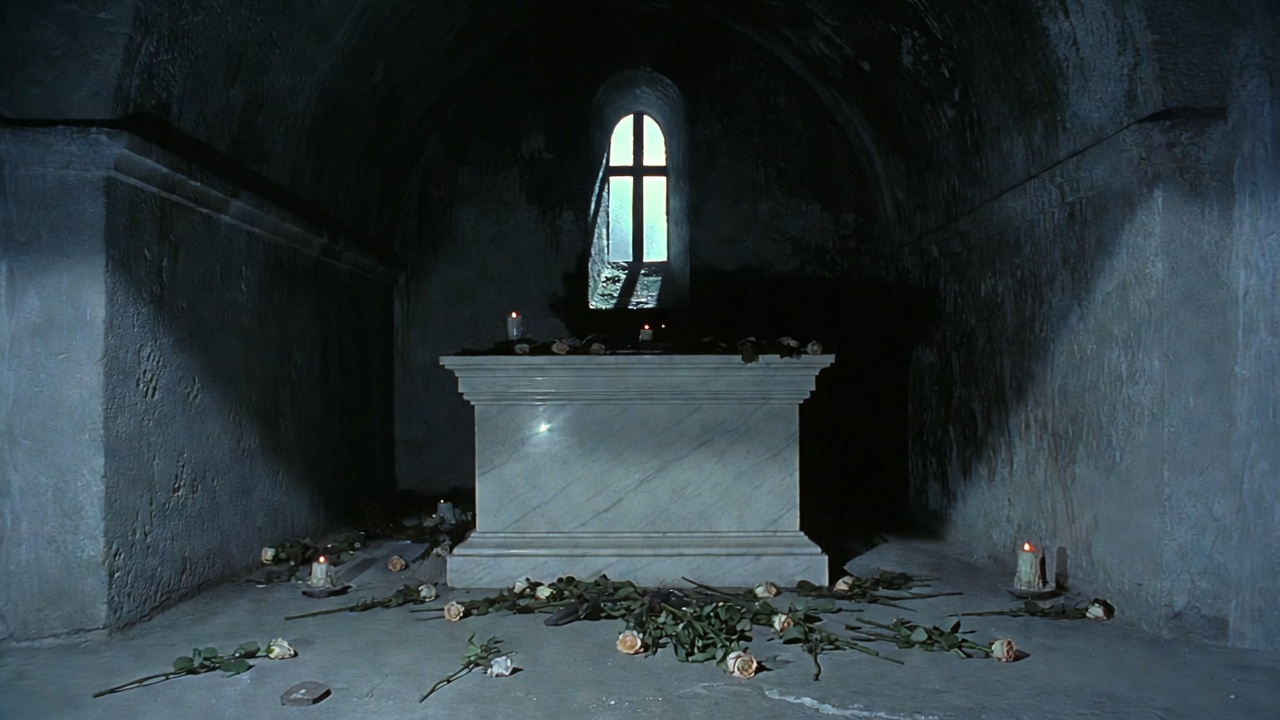
The final act is heavy with funeral and fatal vocabulary.
- Bier (noun) – 5.3: “Lay her… upon the bier” → Funeral stand. Juliet’s “corpse” platform.
- Dirge (noun) – 5.3: “Our solemn dirges” → Funeral lament song.
- Carrion (adj/noun) – Romeo (5.3): “Thou detestable maw… gorged with… dearest morsel” → Dead flesh. Romeo’s disgust at the tomb.
- Inauspicious (adj) – Romeo (5.3): “O here / Will I set up my everlasting rest” → Unlucky or ill-omened.
These words seal the play’s tragic atmosphere—death is no longer metaphorical but literal.
Wordplay, Literary Devices, and R and J Vocabulary
Shakespeare’s genius lies in how he layers devices onto vocabulary:
- Oxymorons & Paradoxes: “Loving hate,” “brawling love,” “heavy lightness” (1.1). These contradictions mirror the play’s central tension—love born from hate.
- Puns & Double Entendres: Mercutio’s “grave man” (3.1) or frequent sexual innuendo (“die” = orgasm/death).
- Metaphors & Similes: Light/dark (“fair sun,” “envious moon”), religious (“shrine,” “pilgrim”), fate (“star-crossed”).
These devices make vocabulary dynamic—words don’t just mean; they multiply meaning.
Practical Tips to Master R and J Words
- Read Aloud: Elizabethan English was meant for the ear—rhythm reveals meaning.
- Use Parallel Texts: No Fear Shakespeare or Folger editions place modern paraphrase beside original.
- Create Flashcards: Front: word + quote; Back: meaning + significance.
- Watch Performances: Zeffirelli (1968), Luhrmann (1996), or RSC productions show how actors emphasize vocabulary.
- Exam Strategy: Practice embedding 3–4 key words per essay paragraph with analysis.
- Pronunciation Help: “Wherefore” = WHERE-for; “jocund” = JOCK-und.
Common Misunderstandings and Myths About R and J Words
- Myth: “Wherefore art thou Romeo?” means “Where are you, Romeo?” → No—it’s “Why are you Romeo Montague?” (family name dooms them).
- Mistake: Assuming all old words are negative → Many (jocund, amorous) are positive and celebratory.
- Overlooking puns: Modern readers often miss sexual/violent double meanings.
FAQs: Your Top Questions About R and J Words Answered
What are the most important R and J words for GCSE/AP exams? Star-crossed, wherefore, choler, pernicious, portentous, dirge, bier, conjure, jocund, effeminate. These appear frequently in essay prompts about theme, character, and language.
How many unique or difficult words appear in Romeo and Juliet? Approximately 150–200 Elizabethan or archaic terms, but only 50–70 are truly essential for understanding plot and themes.
Best free resources for R and J vocabulary? Folger Shakespeare Library (folger.edu), RSC Learning Zone, Utah Shakespeare Festival glossary, No Fear Shakespeare (parallel text), Vocabulary.com Romeo and Juliet lists.
Why does Shakespeare’s language feel hard but rewarding? It requires effort, but that effort mirrors the characters’ struggles—once unlocked, the emotional payoff is immense.
Do film adaptations change the vocabulary? Luhrmann keeps most original lines but modernizes delivery; Zeffirelli stays faithful. Subtitles often help clarify archaic words.
Mastering these R and J words doesn’t just help you pass a test or perform a scene—it lets you experience Romeo and Juliet as Shakespeare intended: as a living, breathing story of passion, fate, and heartbreak. The language that once felt like a barrier becomes the very vehicle that carries you into Verona’s streets and Juliet’s heart.
Revisit the play with this guide in hand. Notice how every “wherefore,” “portentous,” and “jocund” deepens the tragedy. Then explore more Shakespeare—his words continue to shape how we speak about love, conflict, and destiny today.